

Running Shoe Foam Explained: EVA, TPU, PEBA, and Every Brand Foam Decoded
Summarise this running shoe foam guide with AI
Open an assistant and submit the prefilled request. The assistant reads the page only after you submit it.
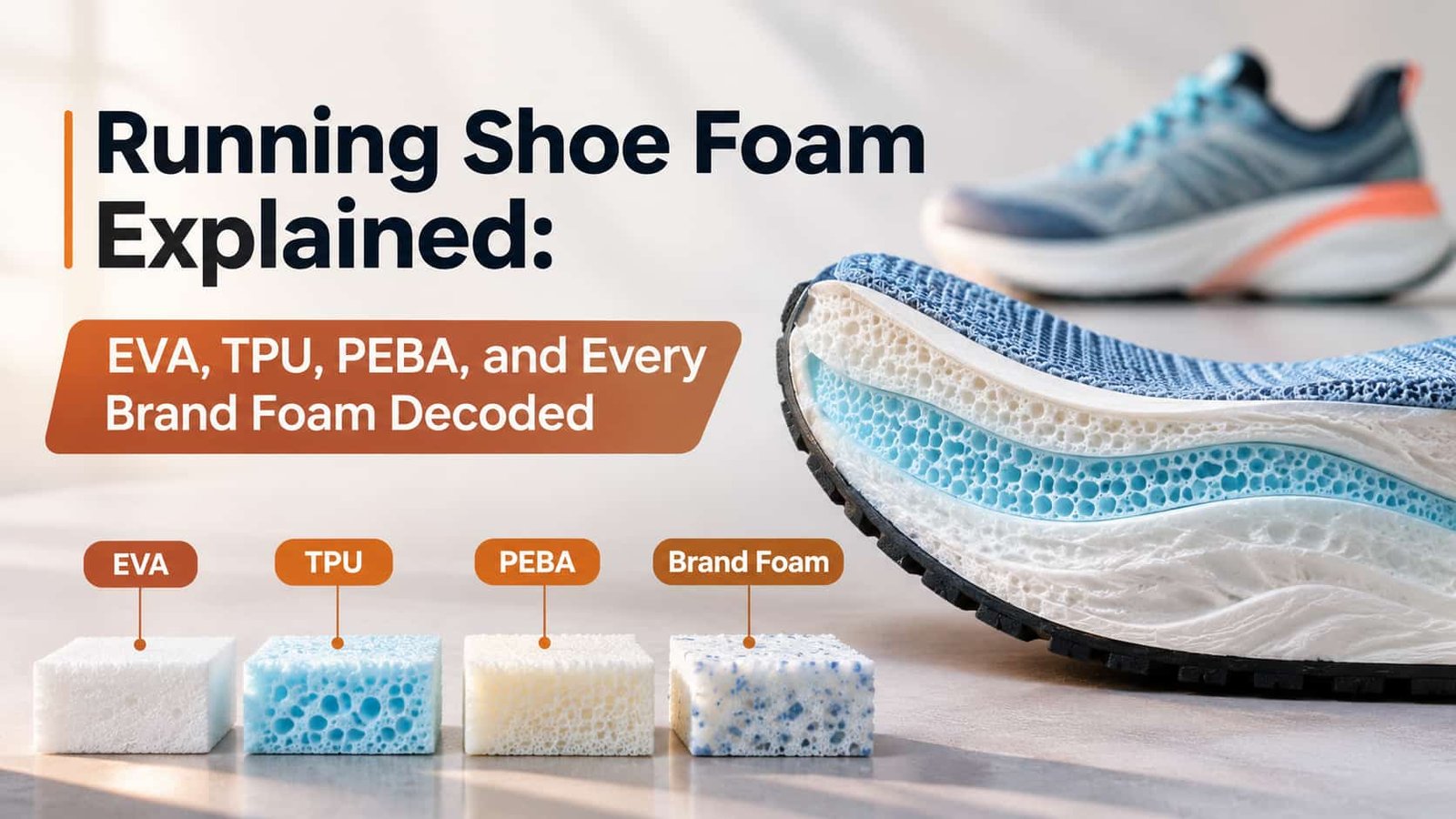
Quick answer: Running shoe foam is the cushioning material in the midsole, the layer between the upper and the outsole. EVA is the most common and usually the most affordable. TPU is firmer and more durable, and PEBA is typically more responsive and more expensive. “Supercritical” describes a manufacturing process rather than a material. Brand names such as ZoomX or Boost describe proprietary technologies, so the base material is the most reliable way to compare shoes.
Key takeaways
- Most running shoe midsoles are built from EVA, TPU, PEBA or blends, and the brand name rarely tells you which.
- Each family trades cost, weight, softness, rebound and durability against the others.
- Brand foams are proprietary, so read each manufacturer’s technology page before comparing claims.
- No source reviewed here gives a fixed lifespan for any foam. Wear depends on load, mileage, surface and storage.
- Dry shoes at room temperature and clean foam gently, because heat and soaking are the fastest ways to damage it.
- Choose a foam by running style, body weight, surface and budget, and try shoes on before buying.
What Running Shoe Foam Is
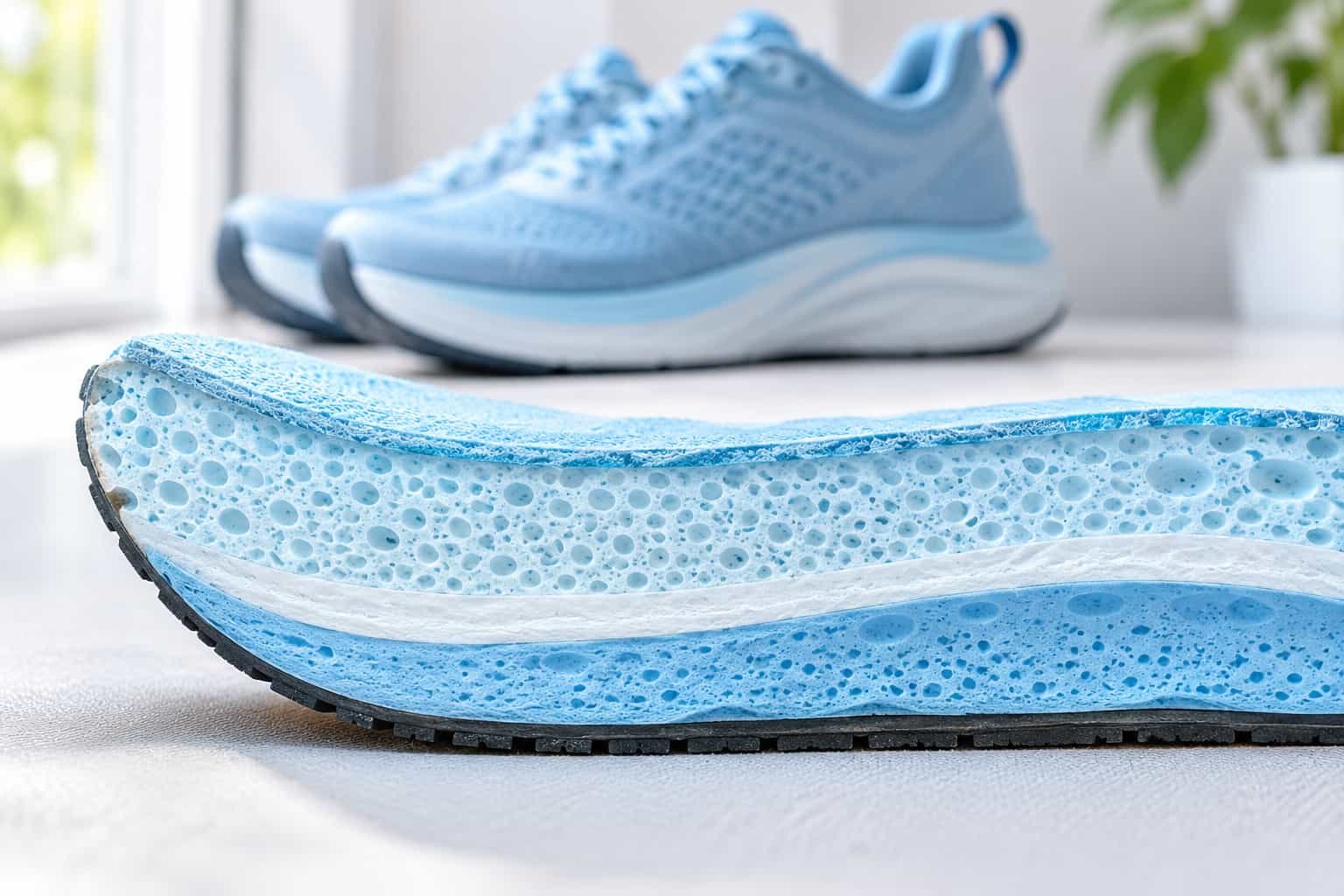
Running shoe foam is the cushioning core of the midsole. It sits between the upper, which wraps the foot, and the outsole, which meets the ground. Each time the foot lands, the foam compresses to absorb impact, then returns some of that energy as the foot pushes off.
Foam is made by mixing a base polymer with a blowing agent and expanding it into a cellular structure. The cells trap air or gas, and that structure sets how much the material compresses, how quickly it springs back and how heavy it feels.
“Foam” describes a physical structure, not a chemical. Two shoes can both have foam midsoles made from different polymers and behave quite differently. That is why comparing shoes by foam name alone causes confusion.
To see where the midsole sits within the rest of the shoe, the insole, midsole and outsole guide and the shoe anatomy overview cover each layer. This article focuses on the midsole material, and the shoe materials places it within the wider world of footwear materials.
The foam family in a shoe is often the first thing to check. Phylon, a related material, is covered in the what is Phylon guide, and the EVA versus Phylon comparison explains how the two differ in practice.
The Main Foam Families
Most running shoe midsoles fall into a small number of material groups. The table below summarises the main ones, with practical trade-offs rather than precise performance numbers.
| Foam family | Base material | Typical strengths | Typical trade-offs |
|---|---|---|---|
| EVA | Ethylene-vinyl acetate copolymer | Lightweight, affordable, soft feel | Can feel less responsive and may compress more over time |
| TPU | Thermoplastic polyurethane | Durable, resilient, often used in stability or structural elements | Usually heavier and firmer than EVA |
| PEBA | Polyether block amide | High rebound, light weight in many designs | Generally more expensive |
| Supercritical or gas-infused foam | EVA, TPU or PEBA with gas expanded during moulding | Refined cell structure, often marketed for springiness | Performance depends on the base polymer and the specific process |
These families overlap. Many brand foams are blends, or they combine a base polymer with a proprietary process. The family tells you what the material is made of. The brand tells you what the company calls its version. Both matter, but the family is the more reliable starting point.
Manufacturers do not always publish the exact composition of their foams, and some descriptions are marketing language. When a claim is not supported by an independent source, treat it as the brand’s description rather than a verified specification.
EVA Foam
Ethylene-vinyl acetate, or EVA, is the most common midsole material in running and casual footwear. It is inexpensive, easy to shape and light, which explains its widespread use.
EVA cushions well when new and feels soft underfoot. Its main limitation is responsiveness. Some runners find it flat compared with newer foams, especially at faster paces. Over time it may lose springiness, which is one reason many guides suggest replacing running shoes periodically.
The dedicated EVA foam guide covers its properties in more depth. EVA is also the base for many lower-cost shoes, and the TPU versus EVA comparison shows how the two materials trade firmness against durability.
Who tends to suit EVA: Walkers, casual wearers, and runners who prioritise a soft, familiar feel and value over maximum rebound.
Watch for: EVA can feel firmer in cold weather and may show compression sooner under high mileage. That does not make the shoe unsafe. It means the cushioning may change and the shoe may need replacing sooner than a more durable compound would.
TPU Foam
Thermoplastic polyurethane, or TPU, is a tough, flexible polymer. In footwear it often appears as a structural part, such as a heel counter, a support overlay or an outsole component. Some midsoles use TPU foam, which can be firmer and more durable than EVA.
TPU’s main strength is resilience. It holds its shape under repeated loads and resists abrasion well. Its drawbacks are weight and firmness. TPU midsoles can feel less cushioned than EVA, so they are often used where support or durability matters more than softness.
The TPU guide explains how TPU is used beyond the midsole, which helps when comparing it with foam. The TPU versus EVA comparison makes the trade-off concrete.
Who tends to suit TPU: Runners who need structure, people who want durable components, and anyone comparing a firm, stable ride with a softer one.
Watch for: A TPU element does not mean the whole midsole is TPU. Check the materials description to see which parts are which.
PEBA Foam
Polyether block amide, or PEBA, is a thermoplastic elastomer known for high rebound. It returns energy efficiently after compression, which is why it appears in many performance-oriented running shoes.
PEBA is generally more expensive than EVA and is often lighter than TPU at a similar cushioning level, though this varies by design and thickness. It typically feels springier and more responsive than EVA, and runners who want energy return often choose it. The PEBA foam explainer covers the material in detail.
Who tends to suit PEBA: Runners who value responsiveness, faster training and lightweight designs, and who accept a higher price.
Watch for: Rebound is not the same as comfort. A very responsive foam can feel firm to runners who prefer a plush ride. Trying shoes on and running a few steps, or using a return-friendly test run, is the most reliable check.
Supercritical and Gas-Infused Foams
Supercritical foaming mixes a polymer with a gas, usually nitrogen or carbon dioxide, under high pressure, then expands it. The process can produce a more uniform cell structure than conventional chemical foaming, and brands use it to refine the balance between softness, rebound and weight.
The key point for buyers is that the process is not a material. A supercritical foam is still built on EVA, TPU or PEBA. The process changes how that base behaves, but it does not automatically make the foam better or worse.
Terms such as “supercritical,” “nitrogen-infused” and “gas-infused” describe manufacturing methods. Benefits claimed for them, such as lighter weight or more energy return, are brand claims unless independent testing supports them. The supercritical foam guide covers the process in more detail. For a look at memory-type materials that some shoes use alongside these foams, the memory foam shoes guide explains how they differ from running foams.
Decoding Brand Foam Names
Searchers often ask about specific brand foams. Brands give their technologies distinct names, and the names rarely reveal the base material. The table below explains the naming pattern without making product-level performance claims.
| Step | What to check | Why it matters |
|---|---|---|
| 1. Find the material | Look for EVA, TPU, PEBA or a described blend in the product’s materials section | The base material drives most of the feel and durability |
| 2. Check the process | Look for terms such as supercritical or gas-infused | The process affects structure and may change rebound or weight |
| 3. Read the brand’s technology page | Use the manufacturer’s own description of the foam | Gives the brand’s intended use and any composition details it discloses |
| 4. Compare like with like | Compare foams in similar shoe categories and weights | A lightweight racing shoe and a daily trainer are built for different jobs |
Major running brands use names such as ZoomX, React, Boost, Lightstrike, FlyteFoam, DNA Loft, DNA Flash, Fresh Foam X, FuelCell, CloudTec, PWRRUN, Profly and HOVR. Each name refers to a foam or midsole system with its own composition and claims. Start with the brand’s own page, then compare.
Brand Foam Guides at a Glance
Nike
Start with the ZoomX foam and the React foam to see two of Nike’s systems.
adidas
Begin with the Boost foam and the Lightstrike foam.
ASICS
The FlyteFoam and GEL technology take two different approaches.
Brooks
Look at the DNA Loft and the DNA Flash to understand each system.
New Balance
Compare the Fresh Foam X and the FuelCell.
Wider comparisons
Three systems side by side in one guide.
On’s CloudTec and Helion foam are the starting points for that brand, and the CloudTec versus Helion comparison sets them side by side. Saucony’s PWRRUN and PWRRUN PB cover its two systems, and the PWRRUN versus PWRRUN PB comparison explains the difference.
For other brands, HOKA’s Profly page, Under Armour’s HOVR page and Skechers’ HYPER BURST page cover their respective foams. The Phylon guide and the memory foam guide are useful background for materials that appear across several brands.
The brand pages are the right place for brand-specific claims. This article does not state rebound, weight or durability figures for any of them. If you want to understand how cushioning systems work in general, the how Nike Air works guide explains a different cushioning approach, and it is a useful contrast to foam.
Foam Comparison Chart
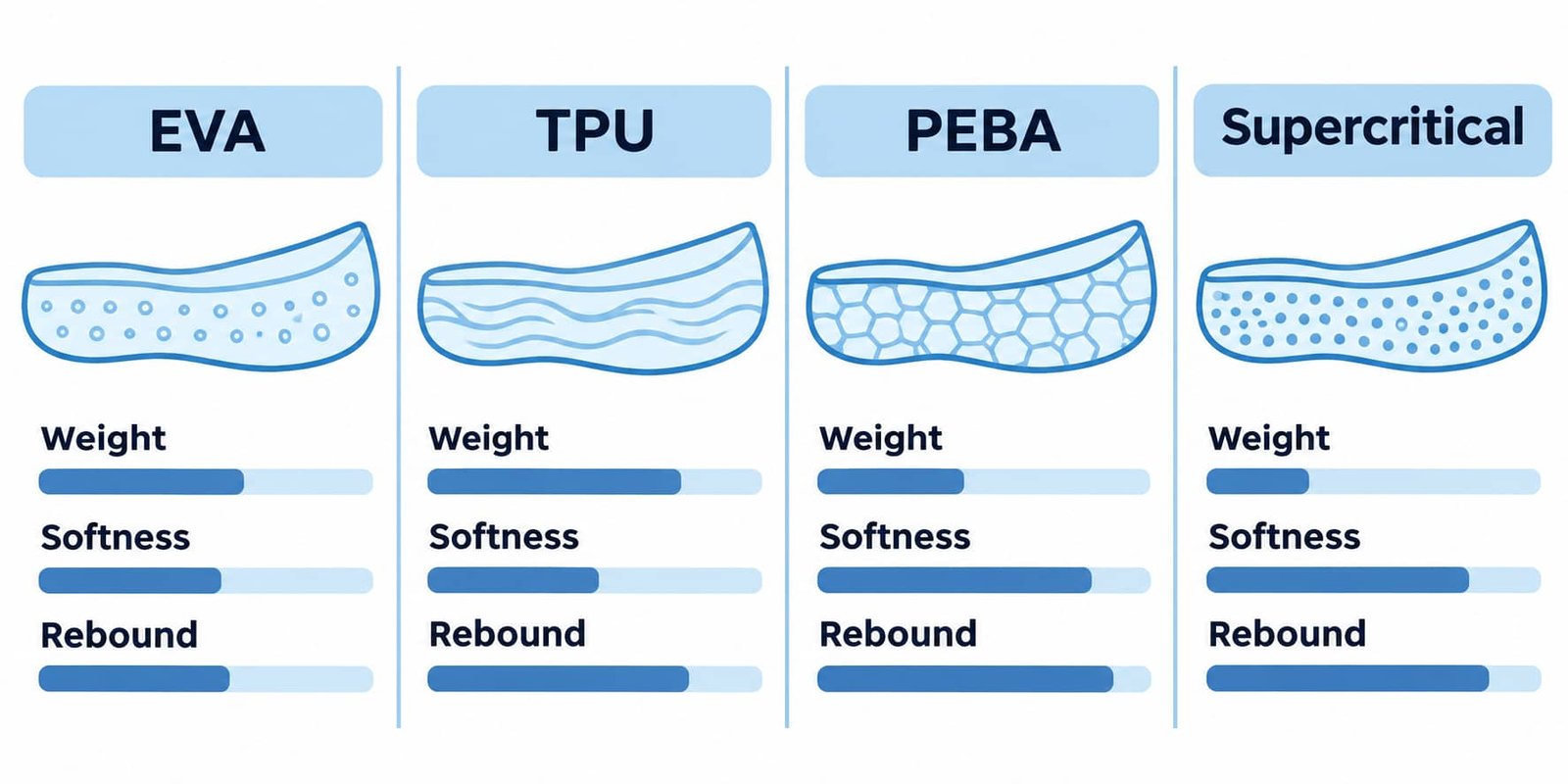
This chart compares the foam families on the factors runners most often ask about. Ratings are relative and editorial, meant to guide choice rather than measure performance.
| Factor | EVA | TPU | PEBA | Supercritical (any base) |
|---|---|---|---|---|
| Cost | Lower | Middle | Higher | Varies by brand |
| Weight | Light | Heavier | Light in many designs | Varies by base polymer |
| Softness | Soft | Firmer | Varies by design | Varies by design |
| Rebound | Moderate | Moderate | High in many designs | Brand-dependent |
| Durability | Good for most uses | Strong | Generally strong | Depends on base polymer |
| Best for | Everyday and budget running | Stability and structure | Responsive, faster-paced running | Brand-specific performance |
Read the chart as a starting map, not a ranking. A soft EVA shoe may suit a relaxed weekend runner better than a firm PEBA shoe, even though PEBA scores higher on rebound.
Does Running Shoe Foam Degrade Over Time?
Yes, foam changes with use, and most runners notice it. Repeated compression can flatten the cell structure, which reduces cushioning and rebound. Heat, moisture, sunlight and long storage can also affect the material.
The rate of change depends on several factors:
- Foam type. Some base polymers resist compression set better than others, but no foam is immune.
- Load. Heavier runners compress midsoles more on each step.
- Mileage. More kilometres means more compression cycles.
- Surface. Hard pavement transmits more force than softer trails.
- Storage. Heat in a car boot or direct sunlight can accelerate ageing.
We have not found a credible, independently verified figure for how many kilometres or months a given foam lasts in typical use. Any number you see online should be treated as an estimate unless it cites a test method and a source. For wear signs and guidance on when to replace running shoes, read the running shoe lifespan guide.
Practical signs of foam fatigue:
- The shoe feels flatter or harder underfoot than when new.
- You notice new aches in the knees, shins or feet after runs that used to feel comfortable.
- Visible creasing or compression lines appear across the midsole.
- The heel or forefoot feels unevenly cushioned.
These signs are prompts to assess the shoe, not diagnoses. If you experience persistent pain, see a qualified clinician or podiatrist. For general foot health information, reputable sources include the American Podiatric Medical Association, which publishes guidance on footwear and foot health.
Foam Recovery and Rest Between Runs
Foam recovery refers to how quickly a midsole returns to its original thickness after compression. Some foams rebound within moments, while others take longer. Runners often ask whether a shoe needs a rest day between runs.
Current guidance is general. A rest day can help the shoe dry out and let the material re-expand, especially after wet runs, but there is no standardised recovery time that applies to every foam. Rotating two pairs of running shoes is a sensible habit for runners who run frequently, because it spreads the compression load across more than one midsole. This is editorial advice, not a finding from a controlled study.
Practical steps:
- Let a shoe dry fully after wet runs before wearing it again.
- Loosen the laces and remove the insole after a run to help air circulate.
- Avoid leaving shoes compressed in a bag or under heavy objects for long periods.
- Rotate shoes if your training volume is high.
How to Clean Running Shoe Foam
Foam is more sensitive than rubber to harsh chemicals and heat. Gentle cleaning protects the midsole and the upper.
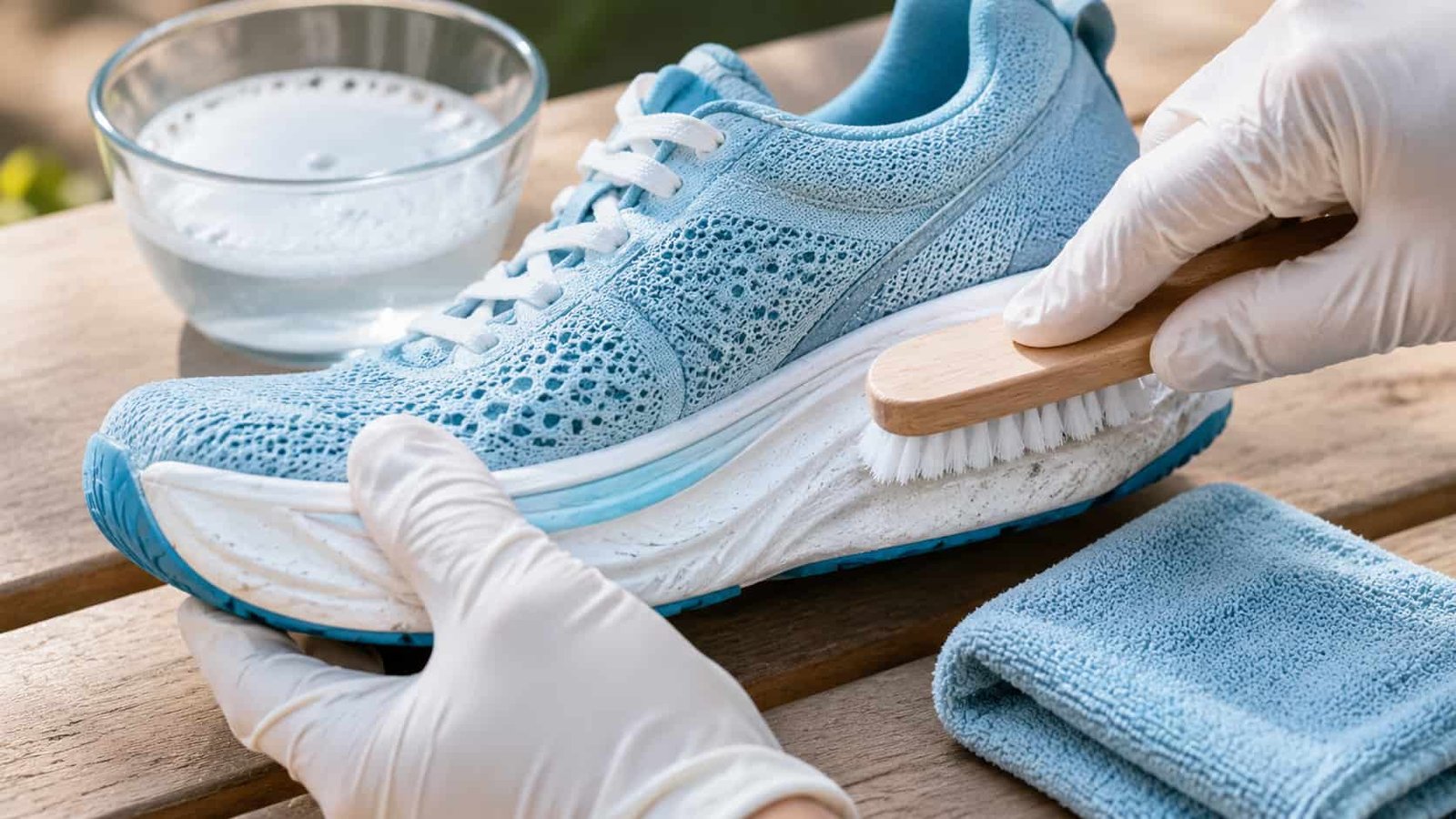
Step-by-step method:
- Remove the insoles and laces.
- Brush off dry dirt with a soft brush.
- Mix a small amount of mild soap with lukewarm water.
- Dab the midsole and upper with a cloth. Do not soak the shoe, because water can penetrate the foam and the adhesives.
- Wipe off soap residue with a damp cloth.
- Stuff the shoe with paper to hold its shape and let it air-dry at room temperature.
Warnings:
- Do not put running shoes in a washing machine or dryer. The agitation and heat can damage the foam, the adhesives and the upper.
- Avoid direct heat from radiators, heaters or hairdryers.
- Avoid strong solvents on the foam. Test any product on a hidden spot first.
- Clean mesh and knit uppers gently, because they can stretch or fray.
For broader maintenance steps across different shoe materials, see the shoe cleaning and maintenance guide.
Choosing the Right Foam for You
No foam is best for everyone. The right choice depends on your body, your running style and the surfaces you use.
Consider these questions:
- How often do you run, and how far? Higher weekly mileage may favour a more durable foam and a second pair to rotate.
- What surface do you use most? Road, track, treadmill and trail place different demands on the midsole.
- Do you want softness or responsiveness? This is a personal preference, and it may change with experience.
- What is your budget? EVA shoes are often the most affordable entry point, while PEBA and advanced brand foams usually cost more.
- Do you need stability or support? Structural elements such as TPU may help some runners, but support needs vary, and a qualified professional can advise on individual biomechanics.
Who might choose what:
- Casual runners and walkers: EVA, for softness and value.
- Runners who want structure: TPU components or support-focused designs, depending on fit.
- Faster or more performance-focused runners: PEBA or advanced supercritical foams, if the price fits.
- Runners with high mileage: Consider durable foams and a rotation plan.
For help narrowing down options by activity and fit, the shoe finder tool can filter choices, and the testing methodology page explains how we approach footwear evaluation. We have not lab-tested the shoes discussed here, and this article makes no claim of first-hand testing.
Myths Worth Dropping
Myth: A brand name tells you the foam’s material. It does not. Brand names describe proprietary technologies, and the base material may be EVA, TPU, PEBA or a blend. Check the material description.
Myth: Softer foam always means better cushioning. Softness and cushioning are related but different. A very soft foam may feel plush but compress more under load, while a firmer foam may feel more stable. Preference and running style matter.
Myth: Higher price guarantees better foam. Premium foams may offer different responsiveness or weight, but price does not guarantee suitability for your body or stride.
Myth: Foam never wears out if you store shoes properly. Storage helps, but compression from use is the main factor in foam ageing. Storage protects against heat and moisture, not mileage.
Myth: Foam always rebounds completely overnight. Recovery time varies by material and use. There is no universal timetable.
Expert Tips
- Rotate your shoes if you run often. Two pairs spread compression across two midsoles.
- Test shoes on the surface you run on most. A store treadmill is not a substitute for your usual route.
- Check the material before the brand. EVA, TPU and PEBA tell you more about feel than any marketing name.
- Keep track of mileage. A simple log helps you notice when a shoe has lost cushioning.
- Dry shoes at room temperature. Heat is the fastest way to damage foam and adhesives.
Frequently Asked Questions
What is running shoe foam made of?
Most running shoe midsoles are made from EVA, TPU, PEBA or blends of these materials. Some use supercritical or gas-infused manufacturing processes, which change the foam’s structure but still rely on a base polymer.
What are the main types of midsole foam?
The main families are EVA, TPU, PEBA and supercritical foams. EVA is common and affordable, TPU is durable and firmer, PEBA is typically more responsive and costly, and supercritical foam refers to a manufacturing process rather than a single material.
Does running shoe foam degrade over time?
Yes. Repeated compression, heat, moisture and storage can all reduce cushioning and rebound. No independently verified figure gives a universal lifespan, so pay attention to how the shoe feels and how your body responds.
How long does running shoe foam take to recover?
Recovery depends on the material and how the shoe has been used. Drying the shoe fully and avoiding long compression between runs helps. There is no universal recovery time for all foams.
How do I clean running shoe foam safely?
Remove the insoles and laces, brush off dirt, clean with mild soap and lukewarm water, wipe away residue, and air-dry at room temperature. Avoid machine washing, heat and strong solvents.
What is the best running shoe foam?
There is no single best foam. The right choice depends on your body, running style, surface and budget. EVA suits many everyday runners, while PEBA may suit those who want more responsiveness.
Is a supercritical foam better than regular foam?
Not automatically. Supercritical refers to a manufacturing method. Its benefits depend on the base polymer and the specific design, and performance claims should be checked against the brand’s technical information.
Do brand foams like ZoomX or Boost differ in material?
They can. Each brand’s technology is proprietary, and the base material and process vary. Check each manufacturer’s technology description for the details it discloses.
Verdict
Running shoe foam is a family of materials rather than a single product. EVA, TPU, PEBA and supercritical processes cover most of what you will encounter, and each makes different trade-offs between cost, weight, softness, rebound and durability. Brand names are useful to recognise, but they do not replace an understanding of the base material.
The most practical approach is to identify the base material, match it to your running style and budget, try shoes on, and watch how the cushioning changes over time. Clean and dry shoes gently, rotate pairs if you run often, and treat any lifespan figure as an estimate unless a clear test method backs it.
For a wider view of materials across footwear, start with the shoe materials. Readers exploring cushioning systems more broadly can also look at the shoe performance technology hub and the shoe brand technologies hub.
Sources
American Podiatric Medical Association. Foot health and footwear guidance. https://www.apma.org/ and Manufacturer technology pages for the brand foams named in this article.


