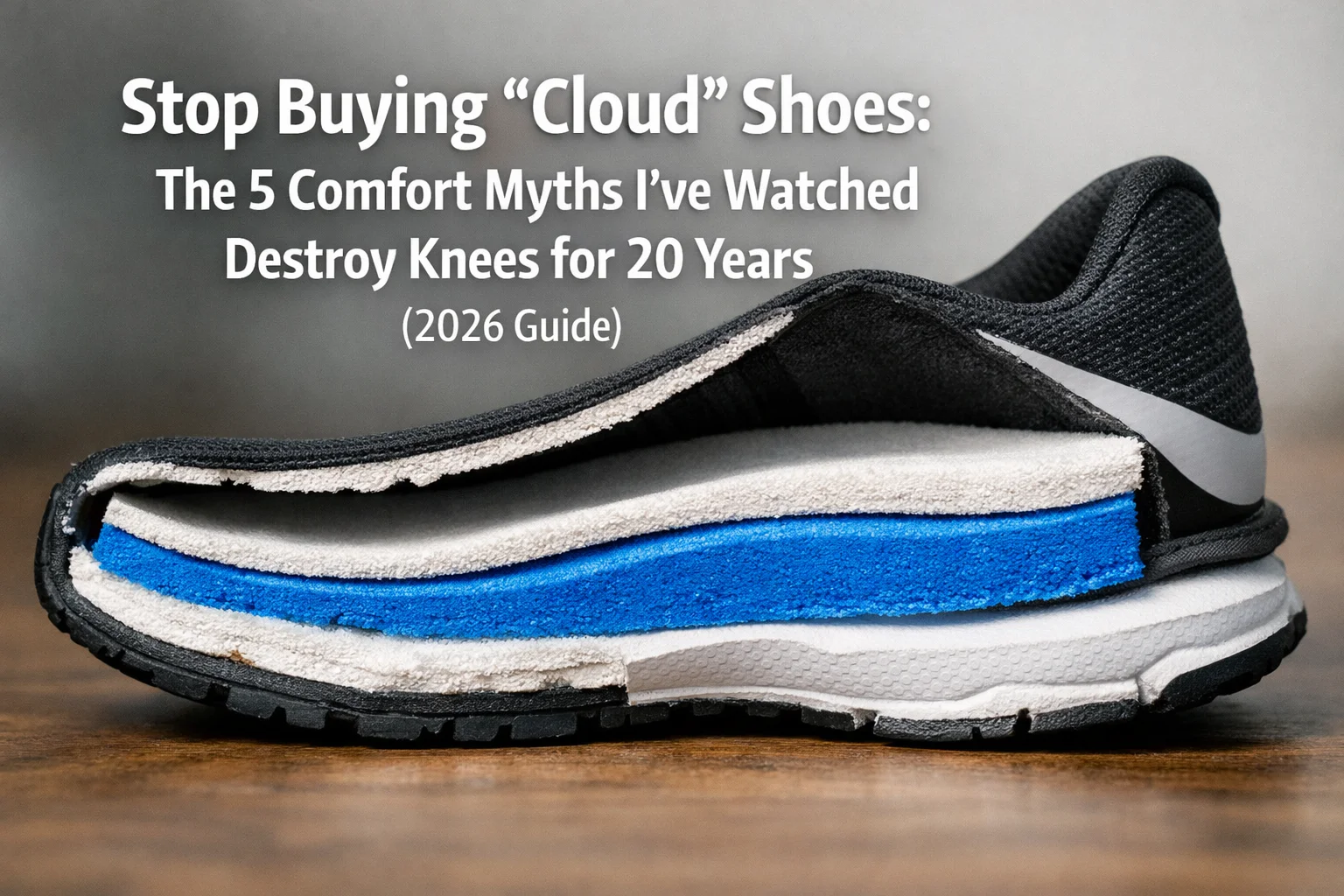

Shoe Anatomy: Complete Parts of a Shoe Explained
Have a Question About Shoe Anatomy?
Want to understand a shoe part better? Choose an AI assistant and ask about the upper, vamp, toe box, heel counter, midsole, outsole or any other shoe component.
Buying shoes online gets much easier when you know what you are looking at.
Terms such as upper, vamp, toe box, heel counter, insole, midsole, outsole, eyestay, collar, and quarter describe different parts of a shoe, and each one has a specific role. Understanding these parts can help you compare shoes more accurately instead of relying only on appearance, price, or marketing terms.
This guide breaks down the anatomy of a shoe from the top to the bottom, explains the names of the main parts, and shows what each component does.
Quick Answer: What Are the Main Parts of a Shoe?
Most shoes can be understood through three main areas:
| Shoe section | What it includes | Main purpose |
| Upper | Vamp, quarter, tongue, collar, eyestay, heel counter | Covers and holds the foot |
| Insole / Sockliner | Removable or built-in footbed | Provides the surface your foot rests on |
| Midsole | Foam or cushioning layer | Cushioning and underfoot support |
| Outsole | Rubber, leather, or other bottom material | Ground contact, traction, and protection |
The exact construction varies by shoe type. A running shoe, leather dress shoe, hiking boot, work shoe, and sandal will not use exactly the same parts.
Nike’s shoe anatomy guide, for example, identifies numerous components across the upper and sole construction, including the tongue, collar, heel counter, eyestay, eyelets, quarter, vamp, strobel, midsole, and outsole.
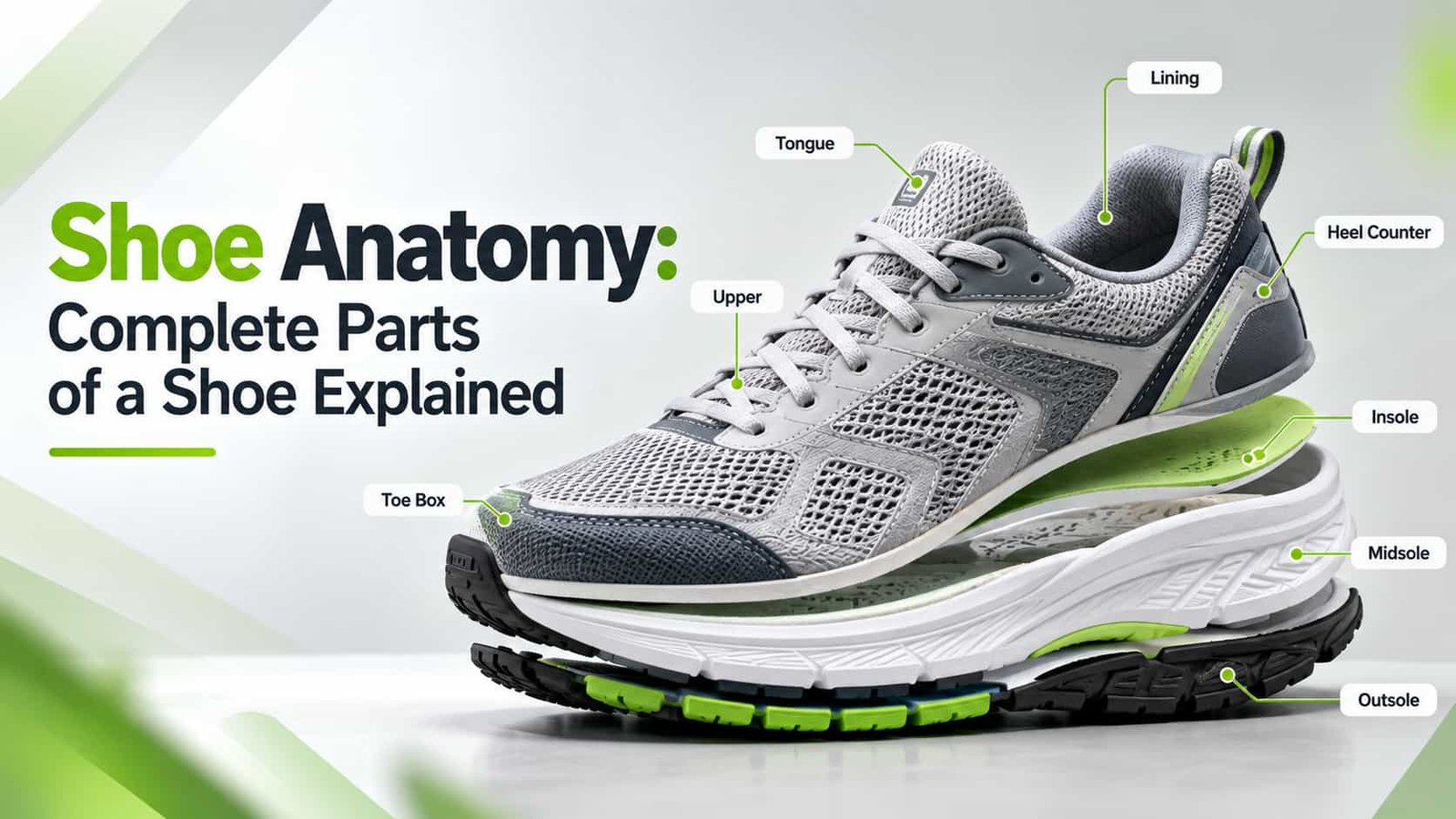
Shoe Anatomy Diagram
Use the diagram below as a quick reference before going through each component.
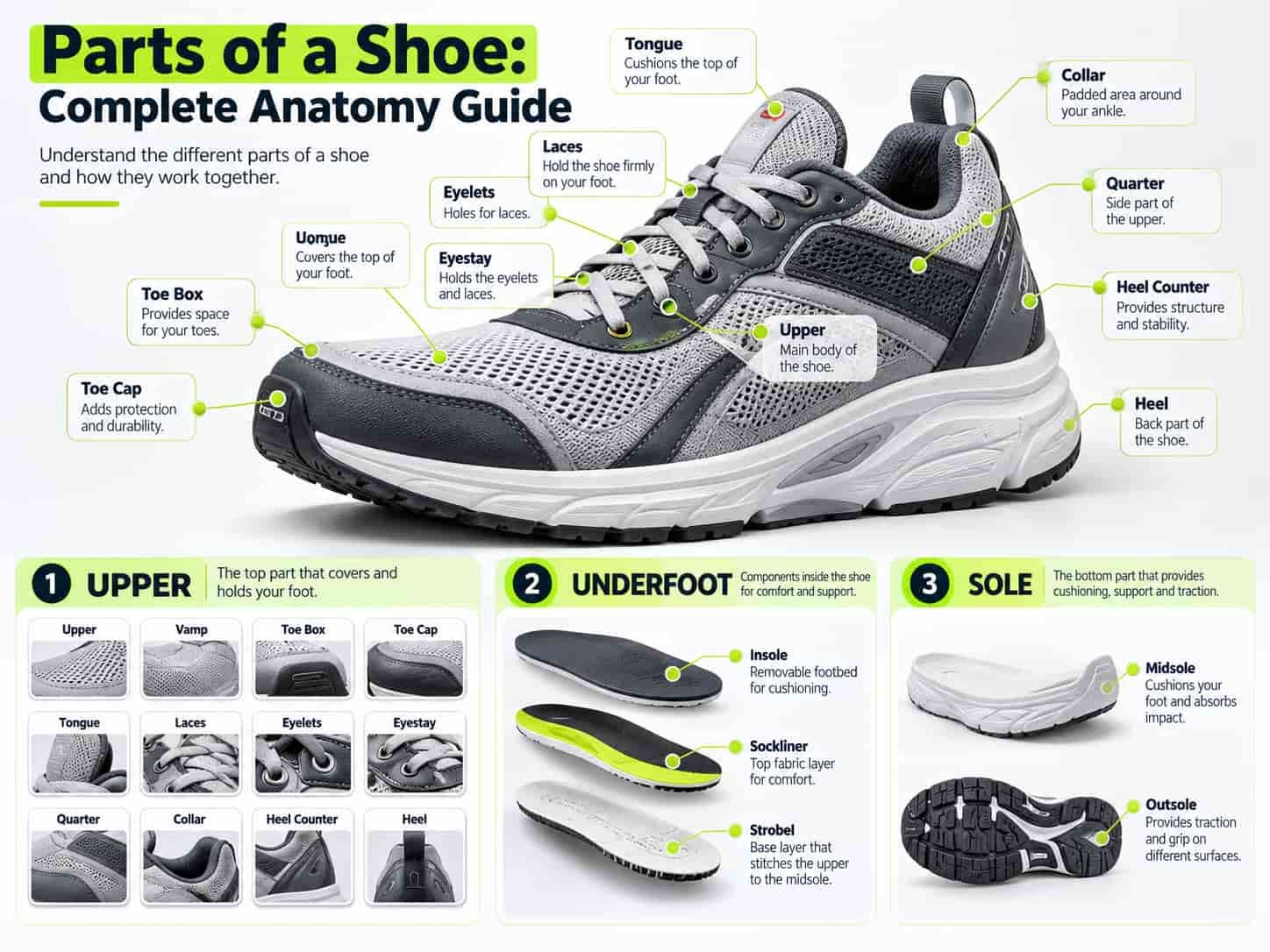
Image: Shoe anatomy diagram showing the upper, vamp, tongue, collar, heel counter, midsole, outsole, toe box, laces, and other major components.
The Upper: The Main Body of the Shoe
The upper is the part of the shoe that covers the top and sides of your foot.
It can be made from materials such as leather, mesh, textile, synthetic materials, knit fabrics, or combinations of several materials.
The upper affects:
- Fit
- Breathability
- Flexibility
- Foot containment
- Durability
- Appearance
For example, a breathable mesh upper can work well for athletic shoes, while leather is common in dress shoes and boots.
The upper is made up of several smaller components.
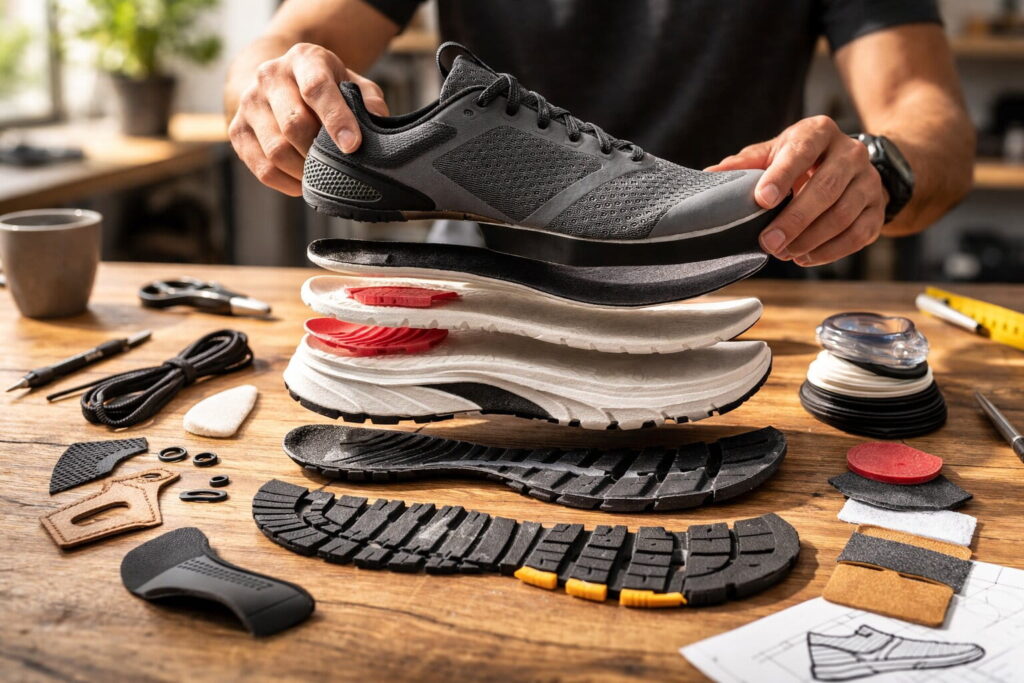
The Anatomy of a Shoe
Explore the main parts of a shoe automatically.
1. Vamp
The vamp is the section covering the front part of the foot, generally extending from the toe area toward the middle of the shoe.
In many shoes, the vamp is one of the areas that bends repeatedly as you walk.
A poorly fitting vamp can create pressure across the forefoot, especially if the shoe is too short or narrow.
2. Toe Box
The toe box is the area inside the front of the shoe where your toes sit.
It is especially important for comfort because your toes need enough room to move naturally.
When comparing shoes, check:
- Length
- Width
- Height
- Shape
A shoe can be technically the correct length but still feel cramped if the toe box is too narrow or low.
3. Toe Cap
The toe cap is an additional piece covering or reinforcing the toe area.
You will see toe caps frequently on:
- Work boots
- Hiking shoes
- Casual sneakers
- Leather shoes
- Safety footwear
A toe cap may be primarily decorative, protective, or both, depending on the shoe.
4. Quarter
The quarter is the part of the upper covering the sides and rear portion of the foot.
In many traditional shoes, the quarter wraps around toward the heel and connects with other upper pieces.
The quarter helps form the overall structure of the shoe and contributes to how the shoe holds your foot.
5. Tongue
The tongue is the strip of material underneath the laces.
Its main jobs are to:
- Protect the top of your foot from the laces
- Help distribute lace pressure
- Contribute to the fit around the instep
Some athletic shoes use padded tongues, while lightweight running shoes may use thinner materials.
6. Collar
The collar is the opening around the ankle where you put your foot into the shoe.
It may contain foam or padding to improve comfort around the ankle.
A well-fitting collar should hold the heel without creating unnecessary pressure.
7. Heel Counter
The heel counter is a supportive structure around the rear of the shoe.
It helps maintain the shape of the heel area and can contribute to how securely the shoe holds your heel.
Nike describes the heel counter as a stiff component at the rear of the shoe that helps maintain its shape.
Fit matters here. A counter that is too rigid, too tall, or poorly shaped for your heel can cause rubbing even when the rest of the shoe feels comfortable.
8. Heel Collar / Heel Lining
The heel lining is the material on the inside of the rear portion of the shoe.
The collar and lining are important because this is one of the areas where repeated friction can lead to irritation or blisters.
If you frequently experience heel rubbing, compare the collar height, lining material, heel shape, and overall fit rather than simply changing shoe size.
9. Eyestay
The eyestay is the section of material that holds or surrounds the eyelets used for the laces.
It helps distribute tension when you tighten the shoe.
A reinforced eyestay can also add structure to the upper.
10. Eyelets
Eyelets are the holes through which the laces pass.
They may be simple punched holes or reinforced with metal, plastic, or additional material.
The number and placement of eyelets can influence how the shoe can be laced and adjusted.
If you want to understand another small but important shoe component, see our guide to what an aglet is and how it works.
11. Laces
Laces allow you to adjust how tightly the shoe fits around the foot.
Different lacing patterns can change pressure across the instep and help improve heel hold or accommodate different foot shapes.
The lace itself is not responsible for providing cushioning. Its main role is fit adjustment and foot retention.
12. Saddle
The saddle is an area of the upper around the midfoot, generally near the lace opening.
It helps create a secure connection between the upper and your foot.
In running shoes, this area is particularly important because the foot needs to stay positioned inside the shoe during movement. Nike includes the saddle among the features to consider when selecting running shoes.
What Is the Bottom of a Shoe Called?
The bottom construction is usually divided into the insole or sockliner, midsole, and outsole.
These parts do different jobs.
13. Insole
The insole is the layer your foot rests on inside the shoe.
It may be:
- Removable
- Fixed
- Flat
- Contoured
- Foam-based
- Orthotic-compatible
The insole can affect step-in comfort and fit.
If you use an aftermarket insert, check whether the original insole is removable and whether the shoe has enough internal volume for the replacement.
14. Sockliner
The sockliner is the internal layer positioned directly under the foot.
In many athletic shoes, the terms insole and sockliner are used interchangeably, although manufacturers may distinguish them based on construction.
Nike describes the sockliner as an often-removable foam insert that cushions and supports the bottom of the foot.
15. Strobel
The strobel is a fabric layer used in the construction of many athletic shoes.
It sits above the midsole and below the footbed area, helping connect the upper to the sole structure.
It is not a visible part on most finished shoes, but it is important to the shoe’s construction.
Nike identifies the strobel as the fabric piece positioned at the bottom of the shoe beneath the foot.
16. Midsole
The midsole sits between the upper/insole area and the outsole.
It is one of the most important parts of a modern athletic shoe because it can provide:
- Cushioning
- Shock absorption
- Underfoot comfort
- Flexibility
- Stability characteristics
Common midsole materials include EVA-based foams, polyurethane, TPU-based materials, PEBA-based foams, and proprietary blends.
If you want a closer look at one of the most common shoe foams, read our guide to what EVA foam is.
The important point is that the word “foam” alone does not tell you exactly how a shoe will feel. Foam density, geometry, thickness, construction, and the rest of the shoe all influence the result.
17. Outsole
The outsole is the bottom portion of the shoe that makes contact with the ground.
Its main functions are:
- Traction
- Abrasion resistance
- Ground protection
- Durability
Outsoles can use rubber, leather, TPU, TPR, or other materials depending on the shoe.
Nike describes the outsole as the bottom layer that contacts outside surfaces and commonly uses rubber for traction.
Midsole vs Outsole: What Is the Difference?
This is one of the most common shoe anatomy questions.
| Feature | Midsole | Outsole |
| Location | Between upper/footbed and outsole | Bottom of the shoe |
| Main role | Cushioning and underfoot characteristics | Traction and ground contact |
| Common materials | EVA, PU, TPU, PEBA and blends | Rubber, TPU, TPR, leather |
| Direct ground contact | No | Yes |
| Visible tread | Usually no | Usually yes |
Simple way to remember it:
The midsole sits underneath your foot, while the outsole sits underneath the midsole and touches the ground.
Nike and Oliver Sweeney both describe the midsole as a layer between the foot-facing construction and outsole, while the outsole forms the shoe’s bottom contact surface.
What Is the Heel of a Shoe Made Of?
The heel area can contain several different components.
Depending on the shoe, you may find:
- Heel counter
- Heel collar
- Heel lining
- Heel tab
- Heel cup
- Heel outsole
- Separate heel block
In athletic shoes, the heel is often integrated into the midsole and outsole. In traditional leather footwear, the heel may be a separate stacked component.
The construction differs significantly between a running shoe and a dress shoe.
What Is the Tip of a Shoe Called?
If you are searching for “what is the tip of a shoe called,” there are several terms that may apply.
- Toe: The front end of the shoe
- Toe box: The internal area where the toes sit
- Toe cap: A separate external piece covering or reinforcing the toe
- Vamp: The upper section covering the forefoot
- Tip: A general term that may be used in shoe construction descriptions
The exact term depends on the shoe’s construction.
For example, a dress shoe may have a clearly defined toe cap, while a running shoe may have a seamless mesh toe area.
What Does “Face of a Shoe” Mean?
“Face of a shoe” is not a standard universal technical term in footwear construction.
If you see this phrase in searches, the person may be referring to the front or visible portion of the shoe, particularly the toe area.
For more precise shoe terminology, use:
- Toe for the front end
- Toe box for the internal toe area
- Toe cap for a separate reinforcing piece
- Vamp for the upper covering the forefoot
This distinction is useful because “face of a shoe” can be ambiguous, while these terms describe specific components.
Shoe Parts Names: Quick Reference Table
| Part | Where it is | What it does |
| Upper | Top and sides | Covers and holds the foot |
| Vamp | Front upper | Covers the forefoot |
| Toe box | Inside front | Houses the toes |
| Toe cap | Front exterior | Adds reinforcement or style |
| Quarter | Side/rear upper | Forms rear structure |
| Tongue | Under laces | Protects instep and helps fit |
| Collar | Shoe opening | Surrounds the ankle |
| Heel counter | Rear | Helps maintain heel structure |
| Eyestay | Lace area | Supports eyelets |
| Eyelets | Lace holes | Hold laces |
| Laces | Upper | Adjust fit |
| Saddle | Midfoot | Helps secure the foot |
| Insole | Inside shoe | Foot-facing layer |
| Sockliner | Under foot | Adds cushioning and comfort |
| Strobel | Under foot | Connects upper and sole construction |
| Midsole | Under foot | Cushioning and support characteristics |
| Outsole | Bottom | Traction and ground contact |
| Heel | Rear bottom | Raises/supports rear of foot |
| Foxing | Around heel on some shoes | Reinforces or finishes the rear upper |
Shoe Anatomy by Shoe Type
Not every shoe uses the same construction.
Running Shoes
Running shoes typically emphasize:
- Lightweight uppers
- Breathable materials
- Cushioned midsoles
- Structured heel areas
- Durable rubber or rubber-like outsoles
The relationship between the upper, midsole, outsole, toe box, heel counter, and fit becomes especially important because the shoe needs to accommodate repeated movement.
Nike recommends matching cushioning and support to factors such as running surface, mileage, and stride rather than treating every running shoe as interchangeable.
Walking Shoes
Walking shoes often prioritize:
- Comfortable upper construction
- Flexible forefoot
- Stable platform
- Cushioning
- Durable outsole
The right balance depends on the person’s walking surface, distance, foot shape, and personal preference.
Work Shoes
Work footwear often places more emphasis on:
- Outsole traction
- Upper durability
- Easy cleaning
- Secure fit
- Toe protection where required
For wet or slippery workplaces, outsole tread and compound become particularly important.
Dress Shoes
Traditional dress shoes can have:
- Leather uppers
- Leather or synthetic linings
- Separate heel
- Leather or rubber outsole
- Structured toe
- Welt or other sole attachment systems
Oliver Sweeney’s shoe anatomy guide provides a useful traditional footwear reference for components such as the collar, counter, quarter, heel, midsole, and outsole.
Shoe Materials: What Should You Look For?
The material matters, but the construction matters too.
EVA
EVA is widely used in footwear midsoles because it can provide lightweight cushioning.
However, EVA is not one single type of foam. Its feel and performance can vary depending on formulation, density, geometry, and construction.
Learn more in our guide to EVA foam in footwear.
Polyurethane
PU is another material used in footwear cushioning and construction.
It is generally denser than many lightweight EVA foams and can be used where durability and structure are important.
Rubber
Rubber is commonly used for outsoles because it can provide traction and resistance to abrasion.
The pattern and coverage of the rubber also matter. A shoe with good rubber compound but poor tread design may still perform differently from what you expect on a particular surface.
Full-Grain Leather
Full-grain leather retains the outer surface of the hide and is commonly used in quality leather footwear.
If you are comparing leather types, see our guide to full-grain vs top-grain leather.
How Shoe Anatomy Affects Fit
Knowing the names of shoe parts is useful, but the real benefit is knowing what to check when you try on a shoe.
If Your Toes Feel Cramped
Check the:
- Toe box
- Vamp
- Shoe width
- Overall length
A larger size is not always the best solution if the problem is width rather than length.
If Your Heel Slips
Check:
- Heel counter
- Collar
- Lacing system
- Overall shoe length
- Heel shape
A small amount of heel movement can occur in some shoes, but excessive movement can indicate a poor fit.
If the Top of Your Foot Feels Pressured
Look at:
- Tongue
- Eyestay
- Lacing pattern
- Saddle
- Upper volume
Changing the lacing pattern can sometimes reduce pressure without changing the shoe size.
If the Shoe Feels Too Hard
Look at the:
- Midsole
- Sockliner
- Outsole construction
- Overall shoe geometry
Do not judge cushioning solely by pressing the shoe with your hand. A shoe’s underfoot feel comes from the complete construction.
A Simple Shoe Anatomy Check Before Buying Online
When product photos are all you have, check these five areas.
1. Look at the upper
Is it mesh, leather, knit, synthetic, or a combination?
2. Check the toe shape
Look for enough room around the toes and compare the manufacturer’s width options.
3. Look at the midsole
Check its thickness, geometry, and stated cushioning technology.
4. Examine the outsole
Look for the amount of rubber, tread pattern, and the intended surface.
5. Study the heel
Look for the heel counter, collar shape, heel tab, and how the rear of the shoe is constructed.
For a deeper look at how we assess footwear, see our shoe testing methodology.
A Practical Way to Read a Shoe Product Page
When shopping online, do not just read the first few marketing lines.
Look for these details:
| What to check | Why it matters |
| Upper material | Gives you clues about breathability, flexibility, and durability |
| Midsole material | Helps identify the cushioning system |
| Outsole material | Gives clues about traction and wear |
| Width options | Useful for different foot shapes |
| Removable insole | Important if you use another footbed |
| Heel construction | Can affect heel hold |
| Toe box shape | Important for forefoot comfort |
| Intended use | Helps match the shoe to your activity |
| Weight | Useful when comparing athletic footwear |
| Return policy | Important when buying online |
This is especially useful when comparing shoes from different brands because product names and marketing terms are not standardized.
Common Shoe Anatomy Mistakes
Confusing the Insole With the Midsole
The insole is where your foot rests. The midsole is underneath it and forms part of the shoe’s cushioning structure.
Assuming a Thick Midsole Automatically Means Better Comfort
Thickness alone does not determine comfort. Foam characteristics, shoe geometry, fit, flexibility, and outsole construction all matter.
Ignoring the Outsole
Two shoes can have similar-looking midsoles but behave differently because their outsole coverage and tread patterns are different.
Buying Based Only on Upper Material
A breathable mesh upper cannot compensate for a poor fit or an unsuitable sole construction.
Assuming Every Shoe Has the Same Parts
A running shoe, dress shoe, hiking boot, clog, and sandal can have very different constructions.
What Shoe Parts Matter Most for Comfort?
There is no single component that determines comfort for everyone.
For most shoppers, start with:
- Toe box and overall fit
- Upper material
- Heel and collar fit
- Midsole cushioning
- Outsole traction
- Insole or sockliner
- Shoe flexibility
- Weight and intended use
The best combination depends on the activity and your individual foot shape.
Questions People Ask About Shoe Anatomy
What are the three main parts of a shoe?
The three broad sections are the upper, midsole, and outsole. The insole or sockliner sits inside the shoe above the sole construction.
What is the upper part of a shoe called?
The entire top portion is called the upper. It includes components such as the vamp, quarter, tongue, collar, eyestay, and heel counter.
What is the difference between an upper and a sole?
The upper covers and holds the foot, while the sole forms the bottom structure underneath the foot. The sole may include the insole, midsole, and outsole depending on how the shoe is described.
What is the difference between the midsole and outsole?
The midsole is the layer associated primarily with cushioning and underfoot characteristics. The outsole is the bottom layer that contacts the ground and provides traction and protection.
What is the front part of a shoe called?
The front can include several parts. The toe is the front end, the toe box is the internal area where the toes sit, and the vamp covers much of the forefoot.
What is the face of a shoe?
“Face of a shoe” is not a universal technical term. It usually refers informally to the visible front or toe area. Terms such as toe, toe box, toe cap, and vamp are more precise.
What is the tip of a shoe called?
It may be called the toe or toe area. If there is a separate reinforcing piece, that component may be called the toe cap.
What is the heel counter?
The heel counter is a structural component around the rear of the shoe that helps maintain the shape of the heel area and contributes to heel containment.
What is the part under the foot called?
Depending on the location, it can be the insole, sockliner, midsole, or outsole. These are different layers rather than interchangeable names.
What are the parts of a sneaker?
A sneaker can include the upper, vamp, toe box, tongue, collar, quarter, eyestay, eyelets, laces, heel counter, insole, sockliner, strobel, midsole, outsole, and other construction-specific components.
Final Takeaway
You do not need to memorize every shoe component to become a better shoe shopper.
Start with the basics: upper, toe box, vamp, tongue, collar, heel counter, insole, midsole, and outsole. Then look at the materials and construction based on how you plan to use the shoe.
Once you understand these terms, product descriptions become much easier to compare. Instead of simply asking whether a shoe “looks comfortable,” you can look at the actual construction and decide whether it fits your needs.
At UrbanStyleFootwear, we use this same approach when evaluating footwear. Our product evaluations combine manufacturer specifications, verified retailer and Amazon listing data, customer feedback, review patterns, and footwear-specific research. We assess shoes across factors such as comfort, fit, cushioning, support, materials, durability, traction, design, and overall value, using multiple sources to provide balanced, practical, and buyer-focused recommendations.