
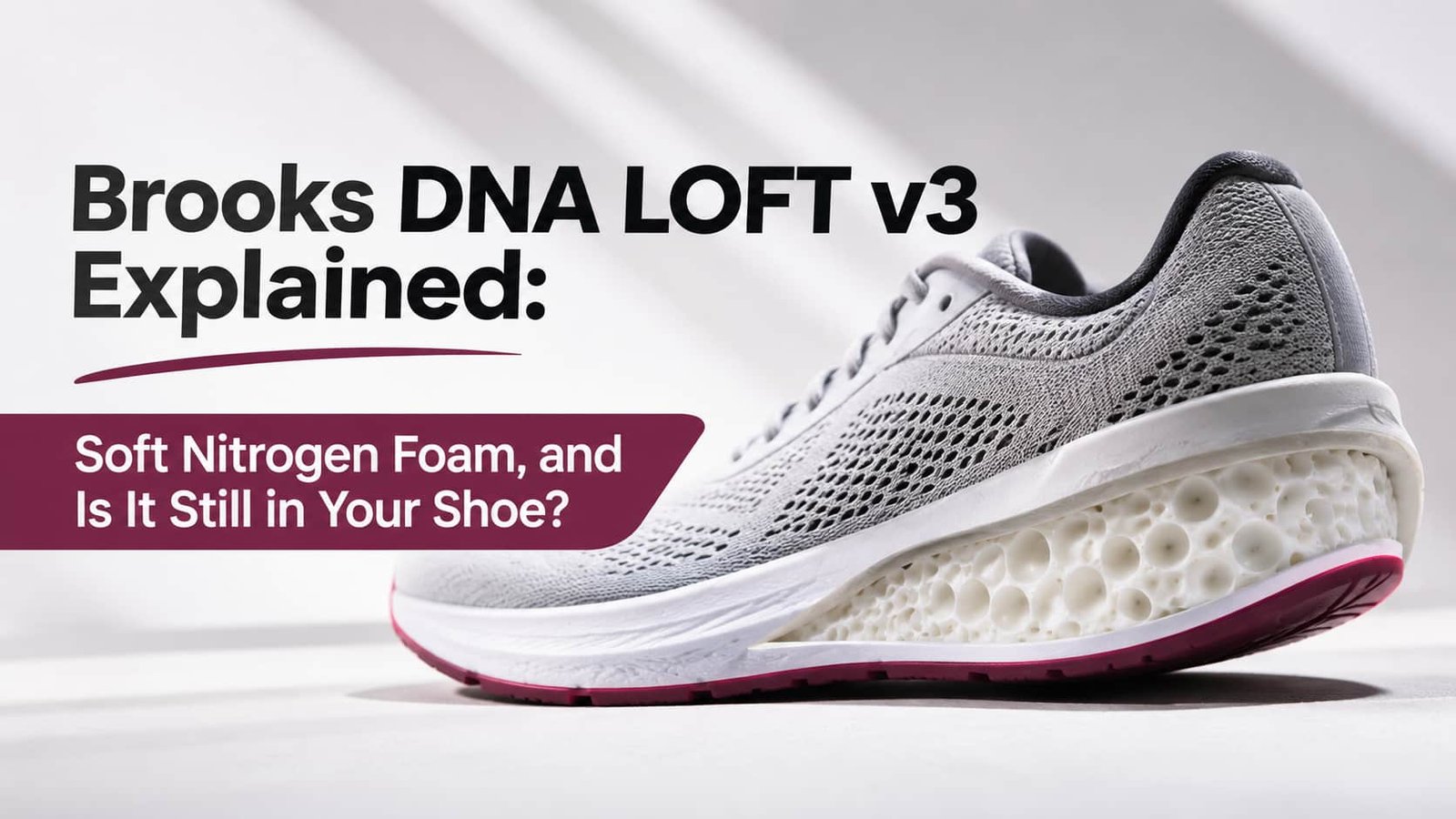
Brooks DNA LOFT v3 Explained: Soft Nitrogen Foam, and Is It Still in Your Shoe?
Summarise this guide with AI
Open your preferred assistant and submit the prefilled request. The assistant only reads this page after you submit it.
- What DNA LOFT v3 is, and how nitrogen and large-cell foaming change it
- What testers found about feel, weight and energy return
- Why some Glycerin models have moved from LOFT v3 to DNA TUNED
- Which runners and Brooks shoes suit a soft LOFT-based ride
DNA LOFT v3 is Brooks’s softest midsole foam: an EVA-based blend with rubber and air, infused with nitrogen through a supercritical process. Brooks says it is lighter, softer and more responsive than the original LOFT. Independent testers have found it plush and comfortable, with energy return that is good rather than exceptional. Because Brooks has since moved some models to other foams, check the midsole before you buy.
Key Takeaways
- LOFT v3 is a nitrogen-infused EVA foam. Brooks describes it as the original LOFT blend, with supercritical nitrogen and large-cell foaming added.
- It is built for softness and comfort. Brooks and reviewers describe a plush landing that suits easy, recovery and long runs.
- Energy return is respectable, not a racing benchmark. Lab tests and reviewers describe LOFT v3 as lively enough for daily miles but not in the same class as PEBA or A-TPU super foams.
- Brooks has changed its lineup. Several models that once used LOFT v3, including the Glycerin, have moved to DNA TUNED, so the model name alone is not enough.
- Durability data is thin. Brooks says LOFT v3 keeps its durability, but independent long-term wear results are limited.
What Is DNA LOFT v3?
If you have browsed Brooks’s neutral and cushioned shoes recently, you will have seen “DNA LOFT” on product pages and “nitrogen-infused” in the descriptions. DNA LOFT v3 is the newest version of the brand’s softest cushioning, designed to deliver a plush, lightweight ride.
Brooks describes DNA LOFT as its soft midsole cushioning, made from a combination of EVA foam, rubber and air. Air is part of the recipe, and Brooks says the rubber adds durability. The v3 generation adds nitrogen to that base, which changes how the foam expands and rebounds.
The name is worth understanding. The “DNA” prefix is Brooks’s family label for its midsole technologies, which include LOFT, FLASH, AMP and BioMoGo DNA. “LOFT” describes the soft end of that family. “v3” marks the third generation of the nitrogen-infused LOFT foam.
For a broader look at how EVA works in running shoes, our EVA foam explainer covers the material behind most of Brooks’s midsoles.
DNA LOFT: The Foundation
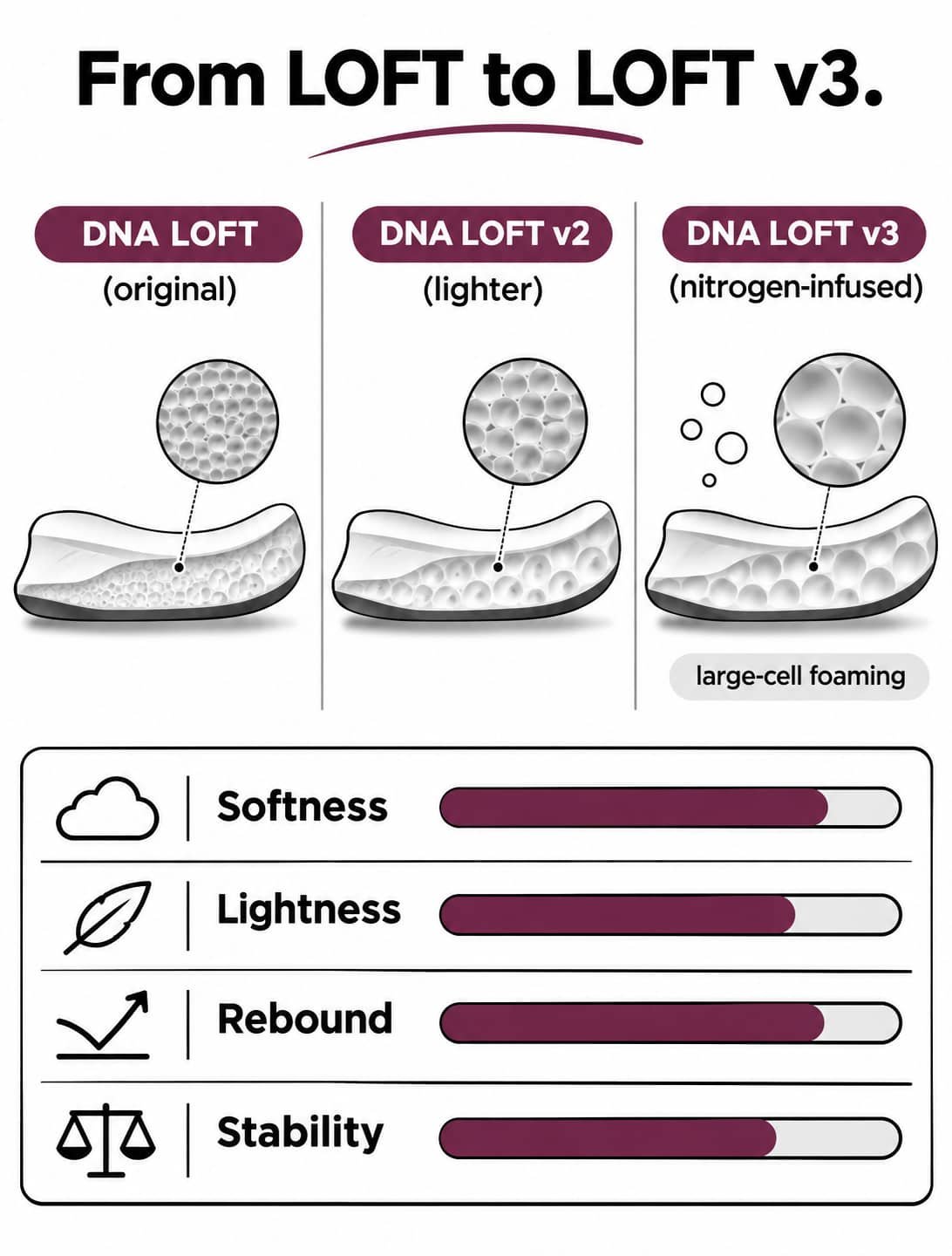
Before v3, there was the original DNA LOFT, and understanding it explains why the newer foam matters. Brooks says the original blended EVA foam with rubber and air to create a soft feel that remained lightweight and durable.
Brooks has said it improved the original in two ways. It changed the foam formula and the way the foam was produced, which led to a lighter second version, DNA LOFT v2. That version was still EVA-based, but it was lighter and more refined than the first.
The v2 foam was used in shoes such as the Cascadia trail model, according to Brooks’s own description of its technologies. Its softness and lightness made it a useful stepping stone to the nitrogen-infused v3.
Reviewers who tested earlier Brooks soft shoes often described the original LOFT as plush but not especially lively. That observation shaped the reason for v3: Brooks wanted to keep the softness while improving bounce and reducing weight.
How Nitrogen Makes LOFT v3 Different
The nitrogen infusion is the defining change in v3. Brooks describes a supercritical foaming process in which liquid nitrogen is heated until it turns into gas. The gas is introduced into the foam during manufacture, expanding the material.
“Supercritical” describes a state in which a substance has properties of both a gas and a liquid. In foam production, a supercritical fluid can be dissolved into the material and then released as the foam forms, creating many small gas pockets. That process is common in modern running foams, and Brooks is one of several brands using it.
Brooks says the result is a lighter, softer foam that also returns more energy than the original. The idea is that gas pockets make the foam less dense, so the same stack height weighs less and compresses more easily.
Gas-infused foams also tend to behave differently across temperatures than standard EVA. Reviewers and manufacturers often claim better consistency in cold conditions, though independent testing for LOFT v3 specifically is limited. We discuss that in the energy return section.
For readers who want to understand foam chemistry more deeply, our TPU in shoes guide compares a different family of midsole materials.
Large-Cell Foaming: The v3 Refinement
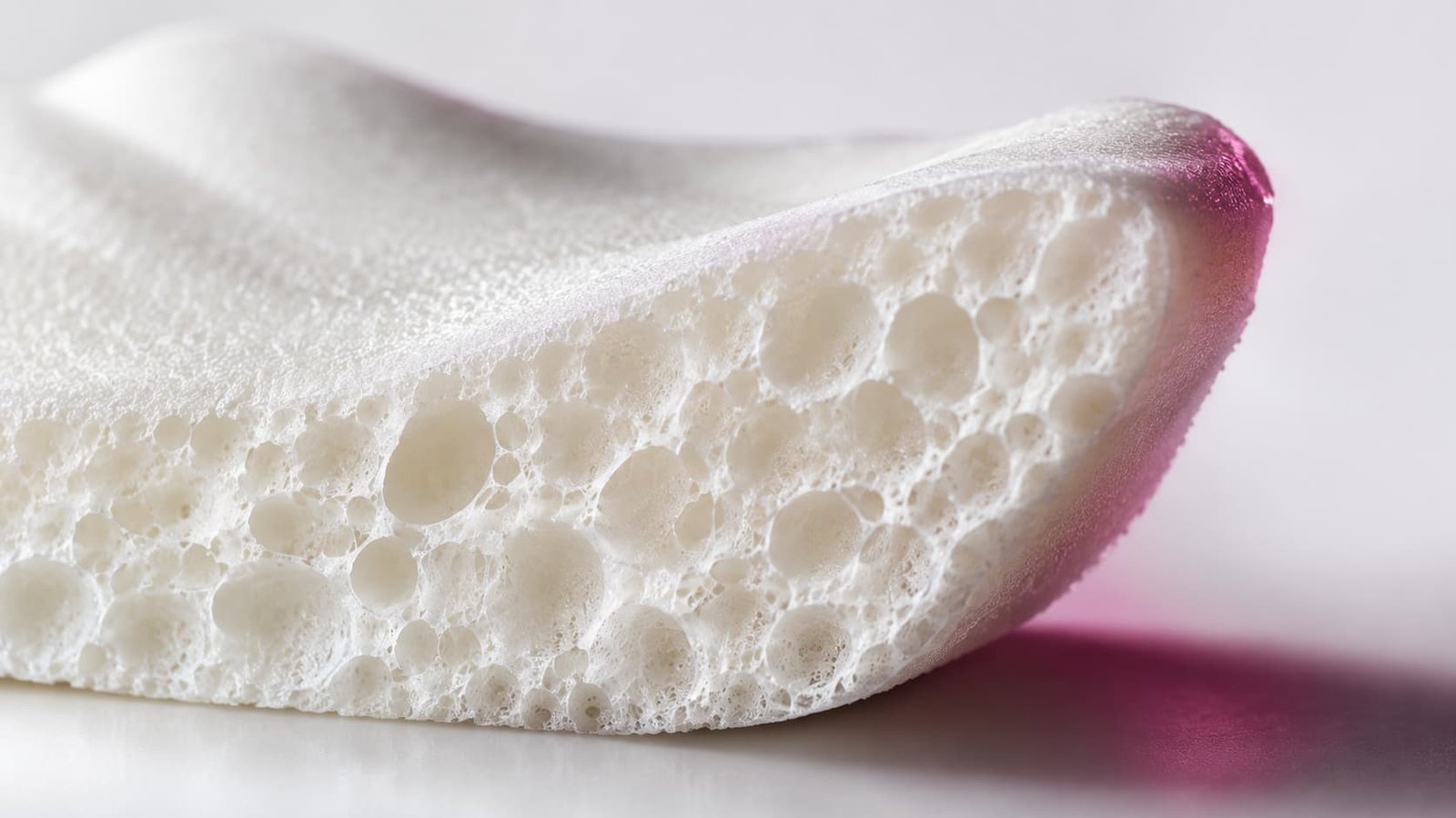
Brooks says it went one step further for v3 by using large-cell foaming. In its description, this process amplifies the cushioning properties, increasing softness, reducing weight and improving energy return without sacrificing durability.
Large-cell foaming means the gas pockets inside the foam are bigger and more open than in a standard fine-cell structure. Larger cells can make a foam feel softer and more compressible, because the material gives way more easily under load.
The trade-off is that large cells can make a foam feel less stable or less firm, and they can affect how the material wears. Brooks states that the rubber in the outsole and the added air help maintain durability, but independent long-term wear data for the v3 foam is limited.
The practical effect is best judged on foot. The v3 foam is noticeably softer than standard EVA, and that softness is the main reason many runners choose LOFT-based shoes for easy days.
Feel and Cushioning
The first thing most runners notice about LOFT v3 is the soft landing. Reviewers describe a plush, enveloping feel that absorbs small bumps in the road, which fits Brooks’s description of cushioning that protects against pavement cracks and small obstacles.
Testers have described the experience in different ways, and it is worth knowing both sides. WearTesters, reviewing the Glycerin 20, said the v3 foam was soft throughout an 18-mile long run without bottoming out, and that it seemed to improve once broken in. The same reviewer said it was not as bouncy as the Aurora-BL, a more energetic shoe that also used v3, though it was clearly better than the original LOFT.
Other testers have found the foam less soft than its name suggests. Meta-Endurance’s review of the Glycerin 20 recorded a durometer reading of 31.8 for the v3 midsole and said that the foam did not feel as soft as advertised, while still noting some bounce. That is an example of how feel varies with the reviewer, the shoe and the test method.
RunnersLab, reviewing the Glycerin 22, described the LOFT v3 foam in earlier Brooks models, including the Ghost 16 and Adrenaline 24, as having many qualities but a rather rigid feel. That is a useful contrast, because the same foam name can feel different in different shoes.
The honest summary is that LOFT v3 is one of Brooks’s softest foams, but its feel depends on the shoe’s geometry, the foam’s thickness and the way it is tuned for each model.
Weight and Responsiveness
Weight is one of LOFT v3’s main selling points. Brooks says the nitrogen-infused foam is lighter than the original LOFT, and reviewers have generally found that the Glycerin with v3 feels light for a plush trainer.
Responsiveness is more mixed. Brooks describes v3 as more responsive than the original LOFT, and reviewers such as Meta-Endurance say it feels bouncy enough to notice at toe-off. Other reviewers find it more comfortable than energetic, which suits runners who want to forget about their shoes on easy miles.
The difference matters at pace. A soft, comfortable foam can help you settle into a relaxed rhythm, but it may feel less lively during faster efforts. If your running is mostly easy, that trade-off is usually a good one. If you race or run tempo sessions, you may want a firmer, more responsive foam.
Weight varies by model and size, so compare the figure on the product page for the shoe you want. Our shoe care guide covers how to look after lightweight trainers, which are often more vulnerable to moisture and heat.
Energy Return: What Testers Found
Energy return describes how much of the energy you put into compressing a midsole comes back at push-off. It is one of the most common measures of how responsive a foam feels, but it is not the only factor in comfort or performance.
| Model | Midsole foam | Energy return (heel / forefoot) |
|---|---|---|
| Glycerin 21 | DNA LOFT v3 | Not a standout feature (reported) |
| Glycerin 22 | DNA TUNED | 54.8% (reported as lower than predecessor) |
| Glycerin 23 | DNA TUNED | 54.1% / 57.7% |
RunRepeat’s lab testing of the Glycerin 21 described the shoe as having energy return that was not its standout feature, and noted that the previous year Brooks had upgraded the Glycerin to the supercritical, nitrogen-infused DNA LOFT v3 foam. RunRepeat’s review described the foam as a significant shift from an average, low-energy-return EVA. In that same review, the shoe’s shock absorption was close to average, at 133 SA against an average of 131 SA.
The important point is the framing. LOFT v3 is better than standard EVA at returning energy, but it sits well below the top performers. Lab results for the Glycerin 22 and 23 later showed that Brooks had moved those shoes to DNA TUNED, which RunRepeat measured at 54.8% and 54.1% in the heel for the 22 and 23 respectively, and described as below average. That comparison shows why the model matters more than the foam name.
Fleet Feet’s review of the Glycerin 21 also described its energy return as modest, noting that the shoe offers an ultra-plush ride with just a touch of energy return. That matches the overall picture: LOFT v3 is designed for comfort first.
Testing methods differ between publications, so compare figures only within the same source. Our running shoe foam overview explains why softness and energy return do not always move together.

Stability and Support
Stability is less about the foam itself than about the shoe’s design. The Glycerin GTS, for example, combines 100% LOFT v3 cushioning with Brooks’s GuideRails support system and a plush interior liner. Brooks describes it as a support shoe with softness on all sides.
For standard neutral shoes, the foam’s softness can make a shoe feel less stable at speed or during lateral movement. Reviewers who test neutral shoes often note that very soft midsoles can feel less controlled. That is not a flaw in every case, but it is worth knowing before you choose.
If you overpronate or have specific support needs, the shoe’s structure matters more than the foam. Look for models with stability features such as GuideRails, and try the shoe on before buying. A physiotherapist or podiatrist can advise on the right type of support for your gait.
Our anatomy of a shoe guide explains how the upper, heel counter and midsole work together to shape stability.
Durability: What We Know and What We Do Not
Durability is a fair question, and the honest answer is that independent long-term data for DNA LOFT v3 is limited. Brooks says the foam combines lightness, softness and durability, with the added rubber in the outsole helping protect it.
The evidence available points in a mixed but generally positive direction. Meta-Endurance’s review of the Glycerin 20 noted good rubber coverage, which it said gave confidence about the shoe’s durability, and reported no visible wear at the time of writing. WearTesters said the Glycerin 20’s durable traction held up well in its testing. Neither review covers hundreds of miles, so these observations are early indications rather than long-term results.
Several factors influence how long any foam lasts. Body weight, pace, surface and how often you rotate shoes all matter. Brooks’s own description also emphasises that the rubber outsole protects the foam, which means shoes with more exposed foam are likely to wear sooner.
Practical steps help. Rotate pairs so each shoe has time to recover, avoid leaving shoes in hot cars, and let them dry naturally after wet runs. Our guide to how long running shoes last explains the signs of worn cushioning to watch for.
We have not found an independent study that isolates LOFT v3’s wear life, so readers should be cautious about claims that a particular mileage is guaranteed.
Which Brooks Shoes Use DNA LOFT v3?
Brooks’s product lineup changes often, so the examples below reflect Brooks’s own technology page and independent reviews at the time of writing. Check the current product page before buying.
Glycerin. The Glycerin is Brooks’s flagship plush trainer. Reviews of the Glycerin 20 and 21 describe the v3 foam as central to its ride. The Glycerin 22 and 23 moved to DNA TUNED, according to RunRepeat, which means the Glycerin name alone does not indicate LOFT v3.
Glycerin GTS. Brooks describes the Glycerin GTS as using 100% DNA LOFT v3 cushioning, with a plush interior liner, a soft heel collar and GuideRails support. It is the stability-oriented sibling of the standard Glycerin.
Glycerin Stealthfit. RunRepeat’s review of the Glycerin Stealthfit 20 reports the v3 midsole and describes it as bouncy enough to feel responsive at toe-off, though the shoe’s lab results are a separate question.
Ghost. Brooks’s 2023 article described the Ghost as featuring 100% DNA LOFT, and RunnersLab’s comparison refers to the Ghost 16 using LOFT v3. The Ghost is a versatile daily trainer, which makes it a useful option for runners who want a lighter ride than the Glycerin.
Adrenaline GTS. Brooks’s technology page describes the Adrenaline GTS as using 100% DNA LOFT with GuideRails support. RunnersLab mentions the Adrenaline 24 as also using LOFT v3.
Caldera. Brooks describes the Caldera as using a nitrogen-infused DNA LOFT v3 midsole for maximum softness on any terrain. It is positioned for trail-leaning running.
Cascadia. The Cascadia trail shoe uses DNA LOFT v2, according to Brooks, rather than v3, which is a useful reminder that not every LOFT shoe uses the newest version.
For more on the Brooks range, our DNA LOFT versus DNA FLASH guide compares the soft and responsive ends of Brooks’s lineup, and our shoe finder can filter by use case.
The Lineup Is Changing: LOFT v3 Versus DNA TUNED
One of the most useful things a buyer can know is that Brooks has moved some models away from LOFT v3. RunRepeat’s review of the Glycerin 22 says the DNA TUNED foam replaced DNA LOFT v3 in that shoe, and RunnersLab describes DNA TUNED as a well-balanced foam leaning toward plushness with good shock absorption.
RunnersLab’s Glycerin 22 review also describes the DNA TUNED structure as using smaller cells at the front to prioritise reactivity and energy return, and larger cells at the heel for cushioning. That is a different design from a single LOFT v3 blend.
RunRepeat’s Glycerin 23 review says the DNA TUNED foam is the same compound used in the 22, and that it keeps a dual-density setup with a custom bonding process. The review found energy return below average, at 54.1% in the heel and 57.7% in the forefoot.
Brooks’s own technology pages still list LOFT v3 in several shoes, but the company has evolved its Glycerin line. The practical advice is simple. Before buying, check the midsole name on the product page. If you want LOFT v3 specifically, look for the Glycerin 20 or 21 in older listings, or other models that name LOFT v3 directly. If you are happy with a DNA TUNED ride, the newer Glycerin may suit you well.

Who Should Choose DNA LOFT v3?
DNA LOFT v3 suits runners who want a soft, comfortable landing and a lighter ride than the original LOFT. It is particularly well matched to recovery runs, long easy miles and days when your legs feel tired.
It is less suited to racing, tempo work or runners who want a firm, energetic push-off. For those goals, Brooks’s DNA FLASH and DNA AMP, or foams from other brands such as PEBA or A-TPU racing midsoles, may fit better. Our DNA LOFT versus DNA FLASH guide explains that choice in more detail.
LOFT v3 is also a sensible choice for walkers and people who spend many hours on their feet. The softness and lightness help on long days, though anyone with specific foot or joint concerns should speak to a podiatrist or physiotherapist before choosing a shoe. This article does not offer medical advice.
Budget matters too. Brooks’s LOFT shoes sit in the mid to premium range, so think about the price per mile you expect to run, not just the purchase price.
For how we prepare comparison and buying content, see our methodology page.
Common Myths About DNA LOFT v3
Myth: All Brooks Glycerin shoes use DNA LOFT v3. Brooks has moved the Glycerin 22 and 23 to DNA TUNED, according to RunRepeat’s reviews. Check the midsole before you buy.
Myth: Nitrogen makes a foam bouncy by default. Nitrogen infusion makes the foam lighter and can change its softness and rebound, but the result depends on the full formula, density and the shoe’s design.
Myth: Soft foam is always inefficient. Softness and energy return are separate properties. LOFT v3 is soft, but it returns more energy than standard EVA, according to Brooks and reviewers, even though it is not a racing foam.
Myth: LOFT v3 is equally firm or soft in every shoe. Reviewers have found that the same foam can feel different in different models, because geometry, thickness and support structure change the ride.
Myth: Durability is proven for hundreds of miles. Independent long-term data is limited, and early reviews are based on short test periods.
Frequently Asked Questions
What is DNA LOFT v3?
DNA LOFT v3 is Brooks’s softest midsole foam, an EVA-based blend with rubber and air, infused with nitrogen through a supercritical process. Brooks says it is lighter, softer and more responsive than the original DNA LOFT.
Is DNA LOFT v3 good for running?
It suits easy, recovery and long runs. It is comfortable and protective, but it is not designed for racing or fast tempo work.
Does DNA LOFT v3 contain nitrogen?
Yes. Brooks describes the v3 foam as nitrogen-infused through a supercritical foaming process.
How long does DNA LOFT v3 last?
Independent long-term data is limited. Brooks says the foam is durable, and early reviews noted good rubber coverage, but no study has isolated the foam’s wear life.
Is DNA LOFT v3 the same as DNA TUNED?
No. DNA TUNED is a different foam that Brooks has used in later Glycerin models, according to RunRepeat’s reviews of the Glycerin 22 and 23.
Which Brooks shoes have DNA LOFT v3?
Brooks’s technology page lists the Glycerin, Glycerin GTS and Caldera among others, and independent reviews describe LOFT v3 in the Glycerin 20 and 21, the Ghost 16 and the Adrenaline 24. Check the current product page.
Is DNA LOFT v3 better than DNA FLASH?
They are designed for different jobs. LOFT v3 is softer and more comfortable, and FLASH is lighter and more responsive. The better choice depends on your running.
Final Verdict
DNA LOFT v3 is Brooks’s softest foam, combining an EVA base with rubber, air and nitrogen. It gives a plush, comfortable and relatively light ride that suits easy, recovery and long runs, and it returns more energy than the original LOFT. It is not a racing foam, and independent long-term wear data is limited.
If you want a soft, forgiving ride, LOFT v3 is a strong option. Because Brooks has moved some Glycerin models to DNA TUNED, check the midsole on the product page before you buy. Try the shoe if you can, and choose the foam that matches the runs you actually do.
Sources
- Brooks Running. “Take a run on the softer side: the science behind Brooks DNA LOFT.” https://www.brooksrunning.com/en_gb/blog/research-innovation/science-behind-brooks-dna-loft.html
- RunRepeat. “Brooks Glycerin 21” review. https://www.runrepeat.com/brooks-glycerin-21
- RunRepeat. “Brooks Glycerin 22” review. https://www.runrepeat.com/brooks-glycerin-22
- RunRepeat. “Brooks Glycerin 23” review. https://runrepeat.com/brooks-glycerin-23
- WearTesters. “Brooks Glycerin 20 Performance Review.” https://weartesters.com/brooks-glycerin-20-performance-review
- RunnersLab. “Brooks Glycerin 22 review.” https://runnerslab.com/brooks-glycerin-22-review/
- Fleet Feet. “Brooks Glycerin 21 review.” https://www.fleetfeet.com/blog/brooks-glycerin-21-review