
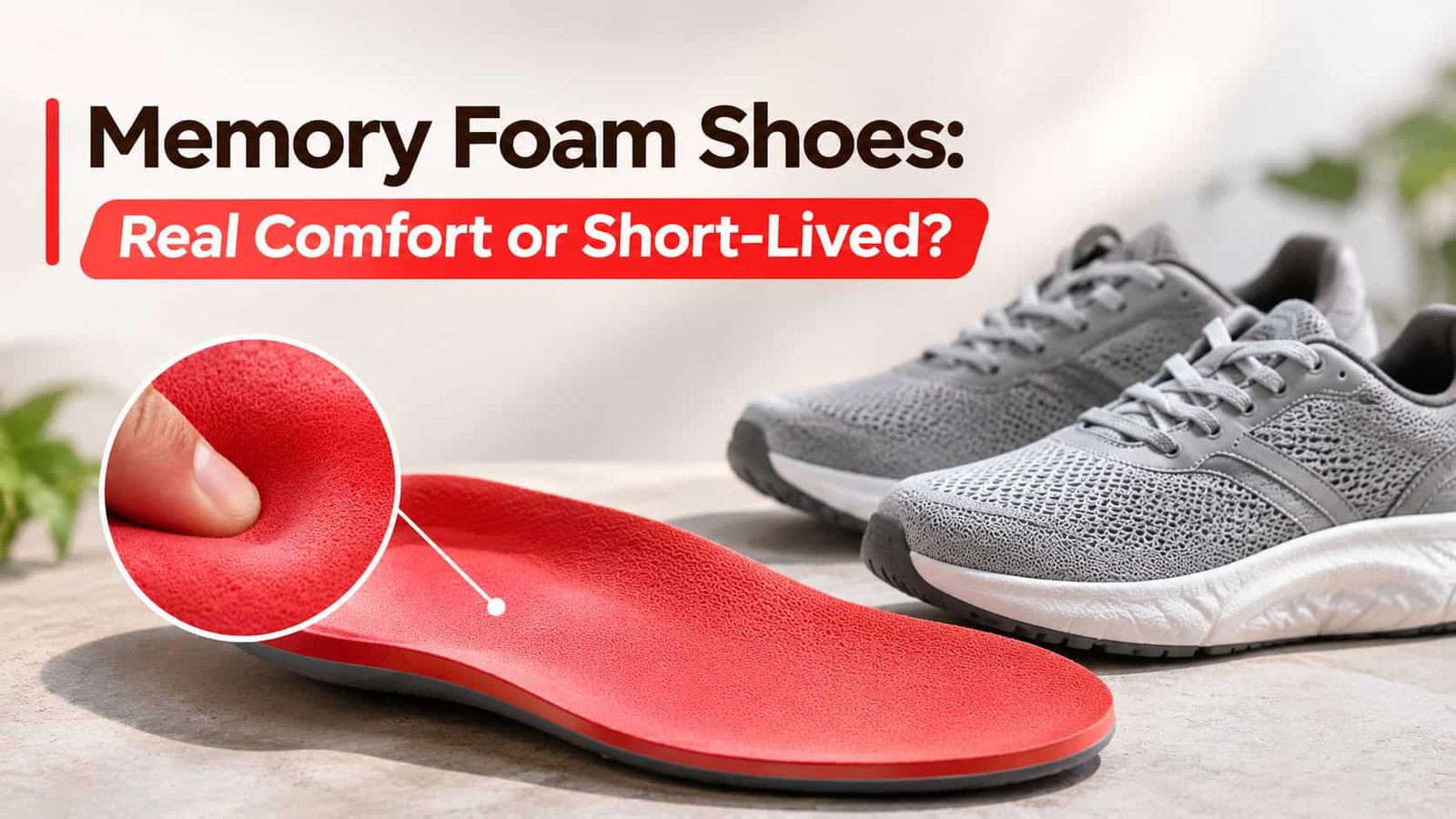
Memory Foam Shoes: Real Comfort or Short-Lived?
Summarise this memory foam guide with AI
Open an assistant and submit the prefilled request. The assistant reads the page only after you submit it.
Quick answer: Memory foam in shoes is a viscoelastic foam that softens with body heat and slowly returns to shape. It can feel soft and conforming at first, but it is usually less responsive than EVA or PEBA and can compress more under sustained load. Built-in memory foam tends to be most useful in insoles and comfort layers. Whether it lasts depends on density, thickness and use. No verified figure gives a universal lifespan.
Key takeaways
- Memory foam is a viscoelastic material. It conforms and recovers slowly, which is different from the faster rebound of many running midsoles.
- Built-in memory foam is most often found in insoles, collars and comfort layers. Full memory foam midsoles are less common and vary widely.
- Comfort on first wear is not the same as long-term support. Foam can flatten with repeated load.
- No independent source reviewed here gives a verified lifespan for memory foam in shoes. Treat any number as an estimate.
- Aftermarket memory foam insoles can change fit, so check shoe volume and depth before adding one.
- Persistent foot pain should be assessed by a qualified clinician, not solved by a product.
What Memory Foam Is
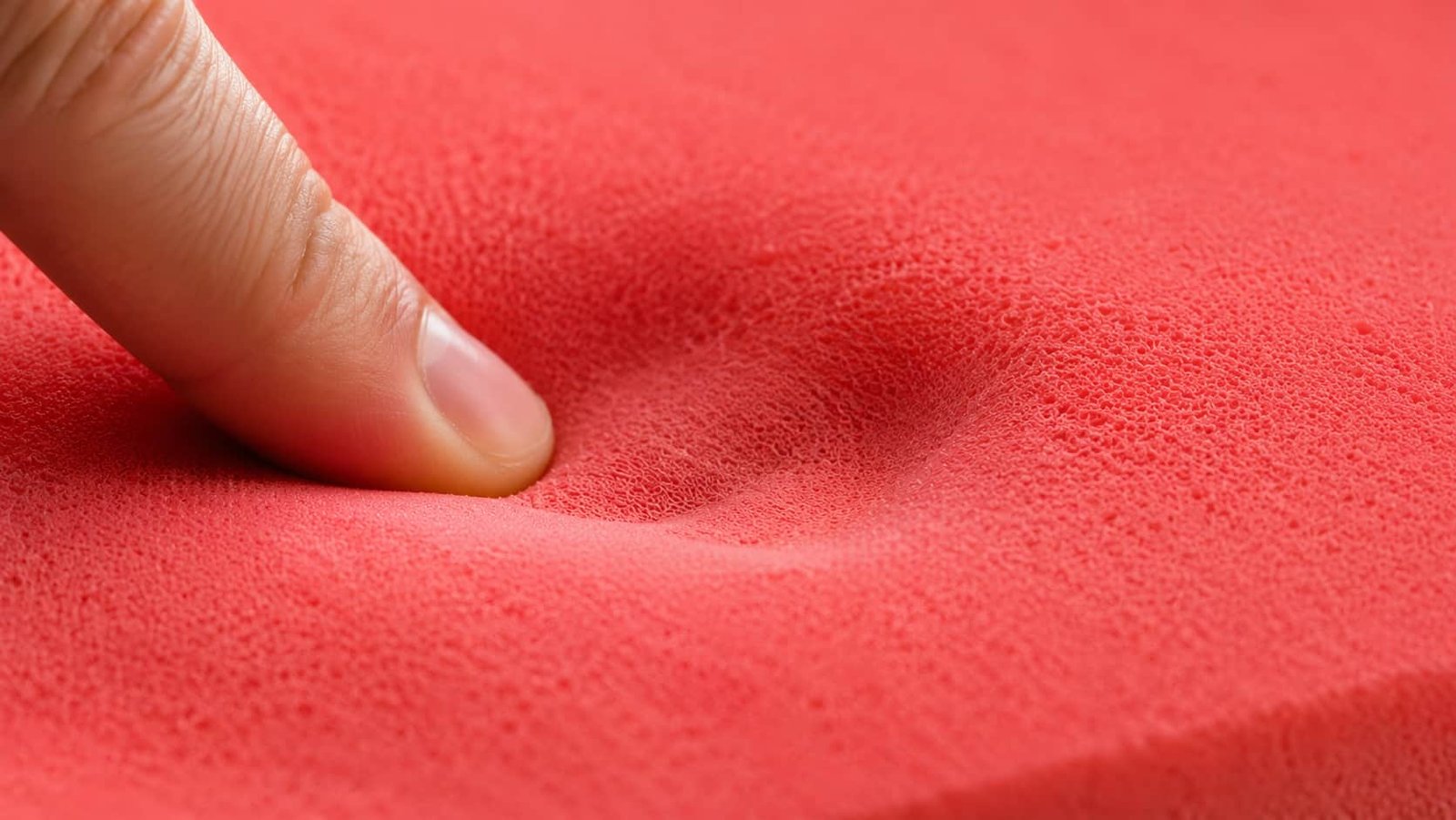
Memory foam is a polyurethane-based foam with viscoelastic properties. In plain terms, it responds to pressure and temperature. Under load it compresses and conforms to the shape pressing on it, and when the load is removed it returns to its original form more slowly than a standard resilient foam.
That slow recovery is the defining feature. A running midsole designed for quick rebound returns energy rapidly. Memory foam returns shape gradually and feels plush at first contact. The two behave differently, which is why a shoe built with one can feel very different from a shoe built with the other.
Terminology matters here, because the phrase “memory foam” is used loosely in marketing. Some products sold as memory foam are other foams with a similar feel. The material’s name on a product page describes the feel the brand wants, so check the materials section for the base polymer when it is listed.
For the broader family of footwear foams, the running shoe foam guide explains how EVA, TPU, PEBA and other materials differ. This article focuses on memory foam and does not repeat those definitions.
Where Memory Foam Appears in Shoes
Memory foam appears in shoes in several forms, and the form matters more than the name.
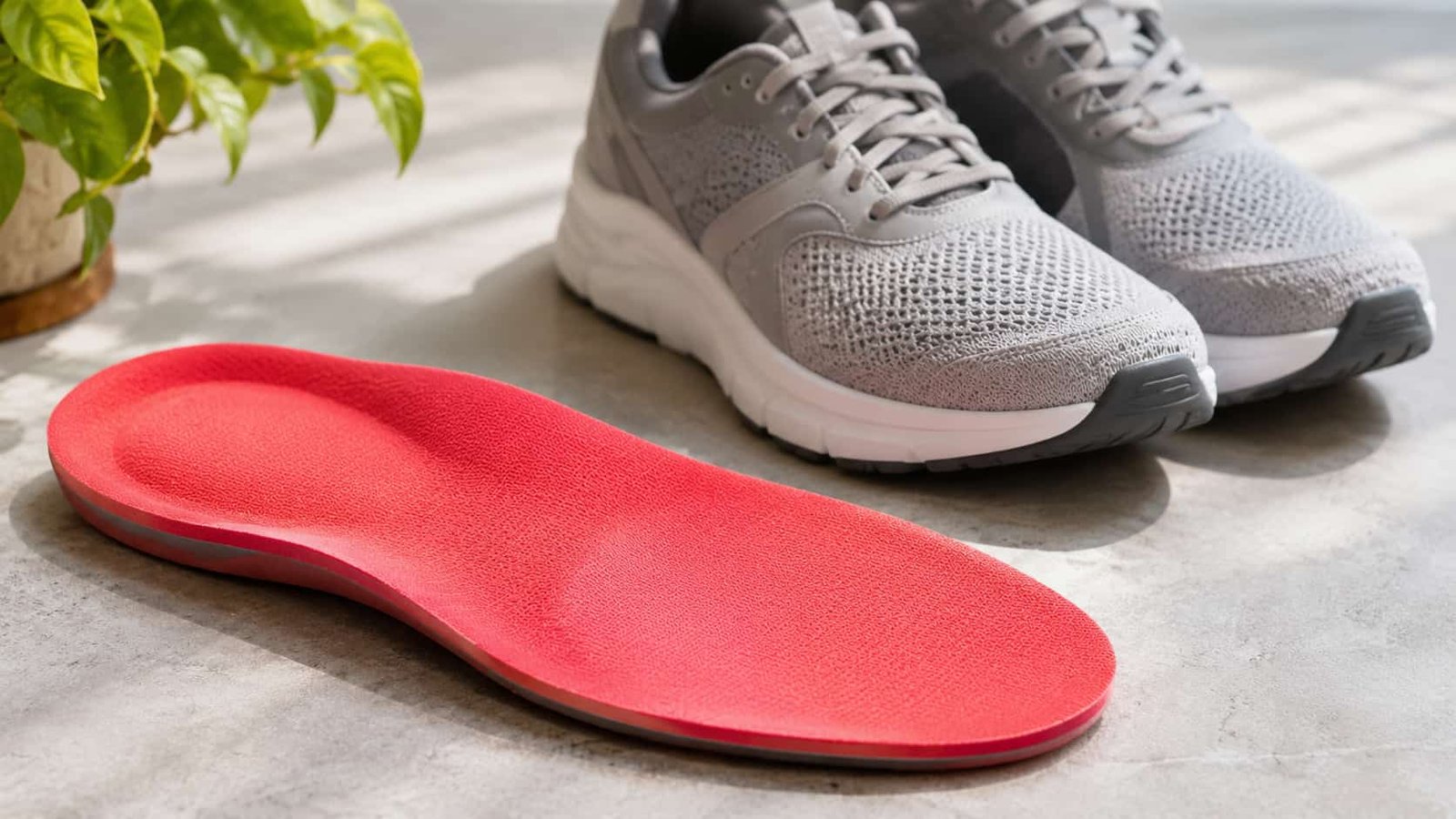
Insoles. This is the most common use. Memory foam insoles are sold as removable inserts for existing shoes, and they account for much of the search interest in this topic.
Collars and heel linings. Memory foam is sometimes used around the ankle collar or heel area to add a soft, conforming touch.
Footbeds and comfort layers. Some shoes include a memory foam footbed or comfort layer over a firmer midsole.
Full midsoles. Shoes with a memory foam midsole exist, but they are less common than insoles, and designs vary widely.
Because the placement changes the feel and the load it carries, check which part of the shoe uses memory foam before comparing products. A thin memory foam insole and a full memory foam midsole are not comparable.
Memory Foam Versus EVA and Other Midsoles
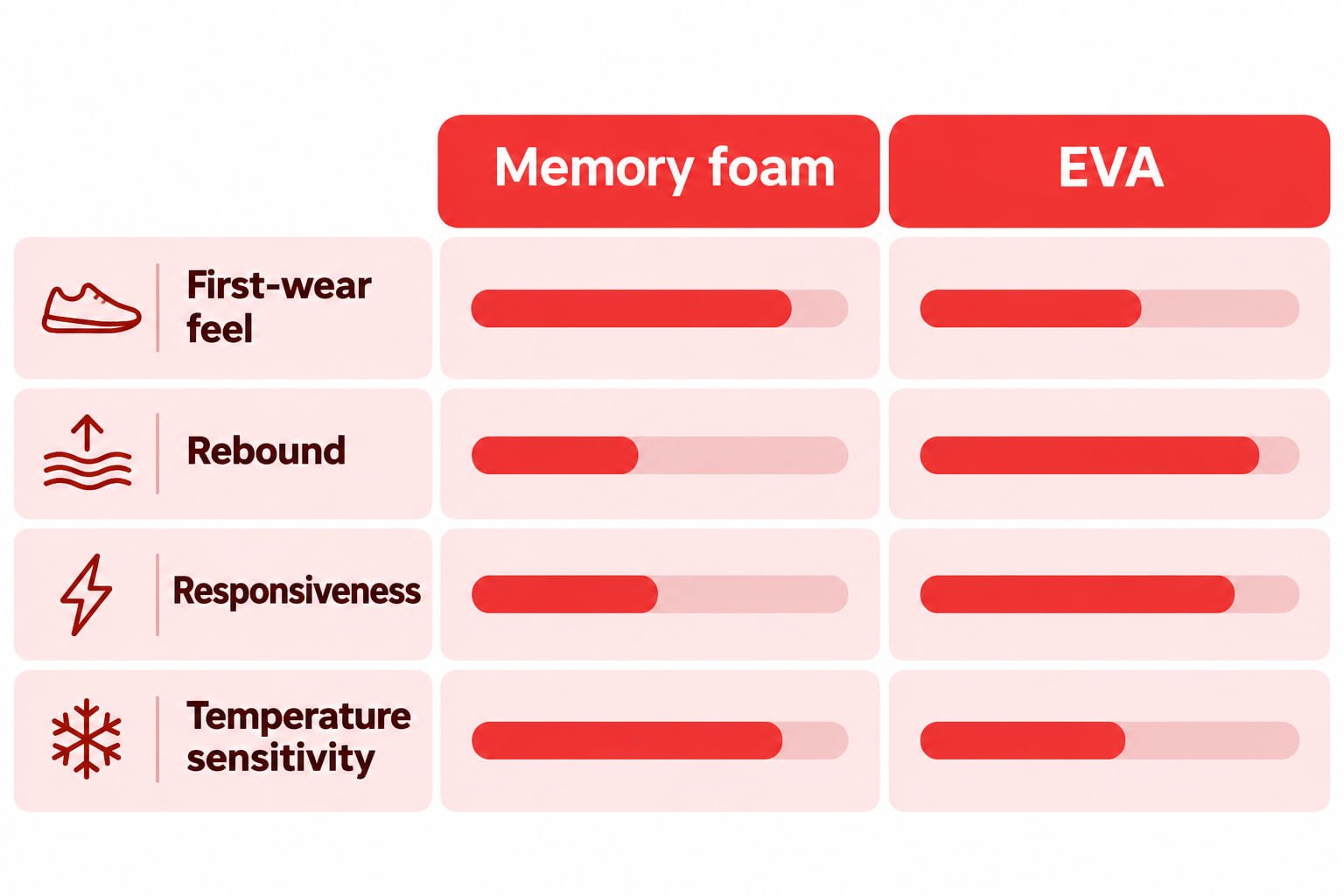
Many readers want to know whether memory foam beats EVA. The honest answer is that they do different jobs. The table compares them in general terms.
| Factor | Memory foam | EVA |
|---|---|---|
| Behaviour under load | Conforms slowly to the shape pressing on it | Compresses and returns more quickly |
| First-wear feel | Often plush and soft | Soft to moderate, depending on density |
| Rebound | Slow, gradual | Moderate, varies by density |
| Responsiveness | Generally lower | Generally higher than memory foam |
| Sensitivity to temperature | Feel can change with warmth and cold | Less temperature-sensitive in general |
| Typical placement | Insoles, collars, comfort layers | Midsoles across many shoe categories |
These are tendencies, not measurements. A dense EVA can feel firmer than a thin memory foam insole, and the shoe’s overall construction matters more than either material on its own.
For a direct comparison of two common midsole materials, the EVA foam guide and the TPU in shoes guide are useful reference points. The supercritical foam guide covers a different manufacturing approach that some brands use for springier foam.
Is Memory Foam Comfortable on the First Wear?
Often, yes. Memory foam tends to feel soft and immediately conforming, which many wearers describe as comfortable on standing and walking. The sensation can be especially noticeable on hard floors, where a softer surface reduces the feeling of pressure.
Comfort on first wear is not the same as long-term support. Foam that feels plush at the start may compress with use, and it may feel less supportive once it has flattened. A shoe that is comfortable in a shop may feel different after several weeks of daily wear.
Some practical checks help:
- Stand and walk for at least ten minutes. Check the heel, arch and forefoot.
- Notice how the foam recovers. If it stays compressed for a long time after you stand up, it may feel less responsive on the next step.
- Try the shoe with the socks you plan to wear. Thickness changes the fit.
- Pay attention to any new discomfort. If pain develops or persists, see a qualified clinician.
Memory Foam Insoles: What They Change
Memory foam insoles are the largest search interest in this cluster, so it is worth explaining what they actually change.
An insole adds a layer between the foot and the shoe’s footbed. A memory foam insole adds softness and may fill small gaps between the foot and the shoe. It can also change the fit, because the shoe’s interior volume is reduced.
Three points matter most:
Volume and fit. Adding an insole reduces space inside the shoe. A thick memory foam insole may feel tight in a shoe that already fits closely. Check the shoe’s depth and width before adding one, and consider whether the shoe can accept a thicker insole without pressure at the toes or the top of the foot.
Replacement and compression. Insoles compress and wear, often sooner than the shoe’s midsole. Many people replace insoles more often than they replace shoes. The lifespan of any insole depends on use, weight and how it is cared for, and no verified figure applies to all products.
Purpose. An insole can add comfort, but it does not change the shoe’s structure. If a shoe lacks structure or stability, a soft insole does not fix that. The insole, midsole and outsole guide explains where each layer sits and what it does.
If you choose an insole, remove the original insole first, place the new one in the shoe, and walk for a few minutes to check the fit before a longer wear.
Does Memory Foam Wear Out?
Yes, all foam wears over time, and memory foam is no exception. Repeated compression can flatten the cell structure and reduce the material’s ability to conform. Heat, moisture and sustained load speed that process.
We have not found an independently verified lifespan for memory foam in shoes or insoles. Any figure you see online should be treated as an estimate unless it cites a test method and a source. Wear depends on body weight, how many hours you wear the shoe, the surfaces you walk on, storage and cleaning.
Signs the foam may be worn:
- The shoe or insole feels flatter than when new.
- Compression lines or creases are visible in the foam.
- The heel or forefoot feels unevenly cushioned.
- New discomfort appears after walks or shifts that used to feel comfortable.
These signs are prompts to assess the product, not diagnoses. The running shoe lifespan guide covers the wider question of when to replace shoes.
Memory Foam, Arch Support and Foot Health
Many readers search for memory foam because they are looking for arch support, or because they have heard it helps with foot pain. These are important questions, and this section is cautious for good reason.
Soft conforming foam can make a shoe feel more comfortable, and it may reduce pressure on sensitive areas for some wearers. That does not mean it corrects a structural issue or treats a condition. Arch support is a question of structure, fit and sometimes orthotic design, and it varies between individuals.
No source reviewed for this article supports a claim that memory foam shoes or insoles treat plantar fasciitis, flat feet or any other condition. We also did not find a verified podiatrist position on any particular brand, so we do not state one.
If you have persistent heel pain, arch pain, numbness, swelling or any symptom that interferes with daily life, see a qualified clinician or podiatrist. The American Podiatric Medical Association publishes general foot health and footwear guidance, and it is a sensible starting point for understanding when professional assessment is appropriate.
Memory Foam Shoes and Heat, Moisture and Odour
Memory foam’s feel is sensitive to temperature. Warm conditions can make it softer, and cold conditions can make it firmer. This is part of its design, but it means a shoe may feel different in winter and summer.
Moisture is a more practical concern. Foam can absorb sweat and water, and a damp insole can retain moisture for longer than a dry one. Retained moisture can encourage odour and make the foam feel heavier. Remove insoles after wear and let them dry at room temperature.
The how waterproof shoes work guide and the waterproof versus water-resistant guide explain the difference between a shoe that repels water and one that only resists it. Neither makes a memory foam insole waterproof, so keep that distinction in mind.
Heat is the main hazard for foam. Keep shoes and insoles away from radiators, heaters and car dashboards.
How to Clean and Dry Memory Foam
Memory foam is more sensitive than many materials to heat and harsh cleaning. The safest approach is gentle, low-moisture cleaning.
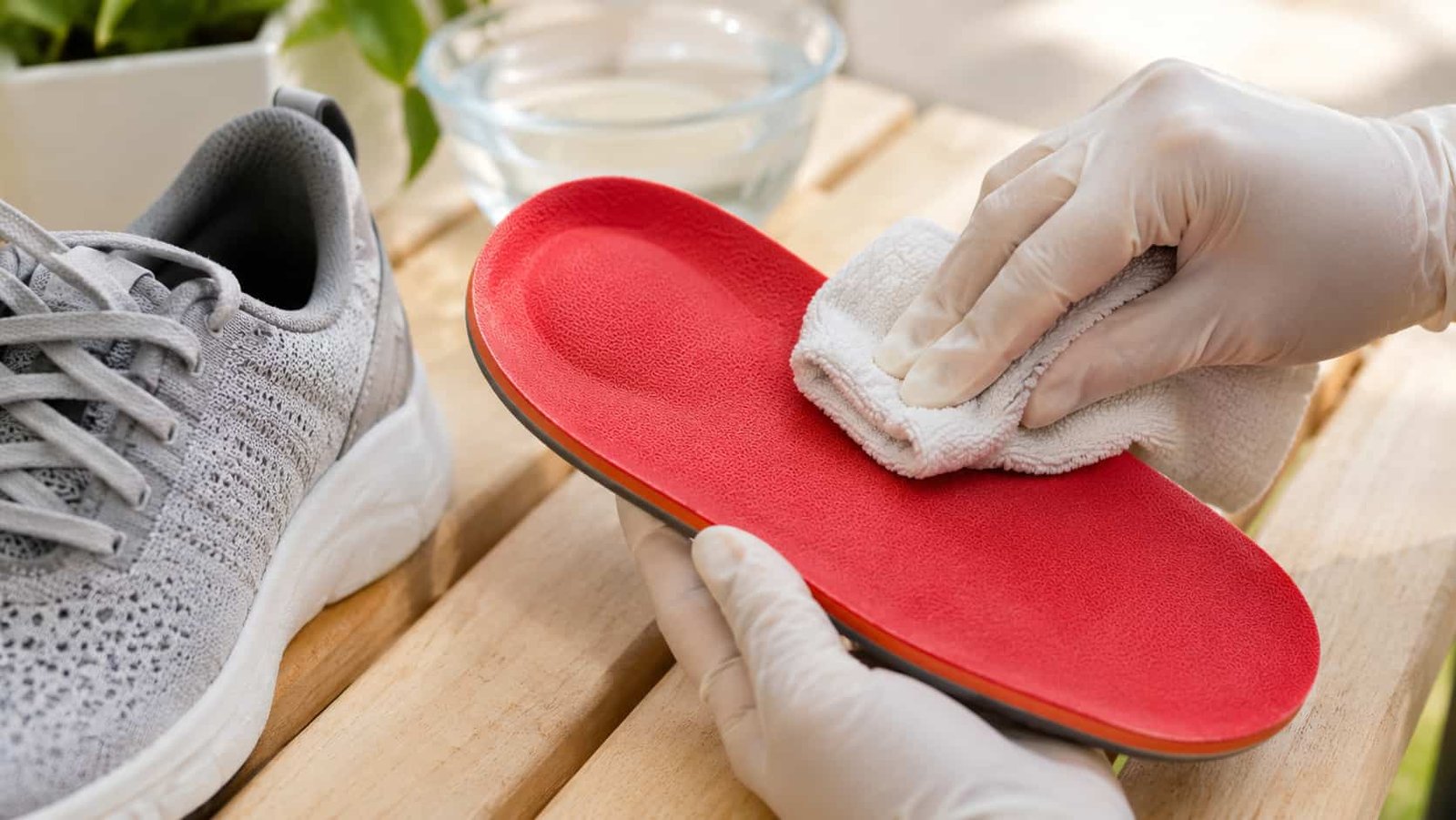
Insoles:
- Remove the insole from the shoe.
- Brush off dry dirt with a soft brush.
- Dab the surface with a cloth dampened with mild soap and lukewarm water. Do not soak the foam.
- Wipe away soap residue with a clean damp cloth.
- Air-dry flat at room temperature, away from direct sun and heat.
Shoes with built-in memory foam:
- Remove the insoles and laces.
- Brush off dirt from the upper, sole and foam areas.
- Clean with a damp cloth and mild soap. Avoid soaking the foam.
- Stuff the shoe with paper to hold its shape and air-dry at room temperature.
Warnings:
- Never tumble-dry memory foam or insoles, because heat can damage the foam.
- Avoid machine washing foam products unless the manufacturer explicitly says the product is machine-washable. Many are not.
- Keep foam away from strong solvents, bleach and direct heat.
The shoe cleaning and maintenance guide covers care for other materials. Machine washing is a common question for some shoe models. The general advice here is to avoid it unless the manufacturer’s care label permits it, and to check the product’s own instructions. A related page on washing one brand’s shoes is listed for review in the internal link plan.
A Practical Decision Guide
Use this sequence to decide whether memory foam is right for you.
- Decide where you want the foam. Insole, footbed, collar or full midsole each behaves differently.
- Check the fit. Make sure the shoe has enough depth and width for the added layer.
- Consider your use. Long standing shifts, casual walking and indoor use may favour a soft, conforming feel. Fast running and high-impact sport may favour a more responsive foam.
- Plan for replacement. Insoles often need replacing sooner than shoes. Set a reminder to check them.
- Test before committing. Walk for at least ten minutes and wear the shoe with your normal socks.
By reader type:
- People who stand for long periods at work: A supportive, well-fitting shoe with a cushioned insole may be worth considering, provided it fits the work environment.
- Casual walkers: A memory foam insole can add comfort, provided the shoe has room.
- Runners who want responsiveness: Other foams, such as PEBA or supercritical designs, usually suit that goal better.
- Anyone with persistent foot pain: See a qualified clinician before relying on a product.
The shoe finder tool can narrow choices by activity, and the how we test shoes methodology page explains how we approach footwear evaluation. We have not lab-tested memory foam products for this article, and we do not claim first-hand testing.
Myths Worth Dropping
Myth: Memory foam always provides arch support. Softness and conformity are not the same as structural support. Arch support depends on the shoe’s design and the individual’s needs.
Myth: Memory foam treats foot conditions. Foam can add comfort, but no source reviewed here supports treating a medical condition with a shoe or insole.
Myth: Memory foam lasts forever if stored well. Storage protects against heat and moisture, but compression from use is the main driver of wear.
Myth: Any thick insole improves the fit. A thick insole can make a shoe tighter, which can cause pressure problems.
Myth: All memory foam is the same. Density, thickness and the base polymer vary, and so does performance.
Myth: Machine washing is always safe. Many foam products should not be machine washed. Check the care label.
Frequently Asked Questions
Are memory foam shoes good?
They can be comfortable, especially on first wear and on hard floors. Whether they suit you depends on the foam’s placement and density, the shoe’s fit, and how you use it. Comfort may change as the foam compresses.
Is memory foam good for flat feet or plantar fasciitis?
No source reviewed here supports a claim that memory foam treats either condition. Persistent pain should be assessed by a qualified clinician or podiatrist.
What is the difference between memory foam and EVA?
Memory foam conforms slowly and feels plush at first. EVA usually rebounds more quickly and is common in midsoles. They suit different purposes.
Do memory foam insoles wear out?
Yes. Insoles compress with use and often need replacing sooner than the shoe. No verified lifespan figure applies to all products.
How do I clean memory foam insoles?
Remove them, brush off dirt, dab with mild soap and lukewarm water, wipe clean and air-dry flat at room temperature. Avoid soaking, tumble-drying and direct heat.
Can I put memory foam shoes in the washing machine?
Only if the manufacturer’s care label explicitly permits it. Many foam products should not be machine washed, because agitation and heat can damage them.
Are memory foam Skechers good?
Individual experience varies. We have not verified the brand’s foam technology or any podiatrist recommendation in this session, so we do not make a comparative claim. Check the product’s technical information and try the shoe on.
Do memory foam insoles make shoes too tight?
They can. A thick insole reduces interior space, so check the fit before adding one, especially in a shoe that already fits closely.
Verdict
Memory foam can make shoes and insoles feel comfortable, especially at first wear and on hard surfaces. Its slow recovery and conforming feel are what set it apart from quicker-rebounding midsoles. It is not a structural fix, it is not a treatment for foot conditions, and it is not immune to wear.
The best approach is to decide where you want the foam, check the fit, test the product before committing, and watch how it feels over time. For foot pain, see a qualified clinician rather than relying on a product. For a wider view of foam families, begin with the running shoe foam guide, and for materials across footwear, the shoe materials is the best starting point.
Sources
American Podiatric Medical Association. Foot health and footwear guidance. https://www.apma.org. Brand technology and product pages for specific memory foam products, including any Skechers foam pages.