

What Is the Loop on the Back of Shoes and Boots For?
Summarise This Guide with AI
Open an assistant below and submit the prefilled request. The assistant reads this page only after you submit it. The guide covers what the loop on the back of a shoe is for, how to use it, how it differs from a tongue pull tab, and its limits.
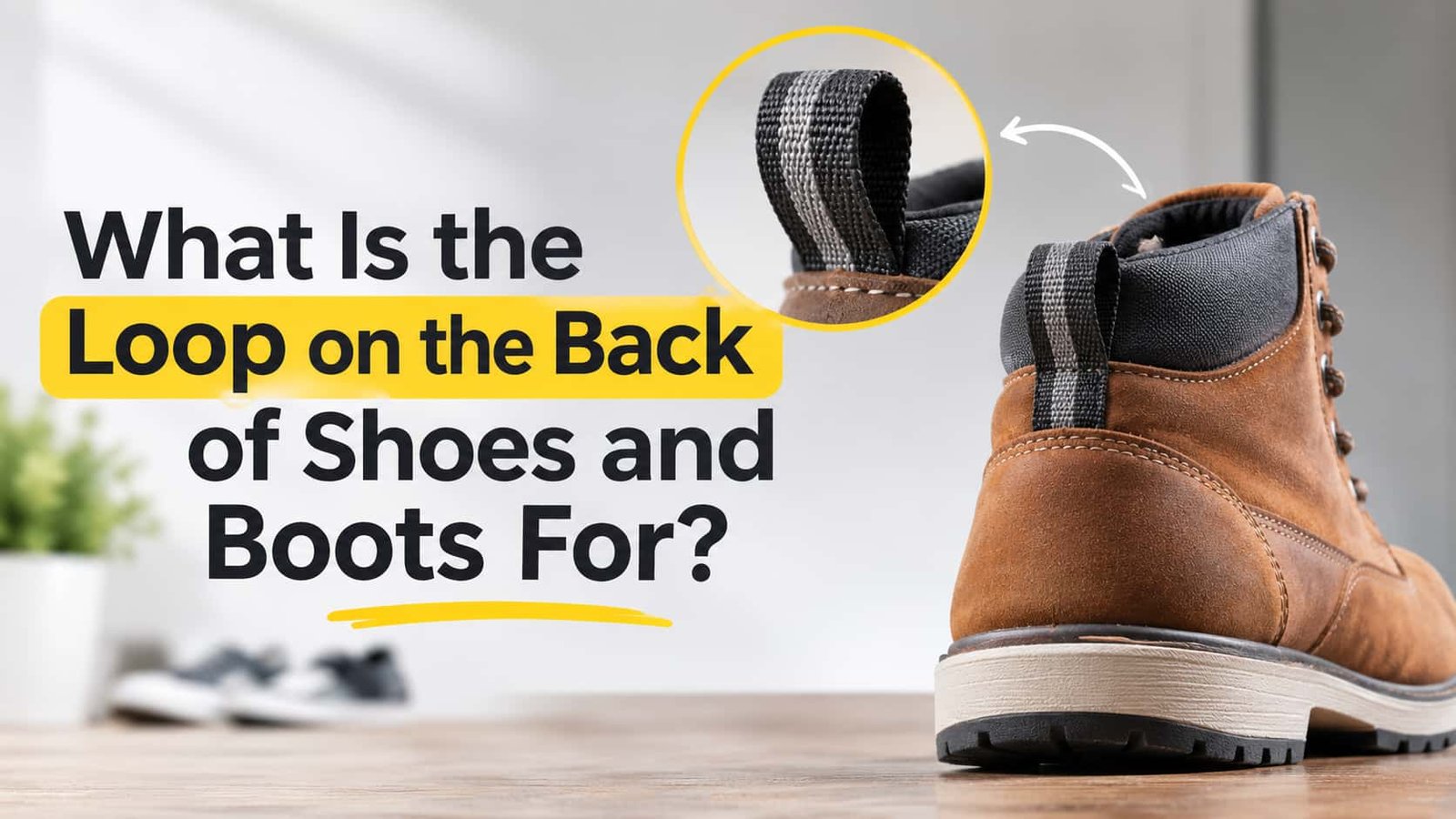
The loop on the back of a shoe or boot is a heel loop, also called a pull tab or heel tab. It is a narrow fabric strap that gives you a grip point to pull the shoe on without crushing the heel counter. Manufacturers also design heel loops to add structure to the heel collar and, on some shoes, reflective material for visibility. A separate tongue pull tab on the tongue can help keep it centred.
Key Takeaways
- The rear loop is a heel loop, often called a pull tab or heel tab. Its main job is to give you a grip point for putting the shoe on.
- Heel loops are usually woven or elastic fabric tapes made from nylon, polyester, or blended yarns, sometimes with reflective or grip finishes.
- A tongue pull tab is a different feature. It is placed on the tongue and helps keep it centred, which is a separate purpose from the heel loop.
- Pull the loop gently, using the loop’s full width, to avoid stretching or tearing it.
- Most of what is known about heel loops comes from manufacturers and design practice, so treat claims about structural or safety benefits as design intent rather than tested outcomes.
The Loop Explained
Most people have pulled on a boot by its loop without thinking about what it is. It is small, easy to overlook, and often looks decorative. Yet heel loops are a practical part of a shoe’s construction, and once you know their purpose, you can use them better and notice when one is worn out.
A heel loop is a narrow strap fixed to the back of the shoe, usually at the top of the heel collar. You hold it with your finger, pull the shoe up over the heel, and your foot slides in. Manufacturer ECI Elastic describes heel loops as narrow fabric straps that act like built-in handles, letting you slip your foot in quickly without fumbling or crushing the heel counter. The company also says they can remove the need for a shoehorn, which is a commercial claim that holds for many shoes but not every design.
The loop is part of the same family of parts that shape a shoe’s entry and fit. If you want a broader map of where the heel loop sits within the shoe, the anatomy of a shoe guide shows the collar, counter, and upper in context.
Where It Sits and What It Is Called
The loop sits at the back of the collar, the opening where the foot enters. It is attached to the upper or the lining near the heel, so it is part of the shoe’s back edge rather than the sole.
Several names describe the same feature. ECI Elastic calls it a heel loop, and it can also be called a pull tab, heel tab, or pull loop. These names overlap in everyday speech, so you may see different words on different product pages. The meaning is the same: a grip point at the heel.
Do not confuse the heel loop with two other features. The first is the tongue pull tab, which is attached to the tongue at the front of the shoe. The second is the extra eyelet at the top of many running shoes, which is used for lacing rather than pulling. Our article on the extra holes in running shoes explains that feature separately.
If you are unsure what a term means, our shoe glossary lists many of these parts in one place.
The Main Job: Getting Your Foot In
The heel loop’s main job is to help you put the shoe on. A grip point at the back lets you hold the shoe steady and pull the heel into the collar without pressing on the heel counter or the back of the shoe.
This matters most in shoes that fit snugly or stiffly. A firm boot or a shoe with a stiff heel counter can be hard to get on if you have to push with your fingers against the back edge. A loop lets you pull upward and back, which helps the foot slide in with less effort. ECI describes the loop as a built-in handle that avoids fumbling and crushing the heel counter, which is a design claim consistent with how the feature is used.
Heel loops also matter for people who have trouble bending, reaching, or gripping. If you find it hard to reach your heel, or your hands have limited strength or dexterity, a loop can make putting on a shoe easier. This is a practical use, not a medical claim. If you have a condition that affects your mobility or hands, an occupational therapist or clinician can advise on footwear and dressing aids.
How to Use It Without Damaging the Shoe
Using a heel loop well takes a little care. The goal is to pull the shoe on smoothly, not to force it.
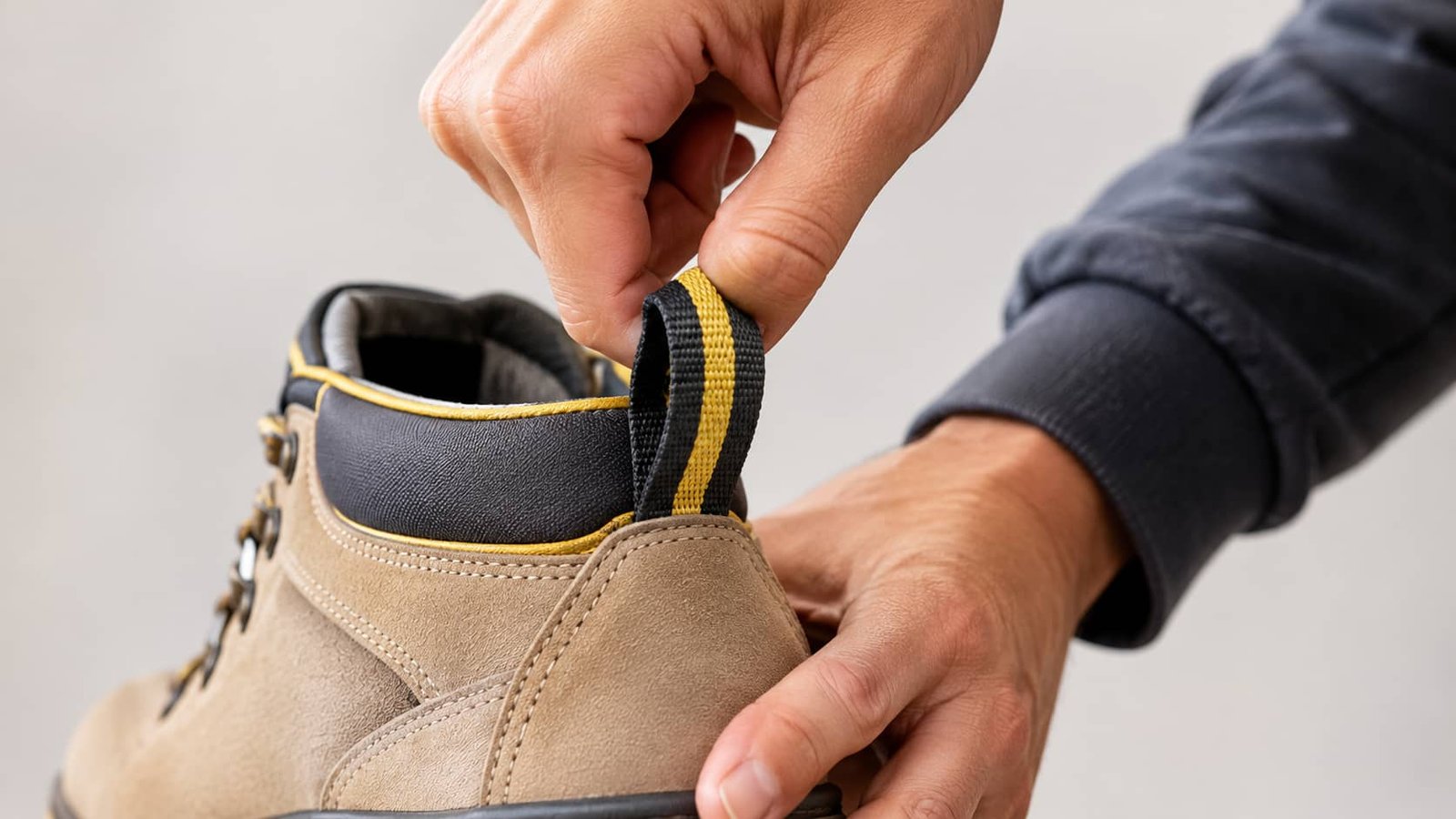
Start by loosening the laces or opening the shoe’s fastening fully. Put your fingers through the loop or grip it with a few fingers so that the loop lies flat across your hand. Hold the shoe steady with your other hand, then pull the loop upward and back while easing your foot in.
Use the loop’s full width rather than one narrow edge. Gripping only the tip can strain the stitching, especially on webbing that is attached only at its base. If the shoe is very tight, adjust the fit or use a shoehorn rather than yanking the loop harder.
Avoid using the loop to lift the shoe off the floor or to hang it on a hook. Loops are designed for pulling the foot in, not for carrying the shoe’s weight. Repeated lifting can wear the stitching.
Check the loop before each use if you wear the shoe often. A frayed, stretched, or loose loop is a sign that the stitching may be failing.
The Structural Role of the Heel Loop
Beyond being a handle, the loop can contribute to the shoe’s structure. ECI describes heel loops and tongue tabs as strengthening high-stress zones. In its description, a well-constructed pull tab reinforces the heel collar and the tongue area, which helps the shoe keep its shape over time and resist early wear in those places.
This is a manufacturer’s account of design intent, not an independent test. What it suggests is that the loop is anchored to parts of the shoe that flex and take load during the pull-on and during walking. A strong, well-stitched loop can therefore be part of the collar’s overall durability, but the loop by itself does not stiffen the heel. The heel counter, the lining, and the upper do that job.
For readers who want a fuller picture of how the heel counter works with the back of the shoe, the guide to the shoe last explains how the shape of the shoe is set, and the heel counter is discussed in the anatomy guide.
Reflective Loops and Visibility
Some heel loops include reflective material, either woven in as reflective yarn or applied as an adhesive strip. ECI describes reflective yarns or strips that catch headlights and help a runner or walker stand out in low light. This is a useful safety feature for early-morning or evening use.
Reflective loops do not replace other visibility measures. Reflective material is only useful when light hits it, and it fades or wears with washing and use. If you run or walk in low light, pair reflective footwear with other visibility aids, and check the material before each session.
The reflective effect works best when the loop stays clean. Dirt and grime can dull the surface, so a gentle clean helps keep it visible.

The Materials Behind Heel Loops
Heel loops are made from narrow fabrics, webbing, or tapes. ECI describes common materials as nylon, polyester, spun polyester, or blended yarns, sometimes with spandex woven in for stretch and recovery. The table below summarises the common choices.
| Loop type | Typical material | Main strength | Main trade-off |
|---|---|---|---|
| Woven webbing | Nylon or polyester webbing | Strength and durability | Less stretch |
| Knitted elastic tape | Polyester or nylon with spandex | Stretch and flexibility | Can lose tension over time |
| Reflective loop | Woven reflective yarn or applied strip | Visibility in low light | Reflectivity fades with wear and washing |
| Silicone-coated loop | Fabric with a grip coating | Better grip when pulling | Coating can wear and may feel different |
ECI notes that woven tapes deliver strength and durability, while knitted elastic tapes provide stretch and flexibility. Decorative finishes such as printing or embossing can also appear on the loop, but these affect appearance rather than function.
Heel Loops vs Tongue Pull Tabs
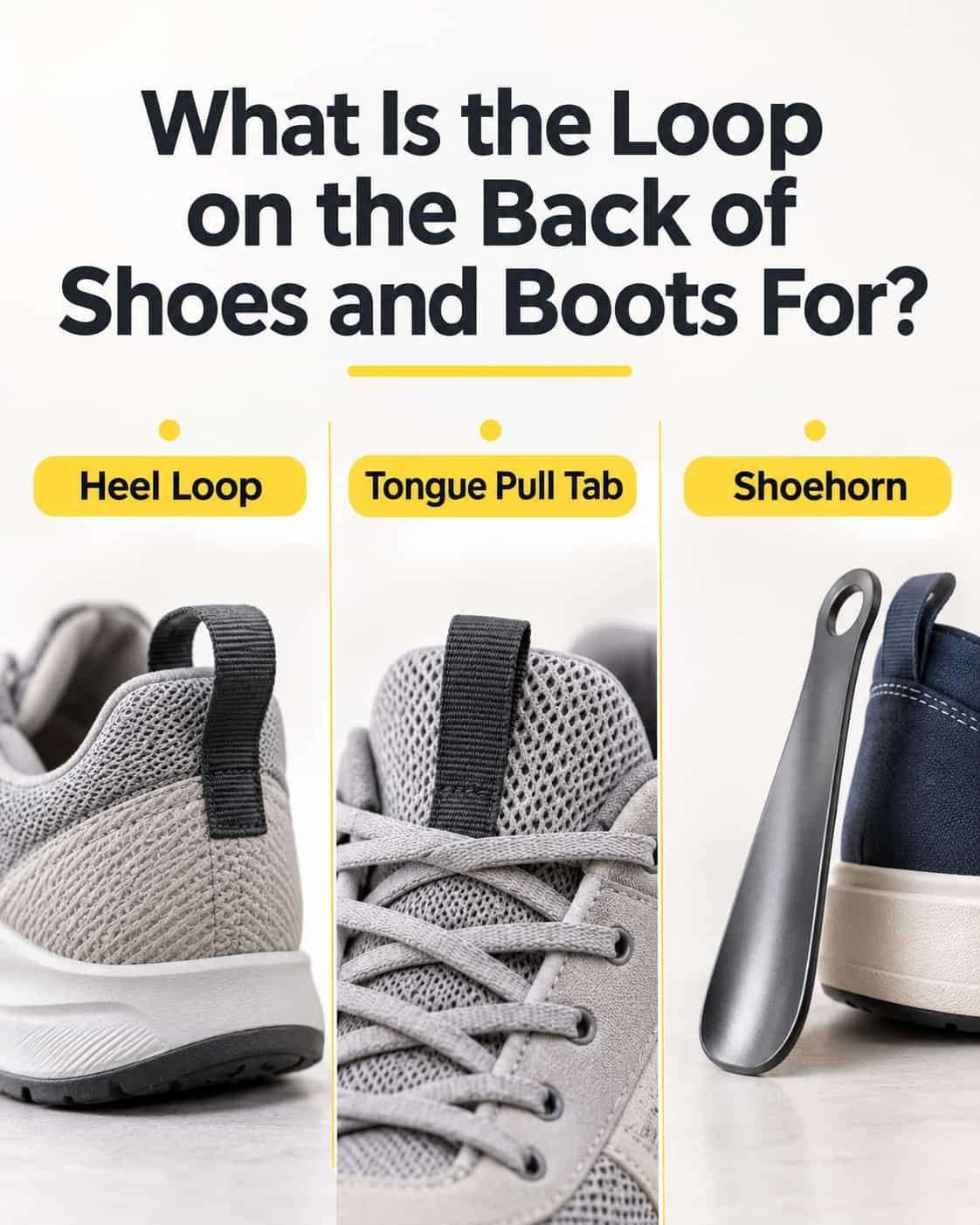
A heel loop and a tongue pull tab are separate features with different jobs. The table below compares them.
| Feature | Heel loop | Tongue pull tab |
|---|---|---|
| Location | Back of the collar | Attached to the tongue |
| Main job | Grip point to pull the shoe on | Helps centre the tongue and keep it from bunching |
| Typical material | Woven webbing or elastic tape | Elastic drawcord or tape |
| Common finishes | Reflective, grip coatings | Grip or decorative finishes |
| Common in | Running shoes, boots, casual shoes | Performance and outdoor footwear |
ECI describes tongue pull tabs as elastic drawcords that give a grip point to centre the tongue and keep it from bunching sideways during activity. This is a comfort and stability claim from the manufacturer. In practice, a well-placed tongue tab can help the tongue stay in position, but fit and lacing also matter.
Heel Loops vs Shoehorns and Other Aids
Many people use a shoehorn or a heel-lifting aid rather than a loop. The table below compares the common options.
| Aid | How it helps | Best for | Limitation |
|---|---|---|---|
| Heel loop | Built into the shoe; a grip point at the back | Everyday pull-on, boots, running shoes | Only as strong as its stitching |
| Shoehorn | A curved tool that guides the heel in | Stiff or snug shoes, leather shoes | Needs a separate tool; can scratch the heel counter if misused |
| Heel-lifting aid | Helps when bending is limited | Reduced reach or flexibility | Needs a sturdy grip and good technique |
| Loosened laces | Opens the collar | Almost any shoe | Does not help a tight heel by itself |
If a shoe is too tight to slide into easily, a loop will not fix the problem. Fit is the first thing to check. Our guide to the shoe last explains why the same size can fit differently between brands.
Who Benefits Most
Heel loops are most useful for everyday pull-on in shoes with a firm or snug collar, such as stiff boots, work boots, and leather shoes. Runners and walkers who want to slip on running shoes quickly may also find them helpful.
People who find it hard to reach the heel, bend, or grip small objects may benefit from a loop. This is a practical convenience, not a medical treatment. If you have a condition that limits your mobility or hand strength, consult a clinician or occupational therapist for footwear and dressing advice that suits your needs.
Parents helping children with shoes may also find loops useful. Pulling a shoe on with a loop can be quicker than guiding a child’s foot with the hands, but care is needed to avoid straining the stitching on small shoes.
Limitations and Warnings
A heel loop has real limits.
It can wear out. Stitching can loosen or tear, especially if the loop is pulled hard, used as a hanging point, or caught in a door or machine. Replace or repair a loop that is frayed or loose.
It is not a load-bearing handle. Do not lift the shoe or any object by its loop, and do not use the loop to hang the shoe, since that can stress the stitching and the collar.
It cannot fix fit. A shoe that is too small or too narrow will not become comfortable because the loop helps you get it on.
Reflective material can fade. Check it before relying on it for visibility.
If you notice pain, swelling, or numbness in the foot when putting on or wearing shoes, see a doctor or podiatrist. This guide does not provide medical foot advice.
Myths Worth Dropping
Myth: The loop is decorative and serves no purpose. It is a functional grip point, and manufacturers design it to help with entry and the heel collar.
Myth: Heel loops and tongue tabs are the same. They sit in different places and do different jobs. The heel loop helps with entry, while the tongue tab helps keep the tongue centred.
Myth: A heel loop makes any shoe easy to put on. It helps, but a tight or badly fitted shoe is still hard to wear, and the loop can wear out if overloaded.
Myth: The loop is a safety harness for hanging the shoe. Loops are for pulling the foot in. Hanging or lifting by the loop can damage the stitching.
Myth: Reflective loops are always visible. Reflective material works only in light, and it fades with wear and washing.
Caring for Heel Loops
Caring for the loop is part of caring for the shoe. Check the loop’s stitching regularly, especially in boots you wear often. A loose thread or a stretched loop is an early warning sign.
Clean the loop with the rest of the shoe. Use lukewarm water and a soft brush, and avoid harsh solvents that can damage the webbing or any reflective coating. Our guide on how to clean shoes and maintain them covers safe methods for common materials.
If a loop is worn, a shoe repair service can often re-stitch it. For a loop that has torn away from the collar, a repair professional can advise on whether the shoe is worth fixing.
Frequently Asked Questions
What is the loop on the back of shoes called?
It is most often called a heel loop. It may also be called a pull tab, heel tab, or pull loop. All of these refer to the grip point at the back of the collar.
What is the loop on the back of shoes for?
Its main job is to give you a grip point to pull the shoe on. It helps the foot slide in without pressing on the heel counter, and it can also contribute to the collar’s structure.
Is the little loop on the tongue the same as the heel loop?
No. The tongue pull tab is attached to the tongue and helps keep it centred. The heel loop sits at the back of the collar and helps you put the shoe on.
Can I hang my shoes by the heel loop?
It is better not to. Loops are designed for pulling the foot in, and hanging or lifting by the loop can stress the stitching. Hang shoes by other means if you need to.
Do heel loops make shoes more comfortable?
They make shoes easier to put on, which can improve comfort for some people. They do not change the fit, so a shoe that is the wrong size or width will not become comfortable.
Are reflective heel loops useful?
They can help you stand out in headlights and low light, but reflectivity fades with wear and washing. Use them alongside other visibility measures.
What should I do if the heel loop tears?
Stop using the loop to pull the shoe on, and have a shoe repair service check whether it can be re-stitched. If the collar is damaged, seek advice from a repair professional.
Conclusion
The loop on the back of a shoe is a heel loop, a practical grip point that helps you pull the shoe on without pressing on the heel counter. Manufacturers also design it to support the collar and, on some shoes, to add reflective visibility. It is different from the tongue pull tab and the extra lacing eyelet. Your next step is to check the loops on the shoes you wear most, and use them gently with the full width of the strap. For a broader foundation, explore the shoe materials hub and the footwear knowledge section.
Sources
ECI Elastic, “Tongue Pull Tabs and Heel Loops: The Small Details That Make Every Step Better” (blog, dated January 22, 2026; manufacturer source): https://www.ecigroup-global.com/en/news-page/shoe-pull-tabs-heel-loops-manufacturer.html


