

What Are the Extra Holes in Running Shoes For? The Heel Lock Explained
Summarise This Guide with AI
Open an assistant below and submit the prefilled request. The assistant reads this page only after you submit it. The guide covers what the extra hole in running shoes is for, how the heel lock works, what the evidence shows, and when to skip it.
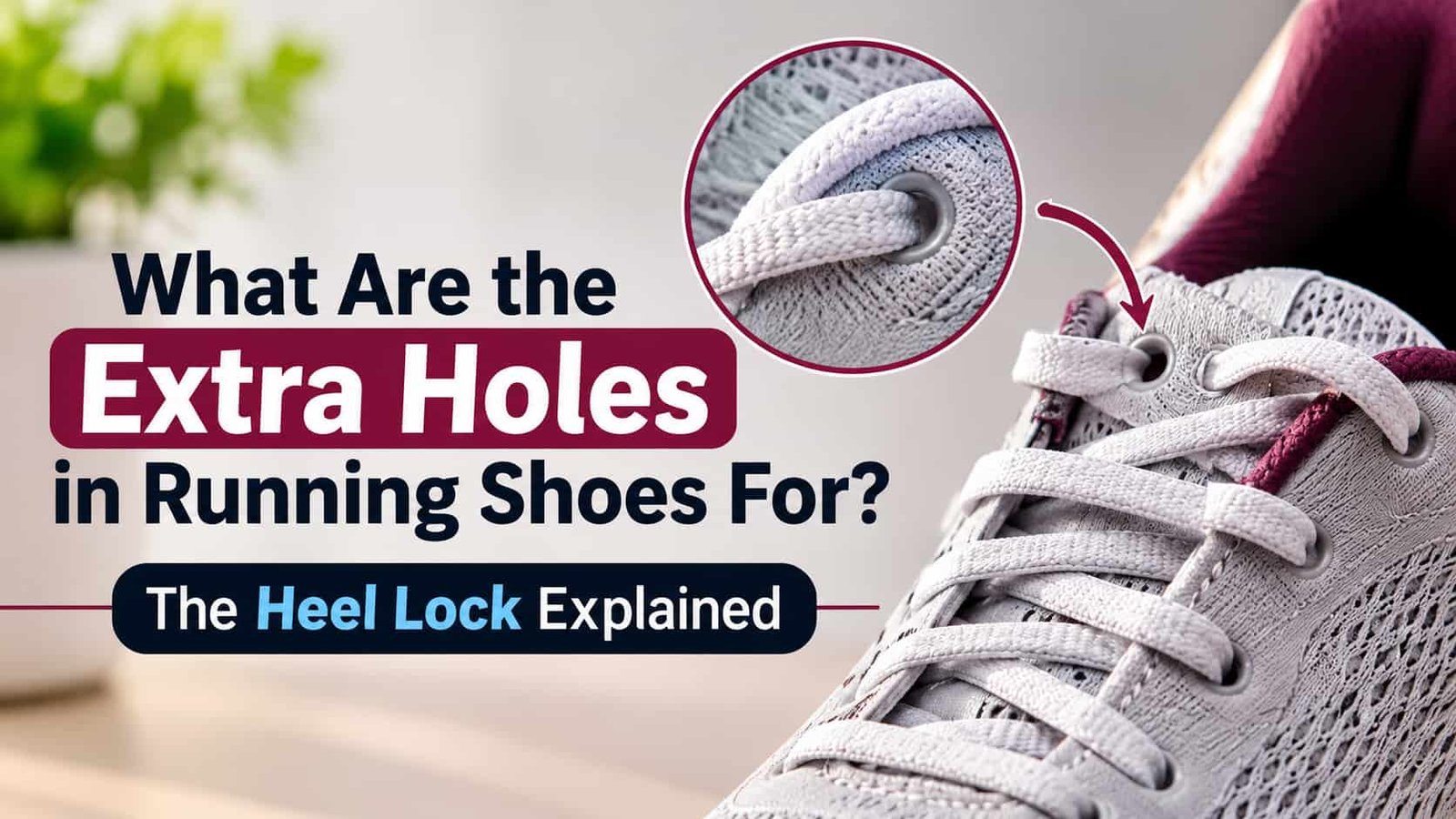
The extra hole near the top of many running shoes is used for a lacing method called the heel lock, or lace lock. You thread the laces through that hole to create loops that pull the heel back into the shoe’s collar. Runners use it to reduce heel slippage and friction. Expert commentary links it to fewer blisters, although controlled studies are limited. It is not suitable for every foot or shoe fit.
Key Takeaways
- The extra hole is a lacing point used for the heel lock, which creates a loop system that holds the heel back in the shoe.
- The heel lock is intended to reduce heel slippage and friction. Podiatrists quoted in consumer coverage describe it as helpful for running and hiking.
- The evidence is mainly expert opinion and practical experience. Controlled research on the heel lock specifically is limited, so treat claims with care.
- Do not tighten the heel lock on an already snug shoe. Excess pressure can cause discomfort, and numbness, tingling, or pain should be checked by a clinician.
- Proper fit matters more than lacing. A heel lock cannot fix a shoe that is too small or too narrow.
The Extra Hole Explained
Most runners have noticed a small hole sitting above the main lacing eyelets, often slightly off-centre and sometimes a different size from the rest. It looks like it may be a spare, or a leftover from manufacturing. In most cases, it is neither. It is a lacing point designed to be used with a specific technique.
The Running Company, an Australian running shoe retailer, explains that the hole is part of a lacing technique known as the heel lock or lace lock. The technique provides additional support and stability to the foot, especially in running or hiking, where a secure fit can help prevent blisters and discomfort. Reader’s Digest’s coverage of a runner’s video makes the same point in simpler terms: the hole is there so that the heel can be locked into place. You can read The Running Company’s explanation for the retailer’s full version.
If you are new to the parts of a shoe, the anatomy of a shoe guide shows where the upper, eyelets, and collar sit. The hole in question is one of the eyelets at the top of the upper.
Where the Hole Sits and What It Is Called
The extra hole is usually the top eyelet on the shoe, sitting higher and often set slightly diagonally from the main row. Reader’s Digest describes it as the extra hole that sits slightly diagonal from the uppermost lacing hole, which is why many people miss its purpose. It is still part of the lacing system, even if it looks like an afterthought.
Eyelets are the holes through which laces pass, and they can be reinforced with metal rings or grommets. Amorim’s footwear glossary defines an eyelet as a hole through which a lace is threaded, which may be reinforced with a metal ring or grommet. Because the top eyelet is set apart, it is easy to mistake for a decorative detail.
Some shoes do not have the extra hole at all. Its presence depends on the model and the lacing design, so a shoe without it may still support a heel lock through its other eyelets. The hole is a convenience, not a requirement.
The Heel Lock, Step by Step
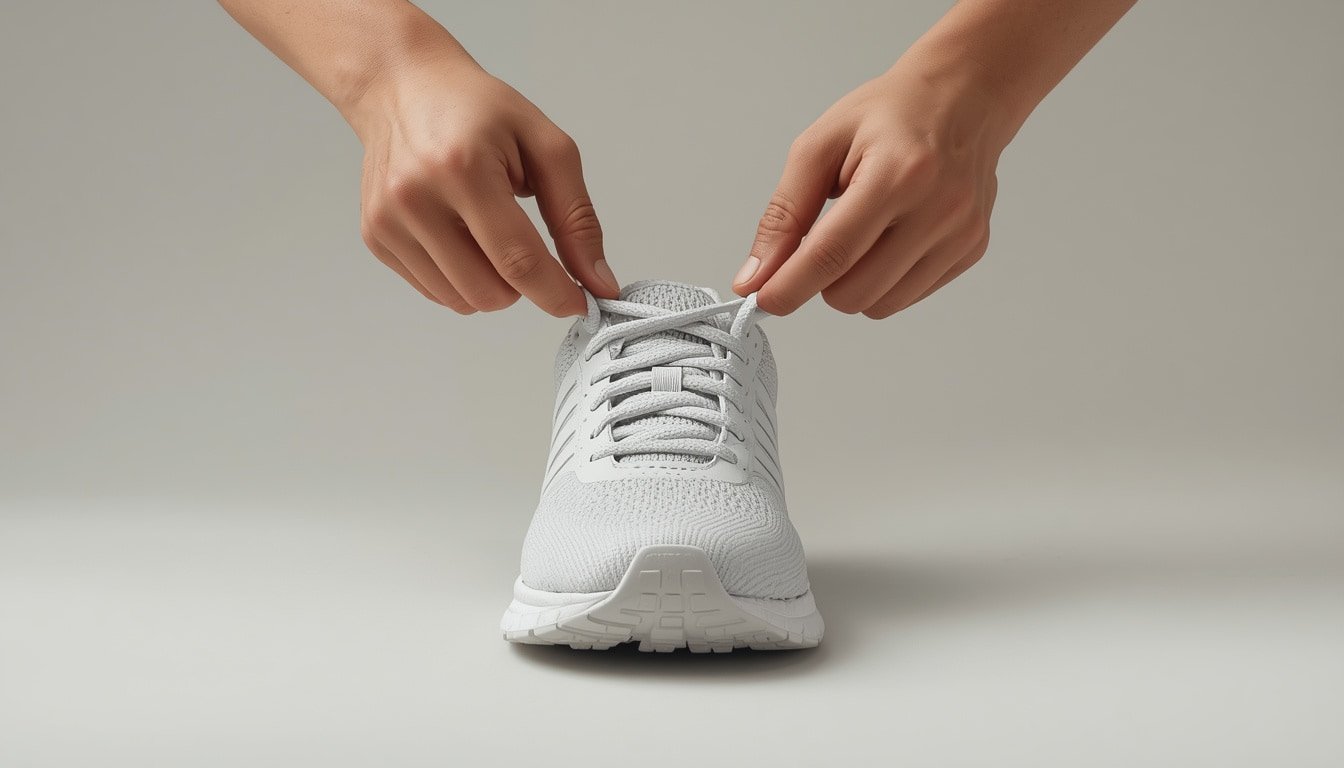
The heel lock uses the extra hole to create a loop on each side of the shoe. Once the loops are pulled tight, the upper is drawn back around the heel. The steps below combine the method described by The Running Company with the sequence described in Reader’s Digest’s coverage of the same technique.
- Lace the shoe as you normally would, leaving the top set of holes empty for now.
- Push one end of the lace into the extra hole on the same side, from the outside in, and pull it most of the way through so a small loop forms.
- Repeat on the other side, creating a loop on each lace end.
- Cross the lace ends over and feed each end through the loop on the opposite side.
- Pull both ends to tighten the loops. The upper should draw in around the heel and ankle.
- Tie the laces as you normally would, checking that the tension is even.
The result is a tension system that holds the heel back into the heel cup. Reader’s Digest quotes Dan Becker, an outdoor adventurer, describing the loop-based lock as holding the shoe around the heel to stop it moving. The method is simple, but its success depends on fit and tension. Pull too hard and the shoe may pinch. Pull too little and the heel lock does nothing.
Why Runners Use the Heel Lock
Runners use the heel lock for three reasons that appear across consumer coverage and expert commentary.
The first reason is heel slippage. A foot that slides up and down inside the shoe creates friction, especially on long runs or descents. The heel lock is intended to keep the heel in place. The Running Company says the method provides enhanced stability by securing the heel and minimizing slippage inside the shoe.
The second reason is friction and blisters. Reader’s Digest quotes podiatrist Brad Schaeffer, DPM, who describes friction as a main cause of blisters. He says supporting the foot by cupping the heel and holding the forefoot in place can help reduce friction. This is a clinician’s view, not a controlled trial result, so treat it as expert opinion.
The third reason is fit security during lateral movement. Zachery Barnett, DPM, is quoted by Reader’s Digest as saying the heel lock is useful for high-impact activities such as running and hiking, and for lateral movement in sports such as pickleball and basketball. The idea is that a secure heel reduces sideways motion inside the shoe.
Reader’s Digest also reports that Dr. Barnett said the heel lock can help a shoe fit well without relying on a tight forefoot. The claim is specific to a well-fitting shoe, which leads to the next section.
What the Evidence Shows and What It Does Not
This is the part of the guide that matters most for trust. The heel lock is widely recommended in running and footwear content, but the sources reviewed here are mainly consumer articles and clinician quotes. They describe mechanisms and experience, not controlled comparisons.
What the sources support is that the heel lock is a lacing technique that can change how the heel sits in the shoe. Podiatrists quoted in the coverage say that heel security and friction control matter for blister prevention, and that heel lock can be useful in running and hiking. Those statements are plausible and consistent with how lacing works mechanically.
What the sources do not establish is a quantified benefit. None of the sources reviewed here reports a trial measuring blister rates with and without the heel lock. Claims that the technique prevents ankle sprains or fixes a poor fit are also not backed by controlled data in these sources. Reader’s Digest mentions ankle sprains in connection with shoes that do not fit properly, but that is a general point about fit, not a measured effect of the heel lock.
For readers, the practical takeaway is simple. The heel lock is a low-cost technique to try if your heel slips or rubs. If it helps, keep using it. If it causes discomfort, stop. If you have ongoing foot pain or a foot condition, a podiatrist or clinician can assess the cause rather than relying on lacing alone.
Heel Lock vs Standard Lacing
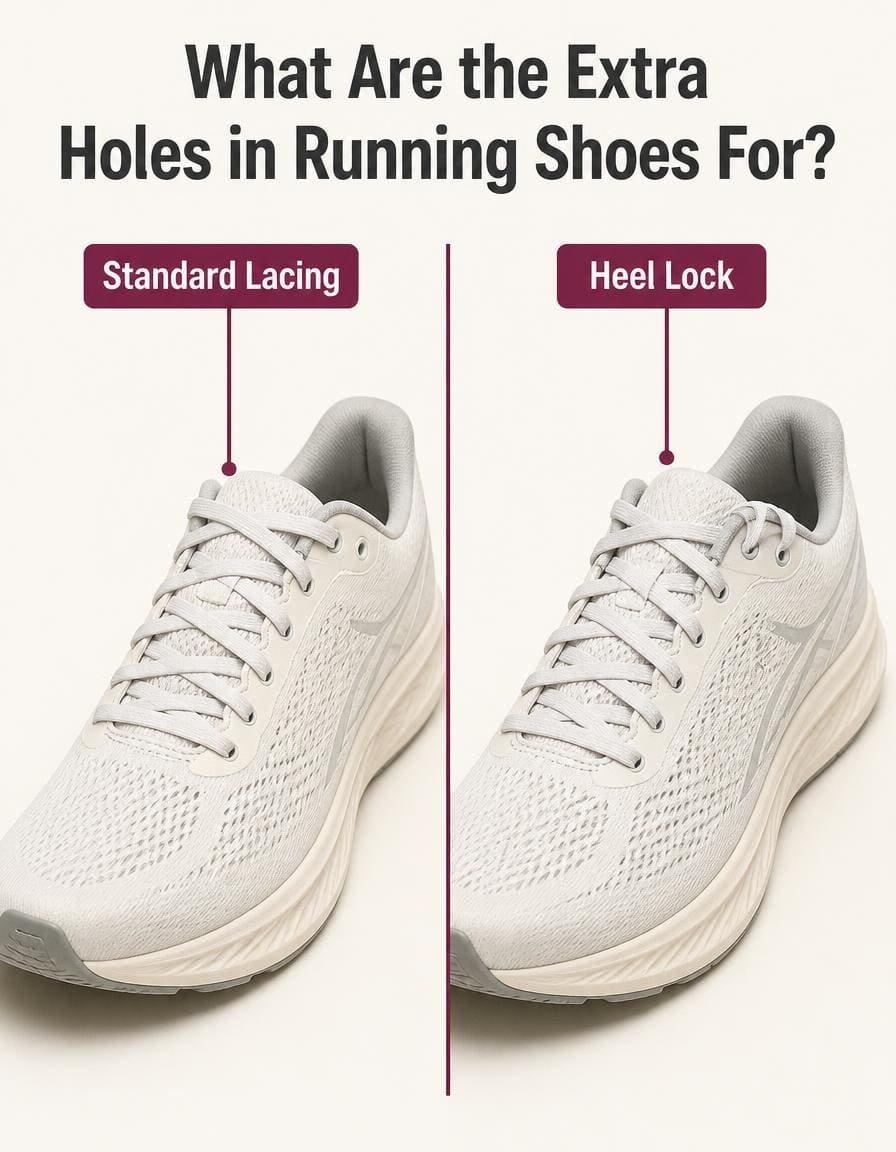
The table below compares the heel lock with standard lacing. It is a general comparison based on the techniques described above, not a test result.
| Feature | Standard lacing | Heel lock |
|---|---|---|
| Lace path | Through the main eyelets only | Uses the extra hole to create heel loops |
| Heel hold | Relies on overall tension | Adds a loop system that pulls the heel back |
| Best for | Everyday wear and general fit | Heel slippage, running, hiking, lateral sports |
| Setup time | Quick, familiar | Slightly longer the first few times |
| Risk | Little, if laced evenly | Excess tension can pinch if the shoe is already snug |
| Adjustment | Easy to loosen | Loosen the loops if the forefoot feels tight |
Runner’s Knot and Other Lacing Methods
Readers often search for “runner’s knot” alongside the extra hole. These are different techniques, and the names are sometimes used loosely in online discussion. The heel lock uses the extra hole. A runner’s knot, as the term is commonly used, usually refers to a different tying method that does not depend on that hole.
Because I did not verify a source for the runner’s knot in this session, this guide does not describe its steps. If you want a separate article on that method, it should be written from a verified source.
Other lacing methods exist, including the bunny ear method for tying the bow and speed lacing for quick adjustments. The choice depends on the shoe, the foot, and the activity. A lacing method should never be used to compensate for a shoe that does not fit.
Who Should Use the Heel Lock
The heel lock suits runners and hikers whose heel slips inside the shoe, especially on descents, long runs, or uneven ground. It may also suit people who play sports with quick direction changes, since a secure heel can make the shoe feel more stable.
It also works well for shoes that have a snug heel but a looser forefoot. In that case, the heel lock may hold the heel without tightening the front of the foot.
Parents teaching children to tie shoes also find the heel lock useful. Reader’s Digest reports that Dr. Barnett described it as an easy way to teach children to tie shoes because it does not involve holding loose loops. That is a practical suggestion from a clinician, not a formal teaching method.

When to Skip It
The heel lock is not for everyone, and some situations call for caution.
Do not use the heel lock on a shoe that is already tight. Reader’s Digest quotes Dr. Barnett warning that a small shoe pulled down with a heel lock could put too much pressure on the foot and cause harm. Fit comes first. If the shoe is too small, lacing will not fix it.
Stop if you notice numbness, tingling, burning, sharp pain, unusual pressure marks, or colour changes in the foot. These signs need assessment from a clinician. Do not keep tightening the lacing to see if the symptoms pass.
If you have a condition that affects sensation or circulation in the feet, consult a doctor or podiatrist before using a tighter lacing method. A clinician can advise on safe fit and footwear for your condition. This guide does not provide medical foot advice.
If the shoe bends, slips, or pinches in a way that lacing does not solve, check the fit with a fitter. Our guide to what a shoe last is explains why the same size can fit differently between brands.
Common Lacing Mistakes
Several common mistakes reduce the benefit of the heel lock or make it uncomfortable.
The first mistake is threading the lace through the wrong hole. The loop should come from the extra hole on the same side, and the other loop should be made on the opposite side. Crossing the wrong ends can produce a loop that pulls unevenly.
The second mistake is pulling too hard. The loops should hold the heel without squeezing the top of the foot. If you feel pressure on the top of the foot or the ankle, loosen the loops and try again.
The third mistake is using a worn or stretched lace. A lace that has lost its tension will not hold the loops well. Replace laces that fray or slip.
The fourth mistake is skipping the fit check. If the heel still slips after lacing, the shoe may be the wrong size, width, or shape. A lacing method cannot change that.
A Practical Decision Guide
Use the heel lock as a tool, not a fix. Here is how to decide.
If your heel slips on runs and you have a snug fit, try the heel lock for a short run and check for pressure. If it holds the heel without pinching, keep using it.
If your shoe feels too tight already, do not add the heel lock. Try a larger size or a wider width, and check the fit with a fitter.
If you run or hike on rough ground, the heel lock may help you feel more secure. If your heel slips on descents, test it on a downhill section before a long outing.
If you have a foot condition, or pain that does not go away, see a clinician before changing your lacing or buying new shoes.
Our shoe finder can help you compare models by use, and our guide to running shoe foam explains the midsole materials that affect how a shoe feels once it fits.
Myths Worth Dropping
Myth: The extra hole is a spare or a manufacturing mistake. It is a lacing point designed for the heel lock. Some shoes have it, and others do not.
Myth: The heel lock fixes any fit problem. It can hold the heel better, but it cannot make a shoe the right size or width.
Myth: Tighter is always better with a heel lock. Excess tension can pinch or cause discomfort. Even, moderate tension is the goal.
Myth: The heel lock prevents all blisters. Blisters have many causes, including moisture, socks, pace, and fit. The heel lock may reduce friction at the heel, but it is not a guaranteed prevention method.
Myth: Podiatrists have proven the heel lock works. Podiatrists quoted in consumer coverage describe it as helpful, but the sources reviewed here do not include controlled trials that prove it.
Frequently Asked Questions
What is the extra hole in running shoes for?
The extra hole is a lacing point for the heel lock, also called the lace lock. It lets you create a loop system that holds the heel back into the shoe’s collar and reduces heel slippage.
Is the heel lock the same as a runner’s knot?
No. The heel lock uses the extra hole to create loops. A runner’s knot is usually a different tying method that does not depend on that hole. The two names are sometimes mixed up.
Does the heel lock prevent blisters?
Podiatrists quoted in consumer coverage describe the heel lock as helpful for reducing friction at the heel. The sources reviewed do not include controlled studies that prove it prevents blisters, so treat that benefit as expert opinion rather than settled fact.
How do I do the heel lock?
Lace as usual but leave the top eyelets empty. Thread each lace end through the extra hole on the same side to make a loop. Cross the ends and feed each one through the opposite loop, pull tight, then tie the laces as normal.
Should I use the heel lock on tight shoes?
No. Podiatrists quoted in coverage warn that a tight shoe pulled down with a heel lock may put too much pressure on the foot. Fit the shoe properly first.
What should I do if the heel lock causes pain or numbness?
Loosen the lacing and stop using the method. Numbness, tingling, burning, or persistent pain should be assessed by a doctor or podiatrist.
Can I teach children the heel lock?
Consumer coverage quotes a podiatrist describing it as an easy way to teach children to tie shoes, because it does not require holding loose loops. Check that the shoe fits well first.
Conclusion
The extra hole in many running shoes is a lacing point for the heel lock, a technique that uses loops to hold the heel back in the shoe. Runners and clinicians quoted in consumer coverage describe it as helpful for heel slippage, friction, and secure fit, though controlled research is limited. Use it on a shoe that already fits, keep the tension even, and stop if you notice numbness, pain, or pressure. Your next step is to test the heel lock on a short run and check how the heel feels. For a wider foundation, explore the shoe materials hub and the footwear knowledge section.
Sources
- The Running Company, “Why do running shoes have an extra hole?” (published November 1, 2024; author Anthony Caruso): https://www.therunningcompany.com.au/why-do-running-shoes-have-an-extra-hole/
- Reader’s Digest, Lauren Cahn, “This Is Why Your Sneakers Have an Extra Hole” (published October 26, 2023; updated 2024): https://www.rd.com/article/shoelace-hole/
- Amorim Cork Solutions, footwear glossary (definition of eyelet): https://amorimcorksolutions.com/en-us/materials-applications/footwear/knowledge-center/glossary/


