
On CloudTec Explained: How On’s Cloud Pods Work

Summarise This Guide with AI
Open an assistant below and submit the prefilled request. The assistant reads this page only after you submit it. Key points covered: what CloudTec is, how its pods work, how it differs from CloudTec Phase and the Speedboard, and who should consider it.
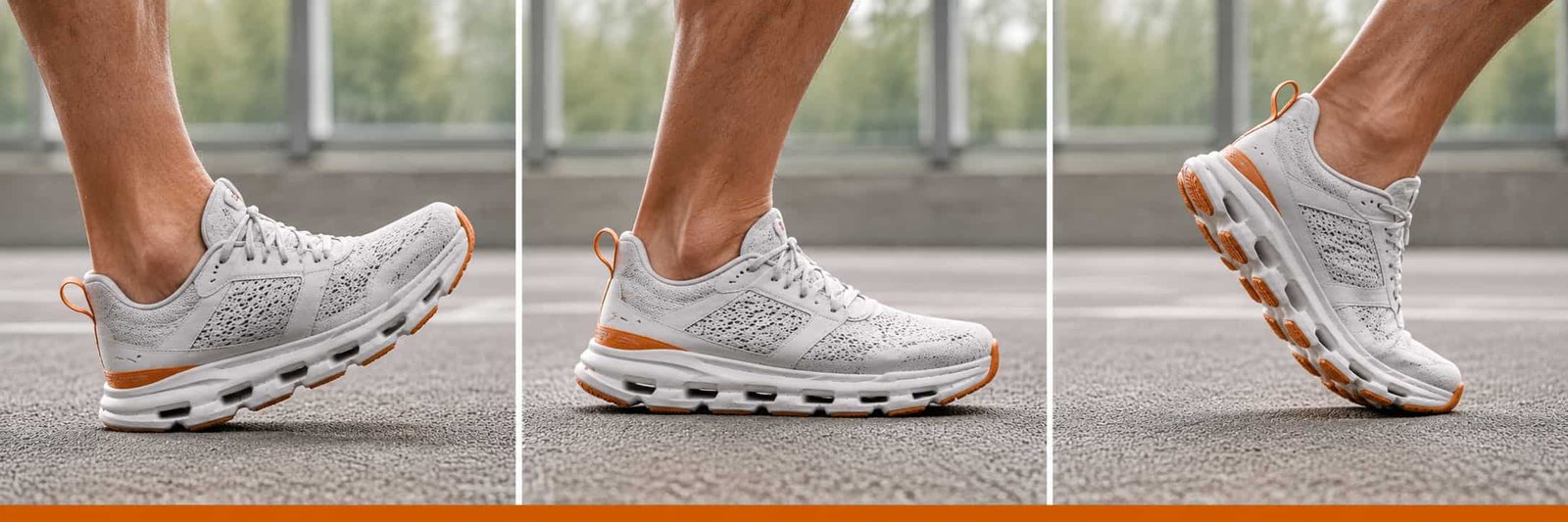
On CloudTec is On’s proprietary cushioning system, built into the outsole as a group of separate pods called Clouds. Each pod compresses on its own as your foot lands and rolls forward, instead of squashing one continuous block of foam. On describes the goal as a soft landing followed by a quick push-off. Related names such as CloudTec Phase, CloudTec Sphere, and the Speedboard plate change how that cushioning is tuned or supported.
Key Takeaways
- CloudTec is a pod-based outsole design. The pods work independently, so the shoe can respond differently across the foot during each stride.
- The “Cloud” pods form the outsole, which means the cushioning is visible on the bottom of the shoe, not hidden inside the midsole.
- CloudTec Phase and CloudTec Sphere are separate On technology names. Phase appears on On’s technology page, and Sphere is described by On as developed for its pinnacle racing shoes.
- The Speedboard is a different component. It is a flexible plate that bends at the forefoot to help move you forward, and it is often confused with CloudTec.
- CloudTec is a design approach, not a promise of a specific result. Fit, body weight, running style, and the particular model matter as much as the outsole design.
What CloudTec Is
On is a Swiss running brand founded in 2010. Its CloudTec technology is the system that the company describes as the foundation of its shoes. According to On’s own technology pages, CloudTec is a proprietary cushioning system that engineers foam into a shape designed for a specific running feel. A Japanese fashion technology publication that spoke with On’s PR team in 2022 reported that CloudTec was already part of the brand’s first running shoes, which shows how central the idea has been since the early years of the company, as described in ZOZO’s research feature on CloudTec.
The name points to the core idea. Instead of one continuous sole, CloudTec places a set of rounded pods across the bottom of the shoe. Highsnobiety described this in its coverage of On’s CloudStratus technology, explaining that rather than one uniform cushioning unit, CloudTec is made of multiple “Clouds” that work independently and adapt to each stride. That single sentence captures most of what separates CloudTec from a standard foam midsole, so it is worth keeping in mind as the rest of this guide unpacks it. You can read the original Highsnobiety explanation of On’s cloud technology if you want the reviewer’s full description.
It helps to think of CloudTec as an outsole system rather than a foam type. Many people shopping for running shoes read about EVA, TPU, or supercritical foams and assume the cushioning lives entirely in the midsole. CloudTec works differently. Its pods form part of the outsole itself, so the way the shoe meets the ground is shaped by the pods, and the foam in the midsole still plays its own role in the overall feel. If you want a refresher on how the sole layers fit together, the anatomy of a shoe guide and the piece on insole, midsole, and outsole differences explain the parts clearly before you go further.
Why On Chose Pods Instead of One Slab of Foam
A single slab of cushioning foam compresses across its whole surface. When your heel strikes, the foam under that area compresses, and nearby foam often compresses too. That is a useful design for many shoes, but it has a limitation. The sole responds as one unit, so a wide, flat area of foam does not always respond to the exact point of contact.
On’s answer was to break the outsole into pods. The idea is that each pod can compress in its own way, so the sole can respond to where the foot lands and how the weight moves across the shoe during the stride. On’s own marketing language describes this as a soft landing followed by a more energetic take-off. That is a claim from the brand, so treat it as the intended feel rather than a measured outcome. Independent reviewers and runners will have their own impressions, and those impressions vary by body type and running style.
The pod approach also changes what the outsole looks like. Instead of a flat rubber surface, you see a pattern of raised shapes on the underside. This visible structure is part of the brand identity. It also explains why CloudTec shoes look distinct when you flip them over in a shop. If you want to understand how outsole rubber itself affects grip and wear, this guide to rubber shoe soles covers the basics, and the pods in CloudTec are a different structure built on top of those principles.
How the Pods Work Stride by Stride
It helps to walk through a single stride in plain terms. When your heel lands, the pods under the rear of the shoe press into the ground. Because each pod is separate, the pressure does not travel evenly to every part of the sole. Pods closest to the point of impact compress more, while pods farther away may compress less. This gives the sole a shape-matched response to the moment of contact.
As the foot rolls forward through midstance, the load shifts toward the forefoot and the pods under the ball of the foot take on more of the work. The independent movement continues here, so the sole is not forced into one uniform bend. At toe-off, the compressed pods release their stored energy as the foot pushes away from the ground. On says this produces a smooth transition and a quicker feeling at the end of the stride, which is the energetic take-off mentioned earlier.
Many people find the sensation hard to picture from a written description, so it helps to think about walking on a surface that is firm in some areas and softer in others. Your foot naturally finds the compliant spots. CloudTec aims to give the sole that kind of responsiveness while the shoe is in motion. The exact feel will depend on the specific model, the density of the foam used in that shoe, the shape of the pods, and your own gait. For this reason, the best way to evaluate CloudTec is to try the shoe on, walk, jog, and see how it responds to your natural movement.
A few practical points follow from this design. Because the pods sit in the outsole, the outsole is part of what gives the shoe its character, so worn or uneven outsole pods can change how the shoe feels. Checking the outsole for uneven wear is a useful habit for any running shoe, and if you want to know how long different running shoes tend to last, this breakdown of running shoe lifespan offers useful context on wear patterns and when to replace a pair.
CloudTec Phase and CloudTec Sphere
Readers searching for “CloudTec Phase” often want to know whether it is a separate system or a newer version of the original. On’s technology overview lists CloudTec Phase among its named technologies, alongside other names such as Cyclon, which the brand describes as a breathable, PFC-free waterproof technology. Because the public descriptions of CloudTec Phase vary across retailer and review sites, the most reliable approach is to read the On technology page directly and then check the product page for the shoe you are considering, as listed on On’s technology overview.
What is clear from On’s materials is that CloudTec is not a single fixed design. The brand adapts the concept for different purposes, and the names reflect those adaptations. The clearest example is CloudTec Sphere. On states that CloudTec Sphere was developed for its pinnacle racing shoes, and it describes the design as pairing with soft, lightweight pinnacle superfoams to deliver long-distance comfort, energy return, and responsiveness. On also states that the design is intended to reduce muscular demands and improve running efficiency, particularly later in a race when many runners begin to slow. These are brand claims, so treat them as the intended goal of the design rather than verified results. You can read On’s own CloudTec Sphere page for the full description.
The practical lesson is that the CloudTec name covers a family of approaches. Some are tuned for everyday training, others for racing. If you are comparing two shoes that both mention CloudTec, look at the specific technology name, the intended use, and the foam type listed for each model. A racing-focused CloudTec design and a daily-trainer CloudTec design can feel very different underfoot even though they share the same basic pod concept. For more on how foam families differ in general, the guide to running shoe foam gives a useful overview, and this explainer on EVA foam covers one of the most common foam types you will see in running shoes.
The Speedboard and How It Relates to CloudTec
Many shoppers mix up the Speedboard with CloudTec, mostly because both are visible features of On shoes and both are promoted heavily in product descriptions. They are not the same thing. CloudTec is the pod-based cushioning system in the outsole. The Speedboard is a separate component, described by On as a flexible plate engineered to bend at the forefoot and push the runner forward.
On’s own Speedboard page describes the plate as something the brand can tune by changing its material, shape, thickness, and curve. According to the brand, the tuning defines the feeling the shoe delivers. The page frames this as propulsion on demand, aimed at making movement feel easier and more energetic. In other words, the Speedboard is about how the forefoot transitions through toe-off, while CloudTec is about how the outsole responds to impact across the sole. The two can work together in a single shoe, which is why On often presents them as part of one system, but each serves a different job. You can read On’s Speedboard technology page for the brand’s own wording.
This distinction matters when you compare shoes. If a shopper wants a softer landing feel, CloudTec is the relevant feature to investigate. If a shopper wants more forward push or a different feel at toe-off, the Speedboard tuning is the relevant feature to look at. Many shoes will have both, so the question becomes which combination suits your running style. For a broader view of how On’s technologies fit alongside its foam systems, this overview of On running shoe technology connects the pieces, and the Helion foam guide for On shoes explains another major component you will see in product listings.

CloudTec vs CloudTec Phase vs Speedboard
The table below separates the three names most often searched together. It is an editorial summary of what each name refers to, based on On’s technology descriptions. Specific performance differences between individual shoe models depend on the foam, geometry, and intended use of each model, so the table is a starting point for research, not a ranking.
| Feature | CloudTec | CloudTec Phase | Speedboard |
| What it is | Pod-based outsole cushioning system | Named On technology listed on the brand’s technology page | Flexible forefoot plate |
| Where it sits | Outsole, as the visible pod pattern | Varies by product; check the product page | Within the sole structure, under the forefoot |
| Main design goal | Adaptive, stride-responsive cushioning | Per On’s listing, a distinct CloudTec-family technology | Forward push and energy transfer at toe-off |
| What to check on a product page | Presence of CloudTec and the model’s intended use | Exact technology name and product description | Speedboard mention and its intended feel |
| Best way to evaluate | Walk and jog to feel the impact response | Read the specific model’s details on the brand site | Pay attention to toe-off feel during faster strides |
The table highlights a common shopping mistake. Two shoes may both mention “CloudTec” but describe it differently, or one may include a Speedboard while the other does not. Reading the full technology list on each product page avoids confusion.

How to Check Whether a Shoe Uses CloudTec
Because CloudTec appears across several models and product names, it is worth checking the product details rather than relying on the shoe’s name or a retailer’s summary. Start with the official On product page. Look for the technology section, which lists the named systems used in that model. Then compare the outsole in person or in product photos, since the visible pod pattern is one of the clearest indicators of the CloudTec design.
Retailers sometimes shorten or paraphrase technology names, so the wording on a third-party listing may not match the brand’s exact naming. Cross-check any unfamiliar term against On’s own technology pages before deciding. Also check the model’s intended use, whether daily training, racing, trail, or walking. The same underlying technology can be tuned differently for each purpose, and the intended use is often the best guide to whether a model suits your plans.
Finally, if you are shopping for a specific size, check the fit guidance on the product page and compare it with your usual size in other brands. Fit issues can make any cushioning system feel worse than it really is, and a shoe that fits poorly will not deliver the feel the brand describes. Our explainer on how footwear materials affect comfort covers how material choices interact with fit and feel in more detail.
Who Should Consider CloudTec
CloudTec-based shoes tend to appeal to runners who want a responsive, cushioned feel and who like the idea of a sole that adapts to the foot rather than acting as one flat slab. Runners who enjoy a more energetic toe-off, and who find that a firm, uniform sole feels dull, may find the design interesting. Runners training for longer distances may also want to test a CloudTec racing or long-distance model, given On’s description of CloudTec Sphere as built for long-distance comfort.
CloudTec may be less of a natural fit for readers who prefer a very firm, highly controlled ride or who want the most minimal, ground-feel experience. Pod-based outsoles add height and softness, and some runners prefer a lower, more direct connection to the ground. If you are coming from a minimal shoe, it may take some time to adjust to any cushioned design, and a gradual transition is a sensible approach. For readers choosing between cushioned platforms, this guide to rocker sole shoes explains a different approach to the forefoot and heel that may suit some runners better.
Runners who are comparing On with other brands often look at new Balance FuelCell as a point of reference, since both brands use foam and plate combinations that aim for a responsive ride. Trying both in person, when possible, gives a clearer picture than any written comparison.
Readers who want a more general framework for judging running shoes can use the methodology we use for testing and evaluating shoes as a checklist, applying the same questions to CloudTec shoes that you would ask of any model: fit, support, weight, cushioning, and intended use.

Trade-Offs and Limitations
No cushioning system is perfect, and CloudTec has real trade-offs worth weighing before you buy.
The first trade-off is that visible pods can change how stable a shoe feels. Because the sole responds to pressure in a more localized way, some runners find the shoe feels lively and others feel it needs more support. Stability depends on the specific model and on your foot mechanics, so check the stability description on the product page and consider a gait assessment if you have a history of overpronation or other mechanical concerns. A podiatrist or sports medicine clinic can provide that assessment. The American Podiatric Medical Association offers general information on running shoe choice and foot care for readers who want authoritative guidance on this topic.
The second trade-off is weight and height. Pods and foam add material, and the stack height of a cushioned shoe can make some runners feel less connected to the ground. Individual experience varies, so the only reliable answer comes from trying the shoe.
The third trade-off is durability. The outsole pattern is part of the shoe’s feel, and uneven wear on individual pods can change how the shoe responds over time. Rotating between two pairs, avoiding heavy use on rough surfaces, and checking the outsole regularly can help you notice wear before it affects your running.
Finally, price varies widely across On’s range, and premium technology does not guarantee a better result for every runner. Focus on fit, intended use, and personal feel before paying for a specific technology name.
Myths Worth Dropping
Myth: CloudTec is the same thing as the Speedboard. It is not. CloudTec is the pod-based outsole cushioning system, while the Speedboard is a separate forefoot plate with its own tuning and purpose. Some shoes include both, and others may include only one of them.
Myth: Every On shoe has the same CloudTec design. On uses the technology across different models, and the exact design can vary with the intended use. A racing model and a daily trainer may both carry CloudTec-related names but feel quite different.
Myth: More pods always means more cushioning. The number, shape, and arrangement of the pods matter, but the feel also depends on the foam, the midsole structure, and the overall geometry of the shoe. Pod count alone does not tell you how a shoe will feel.
Myth: CloudTec will correct overpronation automatically. Cushioning systems do not replace a stability assessment or a proper fit. If you need stability support, look for models designed for that purpose and get a professional assessment where appropriate.
Frequently Asked Questions
What is On CloudTec?
On CloudTec is On’s proprietary cushioning system. It uses a set of separate pods, called Clouds, that form the outsole of the shoe. The pods are designed to compress independently during each stride so the sole responds to where and how the foot lands.
Is CloudTec the same as CloudTec Phase?
They are related names within On’s technology family, but they are not interchangeable terms. On lists CloudTec Phase as a named technology on its technology page. Check the specific product page to see how a given model uses it.
What is the On Speedboard, and is it part of CloudTec?
The Speedboard is a separate flexible plate that bends at the forefoot to help push the runner forward. It is not the same as CloudTec’s pod system, although some On shoes include both components.
Does CloudTec make a shoe more stable?
Not automatically. Stability depends on the specific model, its intended design, and the runner’s own mechanics. Check the stability description on the product page, and consider a professional gait assessment if you have specific concerns.
Is CloudTec suitable for every runner?
No single shoe suits every runner. CloudTec may appeal to runners who want a responsive, cushioned feel, but personal fit, running style, and body mechanics all influence how any shoe performs. Trying the shoe on and walking or jogging in it is the best test.
How can I tell whether a shoe has CloudTec?
Check the technology section on the official On product page and look at the outsole for the visible pod pattern. Compare the brand’s listed technology names with any third-party listing, since retailers sometimes paraphrase them.
How long do CloudTec shoes last?
On does not publish a fixed lifespan for CloudTec shoes, and wear depends on surface, weight, mileage, and rotation. Our guide to running shoe lifespan explains the signs of wear to check.
Conclusion
CloudTec is best understood as a design idea: a pod-based outsole that compresses independently to respond to each stride. On uses the concept across its range and adapts it under different names, including CloudTec Phase and CloudTec Sphere, while the Speedboard handles the forefoot push as a separate component. The most useful next step is to pick the model you are considering, read its technology section on the official site, and try it on to judge the feel for yourself. For a broader foundation in how running shoe materials work together, start with our shoe materials hub and browse the footwear knowledge section.
Sources
- On, “Speedboard” technology page: https://www.on.com/en-ca/explore/technology/speedboard
- On, “CloudTec Sphere” technology page: https://www.on.com/en-in/explore/technology/cloudtec-sphere
- On, technology overview page: https://www.on.com/en-id/explore/technology
- Highsnobiety, “On CloudStratus technology”: https://www.highsnobiety.com/p/on-cloudstratus-technology
- Hypebeast, “What the Tech? On’s CloudTec Reaches New Heights on the CloudStratus 2” (August 2021): https://hypebeast.com/2021/8/what-the-tech-on-running-cloudtec-cloudstratus-2-interview
- ZOZO FashionTech News, “The True Power of ‘Running Above the Clouds’” (August 2022): https://fashiontechnews.zozo.com/en/research/oncloudtech