
ASICS FlyteFoam and FF Blast Explained: What the “FF” on Your Shoe Really Means

Summarise this guide with AI
Open your preferred assistant and submit the prefilled request. The assistant only reads this page after you submit it.
- What the FF in ASICS FlyteFoam stands for and where the foam comes from
- How FF BLAST, FF BLAST MAX, FF TURBO and FF LEAP differ
- What lab tests show for energy return and cold-weather behaviour
- Which running styles suit each FlyteFoam variant
FlyteFoam is ASICS’s proprietary midsole foam family, first introduced in 2016. Its variants share a name but differ widely: FF BLAST is the everyday foundation, FF BLAST PLUS and FF BLAST MAX add softness and stack, and FF TURBO, FF LEAP and related foams deliver racing-level rebound. Choose by ride type, not by the “FF” label alone.
Key Takeaways
- FlyteFoam is a family, not one foam. ASICS lists six main variants, from FF BLAST to FF LEAP, and each suits a different kind of run.
- The name hides big differences. Two shoes that both say “FF” can feel very different because the variant, density and layering vary.
- Lab results show a clear pattern. Standard FlyteFoam-only shoes tend to return less energy than shoes that layer a PEBA or A-TPU top foam over FlyteFoam.
- ASICS does not publish full formulas for every variant. Several reviewers have reported that FF BLAST MAX’s composition is undisclosed, so treat material claims with care.
- Cold weather affects some variants. Reviewers report that FF BLAST MAX firms noticeably in sub-zero conditions.
What Is FLYTEFOAM?
If you have looked at the midsole of an ASICS running shoe, you may have seen “FF” printed on the side. That stands for FLYTEFOAM, the name ASICS gives to its proprietary midsole foam technology. ASICS says the foam was developed by its Institute of Sport Science in Kobe, Japan, and first appeared in 2016 in the MetaRun running shoe.
The original aim was practical. ASICS designed the first FlyteFoam to be significantly lighter than the industry standard, while still offering a balance of responsiveness, support and durability. That remains the core idea behind the whole family. In an interview quoted on ASICS’s New Zealand site, AJ Andrassy, the brand’s Global Director of Performance Running Footwear, described FlyteFoam as lighter and softer than ASICS’s earlier EVA foams without losing cushioning in production.
FlyteFoam is best understood as an EVA-based family with several variations. ASICS describes the changes it has made over time as continuous improvement on the original. That is an important point: a shoe labelled FlyteFoam may use a different version from the one on the shelf next to it.
If you want background on the material that sits underneath most of these foams, our EVA foam explainer covers the basics. Our midsole, insole and outsole guide explains how the foam fits into the wider shoe.
The FlyteFoam Family at a Glance
ASICS publishes an official overview of its FlyteFoam variants. The table below combines that overview with the key shoes it lists, so readers can see how the family fits together.
| Variant | ASICS’s description | Example shoes |
|---|---|---|
| FF BLAST | Balanced comfort and bounce | GEL-PULSE, GT-1000 |
| FF BLAST PLUS | Lighter and bouncier evolution of FF BLAST | GEL-NIMBUS, GEL-KAYANO |
| FF BLAST MAX | Soft and springy, with responsive energy return | GEL-CUMULUS, NOVABLAST |
| FF TURBO PLUS | Racing-level energy return with less weight than FF BLAST | METASPEED SKY and EDGE (top layer) |
| FF TURBO SQUARED | More bounce than FF TURBO PLUS | MEGABLAST (full-length), SONICBLAST (top layer) |
| FF LEAP | ASICS’s lightest, bounciest FlyteFoam to date | SUPERBLAST, METASPEED RAY |
Two extra terms appear alongside the foams. PureGEL is an updated gel technology that ASICS says is about 65% softer, placed alongside FlyteFoam to balance soft landings with responsive toe-offs. Carbon plates and the PEBAX-based ASTROPLATE appear in some racing and speed models.
The table is useful, but it is a starting point rather than a rulebook. Reviewers and lab testers have found that foams with similar names can behave differently across shoes, which we explore in the sections that follow.

FF BLAST: The Foundation
FF BLAST is the foundation of the family. ASICS describes it as balanced comfort and bounce, and it appears in lighter everyday models such as the GEL-PULSE and GT-1000. For many runners, this is the foam they meet first.
The main strength of FF BLAST is that it offers a noticeable amount of bounce without a racing shoe’s firmness. It is designed for everyday running, where you want a ride that feels comfortable across different paces without requiring special technique.
FF BLAST also works as a base layer in some ASICS models. ASICS’s own variation table describes several foams as sitting alongside gel technology, and reviewers often describe FF BLAST as the stable, supporting part of a dual-foam design. In the Superblast 3, for example, RunRepeat’s review notes that FF Blast+ acts as a carrier and protective layer beneath a premium top foam.
A useful way to think about FF BLAST is as the sensible middle of the family. It is firmer and more stable than FF BLAST MAX, less lively than the racing foams, and a reliable choice for daily miles.
FF BLAST PLUS and FF BLAST MAX: Softer, Taller, Lighter
FF BLAST PLUS is the evolution of the original FF BLAST. ASICS’s New Zealand blog says FF BLAST PLUS is 19% lighter than FF BLAST. It appears in models such as the GEL-NIMBUS and GEL-KAYANO, where ASICS describes it as delivering more plush cushioning for longer runs.
FF BLAST PLUS ECO is a variant that ASICS markets as engineered for sustainability and performance. It appears in the GEL-NIMBUS, and the brand describes the result as a shoe that wraps the foot like a second skin.
FF BLAST MAX is the softest and tallest of the group. ASICS describes it as soft and springy, with responsive energy return. It appears in the GEL-CUMULUS and the NOVABLAST, and it is the foam at the heart of the Novablast 5, which reviewers describe as one of the brand’s most cushioned shoes.
FF BLAST MAX is also the foam with the most debate. RunRepeat’s Novablast 5 review found that its FF Blast MAX is a lower-density foam with more open cells than FF Blast+ ECO, which allows greater compression and a softer feel. The reviewer also noted that ASICS claimed an 8.5% energy return increase for the Novablast 5, while RunRepeat measured a smaller gain of 5.3%. That gap is a reminder that brand claims and lab results can differ.
Two details are worth knowing. First, ASICS has not disclosed the full composition of FF BLAST MAX, according to RunRepeat’s review. Second, Solereview’s Novablast 5 review reports that FF Blast MAX firms noticeably in cold weather. We return to that point in the durability section.

FF TURBO, FF TURBO SQUARED and FF LEAP: Racing-Level Rebound
The top of the FlyteFoam family is built for speed. ASICS describes FF TURBO PLUS as racing-level energy return with less weight than FF BLAST foams, and it appears in the top layer of the METASPEED SKY and EDGE. FF TURBO SQUARED delivers even more bounce, and ASICS uses it in the full-length MEGABLAST and the top layer of the SONICBLAST.
FF LEAP is the newest and, according to ASICS, its lightest, bounciest and most advanced FlyteFoam to date. It appears in the SUPERBLAST and the METASPEED RAY. Reviewers have described it as a soft, bouncy foam with a more plush feel than older PEBA-based ASICS foams.
RunRepeat’s Superblast 3 review illustrates how these foams are built into shoes. The top layer is FF Leap, and the base is FF Blast+. The reviewer measured the shoe’s heel energy return at 67.8%, compared with an average of 58.5% across the tested sample. The same review noted that FF Blast+ in the base limited the shoe’s bounce, and argued that a stronger base foam might have pushed the result higher.
ASICS’s Magic Speed 5 shows a similar pattern. RunRepeat describes its FF Leap as excellent, while noting that the FF Blast+ underneath limits energy return. The lesson is that top-tier ASICS foams often depend on the foam beneath them, so the complete midsole matters.
Feel, Stack and Cushioning
FlyteFoam’s feel changes sharply across the family, so it helps to match the foam to the ride you want.
FF BLAST and FF BLAST PLUS feel balanced and forgiving. They suit runners who want cushioning without a firm, racing-style feel. FF BLAST MAX feels plushest. Reviewers describe the Novablast 5 as offering a soft, enveloping landing, which is why the shoe suits easy and recovery runs.
The racing foams feel different. FF TURBO and FF LEAP are designed to rebound quickly, and a shoe built on them can feel firm at the start of the stride and lively at push-off. The Superblast’s FF Leap top layer was described by reviewers as softer than earlier PEBA-based ASICS foams, while still offering strong energy return.
Stack height also matters. ASICS has increased the height of several cushioned models over time. Reviewers note that the Novablast 5 offers a higher stack than earlier versions, which adds protection but can change how the shoe feels at faster paces.
A simple test works well. Walk, jog and then run a few strides at your target pace. If the shoe feels stable and comfortable at easy speed and lively at faster speed, it may suit your style. If it feels unstable or flat, the foam or geometry may not match your needs.
For more on how stack and geometry shape a ride, our anatomy of a shoe guide explains the main parts.
Energy Return: What the Lab Tests Show
Energy return describes how much of the energy you put into compressing a midsole comes back during push-off. ASICS markets its foams around bounce and responsiveness, and independent testing gives a more detailed picture.
RunRepeat’s lab results are a useful reference. Its review of the Novablast 5 reported a forefoot energy return of 63.6%, compared with an average of 58.6% across the tested sample. Its review of the Superblast 3 reported a heel result of 67.8%, against an average of 58.5%. These figures show that top-tier ASICS foams often sit above the average shoe, though they do not reach the top of the market.
A more striking result comes from RunRepeat’s review of the S4+ Yogiri, which compared it with the FlyteFoam-only Gel Pulse 15. The reviewer measured only 44.2% energy return in the Gel Pulse 15, a shoe built on FlyteFoam alone. The Yogiri, which places FF Turbo+ near the foot, returned around 60% in the heel. That comparison is a clear illustration of the point made earlier: FlyteFoam on its own is designed for comfort and stability more than maximum rebound.
Energy return is not the same as softness. RunRepeat’s wider guide to running shoe foams points out that a softer shoe does not automatically return more energy, and that a compliant midsole can lose energy if it compresses too deeply or rebounds slowly. FlyteFoam’s softer variants illustrate that trade-off well.
Lab methods also differ between publications, so figures from different sources should not be compared directly. Use them to understand the direction of a foam’s behaviour rather than to rank shoes precisely.
Durability and Temperature
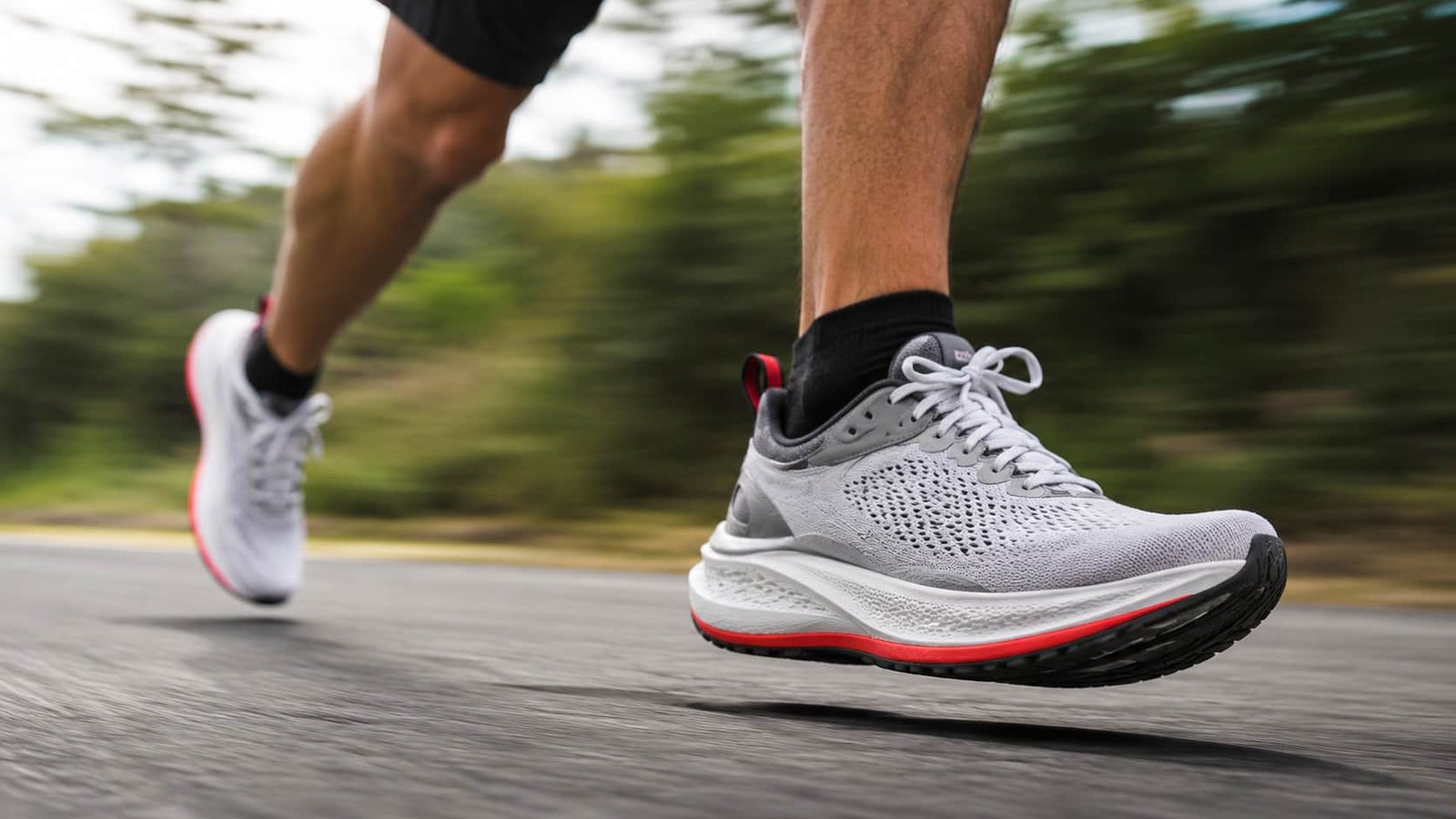
Durability and temperature performance are two areas where FlyteFoam’s reputation is more mixed, and they are worth understanding before you buy.
On durability, public data is limited. RunRepeat’s wider foam guide describes standard EVA and EVA-based foams as generally durable, while premium PEBA foams can lose their peak bounce sooner. FlyteFoam sits mainly in the standard EVA-based group, which is one reason it appears in many everyday trainers. The brand does not publish a mileage figure for the family, so individual results will vary with weight, surface and pace.
RTINGS’s review of the Hyper Speed 6 describes its FlyteFoam as EVA foam, which is consistent with how many reviewers classify the standard variants. That is useful context for everyday buyers, though it does not replace testing of specific models.
On temperature, the picture is more specific. Solereview’s Novablast 5 review says FF Blast MAX stiffens considerably in sub-zero conditions, and that its firmness depends on temperature, running softer on hot days and firmer in freezing weather. RunRepeat’s Novablast 5 review also recorded a notable energy return gain over the previous model, but the cold-weather behaviour is a separate issue. If you run in winter, it is worth trying the shoe in cold conditions or reading reviews that test temperature directly.
Solereview also argues that the variants within the FlyteFoam name are inconsistent. It notes that FF Blast+ in the Cumulus 27 feels different from the FF Blast+ in the Kayano 31. That observation fits with a broader issue across the industry, where brands keep the same foam name while changing the formula. Our running shoe foam overview explains why that happens.
For practical care, shoe lifespan depends on your running volume and how you rotate pairs. Our guide to how long running shoes last covers the signs of wear, and our shoe care guide gives safe cleaning steps.
Which Shoes Use FlyteFoam?
FlyteFoam appears across ASICS’s running range, from everyday trainers to racing shoes. The examples below are drawn from ASICS’s own variant guide and independent reviews. Models change often, so check the current product page before you buy.
Everyday cushioned trainers. The NOVABLAST and GEL-CUMULUS use FF BLAST MAX. The GEL-NIMBUS and GEL-KAYANO use FF BLAST PLUS, with the GEL-NIMBUS including FF BLAST PLUS ECO in some versions. The Gel-Kayano 33, reviewed by Supwell, uses a top layer of FF Blast Max over a denser FF Blast+ base.
Lighter everyday shoes. The GEL-PULSE and GT-1000 use the original FF BLAST. RunRepeat has measured the Gel Pulse 15, a FlyteFoam-only shoe, at 44.2% energy return, which places it well below the premium racing foams.
Speed and tempo trainers. The Magic Speed 5, reviewed by RunRepeat, uses a top layer of FF Leap over an FF Blast+ base, with a carbon plate between them. Reviewers praised the top foam but noted that the base limits energy return.
Racing and super shoes. The METASPEED SKY and EDGE use FF TURBO PLUS as the top layer. The MEGABLAST uses FF TURBO SQUARED as a full-length foam. The SUPERBLAST 3 uses FF LEAP over FF Blast+. The METASPEED RAY uses FF LEAP throughout, according to ASICS’s variant guide.
Trail and other shoes. ASICS uses FlyteFoam across its trail and lifestyle lines as well. Check each model’s midsole for the exact variant, because the same family name can appear in very different constructions.
FlyteFoam and Other ASICS Technologies
FlyteFoam is one of several technologies ASICS uses to shape a ride. Understanding the others helps you see how the foam fits into the whole shoe.
PureGEL is the most important companion. ASICS describes it as the updated version of its gel technology, about 65% softer, and places it alongside FlyteFoam to balance soft landings with responsive toe-offs. That pairing is common across the stability and cushioned lines.
Carbon plates appear in ASICS’s racing models, including the METASPEED SKY and EDGE. ASICS says the plate increases the deformable foam volume under it, which can enhance energy return from the midsole.
ASTROPLATE is a PEBAX-based plate used in the SONICBLAST. ASICS describes it as designed to be more comfortable for daily runs than a carbon plate.
Our ASICS shoe technology guide covers how these systems work together across the brand. For a closer look at the gel component, read our ASICS GEL technology guide.
Which FlyteFoam Shoe Should You Choose?
Choosing a FlyteFoam shoe is easier when you ask what kind of running you do most and which ride you enjoy.
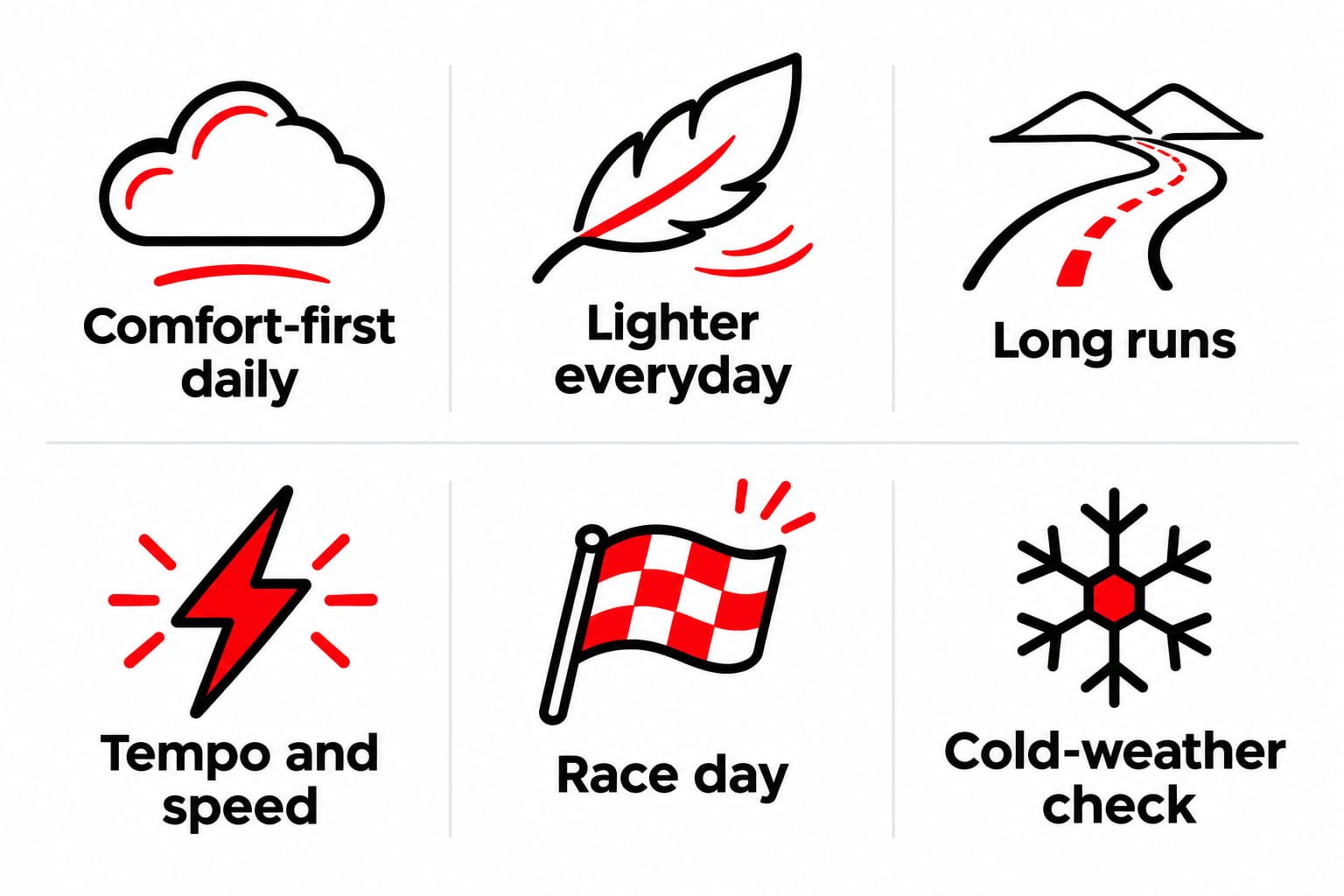
For comfort-first daily running, look at FF BLAST PLUS or FF BLAST MAX shoes such as the GEL-NIMBUS, GEL-KAYANO, GEL-CUMULUS or NOVABLAST. These offer plush, forgiving cushioning and suit easy and recovery miles. If you run in very cold weather, check reviews for temperature performance.
For a lighter everyday shoe, the original FF BLAST in models such as the GEL-PULSE or GT-1000 offers balanced bounce without a firm racing feel.
For tempo runs and faster sessions, choose a shoe with FF LEAP or FF TURBO on top, such as the SUPERBLAST, METASPEED RAY or METASPEED SKY. Check the base foam as well, because it affects how much rebound you feel.
For race day, look at the METASPEED and MEGABLAST range, bearing in mind that racing foams wear faster than everyday trainers. Keep them for races and key sessions.
If you want the best value, the everyday FlyteFoam shoes often offer strong cushioning at a moderate price. Compare the price per mile you expect to run, not just the purchase price.
A simple checklist can help. Ask yourself whether you want softness or firmness, how many miles you run each week, whether you run in cold weather, and whether you need extra stability. Our shoe finder can filter by use case, and our footwear knowledge hub has further guides on fit and materials.
For readers comparing FlyteFoam with other foam families, our adidas Lightstrike foam guide and adidas Boost foam guide offer useful contrasts. Our methodology page explains how we prepare comparison content.
Common Myths About FlyteFoam
Myth: All FlyteFoam is the same foam. The family includes several variants with different densities and layering. Two shoes labelled FlyteFoam can feel very different.
Myth: FlyteFoam is only for slow, easy running. The racing variants, including FF TURBO and FF LEAP, are designed for speed. The everyday variants are for comfort, but the family covers a wide range.
Myth: A softer FlyteFoam always returns more energy. Lab results suggest that softness and energy return are not the same. A soft foam can lose energy if it compresses too deeply or rebounds slowly.
Myth: The brand’s energy return claims match lab results. ASICS claimed an 8.5% energy return gain for the Novablast 5, while RunRepeat measured 5.3%. Independent results can differ from brand claims.
Myth: FlyteFoam performs the same in every temperature. Reviewers report that FF Blast MAX stiffens considerably in sub-zero conditions, so cold-weather performance depends on the variant.
Frequently Asked Questions
What does FF mean on ASICS shoes?
FF stands for FLYTEFOAM, ASICS’s proprietary midsole foam technology. It was developed by the ASICS Institute of Sport Science and first introduced in 2016.
What is the difference between FF BLAST and FF BLAST MAX?
FF BLAST offers balanced comfort and bounce, while FF BLAST MAX is softer and taller with responsive energy return. Reviewers describe FF BLAST MAX as plusher, and it is used in models such as the NOVABLAST and GEL-CUMULUS.
Is FF BLAST PLUS lighter than FF BLAST?
ASICS says FF BLAST PLUS is 19% lighter than FF BLAST, according to its New Zealand blog. Weight also depends on the shoe, so compare shoe weights for your size.
Is FlyteFoam good for running?
Many FlyteFoam shoes suit daily running, and racing variants such as FF TURBO and FF LEAP are built for speed. The right choice depends on your pace, surface and the ride you enjoy.
Does FlyteFoam wear out quickly?
Public data on FlyteFoam durability is limited. Many FlyteFoam variants are EVA-based, which reviewers generally classify as durable, though racing variants can wear faster. Track your mileage and watch for changes in cushioning.
Does FlyteFoam stiffen in cold weather?
Some variants do. Solereview reports that FF BLAST MAX firms noticeably in sub-zero temperatures. Check reviews that test cold-weather performance if you run in winter.
Is FlyteFoam the same as ASICS GEL?
No. FlyteFoam is a midsole foam, while GEL is a separate cushioning technology. ASICS often uses them together, with PureGEL placed alongside FlyteFoam to balance soft landings and responsive toe-offs.
Final Verdict
FLYTEFOAM is a family of ASICS midsole foams that runs from comfortable everyday cushioning to racing-level rebound. The “FF” label tells you a shoe uses the family, but not which variant or how the foam is layered. Check the variant, the top and base layers and reviews that test energy return and cold-weather performance.
If you want plush, forgiving cushioning, look at FF BLAST PLUS and FF BLAST MAX models. If you want a lighter everyday ride, FF BLAST is a reliable choice. If you want speed, look at the FF LEAP and FF TURBO shoes, and remember that racing foams wear faster. Before buying, check the current model’s midsole, weight and price, and try the shoe on if you can. The right FlyteFoam is the one that matches the runs you actually do.
Sources
- ASICS. “What is FLYTEFOAM™?” (April 2026). https://www.asics.com/us/en-us/blog/what-is-flytefoam/
- ASICS New Zealand. “FF BLAST™ Foam Technology” guide. https://www.asics.com/nz/en-nz/mk/ff-blast-foam-technology
- ASICS New Zealand. “What is FLYTEFOAM?” blog. https://www.asics.com/nz/en-nz/blog/article/what-is-flytefoam
- RunRepeat. “ASICS Novablast 5” review. https://runrepeat.com/asics-novablast-5
- RunRepeat. “ASICS Superblast 3” review. https://runrepeat.com/asics-superblast-3
- RunRepeat. “ASICS S4+ Yogiri” review. https://www.runrepeat.com/uk/asics-s-4-yogiri
- Solereview. “ASICS Novablast 5 review.” https://www.solereview.com/?p=21501
- RunRepeat. “The Ultimate Guide to Running Shoe Foams.” https://runrepeat.com/guides/running-shoe-foams-guide