
What Is a TPR Sole? The Complete Guide to Meaning, Durability & Comfort
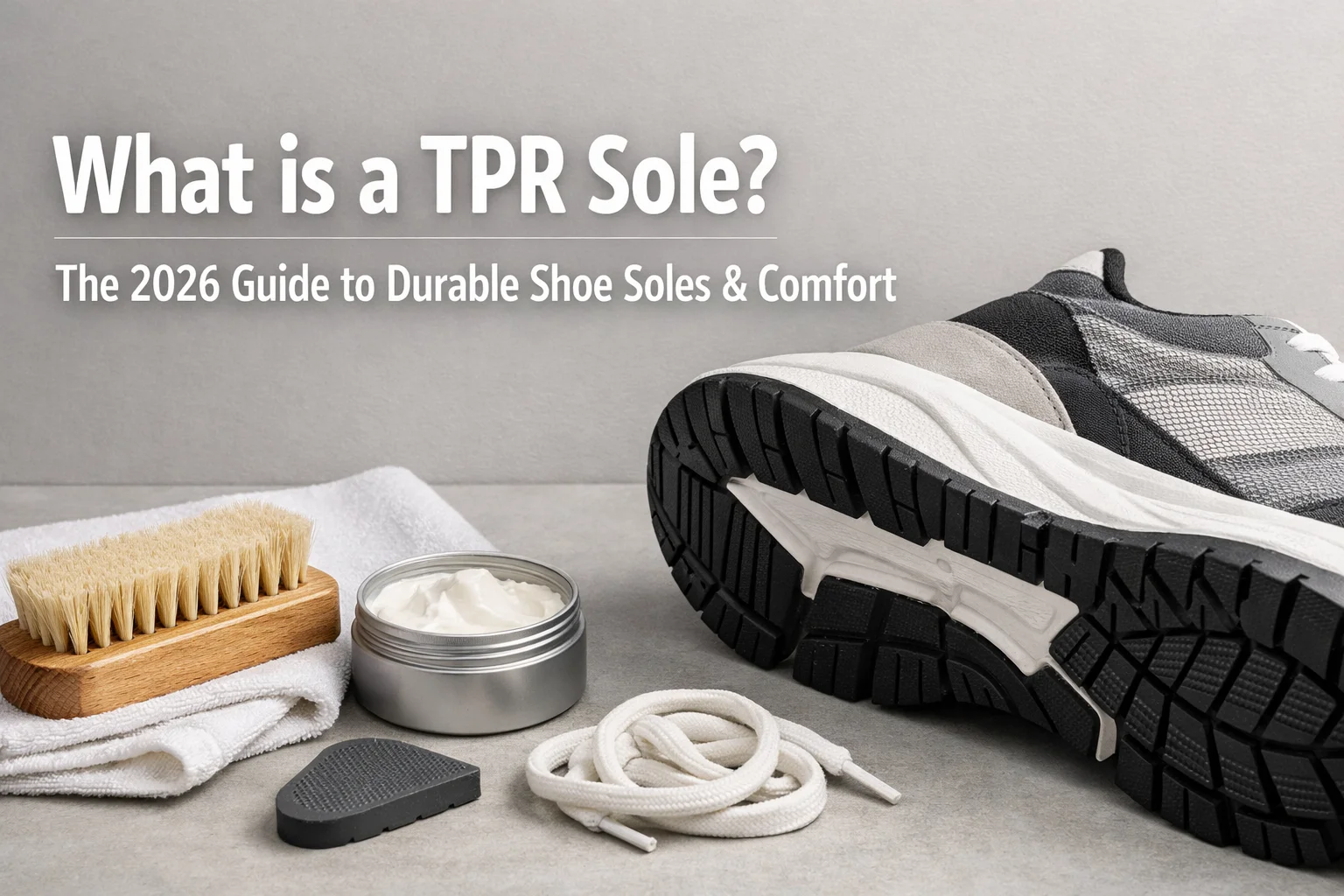
Close-up of a durable TPR sole on a casual walking shoe, showing the anti-slip tread pattern.
We’ve all been there. You’re scrolling through Instagram or hunting for deals online, and you spot the perfect pair of shoes. They look amazing, the price is right, and you hit “Buy Now.” But two weeks later? You’re slipping on a wet coffee shop floor, your feet ache after a three-hour commute, and the bottom of the shoe is already peeling.
I see this complaint daily on Reddit’s fashion and footwear boards: “Why do my new shoes feel like I’m walking on concrete slabs?” The harsh truth is that most buyers are obsessed with the upper part of the shoe—the style, the leather, the mesh, or even the tips of the laces (fun fact: that little plastic tip is called an aglet)—but completely ignore the foundation: the sole. If you want a shoe that survives daily wear, urban commuting, and long hours on your feet, you need to understand what you’re standing on. (For a deeper dive into how all these parts connect, check out our complete guide to the anatomy of a shoe).
Today, we are talking about the unsung hero of everyday footwear.
TLDR: Quick Answer Box
TPR sole meaning: TPR (Thermoplastic Rubber) is a synthetic blend of rubber and plastic polymers, melted and molded together into a shoe sole that’s flexible like rubber but easy to shape like plastic. The result is a durable, slip-resistant, water-resistant outsole widely used in casual sneakers, walking shoes, kids’ shoes, and winter boots.
Want to see the best options available right now?
- Compare top-rated TPR sole walking shoes on Amazon
- Check out the most durable casual sneakers from trusted brands online
- Browse highly-reviewed winter boots featuring slip-resistant TPR grips
Take care of your soles, and they will take care of you.
- What Is a TPR Sole? The Complete Guide to Meaning, Durability & Comfort
- Why Understanding Your Shoe Sole Matters
- We've All Been There
- What is TPR Sole? (Thermoplastic Rubber Explained)
- What Is TPR Sole Material Actually Made Of?
- Is a TPR Sole Waterproof?
- Is a TPR Sole Hard or Soft?
- Why TPR Sole Shoes Are Taking Over the Casual Market
- Material Showdown: TPR vs. EVA vs. PU vs. Rubber
- Best Use-Cases for TPR Outsole Material
- Disadvantages of TPR Soles
- Retailer Pro-Tips: How to Spot High-Quality TPR Soles
- Common Mistakes Buyers Make Online
- Quick Answers: What You Need to Know
- Shop Floor Insights: The Real-World Test
- FAQs
- Ready to Upgrade Your Footwear?
Why Understanding Your Shoe Sole Matters
Let’s be real for a second. Over the last two decades of running a physical shoe store—handling thousands of pairs, observing wear patterns, and listening to customers complain about foot pain—I’ve learned one undeniable fact: the sole dictates the soul of the shoe. From the humid, rain-soaked streets of Chennai to customers buying boots for freezing New York winters, the physical demands we put on our shoes are universal.
Online shopping has made buying shoes incredibly convenient, but it has completely removed the “touch and feel” test. You can’t flip the shoe over, dig your thumbnail into the rubber, or bend it to check the flex. Because of this, buyers end up with cheap PVC soles that crack in the cold, or pure EVA soles that flatten out into pancakes after a month of heavy walking.
Knowing the exact material—specifically understanding the TPR sole meaning—is your best defense against wasting money on bad footwear.
We’ve All Been There
You’re scrolling online, you spot the perfect pair of shoes, the price is right, you hit “Buy Now.” Two weeks later you’re slipping on a wet coffee shop floor, your feet ache after a three-hour commute, and the bottom of the shoe is already peeling.
I see this complaint daily on Reddit’s fashion and footwear boards: “why do my new shoes feel like I’m walking on concrete slabs?” Most buyers obsess over the upper — the style, the leather, the mesh, even the aglet on the laces — and completely ignore the foundation. (For how all these parts connect, see our full guide to the anatomy of a shoe.)
Over two decades running a physical shoe store — handling thousands of pairs, watching wear patterns, listening to customers complain about foot pain — one thing has become obvious: the sole dictates the soul of the shoe. Online shopping removed the “touch and feel” test, which is exactly why buyers end up with cheap PVC soles that crack in the cold, or pure EVA soles that flatten into pancakes after a month of heavy walking. Knowing what you’re standing on is your best defense against wasting money.
What is TPR Sole? (Thermoplastic Rubber Explained)
So, what exactly are we talking about here?
Thermoplastic Rubber (TPR) is a synthetic material. In the manufacturing world, it’s created by melting down and molding a blend of rubber and plastic polymers.
Think of it as the ultimate compromise. Traditional vulcanized rubber is incredibly tough and grippy, but it’s heavy. Plastic (like PVC) is lightweight and cheap to produce, but it has terrible traction and cracks easily. By blending the two under heat, manufacturers create a TPR outsole material that is:
- Lighter than pure rubber
- More flexible than PVC
- More durable than standard foam
When you see a shoe marketed as having an “anti-slip, all-weather grip,” there’s a very high chance you’re looking at a TPR sole.
What Is TPR Sole Material Actually Made Of?
TPR is typically made by blending styrenic block copolymers (SBS or SEBS) with polypropylene, then adding plasticizers and fillers to fine-tune the softness. Manufacturers adjust that ratio to control hardness, measured on the Shore A scale — which is why one “TPR sole” can feel noticeably firmer or softer than another, even from two shoes marketed with the exact same material name.
A softer blend (lower Shore A) feels cushier underfoot but wears down faster. A firmer blend lasts longer but feels stiffer. This is also the main reason TPR sole quality varies so much between brands — not every “TPR” is blended the same way.
Is a TPR Sole Waterproof?
Yes — a TPR sole is completely waterproof. The material itself is impermeable, so it won’t absorb water, swell, or rot the way some natural materials can. That said, a waterproof sole doesn’t mean a waterproof shoe — water can still get in through the upper (mesh, fabric, unsealed seams) even when the sole underneath handles puddles and snow just fine.
Is a TPR Sole Hard or Soft?
TPR sits in the middle: firmer than EVA foam, softer than rigid materials like PVC or dense polyurethane. Exactly how firm depends on the blend ratio — manufacturers can tune it softer for comfort or firmer for durability, which is why TPR soles can feel meaningfully different from one shoe to the next.
Why TPR Sole Shoes Are Taking Over the Casual Market
If you look in your closet right now, you probably own at least two pairs of TPR sole shoes. Why are brands from budget tiers to mid-range luxury using it so frequently?
1. The Grip Factor (No More Slip-and-Slide)
There is a running joke on TikTok about the “office walk of shame”—when you wear new shoes with hard plastic soles and sound like a tap dancer while simultaneously trying not to slip on the polished tile. TPR has excellent surface traction. It grips well on wet pavements, smooth tiles, and uneven outdoor terrain.
2. Weather Resistance
Unlike genuine leather soles (which soak up water and rot if not cared for) or some foams that harden in the cold, TPR retains its flex. It acts as a fantastic barrier against puddles and snow.
3. Environmental Adaptability
Thermoplastic rubber can be melted down and recycled into new soles, making it a slightly more eco-conscious choice compared to single-use plastics and non-recyclable synthetic blends.
4. Shock Absorption for Daily Commutes
While it isn’t as bouncy as the thick running shoe foams, TPR provides a solid, dense layer of shock absorption. It stops the harsh impact of concrete from sending shockwaves up your knees and lower back.
Which Sole Material Is Right for You?
Answer two quick questions to get a personalized recommendation.
Material Showdown: TPR vs. EVA vs. PU vs. Rubber
To truly understand why you might want durable shoe soles made of TPR, you have to see how it stacks up against the competition. Here is the breakdown I use when explaining options to customers on the shop floor.
| Feature | TPR (Thermoplastic Rubber) | EVA (Ethylene Vinyl Acetate) | PU (Polyurethane) | Natural Rubber |
|---|---|---|---|---|
| Best For | Casual shoes, boots, daily walkers | Running shoes, lightweight sneakers | Heavy-duty work boots, premium hikers | Heritage boots, high-end sneakers |
| Weight | Moderate | Very Light | Heavy | Very Heavy |
| Durability | High | Low/Medium (compresses over time) | Very High | Extremely High |
| Flexibility | Excellent | Good | Moderate | Good |
| Slip Resistance | Great on most surfaces | Poor on wet/slick surfaces | Good | Excellent |
| Cost | Budget to Mid-Range | Budget to Mid-Range | Expensive | Expensive |
Comfort vs. Durability: The Trade-off
The biggest mistake people make is buying shoes meant for running for a job where they stand for 10 hours a day. Yes, EVA foam feels like stepping on a marshmallow initially. But after a few weeks, that marshmallow gets squished flat. TPR sole shoes, on the other hand, might feel a bit firmer on day one, but they will maintain their shape and support for months, if not years.
Best Use-Cases for TPR Outsole Material
Not every material is right for every situation. Here is a quick framework for when you should actively seek out a TPR sole:
- The Daily Office Commute: If you walk to the train, navigate city sidewalks, and then sit at a desk, TPR casual oxfords or loafers are perfect. They look structured but flex naturally with your foot.
- Travel and City Exploring: When you’re racking up 15,000 steps a day on a European vacation, you want something that won’t wear through at the heel. TPR handles cobblestones beautifully.
- Kids’ School Shoes: Kids destroy shoes. They drag their feet, kick rocks, and play in the rain. TPR is the gold standard for children’s footwear because it is virtually indestructible under normal wear.
- Light Winter Boots: Because TPR is waterproof and provides solid grip, it is widely used in fashion winter boots and chukkas.
Note: I do not recommend TPR for serious long-distance running. For high-impact sports, you need specialized EVA, TPU, or advanced PEBA foams, often paired with stiff propulsion tech like in modern carbon plate running shoes.
Disadvantages of TPR Soles
TPR isn’t right for every shoe. It underperforms in extreme heat (industrial environments, for instance), where it can soften and deform. It’s not built for performance running — specialized EVA, TPU, or PEBA foams are lighter and more responsive for high-impact sport. And at the cheap end, a poorly balanced blend (too much plastic, not enough rubber) can feel stiff and slightly less grippy than a well-made TPR sole.
Retailer Pro-Tips: How to Spot High-Quality TPR Soles
Brands take shortcuts. It’s a sad reality of the footwear industry. Here are a few insider quality checks you can perform (even when reading online reviews) to ensure you are getting the real deal.
- The “Thumbnail” Rule: If you are in a store, press your thumbnail into the sole. Good TPR will give slightly and bounce right back. If it feels like tapping on a hard piece of wood, it has too much plastic in the mix. It will be slippery.
- Check the Flex Point: The shoe should bend easily at the ball of the foot (where your toes naturally bend). If the TPR sole bends right in the middle (the arch), it lacks structural integrity and will cause plantar fasciitis.
- Look for Siping: “Siping” refers to the tiny razor cuts or grooves on the bottom of the sole. High-quality TPR outsoles will have distinct tread patterns designed to channel water away, exactly like a car tire.
- Read the Weight Specs: When shopping online, check the shipping weight. If a chunky boot weighs suspiciously little, it’s likely an injection-molded foam sole painted to look like TPR or heavy rubber.
Common Mistakes Buyers Make Online
- Choosing Aesthetics Over Support: Buying a shoe because the upper is premium leather (it always pays to know the difference between full-grain vs top-grain), but ignoring the cheap PVC sole glued to the bottom.
- Assuming “Rubber” Means Natural Rubber: Many brands say “rubber sole” in the product description. 90% of the time in the sub-$100 category, this actually means TPR outsole material. That’s not a bad thing, but it’s important to know the difference.
- Ignoring Sole Thickness: A 2mm TPR sole will still let you feel every single pebble on the ground. For urban walking, look for a sole thickness of at least half an inch at the forefoot.
- Poor Gluing: TPR is notoriously tricky to glue to leather uppers. If you are reading Amazon reviews and see people complaining about the sole “talking” (peeling away at the toe), avoid that specific brand.
Quick Answers: What You Need to Know
Is TPR sole good for daily use? Absolutely. It is specifically engineered to handle the friction of daily walking, providing an excellent balance of wear resistance and flexibility.
Does a TPR sole make noise? High-quality TPR is quiet. However, if the sole is brand new or you are walking on highly polished indoor floors (like a mall or hospital), it may squeak slightly until the bottom gets a little scuffed up.
Is a TPR sole better than a rubber sole? It depends on the goal. Natural rubber is heavier and slightly grippier, making it great for work boots. TPR is lighter and more flexible, making it superior for casual sneakers and daily comfort shoes.
Can TPR soles be repaired? Yes, a skilled cobbler can sand down and glue a new piece of tread onto a TPR base, though it is often cheaper to replace the shoe if the upper is also worn out.
Is TPR good for winter? Yes. TPR retains its flexibility in cold temperatures and offers excellent grip on wet or slightly icy surfaces, making it a staple in casual winter footwear.
Shop Floor Insights: The Real-World Test
Having spent over two decades fitting shoes and analyzing wear patterns, I can tell a lot about a person’s gait just by looking at their old soles.
One of the biggest issues I see is “heel drag”—people who strike the ground hard with the outside edge of their heel. When these customers buy soft foam soles, they wear an angular hole into the shoe within weeks, which completely throws off their posture and causes knee pain.
When I switch these customers to tpr sole shoes, the difference is night and day. Because the material is highly resistant to abrasion, it maintains a level platform much longer. This isn’t just about the shoe lasting longer; it’s about maintaining your foot health and biomechanics. A shoe that wears out unevenly is an orthopedic nightmare waiting to happen.
FAQs
What does TPR stand for in shoes? TPR stands for Thermoplastic Rubber — a synthetic blend of rubber and plastic used to make durable, flexible shoe outsoles.
Is a TPR sole good for daily use? Yes. It’s engineered to handle the friction of daily walking, balancing wear resistance with flexibility.
Is a TPR sole waterproof? Yes, the material itself is fully impermeable to water — great for rain and snow, provided the shoe’s upper is also treated or sealed.
Is a TPR sole hard or soft? It sits in the middle: firmer than “marshmallow” EVA foam, softer and more flexible than rigid PVC or dense polyurethane.
Does a TPR sole make noise? High-quality TPR is quiet. New shoes, or highly polished floors, can cause a slight squeak until the sole gets a bit of texture from wear.
What are the disadvantages of TPR soles? It’s not suited to extreme heat environments, where it can soften and deform, and it isn’t the right choice for performance running — specialized EVA, TPU, or PEBA foams perform better there.
What is the difference between TPR sole and PVC sole? TPR blends rubber and plastic for better grip, flexibility, and cold-weather resistance. PVC is mostly plastic — stiffer, more prone to cracking in winter, and notably slippery on wet floors.
Is a TPR sole better than a rubber sole? Depends on the goal. Natural rubber is heavier and slightly grippier, good for work boots. TPR is lighter and more flexible, better for casual sneakers and daily comfort shoes.
Can TPR soles be repaired? Yes — a skilled cobbler can sand down and glue new tread onto a TPR base, though replacing the shoe is often cheaper if the upper is also worn out.
How long does a TPR sole last? With daily, moderate use, a good-quality TPR sole typically lasts 1 to 2 years before the tread wears down significantly.
How do you clean TPR shoe soles? Low maintenance — a stiff brush, warm water, and mild dish soap will remove dirt and grime from the tread easily.
Is TPR an eco-friendly material? More so than thermoset plastics — TPR can be melted down and recycled into new products at the end of its life.
Ready to Upgrade Your Footwear?
Your feet carry you through your entire life; stop punishing them with sub-par materials. Now that you understand the TPR sole meaning and know exactly what to look for, you can shop with confidence.
Whether you need a reliable pair of walking shoes for your next trip, or a sturdy pair of casual oxfords for the office, prioritize the outsole.
Want to see the best options available right now?
- Compare top-rated TPR sole walking shoes on Amazon
- Check out the most durable casual sneakers from trusted brands online
- Browse highly-reviewed winter boots featuring slip-resistant TPR grips
Take care of your soles, and they will take care of you.