
Saucony PWRRUN and PWRRUN+ Explained: What the Foam Really Is
Editorial Guide | Saucony Foams |
Summarize this guide with AI
Choose an assistant and submit the prefilled request. The assistant reads the page only after you submit it.
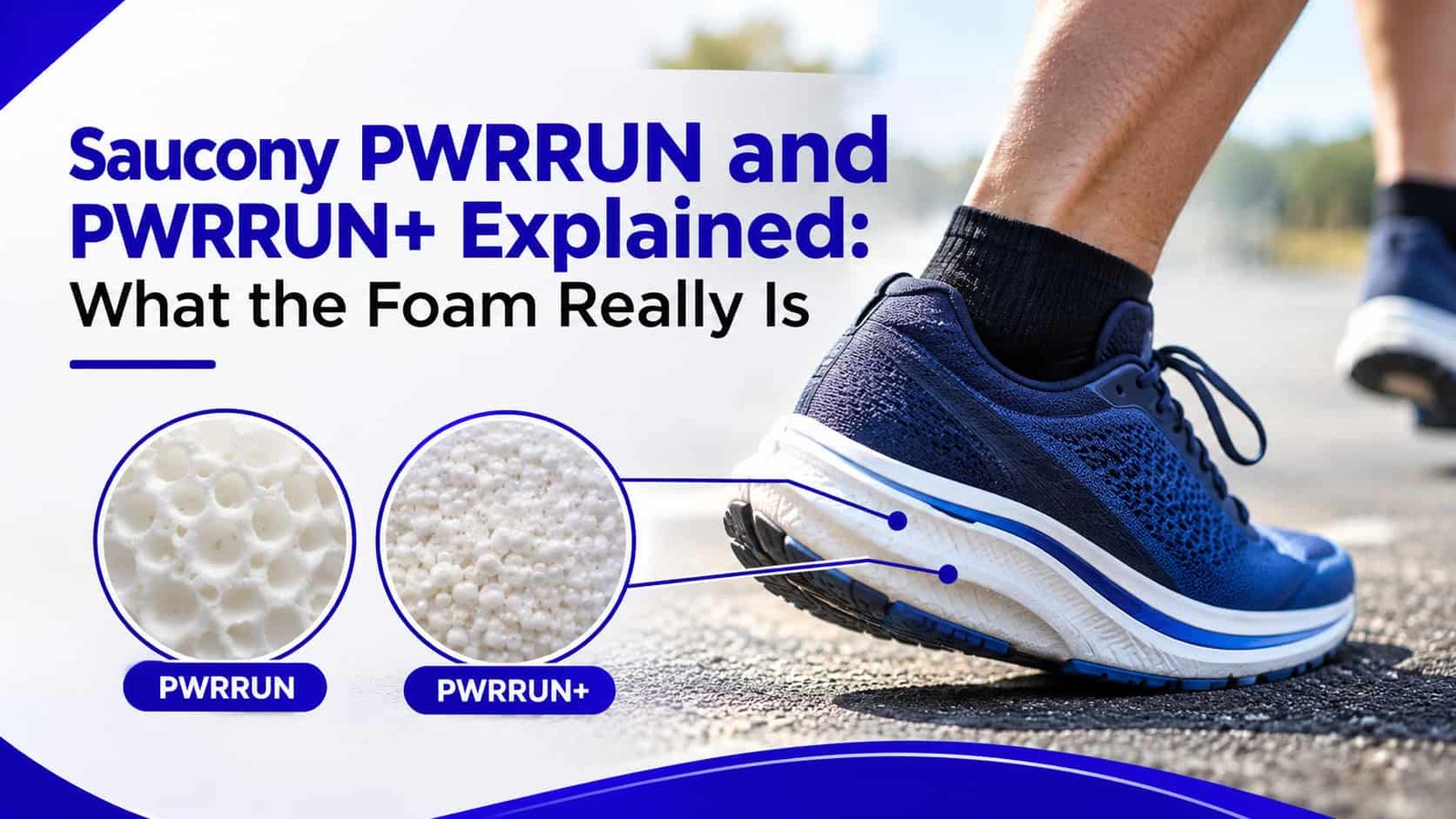
- PWRRUN is a family name. Standard PWRRUN is an EVA blend, PWRRUN+ is steam-fused TPU, and PWRRUN PB and HG use PEBA.
- Saucony gives no test figures for energy return or durability in the pages reviewed.
- Independent rankings place PEBA high, TPU mid, and EVA low for energy return.
- Check the foam named in the current product description before comparing models.
PWRRUN is Saucony’s umbrella name for several foams. Standard PWRRUN is a proprietary EVA blend aimed at everyday cushioning. PWRRUN+ is steam-fused TPU, built for softness and durability. PWRRUN PB and PWRRUN HG use PEBA, a high-rebound material for faster running. The name covers different foams, so read the specific foam before you buy.
Key takeaways
- PWRRUN is a family name. Standard PWRRUN is an EVA blend, PWRRUN+ is steam-fused TPU, and PWRRUN PB and PWRRUN HG are PEBA.
- Saucony describes standard PWRRUN for everyday training, PWRRUN+ for long runs and comfort, and the PEBA versions for tempo work and racing. These are the brand’s stated uses.
- Saucony gives no test figures for energy return, durability, or weight in the pages reviewed. Independent foam ratings place PEBA high, TPU mid, and EVA low for energy return.
- Shoe pages do not always name the foam clearly. Check the foam in the product description before you compare models.
- Model years change which shoes carry which foam, so use the current product page rather than an older guide.
Why One Name Covers Several Foams
Most shoppers meet PWRRUN as a single word on a product page. It sounds like one material, but Saucony uses the name for several foams that differ in chemistry, feel, and purpose. Think of it as a brand label, not a material specification.
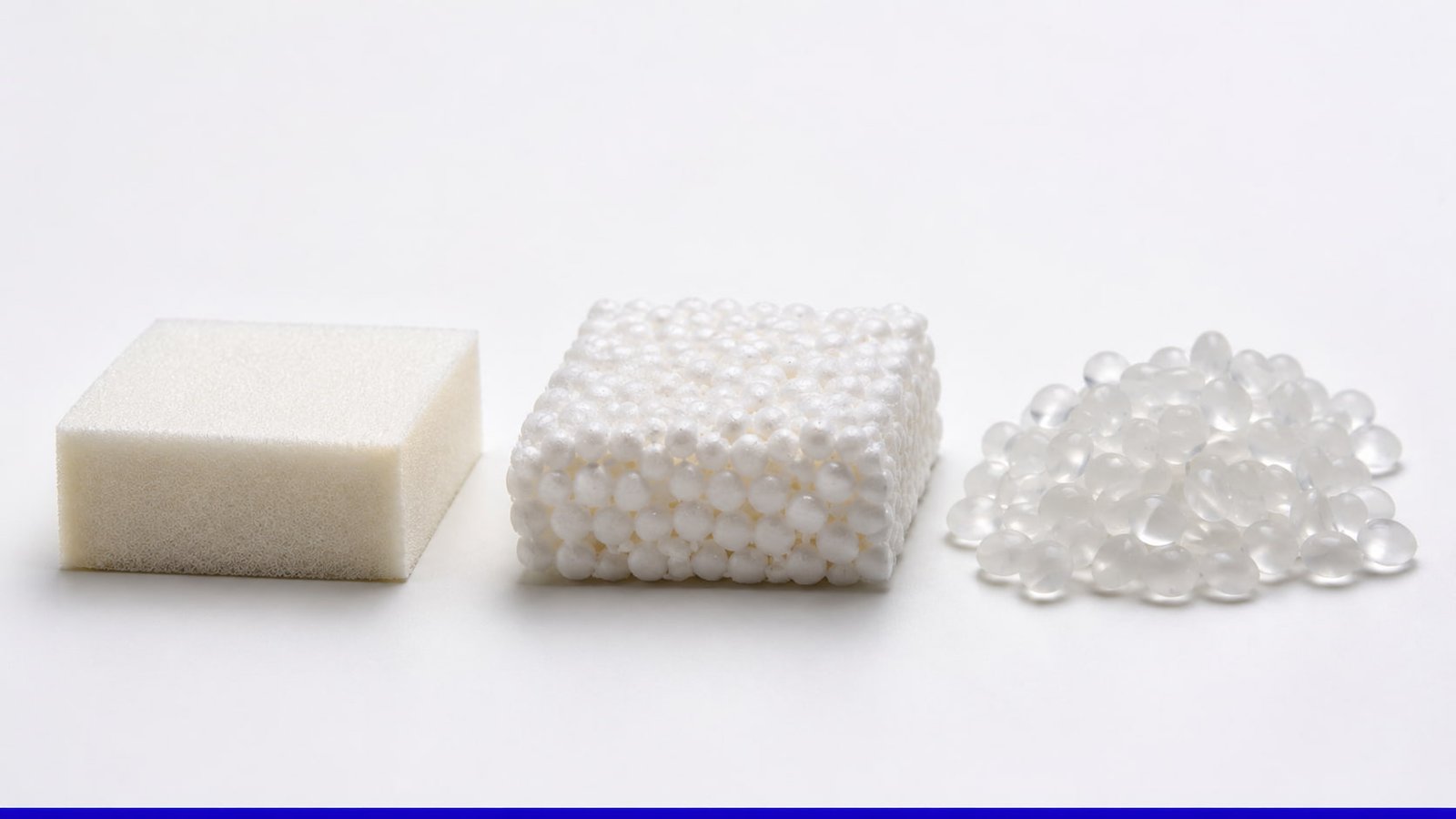
This matters because the three main families behave differently. An EVA blend is the most common midsole material in running shoes, and our explainer on EVA foam covers how it works. TPU is a different polymer foamed into a different structure. PEBA is a high-rebound material used in many performance shoes. Putting all three under one name makes comparisons harder.
Saucony’s own guide describes the families in this way. Standard PWRRUN is a “proprietary EVA blend.” PWRRUN+ is TPU “fused together with steam.” PWRRUN PB uses “lightweight PEBA beads,” and PWRRUN HG is described as “Saucony’s premium PEBA racing foam.” Those descriptions are the brand’s own, so treat them as the starting point for the rest of this guide.
Standard PWRRUN: The EVA Blend
Standard PWRRUN is the foundation of the family. Saucony describes it as “a proprietary EVA blend that delivers lasting comfort, shock absorption, and durability for everyday training.” Its ride is intended to feel balanced. Saucony describes it as protective “without feeling overly soft.”
That position makes sense for daily training. A balanced foam is useful for runners who want consistent cushioning from one run to the next, rather than a plush or race-like feel. The brand’s foam guide places it in the “daily training” category, and its table describes it as “balanced and durable.”
Saucony’s foam-technology page makes a stronger shock-absorption claim, saying the foam offers “high levels of shock absorbency” to protect joints and tendons. That is a manufacturer claim, and the page gives no test method or figure. Read it as a design goal rather than a measured result.
The practical trade-off is that an EVA blend usually sits lower on energy-return rankings than PEBA. Independent guides such as RunRepeat’s running shoe foams guide place EVA low on energy return. A standard PWRRUN shoe will feel steady and protective, not especially springy.
PWRRUN+: Steam-Fused TPU
PWRRUN+ moves the family into TPU, or thermoplastic polyurethane. Saucony describes it as “made from TPU and steam-fused for exceptional softness, durability, and responsiveness.” Steam fusing bonds expanded particles together, which is also how many TPU midsoles are built.
The brand’s most distinctive durability claim is here. Saucony’s foam-technology page calls PWRRUN+ “exceptionally durable over long distances.” Its guide says the foam “feels just as good late in a run as it does at the start.” These statements describe how the foam is meant to perform. They do not include mileage data or a test method.
TPU is generally placed between EVA and PEBA in independent energy-return rankings. For readers who want a soft ride that holds up over longer runs, PWRRUN+ is the more relevant member of the family. The guide’s table describes it as “plush and resilient” and suits it to long runs and everyday comfort.
For background on the material itself, our guide to what TPU is in shoes explains how TPU foam is produced.
PWRRUN PB and PWRRUN HG: The PEBA Versions
PWRRUN PB and PWRRUN HG are the performance end of the family. Saucony’s foam-technology page describes PWRRUN PB as “a very special type of PEBA foam” with foam beads added. It calls PEBA “famed for exceptional energy return” and says the material is more responsive and cushioned at speed, light in weight, and consistent “in all temperatures.”
| Foam | Material | Brand’s stated use | Independent energy-return rank |
|---|---|---|---|
| PWRRUN | Proprietary EVA blend | Everyday, balanced training | Low (category-level) |
| PWRRUN+ | Steam-fused TPU | Long runs, plush comfort | Mid-range (category-level) |
| PWRRUN PB | PEBA beads | Tempo and speed work | High (category-level) |
| PWRRUN HG | PEBA racing foam | Racing | High (category-level) |
PWRRUN HG is described as Saucony’s “premium PEBA racing foam, delivering exceptional energy return with minimal weight.” The guide’s table places it as highly responsive and suited to racing.
PEBA is the material most runners associate with fast, springy shoes. It is also the foam where the trade-offs show up most clearly. Independent comparisons generally place PEBA high on energy return and lower on durability. RunRepeat’s guide places PEBA at the high end of energy return, while RunToTheFinish’s comparison suggests PEBA has shorter lifespan than EVA or TPU. These are third-party rankings, not Saucony data.
The PB and HG foams are therefore best read as tools for specific sessions. They suit tempo work, speed sessions, and racing. They are less likely to be the right choice for daily miles on a tight budget, where durability per pound is a bigger factor.
The Fused PWRRUN HG + PB Option
Saucony also combines two PEBA foams in some models. Its PWRRUN HG+PB page, which lists the Endorphin Pro line, describes the foam as “PWRRUN HG+PB” and gives it an 8mm offset, road surface, and a race-day use. The brand’s foam guide describes the Endorphin Pro 4 as an “industry first,” with a ride that is “snappy and responsive yet smooth and efficient.”
This is the newest and most marketing-heavy part of the family. The page gives no test data, energy-return figure, or durability claim, and it does not explain how the two foams are combined. The sensible reading is that it is a race-oriented PEBA setup, and its benefits should be checked against your own experience on the shoe.
How to Read a PWRRUN Shoe Listing
Product pages do not always name the foam clearly, so a short checklist helps.
- Look for the exact name. “PWRRUN” alone does not tell you the foam. Search the description for “PWRRUN+,” “PB,” “HG,” or “EVA blend.”
- Check the stated use. Daily-training shoes usually carry a standard or plus foam. Race-day models often carry PB or HG.
- Read the weight and offset. These are shoe-level figures. A lighter shoe is not always a higher-rebound one, because upper, outsole, and stack height also matter.
- Compare models within the same year. Saucony’s guide and its product categories list different model years. Guide 18, Kinvara 16, and Peregrine 15 appear in the foam guide, while the current category lists Guide 19, Kinvara 16, and Peregrine 16. Use the current product page for the model you are buying.
- Check the outsole and upper. The foam is only one part of how a shoe feels and lasts.
Our shoe finder can help you narrow options by use if you are comparing several models.

Durability: What Saucony Says and What Is Missing
PWRRUN durability is a common search question. The honest answer is that Saucony does not publish a mileage figure or a test method for any PWRRUN foam in the pages reviewed. The claims are qualitative. PWRRUN+ is described as “exceptionally durable over long distances,” and the standard PWRRUN blend is described as offering “lasting comfort.”
Independent sources are also cautious. Saucony’s own foam FAQ says foam lifespan “varies based on the foam type, mileage, running surface, and individual running mechanics.” That is the most accurate single sentence on the subject, and it matches what most runners see in practice.
Two points are worth keeping in mind. First, PEBA foams usually trade durability for energy return, so a race-focused PB or HG shoe will often wear faster than a daily-training model. Second, the outsole rubber and upper often wear out before the midsole does. Check the outsole pattern and whether the midsole feels flat compared with a newer pair.
For a broader view of shoe life, read our guide to how long running shoes last.
Energy Return in Context
Energy return is the figure most readers want, and it is the one Saucony leaves out. The brand describes PWRRUN PB as offering “exceptional energy return,” but no percentage, test standard, or comparison appears in the material reviewed.
Independent guides fill that gap with rough rankings rather than measurements. RunRepeat’s foam guide places PEBA high, TPU mid-range, and EVA low for energy return. These are category-level judgments, so they show the direction of the trade-off, not the precise difference between two shoes.
Energy return also depends on the runner. Body weight, stride, pace, and the shape of the shoe all change how much rebound you feel. A high-rebound foam in a shoe with a poor heel or an unstable platform may feel less effective than a lower-rebound foam in a well-built shoe.
If you want to see how this site approaches shoe reviews, our methodology page explains it. The rankings above are third-party, not our own testing.
Who Should Choose Which PWRRUN
These are editorial suggestions based on the brand’s stated uses and the independent rankings above. They are not findings from lab testing.
Choose standard PWRRUN (EVA blend) if:
- most of your running is daily, steady training
- you want a balanced, protective feel
- you prefer predictable cushioning over springy rebound
Choose PWRRUN+ (TPU) if:
- you run long and want a soft ride that stays consistent late in a run
- durability matters more to you than maximum rebound
- you find very firm shoes uncomfortable on long runs
Choose PWRRUN PB or PWRRUN HG (PEBA) if:
- you run tempo sessions, speed work, or races
- you want a lighter, more responsive feel
- you accept that the foam may wear faster than daily-training foams
Be cautious with the fused HG + PB setup if:
- you are new to race-day shoes
- your pace is slow and your stride is not fully settled, because very responsive foams can feel unstable to some runners

Myths Worth Dropping
Myth 1: All PWRRUN shoes feel the same. The name covers three different foam families. A standard PWRRUN daily trainer and a PWRRUN PB racer will feel very different.
Myth 2: PWRRUN is always the most durable option. Saucony describes PWRRUN+ as durable and the standard blend as long-lasting, but no measured comparison is published. PEBA foams usually trade durability for rebound.
Myth 3: A newer PWRRUN model is always better. Model updates change the foam, the upper, and the outsole. Compare the specific shoe, not the family name.
Frequently Asked Questions
Is Saucony a good brand?
Saucony is a long-established running brand, and its foams are described in detail on its own pages. Whether it suits you depends on fit, the foam you want, and the runs you do. Compare specific models rather than the brand as a whole.
Are Saucony and ASICS the same?
No. They are separate companies with different foam systems. ASICS uses its own technologies, such as GEL and FlyteFoam. Compare the specific foam and model you are considering.
What is the difference between PWRRUN and PWRRUN+?
Standard PWRRUN is a proprietary EVA blend for balanced daily cushioning. PWRRUN+ is steam-fused TPU, which Saucony describes as softer and more durable over long distances.
Are Endorphin Pro shoes good for marathons?
The Endorphin Pro line uses PEBA-based foam that Saucony positions for racing and fast running. For a marathon, the question is whether you are comfortable with a race-oriented shoe for the full distance. Check the fit, the heel, and how the shoe feels after long efforts.
Do Saucony shoes fit like Nike?
Fit varies by model and width. Use the brand’s size chart and compare with your usual shoe, rather than relying on a general brand comparison.
How do I know which PWRRUN is in a shoe?
Read the product description on the current shoe page. If it says only “PWRRUN” without a suffix, check the brand’s foam technology page or contact the retailer before you buy.
Final Verdict
PWRRUN is best understood as a family of foams, not one material. The standard blend is an EVA foam for balanced daily cushioning. PWRRUN+ is a steam-fused TPU for softness and long-distance comfort. PWRRUN PB and HG use PEBA for fast, responsive running. Saucony does not publish the test figures that would settle comparisons, so the most useful step is to match the foam to the runs you actually do.
Start with our running shoe foam guide for the wider foam picture. Then check the current product page for the exact foam in the model you are considering.
Sources