
Brooks DNA FLASH Explained: Brooks’ Fast Foam, and Which Shoes Use It

Summarise this guide with AI
Open your preferred assistant and submit the prefilled request. The assistant only reads this page after you submit it.
- What Brooks DNA FLASH is and how it differs from DNA LOFT
- How FLASH v2 compares with v1, and what Brooks claims
- What lab tests show for energy return
- Which Brooks shoes use FLASH, and whether it suits your running
DNA FLASH is Brooks’s lightweight, nitrogen-infused foam, built for speed and used in its faster racing and training shoes. Brooks says the current FLASH v2 is about 10% more responsive than the first version, and independent testers describe it as lively, though it is not a super-shoe foam. It suits tempo runs, workouts and quicker days. Its role has also shifted, with some newer models using it as a supporting layer.
Key Takeaways
- FLASH is Brooks’s speed foam. Brooks describes it as lightweight cushioning, softer than LOFT’s plush feel but built for pace.
- FLASH v2 is the current version. Brooks says it is about 10% more responsive than v1, a manufacturer claim that reviewers have broadly echoed.
- Energy return is respectable, not elite. Lab results generally place FLASH-based shoes around or slightly above average, below PEBA and A-TPU super foams.
- Its role is changing. In the Hyperion Max 3, reviewers found FLASH v2 sitting beneath a PEBA-based top layer rather than filling the midsole.
- Check the shoe, not just the foam. Plates, stack and weight change the ride, so compare full models.
What Is DNA FLASH?
Brooks’s midsole family has a name for every job. DNA LOFT is the soft, plush option, and DNA FLASH is the lighter, faster one. Brooks describes FLASH as its lightweight cushioning, built for speed. It is still soft, but less plush than LOFT, and the company positions it in its fastest racing and training shoes.
Like LOFT, FLASH is infused with nitrogen. Brooks’s current technology page describes both foams together as nitrogen-infused, giving an enhanced lightweight experience whether you want plush softness or dynamic responsiveness.
For readers new to the terminology, the foam’s composition sits within the broader group of supercritical EVA foams, which the brand and reviewers describe in similar terms. Our EVA foam explainer covers the base material, and our Brooks shoe technology overview places FLASH alongside Brooks’s other systems.
FLASH and LOFT: Two Ends of Brooks’s Range
Brooks uses LOFT and FLASH to cover opposite ends of its cushioning spectrum. LOFT is built for comfort: a soft, enveloping landing that absorbs road texture and keeps a consistent ride for the length of a run. FLASH is built for pace: a firmer, quicker and more direct feel that rewards a faster stride.
Brooks’s own explanation, from its science article on LOFT, says that FLASH is soft but not as plush as LOFT, and that it appears only in the brand’s fastest racing and training shoes. The practical difference is that LOFT asks your legs to settle, and FLASH asks them to work with the shoe.
If you are deciding between the two, our DNA LOFT versus DNA FLASH guide sets out the comparison in more depth, and our Brooks DNA LOFT v3 guide covers the plush end of the range.

How FLASH Is Made
FLASH begins as an EVA-based foam, and nitrogen is infused into it during manufacture. Brooks’s description for LOFT v3, which applies the same supercritical principle, says liquid nitrogen is heated until it becomes gas and expands the foam from within.
That expansion creates many small gas pockets. Less solid material means a lighter foam, and the gas cells help the foam spring back when compressed. Reviewers have described FLASH v2 as a supercritical, nitrogen-infused EVA, and RunRepeat notes that the nitrogen-injected foam beats standard EVA on energy return and weight because of those internal bubbles.
The composition matters for expectations. FLASH is not PEBA. RunRepeat’s Hyperion Elite 4 review states that FLASH v2’s shortfall in energy return comes from its supercritical, EVA-based composition rather than a PEBA material. That is the central reason why FLASH sits below the top super-shoe foams in lab tests.
For readers comparing foam families, our TPU in shoes guide explains another family of midsole materials and how it differs.

FLASH v1 to v2: What Changed
Brooks released FLASH v2 as an upgrade to the original. The company says the new version is about 10% more responsive than v1, and it has described the foam as more resilient and energy-returning. That is a manufacturer claim, and it is measured by Brooks rather than by an independent body. Reviewers have generally found the difference noticeable.
Doctors of Running, reviewing the Hyperion 2 in 2024, said it felt more responsive than v1, and that Brooks claims 10% more responsiveness. Road Trail Run’s review of the same shoe described v2 as more resilient than v1, with the reviewer noting the change in energy return.
Not every reviewer has been positive about v1. One RoadTrailRun tester said they did not love v1, but found v2 much better, describing it as a non-plated shoe that bounces off the road and rolls smoothly. Another observed that v2 is soft and bouncy compared with v1, with a feel reminiscent of Puma’s Nitro foam.
The honest reading is this: v2 is a meaningful step forward, and reviewers largely agree that it feels livelier than the first version. Whether the 10% figure is noticeable on your run depends on your stride and the shoe.
Feel and Cushioning
FLASH feels firmer and more direct than LOFT. Reviewers describe it as springy and fast-moving, with a responsive push-off, and as not pillowy but not overly firm either.
RunRepeat measured the primary FLASH v2 layer in the Hyperion Max 2 at 20.9 HA, which the reviewer described as nearly identical to the first generation, and as not pillowy but not overly firm. Its Hyperion Tempo review measured the DNA FLASH foam at 22.3 HA and described it as tending more toward firmness than softness. RunRepeat also notes that nitrogen-infused foams like FLASH v2 typically feel softer than their durometer suggests, because of their airier structure.
The sensation changes with the shoe around it. In the Hyperion 3, Brooks used a thicker slab of FLASH v2 on a higher, softer platform, and RunRepeat measured the midsole at 34.9 AC, which turned the shoe into a more forgiving daily trainer. In the Hyperion Max 2, the FLASH layer sits above a nylon plate, which changes how the foot feels at push-off.
A practical test helps. Run a few strides at tempo pace and notice whether the shoe feels lively and controlled, or unsettled. FLASH tends to reward a quicker stride more than a slow, shuffling one.
Weight and Responsiveness
FLASH’s selling point is lightness. Brooks positions it as lightweight cushioning built for speed, and the nitrogen infusion reduces the amount of solid foam in the midsole. Shoes that use it tend to feel light for their stack height.
The Hyperion 2 is a good example. Doctors of Running describes the shoe as working well for daily mileage and really shining when the pace picks up, with v2 greatly lightening the ride. RTINGS notes the shoe’s remarkably lightweight design and low-stack, grounded feel. Retail listings give the Hyperion 2 at 6.2 to 6.8 oz depending on size, which is a useful reference point, though the figure should be checked for the size you plan to buy.
Weight is not the same as responsiveness. Some FLASH shoes feel quick because they are light, while others feel heavier than their foam suggests, because of plates, uppers or stack height. The Hyperion Max 2 uses a nylon plate and a more aggressive rocker, and reviewers have found it heavier than its class. Compare full weights for your size.
Responsiveness depends on the whole platform. A light, low-stack shoe can feel quick, while a taller plated shoe can feel stiff or harsh. Our anatomy of a shoe guide explains how stack, plates and uppers shape the ride.
Energy Return: What the Tests Show
Energy return describes how much of the energy you put into compressing a midsole comes back at push-off. It is useful, but lab figures differ by method, so compare within a single source.
| Shoe | Heel | Forefoot |
|---|---|---|
| Brooks Hyperion 2 | 58.9% (average 58.7%) | 62.7% |
| Brooks Hyperion GTS 2 | 51.8% (average 58.6%) | 59.7% |
| Brooks Hyperion Max 2 | Not reported here | 62.4% (average 61.5%) |
| Brooks Hyperion Elite 4 | Not reported here | 56.2% (reported as overall) |
RunRepeat’s reviewers have been clear that these numbers do not reach super-shoe territory. Its Hyperion Elite 4 review says that to earn the super-shoe label, a shoe needs at least 70% energy return in its lab, and that the Elite 4 falls well short.
RTINGS uses a different methodology and reports different figures, including a higher heel result for the Hyperion 2. Because RTINGS and RunRepeat measure differently, do not average or compare their numbers directly. The consistent message across both is that FLASH sits in the mid-range, not at the top.
Launch 12 testing from RTINGS describes modest energy return overall, with the reviewer noting that runners expecting a bouncy, fun feel will likely find it underwhelming. The Hyperion 3 review from RTINGS also describes energy return as sub-par, especially in the heel. These are useful warnings: a FLASH-branded shoe is not automatically a bouncy one.
For a fuller explanation of energy return and why it does not always track softness, see RunRepeat’s energy return guide.

Durability and Long-Term Wear
Durability is one of the least documented areas for FLASH. No independent long-term mileage study for FLASH v2 was found in the research for this article, and reviewers mostly test shoes over a few weeks or a few hundred kilometres.
Some reviews are positive. RunRepeat’s Hyperion 3 review lists “reliable durability” among its pros, and RoadTrailRun’s multi-tester review describes the Hyperion 3 foam as soft, energetic and bouncy without feeling unstable. Neither review is a long-term wear test.
Several factors matter for any foam. Body weight, pace, surface and rotation all affect how long cushioning lasts. Shoes built for speed generally have less outsole rubber than trainers, and that can expose the foam sooner. Practical steps help: rotate pairs, avoid storing shoes in hot cars and let them dry naturally after wet runs.
Our guide to how long running shoes last explains the signs of worn cushioning, and our shoe care guide covers safe cleaning methods for performance shoes.
Which Brooks Shoes Use DNA FLASH?
Brooks’s range changes often, so treat this list as a snapshot and check the current product page for each model. The examples below come from Brooks’s technology description and independent reviews.
Hyperion 2. The Hyperion 2 uses DNA FLASH v2 as its main midsole foam. Brooks describes it as nitrogen-infused, delivering energetic rebound that is nearly 10% more responsive than before. Reviewers describe it as a lightweight, neutral speed shoe that works well for workouts and races, though not a super shoe.
Hyperion Max 2. The Max 2 places the primary FLASH v2 layer above a nylon plate, with the plate providing rigidity and rocker geometry. RunRepeat notes that the plate, rather than the foam, drove much of the shoe’s energy return increase over the previous version. Outdoor Gear Lab found the foam neither especially soft nor resilient compared with the best shoes in its lineup.
Hyperion GTS 2. This stability version uses FLASH v2, and RunRepeat describes the foam as springy and fast-moving, with forefoot energy return of 59.7%. Heel energy return was lower, at 51.8%.
Hyperion 3. The Hyperion 3 uses a thicker slab of FLASH v2 on a higher, softer platform, making it a more conventional daily trainer. Reviewers describe its energy return as sub-par, particularly in the heel.
Hyperion Elite 4. The Elite 4 is Brooks’s racing shoe, and RunRepeat’s lab measured it at 56.2% energy return. RunRepeat describes the FLASH v2 foam as supercritical and EVA-based rather than PEBA, which explains why it trails the top racers.
Launch 12. RTINGS notes that the Launch 12 uses FLASH v2 in the forefoot, giving a light bounce at toe-off with some ground feel. Reviewers describe its energy return as modest.
For a broader look at Brooks’s current models, our shoe finder can filter by use case.
FLASH’s Changing Role in the Lineup
One of the most useful points for buyers is that FLASH is no longer always the main foam. In the Hyperion Max 3, RunRepeat found a new PEBA-based DNA GOLD foam in the top layer, with the familiar DNA FLASH v2 foam as the secondary layer beneath the nylon plate. The reviewer noted that FLASH v2 previously filled the entire midsole of this model and older Brooks racers like the Elite 4.
The change reflects a wider industry trend. Brands increasingly combine a responsive top foam with a more durable or stable base, and Brooks is doing the same. The result is that a FLASH-based shoe can be very different depending on where the foam sits.
For buyers, the practical advice is to read the midsole description carefully. A shoe marketed with FLASH may use it as its main foam, as a base layer, or alongside a premium top foam. Each arrangement feels different.
Our running shoe foam overview explains how layered midsoles work across brands.
Who Should Choose DNA FLASH?
DNA FLASH suits runners who want a lighter, quicker-feeling shoe for tempo runs, workouts and faster days. It works well for runners who prefer a responsive push-off to a plush landing, and for those who find very soft shoes hard to control at pace.
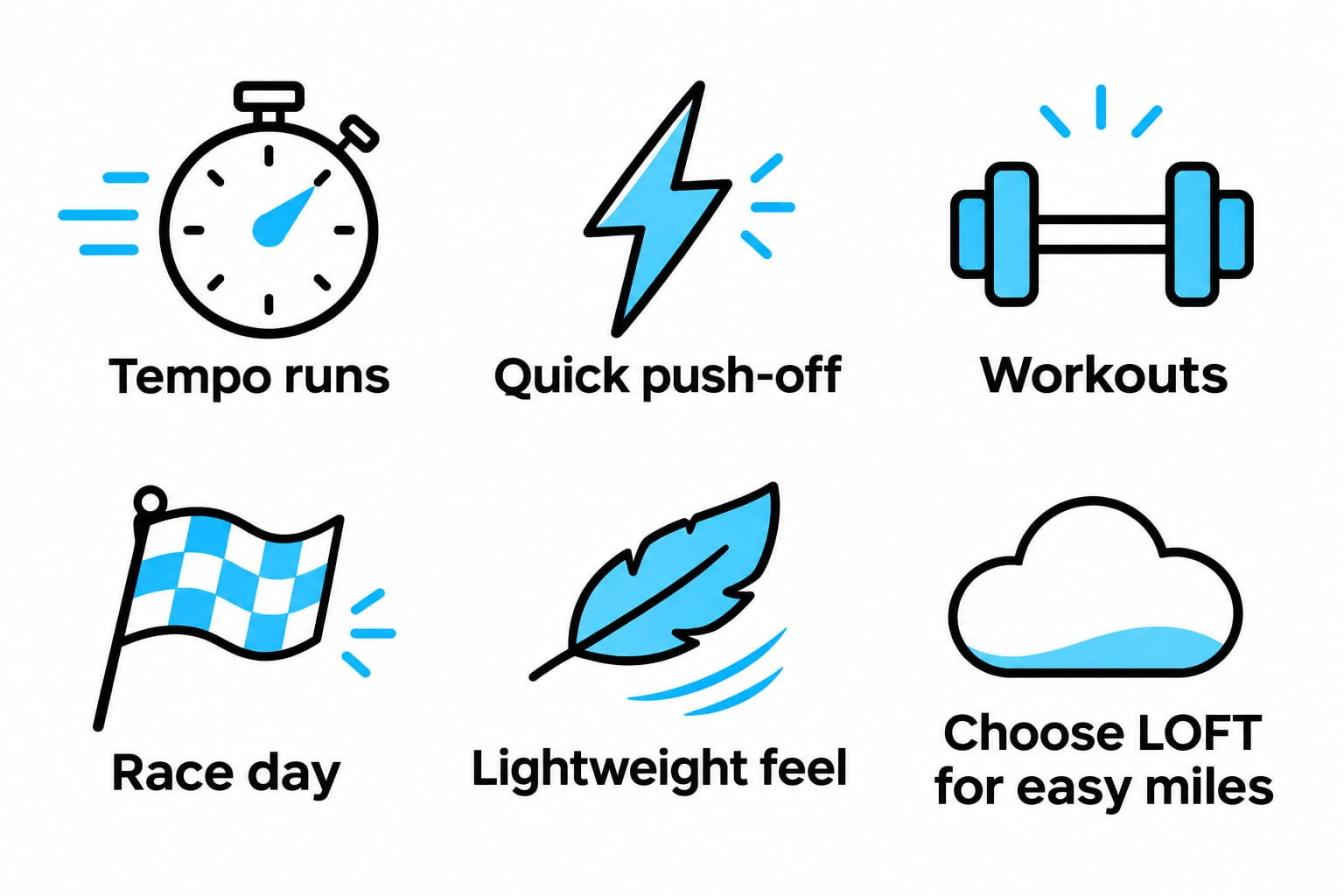
It is less suited to runners who want maximum comfort on long easy miles, which LOFT handles better. It is also not the right choice if you need the highest energy return available. Super shoes with PEBA or A-TPU foams deliver more rebound in lab tests.
Budget matters. FLASH-based shoes often sit in the mid to premium range, and reviewers have questioned whether some of them justify their price given their energy return. Think about the price per mile you expect to run, not just the purchase price.
Runners with specific foot or joint concerns should speak to a podiatrist or physiotherapist before choosing a shoe. This article does not offer medical advice.
For how our comparison content is prepared, see our methodology page.
Common Myths About DNA FLASH
Myth: FLASH is a super-shoe foam. It is a responsive, nitrogen-infused EVA foam. Lab results generally place it in the mid-range, below PEBA and A-TPU super foams.
Myth: Every shoe with FLASH is bouncy. Reviewers have found that some FLASH-based shoes, including the Hyperion 3 and Launch 12, deliver modest or sub-par energy return, especially in the heel.
Myth: FLASH v2 is only marginally better than v1. Brooks claims about 10% more responsiveness, and several reviewers found v2 noticeably livelier. The gain is real but modest in lab terms.
Myth: Plates are the main reason FLASH shoes feel quick. RunRepeat’s Hyperion Max 2 review found that much of the energy return increase came from the plate rather than the foam itself, showing that structure matters as much as material.
Myth: Lighter foam always wears out faster. Brooks says FLASH v2 is lighter while remaining durable. Independent long-term data is limited, so wear depends on the individual and the shoe.
Frequently Asked Questions
What is DNA FLASH?
DNA FLASH is Brooks’s lightweight, nitrogen-infused midsole foam, built for speed. It is softer than LOFT’s plush feel but firmer and quicker, and it is used in Brooks’s faster racing and training shoes.
What is the difference between DNA FLASH and DNA FLASH v2?
Brooks says v2 is about 10% more responsive than v1. Reviewers generally found v2 livelier and more resilient, though the gain is modest in lab terms.
Is DNA FLASH good for running?
Yes, for tempo runs, workouts and faster days. It is less suited to long, easy runs, where a softer foam such as DNA LOFT is more comfortable.
Is DNA FLASH the same as PEBA?
No. RunRepeat describes FLASH v2 as a supercritical, EVA-based foam, not PEBA. That is one reason it trails PEBA-based super foams in lab energy return.
Which Brooks shoes use DNA FLASH?
Examples include the Hyperion 2, Hyperion Max 2, Hyperion GTS 2, Hyperion 3, Hyperion Elite 4 and Launch 12. Check the current product page, because the foam’s role can differ between models.
Does DNA FLASH wear out quickly?
Independent long-term data is limited. Brooks describes the foam as remaining durable while lighter, and wear depends on your weight, pace, surface and how often you rotate shoes.
Is DNA FLASH better than DNA LOFT?
They suit different runs. FLASH is quicker and more responsive, while LOFT is softer and more comfortable. Neither is better in every situation.
Final Verdict
DNA FLASH is Brooks’s fast foam: a lightweight, nitrogen-infused EVA that feels lively at pace and suits tempo runs, workouts and races. FLASH v2 is a real improvement over v1, and reviewers have generally found it livelier. It is not a super-shoe foam, and its role now varies from model to model, sometimes sitting beneath a PEBA-based top layer.
If you want a responsive shoe for faster running, FLASH is worth considering, provided you check the full model and its energy return results. If you want maximum comfort for long easy miles, look at DNA LOFT instead. Before buying, check the current model’s midsole, weight and price, and try the shoe on if you can.