
Children’s Shoe Size by Age: The Complete 0–12 Years Chart (2026)
Last Updated: July 2026
The Quick Answer
Age is just an estimate; measurement is the rule. Every child grows differently, but on average, a 1-year-old wears a US size 4–5 (UK 3–4, EU 19–20), and a 5-year-old wears a US size 10–11 (UK 9–10, EU 27–28). For the best fit, measure your child’s foot length and add 0.5 inches (1.2 cm) for growth room. Recheck every 2–3 months during the toddler years.
Free Shoe Size Conversion
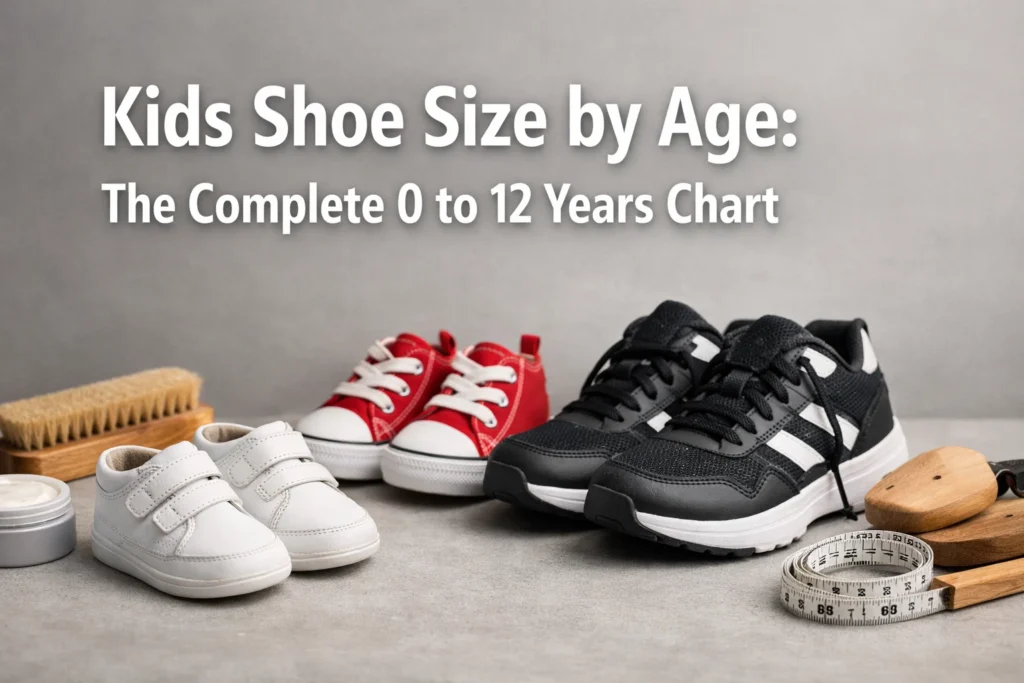
Buying children’s shoes can be confusing because shoe sizes don’t always match a child’s age. Different brands, countries, and growth rates make choosing the right size even more challenging. This Children’s Shoe Size by Age Chart helps parents quickly compare US, UK, and EU sizes for babies, toddlers, little kids, and big kids.
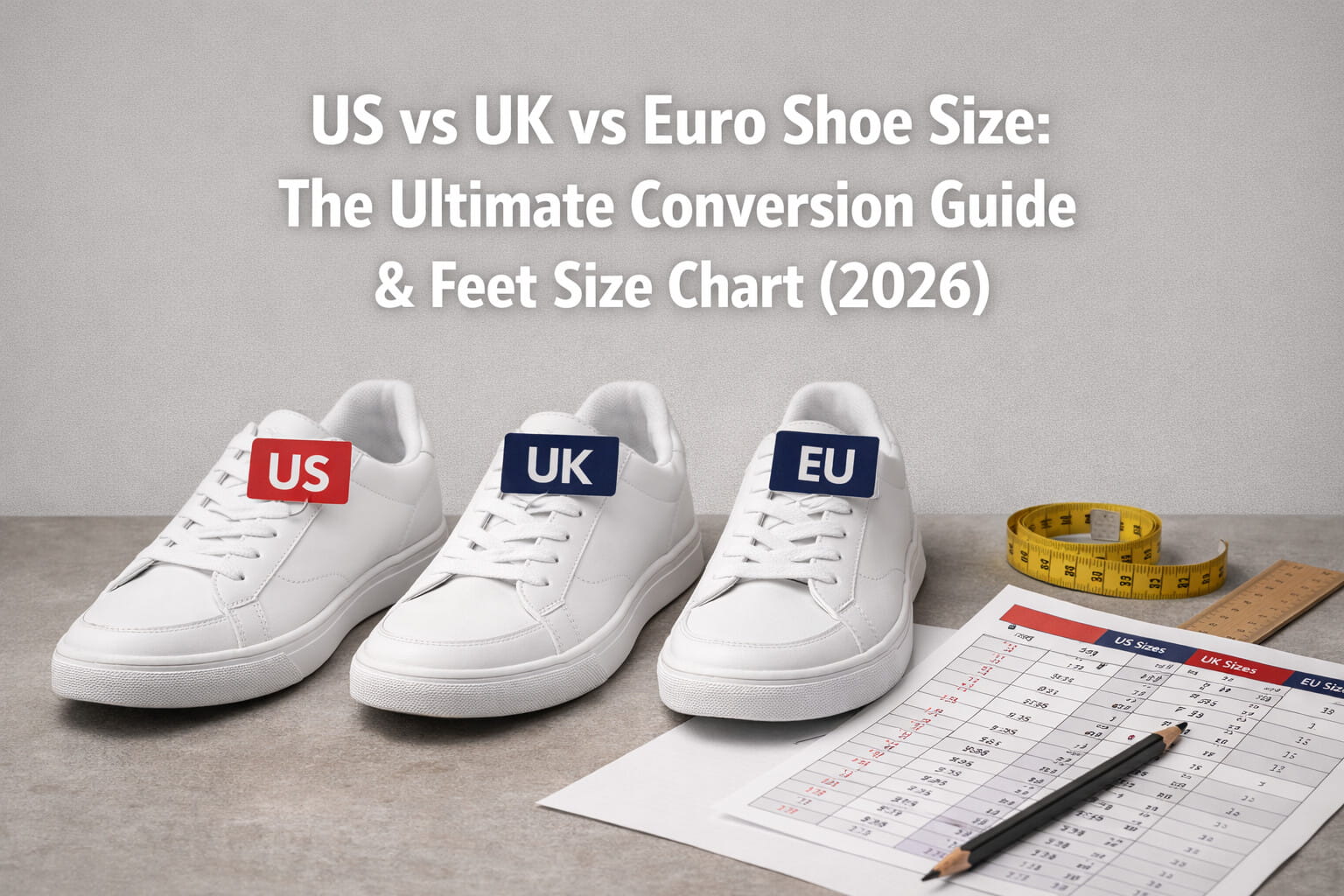
If you already know your child’s foot length and only need a quick conversion, see our Kids Shoe Size Chart. For international conversions, visit our US vs UK vs Euro Shoe Size Conversion Guide.
Understanding the Kids Shoes Size Chart
When shopping for children, you will often see terms like “C” (Child) or “Y” (Youth), or simply age brackets. Using a proper kids shoes size chart is essential because a “size 5” can exist in both the infant category and the big kid category.
Children’s feet can grow up to a half-size every 2 to 3 months for toddlers, and every 4 to 6 months for older children. We have broken down the charts below into two distinct categories: Infants/Toddlers and Kids (Big Kids).
Infant & Toddler Shoe Size Chart (0 – 4 Years)
This chart covers the earliest stages, from crib shoes (soft bottom) to walking shoes. Accuracy here is vital for proper foot development.
| US/CA | UK/IN | EU | Foot Length (in) | Foot Length (cm) | Approx Age |
|---|---|---|---|---|---|
| 1 | 0.5 | 16 | 3.5″ | 8.9 | 0-3 Months |
| 2 | 1 | 17 | 3.75″ | 9.5 | 3-6 Months |
| 3 | 2 | 18 | 4.12″ | 10.5 | 6-9 Months |
| 4 | 3 | 19 | 4.5″ | 11.4 | 9-12 Months |
| 5 | 4 | 20 | 4.75″ | 12.1 | 12-18 Months |
| 6 | 5 | 22 | 5.12″ | 13.0 | 18-24 Months |
| 7 | 6 | 23 | 5.5″ | 14.0 | 2 Years |
| 8 | 7 | 24 | 5.75″ | 14.6 | 2-3 Years |
| 9 | 8 | 25 | 6.12″ | 15.6 | 3 Years |
| 10 | 9 | 27 | 6.5″ | 16.5 | 3-4 Years |
Kids Shoes Size Chart (4 – 12 Years)
Once a child outgrows toddler sizes (usually around US size 10), they move into the “Little Kid” and subsequently “Big Kid” sizing. This kids shoes size chart helps bridge the gap between toddler sizes and adult sizes.
| US/CA | UK/IN | EU | JP/MX | CN | Inches | CM |
|---|---|---|---|---|---|---|
| 10.5 | 9.5 | 28 | 17 | 24 | 6.8″ | 17.1 |
| 11.5 | 10.5 | 29 | 17.5 | 25 | 7.0″ | 17.8 |
| 12 | 11 | 30 | 18.5 | 27 | 7.3″ | 18.4 |
| 13 | 12 | 31 | 19 | 28 | 7.5″ | 19.1 |
| 1 | 13 | 32 | 20 | 30 | 7.9″ | 20.1 |
| 2 | 1 | 33 | 21 | 32 | 8.3″ | 21.0 |
| 3 | 2 | 34 | 21.5 | 33 | 8.5″ | 21.6 |
| 4 | 3 | 36 | 22.5 | 35 | 8.9″ | 22.6 |
| 5 | 4 | 37 | 23.5 | 37 | 9.2″ | 23.2 |
| 6 | 5 | 39 | 24.5 | 39 | 9.6″ | 24.3 |
| 7 | 6 | 40 | 25 | 40 | 9.9″ | 25.2 |
How to Measure Your Child’s Feet (The “Wall Method”)
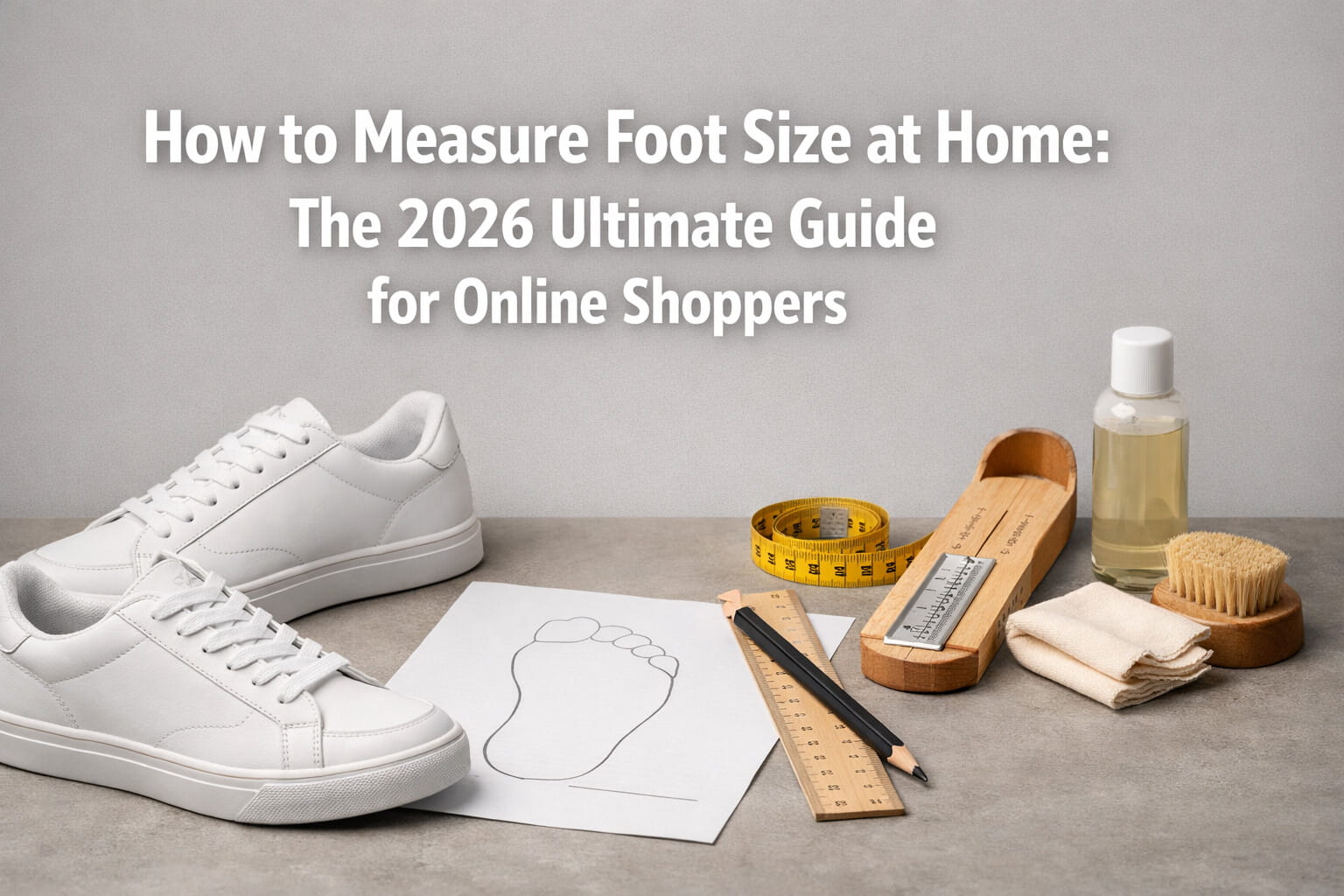
To use the kids shoes size chart effectively, you need an accurate measurement. Kids are notoriously wiggly, so try these simple steps. If you’d like a more detailed tutorial with additional measuring tips and illustrations, read our complete guide on how to measure foot size at home.
- Stand Up: Do not measure while your child is sitting. Their weight naturally spreads the foot, giving a more accurate measurement.
- Place Paper Against a Wall: Position a sheet of paper flat against a wall and have your child stand with their heel gently touching the wall.
- Mark the Longest Toe: Mark the tip of the longest toe, then measure from the wall (heel) to the toe mark using a ruler.
- Measure Both Feet: One foot is often slightly larger than the other. Always use the larger foot measurement when selecting shoe sizes.
- Add Growing Room: Add approximately 0.5–1 cm (0.2–0.4 inches) to allow for healthy growth and comfortable toe movement before comparing the measurement with the chart.
Pro Tip: For the most accurate results, measure your child’s feet in the evening when they are naturally at their largest. Then compare the measurement with the Children’s Shoe Size by Age Chart above to choose the correct size. :contentReference[oaicite:0]{index=0}
Introduction: The “Will They Fit?” Struggle
If there is one universal truth I’ve learned after running a shoe store for over 20 years and kneeling to check the fit on thousands of tiny feet, it is this: Kids’ feet do not follow a calendar.
We have all been there. You are shopping online, you see the perfect pair of sneakers for your child, and you freeze at the size dropdown menu. Does a “Size 4” mean for a 4-year-old? (Spoiler: No, it usually fits a 12-month-old).
The frustration of ordering children’s shoe sizes online, waiting for delivery, and then realizing the shoes are two sizes too small is a global headache. Whether you are in New York, London, or Sydney, the pain point is the same. Poorly fitting shoes aren’t just an annoyance; they can cause long-term foot issues, blisters, and reluctance to walk or run.
In this guide, we are ditching the guesswork. Drawing from two decades of hands-on retail experience—where I’ve seen every foot shape from wide toddler blocks to narrow arch pre-teens—I will walk you through exactly how to determine the right size. We will look at the definitive children’s shoe size by age chart, material choices, and the “thumb rule” we use on the shop floor.
shoe size for good
👟 Best Kids Shoes by Age Category — 2026 Amazon Picks
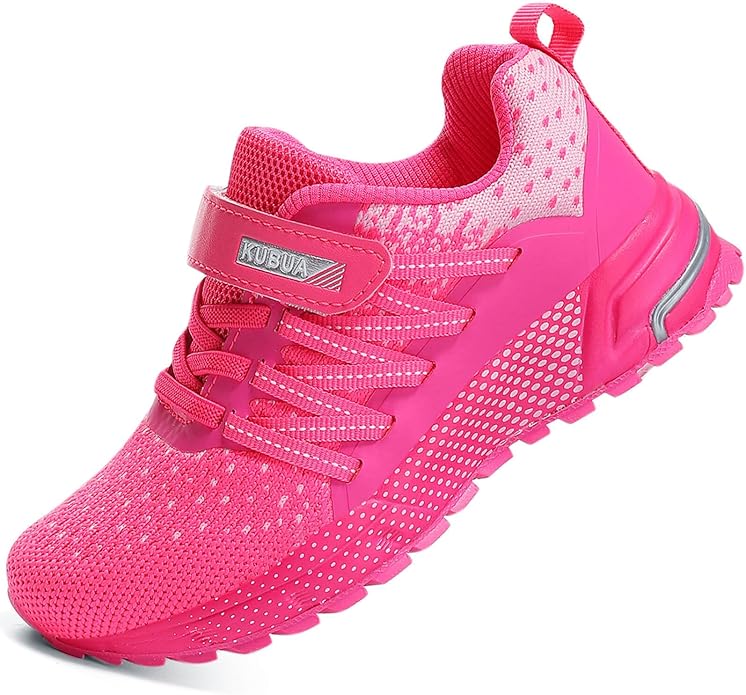
Free Returns · Limited Deal

90-Day Low Price
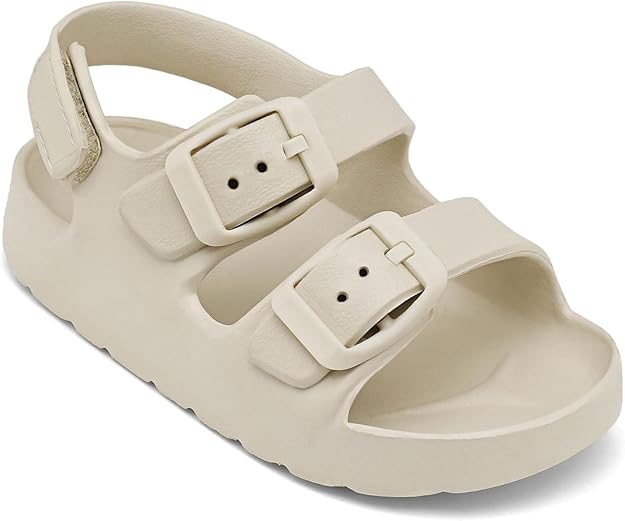
Free Returns · 17 Colors

Free Returns · All Sizes

Get This First · Then Buy Shoes
We may earn a small commission at no extra cost to you · Prices verified on Amazon · Always use our size chart above before ordering
Why Getting the Right Size Matters
Why do we stress so much about fit? In my shop, I often see parents bringing in children complaining of leg pain. More often than not, the culprit is shoes that are too small or have stiff, unyielding soles.
Across the globe, from school playgrounds to family vacations, children are on their feet constantly. Their bones are still ossifying (hardening). If you cram a soft, growing foot into a rigid, undersized shoe, you risk altering the foot’s natural shape.
Common Global Buyer Mistakes:
- Buying way too big: “They’ll grow into it” is fine for a shirt, but dangerous for shoes. It causes tripping and alters a child’s gait.
- Assuming all brands fit the same: A Nike size 10 is rarely the same as an Adidas size 10.
- Ignoring width: Many children have wide feet, especially toddlers. Standard sizing often squeezes the pinky toe.
How to Measure Your Child’s Feet (The “Wall Method”)
Before we look at the children’s shoe size charts, you need raw data. Do not hold a ruler up to the bottom of their foot while they are sitting on the sofa. The foot spreads when standing.
Here is the Shopkeeper’s Standard for measuring at home:
- Gather Supplies: Paper, a pencil, a ruler (or tape measure), and a wall.
- Stand Against the Wall: Place the paper on the floor against a wall. Have your child stand on the paper with their heel touching the wall.
- Weight Down: Ensure they are putting their full weight on that foot.
- Mark the Toe: Mark the tip of the longest toe (usually the big toe, but not always!).
- Measure: Measure the distance from the edge of the paper (heel) to the mark.
- Repeat: Measure both feet. Always buy for the larger foot.
Expert Note: Do this in the evening. Feet swell slightly throughout the day, even for kids.
Quick Answers by Age
Place these directly below the table to target featured snippets and long-tail keywords.
What shoe size does a 1-year-old wear?
Most 1-year-old children wear a US Kids Size 4–5 (UK 3–4, EU 20–21), depending on their foot length.
What shoe size does a 2-year-old wear?
A typical 2-year-old wears a US Kids Size 7 (UK 6, EU 23).
What shoe size does a 3-year-old wear?
Most 3-year-olds wear a US Kids Size 9 (UK 8, EU 25).
What shoe size does a 4-year-old wear?
A 4-year-old usually wears a US Kids Size 10 (UK 9, EU 27).
What shoe size does a 5-year-old wear?
Most 5-year-olds wear a US Kids Size 11 (UK 10, EU 28).
What shoe size does a 6-year-old wear?
The average shoe size for a 6-year-old is US Kids Size 12 (UK 11, EU 30).
What shoe size does a 7-year-old boy wear?
A 7-year-old boy typically wears US Youth Size 13 (UK 12, EU 31).
What shoe size does an 8-year-old wear?
Most 8-year-olds wear US Youth Size 1 (UK 13, EU 32).
What shoe size does a 9-year-old wear?
The average shoe size for a 9-year-old is US Youth Size 2 (UK 1, EU 33).
What shoe size does a 10-year-old wear?
A typical 10-year-old wears US Youth Size 3 (UK 2, EU 34).
What shoe size does an 11-year-old girl wear?
An 11-year-old girl typically wears US Youth Size 2 (UK 1, EU 33), although many begin transitioning to women’s sizes.
What shoe size does a 12-year-old boy wear?
Most 12-year-old boys wear US Youth Size 5 (UK 4, EU 37), with some transitioning into adult men’s sizing.
Toddler & Infant Shoe Size Chart (By Age & Stage)
One of the most common questions we get is: “What is a size 4 in toddler shoes?” or “How do I convert Euro toddler shoe size to US?”
The toddler shoe size chart below breaks down sizes by developmental stage. Note that for the infant shoe size chart by age, we prioritize softness for pre-walkers, while toddler sizes focus on grip for those first wobbly steps.
| Stage | Age (Approx) | US Size | UK Size | EU Size | Foot Length (CM) |
|---|---|---|---|---|---|
| Infant | 0 – 6 Months | 1 – 2 | 0.5 – 1 | 16 – 17 | 8.9 – 9.5 cm |
| Infant | 6 – 12 Months | 3 – 4 | 2 – 3 | 18 – 19 | 10.5 – 11.4 cm |
| Toddler | 12 – 18 Months | 5 – 6 | 4 – 5 | 20 – 22 | 12.1 – 13 cm |
| Toddler | 2 Years | 7 – 8 | 6 – 7 | 23 – 24 | 14 – 14.6 cm |
| Toddler | 3 Years | 9 – 10 | 8 – 9 | 25 – 27 | 15.6 – 16.5 cm |
Pro-Tip: If you are looking for specific conversions like “Size 25 Kids Shoes”, referring to the table above, a EU 25 is roughly a US Toddler 9.
Big Kid & Youth Shoe Size Chart (4+ Years)
As your child transitions from Velcro to laces, they move into the “Little Kid” and “Big Kid” (Youth) categories. This is where the children’s shoe size conversion chart becomes critical, especially when buying brands like Nike or Adidas that use “Y” sizing.
| US Youth | UK Size | EU Size | Foot Length (CM) | Inches |
|---|---|---|---|---|
| 10.5 C | 9.5 | 28 | 17.1 cm | 6.75″ |
| 11.5 C | 10.5 | 29 | 17.8 cm | 7.0″ |
| 12.5 C | 11.5 | 30 | 18.4 cm | 7.25″ |
| 13.5 C | 12.5 | 31 | 19.4 cm | 7.6″ |
| 1 Y | 13.5 | 32 | 20 cm | 7.8″ |
| 2 Y | 1.5 | 33 | 20.6 cm | 8.1″ |
| 3 Y | 2.5 | 35 | 21.6 cm | 8.5″ |
| 4 Y | 3.5 | 36 | 22.2 cm | 8.75″ |
| 5 Y | 4.5 | 37 | 23.2 cm | 9.1″ |
| 6 Y | 5.5 | 39 | 24.1 cm | 9.5″ |
Best Kids Shoes by Age & Activity — Full Reviews 2026
Once you’ve got the right size from the chart above, here’s exactly which shoe to buy — by age, by activity, and by budget.
We may earn a small commission at no extra cost to you · Always verify with our children’s shoe size chart before ordering · Prices on Amazon change frequently
Expert Answers to Common Sizing Questions
Youth Shoe Size Chart vs. Women’s: What is the difference?
This is the most common confusion for parents of pre-teens. Yes, Youth sizes overlap with Women’s sizes.
Generally, the rule is Youth Size + 1.5 = Women’s Size.
- A Youth Size 4 is roughly a Women’s Size 5.5.
- A Youth Size 6 is roughly a Women’s Size 7.5.
If your child has outgrown the big kid shoe size chart, you can often save money by buying the “Youth” version of a sneaker rather than the adult women’s version, as they are often cheaper for the exact same fit!
How do I use a Kids Shoe Size Chart in CM?
Using centimeters (CM) or Japan (JP) sizing is actually the most accurate method. Unlike US sizes which vary by brand, a centimeter is a fixed unit.
- Measure your child’s foot (heel to toe).
- Add 1.0 cm for growth room (or 1.5 cm for hiking/winter boots).
- Look at the “CM” column in our kids shoe size chart above to find the perfect fit.
Is Euro Toddler Shoe Size to US accurate?
European sizes (like EU 22, 23, 24) are based on “Paris Points” (2/3 of a cm), while US sizes are based on barleycorns (1/3 inch). They don’t align perfectly. For example, a Size 25 Kids shoe (EU) sits right between a US 8 and US 9. Always round up to the larger size to ensure comfort.
The Complete Children’s Shoe Size by Age Chart
Note: These are general averages. Always prioritize the inch/cm measurement over the age range.
1. Infants & Pre-Walkers (0 – 12 Months)
At this stage, shoes are mostly for warmth and protection. The structure should be minimal—think soft leather or cloth.
| Age (Approx) | Foot Length (Inches) | Foot Length (CM) | US Size | UK Size | EU Size |
|---|---|---|---|---|---|
| 0-3 Months | 3.5″ | 8.9 cm | 1 | 0.5 | 16 |
| 3-6 Months | 3.75″ | 9.5 cm | 2 | 1 | 17 |
| 6-9 Months | 4.13″ | 10.5 cm | 3 | 2 | 18 |
| 9-12 Months | 4.5″ | 11.4 cm | 4 | 3 | 19 |
2. Toddlers (1 – 3 Years)
This is the critical “first walker” stage. You need grip (rubber soles) but flexibility. Feet grow explosively here—check sizes every 2 months.
| Age (Approx) | Foot Length (Inches) | Foot Length (CM) | US Size | UK Size | EU Size |
|---|---|---|---|---|---|
| 12-18 Months | 4.75″ | 12.1 cm | 5 | 4 | 20 |
| 18-24 Months | 5.13″ | 13 cm | 6 | 5 | 22 |
| 2 Years | 5.5″ | 14 cm | 7 | 6 | 23 |
| 2.5 Years | 5.75″ | 14.6 cm | 8 | 7 | 24 |
| 3 Years | 6.13″ | 15.6 cm | 9 | 8 | 25 |
3. Little Kids (4 – 7 Years)
Activity levels skyrocket. Durability becomes key.
| Age (Approx) | Foot Length (Inches) | Foot Length (CM) | US Size | UK Size | EU Size |
|---|---|---|---|---|---|
| 4 Years | 6.5″ | 16.5 cm | 10 | 9 | 27 |
| 5 Years | 6.75″ | 17.1 cm | 11 | 10 | 28 |
| 6 Years | 7.13″ | 18.1 cm | 12 | 11 | 30 |
| 7 Years | 7.5″ | 19.1 cm | 13 | 12 | 31 |
4. Big Kids (8 – 12 Years)
We are now entering “Youth” sizing, which eventually overlaps with adult sizes.
| Age (Approx) | Foot Length (Inches) | Foot Length (CM) | US Size | UK Size | EU Size |
|---|---|---|---|---|---|
| 8 Years | 7.75″ | 19.7 cm | 1Y | 13.5 | 32 |
| 9 Years | 8.13″ | 20.6 cm | 2Y | 1 | 33 |
| 10 Years | 8.5″ | 21.6 cm | 3Y | 2 | 34 |
| 11 Years | 8.75″ | 22.2 cm | 4Y | 3 | 36 |
| 12 Years | 9.0″ | 22.9 cm | 5Y | 4 | 37 |
Are you shopping for brands across different borders? It can get tricky. For a detailed breakdown of international conversions, check out our guide on US vs UK vs Euro Shoe Size Conversion.
Pro-Tips: Insider Secrets from the Shoe Floor
After years of managing inventory and handling customer returns, I’ve picked up a few tricks that standard charts won’t tell you.
The Removable Insole Hack
If you are buying sneakers (like Skechers, Nike, or generic school shoes), check if the insole is removable.
- Take the insole out of the shoe.
- Place it on the floor and have your child stand on it.
- The Check: You should see about a thumb’s width (roughly 1.2 cm or 0.5 inches) of space between their longest toe and the end of the insole. If their toes are right at the edge, the shoe is already too small.
The “Wiggle” Test
If the insole doesn’t come out, lace up the shoe securely. Have the child stand up. Press your thumb down sideways on the toe box area. You should feel their big toe and still have space to press your thumb down before hitting the shoe tip. Ask them to wiggle their toes. If the leather/fabric doesn’t move, it’s too tight.
Material Matters: What to Look For
Choosing the right size is step one; choosing the right material is step two.
- Canvas & Mesh: Best for active kids. These allow airflow. Kids’ feet sweat twice as much as adults’. If you buy synthetic plastic shoes, you are inviting fungus and bad odors.
- Leather: Great for durability and school shoes. Full-grain leather molds to the foot over time, providing a custom fit that synthetics cannot match.
- The Sole: Look for TPR (Thermoplastic Rubber) or natural rubber. It provides grip. Avoid hard plastic soles (often found on cheap dress shoes)—they are slip hazards on polished floors.
Comparison: Velcro vs. Laces
| Feature | Velcro (Hook & Loop) | Laces |
|---|---|---|
| Ease of Use | Excellent for toddlers and independence. | Requires fine motor skills (usually age 6+). |
| Fit Customization | Good, but limited adjustment zones. | Excellent. Can tighten specific areas for narrow heels. |
| Durability | Velcro can lose stickiness with dirt/lint. | Laces can snap but are cheaply replaced. |
| Safety | Safer (no trailing laces). | Tripping hazard if untied. |
My Verdict: Stick to Velcro until at least age 5 or 6 unless you want to spend your morning tying knots!
Common Mistakes to Avoid in children’s shoe size
- Buying Morning Shoes: As mentioned, measure in the afternoon.
- Hand-Me-Downs: I know it saves money, but a worn shoe has molded to the previous child’s foot impression. This can force your second child’s foot into an unnatural position.
- Ignoring the Heel: If the heel slips out when they walk, the shoe is not just “too big”—the heel counter is too wide. This causes blisters. Don’t buy it hoping they will fill it out.
- Sacrificing Function for Fashion: Those mini-high heels or pointy cowboy boots for toddlers look cute, but they are terrible for foot development.
Ready to Shop?
Now that you are armed with the correct measurements and our Children’s Shoe Size by age chart, you can shop with confidence. Remember, the health of your child’s feet is the foundation for their active life.
- Check today’s best-rated kids’ sneakers on Amazon for durable, supportive options.
- Compare prices on top-tier school shoes to find the best value for the upcoming term.
- Browse flexible pre-walkers designed specifically for developing arches.
Frequently Asked Questions About Children’s Shoe Sizes
1. How fast do kids’ feet grow?
Children’s feet grow rapidly during the early years. From ages 1 to 3, they typically grow about half a shoe size every 3 to 4 months. Between ages 4 and 8, growth slows to about half a size every 4 to 6 months. Measuring your child’s feet every few months helps ensure they continue wearing the correct size.
2. Is a toddler size 4 the same as a Big Kid size 4?
No. These are completely different sizing systems. A Toddler Size 4 usually fits a child around 9–12 months old, while a Big Kid (Youth) Size 4 typically fits an 11- or 12-year-old. Always check whether the size is listed as Toddler, Little Kid, or Youth before purchasing.
3. Should I buy shoes one size bigger for my child?
No. Instead of buying a full size larger, choose shoes with about 0.5 inches (1.2 cm) of growing room at the front. Shoes that are too large can reduce stability and increase the risk of tripping.
4. What is the average shoe size for a 7-year-old?
The average 7-year-old wears approximately US Youth Size 13 or 1Y, which is roughly UK 12–13 or EU 31–32. However, children’s feet develop at different rates, so measuring their feet is always more reliable than using age alone.
5. Do toddler shoes run true to size?
Not always. Shoe sizing varies by brand. Athletic brands such as Nike and Adidas may fit slightly smaller, while brands like Crocs and Converse often fit larger. Always compare your child’s foot measurement with the brand’s official size chart before ordering.
6. How do I know if my child needs wide shoes?
If your child’s foot feels difficult to insert into the shoe, the sides feel tight, or the little toe presses against the upper material, they may need a wide fit. Many brands offer Wide (W) and Extra Wide (XW) options for growing feet.
7. What is the difference between Toddler and Little Kid shoe sizes?
Toddler sizes generally range from 0 to 10, while Little Kid sizes continue from 10.5 to 3. After that, children move into Big Kid (Youth) sizing before eventually transitioning to adult shoe sizes.
8. Are EU shoe sizes more accurate than US shoe sizes?
Generally, yes. European shoe sizes use smaller size increments than the US sizing system, allowing for a more precise fit. However, it’s still best to compare foot length in centimeters (cm) with the manufacturer’s size chart.
9. Can I use a printable children’s shoe size chart?
Yes, but make sure your printer is set to 100% scale. After printing, measure the reference line with a ruler to confirm the chart printed correctly. Incorrect scaling can result in inaccurate shoe sizing.
10. Why do my child’s shoes wear out so quickly?
Children are constantly running, jumping, and dragging their toes, which causes faster wear. Choosing shoes with reinforced toe caps and durable rubber outsoles can help them last longer.
11. When should babies start wearing shoes?
Babies do not need shoes until they begin walking outdoors. Pediatric experts generally recommend allowing babies to go barefoot indoors whenever possible to support natural foot development. Once they start walking outside, lightweight, flexible shoes protect while allowing natural movement.
12. What is the best time of day to buy kids’ shoes?
The best time is late afternoon or evening, when feet are naturally at their largest after a day of activity. This helps ensure the shoes remain comfortable throughout the day.
13. How much room should be left at the end of a child’s shoe?
Leave approximately 0.5 inches (1.2–1.5 cm) of space between the longest toe and the front of the shoe. This provides room for growth while maintaining a secure and comfortable fit.
14. Do children’s shoe sizes vary by brand?
Yes. Shoe sizing differs between manufacturers. For example, a Size 10 from one brand may fit differently than a Size 10 from another. For the best fit, compare your child’s foot measurement with the brand’s official size chart.
15. What does the letter “Y” mean in shoe sizes?
The letter “Y” stands for Youth. For example, 5Y means Youth Size 5, which belongs to the Big Kid sizing category. It does not refer to Toddler sizing and is commonly used by brands such as Nike, Jordan, and Adidas.