
3-6 Month Baby Shoe Size Chart (US Sizes + Foot Length Guide 2026)
⚡ Quick Answer
- Most 3-6 month babies wear US Size 2, though some wear size 1 or 3.
- Foot length is more accurate than age – always measure before buying.
- Leave 0.4-0.5 inches (1-1.3 cm) of growing room for healthy foot development.
- Measure every 6-8 weeks – baby feet grow fast during this stage.
A 3-6 month old baby typically wears a US size 2 shoe, with a foot length of approximately 4 inches (10.2 cm). However, babies grow at different rates-some 3-month-olds wear size 1, while some 6-month-olds wear size 3. That’s why measuring your baby’s foot length in inches or centimeters is always more accurate than relying on age alone. During this rapid growth phase, babies often need a new shoe size every 6-8 weeks. Here’s everything you need to know about 3-6 month baby shoe sizing in 2026.
Table of Contents
- 3-6 Month Baby Shoe Size Chart
- How to Measure Your Baby’s Feet
- Age-by-Age Guide: 3, 4, 5, and 6 Months
- Signs the Shoes Fit Correctly
- Signs Shoes Are Too Small
- Signs Shoes Are Too Big
- Buying Guide for 3-6 Month Baby Shoes
- Common Parent Mistakes
- Expert Tips
- FAQs
3-6 Month Baby Shoe Size Chart
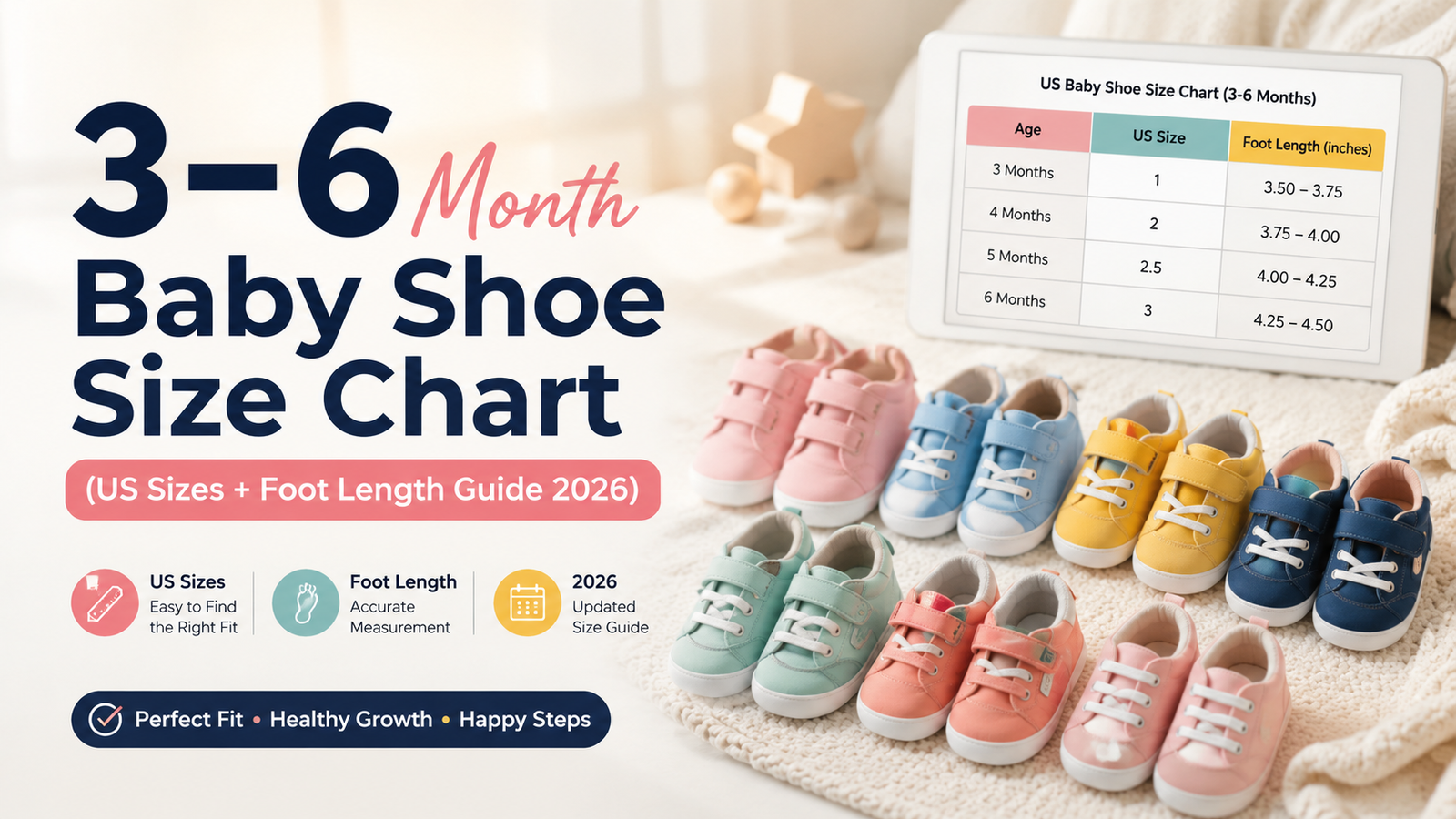
Complete US Size Chart for 3-6 Months
This table shows typical US, UK, and EU sizes for babies from 3 to 6 months. Remember: these are estimates-always measure your baby’s foot length for the most accurate fit.
| 👶 Age | 📏 Foot Length | 🇺🇸 US Size | 🇬🇧 UK Size | 🇪🇺 EU Size |
|---|---|---|---|---|
| 3 Months New Walker | 3.6–3.8″ 9.0–9.5 cm | 1–1.5 | 0.5–1 | 16–17 |
| 3–4 Months Growing | 3.7–4.0″ 9.5–10.0 cm | 1.5–2 | 1–1.5 | 17–18 |
| 4–5 Months Active | 3.9–4.1″ 10.0–10.5 cm | 2 | 1.5 | 18 |
| 5–6 Months Crawling | 4.0–4.3″ 10.2–10.8 cm | 2–2.5 | 1.5–2 | 18–19 |
| 6 Months Pulling Up | 4.1–4.3″ 10.5–10.8 cm | 2.5–3 | 2 | 18–19 |
Sources: Stride Rite sizing shows US size 2 at 4 inches (9.9 cm) for 3-6 months. Journee Collection lists US size 2 at 3.6 inches (9.14 cm) for 3-6 months. Kiwisizing shows 3-6 months at 4 inches (10.2 cm) for US size 2.5. BirdRock Baby lists sizes 2.5-3 for 3-6 months at 4.0-4.1 inches.
💡 Tip: If your baby’s foot length falls between sizes, always choose the larger size to allow for growing room.
US to UK to EU Conversion Table
| US Size | UK Size | EU Size | Approximate Foot Length |
| 1 | 0.5 | 16 | 3.5-3.6″ (8.9-9.0 cm) |
| 1.5 | 1 | 17 | 3.7-3.8″ (9.2-9.5 cm) |
| 2 | 1.5 | 17-18 | 3.9-4.0″ (9.9-10.2 cm) |
| 2.5 | 2 | 18 | 4.0-4.1″ (10.2-10.5 cm) |
| 3 | 2 | 18-19 | 4.1-4.3″ (10.5-10.8 cm) |
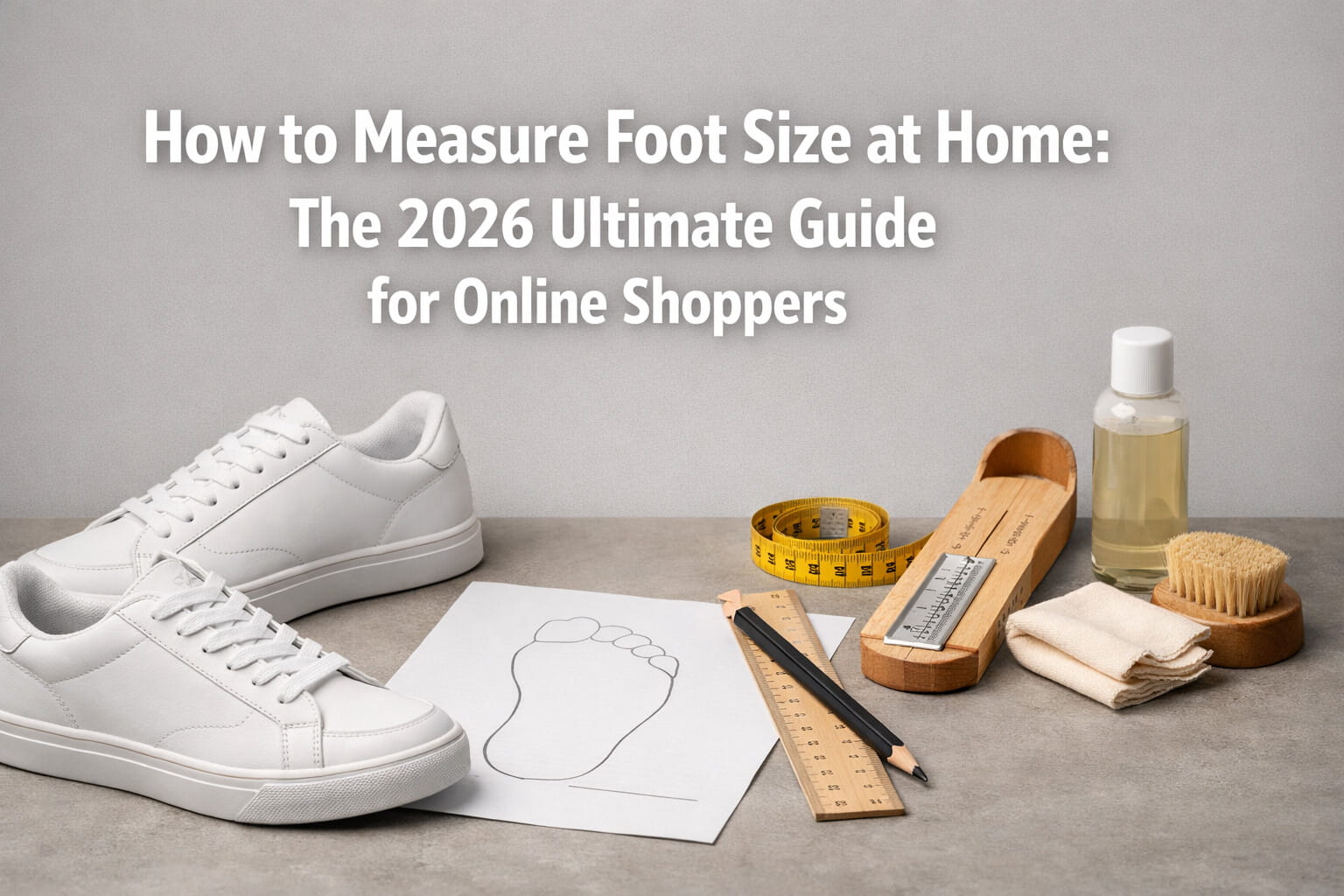
How to Measure Your Baby’s Feet
Getting an accurate measurement is the most important step in finding the right shoe size. Here’s how to do it correctly.
What You’ll Need
- A sheet of paper (letter size works best)
- A pencil or pen
- A ruler or measuring tape
- A hard floor (not carpet)
- Socks if your baby will wear them with shoes
✅ Parent Checklist
- Measure both feet – one is often slightly larger.
- Measure in the afternoon or evening when feet are naturally larger.
- Have your baby stand (with support) for the most accurate measurement.
- Use the sock thickness your baby will wear with the shoes.
- Add 0.4-0.5 inches (1-1.3 cm) for growing room.
- Measure every 6-8 weeks during this growth stage.
Step-by-Step Measuring Guide
Step 1: Prepare the Paper
Place a sheet of paper on a hard, flat floor. Tape it down if needed so it doesn’t move.
Step 2: Position Your Baby
Have your baby stand on the paper with their full weight on their feet. If they’re not standing independently yet, support them under their arms. Don’t measure while seated – feet are shorter without weight on them.
Step 3: Trace the Foot
Hold the pencil vertically (straight up and down) and trace around your baby’s foot. Keep the pencil right against the foot for an accurate outline.
Step 4: Measure the Length
Use a ruler to measure from the heel to the longest toe. The longest toe isn’t always the big toe – some babies have a longer second toe.
Step 5: Measure Both Feet
Measure both feet. They are rarely exactly the same length. Use the longer foot as your reference.
Step 6: Add Growing Room
Add 0.4-0.6 inches (1-1.5 cm) to the measured length. This is the growing room your baby needs.
For a detailed, printable guide and additional tips on measuring both length and width, check out Stride Rite’s official Kids’ Shoe Sizing Help. Also Check Out this guide Baby Shoe Size Chart 0-12 Months (Complete Age Guide)
💡 Expert Tip
Measure your baby’s feet in the evening when feet are naturally a little larger after a day of activity. This helps ensure the shoes stay comfortable throughout the day when feet swell slightly.
Common Measuring Mistakes to Avoid
- Measuring while seated – The foot is shorter without weight on it
- Measuring only one foot – One foot is often larger
- Forgetting about socks – Sock thickness affects the fit
- Not adding growing room – Babies need space to grow
- Measuring on carpet – This can compress the foot and give inaccurate results
Age-by-Age Guide: 3, 4, 5, and 6 Months
While age is only a rough guide, here’s what to expect at each stage.
3 Months Old
Typical US Size: 1-1.5
Foot Length: 3.6-3.8 inches (9.0-9.5 cm)
At 3 months, many babies are just beginning to discover their feet. Shoes at this stage are mostly for warmth and style rather than walking. Soft sole shoes or crib shoes are ideal.
4 Months Old
Typical US Size: 1.5-2
Foot Length: 3.7-4.0 inches (9.5-10.0 cm)
By 4 months, babies are often more active-kicking, rolling, and reaching for toys. Their feet are growing rapidly. This is when many parents notice their baby’s shoes starting to feel snug.
5 Months Old
Typical US Size: 2
Foot Length: 3.9-4.1 inches (10.0-10.5 cm)
At 5 months, babies are usually sitting with support and may be starting to bear weight on their legs. Shoes with flexible soles that allow natural foot movement are best.
6 Months Old
Typical US Size: 2-3
Foot Length: 4.0-4.3 inches (10.2-10.8 cm)
Many 6-month-olds are preparing to crawl or already crawling. Pre-walking shoes with soft, flexible soles are ideal. Some babies may even be pulling up to stand.
👶 Did You Know?
During the 3-6 month stage, babies’ feet can grow nearly half a shoe size every 6-8 weeks. That means you might need to buy new shoes every two months during this rapid growth phase!
Signs the Shoes Fit Correctly
Here’s how to tell if your baby’s shoes fit properly:
The Fit Checklist
✓ Heel stays in place – The heel shouldn’t slip up and down when your baby moves
✓ Toes have wiggle room – About 0.4-0.5 inches (1-1.3 cm) between the longest toe and the front of the shoe
✓ Shoes bend naturally – The shoe should flex at the ball of the foot, not in the middle
✓ No red marks – After removing the shoes, there shouldn’t be red marks on the feet
✓ Easy to put on – Shoes should go on without forcing
✓ Doesn’t slip off – The shoe should stay on securely without being too tight
📏 Size Snapshot
Age: 3-6 Months
Typical US Size: 2
Foot Length: Approximately 4.0 inches (10.2 cm)
Growing Room Needed: 0.4-0.5 inches (1-1.3 cm)
When to Measure Again: Every 6-8 weeks
Signs Shoes Are Too Small
Babies can’t tell you when their shoes are too small. Watch for these signs:
Warning Signs
- Red marks or indentations on the feet after removing shoes
- Blisters or sores – A clear sign shoes are rubbing
- Corns or calluses developing on toes
- Toes curling or overlapping inside the shoe
- Shoe looks stretched or the material is bulging
- Baby is pulling at shoes or seems uncomfortable
- Difficulty putting shoes on – They shouldn’t require forcing
⚠ Common Mistake
Many parents wait too long to size up because they don’t want to buy new shoes again. But shoes that are too small can cause blisters, ingrown toenails, and even affect foot development. If you see any red marks after removing shoes, it’s time for a larger size.
Signs Shoes Are Too Big
Shoes that are too big are just as problematic as shoes that are too small.
Warning Signs
- Heel slipping – The heel moves up and down when walking
- Toes sliding forward – Toes hit the front of the shoe during movement
- Baby trips or stumbles more than usual
- Shoes fall off easily – Even when secured properly
- Blisters from friction caused by slipping
Buying Guide for 3-6 Month Baby Shoes
What Features to Look For
Flexible Sole
At this stage, babies need shoes that allow natural foot movement. The sole should bend easily at the ball of the foot. Stiff soles can restrict natural foot development.
Breathable Materials
Look for shoes made from breathable materials like leather, mesh, or cotton. Babies’ feet sweat, and breathable materials help prevent discomfort and odor.
Soft Construction
Shoes should be soft enough to not restrict movement but sturdy enough to provide protection. Soft sole shoes are ideal for this pre-walking stage.
Easy Closure
Velcro or slip-on styles are easiest for parents. They’re quick to put on and adjust for a secure fit.
Wide Toe Box
Babies need room for their toes to spread naturally. A wide toe box allows for proper foot development and comfort.
Lightweight
Heavy shoes can make it harder for babies to move and explore. Choose lightweight options that won’t weigh down little feet.
What to Avoid
- Stiff soles – Restrict natural foot movement
- Heavy shoes – Can make movement difficult
- Narrow toe boxes – Squeeze toes and affect development
- Shoes that require breaking in – Baby shoes should be comfortable immediately
✅ Quick Buying Checklist
- ✓ Flexible sole that bends at the ball of the foot
- ✓ Breathable materials (leather, mesh, cotton)
- ✓ Soft construction for comfort
- ✓ Easy closure (Velcro or slip-on)
- ✓ Wide toe box for natural toe spread
- ✓ Lightweight design
Common Parent Mistakes
After fitting thousands of children’s shoes, we see these mistakes most often:
1. Buying Shoes by Age Alone
The mistake: Assuming all 6-month-old babies wear the same size.
Why it’s wrong: Babies grow at different rates. A 6-month-old could wear size 1, 2, or 3 depending on their individual growth pattern.
The fix: Always measure your baby’s foot length before buying.
2. Buying Shoes “One Size Up” to Last Longer
The mistake: Purchasing shoes that are too big hoping they’ll “grow into them.”
Why it’s wrong: Shoes that are too big cause slipping, affect balance, and can delay walking confidence. They’re just as problematic as shoes that are too small.
The fix: Buy shoes that fit now with the correct amount of growing room (0.4-0.5 inches).
3. Not Measuring Both Feet
The mistake: Only measuring one foot.
Why it’s wrong: Most people have one foot slightly larger than the other. If you only measure one foot, you might buy shoes that are too small for the other.
The fix: Always measure both feet and use the larger measurement.
4. Forgetting About Sock Thickness
The mistake: Measuring barefoot but wearing shoes with thick socks.
Why it’s wrong: Sock thickness affects the fit. Thick socks take up space that the foot needs.
The fix: Measure with the type of socks your baby will wear with the shoes.
5. Waiting Too Long Between Measurements
The mistake: Assuming the same size will fit for months.
Why it’s wrong: Babies’ feet grow rapidly during the first year-sometimes half a shoe size every 2-3 months.
The fix: Measure every 6-8 weeks during the 3-6 month stage.
Expert Tips
💡 Expert Tip #1: The “Thumb Test”
After putting shoes on your baby, press your thumb down on the front of the shoe. You should feel about a thumb’s width (0.4-0.5 inches) of space between your baby’s longest toe and the front of the shoe. This is the perfect amount of growing room.
💡 Expert Tip #2: Check Fit While Standing
Always check the fit while your baby is standing (with support if needed). Feet are longer and wider when bearing weight. If you check while they’re sitting, the shoes might end up being too small[reference:23].
💡 Expert Tip #3: Know Your Baby’s Growth Pattern
Some babies have growth spurts where their feet seem to grow overnight. During the 3-6 month stage, it’s not uncommon to need a new size every 6-8 weeks. Keep measuring regularly to avoid shoes that are too small.
FRequently Asked question
What size shoe does a 3-month-old wear?
Most 3-month-old babies wear a US size 1-1.5, with a foot length of approximately 3.6-3.8 inches (9.0-9.5 cm). However, foot length is more accurate than age since babies grow at different rates.
What size shoe does a 4-month-old wear?
A 4-month-old typically wears a US size 1.5-2, with a foot length of approximately 3.7-4.0 inches (9.5-10.0 cm). Some 4-month-olds may still wear size 1, while others may already need size 2.
What size shoe does a 5-month-old wear?
Most 5-month-old babies wear a US size 2, with a foot length of approximately 3.9-4.1 inches (10.0-10.5 cm). At this stage, babies are often more active and may be preparing to crawl.
What size shoe does a 6-month-old wear?
A 6-month-old typically wears a US size 2-3, with a foot length of approximately 4.0-4.3 inches (10.2-10.8 cm). Some 6-month-olds may wear size 2 while others need size 2.5 or 3.
How much growing room should 3-6 month baby shoes have?
Leave about 0.4-0.5 inches (1-1.3 cm) of growing room between your baby’s longest toe and the front of the shoe. This is roughly the width of your thumb and allows for natural foot growth without being too loose.
How often should I measure my 3-6 month old’s feet?
Measure every 6-8 weeks during the 3-6 month stage. Babies’ feet grow rapidly during this period-sometimes half a shoe size every 2-3 months. Regular measuring helps ensure shoes always fit properly.
Do 3-6 month old babies need shoes?
Not for walking-most babies at this age aren’t walking yet. Shoes at this stage are primarily for warmth, protection, and style. Soft sole shoes or crib shoes are ideal for this pre-walking stage.
Should I buy 3-6 month baby shoes with socks?
Yes, if your baby will wear socks with the shoes, measure their feet while wearing the socks they’ll use. Sock thickness affects the fit, and measuring barefoot when they’ll wear thick socks can result in shoes that are too small.
What type of shoes are best for a 3-6 month old?
Soft sole shoes with flexible materials are best for this pre-walking stage. Look for breathable materials like leather or mesh, a wide toe box for natural toe spread, and easy closures like Velcro or slip-on styles.
Do babies need arch support at 3-6 months?
No, babies at this age don’t need arch support. Their feet are still developing, and their arches will form naturally as they grow and start walking. Soft, flexible shoes that allow natural foot movement are best.
Related Articles
- Baby Shoe Size Chart 0-12 Months (Complete Age Guide)
- 0-3 Month Baby Shoe Size Chart
- 6-12 Month Baby Shoe Size Chart
- How to Measure Baby Feet (Step-by-Step Guide)
Conclusion
The best shoe size for your 3-6 month old baby is the one based on their actual foot measurement-not just their age. While most babies in this age range wear a US size 2, individual growth varies significantly. A few minutes spent measuring today can prevent discomfort, support healthy foot development, and save you from buying the wrong size.
Remember these key points:
- Measure both feet and use the larger measurement
- Add 0.4-0.5 inches of growing room
- Measure every 6-8 weeks
- Choose soft, flexible shoes with breathable materials
Now that you know the correct size, measure your baby’s feet before ordering. For more guidance, check out our related articles below.