
How to Measure Kids’ Feet at Home (Step-by-Step Guide)
Quick Answer
- All you need is a piece of paper, a pencil, and a ruler or tape measure.
- Have your child stand, trace both feet, and measure heel to longest toe, which isn’t always the big toe.
- Always size to the larger foot, and measure in the evening when feet are naturally a bit bigger.
- Re-measure every 6 to 8 weeks under age 3, and every few months after that as growth slows.
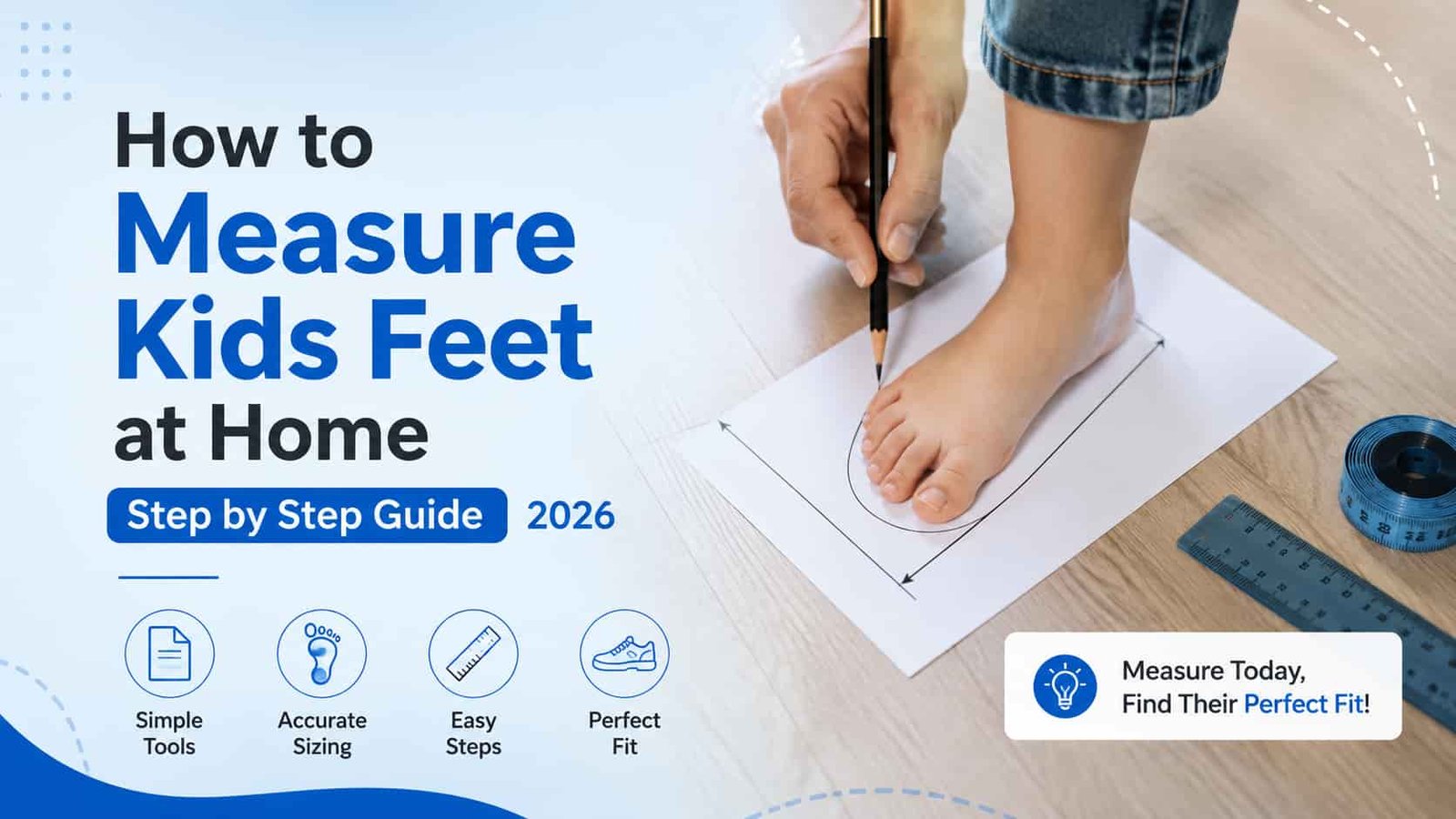
The most reliable way to measure kids feet at home is to have your child stand on a piece of paper, trace around each foot, then measure from the heel to the longest toe using a ruler or tape measure. Measuring beats guessing by age because two kids the same age can differ by a full shoe size or more. Always measure both feet and size to the larger one, since a small difference between feet is common. How often you re-measure depends on age: every 6 to 8 weeks for toddlers, stretching to every few months by the time a child reaches school age.
Turn Your Measurement Into a Size
Pick the stage, slide to the foot length you just measured, and we’ll match the shoe size instantly across US, UK and EU.
| US Size | Foot (in) | Foot (cm) | UK Size | EU Size |
|---|
Ranges are typical, not exact. Always size to the larger foot and leave 0.4 to 0.5 inches of growing room.
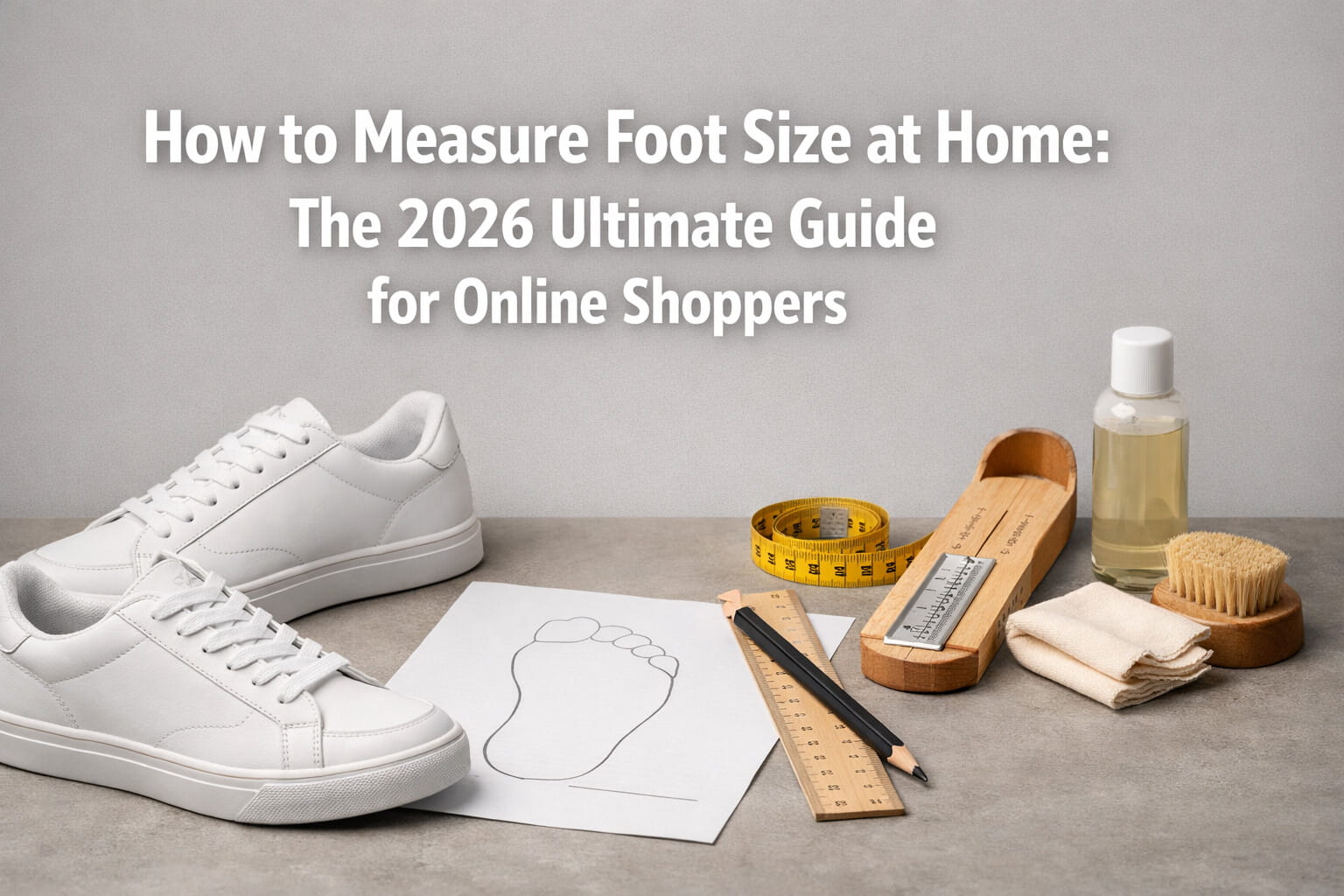
What You'll Need
Here's the good news: measuring a child's feet at home doesn't require any special equipment.
- A piece of paper, ideally a full sheet, plain or lined
- A pencil or pen
- A ruler or soft tape measure
- A flat, hard floor rather than carpet
In our experience fitting thousands of children's shoes, the paper-and-pencil method is genuinely just as accurate as an in-store foot gauge when it's done correctly. The tools matter less than the technique, which is exactly what the next section covers.
How to Measure Kids' Feet: Step by Step
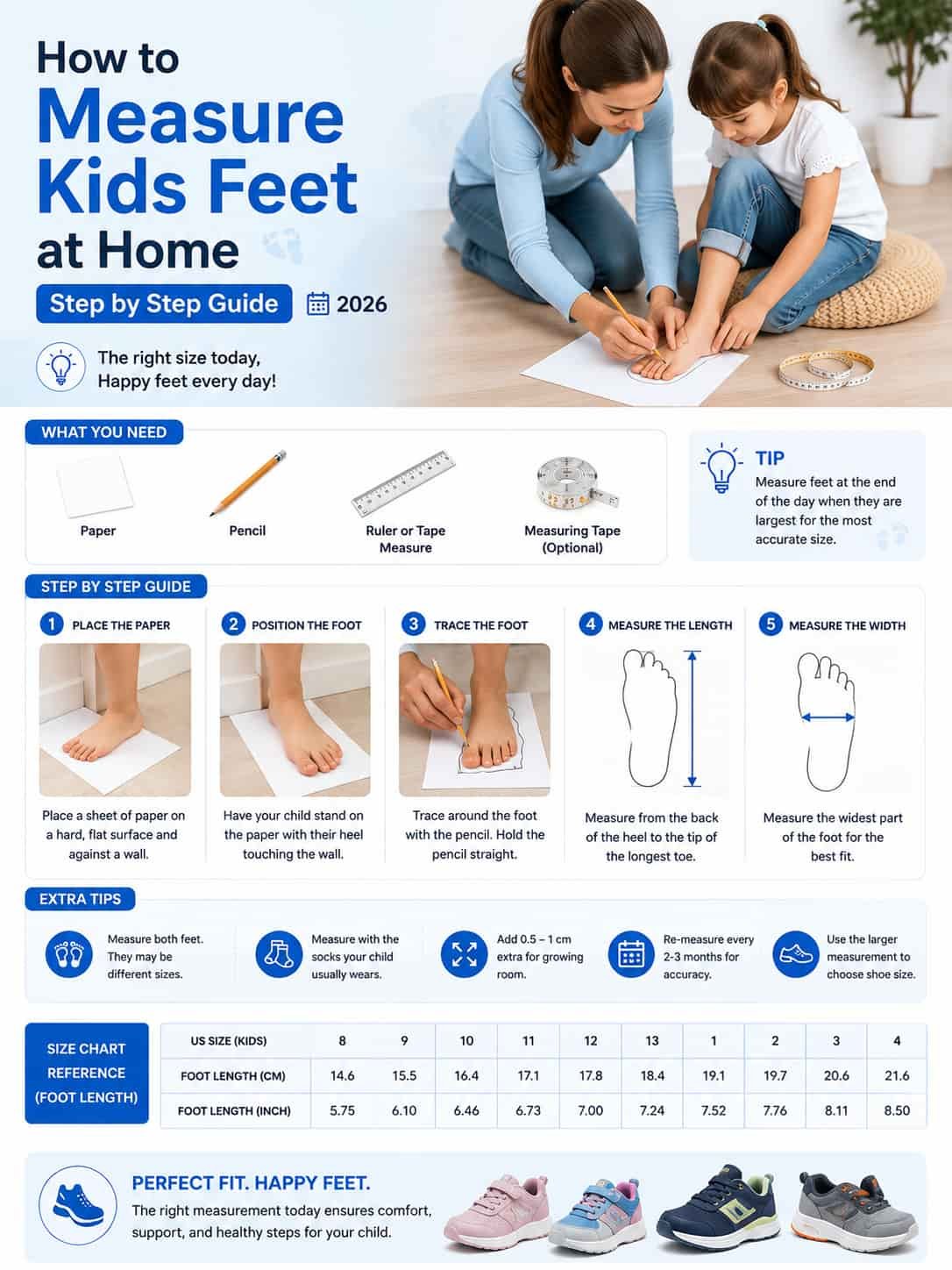
Measuring a kid's foot accurately comes down to five steps, and skipping any one of them is where most at-home measurements go wrong.
- Place the paper on a hard floor against a wall, and have your child stand on it with their heel touching the wall or baseboard.
- Trace around the foot with the pencil held straight up and down, not tilted at an angle, since an angled pencil adds extra width to the outline.
- Mark the longest point, which for many kids is the big toe, but check carefully, since the second toe is sometimes slightly longer.
- Measure the distance from the back of the heel line to the longest toe mark using a ruler or tape measure, in inches or centimeters.
- Repeat for the other foot. It's common for one foot to be a bit longer than the other, and you should always size to the bigger one.
Parent Checklist
- Measure on a hard floor, not carpet.
- Hold the pencil straight up, not at an angle.
- Check which toe is actually longest before marking it.
- Measure both feet and size to the larger one.
- Measure again in the evening for the most accurate result.
Standing vs Sitting: Why It Matters
One thing parents often miss is that a foot measured while sitting can read up to a quarter inch shorter than the same foot measured while standing.
When a child stands and puts weight on their foot, it naturally flattens and lengthens slightly, which is exactly the shape a shoe needs to accommodate. If your child is too young to stand steadily on their own, measuring while someone holds them upright still gives a more accurate result than measuring a foot that's simply resting in your lap.
For babies who genuinely can't stand yet, our How to Measure Baby Feet guide covers a gentler approach suited to that age.
Did You Know?
A foot can measure noticeably different depending on the time of day, since feet naturally swell a little by evening. Measuring in the late afternoon or evening tends to give a more realistic "worst case" size than a first-thing-in-the-morning measurement.
How Often to Re-Measure by Age
A quick tip that saves a lot of wasted shoe purchases: how often you need to re-measure changes a lot as your child gets older.
| Age | Re-Measure Every |
| Under 2 years | 4 to 6 weeks |
| 2 to 4 years | 6 to 8 weeks |
| 4 to 6 years | 8 to 10 weeks |
| 6 to 10 years | 3 to 4 months |
| 10 years and up | Twice a year |
This isn't just a rough guideline. Growth genuinely slows in stages, so measuring a 9 year old every 6 weeks the way you would a toddler wastes effort, while measuring a toddler only twice a year risks weeks of cramped shoes without you noticing.
Expert Tip
Set a reminder tied to something you'll actually notice, like the start of each school term or the change of season, rather than trying to remember an exact week count. After 25 years in children's footwear, we've found parents keep up with re-measuring far more consistently when it's linked to a date they already track.
Turning a Measurement Into a Shoe Size
Once you have a foot length in inches or centimeters, the next step is matching it to an actual shoe size, and this is where a lot of parents get stuck.
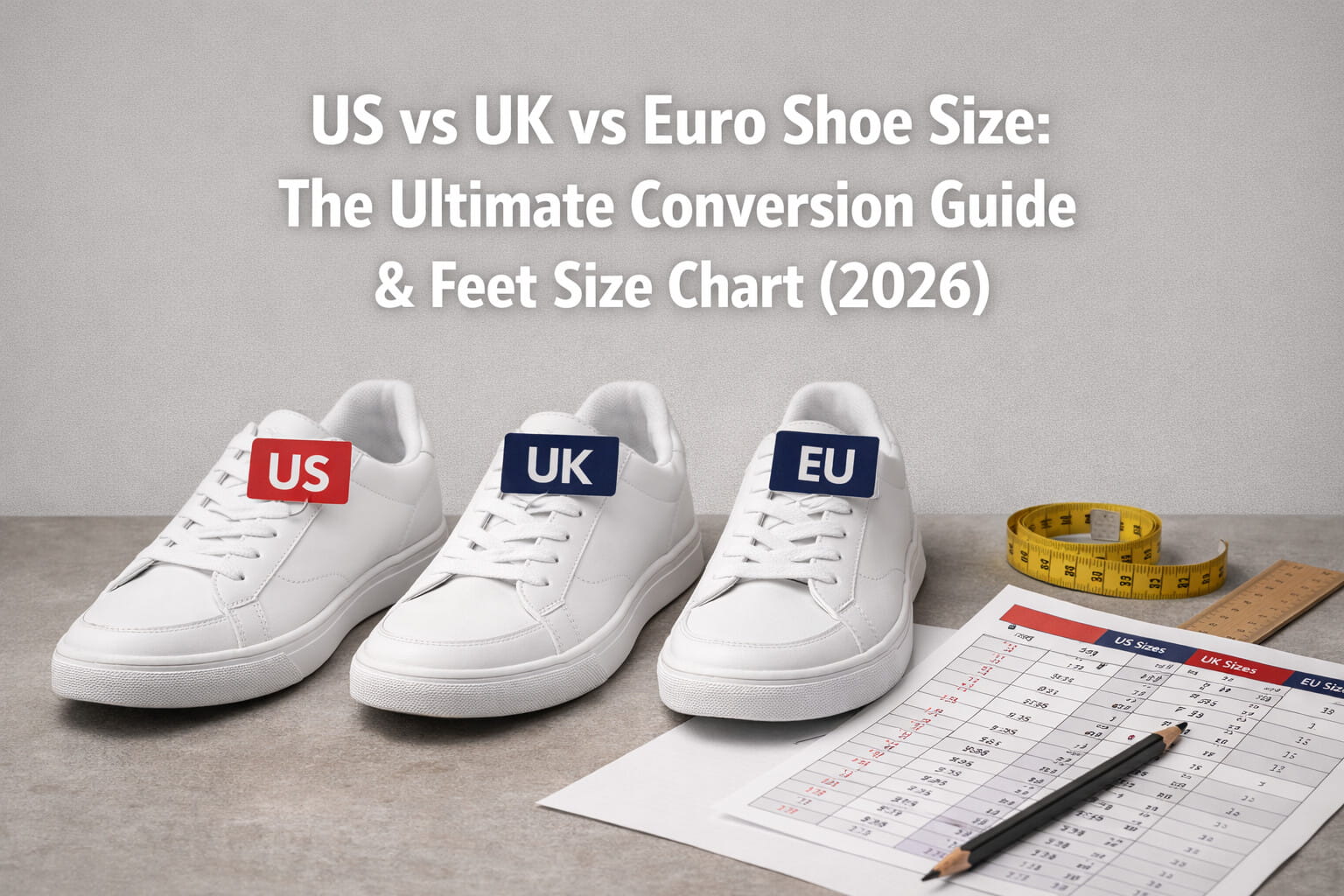
Foot length maps to different size numbers depending on the stage your child is in, toddler, little kid, or youth, and each stage uses its own number range. A foot measuring 8 inches, for example, lands very differently in a little kid chart than it would if you mistakenly checked a toddler chart. Our Kids Shoe Size Chart breaks down foot length by stage so you can match your measurement to the correct size. If you're shopping a UK or EU brand, our Shoe Size Conversion Chart Calculator converts your measurement across every system in one place. For the most accurate shoe size, first learn how to measure your foot size at home
Common Mistake
Rounding a measurement down to the nearest whole size is one of the most common mistakes we see. If a foot measures between two sizes, round up rather than down, and leave the standard 0.4 to 0.5 inches of growing room on top of that.
Signs of a Correct Fit
Once shoes are on, a few quick checks confirm whether the size you measured actually translates to a good fit:
- About a thumb's width of space between the longest toe and the front of the shoe
- No heel slipping when your child walks or runs a few steps
- No red marks or pressure lines once the shoe comes off
- Toes can wiggle freely inside the shoe
- The shoe bends at the ball of the foot, not somewhere in the middle of the sole
Signs the Shoes Are Too Small
A shoe that measured correctly on paper can still end up too small if growth has crept ahead of your last measurement.
- Resistance or complaints when putting the shoe on
- Red marks or pressure lines visible after the shoe comes off
- Toes curling, or no gap at all at the front of the shoe
- New complaints about foot pain or tiredness, especially after active play
- A visible line pressing across the top of the foot
Signs the Shoes Are Too Big
Shoes that are too big cause just as many problems as shoes that are too small, especially once running and active play are involved.
- Visible heel slip while walking
- Shuffling or dragging the feet instead of a normal stride
- The shoe coming off entirely during play
- Extra material bunching at the toe when you press down gently
Common Measuring Mistakes
- Measuring while sitting instead of standing, which can shrink the reading by up to a quarter inch
- Holding the pencil at an angle instead of straight up, which adds inaccurate width to the trace
- Assuming the big toe is always the longest, when the second toe sometimes extends further
- Measuring only one foot instead of both and sizing to the smaller reading by accident
- Measuring first thing in the morning and missing the natural evening swelling
- Printing an online foot gauge without checking it's set to 100 percent scale, which throws off every measurement that follows
Avoid This
Skip measuring on carpet or a soft rug if you can help it. A soft surface lets the foot sink slightly, which can add a fraction of an inch to your trace and lead you to size up more than necessary.
Expert Tips for Fidgety Kids
Measuring a wiggly toddler is genuinely harder than measuring an older kid, so here are a few things that help.
- Turn it into a game, like "stand still like a statue," rather than announcing it as a chore
- Distract with a short video or a favorite toy held at eye level while you trace quickly
- Measure right after a meal or snack when energy tends to be lower
- Have a second adult help steady balance while you trace, especially for a child who's just learning to stand
- If tracing fails twice, switch to the tape measure method instead, since it takes only a few seconds per foot
FAQs
How do I measure my child's foot without a ruler? A standard piece of printer paper is 11 inches long, so you can use the edge of the paper itself as a rough length reference if you don't have a ruler on hand, then confirm the exact measurement with any tape measure or measuring app you have available.
Should I measure my child's feet standing or sitting? Standing gives a more accurate measurement, since a foot naturally flattens and lengthens slightly under body weight, which is exactly the shape a shoe needs to fit. A seated measurement can read noticeably shorter.
What if my child's two feet are different sizes? This is completely normal. Always buy shoes based on the larger foot, and if the size difference is significant, look for a shoe with an adjustable closure that can accommodate the smaller foot comfortably too.
How much growing room should I add to the measurement? Leave about 0.4 to 0.5 inches, roughly a thumb's width, between the longest toe and the front of the shoe. Much more than that and the heel tends to slip during normal walking.
How often should I re-measure my child's feet? It depends on age. Every 4 to 6 weeks under age 2, stretching out to every 8 to 10 weeks by age 6, and down to about twice a year once a child passes 10, since growth slows in stages rather than staying constant.
Can I measure my baby's feet the same way as an older child? Not quite. Babies who can't stand yet need a gentler approach, usually measured while lying down with legs relaxed rather than standing. Our How to Measure Baby Feet guide walks through that method specifically.
Why does my measurement not match the size on the shoe box? There's no single regulated sizing standard across manufacturers, so a size 2 in one brand can measure slightly differently in another. Treat your measured foot length as the reliable number, and check it against each brand's specific chart rather than assuming sizes transfer exactly.
Is it okay to measure my child's feet with socks on? It's fine to measure barefoot for the most accurate raw length, but if your child will typically wear thick socks with the shoes, try the shoe on with those same socks before buying, since sock thickness can quietly eat into the growing room you measured for.
What time of day is best for measuring? Evening tends to give the most reliable reading, since feet swell slightly by the end of the day. A shoe that fits comfortably on an evening-measured foot is less likely to feel tight later in the day once your child is actually wearing it.
How do I know if I measured correctly? If you can repeat the measurement twice and get results within about a tenth of an inch of each other, you can trust the number. A bigger gap between two attempts usually means the pencil was angled, the child shifted mid-trace, or the foot wasn't fully flat.
RELATED ARTICLES
CONCLUSION
Measuring a child's feet at home really does come down to a piece of paper, a pencil, and five simple steps: trace, mark the longest toe, measure heel to toe, check both feet, and size to the larger one. The number you get matters more than any age chart, since kids grow at such different rates.
Set a reminder to re-measure based on your child's age, and once you have a fresh number, match it against our Kids Shoe Size Chart to find the right size before you buy.