The Ultimate Guide to Shoe Size Conversion Calculator: Everything You Need to Know About Finding the Perfect Fit
Welcome to the ultimate guide for shoe size conversion. Finding the perfect fit when shopping online can be frustrating. Brands differ, international standards vary, and a size 10 in the US is completely different from a size 10 in the UK. Use our accurate calculator below to instantly convert between US, European, UK, and CM sizes.
Shoe Size Conversion
Why is Shoe Sizing So Complicated?
If you have ever tried to convert an American shoe size to European, or wondered why a size 9 fits differently in Nike vs. Adidas, you aren’t alone. The complication stems from history. Unlike units of measurement like the kilogram which are standard globally, shoe sizes evolved locally.
Cobblers in the UK used “Barleycorns” (1/3 of an inch) to measure feet, while French cobblers used “Paris Points” (2/3 of a centimeter). This historical divergence is why an EU shoe size to US conversion often results in half-sizes or awkward fits.
Complete Shoe Size Conversion Charts
Below are the detailed reference tables for converting European to English shoe size, US to Asian sizes, and foot length measurements.
Women’s Shoe Size Chart
| US/CA | UK/IN | EU | JP/MX | CN | Inches | CM |
|---|---|---|---|---|---|---|
| 4 | 2 | 34 | 21 | 32 | 8.3″ | 21.2 |
| 5 | 3 | 35 | 22 | 34 | 8.7″ | 22.0 |
| 6 | 4 | 36 | 23 | 36 | 9.0″ | 22.9 |
| 7 | 5 | 38 | 23.5 | 37 | 9.3″ | 23.7 |
| 8 | 6 | 39 | 24.5 | 39 | 9.7″ | 24.6 |
| 9 | 7 | 40 | 25.5 | 41 | 10.0″ | 25.4 |
| 10 | 8 | 41 | 26 | 42 | 10.3″ | 26.2 |
| 11 | 9 | 43 | 27 | 44 | 10.7″ | 27.1 |
| 12 | 10 | 44 | 28 | 46 | 11.0″ | 27.9 |
Men’s Shoe Size Chart
The mens shoe size chart typically runs about 1.5 sizes smaller than women’s numbers in the US system (e.g., a Men’s 7 is a Women’s 8.5).
| US/CA | UK/IN | EU | JP/MX | CN | Inches | CM |
|---|---|---|---|---|---|---|
| 6 | 5 | 38 | 23.5 | 37 | 9.3″ | 23.7 |
| 7 | 6 | 39 | 24.5 | 39 | 9.7″ | 24.6 |
| 8 | 7 | 40 | 25.5 | 41 | 10.0″ | 25.4 |
| 9 | 8 | 41 | 26 | 42 | 10.3″ | 26.2 |
| 10 | 9 | 43 | 27 | 44 | 10.7″ | 27.1 |
| 11 | 10 | 44 | 28 | 46 | 11.0″ | 27.9 |
| 12 | 11 | 45 | 29 | 48 | 11.3″ | 28.8 |
| 13 | 12 | 46 | 29.5 | 49 | 11.7″ | 29.6 |
| 14 | 13 | 48 | 30.5 | 51 | 12.0″ | 30.5 |
Kids’ Shoe Size Chart (5-12 Years)
| US/CA | UK/IN | EU | JP/MX | CN | Inches | CM |
|---|---|---|---|---|---|---|
| 10.5 | 9.5 | 28 | 17 | 24 | 6.8″ | 17.1 |
| 12 | 11 | 30 | 18.5 | 27 | 7.3″ | 18.4 |
| 13.5 | 12.5 | 32 | 19.5 | 29 | 7.8″ | 19.7 |
| 1 | 13 | 32 | 20 | 30 | 7.9″ | 20.1 |
| 2 | 1 | 33 | 21 | 32 | 8.3″ | 21.0 |
| 4 | 3 | 36 | 22.5 | 35 | 8.9″ | 22.6 |
| 6 | 5 | 39 | 24.5 | 39 | 9.6″ | 24.3 |
| 7 | 6 | 40 | 25 | 40 | 9.9″ | 25.2 |
How to Measure Your Feet for the Perfect Fit
To use our feet size chart effectively, you need an accurate measurement. While professionals use a Brannock Device, you can measure at home:
- Timing matters: Measure your feet in the evening. Feet swell throughout the day, and you want shoes that fit your feet at their largest.
- The Setup: Place a piece of paper on the floor against a wall. Stand on the paper with your heel firmly against the wall.
- Trace: Trace the outline of your toes. Measure the distance from the edge of the paper (heel) to the longest toe.
- Input: Enter this number (in inches or cm) into the calculator above.
Common Conversion Questions
Men’s to Women’s Shoe Size:
In the US system, men’s sizes are generally 1.5 sizes smaller than women’s. If you are a woman wearing a size 10, you would roughly be a size 8.5 in men’s shoes.
European Shoe Size to American:
EU sizes are based on centimeters (Paris Points), while US sizes are based on inches. Because the math doesn’t line up perfectly, an EU 42 is generally a US Men’s 9, but in some brands, it might be a 9.5. Always check the brand’s specific chart if available.
You have found the perfect pair of shoes online. They are stylish, durable, and exactly what you have been looking for to complete your wardrobe. You are ready to click “Add to Cart,” but there is just one problem: the size is listed in “EU 42” or “UK 8,” and you are used to US sizing. Or perhaps you are shopping for your growing child, buying sneakers for the new school year, and you find yourself completely baffled as to why a “Size 13” suddenly disappears and becomes a “Size 1”?
Shoe sizing is widely considered one of the most confusing and frustrating aspects of modern clothing and fashion. Unlike a kilogram, a liter, or a meter—which are standard, scientifically defined measurements used globally—shoe sizes are a fragmented mix of medieval historical traditions, regional preferences, and proprietary manufacturing variations. A size 10 in the US is not a size 10 in the UK. A size 40 in Europe is not a straightforward integer in inches. To make matters worse, even two shoes of the same “size” from the same brand can fit differently depending on their design purpose.
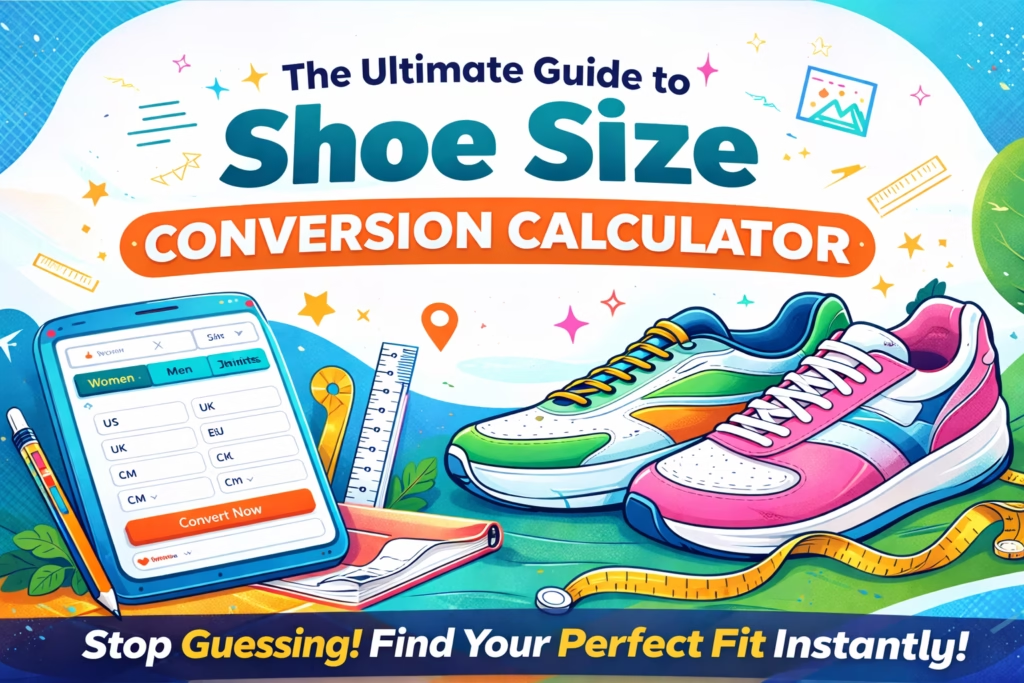
This comprehensive guide is here to solve that problem once and for all. Below the Shoe Size Conversion calculator you just used, we have compiled the most detailed resource on the web for understanding how shoe sizing works. From converting American shoe size to European to understanding the nuances of width sizing and how to measure your feet like a professional cobbler, we cover it all.
Why Is Shoe Sizing So Complicated?
To understand why you need a shoe size conversion chart in the first place, we have to look back at history. Before the industrial revolution and mass manufacturing, shoes were custom-made by local cobblers. You didn’t walk into a shop and ask for a “size 9”; you simply sat on a stool, had your foot measured with a tape or a piece of leather, and a shoe was built specifically around your unique anatomy.
As mass production began in the 19th century, factories needed a way to produce shoes in bulk that would fit the “average” person. However, because there was no global communication or international trade organization at the time, different regions developed their own completely separate systems for standardizing sizes. These systems developed in isolation, based on the measurement units available to them at the time.
The Barleycorn System (UK and USA)
In 1324, King Edward II of England signed a royal decree stating that three barleycorns placed end-to-end equaled one inch. While this might sound like a quaint fairy tale, it became the actual legal basis for the British shoe sizing system. A “size” was defined mathematically as the length of one barleycorn (which is exactly 1/3 of an inch, or 8.46 mm).
This system is still in use today. The reason US and UK sizes don’t make intuitive sense to modern users accustomed to the metric system is that they are literally based on a medieval grain measurement.
- The Difference: While both US and UK systems use the barleycorn unit (1/3 inch per size), they start counting from different points. The UK system starts its “zero point” at 4 inches (a hand’s breadth), while the US system starts its count slightly earlier. This offset is why a US size is numerically higher than its UK counterpart for the exact same foot length.
The Paris Point (Europe)
Continental Europe took a completely different approach, ignoring the imperial inch entirely. They developed the “Paris Point” in the mid-19th century. One Paris Point is defined as equal to 2/3 of a centimeter (6.67 mm).
This creates a mathematical headache for conversion. Because 6.67 mm (EU step) does not align with 8.46 mm (US/UK step), European shoe size to American conversions are rarely whole numbers. They are almost always approximations.
- The Math: A US size 9 might correspond to a foot length that sits perfectly between an EU 42 and EU 43. This is why you will often see conversion charts listing fractions, or why a shoe box might say “US 9.5 / EU 42.5”.
The Mondopoint (Asia and Military)
Japan, China, Korea, and most of the world’s military organizations use what is arguably the most logical system: Mondopoint. Developed in the 1970s by the International Organization for Standardization (ISO), this system simply measures the foot length in millimeters or centimeters.
If your foot is 260mm (26cm) long, your shoe size is 260 (or 26). This eliminates the need for arbitrary numbers or “decoding” sizes. While this is the standard for ski boots and military gear, it has yet to fully replace the legacy systems in the global fashion footwear market, though Japanese sneaker releases often use it exclusively.
Detailed Shoe Size Conversion calculator & Charts
While our calculator above does the math for you instantly, it is often helpful to see the data laid out in a feet size chart to understand the progression of sizes. Below, we break down the conversions for every major category, providing context on how these sizes generally compare.
Men’s Shoe Size Chart
One of the most common searches is for a mens shoe size chart. Men’s sizes in the US and UK differ by roughly one full size. A US Men’s 10 is typically a UK Men’s 9. However, the jump to European sizes is more complex due to the “Paris Point” mismatch.
Note: The inch and CM measurements below refer to the recommended foot length, not the length of the shoe itself.
| US Men’s | UK Men’s | EU Men’s | Foot Length (Inches) | Foot Length (CM) |
|---|---|---|---|---|
| 6 | 5 | 38 | 9.3″ | 23.7 cm |
| 7 | 6 | 39 | 9.7″ | 24.6 cm |
| 8 | 7 | 40 | 10.0″ | 25.4 cm |
| 9 | 8 | 41 | 10.3″ | 26.2 cm |
| 10 | 9 | 43 | 10.7″ | 27.1 cm |
| 11 | 10 | 44 | 11.0″ | 27.9 cm |
| 12 | 11 | 45 | 11.3″ | 28.8 cm |
| 13 | 12 | 46 | 11.7″ | 29.6 cm |
| 14 | 13 | 48 | 12.0″ | 30.5 cm |
Women’s Shoe Size Chart
When converting mens to womens shoe size in the US, there is typically a 1.5 size difference. A man wearing a size 7 would wear a woman’s size 8.5. This differs from the UK system, where men’s and women’s sizing scales are often identical, just covering different ranges. In Europe, the size is unisex; a size 40 is a size 40 regardless of gender, though the width of the shoe last may differ.
| US Women’s | UK Women’s | EU Women’s | Foot Length (Inches) | Foot Length (CM) |
|---|---|---|---|---|
| 5 | 3 | 35 | 8.7″ | 22.0 cm |
| 6 | 4 | 36 | 9.0″ | 22.9 cm |
| 7 | 5 | 38 | 9.3″ | 23.7 cm |
| 8 | 6 | 39 | 9.7″ | 24.6 cm |
| 9 | 7 | 40 | 10.0″ | 25.4 cm |
| 10 | 8 | 41 | 10.3″ | 26.2 cm |
| 11 | 9 | 43 | 10.7″ | 27.1 cm |
| 12 | 10 | 44 | 11.0″ | 27.9 cm |
Kids’ Shoe Size Chart
Kids’ shoe sizing is notoriously difficult because the numbering system loops back on itself. In the US/UK system, sizes start at Infant 0 and count up to 13.5 (Little Kid). After 13.5, the numbers do not continue to 14; instead, they reset back to 1 (Big Kid). This “Big Kid” size 1 is effectively the next step after size 13.5.
Pro Tip for Parents: A “Big Kid” (Youth) size 3.5 to 7 is roughly equivalent to Men’s sizes 3.5 to 7. This is why you often see “Grade School” (GS) shoes that fit both children and women with smaller feet. If you are a woman with size 6 feet, you can often save money by buying a Youth Size 6GS!
How to Measure Your Feet at Home
Using a feet size chart is useless if you don’t know your actual foot measurements. While you can go to a shoe store and use a Brannock Device (that metal slider tool), you can get a highly accurate measurement at home with a piece of paper and a ruler.
Step-by-Step Guide
- Gather Supplies: You need a piece of paper larger than your foot, a pencil, a ruler, and tape.
- Tape the Paper: Secure the paper to the floor right up against a wall. Hard floors (tile, wood) are much better than carpet for accuracy, as carpet can allow the pencil to slip underneath the foot.
- Stand Firm: Place your heel firmly against the wall and stand on the paper. It is crucial to stand, not sit. Your foot expands, flattens, and spreads when it bears your body weight. Measuring while sitting can result in a shoe that is too tight when walking.
- Trace: Draw a line at the very tip of your longest toe. Note: For many people, the second toe is actually longer than the big toe (this is called “Morton’s Toe”). Measure to whichever toe is longest.
- Measure: Step off the paper and measure the distance from the edge of the paper (where your heel was) to the line you drew.
- Repeat: Measure both feet. It is very common for humans to have one foot slightly larger than the other. Always buy shoes to fit the larger foot; you can add an insole to the smaller shoe, but you cannot stretch a shoe that is too small.
The “Swell” Factor
Human feet swell throughout the day due to walking, gravity, and heat. A shoe that fits perfectly at 8:00 AM might feel painfully tight by 6:00 PM. For this reason, always measure your feet in the afternoon or evening. This ensures your new shoes will remain comfortable all day long, even after a long day of walking.
Understanding Width: The Missing Dimension
Most Shoe Size Conversion calculator focus exclusively on length, but width is equally important for comfort. A shoe that is the right length but too narrow will cause blisters, bunions, and numbness. Conversely, a shoe that is too wide will cause your heel to slip, leading to instability and blisters on the heel.
In the US system, width is denoted by letters. While “Medium” is the standard, many people unknowingly need a different width.
- AAA, AA, A: Narrow to Extra Narrow. (Commonly found in specialized running or dress shoes).
- B: The standard width for Women. It is considered a Narrow width for Men.
- D: The standard width for Men. It is considered a Wide width for Women.
- E, EE, EEE (2E, 3E): Wide, Extra Wide, and Extra-Extra Wide.
Standard vs. Wide: Most shoes sold in standard retailers are “D” width for men and “B” width for women. If you frequently find that your toes feel squashed or the sides of your feet spill over the sole, you likely need a Wide (E) or Extra Wide (EE) shoe. If you see shoes labeled “Unisex,” they are almost always a Men’s “D” width, which may be too wide for many women.
International Conversion Deep Dive
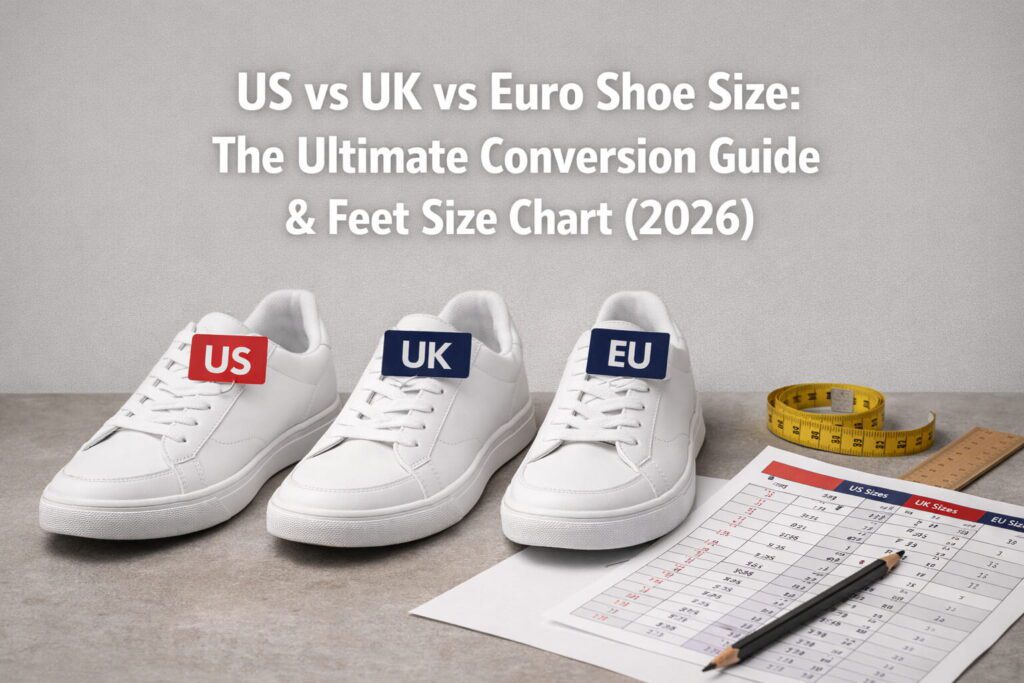
Let’s break down the specific conversions that cause the most confusion.
US vs. UK Sizing
The relationship between US and UK sizes is generally consistent, but it differs for men and women.
- Men: UK size is generally 1 size smaller than US. (US 10 = UK 9).
- Women: UK size is generally 2 sizes smaller than US. (US 8 = UK 6).
- Kids: UK size is generally 0.5 to 1 size smaller than US.
This discrepancy is why it is vital to check if you are looking at a “Unisex” chart or a gender-specific chart. A US woman buying a “Unisex” UK shoe needs to be very careful with the conversion math.
European to English Shoe Size
Converting European to English shoe size is tricky because the intervals are different. A UK size increases by 8.46mm per full size (barleycorn). An EU size increases by 6.67mm per full size (Paris Point). Because the “step” sizes are smaller in Europe, you get a more precise fit, but it makes direct conversion harder.
- UK 5 is often listed as EU 38.
- UK 9 is often listed as EU 43.
EU Shoe Size to US
This is perhaps the most common conversion query.
- Women: A US 7 is roughly an EU 37-38.
- Men: A US 10 is roughly an EU 43-44.
The “Half Size” Problem: Because EU sizes don’t use half sizes in the same way US sizes do, a US half size often lands “between” two EU sizes. If you are a US 9.5 Men’s, you might find an EU 42 too tight and an EU 43 slightly loose. In these cases, checking the brand’s specific CM (centimeter) chart is the safest bet, or looking for brands that offer specific half-step EU sizes (like 42 2/3).
Ultimate Guide to Indian Shoe Sizes
One of the most frequent questions online shoppers in India ask is about the difference between UK and India shoe sizes. You are on Amazon, Flipkart, or Myntra, you have found the perfect pair of sneakers, and you see the size option: UK 7. But you know your foot size is India 7. Do you buy it? Do you size up?
The confusion is understandable because the world of shoe sizing is messy. However, for Indian shoppers, there is one golden rule that simplifies everything.
The Golden Rule: India Size = UK Size
For 99% of brands sold in India, the Indian shoe size is exactly the same as the UK shoe size.
If you wear a Size 8 in Bata or Action (classic Indian brands), you are a UK Size 8 in Nike, Adidas, or Puma. The historical reason for this dates back to the British era, where the United Kingdom’s measurement system was adopted as the standard for India. While the US and Europe developed their own distinct systems, India retained the UK system.
Answering the Big Question: “UK 7 Size in India”
If you are looking for UK 7 size in india, the answer is simple: It is an India Size 7.
- Foot Length: Approximately 25.4 cm to 25.8 cm.
- US Equivalent: US Men’s 8.
- Euro Equivalent: EU 40 to 41 (depending on the brand).
If a shoe box says “UK 7,” it fits an Indian foot that is size 7. You do not need to do any math.
India Shoes Size Chart (Men & Women)
While the rule is simple, it helps to see the numbers side-by-side, especially when international brands list US or EU sizes on the box.
Men’s Size Chart (India)
| India / UK Size | US Men’s Size | EU Size | Foot Length (CM) |
|---|---|---|---|
| 6 | 7 | 40 | 24.6 cm |
| 7 | 8 | 40.5 – 41 | 25.4 cm |
| 8 | 9 | 42 | 26.2 cm |
| 9 | 10 | 43 | 27.1 cm |
| 10 | 11 | 44 – 45 | 27.9 cm |
| 11 | 12 | 46 | 28.8 cm |
Women’s Size Chart (India)
| India / UK Size | US Women’s Size | EU Size | Foot Length (CM) |
|---|---|---|---|
| 3 | 5 | 35.5 | 22.0 cm |
| 4 | 6 | 37 | 22.9 cm |
| 5 | 7 | 38 | 23.7 cm |
| 6 | 8 | 39 | 24.6 cm |
| 7 | 9 | 40 – 41 | 25.4 cm |
| 8 | 10 | 42 | 26.2 cm |
Buying Tips for Indian Shoppers
While the India shoes size chart is generally standard, there are exceptions you should be aware of when shopping on Indian e-commerce sites:
- The “US” Brand Exception: Some American brands (like Nike or Skechers) highlight the US size on the box. If you ask for a “Size 8” at a store selling US brands, check if they mean US 8 or UK 8. A US 8 is actually a UK/India 7. Always verify the “UK” or “CM” label.
- Decathlon Sizing: Decathlon often uses EU sizing (e.g., 42, 43). If you are an India Size 9, do not guess; look for the EU equivalent (usually EU 43).
- Traditional Footwear (Juttis/Kolhapuris): Unlike sneakers, traditional Indian footwear needs to be snug initially as leather stretches. However, the sizing scale remains consistent with the UK system.
Brand Discrepancies: Why Your Nike Size Isn’t Your Adidas Size
Even with a perfect shoe size conversion chart, you might find inconsistencies between brands. This is due to the “Last.”
A “Last” is the 3D mold upon which a shoe is constructed. Every brand uses its own proprietary lasts, which dictate the volume, width, and arch height of the shoe.
- Nike: Generally runs slightly narrow and small. Many users size up 0.5 sizes, especially in models like the Huarache or Air Max.
- Adidas: Tends to run true to size or slightly large. Their “Ultraboost” line is known for a snug, sock-like fit, while the “Superstar” runs big.
- Converse (Chuck Taylors): Famous for running very large. Most people size down 0.5 to 1 full size. A US 9 in Nike might need a US 8 in Converse.
- New Balance: Known for wider toe boxes and true-to-size fit. They are one of the few brands that consistently offer multiple width options (2E, 4E) for the same model.
- Dr. Martens: Often do not offer half sizes. Their boots run large, and because the leather is stiff, getting the right size is critical to avoid painful break-in periods.
Because of these variations, the feet size chart based on centimeters is your best friend. Ignore the arbitrary number on the box (9, 10, 42) and look at the CM or MM measurement on the tongue of your current favorite shoes. If your favorite Nikes are 27cm, buy the 27cm size in Adidas, regardless of what “US Size” they call it.
Tips for Buying Shoes Online
Buying shoes without trying them on can be risky, but you can minimize returns by following these rules:
1. Know Your Measurement in CM: As mentioned above, centimeters are the universal language of shoe sizing. Japanese sizing is literally just the length in centimeters. This is the most accurate metric to cross-reference.
2. Check the “Fit” Reviews: Most major retailers have reviews that say “Runs Small,” “True to Size,” or “Runs Large.” Trust the aggregate data of thousands of buyers. If 80% of reviews say “Size Up,” you should definitely size up.
3. Account for Socks: If you are buying winter boots, measure your feet while wearing thick wool socks. If you are buying running shoes, wear your athletic socks. Measuring barefoot for a shoe you will wear with thick socks will result in a fit that is too tight.
4. Leave “Wiggle Room”: A proper fitting shoe should have about 0.5 inches (roughly 1.2 cm) of space between your longest toe and the end of the shoe. This prevents your toes from hitting the front when you walk downhill or stop suddenly. This is popularly known as the “thumb width” rule.
5. Order Two Sizes: If a retailer offers free returns, order your estimated size and a half-size up (or down). Try them both on at home in the evening, keep the one that fits, and return the other.
Frequently Asked Questions (FAQ)
Q: Is EU shoe size the same for men and women? A: Generally, yes. The EU system is unisex. An EU 40 is the same length whether it is a men’s shoe or a women’s shoe. However, the width and shape of the shoe will likely differ. A women’s EU 40 will be narrower (B width) than a men’s EU 40 (D width).
Q: What is the difference between Big Kid and Little Kid sizes? A: “Little Kid” sizes range from roughly 10.5 to 13.5. “Big Kid” sizes start at 1 and go up to 7. The confusion arises because 13.5 is actually smaller than 1. The scale resets. A Big Kid size 3.5 to 7 is effectively the same as Men’s 3.5 to 7.
Q: Does weight affect shoe size? A: Yes. Significant weight gain or pregnancy can cause feet to flatten and spread, effectively increasing your shoe size. The ligaments in your feet relax, causing the arch to lower and the foot to lengthen. It is recommended to remeasure your feet every year.
Q: What is a Brannock Device? A: A Brannock Device is the standard metal measuring tool found in shoe stores. It measures foot length, arch length, and width simultaneously. It is considered the gold standard for measurement. If you have difficult feet, visiting a store to use one is highly recommended.
Q: I am between sizes. Should I size up or down? A: In almost all cases, it is better to size up. You can fix a shoe that is slightly too big by adding a thicker insole or wearing thicker socks. You cannot fix a shoe that is too small; it will simply cause pain and potential foot damage.
Conclusion
Finding the right shoe size doesn’t have to be a guessing game. While the systems for american shoe size to european or mens to womens shoe size can be perplexing, they follow predictable rules.
By measuring your feet in centimeters and using the Shoe Size Conversion calculator at the top of this page, you can shop confidently across borders and brands. Remember that comfort is king—no matter what the number on the box says, the right size is the one that feels good on your feet.
Bookmark this page and reference our feet size chart whenever you are shopping for your next pair of sneakers, boots, or dress shoes. Happy shopping!
- The Ultimate Amazon Fashion Find: POYOIOR Cowgirl Western Pattern Embroidered Review

- 7 Best Safety Shoes for Construction Workersin India

- 7 Best Safety Shoes for Construction Workers in India 2026
- 5 Best Orthopedic Slippers for Diabetic Patients in India (2026 Guide)
- What is TPR Sole? The Ultimate Guide to Durable Shoe Soles (2026)
- Why Are Red Bottom Heels So Expensive? The Truth Behind Louboutin Pricing (2026 Guide)
- The Anatomy of a Shoe: Upper, Midsole, Outsole & Complete Parts Guide 2026
- What is Full-Grain Leather vs. Top-Grain? The Ultimate 2026 Guide to Leather Quality Grades
- Carbon Plate Running Shoes: Cheating or Revolutionary Tech in 2026?
- Why Do Sneaker Soles Turn Yellow? The Science of Oxidation & Sole Care (2026)
- What is an Aglet? The Complete Shoelace Tip History & Buyer’s Guide (2026)
- Nike Sabrina 3 “Oregon Ducks” Officially Revealed: A March Madness Must-Cop
- Nike Air Force 1 Low “Dark Sky Blue” Retro Premium: Spring 2026 Release Date & Official Specs
- The Whitaker Group x adidas ‘Do Not Duplicate’ Collection: Ultra-Limited Drops Redefine Authenticity
- Goodyear Welt Explained: Why These Resolable Shoes Last Forever (2026 Guide)
- Willy Chavarria x adidas Superstar “Rose” Core Black: Official Release Date, Price, & Sculpted Toe Cap Details
- Nike LeBron 23 “LeBronto” Release Date: King James Resurrects Playoff Dominance
- Converse SHAI 001 Pink Release: Secure the Boldest Hardwood Drop Before It Sells Out!
- Nike Air Max DN8 “Pink Gaze” Drops March 2026: Official Look & Release Details
- New Balance ABZORB 2000 “Electric Indigo” Released: Official Look & Buyer’s Guide
- The Whitaker Group x Nike V5 RNR Collection: Seven Exclusive Drops Arriving This Season
- Nike Air Foamposite Pro ‘Dr. Doom’ 2026 Release: The 20th Anniversary Marvel Crossover Returns
- Air Jordan 1 Retro High OG ‘Psychic Blue’: Official Release Date, Pricing & Exclusive Accessories
- Vulcanized vs. Cupsole Skate Shoes 2026: The Ultimate Guide to Board Feel vs. Durability
- On LightSpray Cloudmonster 3 Hyper Release Date: The 205g Revolutionary Running Silhouette Arrives
- Audi Revolut F1 Team x adidas Adizero EVO SL “Chalk Pearl” Drops Now: Ultimate Motorsport Performance Sneaker
- Travis Scott x Jordan Jumpman Jack “Green Spark”: Official Release Date & Details
- HOMME PLISSÉ ISSEY MIYAKE CIOCCOLATO: Official Release Date, Price, and Where to Buy the Chocolate-Inspired Silhouette

- Nike Zoom Vomero 5 “Game Royal” Swooshless Drops Spring 2026: Official Images & Release Info
- New Balance 1906U Gator Run “Star Burst”: Official Release Details, Price, & Where to Buy
- ike Air Max Muse “Royal Pulse/Black” Available Now: A Bold Leap in Futuristic Footwear
- Kylian Mbappé x Nike Air Max Plus VII & Mercurial Superfly Drop: Historic 2002 Revival Hits Next Week
- PUMA x JiyongKim V-S1 Collaboration: Release Date & Details for the Deconstructed Football Boot
- Union LA x Fragment Design x Air Jordan 1 Leads Week’s Premier Footwear Drops
- CLOT x adidas Superstar ‘Coffee’ Release: Edison Chen Pours A Premium Earth-Toned Classic
- Mizuno Wave Prophecy Morelia Neo “Silver” Release Date: The Metallic Lifestyle Runner Arrives Soon
- Naruto Shippuden x Converse Japan Collection: Official Release Date, Price, and Detailed Silhouette Specs
- What is EVA Foam? The 2026 Guide to Lightweight Shoe Soles & Comfort
- Thom Browne x ASICS GEL-Kayano 14 Pre-Order Available: Release Date, Price & Official Specs
- ASICS GEL-Kayano 14 “Light Navy” Surfaces: Official Look & Spring 2026 Drop Details
- New Balance Gator Run ‘Star Burst/Sea Salt’ Release Date: The Archival Turf Classic Returns in Premium Suede
- Nike Air Flightposite 3 Retro: The Alpha Project Icon Returns in Spring 2027
- New Balance MADE in USA SS26 Collection Revealed: Secure Your Teddy Santis 992 & 990v4 Drops
- Awake NY x Air Jordan 6 ‘Midnight Navy’ & ‘Playful Pink’: Fall 2026 Release Details & First Looks Revealed!
- Palace x Vans Low 2 Release Date: The Self-Proclaimed ‘Skate Shoe of the Year’ Drops This Week
- New Balance ABZORB 1890 “Faded Black/Utility Green” Drop: Release Date, Price, and Cop Guide
- ASICS Hypersync “Piedmont Grey” Drops Soon: Official Images, Specs & Release Date
- Norda SS26 “Kaleidoscopic” Collection: Cosmic Gradients & Trail Innovations Available Now
- Nike Air Max Plus ‘Black/Blue Crystal’ Drops in 2026: Official Look & Release Details
- Birkenstock 1774 x Thibo Denis “Ensemble” Collection: A Premium Material Masterclass Arrives
- Jacquemus x Nike Moon Shoe Spring 2026: 3 High-Fashion Colorways Revealed!
- ASICS Hypersync “Graphite Grey” Drops March 6: Specs, Price, and Where to Buy
- adidas Adimule ‘Cow Print’ Revealed: Bold Faux-Fur Slip-On Dropping Summer 2026
- Slam Jam x Salomon XA PRO 3D GORE-TEX “White”: Release Date & Where to Buy
- Virgil Abloh Archive Air Jordan 1 High OG “Alaska” 2026 Release: Everything You Need To Know
- Reebok Angel Reese 1 “Unapologetically Angel”: First Look & SS26 Release Info
- Ronnie Fieg x Clarks Originals Bristol Loafer: The 8th St Spring 2026 Drop Arrives Today
- Patta x Nike Air Max 1 Waves ‘Hyper Crimson’: Official Release Details, Price & Spring 2026 Drop
- Derby vs Oxford Shoes 2026: The Ultimate Formal Shoe Guide
- Kobe Bryant x Nike Air Force 1 Low “Cool Grey” Drops Now: The Ultimate Black Mamba Tribute
- How to Dry Birkenstocks Properly: The Ultimate 2026 Care & Rescue Guide
- How to Clean Oiled Leather Birkenstocks: 2026 Ultimate Guide to Care & Conditioning
- How to Clean White Birkenstocks 2026: Removing Stains & Restoring Color
- How to Restore Old Birkenstocks: The Ultimate 2026 DIY Guide to Refurbish Worn Sandals
- Can You Wash Birkenstocks in Washing Machine? 2026 Cleaning & Care Guide
- How to Deep Clean Birkenstocks at Home 2026: The Ultimate Guide to Wash Cork Footbeds Safely
- How to Remove Smell from Birkenstocks 2026: The Ultimate Guide to Deodorize Cork Footbeds
- Nike Total 90 III PRM ‘Light Smoke Gray’ Revealed: Release Date, Price, and Where to Buy the Summer 2026 Drop
- Converse CONS RUNBOUNCE 3itsuka “Strawberry” Drops in Ultra-Limited 300-Pair Run
- URBAN RESEARCH Clarks Wallabee: Exclusive Spring Colorways Releasing Soon
- Khakis x New Balance 2010 ‘Day Tour’: Seoul Exclusive Reimagines the Premium Runner
- Kiko Kostadinov x ASICS ILARGI FF: Boundary-Pushing Tabi Sneaker Drops Feb 23
- Cactus Plant Flea Market x Nike Flea 1 Revival: Corrected Sizing & New Colorways Confirmed for Holiday 2026 Drop
- Best Cleaner for Birkenstocks 2026: The Ultimate Care & Maintenance Guide
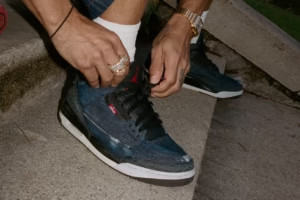
- Levi’s x Air Jordan 3 Collection Drops Globally: Release Date, Price & SKUs
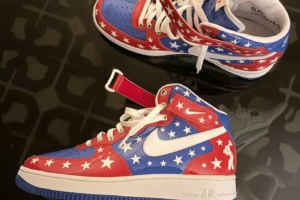
- Concrete Boys x Nike Air Force 1 Mid ‘2006 All-Star’ Sample Unveiled by Lil Yachty
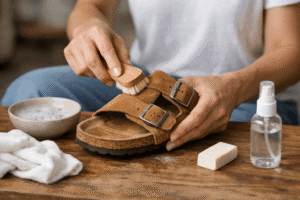
- How to Clean Suede Birkenstocks Without Damage: 2026 Care Guide
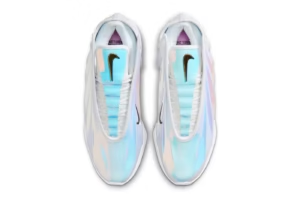
- Nike GT Future “Warning Label” Unleashed: Metallic All-Star Weekend Exclusive
- Air Jordan 4 RM ‘Pale Ivory/Particle Rose’ Confirmed for Spring 2026 Release
- WTAPS x New Balance 1300 “Tactical Black” Confirmed for February Drop
- How to Clean Birkenstock Footbed Naturally: The 2026 Expert Guide to Remove Stains & Odors
- HOKA Stealth/Tech “Walnut/Cast Iron” Pack: Japan-Exclusive Drop for Speedgoat 2 & Mafate Speed 2
- How to Clean On Cloud Running and Tennis Shoes: The Expert Guide to Keeping Them Fresh
- How to Clean On Cloud Waterproof Shoes Without Damaging Them
- How to Clean White On Cloud Shoes Without Yellowing
- How to Wash On Cloud Shoes in Washing Machine (Safe Step by Step Method)
- 10 Best Running Shoes Under 2000 in India (2026 Review: Retailer’s Choice)
- Mizuno WAVE PROPHECY MOC ‘Black’ Releases: A Stealthy Evolution of the Hybrid Icon
- Nike GT Future “Unseen Hours” Channels “Eggplant” Aesthetics in 2026 Release
- Kith x Nike KD 18 ‘Air Max 95 black’ Unveiled: Ronnie Fieg Reveals Ultra-Exclusive Hybrid Silhouette
- Air Jordan 7 “Miro” 2026 Release Date: The Olympic Grail Returns
- JuJu Watkins Debuts Nike LeBron NXXT Gen ‘Silver Lining’ for Summer 2026
- How to Clean Canvas Shoes (Converse/Vans) & Wash Sneakers in a Washer: The 2026 Expert Guide
- How to Recycle Old Shoes in India: The Complete 2026 Sustainability Guide
- How to Remove Ink Stains from Leather Shoes: An Expert’s Guide (2026)
- Master Straight Bar Lacing: The Ultimate Guide for Men’s & Women’s Dress Boots (2026)
- How to Clean Sheepskin Boots (Uggs) at Home in 2026: The Ultimate Suede Brush & Care Guide
- How to Disinfect Second-Hand Shoes in 2026: Complete Sanitization Guide
- How to Disinfect Second-Hand Shoes: A 2026 Guide to Sanitize Used Footwear Safely
- How to Clean White Crocs: The Expert Guide to Restoring Shine (2026)


















![]Nike Total 90 III PRM Light Smoke Gray Revealed Release Date Price and Where to Buy the Summer 2026 Drop](https://urbanstylefootwear.com/wp-content/uploads/2026/02/Nike-Total-90-III-PRM-Light-Smoke-Gray-Revealed-Release-Date-Price-and-Where-to-Buy-the-Summer-2026-Drop-300x200.avif "Nike Total 90 III PRM 'Light Smoke Gray' Revealed: Release Date, Price, and Where to Buy the Summer 2026 Drop 68")