
How to Disinfect Used Shoes: Safe Guide for Second-Hand Footwear
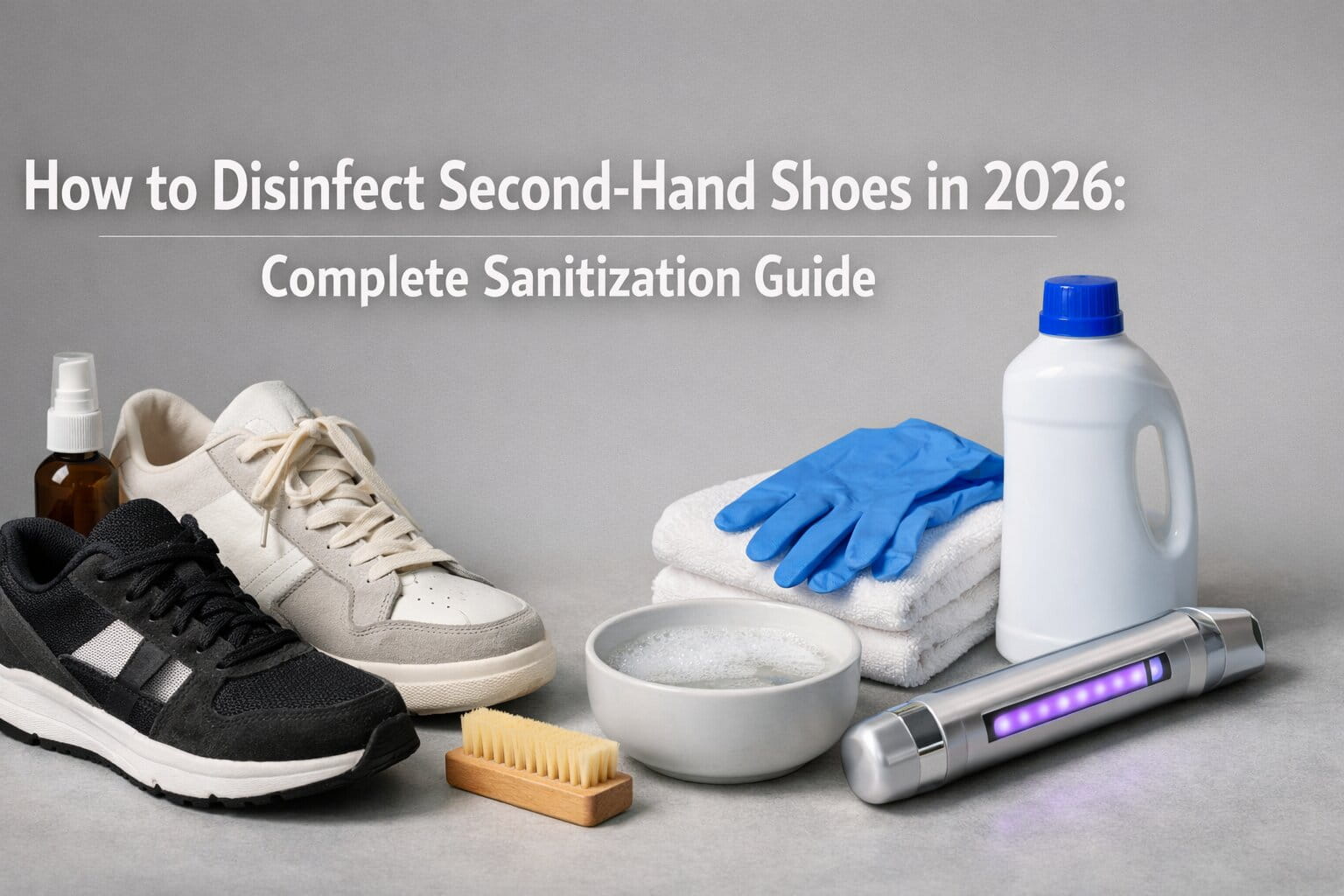
Buying second-hand shoes can be a great way to save money, find older styles or give quality footwear another life. But before wearing a pre-owned pair, it is worth cleaning them properly and deciding whether they can be safely refreshed.
The key is to separate cleaning from disinfection.
Cleaning removes visible dirt, sweat, oils and residue. Disinfection is a separate step that should only be done with a product that is appropriate for the material and specifically labeled for the intended use.
This guide explains how to clean and disinfect used shoes, including sneakers, leather shoes, boots, canvas and mesh footwear, while reducing the risk of damaging the materials.
Quick answer: Remove the laces and insoles, inspect the shoes, clean away dirt and residue first, then use a suitable shoe disinfectant according to its label. Allow the shoes and removable components to dry completely before wearing them. For suede, nubuck, delicate leather and specialty materials, follow the manufacturer’s care instructions rather than applying a general-purpose disinfectant.
Is It Safe to Wear Second-Hand Shoes?
Generally, a used pair of shoes can be cleaned and worn, but condition matters.
Before wearing second-hand footwear, inspect it for:
- Heavy odor that does not improve after cleaning
- Visible mold-like growth
- Dampness
- Damaged or peeling interior lining
- Crumbling foam
- Cracked midsoles
- Loose stitching
- Separated soles
- Excessive wear
- Contamination that you cannot safely remove
Footwear can contribute to fungal exposure because warm, damp environments encourage fungal growth. Dermatology guidance also recognizes that fungi can remain in footwear and recommends disinfecting or replacing shoes in certain fungal-infection situations.
If a pair is badly deteriorated, visibly contaminated or structurally unsafe, cleaning may not make it a good pair of shoes to wear. Learn more about how we test shoes and evaluate footwear
Cleaning vs. Disinfecting Shoes: What’s the Difference?
What Is the Safest Way to Clean My Used Shoes?
Choose your shoe material and the main problem you’re dealing with. We’ll recommend the safest starting point.
This tool provides general footwear-care guidance. Always check the manufacturer’s instructions and the label of any cleaning or disinfecting product before use.
These terms are often used interchangeably, but they are not the same.
| Task | What it does | When to do it |
| Cleaning | Removes dirt, sweat, oils and residue | Always start here |
| Deodorizing | Helps reduce unwanted smells | After cleaning if needed |
| Disinfecting | Uses an appropriate disinfectant to reduce specified microorganisms | When the product and material are suitable |
| Drying | Removes moisture from the shoe | Always before wearing |
| Replacing | Removes components that cannot be cleaned effectively | When insoles or footwear are excessively worn |
Cleaning should come before disinfection because dirt and organic material can interfere with some disinfecting processes.
If you use a registered disinfectant product, follow the label for the permitted surface, application method, dilution and contact time. EPA guidance specifically warns against using disinfectants in ways that are not included in their directions.
What You Need to Clean Used Shoes
The exact supplies depend on the shoe material, but a basic kit can include:
- Soft shoe brush
- Clean toothbrush
- Microfiber cloths
- Mild detergent or shoe cleaner
- Bowl of cool or lukewarm water
- Material-specific leather or suede cleaner when required
- Suitable shoe disinfectant, if needed
- Replacement insoles, if the originals are heavily worn
- Clean shoelaces, if necessary
- Shoe trees or clean paper for maintaining shape
You do not need to use every product on every shoe.
The safest cleaning method is usually the least aggressive method that works.
Step 1: Inspect the Second-Hand Shoes Before Cleaning
Don’t start scrubbing immediately.
First inspect the entire pair.
Look at:
- Upper
- Toe box
- Tongue
- Interior lining
- Heel counter
- Insoles
- Midsole
- Outsole
- Stitching
- Adhesive areas
Also check for structural problems.
Signs you should reconsider the purchase
Be cautious if:
- The midsole is crumbling
- The foam feels sticky or unusually soft
- The outsole is separating
- The upper is badly cracked
- The interior lining is deteriorating
- There is persistent musty contamination
- The shoes have significant mold-like growth
- The shoes have been exposed to unknown chemicals
A dirty shoe can often be cleaned.
A structurally failed shoe cannot be restored simply by disinfecting it.
Step 2: Remove the Laces
Take the laces out before cleaning.
Wash them separately using mild detergent and water, then rinse and air-dry.
If the laces are badly stained, frayed or heavily worn, replacing them is often easier than trying to restore them.
Nike also recommends removing shoelaces before cleaning footwear.
Step 3: Remove the Insoles
If the insoles are removable, take them out.
This gives you access to the footbed underneath and allows the insoles to dry separately.
Inspect them for:
- Heavy odor
- Compression
- Cracking
- Staining
- Peeling
- Persistent dampness
Should You Replace Used Shoe Insoles?
Not always.
If the insoles are in good condition and can be safely cleaned according to their material, you can keep them.
Replacement is worth considering when:
- They are badly worn
- They retain strong odor
- They are peeling
- They are permanently compressed
- They cannot be cleaned safely
- They came from heavily used footwear
Replacement insoles can also be useful if you want to improve comfort, but they are not automatically required for hygiene.
Step 4: Dry-Brush Away Loose Dirt
Start with the shoes dry whenever the material allows it.
Use a soft brush to remove:
- Dust
- Dried mud
- Sand
- Dirt from the outsole
- Loose debris
Don’t aggressively brush suede or delicate materials.
Nike’s general shoe-care guidance also starts with removing loose dirt before applying a cleaning solution.
Step 5: Clean the Exterior
Use a mild cleaning solution appropriate for the material.
For many fabric sneakers, a small amount of mild detergent in cool or lukewarm water can work.
Apply the solution with:
- A soft brush
- Microfiber cloth
- Clean toothbrush
Avoid soaking the shoe unless the manufacturer’s instructions specifically allow it.
Mesh and Knit
Use a soft brush and mild cleaning solution.
Work gently in the direction of the material.
Nike recommends hand cleaning mesh and Flyknit footwear with mild soap or detergent and avoiding harsh chemicals or bleach.
Canvas
Canvas can usually tolerate more moisture than leather or suede, but avoid unnecessarily saturating the shoe.
Clean the surface with a mild solution and remove excess moisture with a cloth.
Leather
Use a cleaner designed for the specific leather whenever possible.
Avoid soaking the shoe.
After cleaning, use an appropriate leather conditioner if recommended for that type of leather.
Suede and Nubuck
Use a suede or nubuck brush and material-specific cleaner.
Avoid treating suede like canvas or mesh.
Nike recommends dry brushing suede and avoiding routine soap-and-water washing because moisture can cause staining.
Step 6: Clean the Inside of Used Shoes
This is one of the most important parts of the process because the interior is where sweat, skin oils and moisture accumulate.
Focus on:
- Heel lining
- Tongue
- Toe box
- Footbed
- Interior sidewalls
Use a lightly damp cloth or a material-appropriate cleaner.
Do not flood the inside of the shoe.
For shoes with removable insoles, clean the insoles separately.
For non-removable insoles, use only enough moisture to clean the surface and allow the shoe to dry completely afterward.
Step 7: How to Disinfect Used Shoes
This is where you need to be more careful than simply spraying a household chemical inside the shoe.
Best approach: use a product specifically intended for footwear
Choose a disinfectant or shoe sanitizer that:
- Is intended for the material or surface
- Provides directions for footwear use
- States the microorganisms it is tested or approved to address
- Provides an application method
- Provides a contact time
Follow the label exactly.
Do not assume that a household surface disinfectant is suitable for leather, suede, fabric or the interior of footwear.
EPA guidance states that disinfectants should be used according to their label, including the application method and contact time.
Why the label matters
A disinfectant is not simply “effective because it contains alcohol” or another active ingredient.
Its effectiveness depends on factors such as:
- Concentration
- Contact time
- Surface
- Application method
- Target microorganism
- Amount of product
- Product formulation
That is why a blanket recommendation such as “spray every shoe with 70% alcohol” is not appropriate.
When cleaning and disinfecting second-hand shoes, always choose a method based on the shoe material and follow the product manufacturer’s instructions. For general footwear-care guidance, Nike’s shoe-cleaning guide explains how to clean different types of footwear, while its mesh and Flyknit cleaning guide provides additional guidance for delicate mesh materials. If you’re concerned about fungal infections, the American Academy of Dermatology’s footwear guidance recommends disinfecting or replacing footwear in certain situations, and the NHS athlete’s foot guidance recommends keeping feet and footwear clean and dry. For disinfectant products, always follow the label directions, including the required application method and contact time, as explained by the U.S. EPA’s disinfectant guidance.
Can You Use 70% Isopropyl Alcohol Inside Shoes?
Alcohol can be useful for certain cleaning and disinfection applications, but it should not be treated as a universal shoe disinfectant.
Potential problems include:
- Drying natural leather
- Affecting finishes
- Discoloring certain materials
- Damaging coatings
- Leaving unexpected residue depending on the formulation
If you choose an alcohol-based product, check that the product is suitable for the intended surface and follow its instructions.
For expensive leather or delicate footwear, a material-specific product is the safer option.
Can You Use Disinfecting Wipes on Shoes?
Sometimes.
A disinfecting wipe may be appropriate for certain hard, compatible surfaces such as rubber or some synthetic materials, but the product label should indicate that use.
Do not assume that a wipe designed for countertops or other hard surfaces is safe for:
- Leather
- Suede
- Nubuck
- Delicate mesh
- Dyed fabric
- Specialty coatings
Always test an inconspicuous area if the manufacturer permits the product for that surface.
Can You Use Vinegar to Disinfect Used Shoes?
Vinegar is commonly suggested as a DIY shoe-cleaning ingredient, but it should not be presented as a substitute for a properly labeled disinfectant.
It may help with some cleaning or odor-related tasks, but you should not assume that a vinegar-and-water mixture provides reliable disinfection against specific pathogens.
If your goal is actual disinfection, use a product that is labeled for that purpose.
Can You Use Hydrogen Peroxide on Used Shoes?
Hydrogen peroxide can have antimicrobial properties, but household peroxide products and shoe materials vary.
It may discolor some materials and should not automatically be applied to leather, suede or colored fabric.
If a product is not specifically intended for the shoe material and application, choose a safer material-specific cleaner instead.
Step 8: Clean the Insoles Separately
If the manufacturer allows washing, clean removable insoles with a mild cleaning solution.
A practical approach is:
- Remove loose dirt.
- Apply mild detergent and water.
- Gently scrub.
- Wipe or rinse according to the manufacturer’s instructions.
- Remove excess water.
- Allow the insoles to dry completely.
Do not put them back inside the shoe while they are damp.
Nike similarly recommends removing insoles when cleaning them and allowing them to dry completely before replacing them.
Step 9: Dry the Shoes Completely
Drying is not an optional finishing step.
After cleaning or using a suitable disinfectant:
- Open the shoes fully
- Remove the insoles
- Loosen the laces
- Place them in a well-ventilated area
- Use a shoe tree or clean paper if appropriate
- Allow them to dry completely
Avoid:
- Clothes dryers
- Radiators
- Direct high heat
- Heat guns
- Very hot hair dryers
Nike recommends air-drying shoes and warns that dryer heat can damage footwear.
Should You Dry Shoes in Direct Sunlight?
Not necessarily.
Although sunlight may help dry some washable fabrics, direct sunlight can fade or damage certain materials.
For leather, suede and colored footwear, indirect airflow is generally the safer choice unless the manufacturer says otherwise.
How to Disinfect Second-Hand Sneakers
For ordinary fabric or synthetic sneakers:
- Inspect the shoes.
- Remove laces.
- Remove removable insoles.
- Brush away dry dirt.
- Clean the outsole.
- Clean the upper with an appropriate mild solution.
- Clean the inside.
- Apply a footwear-compatible disinfectant if needed and follow its label.
- Dry all components completely.
- Reassemble only when everything is dry.
This approach is safer than immediately soaking the entire sneaker in chemicals.
How to Disinfect Second-Hand Leather Shoes
Leather needs more care.
Use this process:
- Inspect the leather for cracks and peeling.
- Remove laces.
- Remove the insoles if possible.
- Dry-brush loose dirt.
- Clean the exterior with a leather-appropriate cleaner.
- Clean the interior with a compatible product.
- If using a disinfectant, verify that the label permits use on that surface.
- Allow the shoe to dry naturally.
- Condition the leather if appropriate.
Avoid blindly spraying alcohol or household disinfectant onto finished leather.
How to Disinfect Used Suede Shoes
Suede should be handled separately.
Do not treat suede like a washable canvas sneaker.
Instead:
- Let wet dirt dry.
- Brush away loose debris with a suede brush.
- Use a suede-specific cleaner for remaining stains.
- Follow the product instructions.
- Avoid soaking the shoe.
- Allow it to air-dry naturally.
Nike similarly recommends dry brushing suede and warns against routine soap-and-water washing.
If the suede is badly contaminated and you cannot safely clean it, professional cleaning or replacement may be preferable.
How to Disinfect Used Boots
Boots need special attention because the materials vary widely.
Leather boots
Use leather-specific products and avoid excessive moisture.
Rubber boots
Rubber surfaces are generally easier to clean, but still follow the manufacturer’s instructions.
Suede boots
Use suede-specific care.
Work boots
Pay particular attention to the removable footbed, lining and areas around the heel and toe.
For heavily worn work footwear, inspect the outsole, midsole and internal support before spending time on cleaning.
How to Clean Shoes from a Thrift Store
If you bought shoes from a thrift store, follow this order:
Inspect → Remove laces → Remove insoles → Dry brush → Clean outside → Clean inside → Disinfect if appropriate → Dry completely → Reassemble
Don’t begin by spraying a strong chemical everywhere.
The goal is to clean the footwear while preserving the material.
How to Remove the Thrift-Store Smell from Shoes
A strong smell does not automatically mean the shoe contains dangerous contamination.
Odor can come from:
- Sweat
- Moisture
- Bacteria
- Old cleaning products
- Storage conditions
- Damp materials
Start with cleaning and drying.
Then:
- Remove the insoles.
- Clean the interior.
- Allow the footwear to dry completely.
- Use an appropriate shoe deodorizer if necessary.
- Replace insoles if they retain persistent odor.
If the odor remains extremely strong after proper cleaning and drying, reconsider whether the shoe is worth keeping.
Does Baking Soda Disinfect Used Shoes?
No.
Baking soda is useful for odor and moisture management, but it should not be described as a registered or guaranteed disinfectant.
You can use it as a deodorizing aid when appropriate, but don’t substitute baking soda for a product designed and labeled for disinfection.
Can UV Shoe Sanitizers Disinfect Shoes?
UV-based shoe sanitizers are a separate category from chemical disinfectants.
Some dermatology guidance mentions UV shoe sanitizers as an option for disinfecting footwear in the context of fungal nail infection.
However, performance depends on the device design and exposure conditions.
A UV device may not expose every internal surface equally because:
- Light can be blocked by material
- Shadows can prevent exposure
- Shoe geometry varies
- Exposure time matters
- Device output varies
Don’t assume that a cheap UV flashlight provides the same result as a purpose-built shoe-sanitizing device.
Can You Put Second-Hand Shoes in the Washing Machine?
Sometimes, but only when the shoe and manufacturer instructions allow it.
Nike recommends hand cleaning rather than machine washing for many footwear types, particularly delicate mesh and knit shoes.
Avoid machine washing:
- Leather
- Suede
- Nubuck
- Structured footwear
- Shoes with delicate adhesives
- Shoes with specialty finishes
For washable fabric shoes, follow the manufacturer’s instructions and avoid high heat during drying.
Common Mistakes When Cleaning Used Shoes
1. Spraying disinfectant before cleaning
Remove dirt first.
Cleaning and disinfection are different steps.
2. Using the same chemical on every material
Leather, suede, mesh and rubber do not respond identically to cleaning products.
3. Using household bleach
Bleach is not a universal shoe cleaner and can damage materials, color and finishes.
4. Assuming alcohol is safe for every shoe
Alcohol can affect some materials and finishes.
5. Soaking leather or suede
Excess moisture can create additional problems.
6. Putting damp insoles back inside
Moisture trapped inside the shoe can contribute to odor and an environment favorable to fungal growth.
7. Using high heat
Dry naturally unless the manufacturer specifies otherwise.
8. Ignoring structural damage
Disinfection will not repair degraded foam, failed adhesives or worn-out cushioning.
Retailer’s Used-Shoe Inspection Checklist
After handling used footwear, I would check five things before deciding whether the pair is worth cleaning.
1. Midsole condition
Press the midsole gently.
Look for:
- Crumbling
- Cracks
- Excessive softness
- Sticky areas
- Separation
2. Heel counter
Press the heel area.
If the structure has collapsed, cleaning will not restore it.
3. Interior lining
Check for:
- Peeling
- Tears
- Excessive wear
- Persistent odor
4. Outsole
Check tread depth and uneven wear.
This is especially important for second-hand running shoes.
5. Smell after cleaning
A temporary odor is different from a persistent musty smell that remains after thorough cleaning and drying.
Are Second-Hand Running Shoes Worth Buying?
Hygiene is only one consideration.
Running shoes also wear down mechanically.
Check:
- Midsole compression
- Outsole wear
- Heel wear
- Upper tears
- Cushioning
- Previous repairs
- General structural condition
A shoe can look almost new while its cushioning is already heavily worn.
For running shoes, condition and intended use matter just as much as cleanliness.
When Should You Throw Away Used Shoes?
Consider replacing or rejecting a pair when:
- The sole is separating badly
- The midsole is crumbling
- The foam has degraded
- The interior lining is extensively damaged
- Persistent contamination cannot be safely removed
- The shoe has severe mold-like growth
- The footwear is structurally unsafe
- The smell remains severe despite cleaning and drying
Cleaning is not always the answer.
Sometimes the safest and most economical option is to replace the footwear.
Quick Second-Hand Shoe Cleaning Checklist
Before wearing a used pair:
☐ Inspect the upper and sole
☐ Remove the laces
☐ Remove removable insoles
☐ Brush away loose dirt
☐ Clean the outsole
☐ Clean the upper according to its material
☐ Clean the interior
☐ Use a suitable disinfectant only when appropriate
☐ Follow the disinfectant label
☐ Dry the shoes and insoles completely
☐ Replace damaged or persistently odorous insoles
☐ Reinspect the shoe before wearing
Frequently Asked Questions
How do you disinfect used shoes?
First clean away dirt and residue, then use a footwear-compatible disinfectant according to its label. Remove and clean removable insoles and laces separately, and allow everything to dry completely before wearing.
How do you sanitize second-hand shoes?
Start with inspection and cleaning. Then use an appropriate shoe sanitizer or disinfectant if the product is suitable for the shoe material and intended application. Finish by drying the footwear completely.
How do you clean second-hand shoes?
Remove the laces and insoles, brush away loose dirt, clean the upper and outsole with a material-appropriate solution, clean the interior and allow the footwear to dry completely.
How do you clean the inside of used shoes?
Remove the insoles if possible and clean them separately. Wipe the interior lining and footbed with a compatible cleaning solution without soaking the shoe. Allow the inside to dry completely before replacing the insoles.
Can you use rubbing alcohol to disinfect shoes?
Alcohol may be appropriate for some applications, but it is not a universal shoe disinfectant. It can affect leather and other materials. Only use it when the product and shoe material are compatible and the instructions permit that application.
Can I use Lysol on shoes?
Only if the specific product label permits use on that shoe material and surface. A household disinfectant designed for hard surfaces should not automatically be assumed safe for leather, suede or fabric footwear.
Does baking soda disinfect used shoes?
No. Baking soda can help with odor and moisture, but it should not be treated as a substitute for a disinfectant.
Does hydrogen peroxide disinfect shoes?
Hydrogen peroxide has antimicrobial properties, but household products can vary in concentration and may discolor some materials. Check compatibility and product instructions before using it on footwear.
Can you disinfect shoes without washing them?
You can perform limited cleaning and disinfection without fully washing the shoe, but visible dirt should still be removed first. Use a suitable product according to its label and material compatibility.
Can I put second-hand shoes in the washing machine?
Only if the manufacturer permits machine washing and the material is suitable. Leather, suede, nubuck and many structured shoes should generally be cleaned using material-specific methods instead.
How do I get the thrift-store smell out of shoes?
Clean the shoes, clean or replace the insoles when appropriate, and allow the footwear to dry completely. Baking soda or a suitable shoe deodorizer may help with odor, but persistent strong odors may indicate that the footwear is not worth keeping.
Can freezing shoes disinfect them?
Freezing should not be relied upon as a dependable shoe-disinfection method.
Can UV light disinfect shoes?
Purpose-built UV shoe sanitizers may be useful in certain situations, but their performance depends on the device and exposure conditions. A general UV flashlight should not be treated as proof that footwear has been disinfected.
How long should used shoes dry before wearing?
There is no universal number of hours because materials and cleaning methods differ. The important rule is to allow the footwear and removable components to dry completely before wearing them. Follow the manufacturer’s instructions and any product-specific drying guidance.
Can second-hand shoes cause athlete’s foot?
Fungal infections such as athlete’s foot can spread through contaminated environments and shared footwear. Keeping feet and footwear dry and avoiding shared shoes are important preventive measures.
If you develop persistent itching, scaling, cracking or other symptoms of athlete’s foot, speak with a pharmacist or healthcare professional rather than relying on shoe cleaning alone.
Final Verdict: How to Safely Prepare Second-Hand Shoes
You don’t need to attack a used pair of shoes with every household chemical you can find.
A better process is:
Inspect → Clean → Disinfect when appropriate → Dry completely → Recheck
Use material-specific care for leather, suede and delicate footwear. Don’t assume that alcohol, vinegar, hydrogen peroxide, bleach or a household disinfectant is automatically safe for every shoe.
And remember that cleaning cannot fix a structurally failed shoe.
If you regularly buy pre-owned footwear, build a simple shoe-care routine around inspection, gentle cleaning, proper drying and material-appropriate products.
For more footwear-care advice, see our shoe-testing methodology and our guide to removing bad shoe odor.
If you are replacing a pair after cleaning or checking used footwear, use our shoe size conversion guide to compare sizing systems before buying.