
How to Clean White Birkenstocks: Complete Stain & Footbed Care Guide
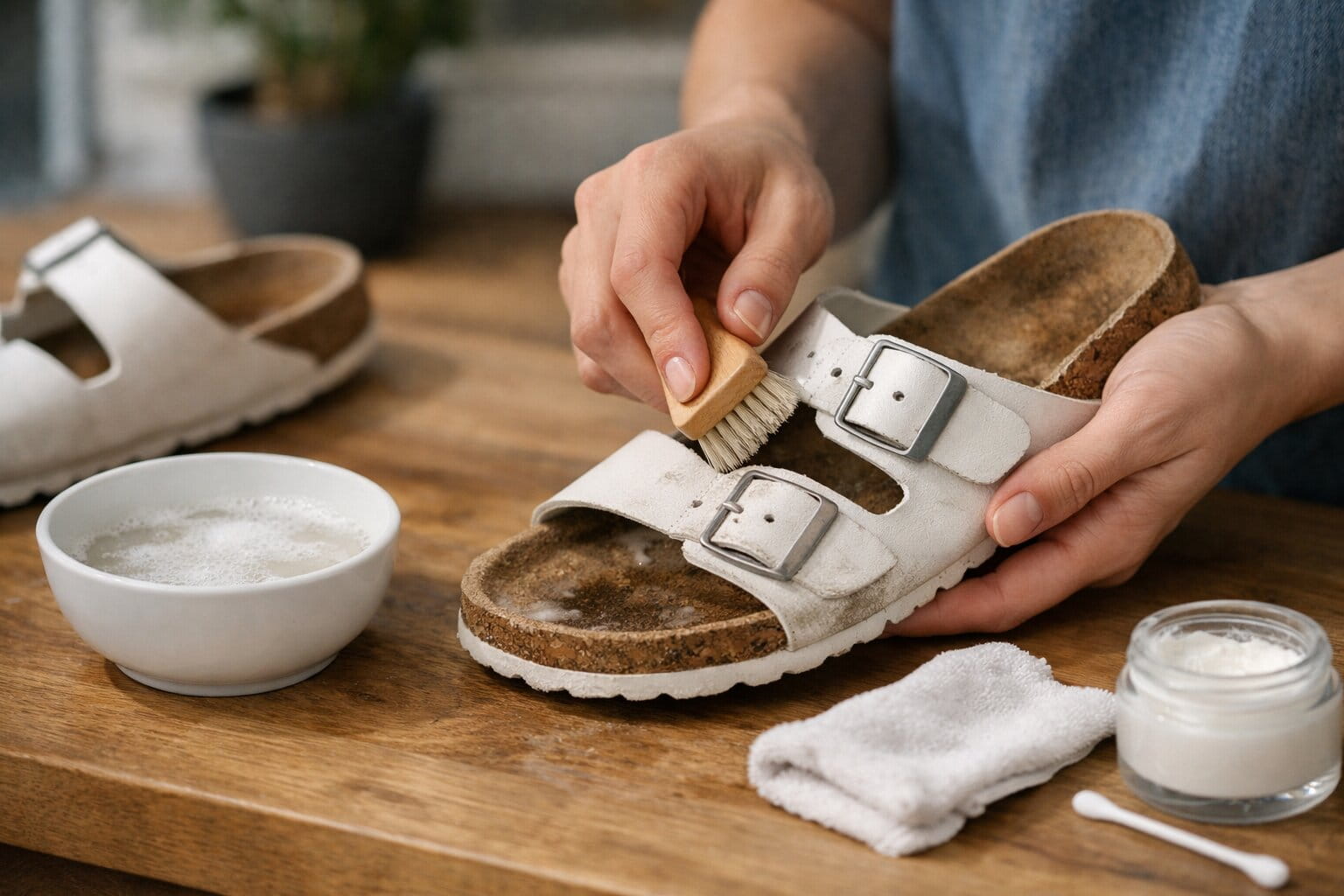
White Birkenstocks look great when they are clean, but their light-colored straps, footbeds and soles show dirt quickly. The good news is that you do not need to soak the sandals or use harsh bleach to restore them.
The safest cleaning method depends on the material. Birko-Flor and Birkibuc straps can usually be wiped with a damp cloth, suede and nubuck need dry brushing, smooth leather needs leather-specific care, and EVA sandals can tolerate more water than traditional cork-footbed models. The cork footbed should always be kept away from excessive moisture and heat.
If you are wondering how to clean white Birkenstocks, this guide explains exactly what to use, what to avoid, how to clean the white rubber or EVA sole, how to remove the dark footbed footprint, and how to dry your sandals without damaging them.
Quick Answer: How to Clean White Birkenstocks
For most white Birkenstocks, start by removing loose dirt with a dry, soft brush. Clean Birko-Flor or Birkibuc straps with a damp, lint-free cloth and mild soap if needed. For suede or nubuck, use a suede/nubuck brush and eraser instead of soaking the material. Clean the cork footbed with minimal moisture and wipe away residue rather than rinsing the sandal under running water.
For white EVA Birkenstocks, more thorough washing with lukewarm water and mild soap is possible because EVA is water-friendly. After cleaning, allow the sandals to dry slowly at room temperature and keep cork and EVA away from prolonged direct heat or sunlight. Birkenstock specifically advises against immersing most styles and recommends slow air drying away from direct heat.
Before You Clean: Identify Your Birkenstock Material
Do not use the same cleaner on every Birkenstock.
A white synthetic strap, a white suede strap and a white leather strap may look similar from a distance, but they require different care.
| Material | Best Cleaning Method | Water Exposure | Main Warning |
| Birko-Flor | Damp cloth + mild soap for stubborn dirt | Minimal | Do not soak |
| Birkibuc | Damp cloth | Minimal | Avoid excessive moisture |
| Suede/Nubuck | Suede brush + eraser | Keep mostly dry | Do not scrub with soap |
| Smooth Leather | Leather cleaner + soft cloth | Minimal | Condition when appropriate |
| EVA | Lukewarm water + mild soap | More water-friendly | Avoid extreme heat |
| Cork Footbed | Dry brush + controlled spot cleaning | Minimal | Never soak |
Birkenstock’s own care guidance recommends wiping Birko-Flor and Birkibuc with a damp cloth, brushing suede and nubuck with a suitable brush, and protecting the exposed cork with cork sealer when it begins to dry.
What Cleaning Method Does Your Birkenstock Need?
Choose your Birkenstock material and the problem you are trying to fix. We’ll show you the safest starting method.
What You Need
For a basic cleaning session, gather:
- Soft shoe brush
- Suede/nubuck brush if applicable
- Clean microfiber or lint-free cloth
- Small bowl of lukewarm water
- Mild soap
- Suede eraser for suede or nubuck
- Leather cleaner for smooth leather
- Baking soda for optional footbed odor/stain treatment
- Cork sealer if the exposed cork edge looks dry
- Dry towel or paper towels
You do not need bleach, aggressive household cleaners or a washing machine.
Step 1: Remove Loose Dirt First
Before applying any water or cleaning solution, brush away dry dirt.
Turn the sandals upside down and gently remove loose dust from the outsole. Then brush the straps and footbed according to their material.
This simple step matters because rubbing wet dirt into a light-colored surface can spread the stain instead of removing it.
For suede or nubuck, use a proper suede/nubuck brush and work gently to lift surface dirt and restore the nap. Birkenstock recommends brushing suede and nubuck uppers to remove dirt and maintain their texture.
Step 2: Clean White Birko-Flor or Birkibuc Straps
If your white Birkenstocks have Birko-Flor or Birkibuc uppers, cleaning is relatively straightforward.
- Mix a small amount of mild soap with lukewarm water.
- Dip a microfiber or lint-free cloth into the solution.
- Wring the cloth out thoroughly.
- Wipe the straps gently.
- For stubborn marks, repeat rather than aggressively scrubbing.
- Wipe away soap residue with a clean, barely damp cloth.
- Allow the sandals to air dry at room temperature.
Birkenstock specifically recommends wiping Birko-Flor and Birkibuc with a dry or damp lint-free cloth, with soap and water suitable for stubborn stains.
Important
Do not treat synthetic straps like rubber. Avoid abrasive pads, strong bleach and aggressive scrubbing because these can change the finish of a white synthetic upper.
Step 3: How to Clean White Suede Birkenstocks
White suede requires more care than synthetic straps.
If the suede is dusty or dull:
- Make sure it is dry.
- Use a suede/nubuck brush to remove loose dirt.
- Brush gently in one direction.
- Use a suede eraser on isolated scuff marks.
- Brush again to restore the nap.
Avoid soaking white suede. Water and excessive rubbing can change the texture and appearance of the leather.
If you have a stubborn stain, test any cleaning product on a small hidden area first. Birkenstock recommends a nubuck/suede brush for removing dirt and maintaining the nap, along with appropriate protective treatment.
For a more detailed method, see our guide to cleaning suede shoes without water.
Step 4: How to Clean the Dark Footprint on White Birkenstocks
The dark footprint on a Birkenstock footbed is one of the most common cleaning problems.
The footbed can collect sweat, skin oils, dust and everyday dirt. You do not need to completely soak the sandal to clean it.
Safer footbed cleaning method
- Brush away loose dirt while the footbed is dry.
- Use a small amount of mild cleaner appropriate for the footbed.
- Work on small areas rather than flooding the entire footbed.
- Gently scrub with a soft brush.
- Wipe away residue with a barely damp cloth.
- Allow the sandal to dry completely at room temperature.
For DIY cleaning, some owners use a small amount of baking soda mixed with water as a paste. If you choose this method, use only a small amount, scrub gently, and avoid saturating the footbed.
Do not rinse a traditional cork-footbed Birkenstock under a running tap.
Birkenstock recommends its own Cleaner & Refresher for the footbed and advises wiping away excess moisture and dirt rather than saturating the sandal.
Step 5: How to Clean White Birkenstock Rubber and EVA Soles
If your search is specifically how to clean white Birkenstocks rubber, focus on the outsole rather than the cork footbed.
For EVA sandals:
- Remove loose dirt with a soft brush.
- Rinse or wipe with lukewarm water where appropriate.
- Add a small amount of mild soap.
- Scrub gently with a soft brush or cloth.
- Rinse away soap residue.
- Dry naturally away from concentrated heat.
EVA is much more water-friendly than the traditional cork construction, but extreme heat is still a bad idea. Birkenstock warns that EVA soles and cork footbeds can be damaged by concentrated heat and prolonged exposure to high temperatures.
For stubborn marks on the white outsole, a gentle shoe-cleaning sponge can help. Test abrasive products carefully because aggressive rubbing can change the surface finish.
Step 6: Cleaning White Smooth Leather Birkenstocks
White smooth leather needs a different approach.
Do not use baking soda paste, abrasive sponges or strong household cleaners as your default method.
Instead:
- Remove loose dust with a soft cloth.
- Apply a small amount of leather cleaner to a clean cloth.
- Work gently over the stained area.
- Remove excess product.
- Allow the leather to dry naturally.
- Apply an appropriate leather-care product if required by the leather type.
Birkenstock recommends using a lint-free cloth to remove dirt from smooth leather and notes that scratches can be treated with suitable shoe polish.
Step 7: How to Clean White Birkenstocks Without Ruining the Cork
The exposed cork edge is part of what makes traditional Birkenstocks distinctive, but it should not be treated like a waterproof sole.
The biggest rule is simple:
Keep the cork away from excessive water and heat.
If the cork edge looks dry or begins to lose its protective finish, a suitable cork sealer can help protect it.
Birkenstock states that its sandals and clogs are supplied with a light coating of cork sealer and recommends applying a thin layer of cork sealer when the exposed cork begins to dry.
Signs your cork may need attention
- The cork looks noticeably dry.
- The edge has lost its protective sheen.
- Small areas are beginning to flake.
- The cork feels rougher than before.
Do not cover the suede footbed or straps with cork sealer.
How to Dry White Birkenstocks Properly
Drying is just as important as cleaning.
After cleaning:
- Wipe away excess moisture.
- Place the sandals in a cool, well-ventilated room.
- Let them dry naturally.
- Keep them away from radiators, heaters and other concentrated heat.
- Avoid leaving traditional cork-footbed sandals in intense direct sunlight for prolonged periods.
Birkenstock specifically recommends allowing wet footwear to air dry slowly away from direct heat.
Do not use a clothes dryer
A dryer exposes the sandals to unnecessary heat and can affect adhesives, leather, cork and other materials.
Can You Wash White Birkenstocks in Water?
It depends on the model.
Traditional cork-footbed Birkenstocks should not be soaked or submerged. Incidental moisture should be removed and the sandals should be allowed to dry slowly.
EVA models are more water-friendly, but they should still be kept away from extreme heat.
Always check the care information for your specific model before using a more aggressive cleaning method.
Can You Use Baking Soda on White Birkenstocks?
Baking soda can be useful as a mild DIY deodorizing or spot-cleaning option, but it should not replace material-specific care.
For a traditional footbed, use only a small amount and avoid excessive moisture. Do not use baking soda paste as a general-purpose cleaner on smooth leather, suede straps or delicate finishes.
If you prefer a manufacturer-specific solution, Birkenstock offers dedicated cleaning and care products for its footwear.
Can You Use a Magic Eraser on White Birkenstocks?
A melamine sponge is abrasive, so it should not be your first choice for leather, suede or synthetic uppers.
If used at all, reserve it for appropriate hard outsole surfaces and use very light pressure. Test a small inconspicuous area first.
For delicate materials, a material-specific brush or cleaner is safer.
Common Mistakes That Make White Birkenstocks Worse
1. Soaking the entire sandal
Traditional Birkenstocks are not designed to be treated like washable flip-flops. Excess moisture can affect the cork, adhesives and finish.
2. Using bleach
Bleach is unnecessary for routine Birkenstock care and can damage materials or alter their appearance.
3. Scrubbing suede with soap
Suede and nubuck need brushing and material-specific treatment rather than aggressive wet scrubbing.
4. Drying them in extreme heat
Do not place Birkenstocks near a radiator, heater or other concentrated heat source. Birkenstock specifically warns against extreme heat for cork footbeds and EVA soles.
5. Using one cleaner for every material
The best cleaner for EVA is not automatically the best cleaner for suede or leather.
6. Ignoring the cork
A clean white strap cannot compensate for a neglected, dry or damaged cork edge.
White Birkenstocks Cleaning Cheat Sheet
| Problem | Best Approach | Avoid |
| Dirty Birko-Flor straps | Damp cloth + mild soap | Bleach, harsh abrasives |
| Dirty white suede | Suede brush + eraser | Soaking |
| Dark footbed | Controlled spot cleaning + suitable footbed cleaner | Running water |
| Dirty EVA sole | Lukewarm water + mild soap | Extreme heat |
| Smooth leather stains | Leather-specific cleaner | Baking soda scrubbing |
| Dry cork edge | Cork sealer | Soaking |
| Bad odor | Clean and completely dry footbed | Masking odor only |
| Fresh dirt | Wipe immediately | Letting stains set |
How to Keep White Birkenstocks Clean Longer
Cleaning is easier when dirt does not have time to build up.
Wipe after heavy use
If you have worn your white sandals during a dusty commute or outdoor activity, wipe visible dirt away before it becomes embedded.
Keep them dry between wears
Allow the footbed to dry completely before wearing the sandals again.
Brush suede regularly
A quick dry brushing routine is easier on suede than repeated deep cleaning.
Protect suitable leather and suede uppers
Birkenstock recommends using appropriate water and stain protection products for leather, suede and nubuck.
Do not wait until the footbed is extremely dark
Regular light maintenance is easier than trying to rescue years of accumulated dirt and oils.
Are White Birkenstocks Hard to Keep Clean?
They are more visually demanding than darker colors because dirt and stains are easier to see.
However, they do not need aggressive cleaning.
A simple maintenance routine works well:
Quick wipe → regular brushing → occasional footbed cleaning → proper drying → cork maintenance.
The key is using the correct method for the material rather than trying to make the entire sandal spotless with one strong cleaner.
When Should You Replace White Birkenstocks?
Cleaning cannot repair structural wear.
Consider professional repair or replacement when:
- The cork is severely cracked or crumbling.
- The outsole has worn significantly.
- The footbed has become heavily compressed.
- The straps or buckles are damaged.
- The sandal no longer fits securely.
- The construction has separated.
If the sandal is dirty but structurally sound, cleaning and maintenance may be all it needs.
Frequently Asked Questions
How do you clean white Birkenstocks?
Start by identifying the material. Clean Birko-Flor or Birkibuc with a damp cloth and mild soap, brush suede or nubuck while dry, use leather-specific products for smooth leather, and clean EVA with mild soap and water. Avoid soaking traditional cork-footbed models.
How do you clean white Birkenstocks rubber?
For white EVA soles, use lukewarm water, mild soap and a soft brush. Scrub gently, remove the soap and let the sandals air dry away from concentrated heat.
How do you clean white suede Birkenstocks?
Use a suede/nubuck brush to remove loose dirt and a suede eraser for small scuffs. Avoid soaking the suede and allow it to dry naturally.
How do you clean the black footprint from Birkenstocks?
The footbed can accumulate sweat, oils and dirt over time. Start with dry brushing, then use a suitable footbed cleaner with controlled moisture. A small baking soda-and-water paste is an optional DIY approach, but do not saturate the cork footbed.
Can you wash Birkenstocks with soap and water?
Some materials can tolerate limited soap-and-water cleaning, but traditional cork-footbed models should not be soaked. Use a damp cloth rather than immersing the sandal.
Can I put white Birkenstocks in the washing machine?
No. A washing machine exposes traditional Birkenstocks to unnecessary water, agitation and heat. It is not an appropriate general cleaning method for cork-footbed sandals.
Can I use bleach on white Birkenstocks?
It is not recommended. Bleach is unnecessarily harsh for routine care and may damage or discolor the materials.
Can I use a Magic Eraser on Birkenstocks?
Use caution. Melamine foam is abrasive and may alter the finish of leather or synthetic materials. If used, reserve it for suitable hard outsole surfaces and test first.
Why do white Birkenstocks get dirty so easily?
Light-colored materials make everyday dust, skin oils, scuffs and stains much more visible. Regular wiping and brushing can prevent buildup.
How do I dry Birkenstocks after cleaning?
Remove excess moisture and let them air dry slowly at room temperature in a well-ventilated area. Keep them away from radiators, heaters and prolonged direct heat.
Final Takeaway
The best way to clean white Birkenstocks is not to use the strongest cleaner. It is to use the right cleaning method for the material.
For Birko-Flor and Birkibuc, use a damp cloth and mild soap when necessary. For suede and nubuck, rely primarily on dry brushing and an appropriate eraser. For smooth leather, use leather-specific care. For EVA, mild soap and water are suitable, while the traditional cork footbed should receive minimal moisture.
Most importantly, avoid soaking traditional Birkenstocks, avoid harsh bleach and keep the sandals away from extreme heat while drying. These simple habits can help keep white Birkenstocks cleaner while protecting the materials that make them comfortable.
For additional footwear-care advice, explore our guides on how to clean Birkenstocks, cleaning suede shoes without water, and the best cleaners for Birkenstocks.
For manufacturer-specific instructions, see the official BIRKENSTOCK Care Tips before applying a new cleaning product.
Disclosure: Some product links on this website may be affiliate links. If you purchase through an affiliate link, we may earn a commission at no additional cost to you. Recommendations should always be checked against the care instructions for your specific Birkenstock model.