
How to Clean Suede Birkenstocks Safely: Complete Care Guide
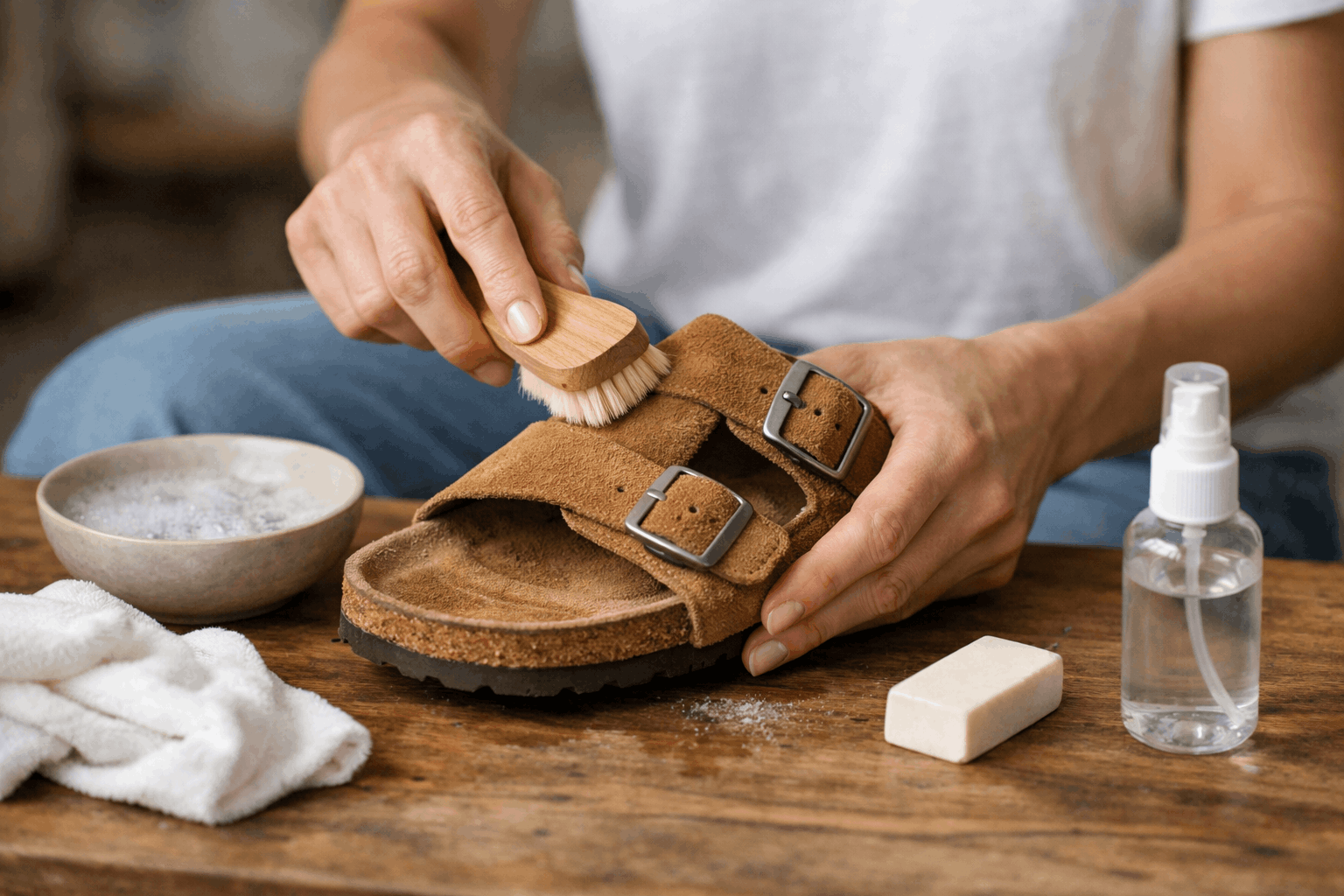
Suede Birkenstocks are comfortable, breathable and designed to develop a distinctive lived-in appearance. But the same soft, napped surface that makes them comfortable also attracts dust, dirt, water marks and everyday stains.
If your Arizona sandals, Boston clogs or another suede Birkenstock pair has developed a dark footprint, dusty straps, water marks or an overall dull appearance, you do not need to soak them or put them in a washing machine.
The safest approach is simple: brush suede regularly, use a suede eraser for dry marks, use as little moisture as possible for stubborn stains, and allow the footwear to dry naturally away from direct heat.
This guide explains how to clean suede Birkenstocks without damaging the suede, cork footbed or EVA outsole.
Quick Answer: How to Clean Suede Birkenstocks
Start with the shoes completely dry and use a suede or nubuck brush to remove loose dirt and restore the nap. For small dry marks, use a suede eraser and brush away the residue. For stubborn stains, use a cleaner specifically intended for suede or nubuck and follow its instructions rather than soaking the sandal.
If the footwear becomes damp during cleaning, let it dry naturally at room temperature and keep it away from radiators, heaters and prolonged direct sunlight. BIRKENSTOCK specifically recommends brushing suede and nubuck uppers, using appropriate water and stain protection, and allowing wet footwear to dry slowly away from direct heat.
Why Suede Birkenstocks Need Special Care
Suede has a soft, textured surface called a nap. Dirt can become trapped between these fibers, while excessive rubbing or moisture can change the texture and appearance.
Traditional Birkenstocks also combine the suede upper or footbed with a cork-latex footbed and an EVA outsole. That means you are not cleaning a simple piece of fabric. You are caring for several different materials at the same time.
The biggest mistake is usually not failing to clean the sandal. It is using too much water or the wrong product.
BIRKENSTOCK notes that most footwear styles should not be immersed in water because oversaturation can compromise sealants and alter the look or finish of the materials.
Before You Start: Identify the Material
Make sure your Birkenstocks are actually suede before following this guide.
Suede
Suede has a soft, fuzzy or velvety surface. When you brush the material in different directions, its appearance changes because the nap moves.
Nubuck
Nubuck can look similar to suede but has a shorter, finer nap. It also needs a dedicated nubuck or suede brush.
Oiled Leather
Oiled leather has a smoother, more waxy appearance. Do not treat it like suede. It needs leather-specific care.
Smooth Leather
Smooth leather has a relatively even surface without the fuzzy nap found on suede.
If you are unsure, check the material information for your specific Birkenstock model before applying a cleaning product.
What You Need to Clean Suede Birkenstocks
You do not need a large collection of cleaning products.
Start with:
- Suede or nubuck brush
- Suede eraser
- Clean lint-free cloth
- Appropriate suede/nubuck cleaner for stubborn stains
- Clean water for controlled spot cleaning when the product instructions allow it
- Dry towel or paper towels
- Suede or leather water-and-stain protector
- Cork sealer for the exposed cork edge when necessary
BIRKENSTOCK itself recommends a nubuck/suede brush for removing dirt and restoring the nap, along with regular water-and-stain protection for suitable suede and nubuck uppers.
Step-by-Step: How to Clean Suede Birkenstocks
Step 1: Remove Loose Dirt While Dry
Always begin with dry cleaning.
Unbuckle the straps so you can access the entire upper. If there is dried mud, allow it to dry completely before brushing.
Use your suede brush to gently loosen:
- Dust
- Dry mud
- Sand
- Surface dirt
- Small debris
Brush gently rather than aggressively grinding the dirt into the material.
For suede and nubuck, BIRKENSTOCK recommends brushing to remove dirt and dust and to restore the nap.
Step 2: Restore the Suede Nap
Once loose dirt has been removed, brush the suede in several directions.
Start gently with the brush. If the material looks flattened in a high-wear area, slightly more brushing may help lift the nap.
Do not keep brushing the same area aggressively for several minutes. Excessive friction can wear the surface.
Step 3: Remove Small Dry Stains With a Suede Eraser
For small scuffs or dry marks, a suede eraser can be more appropriate than liquid cleaner.
Rub the eraser gently over the affected area.
You may notice small crumbs forming. Remove those crumbs with your suede brush.
Then brush the area again to blend the texture.
Step 4: Treat Stubborn Stains Carefully
If brushing and an eraser do not remove the stain, move to a cleaner specifically designed for suede or nubuck.
Before treating the entire sandal:
- Read the product instructions.
- Test the cleaner on a hidden area.
- Use a small amount.
- Avoid saturating the suede.
- Allow the treated area to dry naturally.
- Brush the nap again once completely dry.
This approach is safer than using a strong household cleaner simply because the stain looks difficult.
BIRKENSTOCK offers dedicated suede-care products and recommends material-specific care rather than treating all footwear materials in the same way.
Can You Use Vinegar to Clean Suede Birkenstocks?
White vinegar is commonly recommended online as a DIY suede cleaner, but it should not be treated as the default cleaning solution for every Birkenstock.
The safer first choice is a suede/nubuck cleaner designed for the material.
If you decide to experiment with a household solution, test it on an inconspicuous area first. Any liquid treatment can change the color or finish of suede.
For expensive, light-colored or heavily stained suede Birkenstocks, a dedicated suede cleaner is the more controlled option.
How to Clean the Dark Footprint on Birkenstocks
A darkened footbed is common on frequently worn Birkenstocks.
The discoloration can develop from normal contact with feet, including sweat, skin oils and everyday dirt.
Do not immediately soak the entire footbed.
Instead:
- Brush away loose debris.
- Use a suitable footbed cleaner according to its instructions.
- Apply only the amount of moisture required.
- Work gently over the affected area.
- Wipe away excess moisture and dirt.
- Allow the sandal to dry completely.
- Brush the footbed once dry if appropriate for the material.
BIRKENSTOCK recommends its Cleaner & Refresher for the footbed and advises wiping away excess moisture and dirt with a cloth.
What About Baking Soda?
Baking soda is frequently suggested as a DIY deodorizing or cleaning treatment, but it should not be considered a universal Birkenstock cleaner.
If you use it, keep the amount small and avoid creating a wet paste that saturates the footbed.
For a more controlled approach, use a cleaner specifically formulated for the footbed.
How to Remove Water Stains From Suede Birkenstocks
Water marks can be difficult because uneven moisture can create visible changes in suede.
If your Birkenstocks have become wet:
- Do not immediately apply heat.
- Remove excess moisture gently.
- Let the sandals dry naturally at room temperature.
- Keep them away from radiators and heaters.
- Once completely dry, brush the suede to restore the nap.
- If the mark remains, use a suitable suede cleaner according to its instructions.
Do not use a hair dryer on high heat to force the drying process.
BIRKENSTOCK specifically recommends slow air drying away from direct heat after footwear becomes wet.
How to Dry Suede Birkenstocks Correctly
Drying is one of the most important parts of suede care.
After cleaning:
- Remove excess moisture with a clean cloth.
- Leave the sandals in a well-ventilated room.
- Allow them to dry at room temperature.
- Keep them away from radiators and heaters.
- Avoid prolonged exposure to intense direct sunlight.
- Do not use a clothes dryer.
BIRKENSTOCK warns that concentrated heat and extreme temperatures can damage cork footbeds and EVA soles and recommends slow drying away from direct heat.
How Long Should They Dry?
There is no universal drying time because humidity, temperature and the amount of moisture used all affect drying.
Do not wear the sandals simply because the outside feels dry.
Wait until the suede and footbed are completely dry.
Step 5: Brush the Suede Again After Drying
Once your Birkenstocks are completely dry, brush the suede again.
This helps:
- Lift flattened fibers
- Remove remaining surface residue
- Restore the nap
- Improve the overall appearance
Use gentle, controlled strokes rather than aggressively sanding the material.
How to Clean Suede Birkenstock Straps
For dirty suede straps:
- Brush away loose dirt.
- Use a suede eraser for small dry marks.
- Apply a suitable suede cleaner only if necessary.
- Let the strap dry completely.
- Brush the nap back into shape.
Avoid soaking the straps.
If the straps are badly stained, repeated aggressive scrubbing can cause more visible damage than the original stain.
How to Clean Suede Birkenstock Footbeds
The footbed experiences much more direct contact with your feet than the upper.
For regular maintenance:
- Brush away loose dirt.
- Use a suitable footbed cleaner when needed.
- Avoid flooding the footbed with water.
- Wipe away excess moisture.
- Let the sandal dry completely.
- Brush the surface if appropriate after drying.
If the footbed has developed a strong odor, cleaning alone may not solve every cause. Allow the sandals to dry fully between wears and avoid storing them while damp.
Protecting Suede Birkenstocks After Cleaning
Cleaning removes dirt, but prevention can reduce how quickly new stains develop.
A suitable colorless water-and-stain repellent can help protect compatible suede and nubuck materials.
Always follow the instructions on the specific product and test it before applying it across the entire sandal.
BIRKENSTOCK recommends regular use of a colorless waterproofing spray for suede and nubuck products.
For additional protection, see our guide to how to protect suede shoes from water and stains.
Cork Care: Do Not Forget the Footbed Edge
Cleaning the suede is only one part of caring for Birkenstocks.
The exposed cork edge can dry out over time.
BIRKENSTOCK recommends applying a thin layer of cork sealer when the exposed cork begins to dry. Its own cork sealer is designed specifically for cork and cork-latex footbeds and should be applied in a thin layer to dry cork edges.
Signs the Cork Needs Sealing
Look for:
- A noticeably dry appearance
- Loss of the protective sheen
- Small areas beginning to dry or become brittle
- Minor cracks developing along the exposed edge
Keep cork sealer away from the suede and footbed because it can stain other materials.
What Not to Use on Suede Birkenstocks
Avoid making these common mistakes:
Washing Machine
Do not put traditional suede Birkenstocks in a washing machine.
The combination of water, agitation and drying can damage the suede, cork construction and other components.
Bleach
Bleach is unnecessarily harsh and can discolor or damage footwear materials.
Strong Household Cleaners
A product that works on a countertop is not automatically suitable for suede.
Leather Polish
Traditional shoe polish is designed for different leather finishes. It is not a substitute for suede care.
Abrasive Sandpaper
Do not sand stains aggressively. You can remove material rather than simply removing dirt.
Direct Heat
Do not dry Birkenstocks on radiators, near heaters or with concentrated hot air.
Excessive Water
More water does not mean better cleaning. For most Birkenstock styles, oversaturation is specifically discouraged.
Suede Birkenstock Cleaning Methods Compared
| Method | Best For | Risk | Recommendation |
|---|---|---|---|
| Suede brush | Dust and routine dirt | Low | Best starting point |
| Suede eraser | Dry scuffs and marks | Low | Good for spot treatment |
| Dedicated suede cleaner | Stubborn stains | Low to moderate | Follow product instructions |
| Water + household solution | DIY experiments | Moderate | Test first |
| Baking soda paste | Limited deodorizing/DIY use | Moderate | Avoid excessive moisture |
| Washing machine | Not recommended | High | Avoid |
| Strong household chemicals | Not recommended | High | Avoid |
| Professional cleaning | Valuable or badly stained pairs | Low | Good for difficult cases |
Common Mistakes When Cleaning Suede Birkenstocks
1. Cleaning Them While Mud Is Wet
Let mud dry first. Brushing wet mud can spread the stain.
2. Scrubbing Too Hard
Suede is not a surface you should attack with maximum pressure.
3. Using Too Much Water
The objective is controlled cleaning, not soaking.
4. Drying With Heat
Heat can damage the cork footbed and other materials.
5. Forgetting to Brush After Drying
The suede can look flattened after cleaning. A gentle brush can restore its texture.
6. Using the Same Cleaner on Every Material
Suede, leather, Birko-Flor and EVA need different care.
How Often Should You Clean Suede Birkenstocks?
There is no fixed schedule because it depends on how frequently you wear them.
A practical routine is:
Weekly or frequent wear: Brush off surface dirt.
After outdoor use: Remove visible dirt before it becomes embedded.
After a spill: Treat the stain as soon as practical, using a material-appropriate method.
Seasonally: Inspect the suede, footbed and exposed cork.
The goal is to prevent heavy buildup rather than repeatedly performing aggressive deep cleans.
Can You Repair Old Suede Birkenstocks?
Cleaning cannot fix every type of wear.
If the suede is dirty but structurally sound, cleaning and brushing may significantly improve its appearance.
If you have:
- Severely worn suede
- Damaged straps
- Crumbling cork
- Worn tread
- Separated construction
consider taking the sandals to a qualified footwear repair professional.
Do not assume that a dirty sandal needs to be replaced. Conversely, do not keep cleaning a sandal whose structural components are already failing.
Frequently Asked Questions
Can I put suede Birkenstocks in the washing machine?
No. A washing machine exposes suede Birkenstocks to excessive water and mechanical agitation and is not an appropriate general cleaning method.
What is the best way to clean suede Birkenstocks?
Start with a suede or nubuck brush. Use a suede eraser for small dry stains and a dedicated suede cleaner for more difficult marks. Avoid soaking the sandals.
Can I use vinegar on suede Birkenstocks?
Vinegar is a popular DIY recommendation, but it should not automatically be your first choice. A dedicated suede cleaner provides more controlled material-specific care. If you use a household solution, test it on an inconspicuous area first.
Can I use baking soda on suede Birkenstocks?
Avoid using baking soda paste on the suede upper. If you use baking soda as a DIY deodorizing treatment, keep moisture controlled and avoid saturating the footbed.
How do I clean the black footbed on Birkenstocks?
Use a suitable footbed cleaner with controlled moisture. Brush away loose dirt first, clean gently, wipe away excess moisture and allow the sandal to dry completely.
How do I clean water stains from suede Birkenstocks?
Allow the sandal to dry naturally first. Once dry, brush the suede to restore the nap. If the stain remains, use a suede-specific cleaner according to its instructions.
Why did my suede Birkenstocks become stiff after cleaning?
Excess moisture can cause suede fibers to become temporarily stiff or flattened. Once completely dry, gently brush the suede to help restore the nap.
Can I use a toothbrush instead of a suede brush?
A soft toothbrush may help with very light surface dirt, but a proper suede/nubuck brush is preferable because it is designed to lift dirt and restore the nap.
Should I waterproof suede Birkenstocks?
A suitable colorless water-and-stain repellent can help protect compatible suede and nubuck. Follow the product instructions and test first. BIRKENSTOCK recommends regular water-and-stain protection for suitable suede and nubuck products.
How do I protect the cork on Birkenstocks?
Inspect the exposed cork edge periodically. If it begins to dry, apply a thin layer of appropriate cork sealer to the dry cork edge while keeping the product away from the suede and other materials.
How often should I clean suede Birkenstocks?
Brush them whenever surface dirt appears. More thorough cleaning should be based on actual stains or buildup rather than a rigid calendar schedule.
Final Takeaway
The safest way to clean suede Birkenstocks is to start with the least aggressive method.
Brush first. Erase dry marks second. Use a suitable suede cleaner only when necessary. Keep moisture controlled and let the sandals dry naturally.
Do not put traditional suede Birkenstocks in a washing machine, do not soak the cork footbed and do not use concentrated heat to speed up drying.
With regular brushing, appropriate stain protection and occasional cork maintenance, you can keep suede Birkenstocks looking cleaner while protecting the materials that make them comfortable.
For more footwear-care advice, explore our guides on how to clean Birkenstocks, how to clean white Birkenstocks, and how to clean suede shoes.
For manufacturer-specific care instructions, check the official BIRKENSTOCK Care Tips before using a new cleaning product.
Disclosure: Some product links on this website may be affiliate links. If you purchase through an affiliate link, Urban Style Footwear may earn a commission at no additional cost to you. Always check the care instructions for your specific Birkenstock model before applying a cleaning product.