
Why Are Red Bottom Heels So Expensive? The Truth Behind Louboutin Pricing (2026 Guide)
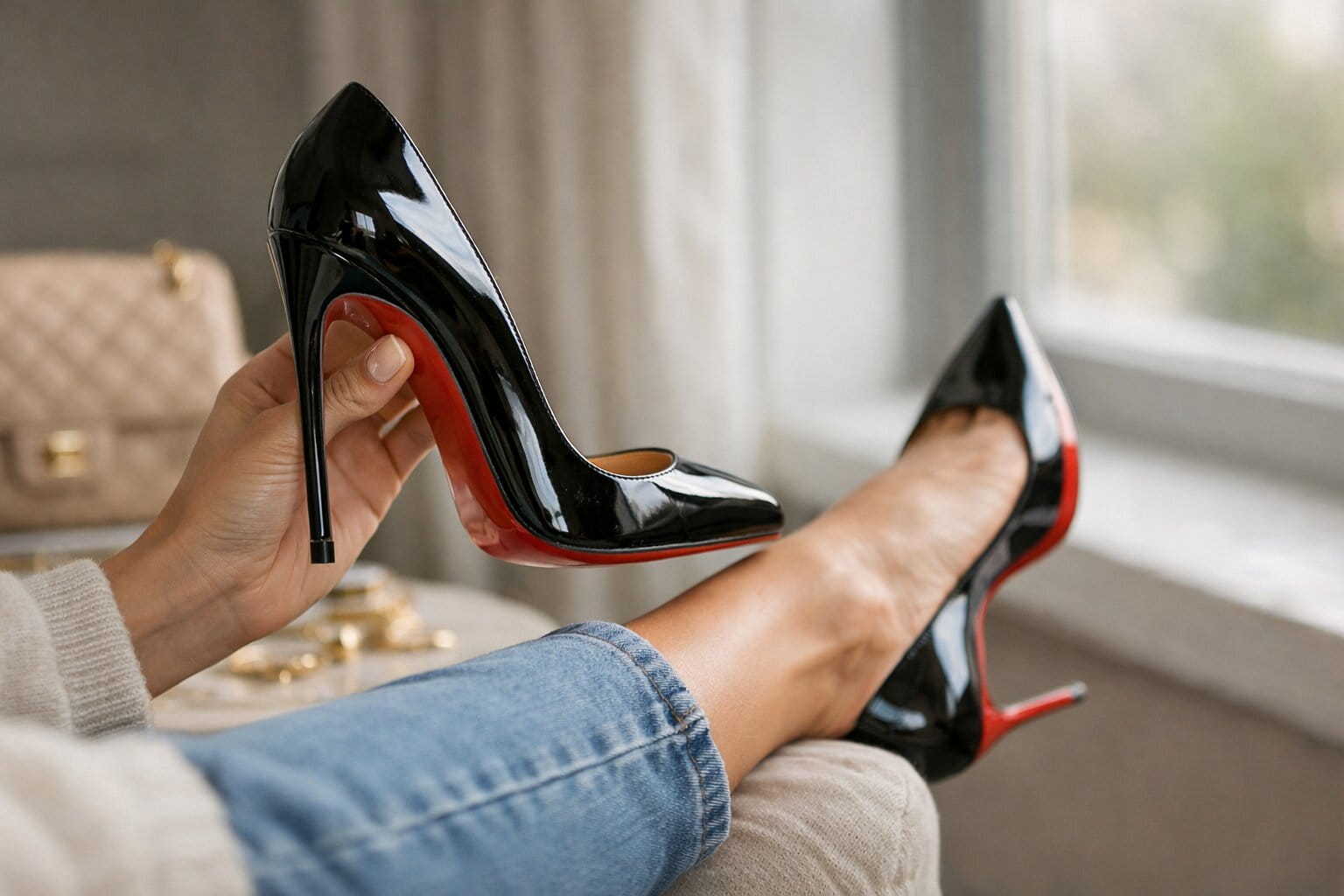
If you’ve ever watched a celebrity step out of a limousine or scrolled through high-fashion feeds on Instagram, you’ve seen the unmistakable flash of a crimson sole. That bright red underbelly is the universal calling card of Christian Louboutin. But when you finally look up the price tag and see numbers hovering between $800 and $3,000, a very practical question comes to mind: Why are red bottom heels so expensive?
Are they made of indestructible materials? Do they offer cloud-like comfort?
As someone who has spent over two decades in the footwear industry—analyzing everything from running shoe biomechanics to high-end designer stilettos—I can tell you that the answer isn’t about practical utility. It’s about psychology, art, and brilliant marketing.
Whether you’re a luxury shoe shopper doing your research or just a curious onlooker wondering how a pair of pumps can cost as much as a mortgage payment, this guide breaks down the real reasons behind the price tag.
The Quick Answer
Red bottom heels are expensive primarily because you are paying for an exclusive, globally recognized status symbol protected by the Christian Louboutin trademark. While they are handcrafted in Europe using premium leathers, the steep price is driven by brand positioning, psychological allure, and the sheer prestige of luxury shoe pricing rather than superior comfort or durability.
Why Are Red Bottom Heels So Expensive? Why This Topic Matters in the World of Footwear
Every day, consumers worldwide face a massive disconnect between what a shoe costs and how it actually feels. When people transition from buying mid-range, comfort-focused shoes to exploring the luxury market, they often carry the same expectations. They assume a $1,000 shoe will be ten times more comfortable than a $100 shoe.
In the real world of footwear retail, this is the most common shock for buyers.
Online shopping has only amplified this. You see a beautifully photographed pair of Louboutin “So Kates” and assume they are perfect for your cousin’s all-day wedding. But luxury footwear operates on a completely different set of rules than your daily walking shoes or office loafers. Understanding what you are actually paying for prevents expensive buyer’s remorse and helps you appreciate the shoe for what it truly is: wearable, architectural art.
The Accidental Genius: Red Bottom Shoes History
To understand the price, you have to understand the origin. The red bottom shoes history isn’t rooted in centuries of royal tradition; it actually started as a moment of spontaneous frustration in 1993.
Christian Louboutin had designed a shoe inspired by Andy Warhol’s “Flowers” painting. When the prototype arrived from Italy, he felt it lacked the energy of his original sketch. The shoe looked too heavy; the massive black sole was swallowing the design.
As the story goes, his assistant was sitting nearby painting her nails a bright red. Louboutin grabbed the bottle of nail polish and painted the sole of the prototype. The shoe instantly came to life. That impromptu splash of color became the brand’s ultimate signature. Today, that specific shade of red (close to Pantone 18-1663 TPX) is the reason these shoes command such astronomical prices. You aren’t just buying footwear; you’re buying a piece of fashion history.
Where to Shop for Red Bottom Heels
If you’ve decided the price is worth it for you, buy only from Christian Louboutin’s official site or authorized luxury retailers (Neiman Marcus, Saks, Nordstrom, Net-a-Porter) — never from third-party marketplace sellers offering suspiciously low prices, given how aggressively the brand pursues counterfeits. Starter styles worth knowing before you shop: the So Kate (dramatic 120mm point-toe), the Pigalle (the classic silhouette), and the Kate (lower, more wearable heel for first-time buyers). See our note below on spotting fakes before you commit.
How to Spot Authentic Red Bottoms
Given how fiercely Louboutin protects this trademark, counterfeits are everywhere. Before buying secondhand or resale, check:
- The red shade — genuine soles use a specific lacquer tone (close to Pantone 18-1663 TPX); fakes often run too glossy, too orange, or too pink
- Stitching quality — genuine pairs have clean, even stitching with no loose threads
- The stamped logo — should be crisply and deeply embossed, not shallow or smudged
- Leather smell and feel — genuine leather has a distinct quality fakes rarely replicate
- Box and authentication card — official pairs include a dust bag, box, and often an authentication card
When in doubt, buy from authorized retailers or use a legitimate authentication service before a resale purchase.
The Ironclad Christian Louboutin Trademark
You might wonder, why doesn’t every brand just paint their soles red and charge a premium? They try. And they get sued.
The christian louboutin trademark is one of the most fiercely protected intellectual properties in the fashion world. Louboutin has fought—and won—massive legal battles globally to ensure that no other brand can sell a contrasting red-soled shoe.
When a brand holds a legal monopoly on a highly desirable aesthetic, it naturally drives up luxury shoe pricing. The red sole communicates instant wealth and status without the need for a massive, tacky logo. You are paying a premium for the legal exclusivity of wearing that specific color on the bottom of your foot.
Decoding Luxury Shoe Pricing: What Are You Actually Paying For?
When you buy an everyday walking shoe, your money goes toward advanced sole materials like EVA (Ethylene-vinyl acetate) or TPR (Thermoplastic Rubber) for shock absorption, breathable mesh, and ergonomic support.
With Louboutins, the financial breakdown looks very different:
- European Craftsmanship: These shoes are not mass-produced on automated assembly lines. They are handcrafted in Italy and Spain. The labor costs for skilled European artisans are significantly higher than factory production.
- Premium Materials: The uppers are made from top-tier calfskin, patent leather, exotic skins, or delicate lacework.
- The Red Lacquer: The sole is typically made of hard, high-quality leather that has been treated and painted with a high-gloss red lacquer.
- The “Veblen Good” Effect: In economics, a Veblen good is an item for which demand increases as the price increases, because its high price is the very thing that makes it desirable. If Louboutins cost $150, they would lose their magic. Unlike everyday shoes built around quality shoe construction techniques, Louboutins prioritize silhouette over structural durability.
The Social Media Struggle: Expectations vs. Reality
If you spend five minutes on fashion subreddits or browse TikTok, you’ll quickly encounter the hilarious (and painful) reality of owning these shoes.
The ultimate meme in the luxury community is the “one-hour scuff.” Users constantly post photos crying over how they wore their brand-new red bottoms on a concrete sidewalk for 20 minutes, only to find the beautiful red lacquer completely chewed up. You’ll see endless threads asking, “Should I put clear 3M tape on the bottom?” or “Who knows a good cobbler who can repaint my soles?” This perfectly highlights the disconnect: buyers expect a $1,000 shoe to be invincible, but painted leather rubbing against asphalt is simple physics. The red will come off.
Pro-Tip: Insights from the Fitting Stool
Having evaluated footwear quality for over two decades, here is the insider truth about luxury stilettos: They are not designed for the human foot; the human foot is forced to adapt to the design.
If you are buying a shoe with a 120mm (nearly 5-inch) heel with no platform, your foot is practically at a 90-degree angle. There is no arch support, no EVA foam cushioning, and no shock absorption. When you inspect a Louboutin up close, you’ll notice the toe box is incredibly narrow. Brands use this shortcut to create a sleek, razor-sharp silhouette, completely disregarding the natural splay of human toes.
If you are buying these, buy them for a carpeted event, a dinner where you will be sitting, or a red carpet. Do not buy them for a walking commute. If you’re new to a 4–5 inch heel, it’s worth learning how to walk in heels comfortably before your first outing in a pair this dramatic.
Prioritizing Looks Over Support: “Forcing a wide or sensitive foot into a rigid luxury pump is one of the most common reasons heels cause pain, no matter how much the shoe costs.
Material & Value Comparison
How does a red-bottom heel stack up against other types of footwear?
| Feature | Luxury Red Bottoms (Louboutin) | Premium Comfort Heels | Standard Casual/Walking Shoes |
|---|---|---|---|
| Outsole Material | Rigid painted leather | Rubber or synthetic blends | EVA / TPR / Polyurethane |
| Primary Goal | Posture, aesthetics, status | Balance of style and wearability | Shock absorption, all-day comfort |
| Durability of Sole | Low (paint scuffs immediately) | Medium to High | High |
| Resale Value | Very High (if kept in good condition) | Moderate | Negligible |
| Price Range | $795 – $3,000+ | $150 – $400 | $50 – $150 |
Common Mistakes Buyers Make
If you are ready to invest in a pair, avoid these global pitfalls:
- Chasing the Highest Heel: Many first-time buyers go straight for the “So Kate” 120mm because it looks the most dramatic. Unless you are a seasoned stiletto wearer, you won’t last 10 minutes. Start with an 85mm or 100mm heel.
- Ignoring the Scuff Factor: Do not panic when the red paint on the bottom chips off at the ball of the foot. It is completely normal.
- Getting the Wrong Size: Italian luxury shoes often run small and narrow. Sizing up by half a size is a common necessity, especially in patent leather which does not stretch.
- Prioritizing Looks Over Support: If you have wide feet, severe bunions, or plantar fasciitis, forcing your foot into a rigid luxury pump will result in agonizing pain, no matter how much the shoe costs. Getting the Wrong Size: “Italian luxury shoes often run small and narrow — check our shoe size conversion calculator before ordering, especially since patent leather won’t stretch.
Curious Minds Want to Know
What is the history behind the red shoes? It started in 1993 when Christian Louboutin borrowed his assistant’s red nail polish to paint the dull black sole of a prototype shoe, instantly creating a global fashion icon.
Why does Taylor Swift wear Louboutins? Taylor Swift often wears custom Louboutins during her tours (like the Eras Tour) because they provide dramatic stage presence, sparkle, and the brand custom-builds them to withstand the rigors of her choreography.
Which is more expensive, Louboutin or Louis Vuitton? It varies by specific item, but generally, their flagship footwear sits in a similar premium luxury bracket ($800–$1,500), though LV produces more casual/chunky sneakers alongside their formal wear.
Why does the red come off Louboutins? The sole is made of leather painted with red lacquer. When you walk on hard surfaces like concrete or asphalt, the friction naturally grinds away the paint to reveal the natural leather underneath.
Why did Pope Francis refuse to wear red shoes? Historically, Popes wore red leather outdoor shoes as a symbol of martyrdom and submission to Christ. Pope Francis opted out of this tradition, choosing simple black shoes to emphasize humility (Note: the Papal red shoes were never Louboutins, despite internet rumors).
Real-World Footwear Expertise
Over the course of 20+ years handling footwear, fitting customers, and analyzing shoe construction, I’ve learned that every shoe has a specific job. A running shoe’s job is to protect your joints. A work boot’s job is to protect your toes. A Louboutin’s job is to alter your posture, elongate your leg, and make a statement before you even speak.
We’ve had countless customers over the years bring in high-end designer shoes, confused as to why a thousand-dollar item is causing them blisters. The truth we always share is that in the highest echelons of fashion, you are paying for the art, not the ergonomics. Understanding this difference is the key to building a wardrobe that actually works for your lifestyle.
Your Footwear Questions, Answered
Are red bottom shoes actually comfortable? Generally, no. They are designed for high fashion and posture alteration, not for ergonomic support or long-term walking.
Can you fix the red bottom when it scuffs? Yes. You can take them to a luxury cobbler who can repaint the soles or apply a protective red rubber half-sole to prevent further damage.
Is the Christian Louboutin trademark valid everywhere? It is recognized in many major markets (like the US and the EU), provided the rest of the shoe is a contrasting color.
Why are they called “red bottoms”? It is the colloquial, popular term for Christian Louboutin shoes, referencing their signature, bright red lacquered leather outsoles.
Do men’s Louboutins also have red soles? Yes, Christian Louboutin manufactures men’s dress shoes, loafers, and sneakers, all featuring the iconic red sole.
Are Louboutins handmade? Yes, they are predominantly handcrafted by skilled artisans in Italy and Spain using premium materials.
Does high luxury shoe pricing guarantee longevity? Not for the sole. While the upper leather and stitching will last decades if cared for, the red painted sole will show wear after a single use on hard ground.
What is a “Veblen good” in relation to these shoes? It means the shoes are desirable because they are expensive; the high price acts as a status symbol that signals wealth.
Should I put sole protectors on new Louboutins? Many buyers do. Applying a clear 3M film or a thin rubber sole protector can save the red lacquer, though purists prefer to leave them unaltered.
How can you spot fake red bottoms? Look at the shade of red (fakes are often too glossy or the wrong tint), the quality of the stitching, the leather smell, and the stamped logo on the sole, which should be crisp and deeply embossed.
Where can I buy authentic Louboutin heels? Directly from christianlouboutin.com or authorized retailers like Neiman Marcus, Saks Fifth Avenue, Nordstrom, and Net-a-Porter. Avoid third-party marketplace listings with prices far below retail.
What’s the best Louboutin style for first-time buyers? The Kate or a lower-heeled Pigalle (85mm–100mm) — the So Kate’s 120mm heel is dramatic but genuinely difficult for anyone without stiletto experience.
Ready to Step Up Your Shoe Game
Whether you’re saving up for your first pair of red bottoms or want an elegant alternative without compromising your posture, understanding what you’re paying for is the first step. If comfort matters more to you day-to-day, our guide to the best heels for women in India covers styles that don’t require you to sit all night. Prefer something with more stability and a lower learning curve? Our block heels guide is a good place to start.