
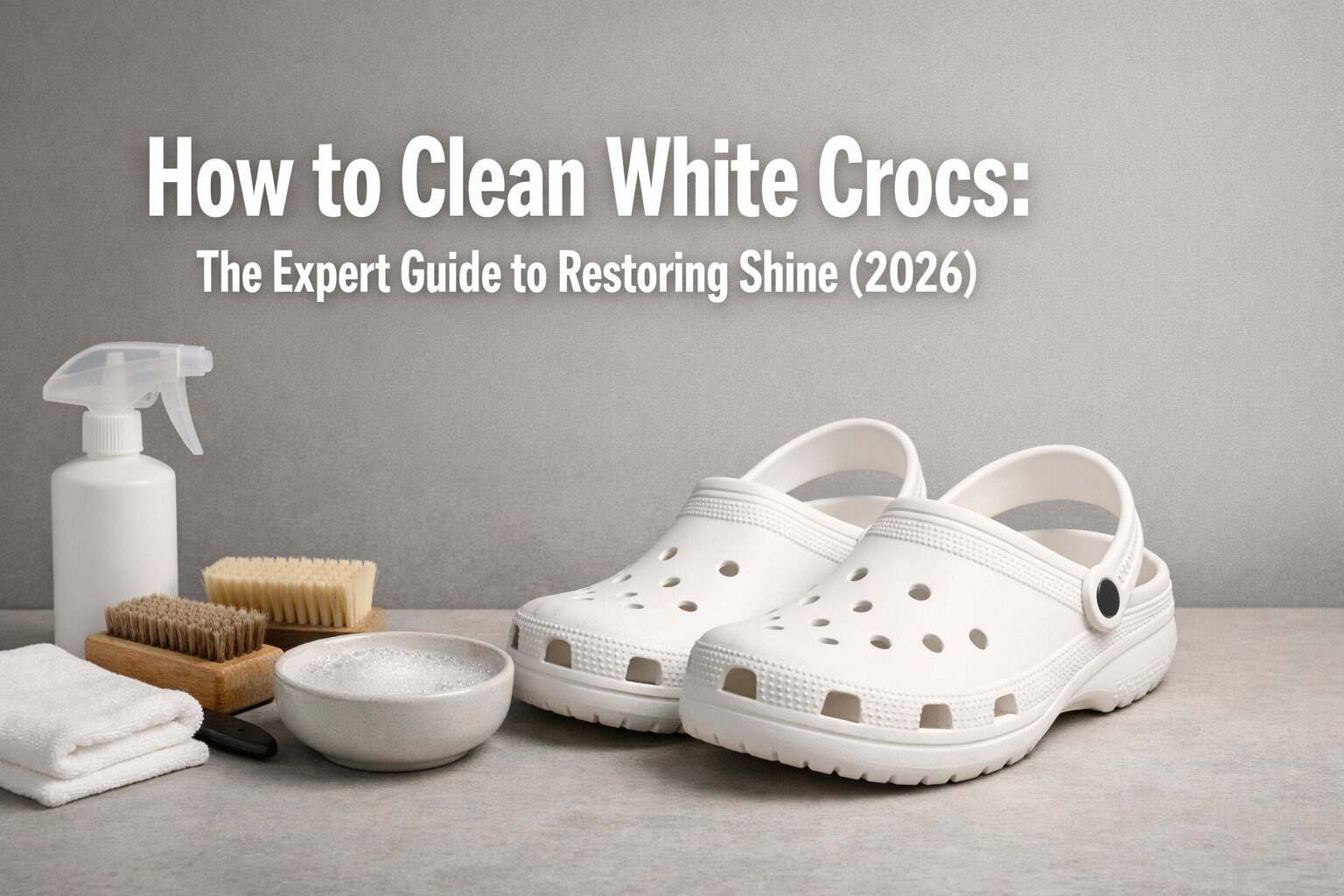
How to Clean White Crocs: The Expert Guide to Restoring Shine (2026)
The Quick Answer
To clean white Crocs effectively, rinse loose dirt with cold water, then scrub using a paste of baking soda and mild dish soap. For stubborn scuff marks, a melamine sponge (Magic Eraser) is the most effective tool. Can you wash Crocs in the washing machine? Yes, but strictly use a delicate cycle with cold water and place them in a mesh laundry bag. Never put them in the dryer or direct sunlight, as the heat will shrink the Croslite material.
Introduction: The Struggle of the “Fresh White” Look
There is a specific kind of heartbreak that happens when you look down at your favorite pair of white Crocs and realize they are no longer white—they are a sad shade of grey, scuffed with black marks, or arguably worse, starting to yellow.
In my 20+ years of running a shoe retail business, I have handed thousands of boxes of pristine white foam clogs to customers. I’ve also had hundreds of those same customers come back months later asking, “Is there any way to make these look new again?”
White footwear is a global staple. Whether you are a nurse working a 12-hour shift, a chef in a busy kitchen, or a traveler exploring a new city, white Crocs offer unbeatable comfort. But their porous, rubber-like material (Croslite) is a magnet for dirt, grass stains, and scuffs.
The good news? Unlike canvas or suede, this material is incredibly resilient if you treat it right. In this guide, I’m going to share the exact methods we use to restore that “out-of-the-box” shine, covering everything from quick daily wipes to deep cleaning hacks for disasters.
Why This Topic Matters (and Why You Need to Be Careful)
You might think cleaning a rubber shoe is straightforward. Grab some bleach and scrub, right? Wrong.
One of the biggest mistakes I’ve seen in my career is people destroying the integrity of their footwear by using the wrong chemicals or heat. I have seen Crocs that have shrunk two sizes because someone threw them in a hot dryer, and pairs that turned a permanent, sickly yellow because of improper bleach usage.
When you buy cheap knock-offs online, the material might dissolve under harsh scrubbing. But genuine Crocs use a proprietary closed-cell resin. Cleaning them isn’t just about aesthetics; it’s about hygiene and material preservation.
If you want your shoes to last another three years rather than three months, you need to clean them the right way.
Understanding the Material: What You Are Actually Cleaning
Before we scrub, we need to understand the surface. Crocs are made of Croslite, a closed-cell resin. It is not plastic, and it is not rubber.
- It is porous (slightly): While it resists water, textured surfaces trap microscopic dirt.
- It is heat-sensitive: This is the most critical factor. Heat warps and shrinks this foam.
- It is chemical-resistant (mostly): It handles soap well, but harsh solvents can strip the glossy finish, leaving them matte and easier to get dirty in the future.
Method 1: The “Kitchen Sink” Mix (Best for General Dirt)
This is the gold standard for maintenance. If your shoes are just “dusty” or have general street grime, start here.
What you need:
- Warm water (not hot)
- Mild liquid dish soap (grease-fighting is best)
- A soft-bristle scrub brush or an old toothbrush
The Process:
- Rinse: Run the shoes under cold water to remove loose grit. Do not scrub yet, or you might scratch the surface with the sand particles.
- Soak: Fill a basin or your sink with cool-to-lukewarm water and add a generous squeeze of dish soap. Let the Crocs float in this bath for 15 minutes. This loosens the grime bonded to the textured footbed.
- Scrub: Dip your brush into the soapy water and scrub in circular motions. Pay attention to the “tread” on the bottom and the little ventilation holes (jibbitz holes).
- Rinse & Dry: Rinse thoroughly with cold water. Pat dry with a towel and let them air dry in the shade.
Retailer Insight: Use a toothbrush for the strap hinges. Dirt accumulates there and acts like sandpaper, eventually causing the strap to snap. If you’re also dealing with grimy On Cloud shoes, the same gentle-scrub principle applies, though the mesh upper needs a slightly different approach.
Method 2: The Deep Clean (Baking Soda Paste)
If your white Crocs have turned grey or have stubborn grass stains, soap won’t cut it. You need an abrasive that won’t scratch the finish.
The Recipe:
- 1 part Baking Soda
- 1 part Water (or Hydrogen Peroxide for extra whitening power)
The Process:
- Mix the ingredients in a small bowl until it forms a thick paste, similar to toothpaste consistency.
- Apply the paste all over the shoe, focusing on the toe box and the heel strap.
- Let it sit. This is the secret. Leave the paste on the shoes for at least 30 minutes.
- Scrub vigorously with a stiff brush. The baking soda acts as a gentle exfoliant for the shoe, lifting deep-set dirt.
- Rinse thoroughly.
Method 3: The “Magic” Eraser (For Scuffs & Marks)
If you have black scuff marks (from tripping on curbs or hitting car pedals), no amount of soap will remove them. This is where melamine sponges (commonly known as Magic Erasers) save the day.
How to use:
- Wet the sponge and squeeze out excess water.
- Rub the scuff mark gently.
- Stop when the mark is gone.
Warning: Melamine sponges are essentially extremely fine sandpaper. If you scrub too hard or too long on one spot, you will sand away the shiny coating of the Croslite, leaving a dull patch that attracts dirt faster in the future.
Can You Bleach White Crocs?
Yes, but carefully. Croslite is chemical-resistant to mild cleaners, but full-strength bleach applied directly will damage the material — you’re better off treating bleach as a last resort, not a first step.
The safe ratio: 1 cap of bleach to 1 gallon of water. Never apply bleach undiluted or straight from the bottle onto the shoe.
When to reach for it:
- Mold or mildew that soap and baking soda haven’t cleared
- Severe, set-in yellowing that a Magic Eraser or baking soda paste hasn’t fixed
How to do it safely:
- Mix the diluted solution in a basin — never pour bleach directly onto the shoe.
- Submerge the Crocs fully for no more than 10–15 minutes.
- Rinse thoroughly with cold water — bleach residue left on the shoe will continue reacting with the material.
- Air dry in the shade, never direct sun or a dryer.
Retailer Insight: Here’s the irony most people miss — overusing bleach, or using it too concentrated, is actually one of the most common causes of the yellowing it’s meant to fix. If you’re bleaching your Crocs every week to keep them white, you’re likely accelerating the exact problem you’re trying to solve. Save it for genuine emergencies, not routine cleaning.
Why Do White Crocs Turn Yellow?
White Crocs yellow for three main reasons, and knowing which one you’re dealing with determines the fix.
1. UV exposure from direct sunlight
Sunlight breaks down the surface of the Croslite resin over time, causing a yellowish tint — this is the single most common cause, and it’s also the easiest to prevent. Always dry your Crocs in the shade, never on a sunny windowsill or outdoor line.
2. Natural oxidation
Even without sun exposure, Croslite resin slowly oxidizes with age and use, similar to how white rubber soles on sneakers yellow over years. This is largely unavoidable long-term, but a Magic Eraser pass can restore surface brightness.
3. Overuse or misuse of bleach
As covered above, bleach that’s too concentrated or applied too frequently can actually cause the yellowing it’s meant to prevent, through a chemical reaction with the resin.
This is largely unavoidable long-term, but a Magic Eraser pass can restore surface brightness. The same UV/oxidation process is behind yellowed rubber soles on sneakers generally, if you’re dealing with that on other pairs too.
The fix depends on the cause:
| Cause | Best Fix |
|---|---|
| Sun-related yellowing | Hydrogen peroxide + baking soda paste, left on in indirect light for an hour |
| General oxidation/age | Magic Eraser pass to remove the top layer of dulled material |
| Bleach damage | Stop using bleach; switch to baking soda paste for maintenance going forward |
Prevention beats cure: Always dry Crocs in the shade, and treat bleach as an occasional emergency tool — not a weekly habit.
How to Get Grass Stains Off Crocs
Grass stains are a different beast than mud or scuffs — the green comes from chlorophyll, which actually dyes the surface of the Croslite rather than just sitting on top of it. Soap alone won’t touch it. Speed matters here: a fresh grass stain comes out far easier than one that’s had a week to set in.
What you need:
- Rubbing alcohol (or a baking soda and vinegar paste as an alternative)
- A stiff-bristle brush
- Cold water
The Process:
- Act fast. If you catch the stain within a few hours, a quick rub with rubbing alcohol on a cloth often lifts it entirely before it sets.
- For set-in stains, make a paste of baking soda and white vinegar — it will fizz, that’s normal.
- Apply directly to the stain and let it sit for 15 minutes.
- Scrub with a stiff brush in circular motions, focusing on the discolored area.
- Rinse thoroughly with cold water and check the result — repeat once if any green tint remains.
Retailer Insight: Grass stains on white Crocs are one of the most common returns-turned-cleaning-questions I get from parents in spring and summer. If your kids play outdoors regularly, treating stains the same day beats any deep-clean method later — dried chlorophyll bonds to the resin in a way that’s much harder to fully reverse.
Can You Wash Crocs in the Washing Machine?
This is the number one question I get asked by parents and busy professionals. The answer is yes, but you must follow these rules.
I have seen customers ruin expensive limited-edition pairs by ignoring these parameters.
The Machine Wash Protocol:
- Remove Charms: Take off all Jibbitz/charms. They can fly off and damage your washing machine drum or get lost.
- Pre-Rinse: Hose off heavy mud. You don’t want mud clogging your washer’s filter.
- Protection: Place the shoes inside a mesh laundry bag or an old pillowcase tied shut. This prevents them from banging loudly and protects the washing machine drum.
- The Settings:
- Cycle: Delicate / Hand Wash
- Temperature: Cold Water ONLY (Max 30°C / 85°F)
- Spin: Low spin
- Drying: NEVER put them in the dryer. The heat will shrink them. Air dry only.
Pro-Tip Section: Insider Retailer Secrets
After handling inventory for two decades, here are the tricks of the trade that most blogs won’t tell you.
- Restoring the Shine: After deep cleaning (especially with Magic Erasers), the shoes might look clean but matte/dull. To bring back a subtle sheen, apply a tiny drop of automotive dashboard protectant (like Armor All) or even a minuscule amount of leather conditioner to a cloth and buff the shoe. It repels dust and adds a glow. Note: Do not do this on the sole/bottom, or you will slip and fall.
- The “Shrink-Unshrink” Trick: If you accidentally left your Crocs in a hot car and they shrank, you can sometimes reverse it. Boil them in hot water for 45 seconds, remove them (carefully with tongs), and immediately put them on your feet (wearing thick socks to prevent burns). Walk around while they cool. The material becomes pliable and remolds to your foot size.
- The Bleach Ratio: If you must use bleach for mold or extreme yellowing, the ratio is 1 cap of bleach to 1 gallon of water. Never apply raw bleach directly to the shoe; it will eat the rubber.
Comparison: Cleaning Methods Rated
We tested these methods on shop displays to see what actually works.
| Method | Effectiveness on Mud | Effectiveness on Scuffs | Whitening Power | Risk of Damage |
|---|---|---|---|---|
| Soap & Water | High | Low | Low | None |
| Baking Soda Paste | High | Medium | High | Low |
| Magic Eraser | Low | Very High | Low | Medium (Abrasion) |
| Washing Machine | Medium | Low | Medium | High (If heated) |
| Bleach Soak | Low | Low | High | High (Yellowing) |
Common Mistakes to Avoid
- Sun Drying: UV rays are the enemy of white Croslite. Drying your shoes in direct blazing sunlight will warp the shape and actually cause the white material to turn yellow faster due to oxidation. Always dry in the shade.
- Using Acetone: Some people suggest nail polish remover (acetone) for stains. While it works, it is too harsh. It strips the protective outer layer of the shoe instantly. Use rubbing alcohol instead if absolutely necessary.
- Ignoring the Inside: The footbed (where your foot sits) holds the most bacteria. If your shoes smell, the ‘cleaning’ isn’t done until you’ve scrubbed the inside with an enzyme cleaner or baking soda. For a deeper approach — especially on secondhand or thrifted pairs — see our guide on how to disinfect second-hand shoes.
- Waiting Too Long: Fresh mud stains white rubber quickly. Dried red clay or grass stains can permanently dye the material if left for weeks.
People Also Ask (PAA)
How do you get yellow stains out of white Crocs? Create a paste using hydrogen peroxide and baking soda, apply it to the yellow spots, and let it sit in bright (but not hot) light for an hour before rinsing.
Can I use vinegar to clean Crocs? Yes, white vinegar is excellent for removing odors and killing fungus. Mix one part vinegar with three parts water for a soaking solution.
How do I clean the fuzzy/lined Crocs? Do not scrub the lining with a stiff brush. Hand wash gently with mild detergent and warm water, then squeeze the lining to dry. Do not machine wash lined Crocs as the faux fur often mats.
Why did my Crocs shrink? Croslite material is a closed-cell resin that reacts to high heat. Leaving them in a hot car, direct sunlight, or a dryer causes the cells to contract and shrink the shoe.
Does toothpaste clean white Crocs? Yes, white non-gel toothpaste works well as a mild abrasive for spot cleaning scuffs if you don’t have baking soda handy.
Why Trust This Guide?
20+ Years Experience: I have managed footwear inventory since the early 2000s, dealing with material defects, returns, and customer care for major global brands.
Real-World Testing: The methods described above (specifically the washing machine protocols) have been tested on personal pairs and damaged returns to verify safety limits.
Material Science: This advice ignores “viral hacks” that damage shoes in the long run and focuses on the chemical properties of Croslite resin.
FAQs
1. What is the best homemade cleaner for white Crocs?
A thick paste made of baking soda and water (or hydrogen peroxide) is the best homemade cleaner. It lifts deep dirt and whitens without damaging the resin material.
2. Can you put Crocs in the dryer?
No, never put Crocs in the dryer. The high heat will cause the Croslite foam to shrink and warp permanently, often making them unwearable.
3. How do you clean white Crocs that turned gray?
To fix gray discoloration, soak the shoes in a mixture of warm water and mild dish soap for 30 minutes, then scrub with a melamine sponge (Magic Eraser) to remove the surface layer of grime.
4. Will bleach turn white Crocs yellow?
Yes, if used largely or left on too long, bleach can cause a chemical reaction that turns white rubber and foam yellow. It is safer to use baking soda or hydrogen peroxide.
5. How do you unshrink Crocs?
You can attempt to unshrink them by boiling them in water for 45 seconds to soften the material, then putting them on your feet (wearing thick socks) to stretch them back to shape while they cool.
6. How often should you clean Crocs?
For daily wear, a quick rinse with water should happen weekly. A deep clean with soap and scrubbing should be done once a month to prevent permanent staining.
7. How do I remove grass stains from white Crocs?
Rubbing alcohol or a paste of baking soda and vinegar is effective for grass stains. Apply the solution, let it sit for 15 minutes, and scrub with a stiff brush.
8. Is it safe to use Armor All on Crocs?
Yes, but only on the upper parts to restore shine. Never use Armor All or oil-based protectants on the soles, as it will make the shoes dangerously slippery.
9. Can I wash Jibbitz charms in the washing machine?
No, remove all Jibbitz before washing. They can detach and damage the washing machine drum or get lost in the drainage filter. Hand wash them with soapy water instead.
10. Why are my white Crocs sticky after cleaning?
If they feel sticky, the detergent wasn’t rinsed off completely, or a harsh chemical stripped
Conclusion & Next Steps
Cleaning white Crocs doesn’t require expensive kits. With a little baking soda, a Magic Eraser, and some patience, you can bring them back to life. The most important takeaway? Keep them cool — heat is the enemy of your footwear’s longevity.
If your current pair is beyond saving — the tread is worn smooth or the strap has snapped — it might be time to invest in a fresh pair. Check out our top picks for white sneakers if you want a change from clogs, or browse Crocs and casual footwear on Amazon for a replacement pair.