
Women’s Half Size Shoes Guide: Should You Size Up or Down?
Quick Answer
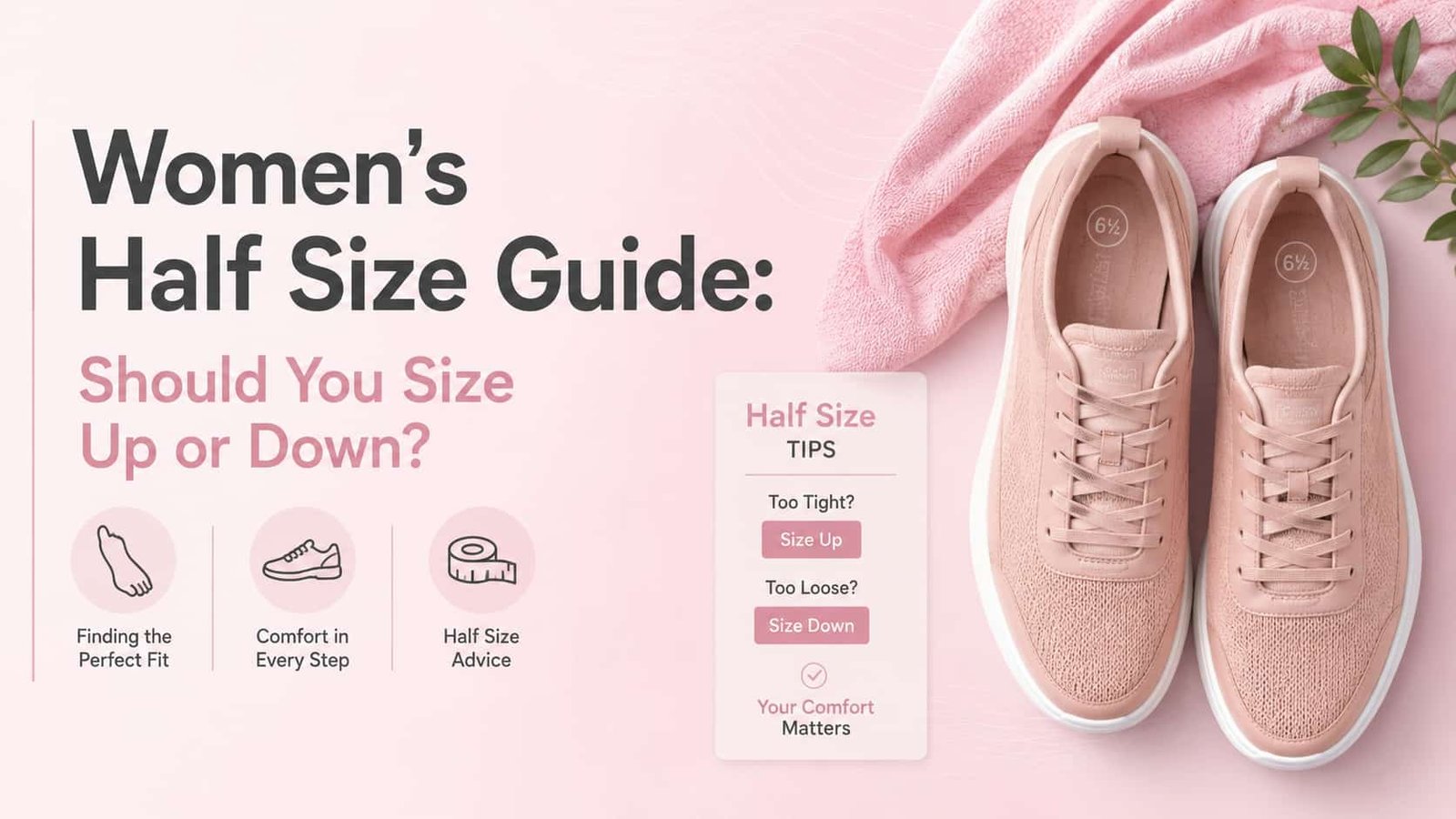
- A half size gives you a small increase in shoe length compared with the adjacent full size.
- If your toes touch the front of the shoe, sizing up may provide more useful space.
- If your heel slips or the shoe feels loose, sizing down may be worth considering.
- If the length feels right but the shoe is tight across your foot, check the width instead of automatically changing size.
- Measure both feet before deciding which women’s half size shoes are right for you.
If you are between two women’s shoe sizes, choosing a half size can make a noticeable difference in comfort. The right choice depends on where the shoe feels tight or loose, not simply on whether you normally prefer a bigger or smaller size.
A half size generally gives you a small increase in length, but it does not automatically solve every fit problem. If your toes are crowded, sizing up may help. If your heel slips in a larger shoe, sizing down may be better. If the sides of your feet feel tight while the length is comfortable, the issue may be width rather than length.
Before buying, measure both feet and compare your measurements with the brand’s size chart.
For a broader reference, you can also use this Women’s Shoe Size Chart to compare standard women’s shoe sizes.
What Is a Half Size in Women’s Shoes?
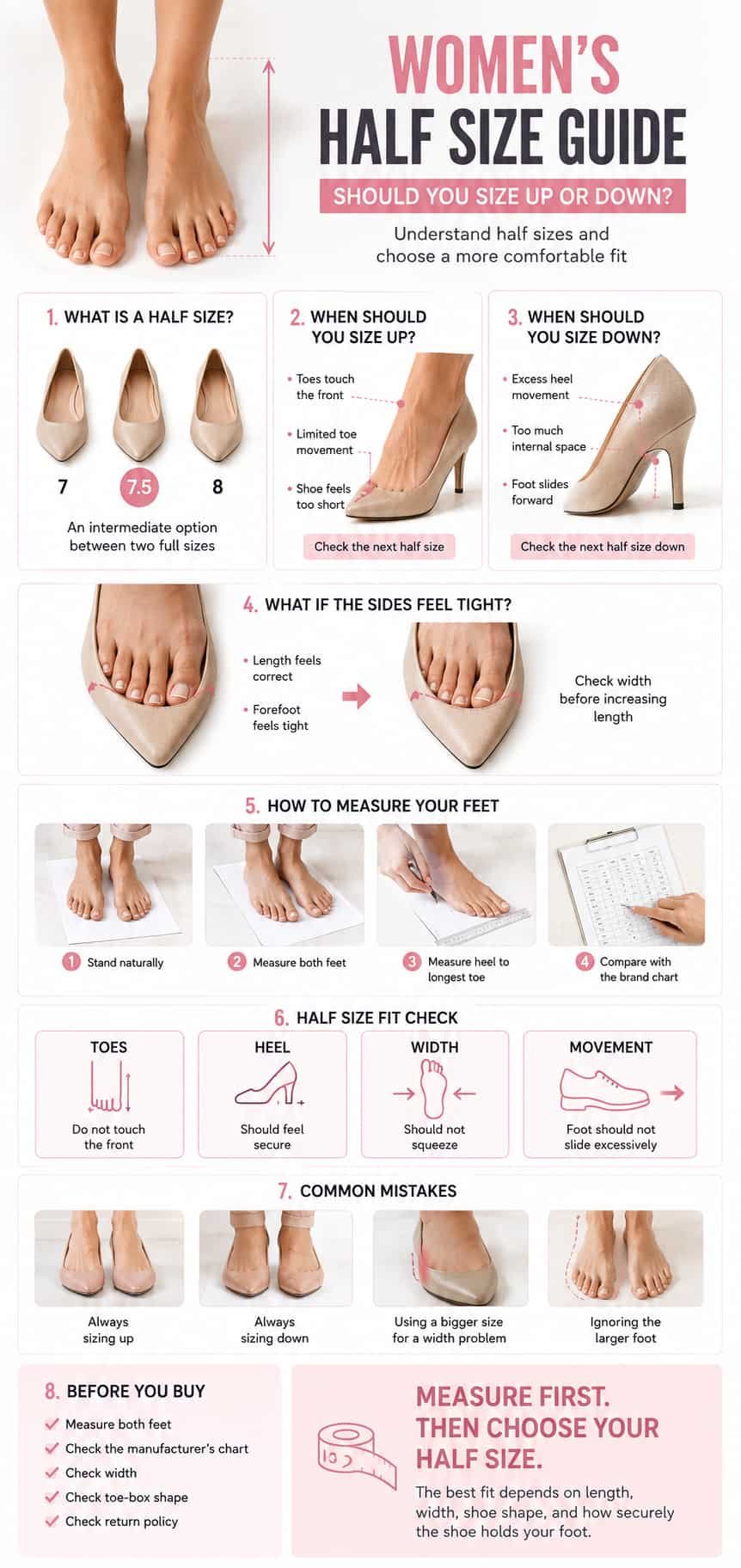
A half size is an intermediate shoe size between two full sizes.
For example, a sizing system may offer sizes such as 7, 7.5 and 8. A half size gives shoppers another option when a full size feels slightly too tight or too loose.
The exact difference between sizes depends on the sizing system and manufacturer, so you should not assume that every half size represents exactly the same physical measurement.
Simple example
| Size | Position |
| 7 | Full size |
| 7.5 | Half size |
| 8 | Full size |
The purpose of half sizes is to give you more choice when your foot does not fit comfortably into the available full sizes.
That is particularly useful when you find that one size is slightly short while the next full size feels too roomy.
Are Half Sizes Longer or Wider?
A half size is primarily intended to provide an intermediate length option, but the actual construction can vary by brand and shoe model.
This is important because a half size should not be treated as a substitute for a wider shoe.
For example, suppose a size 7 fits correctly from heel to toe but feels tight around the sides of your forefoot. Moving to a 7.5 may provide some additional overall room, but it may also leave too much space in front of your toes.
In that situation, a wider version of the same size could be a better solution.
If width is your main concern, compare your measurements with a Women’s Wide Shoe Size Chart instead of automatically increasing the length.
Remember this simple rule
Length problem = consider size.
Width problem = consider width.
That distinction can prevent many common shoe-fitting mistakes.
Should You Size Up or Down?
If you are between women’s shoe sizes, your choice should depend on how the shoe fits your foot.
A useful starting point is to identify whether the problem is toe space, heel movement, or width.
| What you notice | What to investigate |
| Toes touch the front | Consider sizing up |
| Heel slips | Consider sizing down or a more secure fit |
| Sides feel tight | Check a wider width |
| Shoe feels loose everywhere | Consider sizing down |
| Length feels good but toes feel cramped | Check toe-box shape |
| One foot is larger | Fit the larger foot |
There is no universal rule that says you should always size up or always size down.
Your actual foot measurement and the construction of the shoe matter more.
When Should You Size Up Half a Size?
You may want to consider sizing up when the shoe feels too short.
Common signs include:
- Your longest toe touches the front
- Your toes feel cramped
- Your foot reaches the front while walking
- Your toes have little room to move
- The shoe feels comfortable at first but becomes restrictive during use
If the shoe length is the issue, moving from a full size to the next half size can provide a more comfortable fit.
Example
Imagine that size 7 feels slightly short while size 8 feels noticeably loose.
A size 7.5 could be the useful middle option.
However, do not choose 7.5 simply because half sizes exist. Check your actual foot measurement and the manufacturer’s sizing information.
💡 Fit Tip
If your toes are touching the front of the shoe, do not solve the problem by simply loosening the laces. Check whether the shoe is actually too short.
When Should You Size Down Half a Size?
Sizing down may make sense when the larger size leaves too much unused space.
Signs can include:
- Your heel repeatedly slips
- Your foot moves around inside the shoe
- You need to tighten the shoe excessively
- There is excessive space around the toes
- You feel unstable while walking
- The upper does not hold your foot securely
For example, if size 8 feels loose but size 7 feels too short, size 7.5 may provide a better compromise.
However, if size 7.5 still feels loose because the shoe is particularly roomy, the issue may be the shoe’s shape rather than your normal size.
What If the Shoe Is Tight but the Length Is Correct?
If the length feels comfortable but the shoe feels tight across your foot, do not immediately size up.
The problem may be width.
This is especially important if:
- Your toes have enough front-to-back space
- The sides of your foot feel compressed
- The upper stretches across your forefoot
- Your foot bulges over the edges
- The shoe feels tight around the widest part of your foot
In these situations, look at width options.
You can also compare the Women’s Narrow Shoe Size Chart if standard shoes feel too loose across your foot.
How to Measure Your Feet for a Half Size
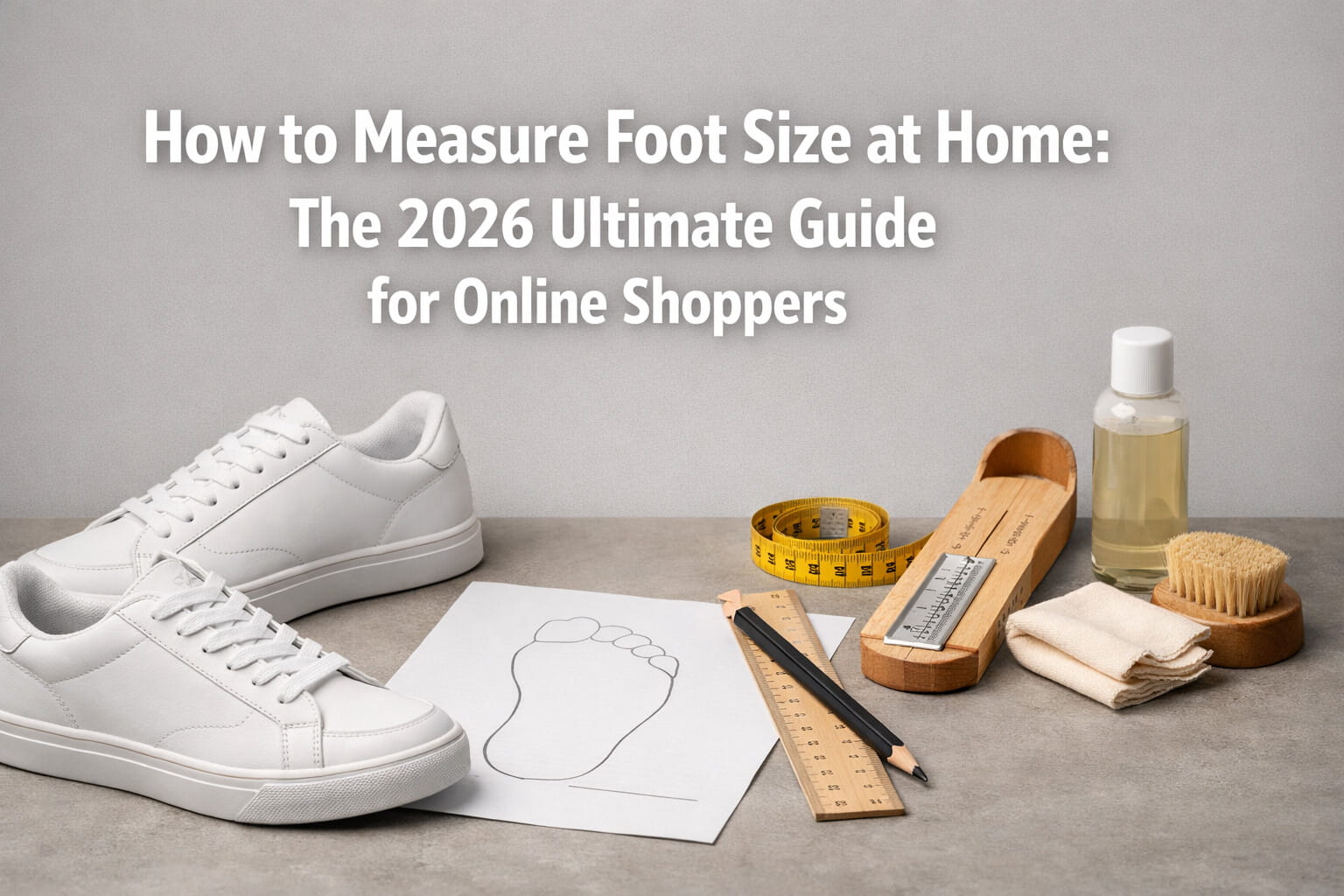
Measuring your feet is one of the easiest ways to reduce guesswork when buying women’s half size shoes.
You can measure your feet at home with:
- A sheet of paper
- A pencil
- A ruler or measuring tape
- A flat surface
For a complete visual process, follow How to Measure Foot Size at Home.
Step 1: Place your foot on paper
Put the paper on a hard, flat floor.
Stand naturally with your weight distributed evenly.
Step 2: Mark your foot
Trace around your foot or mark the heel and longest toe.
Avoid holding the pencil at an extreme angle because this can affect your measurement.
Step 3: Measure from heel to longest toe
Measure the straight distance from the back of your heel to the longest toe.
Your longest toe may not always be your big toe.
Step 4: Measure both feet
Repeat the process for the other foot.
It is common for feet to differ slightly.
Step 5: Use the larger measurement
When the two feet differ, the larger foot usually deserves more attention when choosing your shoe size.
Step 6: Compare with the brand’s chart
Do not rely solely on a generic conversion chart.
Each brand can use its own measurements and shoe construction.
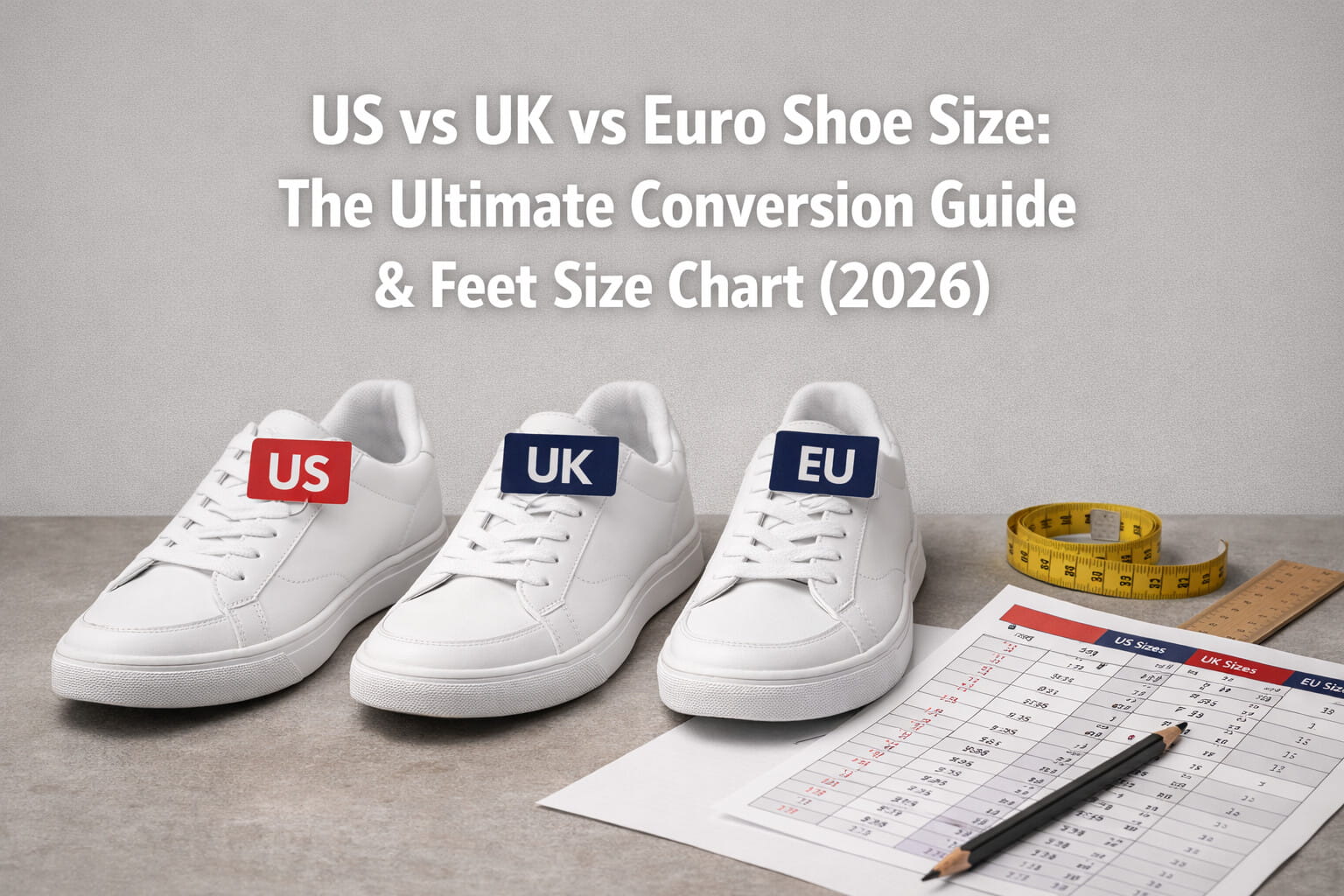
For international sizing, the Women’s Shoe Size Conversion Chart can help you understand the relationship between common sizing systems.
Women’s Half Size Comparison Chart
A half size sits between two full sizes within a given sizing system.
| Full Size | Half Size | Next Full Size |
| 5 | 5.5 | 6 |
| 6 | 6.5 | 7 |
| 7 | 7.5 | 8 |
| 8 | 8.5 | 9 |
| 9 | 9.5 | 10 |
| 10 | 10.5 | 11 |
| 11 | 11.5 | 12 |
This table is a simple size sequence rather than a universal foot-length chart.
For exact measurements, always check the specific brand’s sizing guide.
If you need to compare different sizing systems, use the Shoe Size Conversion Chart & Calculator.
Do Half Sizes Fit the Same in Every Brand?
No. Half sizes can feel different between brands and even between different models from the same brand.
A shoe’s fit depends on more than the printed size.
Factors include:
- Shape of the toe box
- Shoe last
- Upper material
- Heel construction
- Sole design
- Intended use
- Width
- Lacing or fastening system
A 7.5 in one shoe may feel different from a 7.5 in another.
This is why customer reviews can be helpful, but they should not replace your own measurements.
📌 Quick Reminder
A shoe size is a reference point, not a guarantee of identical fit between brands. Always check the manufacturer’s own size information before ordering.
How Should Different Types of Women’s Shoes Fit?
Different footwear styles can require slightly different fit considerations.
How Should Women’s Running Shoes Fit?
Running shoes should feel secure without squeezing the foot.
You generally want enough space for comfortable toe movement while keeping the heel secure.
If your toes touch the front during movement, investigate a larger size or a different shoe shape.
How Should Women’s Walking Shoes Fit?
Walking shoes should provide a stable and comfortable fit.
Your foot should not slide excessively from side to side, and your heel should remain reasonably secure.
If the length is correct but the sides feel tight, consider width rather than simply increasing the size.
How Should Women’s Dress Shoes Fit?
Dress shoes can have more structured shapes and narrower toe boxes.
Check the front of the shoe carefully.
A shoe that looks comfortable while standing still may feel much tighter after extended walking.
How Should Women’s Sandals Fit?
Your heel and toes should remain within the footbed during normal movement.
Adjustable straps can help create a more secure fit.
Do not choose a larger sandal simply because it feels easier to put on. Excess movement can make walking less comfortable.
Can You Wear a Half Size Bigger With Thick Socks?
Sometimes, but it depends on the shoe.
Thicker socks take up more internal space. If your current shoes are already snug, thicker socks may make them feel tighter.
If a slightly larger shoe becomes comfortable with your usual socks, it may work well.
However, do not deliberately buy a much larger shoe simply because you plan to wear thick socks.
The shoe should still hold your foot securely.
Can Insoles Fix a Half Size That Is Too Big?
An insole can sometimes improve the fit of a shoe that is slightly roomy, but it is not a replacement for choosing the correct size.
An insole may reduce some internal space and provide additional cushioning.
However, if your foot slides significantly or the shoe is clearly too long, choosing a better size is usually a more appropriate solution.
What If One Foot Is a Half Size Larger?
It is common for one foot to be slightly different from the other.
When this happens, prioritize the larger foot.
A shoe that fits the smaller foot perfectly may feel restrictive on the larger foot.
You can sometimes improve the fit on the smaller foot using appropriate lacing or a suitable insole, depending on the shoe.
Do not choose a size that makes the larger foot uncomfortable just to achieve a tighter fit on the smaller foot.
Does Foot Width Affect Half Size Choice?
Yes.
Width can strongly affect how a half size feels.
Suppose your size 7 fits your foot length correctly but feels tight across the forefoot. A 7.5 may feel more comfortable because it creates some additional internal space, but it also changes the length.
A wide size 7 may be a better solution if the shoe is available in that width.
This is why choosing between half sizes should always involve checking both length and width.
Can Your Shoe Size Change Over Time?
Yes.
Foot size can change over the course of adulthood.
Changes in body weight, activity, pregnancy, aging and other factors can affect how shoes fit.
That means an old shoe size should not automatically be treated as your current size.
If your usual shoes suddenly feel uncomfortable, measure your feet again before buying another pair.
Women’s Half Size Buying Guide
When shopping online, use this simple process.
1. Measure before ordering
Do not rely only on the size you bought several years ago.
2. Check both feet
Record both measurements.
3. Identify the actual problem
Ask yourself whether the shoe is:
- Too short
- Too long
- Too narrow
- Too wide
- Loose around the heel
4. Check the manufacturer’s chart
Compare your measurements with the specific shoe.
5. Consider the shoe’s shape
A pointed shoe can feel tighter than a rounded shoe even when both have the same listed size.
6. Check reviews carefully
Look for repeated comments about whether the shoe runs short, long, narrow or wide.
7. Check the return policy
A clear return policy makes online footwear shopping much easier.
Common Women’s Half Size Mistakes
Mistake 1: Always sizing up
Some shoppers believe that buying larger shoes is safer.
It is not always better.
Too much length can cause heel movement and reduce stability.
Mistake 2: Always sizing down
A smaller shoe can create pressure around the toes.
If your longest toe touches the front, the shoe may simply be too short.
Mistake 3: Using a bigger size to solve a width problem
If the length is already correct, increasing size may create unnecessary space at the toe.
Check whether a wider option is available.
Mistake 4: Trusting your old shoe size
Your feet can change over time.
Measure again if your current shoes no longer feel right.
Mistake 5: Ignoring the larger foot
Always check both feet before choosing your size.
Mistake 6: Assuming every brand fits identically
A size 8.5 can feel different between different manufacturers.
Women’s Half Size Checklist
✓ Women’s Shoe Fit Checklist
- Measure both feet.
- Record the length of each foot.
- Check your foot width.
- Identify your larger foot.
- Compare measurements with the brand’s chart.
- Check the toe-box shape.
- Make sure your heel feels secure.
- Consider the socks you normally wear.
- Check the return policy before ordering.
Interactive Half Size Decision Tool
This tool gives readers a general starting recommendation based on how their current shoes feel. It does not replace the manufacturer’s size chart.
Should You Size Up or Down?
Answer three simple questions to identify what you should check first.
Full Size
The starting full size in this simple example.
Half Size
An intermediate option between two full sizes.
Full Size
The next full size in the sequence.
FAQs
What is a half size in women’s shoes?
A half size is an intermediate option between two full shoe sizes. For example, 7.5 sits between 7 and 8. Half sizes can be useful when one full size feels slightly short and the next feels too loose. The exact fit can vary between brands, so measurements and the manufacturer’s chart are still important.
Should I size up or down if I am between women’s shoe sizes?
It depends on where the shoe feels uncomfortable. If your toes touch the front, sizing up may provide better length. If the larger size creates heel movement or excessive space, sizing down may be better. If the sides feel tight but the length is correct, investigate shoe width instead.
Are women’s half sizes wider?
A half size is primarily intended to provide an intermediate length option, although the exact construction can vary by brand. You should not assume that moving up half a size is equivalent to choosing a wider shoe. If the sides of your foot feel tight, check whether the shoe is available in a wider width.
Is it better to size up or down in women’s shoes?
Neither option is automatically better. The correct choice depends on your foot measurement and how the particular shoe fits. A shoe that is too short can crowd your toes, while a shoe that is too large can cause heel movement. Look at length, width and overall security together.
How much bigger is a half size?
The physical difference between half sizes depends on the sizing system and manufacturer. A half size represents an intermediate point between two full sizes, but it should not be treated as an identical measurement across every brand. Use the manufacturer’s own sizing information when selecting a specific shoe.
Should I size up if my shoes feel tight?
First determine where the shoes feel tight. If the toes are touching the front, the shoe may be too short and sizing up could help. If the sides are tight while the length is correct, a wider shoe may be a better solution than choosing a longer size.
Should I size down if my heel slips?
A smaller size can sometimes reduce heel movement if the shoe is also too long. However, heel slipping can be caused by the shoe’s shape or construction. Check whether the next half size provides a better overall fit without squeezing your toes.
Can one foot be a different size from the other?
Yes. Feet can differ slightly in length or width. When selecting women’s half size shoes, pay attention to the larger foot. A shoe should not make the larger foot uncomfortable simply to achieve a tighter fit on the smaller foot.
Do women’s shoe sizes vary between brands?
Yes. The same numerical size can feel different between brands and even between different shoe models. Construction, toe-box shape, materials, width and heel design can all affect fit. Always check the manufacturer’s size information before assuming your usual size will fit exactly the same way.
Can I use socks to make a larger shoe fit?
Socks can change the amount of space inside a shoe, but they should not be used to compensate for a significantly oversized shoe. If a shoe is only slightly roomy, your normal socks may improve the fit. If your foot moves excessively, choosing a better size is usually preferable.
What should I do if my foot measurement falls between sizes?
Start by comparing the measurement with the manufacturer’s chart. If the smaller size is clearly too short and the larger size is only slightly roomy, the larger option or a half size may work. Consider the shoe’s width and construction before making the final choice.
Final Thoughts
The best women’s half size shoes are not necessarily the biggest or smallest option available. The right choice depends on your actual foot measurements and how the shoe fits from heel to toe and across the foot.
If your toes feel cramped, check whether you need more length. If the shoe feels loose, compare the smaller half size. If the length is comfortable but the sides are tight, look at width before changing size.
Measure both feet, compare your measurements with the manufacturer’s chart, and consider how you normally wear the shoes.
If you want to check your measurements before deciding, start with How to Measure Foot Size at Home.
For broader size information, use the Women’s Shoe Size Chart.
And if you are comparing international sizing systems, the Shoe Size Conversion Chart & Calculator can help you understand the differences.
A few minutes of measuring before you order can save you from choosing the wrong size and make online shoe shopping much easier.