
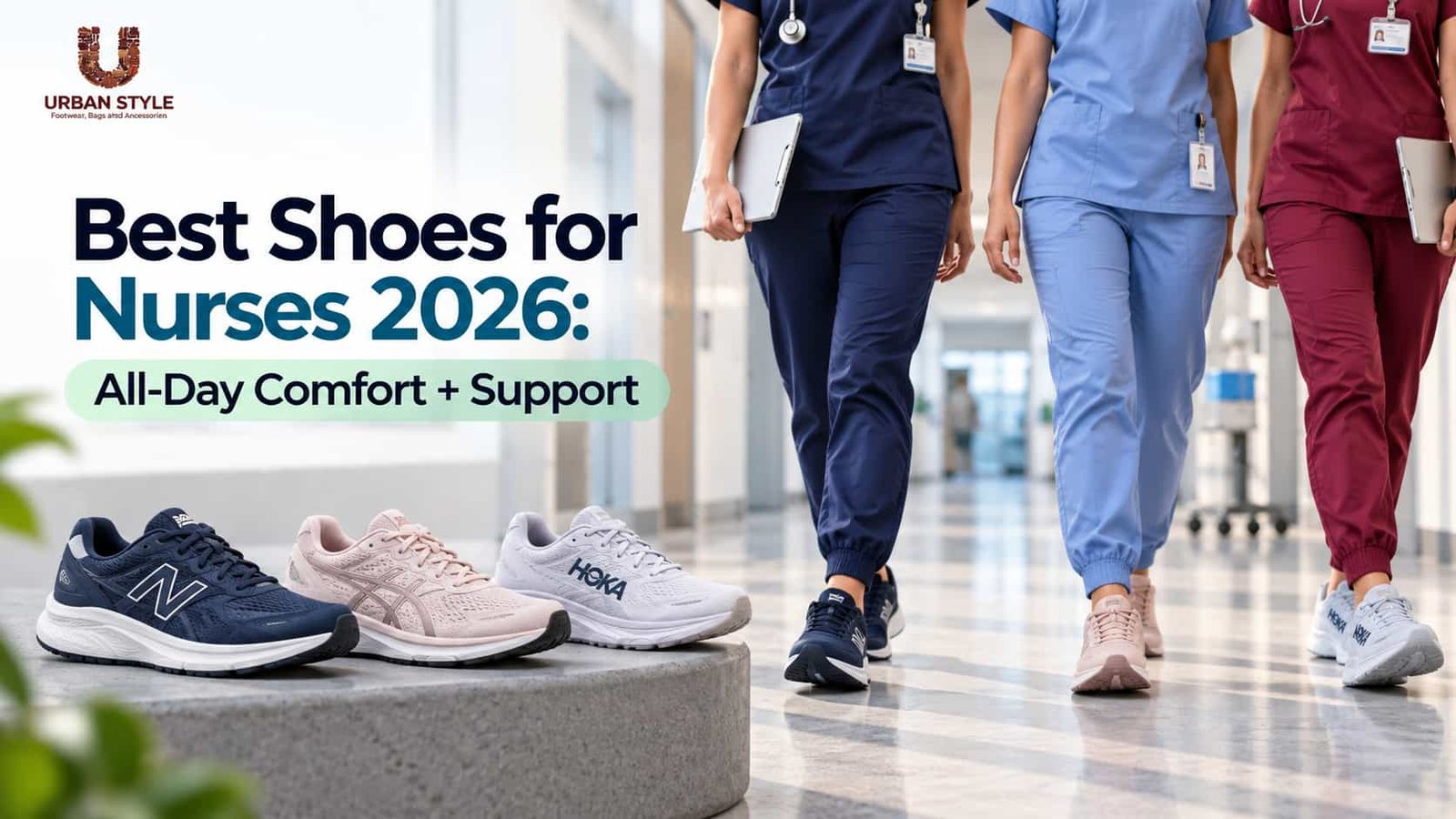
Best Shoes for Nurses 2026: All-Day Comfort + Support
✅ Expert Footwear Analysis | 🛒 Amazon US Options | 📅 Updated September 2026
The best shoes for nurses in 2026 are those that combine cushioning, stability, slip resistance, and a secure fit for 8 to 12 hour shifts on hard hospital floors. Based on published specifications, the New Balance 608 V5 offers the best overall value for most nurses, while the Dansko XP 2.0 and Brooks Ghost Max 3 serve specific support and cushioning needs.
🌿 Top Picks Quick Summary: Best Shoes for Nurses 2026
A quick visual pick of the 15 nursing shoes compared in this guide. Five standout picks first, then the full shortlist below.
⭐ Top 5 Standout Picks
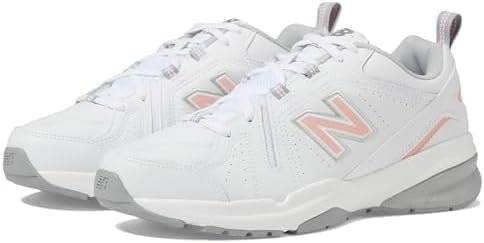
New Balance Women’s 608 V5
ABZORB heel cushioning with suede leather upper. Best value for everyday nursing shifts.
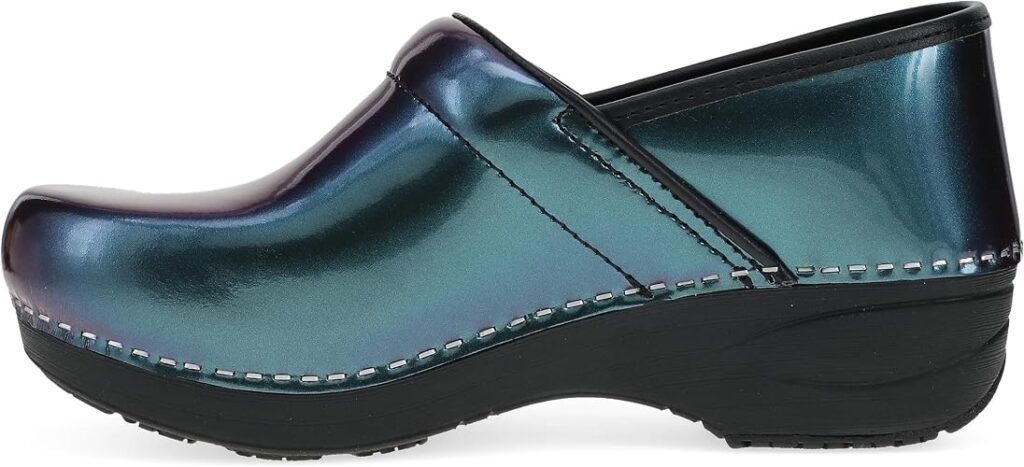
Dansko XP 2.0 Clogs
Removable footbed with Natural Arch tech and APMA Seal of Acceptance. Structured support for long standing shifts.
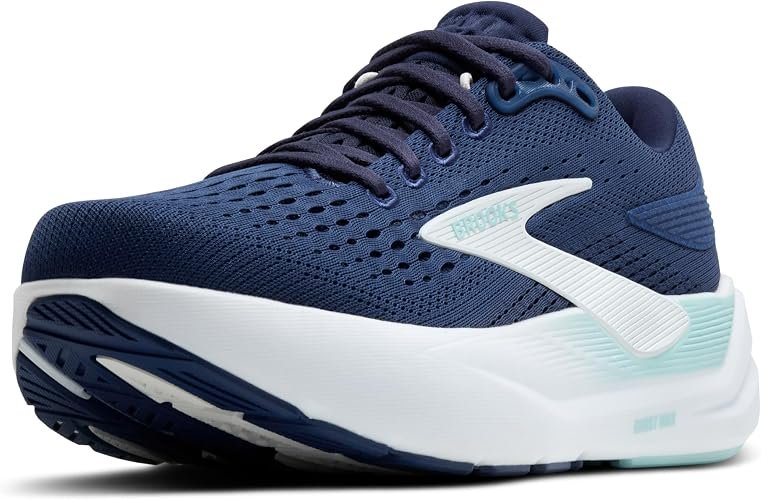
Brooks Women’s Ghost Max 3
DNA Loft v3 cushioning with GlideRoll Rocker. High stack and wide base for nurses who walk all day.
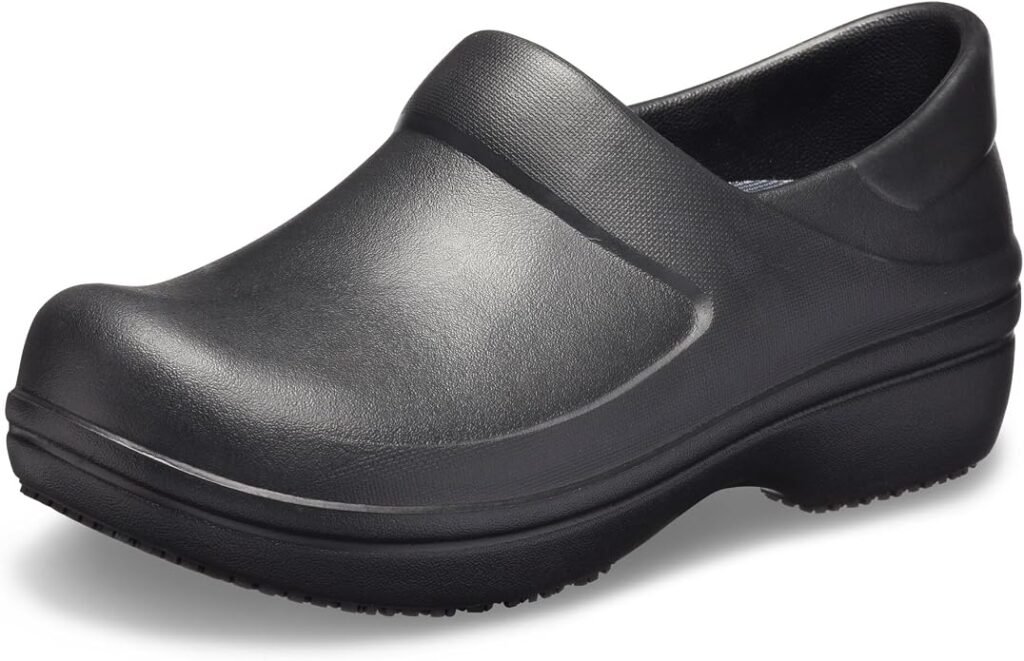
Crocs Women’s Neria Pro II
Waterproof Croslite clog with ASTM F2913 and F3445 slip resistance. Easy to wipe clean after fluid exposure.
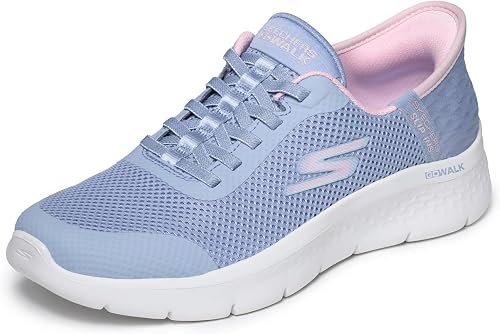
Skechers Go Walk Flex Grand Entry
Hands free slip-in with ULTRA GO cushioning. Machine washable for easy cleaning between shifts.
📋 Full Shortlist: 10 More Top Picks
Prices and ratings reflect Amazon US listings at the time of publishing and may change. Tap any product to view the current price.
Introduction
A nurse working a 12 hour shift in a Chicago hospital walks the equivalent of a 5K before lunch and then keeps going. By hour eight, the difference between a shoe that supports the foot and one that just covers it becomes obvious. Hard tile corridors, wet bathroom floors, and the constant transition between standing, walking, and pivoting all place demands on footwear that a standard sneaker or casual shoe was never designed to handle.
Nursing footwear is functional equipment. It has to manage impact, provide a secure platform on slick surfaces, accommodate foot swelling over long shifts, and comply with workplace dress codes that typically require closed toes and closed heels. The problem is that most shoe listings do not explain how a shoe actually performs in a hospital environment. Cushioning claims do not address stability, and slip resistance claims often do not specify whether the outsole has been tested.
This guide evaluates 15 nursing shoe options based on published specifications, construction details, and the specific demands of U.S. healthcare work environments. It covers clogs, athletic sneakers, and slip-on designs, explains which tradeoffs matter for different nursing roles, and helps narrow the field to the shoes most likely to work for a specific foot type and shift pattern. If you are still deciding between silhouettes, our breakdown of clogs vs sneakers for nurses is a useful starting point.
What Are Nursing Shoes?
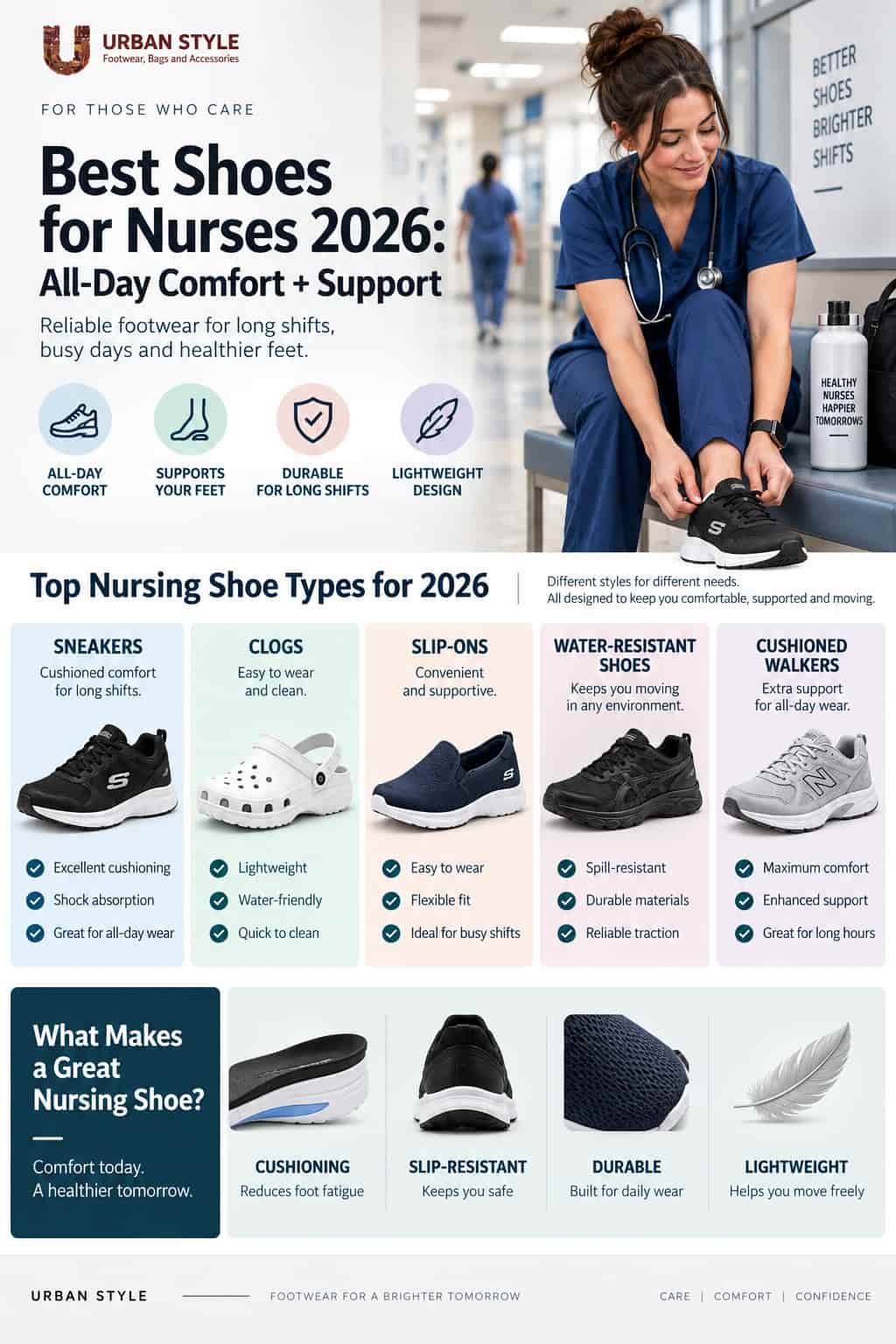
Nursing shoes are work footwear designed for healthcare professionals who spend the majority of their shift on their feet. They typically share several construction features that distinguish them from casual or running shoes. Common characteristics include a closed toe and closed heel for workplace safety compliance, an outsole engineered for traction on hard and potentially wet flooring, and some combination of cushioning and arch support intended to manage the cumulative load of prolonged standing and walking.
Nursing shoes fall into three broad categories. Clogs use a backless or partially enclosed design with a roomy toe box and a rocker shaped outsole. Athletic sneakers adapted for work use breathable uppers, foam midsoles, and rubber outsoles. Slip on designs prioritize convenience for nurses who need to change footwear quickly. Each category makes different compromises between support, breathability, cleanability, and ease of use. Nurses who want a deeper look at the first category can explore our dedicated guide to the best nursing clogs.
Why Do Nursing Shoes Matter for Nurses?
Nursing shoes matter because nurses spend 8 to 12 hours per shift on hard floors, and footwear directly affects foot comfort, stability, and fatigue during that time. Research on nurses in prolonged standing environments has found that ill fitting shoes are associated with increased foot pain and disorders. A separate review of foot and ankle disorders in nurses found that pain, numbness, burning feet, and calluses were among the most common reported issues.
The flooring matters as much as the shoe. Hospital corridors, patient rooms, and medication rooms typically use hard, non absorbent surfaces that reflect force back into the foot with every step. Unlike a runner on pavement, a nurse may spend most of a shift standing relatively still at a medication cart or bedside, which concentrates pressure on specific areas of the foot rather than distributing it across a stride. If your shifts involve very little sitting, it helps to compare these picks against our guide to the best shoes for nurses who stand all day.
Slip risk adds another layer. Spills, cleaning solutions, and bodily fluids can create slick patches on hard flooring. The ASTM F3445 standard specifically addresses minimum slip resistance performance requirements for footwear evaluated using the ASTM F2913 whole shoe tester. Shoes that meet this standard have been tested under conditions that simulate contaminated surfaces. For a deeper look at traction focused options, see our roundup of the best slip resistant shoes for nurses.
Workplace policies vary. Some hospitals require all white shoes. Others mandate closed heels and specific colors. Verify your employer’s footwear policy before purchasing, because a shoe that meets every comfort criterion may still violate a unit dress code.
What Should Nurses Look For in Nursing Shoes?
Cushioning
Cushioning is the material between the foot and the ground that absorbs impact. In nursing shoes, cushioning typically comes from an EVA or TPU foam midsole, sometimes supplemented by a gel or memory foam insert. More cushioning can reduce peak pressure underfoot, but excessive softness without stability can create a wobbly platform that forces the foot to work harder to stay balanced.
What to look for: A midsole that compresses under pressure but recovers. Nurses who stand in one position for long periods may benefit from moderate cushioning, while nurses who walk long distances may prefer slightly firmer foam for energy return.
Tradeoff: Very soft cushioning can feel comfortable for the first hour and fatiguing by hour six if the shoe lacks structure.
Stability
Stability refers to how well a shoe controls foot motion and keeps the foot centered over the platform. A wide base, a firm heel counter, and a midsole that resists excessive compression all contribute to stability. Stack height, which is the amount of material between the foot and the ground, affects stability. A taller stack increases cushioning potential but can reduce stability if the base is not proportionally wide.
What to look for: A heel counter that holds the heel securely and a forefoot platform wide enough to accommodate toe splay without the foot rolling over the edge.
Tradeoff: Highly stable shoes can feel stiff or heavy, particularly during the break in period.
Slip Resistance
Slip resistance depends on the outsole compound and tread pattern. Rubber outsoles with siping, which are the small slits in the tread, and lug patterns that channel liquid away from the contact surface generally provide better traction on wet hard floors than smooth or shallow treads. Some manufacturers submit their outsoles for ASTM F2913 or F3445 testing, which provides an objective benchmark rather than a marketing claim.
What to look for: A rubber outsole with a tread pattern that has channels or lugs, and references to ASTM testing in the product specifications.
Tradeoff: Deep treads can trap debris and are more difficult to clean than smooth outsoles.
Fit and Width
Fit affects everything. A shoe that is too narrow compresses the forefoot and can aggravate bunions or neuromas. A shoe that is too long allows the heel to slip, which increases the risk of blisters and reduces stability. Feet swell during long shifts, so a shoe that feels snug at 6 a.m. may feel tight by 2 p.m. If your forefoot typically feels pinched, our guide to the best shoes for nurses with wide feet goes deeper into width grading and toe box volume.
What to look for: Toe box volume that allows toes to spread without pressure, a heel that locks in place without pinching, and width options if your foot is wider than a standard D or B width.
Tradeoff: A roomy toe box can feel loose on nurses with narrow feet.
Cleanability
Hospital shoes get exposed to fluids, spills, and cleaning agents. Uppers that can be wiped with a disinfectant cloth are easier to maintain than porous materials that absorb liquid. Mesh uppers breathe well but are difficult to clean if contaminated. Leather and synthetic leather uppers offer a better balance of durability and wipeability. For wet units, our guide to the best waterproof shoes for nurses covers fully sealed options.
What to look for: Smooth, non porous upper material and removable insoles that can be washed or replaced.
Tradeoff: Wipeable uppers are often less breathable than mesh.
Breathability
Breathability affects foot temperature and moisture. Nurses who work in warm units or wear compression socks may prefer a more breathable upper. Mesh uppers allow air circulation but may compromise water resistance and durability.
What to look for: Mesh panels in strategic locations rather than a fully mesh upper if you need both breathability and cleanability.
Weight
A lighter shoe reduces the energy cost of walking. However, weight reduction often comes at the expense of cushioning or stability. A very light shoe may feel comfortable initially but lack the underfoot protection needed for 12 hour shifts.
Durability
Durability in nursing shoes relates primarily to midsole compression and outsole wear. EVA foam loses its cushioning properties over time. Rubber outsoles abrade on hard flooring. Shoes that use denser foams or TPU inserts generally maintain their cushioning longer than soft EVA.
What to look for: A durable rubber outsole and a midsole material that specifies compression resistance. Replace shoes when the midsole feels flat or the outsole tread is visibly worn.
Nursing Workplace Considerations
Hospital dress codes: Many U.S. hospitals require closed toe and closed heel shoes. Some specify white or black. Verify before purchasing, especially if you work in a unit with infection control requirements. If your hospital does not permit clogs, athletic sneakers with a full heel may be the only compliant option. Nurses who prefer clogs should confirm whether their employer permits backless or partially backless designs.
Unit specific demands: ICU nurses may spend more time standing at bedsides and monitors. ER nurses may pivot and move quickly, which is why we put together a dedicated guide to the best nursing shoes for ER and surgical nurses. OR nurses may need shoes that can be wiped clean of blood or irrigation fluid. Outpatient clinic nurses may have more opportunity to sit between patients. These differences affect which shoe characteristics matter most.
Shift length: An 8 hour shift and a 12 hour shift place different demands on footwear. Nurses working 12 hour shifts should prioritize cushioning that maintains its properties over time and a fit that accommodates swelling. For overnight schedules, the best nursing shoes for night shift guide covers low light visibility and comfort considerations.
Commuting: Shoes that work in a hospital may not be comfortable for a commute that involves walking to a train or parking far from the entrance. Some nurses keep a separate pair of commuting shoes and change at work.
Product Reviews
New Balance Women’s 608 V5 Casual Comfort Cross Trainer
Best For: Nurses who want a reliable, moderately cushioned work sneaker at an accessible price.
Why It Works: The 608 V5 uses an IMEVA midsole with an ABZORB heel pad, which absorbs impact at the heel, the area that takes the most force during walking. The suede leather upper provides more structure than a mesh shoe, and the lace up closure allows for fit adjustment. The outsole is slip resistant, which is a baseline requirement for hospital environments. At 4.4 stars across 45,045 reviews, it has a substantial user base.
Expert Analysis: The ABZORB heel pad is a cushioning insert positioned specifically at the heel, not throughout the entire midsole. This means the shoe provides impact absorption where it is needed most during walking but does not wrap the whole foot in soft foam. For nurses who prioritize heel comfort but do not want a mushy platform, this is a sensible construction choice. The suede upper is more durable than mesh and easier to clean, though it will not breathe as well. If you want to see other New Balance work options side by side, our roundup of the best New Balance shoes for nurses covers the brand in more detail.
Pros:
- ABZORB heel cushioning
- Suede leather upper for durability and cleanability
- Slip resistant outsole
- Affordable price point
Cons:
- Water resistance level: Not water resistant
- Suede upper may be less breathable than mesh alternatives
Main Tradeoff: The shoe is not water resistant, which means spills or fluid exposure can soak through the upper. Nurses in high fluid exposure environments may prefer a waterproof clog or a shoe with a synthetic upper.
Who Should Buy: Nurses who want a balanced work sneaker with heel focused cushioning and do not need waterproofing.
Who Should Skip: Nurses who work in environments with heavy fluid exposure or who need a fully waterproof shoe.
Verdict: A solid entry level nursing sneaker with a specific heel cushioning feature that addresses a common source of foot fatigue. The lack of water resistance is the main limitation.
🛒 Check Price on AmazonDansko XP 2.0 Clogs
Best For: Nurses who want structured arch support and a rocker bottom clog design.
Why It Works: The XP 2.0 uses a dual density PU footbed with Dansko Natural Arch technology and memory foam, plus a TPU heel counter that adds rearfoot stability. The EVA midsole provides shock absorption, and the 1.75 inch heel with a rocker bottom is designed to support a natural walking motion. The removable footbed accommodates custom orthotics. The rubber outsole is slip resistant on dry, wet, and oily or wet surfaces. Dansko shoes carry the American Podiatric Medical Association Seal of Acceptance. Nurses who want to see the full range of Dansko work options can compare them in our guide to the best Dansko nursing shoes.
Expert Analysis: The rocker bottom is the defining feature of this clog. A rocker geometry reduces the amount of toe flexion required during walking, which may be useful for nurses who experience forefoot discomfort. The tradeoff is that rocker shoes feel different from flat soled shoes and require a break in period. The dual density footbed provides a firmer base than memory foam alone, which supports stability rather than pure softness.
Pros:
- Removable footbed for orthotics
- APMA Seal of Acceptance
- Slip resistant on dry, wet, and oily or wet surfaces
- TPU heel counter for rearfoot stability
Cons:
- Higher price point at $169.95
- Heel height of 1.75 inches may not suit nurses who prefer a flat platform
Main Tradeoff: The price is significantly higher than most athletic sneaker options in this guide. Nurses who do not need orthotic accommodation or structured arch support may find comparable comfort in a less expensive shoe.
Who Should Buy: Nurses with high arches, plantar fasciitis, or a need for removable footbeds. Nurses who prefer clogs over sneakers.
Who Should Skip: Nurses who need a flat, flexible shoe or who work in units that prohibit clogs.
Verdict: A well constructed clog with genuine support features and a large user base. The price and rocker geometry are the main considerations.
🛒 Check Price on AmazonSkechers Women’s UNO Stand on Air Sneaker
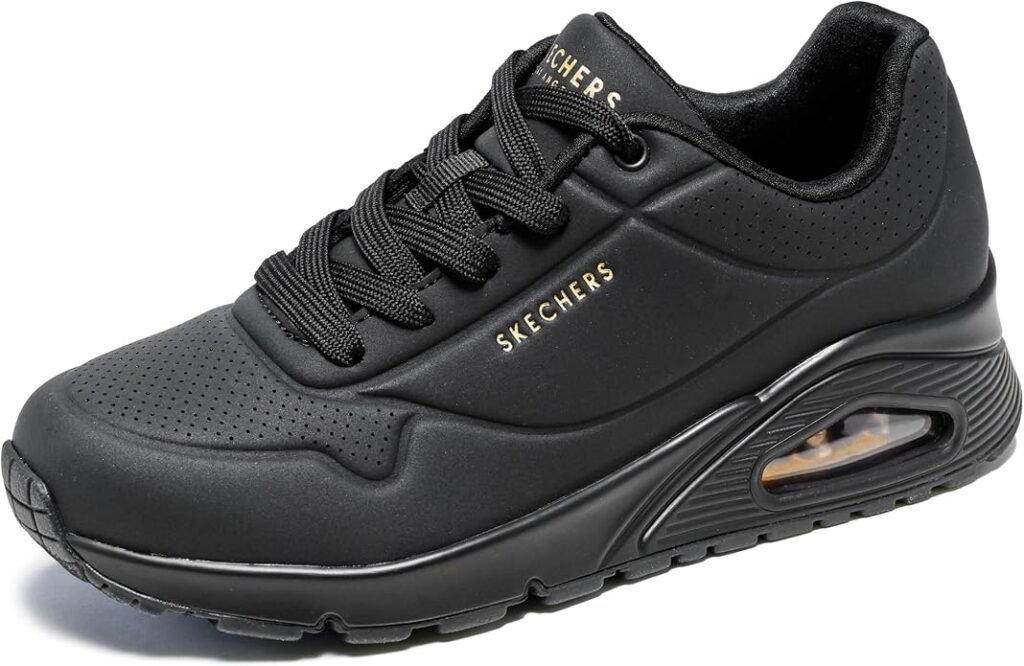
Best For: Nurses who want visible air cushioning and a fashion forward work sneaker.
Why It Works: The UNO Stand on Air uses an Air Cooled Memory Foam insole and a Skech Air visible air cushioned midsole. The perforated durabuck upper provides some breathability while maintaining a cleaner look than mesh. The rubber outsole is flexible, and the hidden wedge adds a slight heel lift. At 4.4 stars with 59,000 reviews, it is one of the most widely adopted options. For more on the brand’s nursing lineup, see our guide to the best Skechers nursing shoes.
Expert Analysis: The visible air cushioning in the midsole is a Skech Air unit, which uses air chambers to absorb impact. This is different from an air filled bladder in a running shoe, as it is a molded cushioning element. The memory foam insole adds step in comfort. The wedge geometry raises the heel slightly, which can feel comfortable for nurses who are used to a small heel but may not suit those who need a flat platform.
Pros:
- Air Cooled Memory Foam insole
- Visible air cushioned midsole
- 59,000+ reviews
- Perforated upper for some breathability
Cons:
- Water resistance level: Not water resistant
- Hidden wedge may not suit nurses who prefer flat shoes
Main Tradeoff: The shoe is not water resistant. The synthetic upper is more breathable than leather but less easy to wipe clean thoroughly.
Who Should Buy: Nurses who want a cushioned sneaker with a slightly elevated heel and do not need waterproofing.
Who Should Skip: Nurses who need a flat platform or a fully wipeable upper.
Verdict: A popular, well cushioned option with a distinctive look. The lack of water resistance is the primary limitation for hospital use.
🛒 Check Price on AmazonCrocs Women’s Neria Pro II Work Clogs
Best For: Nurses who prioritize waterproofing, easy cleaning, and certified slip resistance.
Why It Works: The Neria Pro II is a fully waterproof clog with a Croslite foam construction, an enclosed toe, and a slip resistant outsole with Crocs Lock tread. It is tested and certified to ASTM F2913-24 and ASTM F3445-24, plus CE and EN ISO 20347:2012 standards. The upper is easy to wipe clean. At 4.0 stars with 24,614 reviews, it has a strong following among healthcare workers. To compare it against other Crocs work models, see our guide to the best Crocs for nurses.
Expert Analysis: The ASTM F3445 certification is the key differentiator here. This standard specifies minimum slip resistance requirements for footwear evaluated using the ASTM F2913 whole shoe tester. Nurses who work in environments with frequent spills, such as dialysis units, GI labs, or emergency departments, benefit from a shoe that has been objectively tested for traction on contaminated surfaces. The Croslite foam is soft and lightweight, but it lacks the structured arch support of a dual density footbed.
Pros:
- ASTM F2913-24 and F3445-24 certification
- Fully waterproof
- Easy to wipe clean
- Lightweight Croslite foam
Cons:
- Relaxed fit with extra room at the heel, which may require sizing down
- Arch support is described as low arch
Main Tradeoff: The relaxed fit and low arch profile may not suit nurses who need firm arch support or a snug heel fit. The waterproof construction also reduces breathability compared with mesh uppers.
Who Should Buy: Nurses in high spill environments, nurses who need a waterproof shoe, and nurses who want ASTM certified slip resistance.
Who Should Skip: Nurses who need structured arch support or a performance fit.
Verdict: The most safety certified option in this guide. The waterproof build and ASTM testing make it a strong choice for messy environments, provided the fit works for the individual foot.
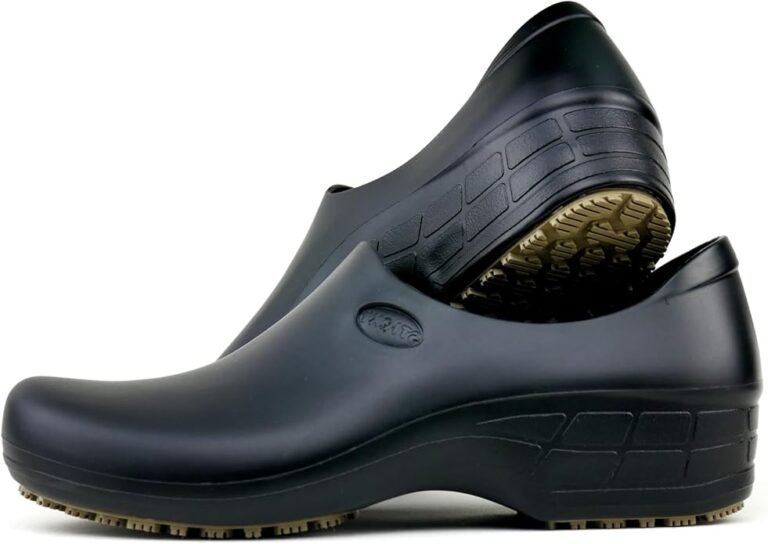
🛒 Check Price on AmazonSticky Nursing Shoes Women
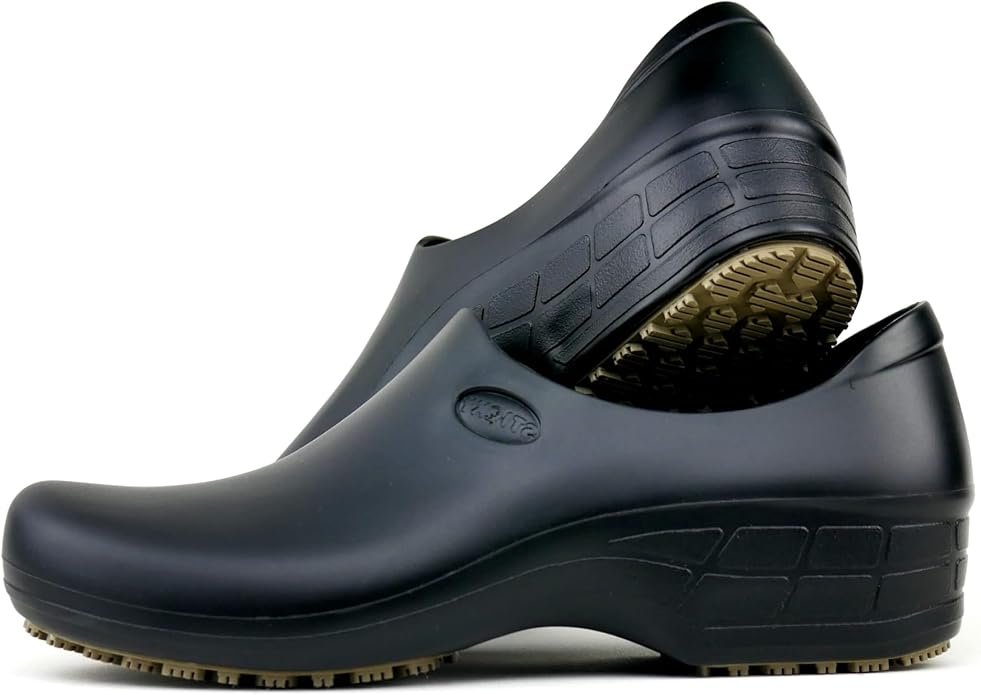
Best For: Nurses who want a waterproof clog at the lowest possible price.
Why It Works: The Sticky Nursing Shoe is a waterproof, slip resistant clog with a TPR outsole, a moisture wicking insole, and a lightweight design. It includes a 90 day manufacturer warranty. At 4.1 stars with 17,056 reviews, it has a substantial user base for a budget option. It also appears in our roundup of the best nursing shoes under $50.
Expert Analysis: The TPR outsole is resistant to oil, heat, and abrasion, which are relevant properties for hospital environments where cleaning agents and bodily fluids may contact the sole. The moisture wicking insole addresses foot moisture, though the overall breathability of the shoe is limited by the waterproof construction. The 90 day warranty is shorter than what premium brands offer but provides some assurance at this price point.
Pros:
- Waterproof upper and outsole
- Slip resistant
- Lightweight
- 90 day manufacturer warranty
- Lowest price in this guide at $44.90
Cons:
- Cushioning level: Basic
- Arch type: Neutral
- Warranty is shorter than premium alternatives
Main Tradeoff: The cushioning is basic and the arch support is neutral. Nurses who need substantial underfoot cushioning or structured arch support may find this shoe insufficient for very long shifts.
Who Should Buy: Budget conscious nurses who need a waterproof clog for moderate shift lengths or as a secondary pair.
Who Should Skip: Nurses who need maximum cushioning or structured arch support for 12 hour shifts.
Verdict: A functional budget option that covers the safety basics of waterproofing and slip resistance without the cushioning sophistication of higher priced alternatives.
🛒 Check Price on AmazonCrocs Unisex On The Clock Clog
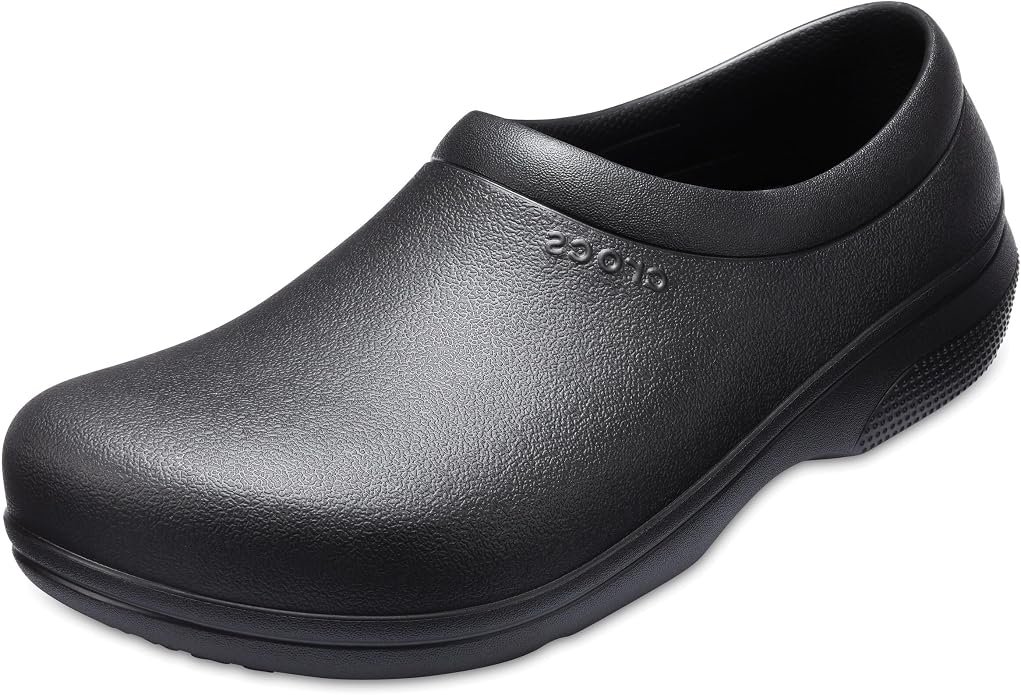
Best For: Nurses who want a unisex, waterproof, ASTM certified clog with a roomier fit.
Why It Works: The On The Clock Clog uses Crocs Lock slip resistant tread and is tested to ASTM F2913-24 and ASTM F3445-24 standards. The enclosed toe and heel construction is designed to align with workplace safety guidelines. It is waterproof, washable, and uses the Iconic Crocs Comfort cushioning system. At 4.3 stars with 35,891 reviews and 500+ bought in the past month, it has strong adoption.
Expert Analysis: Compared with the Neria Pro II, the On The Clock has a more neutral, unisex fit and a slightly different cushioning profile. The EVA insole is described as moderate cushioning, which is firmer than the maximum cushioning of the Neria Pro II. For nurses who find the Neria too soft or too roomy, the On The Clock may offer a more balanced feel. The ASTM certifications are identical.
Pros:
- ASTM F2913-24 and F3445-24 certification
- Waterproof and washable
- Enclosed toe and heel
- Unisex sizing
Cons:
- Runs large, so size down if between sizes
- Arch type: Low arch
Main Tradeoff: The shoe runs large and has a low arch profile. Nurses who need precise sizing or higher arch support may need to adjust with insoles or choose a different model.
Who Should Buy: Nurses who want a waterproof, certified slip resistant clog with a unisex fit and moderate cushioning.
Who Should Skip: Nurses who need high arch support or a more precise fit.
Verdict: A practical, safety certified clog that works across a range of healthcare roles. The unisex fit and moderate cushioning distinguish it from the Neria Pro II.
🛒 Check Price on AmazonSkechers Women’s Go Walk Flex Grand Entry
Best For: Nurses who want a hands free slip on sneaker that is machine washable.
Why It Works: The Go Walk Flex Grand Entry uses Skechers Hands Free Slip ins technology with an exclusive Heel Pillow that holds the foot in place without bending down. The ULTRA GO cushioning is lightweight and responsive, and the Air Cooled Memory Foam insole adds step in comfort. The shoe is machine washable, which simplifies cleaning. At 4.4 stars with 18,135 reviews, it is a number one best seller in Women’s Walking Shoes on Amazon.
Expert Analysis: The Heel Pillow is a padded collar that secures the heel without requiring laces. This addresses a common problem with slip on shoes, which can allow the heel to lift during walking. The machine washable feature is unusual in work footwear and relevant for nurses who want to sanitize their shoes more thoroughly than wiping allows. The bungee closure eliminates the need to tie laces.
Pros:
- Hands free slip in design
- Machine washable
- Heel Pillow for heel security
- ULTRA GO cushioning
- Number one best seller in Women’s Walking Shoes
Cons:
- Water resistance level: Not water resistant
- No slip resistance certification specified
Main Tradeoff: The shoe is not water resistant and lacks a specific slip resistance certification. Nurses who need verified traction on wet floors should consider a clog with ASTM certification instead.
Who Should Buy: Nurses who want convenience, machine washability, and a secure slip on fit for lower risk environments.
Who Should Skip: Nurses in high spill environments or those who need documented slip resistance.
Verdict: A convenient, comfortable slip on for nurses who value easy on and off and machine washing over maximum traction on wet floors.
🛒 Check Price on AmazonBrooks Men’s Adrenaline GTS 25
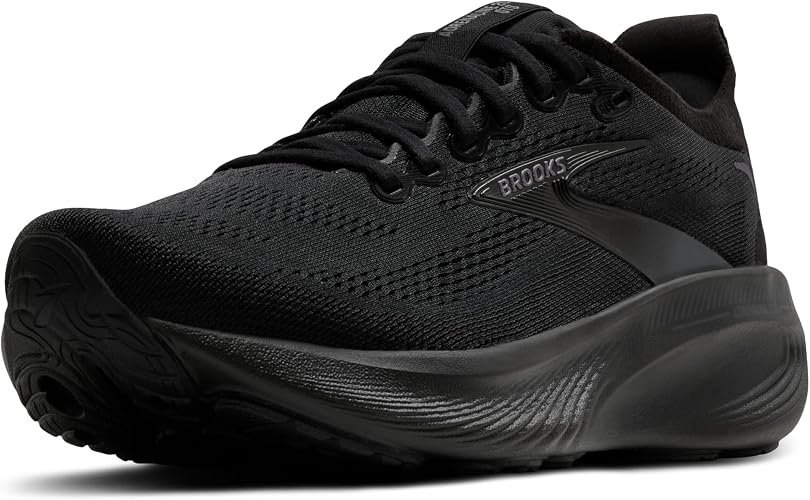
Best For: Male nurses who need stability support and a certified diabetic shoe.
Why It Works: The Adrenaline GTS 25 uses GuideRails holistic support, which is designed to keep excess movement in check while supporting the body’s natural motion path. The DNA LOFT v3 cushioning is nitrogen infused for lightweight softness. It is a certified PDAC A5500 diabetic shoe and has been granted the APMA Seal of Acceptance. At 4.5 stars with 2,428 reviews, it has a strong rating. Men shopping this brand should also see our guide to the best Brooks shoes for nurses.
Expert Analysis: GuideRails are not a traditional medial post. Instead of forcing the foot into a specific motion path, they provide support at the sides of the foot to limit excessive movement. For nurses who overpronate slightly or who want a stable platform without a rigid correction, this is a relevant construction difference. The PDAC A5500 certification is meaningful for nurses with diabetes who need footwear that meets Medicare therapeutic shoe requirements.
Pros:
- GuideRails support system
- DNA LOFT v3 cushioning
- PDAC A5500 diabetic shoe certification
- APMA Seal of Acceptance
- Breathable engineered mesh upper
Cons:
- Water resistance level: Not water resistant
- Cushioning is maximum, which may feel too soft for nurses who prefer a firmer ride
Main Tradeoff: The shoe is not water resistant. The maximum cushioning may not suit nurses who prefer a firmer, more ground connected feel.
Who Should Buy: Male nurses who need stability support, nurses with diabetes, and nurses who want APMA accepted cushioning.
Who Should Skip: Nurses who need a waterproof shoe or who prefer firm cushioning.
Verdict: A high quality stability sneaker with meaningful certifications. The lack of water resistance limits its use in high spill environments.
🛒 Check Price on AmazonHoka Men’s Bondi 9
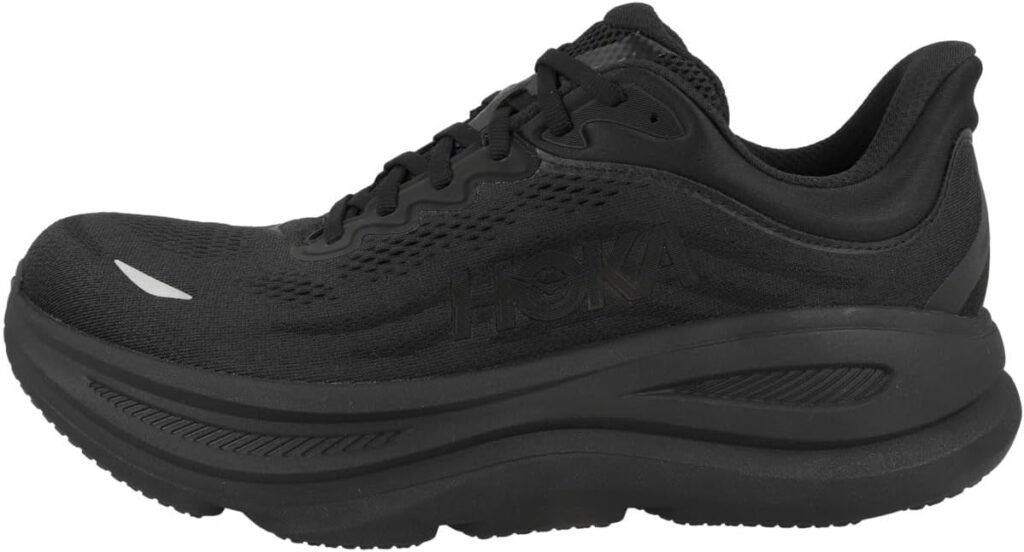
Best For: Male nurses who want maximum cushioning for long hours on hard floors.
Why It Works: The Bondi 9 uses an engineered mesh upper and a maximum cushioning foam midsole. It is designed for road running, but the high stack of soft foam is well suited to prolonged standing on hard surfaces. At 4.5 stars with 3,320 reviews and 500+ bought in the past month, it has strong adoption. For other max cushion models from the brand, see our guide to the best HOKA shoes for nurses.
Expert Analysis: The Bondi is the most cushioned shoe in the Hoka lineup. The high stack height means there is more material between the foot and the ground to absorb impact. The tradeoff is that a very tall stack can reduce stability if the base is not wide enough. The engineered mesh upper provides breathability but is not easy to wipe clean and is not water resistant.
Pros:
- Maximum cushioning
- Engineered mesh upper for breathability
- High user rating of 4.5 stars
Cons:
- Water resistance level: Not water resistant
- Very high stack may feel unstable for some users
Main Tradeoff: The shoe is not water resistant and the maximum stack height may not suit nurses who need a lower, more stable platform. Nurses with balance concerns or a history of ankle instability may prefer a shoe with more ground feel.
Who Should Buy: Male nurses who prioritize underfoot softness and shock absorption for long standing shifts.
Who Should Skip: Nurses who need a waterproof shoe or who prefer a firmer, lower profile platform.
Verdict: The most cushioned sneaker in this guide. Ideal for nurses who want to minimize impact, provided the stack height does not compromise their stability.
🛒 Check Price on AmazonHoka Women’s Bondi 9
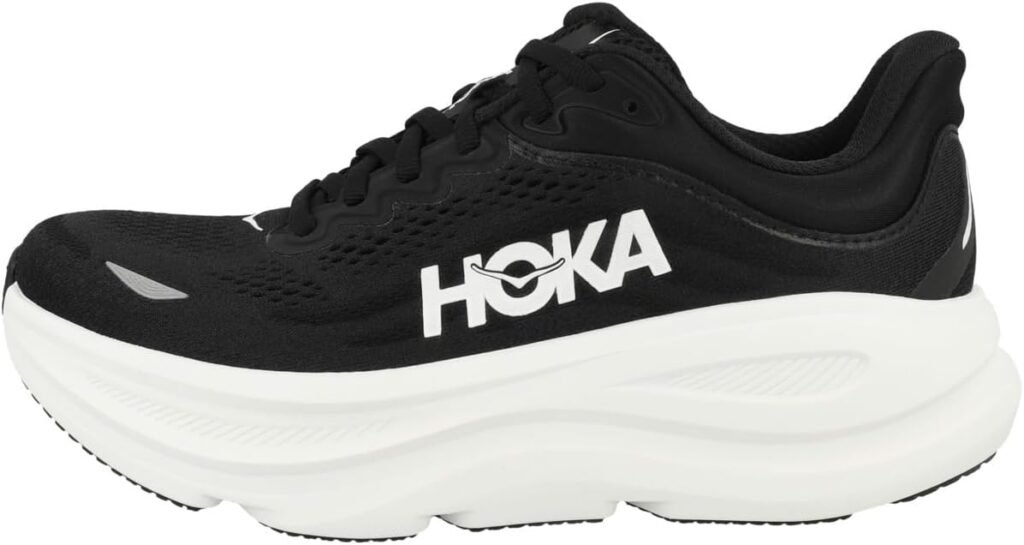
Best For: Female nurses who want maximum cushioning in a women’s specific fit.
Why It Works: The Women’s Bondi 9 shares the maximum cushioning construction of the men’s version with an engineered mesh upper and EVA foam midsole. At 4.5 stars with 3,141 reviews and 300+ bought in the past month, it is a popular choice among nurses who want a plush ride.
Expert Analysis: Women’s specific running shoes often differ from men’s versions in heel width, arch placement, and overall volume. The Bondi 9 women’s model is designed for a narrower heel and a slightly different forefoot shape. The cushioning is identical in concept, a high stack of soft foam, but the fit is tailored. As with the men’s version, the main limitation is the lack of water resistance and the stability tradeoff of a tall stack.
Pros:
- Maximum cushioning
- Women’s specific fit
- Engineered mesh upper
Cons:
- Water resistance level: Not water resistant
- High stack may reduce stability for some wearers
Main Tradeoff: Same as the men’s version, no water resistance and a tall stack that may not suit every nurse’s balance profile.
Who Should Buy: Female nurses who want maximum cushioning and a women’s specific fit.
Who Should Skip: Nurses who need a waterproof shoe or a lower, more stable platform.
Verdict: A top tier cushioning option for nurses who want softness above all else, in a women’s specific fit.
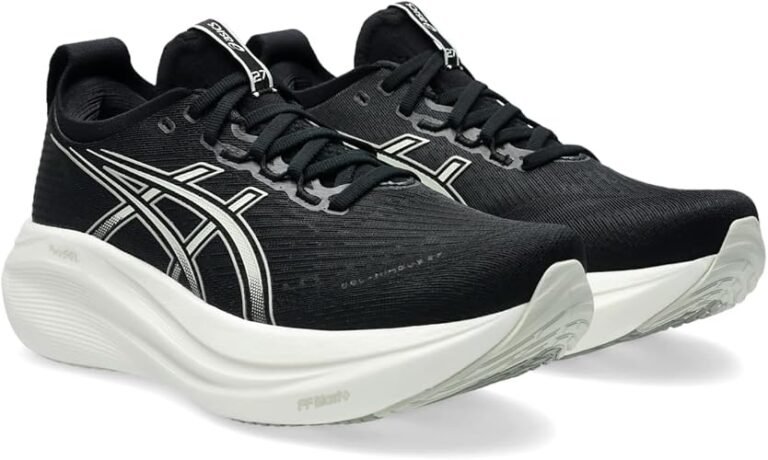
🛒 Check Price on AmazonASICS Women’s Gel Nimbus 27
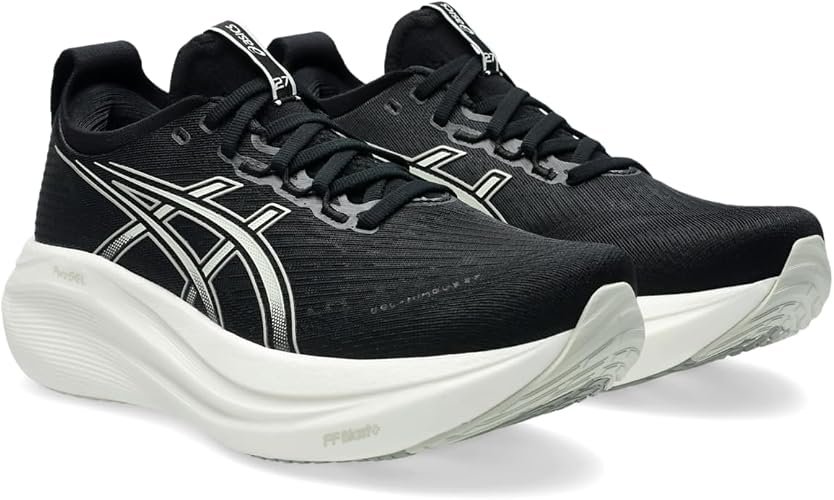
Best For: Female nurses who want gel and foam cushioning in a breathable mesh shoe.
Why It Works: The Gel Nimbus 27 uses PureGEL technology for lightweight cushioning and softer landings, plus FF BLAST PLUS ECO foam made with approximately 24 percent bio based content. The engineered jacquard mesh upper wraps the foot with a soft feel. The OrthoLite X-55 sockliner improves step in comfort. At 4.4 stars with 2,793 reviews, it is an Amazon Overall Pick. For more from this brand, see our guide to the best ASICS nursing shoes.
Expert Analysis: PureGEL is a gel insert positioned in the heel, similar in concept to the ABZORB heel pad in the New Balance 608 but with a different material. Gel provides a distinct type of cushioning, as it compresses less than foam but absorbs impact differently. The FF BLAST PLUS ECO foam is the primary midsole material, and the combination of gel and foam creates a layered cushioning system. The mesh upper is highly breathable but not water resistant.
Pros:
- PureGEL heel cushioning
- FF BLAST PLUS ECO foam midsole
- Breathable jacquard mesh upper
- OrthoLite X-55 sockliner
- Amazon Overall Pick
Cons:
- Water resistance level: Not water resistant
- Runs large per product description
Main Tradeoff: The shoe runs large and is not water resistant. Nurses who need a precise fit or waterproof construction should look elsewhere.
Who Should Buy: Female nurses who want breathable mesh, gel cushioning, and a lightweight feel.
Who Should Skip: Nurses who need a waterproof shoe or who prefer a leather upper for easier cleaning.
Verdict: A breathable, cushioned sneaker with a distinctive gel heel system. Best suited to nurses in dry environments who value airflow over wipeability.
🛒 Check Price on AmazonASICS Men’s Gel Nimbus 27
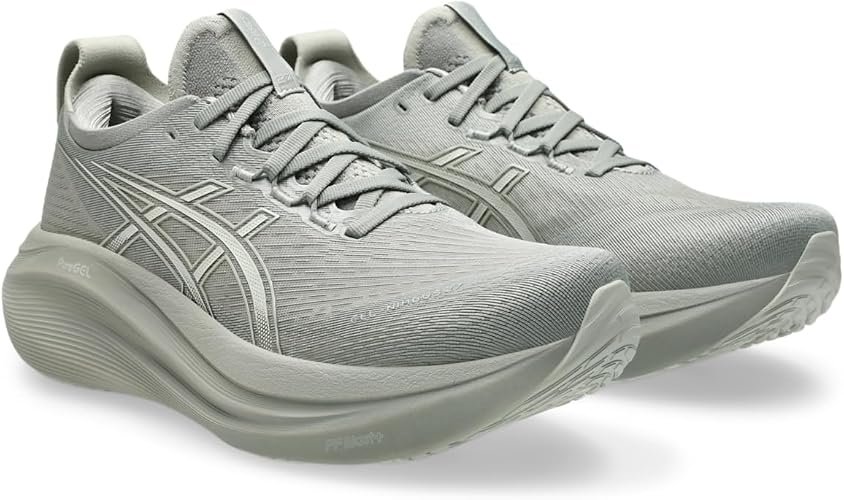
Best For: Male nurses who want gel and foam cushioning in a men’s specific fit.
Why It Works: The Men’s Gel Nimbus 27 shares the PureGEL and FF BLAST PLUS ECO construction of the women’s model with a men’s specific fit and volume. At 4.6 stars with 2,932 reviews, it has the highest rating in this guide.
Expert Analysis: The men’s version has a slightly wider forefoot and a different instep height than the women’s model. The cushioning system is the same. The 4.6 star rating across nearly 3,000 reviews is notable, as it suggests high satisfaction, though it does not guarantee the shoe will work for every nurse’s foot shape.
Pros:
- PureGEL and FF BLAST PLUS ECO cushioning
- 4.6 star rating
- Breathable engineered mesh upper
- OrthoLite X-55 sockliner
Cons:
- Water resistance level: Not water resistant
- No slip resistance certification specified
Main Tradeoff: The shoe is not water resistant and lacks a specific slip resistance certification. Nurses who need documented traction on wet floors should consider a certified clog instead.
Who Should Buy: Male nurses who want a highly rated, breathable, cushioned sneaker for dry environments.
Who Should Skip: Nurses who need waterproofing or verified slip resistance.
Verdict: A highly rated cushioning sneaker with a strong combination of gel and foam. The lack of water resistance and slip certification are the primary limitations for hospital use.
🛒 Check Price on AmazonBrooks Women’s Ghost Max 3
Best For: Female nurses who want maximum cushioning with a wide base and a rocker geometry.
Why It Works: The Ghost Max 3 uses a high stack of DNA Loft v3 cushioning and a wide base that reduces pressure underfoot. The GlideRoll Rocker supports smooth heel to toe transitions. It is a certified PDAC A5500 diabetic shoe with the APMA Seal of Acceptance. The linear last construction adds volume to accommodate a variety of foot shapes and orthotics. At 4.3 stars with 3,222 reviews, it has strong adoption.
Expert Analysis: The combination of a high stack, a wide base, and a rocker geometry is designed to reduce pressure underfoot while maintaining stability through the width of the platform rather than through rigid medial support. The linear last construction means the shoe has more volume than a curved last, which may suit nurses with wider feet or those who wear orthotics. The PDAC A5500 certification is relevant for nurses with diabetes. If you use prescription inserts, our guide to custom orthotics for nursing shoes explains how to match them to a removable footbed.
Pros:
- High stack DNA Loft v3 cushioning
- Wide base for stability
- GlideRoll Rocker for smooth transitions
- PDAC A5500 diabetic shoe certification
- APMA Seal of Acceptance
- Linear last adds volume for orthotics
Cons:
- Water resistance level: Not water resistant
- High stack may feel too soft for nurses who prefer a firmer ride
Main Tradeoff: The shoe is not water resistant. The maximum cushioning and rocker geometry may not suit nurses who prefer a flat, firm platform.
Who Should Buy: Female nurses who want maximum cushioning, a wide base, and orthotic accommodation.
Who Should Skip: Nurses who need a waterproof shoe or who prefer a low profile, firm shoe.
Verdict: A well cushioned, certified sneaker with thoughtful construction for pressure reduction and orthotic accommodation.
🛒 Check Price on AmazonBrooks Men’s Ghost Max 3
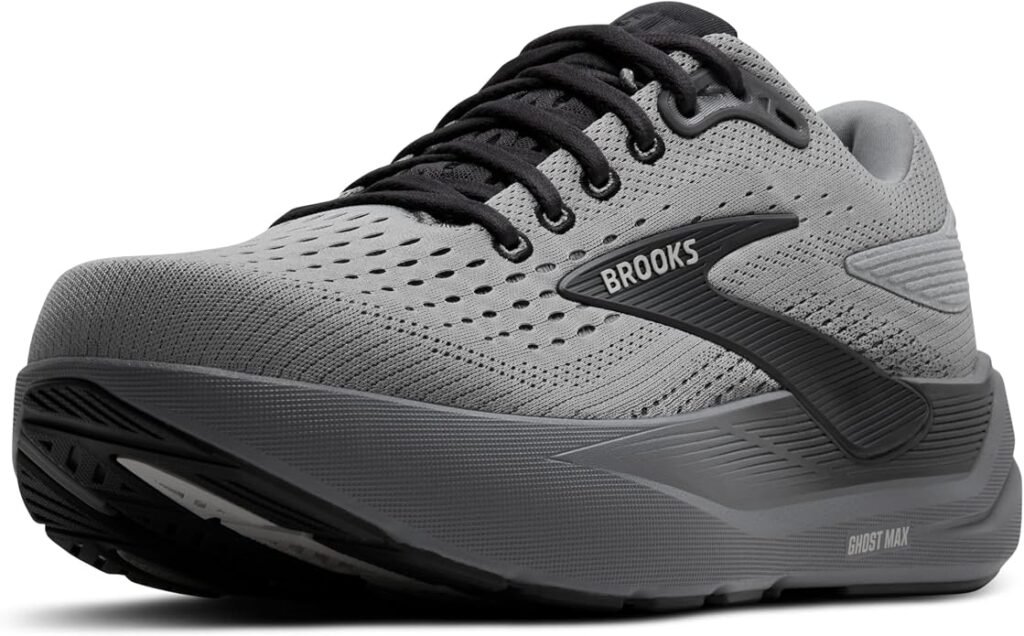
Best For: Male nurses who want maximum cushioning with a wide base and a rocker geometry.
Why It Works: The Men’s Ghost Max 3 shares the DNA Loft v3 cushioning, GlideRoll Rocker, and linear last construction of the women’s model. It is also a certified PDAC A5500 diabetic shoe with the APMA Seal of Acceptance. At 4.5 stars with 2,381 reviews, it has strong adoption.
Expert Analysis: The men’s version uses the same wide base and rocker geometry as the women’s model, with a fit tailored for a men’s foot shape. The linear last provides additional volume for orthotics and accommodates a range of foot widths. As with the women’s version, the primary limitation is the lack of water resistance.
Pros:
- DNA Loft v3 maximum cushioning
- GlideRoll Rocker
- PDAC A5500 and APMA accepted
- Linear last for orthotics
- Wide base for stability
Cons:
- Water resistance level: Not water resistant
- Maximum cushioning may feel too soft for some wearers
Main Tradeoff: The shoe is not water resistant. The very soft cushioning and rocker geometry may not suit nurses who prefer a firm, flat platform.
Who Should Buy: Male nurses who want high volume cushioning, a wide base, and orthotic accommodation.
Who Should Skip: Nurses who need a waterproof shoe or who prefer a firmer ride.
Verdict: A strong option for male nurses who want maximum cushioning with a stable, wide platform.
🛒 Check Price on AmazonHKR Women Walking Shoes Cushioned Slip On Sneakers
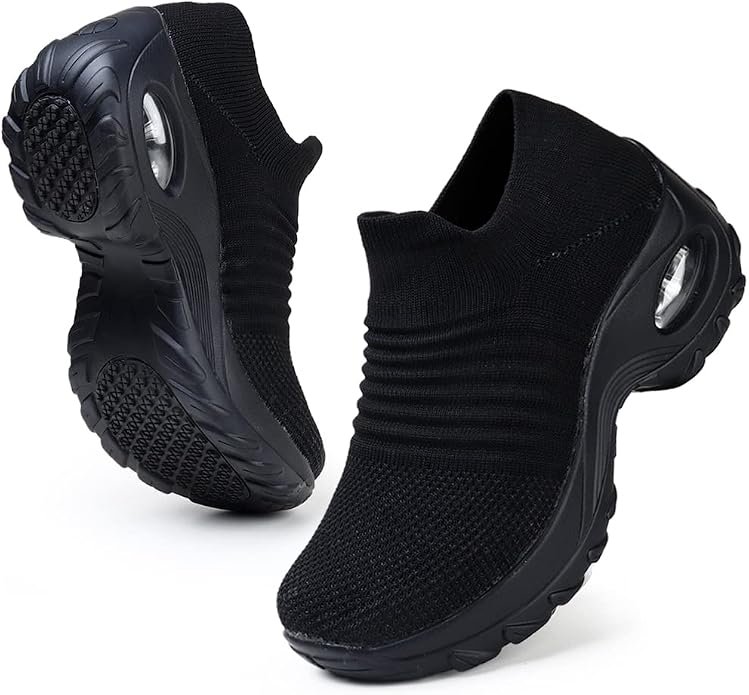
Best For: Nurses who want a very low cost slip on sneaker for light duty use.
Why It Works: The HKR shoe uses a stretchable mesh upper, a cushioned insole, and a durable rubber outsole. The slip on design with a pull tab makes it easy to put on and take off. At 4.0 stars with 46,136 reviews and 200+ bought in the past month, it has a large user base.
Expert Analysis: At $31.23, this is the lowest priced option in the guide. The cushioning is moderate, the arch type is low, and the mesh upper is breathable but not water resistant. The slip resistant feature is listed, though no specific ASTM certification is mentioned. For nurses who need a secondary pair for light shifts or who are experimenting with slip on comfort before investing in a premium pair, it serves a purpose.
Pros:
- Lowest price at $31.23
- Slip on design
- Breathable mesh upper
- 46,000+ reviews
Cons:
- Cushioning level: Moderate
- Low arch profile
- No specified water resistance
Main Tradeoff: The cushioning and support are basic. For 12 hour shifts on hard floors, the shoe may not provide adequate underfoot protection. Nurses should not expect premium performance at this price point.
Who Should Buy: Nurses who need a low cost secondary shoe, or nurses on a very tight budget who work shorter shifts.
Who Should Skip: Nurses who need maximum cushioning, structured arch support, or certified slip resistance for long shifts.
Verdict: A budget slip on that covers the basics. It is not a replacement for a properly cushioned work shoe for 12 hour hospital shifts.
🛒 Check Price on AmazonComparison Table
| Product | Price | Rating | Reviews | Best For | Key Feature | Width | Main Tradeoff |
|---|---|---|---|---|---|---|---|
| New Balance 608 V5 | $59.95 | ★ 4.4 | 45,045 | Best overall value | ABZORB heel cushioning | Standard | Not water resistant |
| Dansko XP 2.0 | $169.95 | ★ 4.4 | 14,757 | Best support | Removable footbed, APMA accepted | Standard | Higher price |
| Skechers UNO Stand on Air | $69.98 | ★ 4.4 | 59,000 | Visible air cushion | Skech-Air midsole | Standard | Not water resistant |
| Crocs Neria Pro II | $37.49 | ★ 4.0 | 24,614 | Best for spills | ASTM F2913 and F3445 certified | Relaxed | Low arch |
| Sticky Nursing Shoes | $44.90 | ★ 4.1 | 17,056 | Best budget waterproof | Waterproof TPR outsole | Standard | Basic cushioning |
| Crocs On The Clock | $37.49 | ★ 4.3 | 35,891 | Unisex certified clog | ASTM F2913 and F3445 certified | Unisex | Runs large |
| Skechers Go Walk Flex | $71.66 | ★ 4.4 | 18,135 | Best slip on | Hands free, machine washable | Standard | No slip certification |
| Brooks Adrenaline GTS 25 | $137.00 | ★ 4.5 | 2,428 | Best stability | GuideRails, PDAC A5500 | Standard | Not water resistant |
| Hoka Bondi 9 Men’s | $165.78 | ★ 4.5 | 3,320 | Max cushion men’s | High stack foam | Standard | No water resistance |
| Hoka Bondi 9 Women’s | $165.25 | ★ 4.5 | 3,141 | Max cushion women’s | High stack foam | Standard | No water resistance |
| ASICS Gel Nimbus 27 Women’s | $109.95 | ★ 4.4 | 2,793 | Gel heel cushion | PureGEL and FF BLAST | Standard | Runs large |
| ASICS Gel Nimbus 27 Men’s | $109.95 | ★ 4.6 | 2,932 | Highest rated cushion | PureGEL and FF BLAST | Standard | No slip certification |
| Brooks Ghost Max 3 Women’s | $109.95 | ★ 4.3 | 3,222 | Wide base cushion | GlideRoll Rocker, PDAC A5500 | Standard | Not water resistant |
| Brooks Ghost Max 3 Men’s | $109.95 | ★ 4.5 | 2,381 | Wide base cushion | GlideRoll Rocker, PDAC A5500 | Standard | Not water resistant |
| HKR Slip On Sneakers | $31.23 | ★ 4.0 | 46,136 | Lowest price | Slip on mesh upper | Standard | Basic cushioning |
Prices, ratings, and review counts reflect the Amazon US listings at the time of publishing and may change. Tap any product name to view the current price on Amazon.
Decision Matrix
| Nursing Need | Recommended Product | Why |
| 12 hour shifts | Brooks Ghost Max 3 or Hoka Bondi 9 | High stack cushioning maintains comfort over long periods |
| Wide feet | Brooks Ghost Max 3 | Linear last construction adds volume |
| Slip resistance | Crocs Neria Pro II or Crocs On The Clock | ASTM F2913 and F3445 certified |
| Easy cleaning | Crocs Neria Pro II | Waterproof, wipeable Croslite construction |
| Budget | HKR Slip On Sneakers or Sticky Nursing Shoes | Lowest prices in the guide |
| Maximum cushioning | Hoka Bondi 9 | Highest stack height in the lineup |
| Stability | Brooks Adrenaline GTS 25 | GuideRails support system |
| Orthotic accommodation | Dansko XP 2.0 or Brooks Ghost Max 3 | Removable footbed or linear last |
| Slip on convenience | Skechers Go Walk Flex | Hands free entry, machine washable |
| Male nurses | Brooks Adrenaline GTS 25 or Hoka Bondi 9 | Men’s specific fit and support |
| Female nurses | Hoka Bondi 9 Women’s or Brooks Ghost Max 3 | Women’s specific fit and cushioning |
| Diabetic nurses | Brooks Adrenaline GTS 25 or Brooks Ghost Max 3 | PDAC A5500 certification |
How to Choose Nursing Shoes
Start with your shift length and unit type. A nurse working 12 hour shifts in an ICU needs different footwear from a nurse working 8 hour shifts in an outpatient clinic. Longer shifts and higher acuity units generally demand more cushioning and more stability. For a step by step walkthrough, our how to choose nursing shoes buying guide covers sizing, fit, and workplace compliance in more depth.
Identify your foot’s specific needs. If you have a wide forefoot or bunions, prioritize a shoe with a roomy toe box and available width options, and see our guide to the best nursing shoes for bunions. If you have high arches, look for structured arch support or removable footbeds that accommodate orthotics. If your feet swell significantly, choose a shoe with adjustable lacing or a flexible fit.
Verify your workplace policy. Closed toes and closed heels are commonly required. Some hospitals specify shoe color. Clogs may or may not be permitted depending on the unit. Confirm before purchasing.
Prioritize safety certifications for wet environments. If you work in an area with frequent spills or fluid exposure, look for ASTM F2913 or F3445 testing. This provides an objective benchmark for slip resistance rather than a marketing claim.
Consider the tradeoffs honestly. A waterproof shoe is easier to clean but less breathable. A maximum cushioning shoe is softer but potentially less stable. A budget shoe is accessible but may lack the midsole density for long shifts. There is no shoe that excels at everything.
If you are comparing shoe categories more broadly, our guide to the best nursing sneakers covers athletic style work shoes in more depth. For nurses who prefer a clog silhouette, the guide to the best nursing clogs breaks down the key differences in clog construction and support.
FAQ
What are the best shoes for nurses working 12 hour shifts?
The best shoes for 12 hour shifts combine cushioning that maintains its properties over time, stable footing, and a fit that accommodates swelling. The Brooks Ghost Max 3 and Hoka Bondi 9 offer the highest cushioning in this guide. Nurses who prioritize support over softness may prefer the Brooks Adrenaline GTS 25.
Are running shoes good for nurses?
Running shoes can work for nursing if they provide adequate stability and traction. However, many running shoes are designed for forward motion on pavement, not for pivoting, lateral movement, and standing on hard tile. A running shoe with a wide base and a rubber outsole may be suitable. A shoe with a very soft, unstable platform may not.
Do nurses need slip resistant shoes?
Slip resistance is relevant for all nurses, but especially for those who work in environments with frequent spills, such as ERs, dialysis units, and GI labs. Shoes with ASTM F2913 or F3445 certification have been objectively tested for traction on contaminated surfaces. Even in dry units, a rubber outsole with some tread is safer than a smooth sole.
Should nursing shoes be waterproof?
Waterproof shoes are easier to wipe clean and protect the foot from fluid exposure. However, waterproof construction reduces breathability. Nurses in high fluid exposure environments should prioritize waterproofing. Nurses in dry environments may prefer a more breathable mesh shoe with a wipeable upper.
Are clogs or sneakers better for nurses?
Clogs offer structured arch support, easy cleaning, and a roomy toe box. Sneakers offer breathability, lighter weight, and more flexibility. Clogs with rocker bottoms may reduce forefoot pressure. Sneakers with mesh uppers may be more comfortable in warm units. The choice depends on the unit and the individual foot.
How should nursing shoes fit?
They should fit with approximately a thumb’s width of space between the longest toe and the front of the shoe. The heel should be secure without slipping. The widest part of the foot should align with the widest part of the shoe. Feet swell during long shifts, so a shoe that feels snug in the morning may feel tight in the afternoon.
Do nurses need wide shoes?
Not all nurses need wide shoes, but nurses with wide feet, bunions, or a history of forefoot pressure should look for width options or shoes with a roomy toe box. Some shoes, like the Brooks Ghost Max 3, use a linear last that adds volume for a wider range of foot shapes.
How much cushioning should nursing shoes have?
Moderate to maximum cushioning is generally recommended for nurses who stand and walk for 8 to 12 hours. Very soft cushioning can feel comfortable initially but may lack the support needed for long shifts. A midsole with moderate firmness that maintains its properties over time is often more comfortable than a very soft foam that compresses quickly.
Are expensive nursing shoes worth it?
A higher price often corresponds to better materials, more sophisticated cushioning systems, and certifications such as APMA acceptance or PDAC A5500. However, a less expensive shoe with a supportive footbed can work for some nurses. The key is whether the shoe meets the specific demands of your shift and your foot.
How often should nurses replace work shoes?
There is no universal replacement schedule. Replace shoes when the midsole feels compressed or flat, when the outsole tread is visibly worn, or when you notice increased foot fatigue that was not present when the shoes were new. Nurses who rotate between two pairs may extend the usable life of each pair. For more detail, see our nursing shoe rotation and durability guide.
Can nurses wear regular sneakers?
Regular sneakers may not meet workplace dress codes if they have open heels or non compliant colors. They may also lack the slip resistance, cleanability, and support features of purpose built nursing shoes. A regular sneaker with a rubber outsole and a closed heel may work for low risk environments, but nurses in high spill units should choose a shoe with documented slip resistance.
What should nurses look for in nursing shoes?
The most important factors are fit, which includes toe box room, heel security, and width; cushioning that maintains its properties; stability from a wide base and heel counter; slip resistance from a rubber outsole with ASTM testing; and cleanability from a wipeable upper and removable insole. Breathability and weight are secondary considerations that depend on the work environment.
Expert Nursing Shoe Tips
Measure your feet later in the day. Feet swell as the day progresses. Measuring or fitting shoes in the afternoon or evening gives a more accurate sense of how a shoe will fit during a shift.
Size for the larger foot. Most people have one foot slightly larger than the other. Choose a size that fits the larger foot comfortably, and use lacing adjustments or an insert to manage the smaller foot.
Check the toe box with your toes, not your fingers. Your toes should be able to spread and wiggle without pressing against the front or sides of the shoe. If they feel cramped at rest, they will feel worse after hours of standing.
Use a heel lock lacing technique if your heel slips. If the shoe fits well in length but the heel lifts during walking, try a runner’s loop lacing pattern, which pulls the heel back into the heel counter.
Rotate between two pairs of shoes if possible. Alternating shoes gives the midsole foam time to recover between shifts. It also reduces the daily wear on each pair.
Watch for compressed cushioning. When the midsole of a shoe feels flat or hard compared with when it was new, the foam has likely lost its ability to absorb impact. This is a sign to replace the shoe, even if the upper still looks intact.
Clean shoes regularly. Wipe waterproof and leather uppers with a disinfectant wipe. Machine washable shoes should be washed according to the manufacturer’s instructions and air dried. Do not put shoes in a dryer, as heat can degrade adhesives and foam.
Replace insoles before replacing shoes. If the shoe’s upper and midsole are in good condition but the insole has flattened, a replacement insole can restore comfort. Our guide to the best insoles for nursing shoes covers options for specific foot needs.
If you have flat feet or need additional arch support, our guide to the best shoes for nurses with flat feet covers shoes with specific construction features for that foot type. Nurses who experience heel pain may benefit from reviewing the best shoes for nurses with plantar fasciitis, which focuses on heel cushioning and arch support. Pregnant nurses dealing with changing foot size and balance should also see our guide to the best nursing shoes for pregnant nurses.
Final Verdict
If your priority is maximum cushioning, choose the Hoka Bondi 9. The highest stack in this guide provides the most underfoot softness for nurses who want to minimize impact on hard floors.
If your priority is slip resistance, choose the Crocs Neria Pro II or Crocs On The Clock. Both carry ASTM F2913 and F3445 certification, making them the most objectively tested options for wet environments.
If you have wide feet or wear orthotics, choose the Brooks Ghost Max 3. The linear last construction adds volume, and the wide base supports stability without rigid medial posting.
If your priority is easy cleaning, choose the Crocs Neria Pro II. The waterproof, wipeable Croslite construction is the simplest to sanitize.
If your priority is support, choose the Dansko XP 2.0. The dual density footbed, TPU heel counter, and removable insole provide structured support and orthotic accommodation.
If your priority is budget, choose the New Balance 608 V5. At $59.95 with ABZORB heel cushioning and a suede leather upper, it offers the best balance of price and performance for a work sneaker. Nurses who want to spend less should also review our guide to the best nursing shoes under $50, while those willing to step up in price can compare mid range picks in our roundup of the best nursing shoes between $75 and $120. If you are weighing whether a high end pair is worth the spend, our breakdown of the best premium nursing shoes explains where the extra cost actually goes.
Overall winner: The New Balance 608 V5 is the best overall shoe for most nurses because it combines a meaningful heel cushioning feature, a durable upper, a slip resistant outsole, and an accessible price. It does not have the maximum cushioning of a Hoka or the ASTM certification of a Crocs clog, but for the widest range of nurses in the widest range of environments, it covers the essentials without a significant weakness. Nurses with specific needs such as maximum cushioning, orthotic accommodation, or certified slip resistance should choose from the category leaders above. If your priority is avoiding common footwear mistakes, our guide to the worst shoes for nurses to avoid is a useful companion read.
Affiliate Disclosure
Some links on this page are affiliate links. If you purchase through them, Urban Style Footwear may earn a commission at no additional cost to you. Our recommendations are based on the product information, footwear characteristics, and buying criteria discussed in this guide, not on the size of the commission.