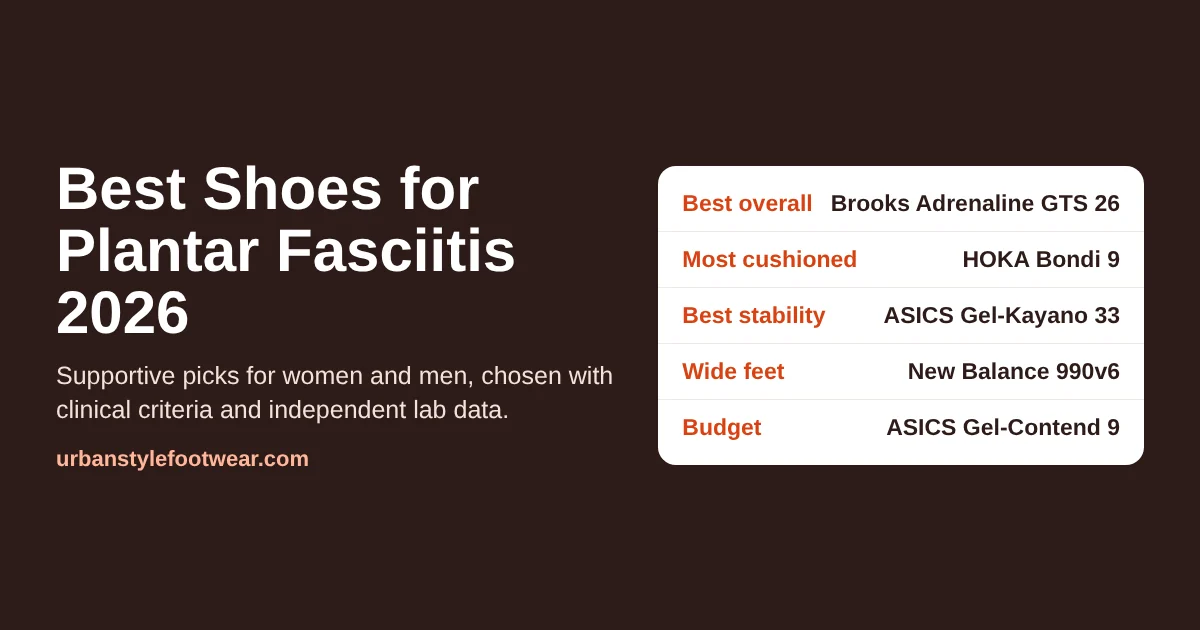

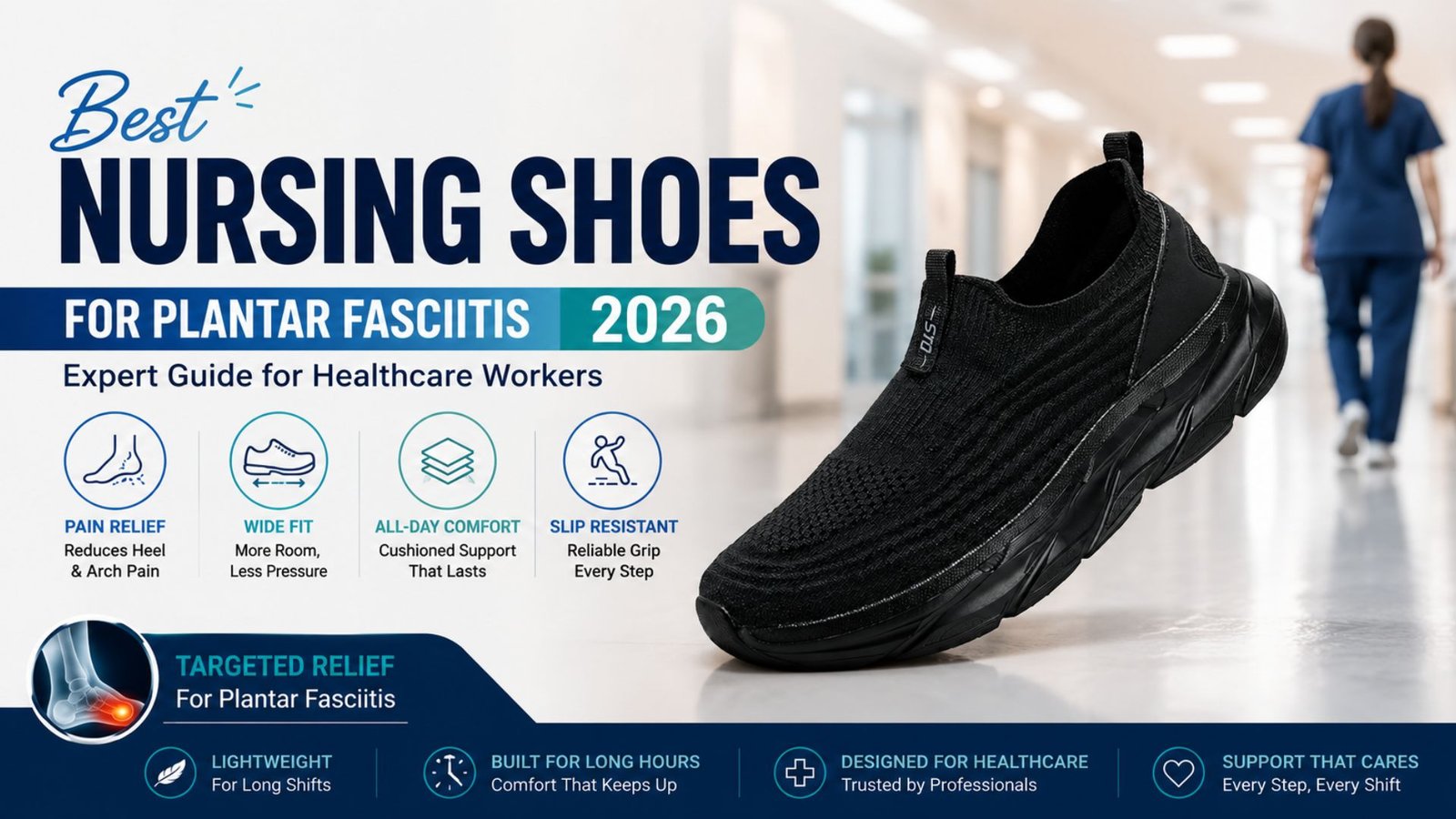
Best Nursing Shoes for Plantar Fasciitis 2026: 10 Supportive Picks
Expert footwear guide | Amazon US options | Updated October 2026
If your heels hurt after a 10- or 12-hour nursing shift, the right shoe can make a noticeable difference in how your feet feel by the end of the day.
But plantar fasciitis changes the buying decision. A soft shoe is not automatically a supportive shoe, and a popular nursing clog is not automatically the right choice for every foot.
For nurses dealing with plantar-fascia-related heel pain, the better approach is to look at the entire shoe: arch support, cushioning, heel stability, fit, toe-box space, outsole traction, materials, weight and how the shoe behaves during long periods of standing and walking.
We also looked at the questions nurses commonly raise when choosing footwear, including whether clogs are better than sneakers, whether slip-ons provide enough support, how much cushioning is useful, and whether a shoe can accommodate an orthotic.
At UrbanStyleFootwear, our product evaluations combine manufacturer specifications, verified retailer and Amazon listing data, customer feedback, review patterns, and footwear-specific research. We assess shoes across factors such as comfort, fit, cushioning, support, materials, durability, traction, design, and overall value, using multiple sources to provide balanced, practical, and buyer-focused recommendations.
Important: Plantar fasciitis is a medical condition. Shoes can support comfort and reduce mechanical stress, but persistent or severe heel pain deserves evaluation by a qualified healthcare professional.
Not sure which shoe fits your foot?
Use this guide to compare cushioning, arch support, stability, entry style, workplace requirements and budget before choosing a nursing shoe.
Remember: The most popular shoe is not automatically the best shoe for your feet. Fit, support, comfort and workplace requirements should drive the final decision.
Quick Answer: What Are the Best Nursing Shoes for Plantar Fasciitis?
There is no single shoe that works for every nurse with plantar fasciitis.
For a structured clog, Dansko Women’s Professional is the strongest traditional nursing option in this selection.
For a budget-friendly clog, the INMINPIN orthopedic clog offers a simple slip-on design with a thick EVA platform and built-in arch support.
For adjustable support, OrthoComfoot Women’s Orthopedic Loafers stand out because of their removable insole system.
For a supportive athletic-style option, Brooks Adrenaline GTS 25 is worth considering because its GuideRails system is designed around stability and controlled movement.
For hands-free entry, Orthofeet Women’s Kita combines an easy-entry design with a roomy toe area and orthotic-oriented construction.
The key is to choose according to your foot and your shift, rather than simply buying the shoe with the most cushioning or the largest review count.
Best Nursing Shoes for Plantar Fasciitis 2026
Compare our top nursing shoe picks by support, comfort, shoe style, ease of entry and budget.
Affiliate disclosure: UrbanStyleFootwear may earn a commission from qualifying purchases made through links on this page. Prices and availability can change.
What Nurses With Plantar Fasciitis Should Look For
A good nursing shoe for plantar fasciitis needs to handle two problems at once.
First, it needs to provide a comfortable and supportive platform for the foot.
Second, it needs to work in a demanding healthcare environment.
That means the ideal shoe may need:
- Support around the arch
- A stable heel
- Enough cushioning without excessive softness
- A secure fit
- Comfortable toe-box space
- Appropriate width
- Useful outsole traction
- Materials suitable for the workplace
- Reasonable weight
- Easy cleaning
- Compatibility with orthotics when required
Nurse.com similarly highlights arch support, cushioning, heel support, a firm midsole, shock absorption, flexibility, fit and breathability when choosing nursing footwear for plantar fasciitis.
For a broader comparison across nursing footwear, see our guide to the best nursing shoes.
Does Plantar Fasciitis Change What Nurses Should Wear?
Yes.
Plantar fasciitis commonly produces heel pain, particularly around the first steps after rest and after periods of prolonged activity. For nurses, that can become especially frustrating because the job itself involves repeated walking, standing and movement.
A shoe that feels comfortable for 20 minutes may not feel the same after several hours.
That is why long-shift comfort matters more than showroom comfort.
A supportive shoe should give your foot a stable base while still allowing normal movement.
For nurses who spend most of the day standing rather than constantly walking, our guide to the best shoes for nurses who stand all day provides another useful comparison.
Arch Support vs Cushioning: Which Matters More?
This is one of the most common questions when shopping for plantar-fasciitis footwear.
The answer is: you generally need the combination to work for your foot.
Arch support
Arch support can help distribute pressure and provide a more controlled platform.
It can be especially useful for people who have flat feet, excessive pronation or a preference for structured footwear.
Cushioning
Cushioning changes how the shoe feels underfoot and can reduce the harshness of repeated contact with hard flooring.
But softer is not automatically better.
Some nurses prefer a firmer, more stable shoe because excessive softness can feel unstable during a long shift.
Heel stability
A secure heel can help prevent excessive movement inside the shoe.
This is particularly important when you’re repeatedly walking, turning, stopping and starting during patient care.
RunRepeat’s current nursing-shoe testing also emphasizes stability, heel-counter stiffness, platform width, toe-box dimensions and cushioning rather than treating softness alone as the definition of support.
Are Clogs Better Than Sneakers for Plantar Fasciitis?
Not necessarily.
Clogs have some obvious advantages for nurses:
- Easy entry
- Easy removal
- Often simple to wipe clean
- Structured construction
- Roomy toe areas on some models
But sneakers have their own advantages:
- More secure fit
- Adjustable lacing
- More athletic cushioning
- More options for width
- Easier adaptation to different foot shapes
Real-world nursing discussions show exactly why there is no universal winner. Some nurses strongly prefer Dansko clogs, while others report better experiences with Brooks, Skechers, HOKA or other athletic shoes. Some even report that shoes widely recommended by other nurses made their own plantar-fasciitis symptoms worse.
The best shoe is the one that provides the right combination of support, fit and comfort for your feet.
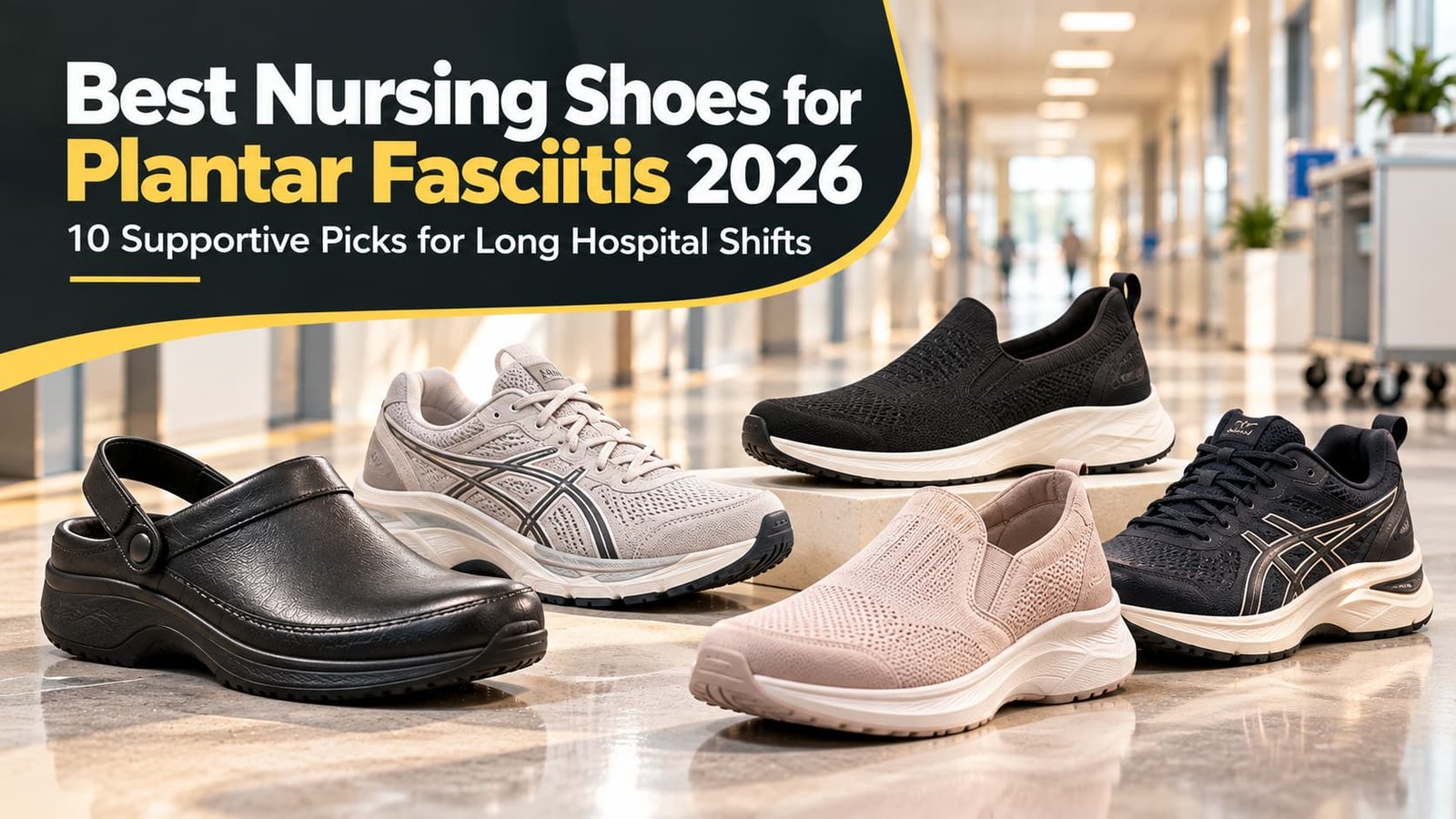
10 Best Nursing Shoes for Plantar Fasciitis in 2026
1. Dansko Women’s Professional – Best Overall Nursing Clog
Best for: Nurses who prefer a structured clog with strong arch support
Price: About $159.95 at the time of writing
Customer rating: 4.3/5
Customer reviews: 18,000+
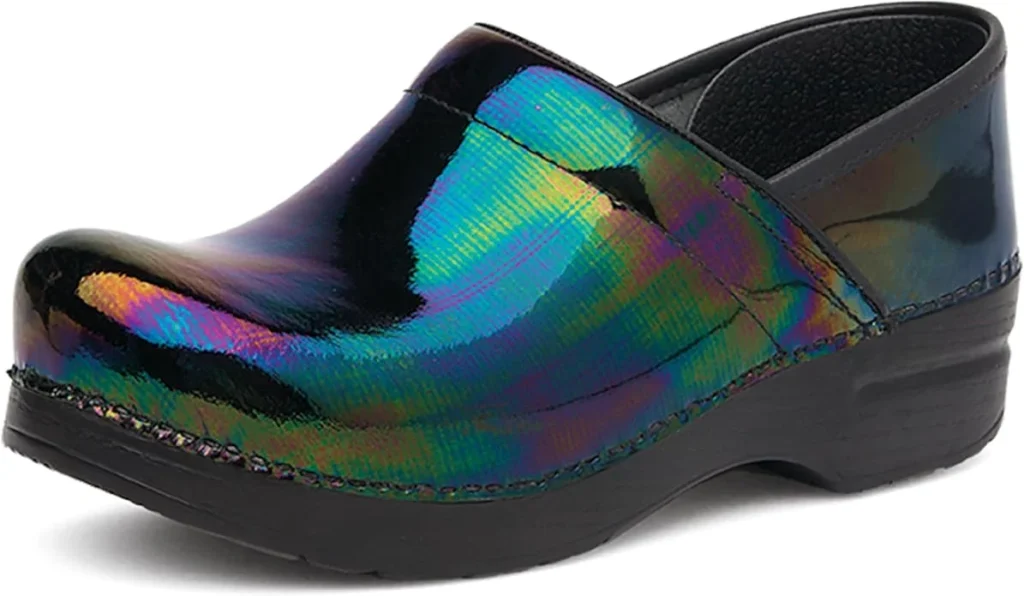
The Dansko Women’s Professional remains one of the most recognizable nursing clogs for people who prefer a firm, structured platform.
Its contoured footbed, rocker-bottom construction and roomy forefoot make it particularly appealing to nurses who dislike soft, flexible sneakers.
The rocker-style sole can encourage a smooth transition from heel to toe, while the structured footbed gives the shoe a very different feel from a conventional running sneaker.
It is also a useful choice for nurses who want a more traditional professional appearance.
Why consider it
- Structured footbed
- Strong arch-support feel
- Roomy toe area
- Rocker-bottom design
- Traditional nursing-clog profile
- Durable construction
- Professional appearance
Potential drawbacks
- Firm feel will not suit everyone
- Premium price
- Clog design takes some adjustment
- Not the best option for people who dislike loose-heel footwear
Best for: Nurses who already know they prefer firm, structured clogs.
Skip it if: You prefer a conventional lace-up running shoe with a locked-in heel.
Verdict: Best overall choice for nurses who want a traditional, structured plantar-fasciitis nursing clog.
🛒 Check Price on Amazon2. INMINPIN Women’s & Men’s Orthopedic Clogs – Best Budget Clog
Best for: Budget-conscious nurses who prefer a simple slip-on clog
Price: About $33.59 at the time of writing
Customer rating: 4.4/5
Customer reviews: 6,000+
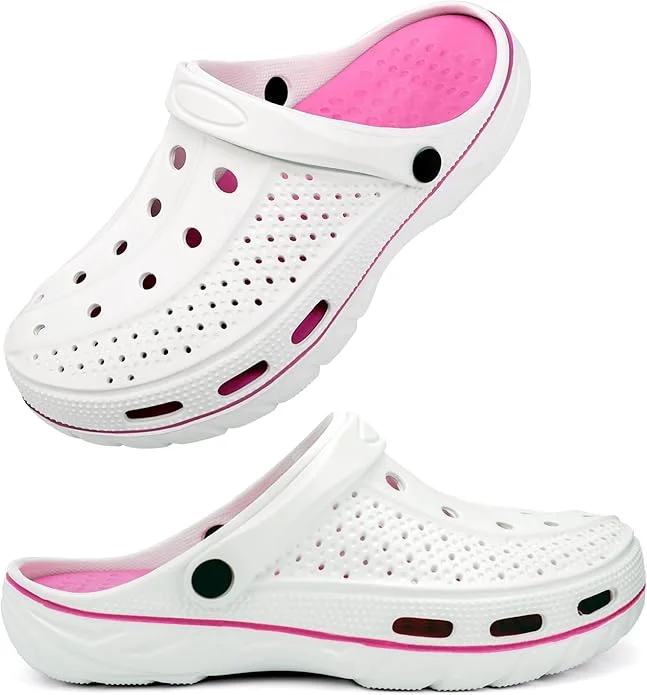
If your priority is getting a simple supportive clog without spending $100 or more, this INMINPIN model is worth considering.
The EVA construction keeps the design lightweight and easy to clean, while the thick sole and integrated arch-support insole create a noticeably cushioned platform.
The main compromise is refinement. It does not have the same premium construction or long-standing nursing-shoe reputation as Dansko.
Why consider it
- Affordable
- Slip-on design
- Thick cushioned sole
- Built-in arch support
- EVA construction
- Easy-care design
- Unisex sizing
Potential drawbacks
- More casual appearance
- Less premium construction
- Bulkier feel than a running shoe
- Fit may be less precise than an adjustable sneaker
Best for: Students, new nurses and budget-conscious buyers.
Verdict: A practical low-cost option when you want a clog-style shoe without the premium price.
🛒 Check Price on Amazon3. OrthoComfoot Women’s Orthopedic Loafers – Best Adjustable Support
Best for: Nurses who want removable insoles and the ability to adjust support
Price: About $59.50 at the time of writing
Customer rating: 4.0/5
Customer reviews: 4,700+
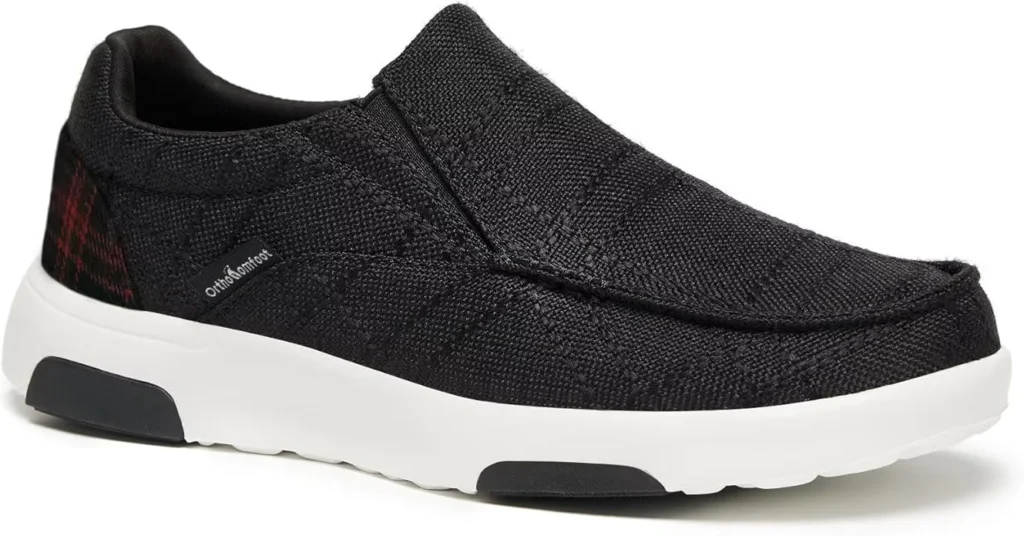
The biggest advantage here is flexibility.
The OrthoComfoot design uses removable insoles, allowing you to change the internal setup rather than being locked into a single footbed.
That can be useful if your comfort needs change during the week or if you already use an orthotic strategy.
The slip-on format also makes it easier to get ready for work compared with a traditional lace-up sneaker.
Why consider it
- Removable insoles
- Arch-support-oriented footbed
- Slip-on design
- Memory-foam cushioning
- Lightweight construction
- Flexible everyday styling
Potential drawbacks
- Canvas is not ideal for every clinical environment
- Less structured than a traditional clog
- Moderate rather than maximal cushioning
- May not suit nurses who require a very secure heel
Best for: Nurses who value adjustability and easy entry.
Verdict: One of the more interesting choices for people who want to customize the support inside their shoe.
🛒 Check Price on Amazon4. STQ Women’s Lace-Up Loafers – Best Lightweight Option
Best for: Nurses who prefer a lightweight shoe with adjustable fit
Price: About $39.99 at the time of writing
Customer rating: About 4.4/5
Customer reviews: 5,000+
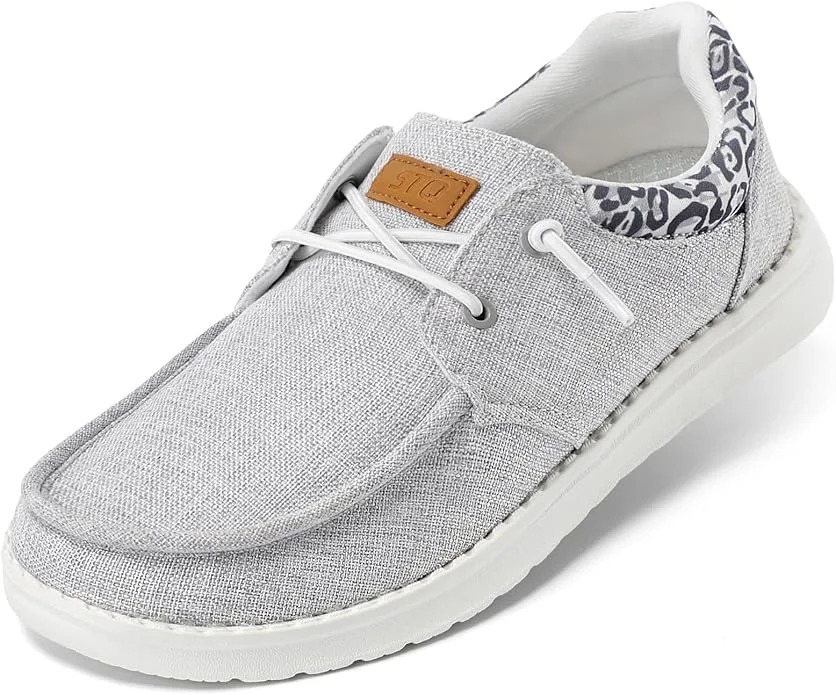
The STQ lace-up loafer takes a different approach from traditional nursing clogs.
Its lightweight canvas construction, removable arch-support insole and adjustable closure make it more adaptable than a completely fixed slip-on.
The biggest attraction is weight. If you dislike heavy clogs, a lightweight shoe can feel noticeably different after several hours on your feet.
Why consider it
- Very lightweight design
- Removable insole
- Adjustable fit
- Arch-support-oriented footbed
- Shock-absorbing construction
- Casual-professional appearance
Potential drawbacks
- Canvas is not ideal for every healthcare environment
- Not as protective as a closed leather clog
- Lace-up entry takes longer than a true slip-on
- Not a dedicated medical work shoe
Best for: Nurses working in relatively clean clinical environments who prioritize low weight.
Verdict: A good lightweight alternative to heavier clogs.
🛒 Check Price on Amazon5. Dansko Kane Slip-On Mule – Best Easy-Entry Dansko
Best for: Nurses who like Dansko but want a lighter, easier-entry design
Price: About $94.95 at the time of writing
Customer rating: About 4.2/5
Customer reviews: 7,000+
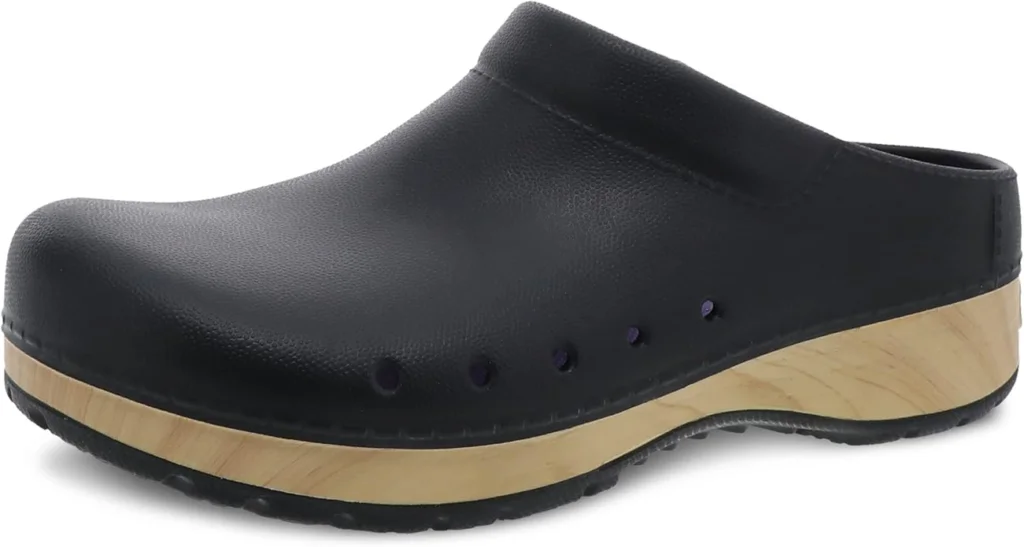
The Kane takes the familiar Dansko approach and packages it into a lightweight mule.
The removable EVA footbed gives you more flexibility than a fixed insole, while the molded construction makes the shoe easy to clean.
It is also considerably easier to step into than a traditional lace-up sneaker.
Why consider it
- Easy slip-on entry
- Removable footbed
- Arch-support technology
- Lightweight molded construction
- Easy-care upper
- Good option for people who like clog-style footwear
Potential drawbacks
- Open-back mule design will not suit every workplace
- Less secure than a closed heel
- Moderate cushioning
- Workplace dress codes may restrict mule-style shoes
Best for: Nurses whose employer permits this type of footwear and who prioritize fast entry.
Verdict: A useful middle ground between a traditional nursing clog and a casual slip-on.
🛒 Check Price on Amazon6. Brooks Women’s Adrenaline GTS 25 – Best Stability Sneaker
Best for: Nurses who prefer a supportive athletic shoe
Price: About $150.26 at the time of writing
Customer rating: 4.6/5
Customer reviews: 1,700+
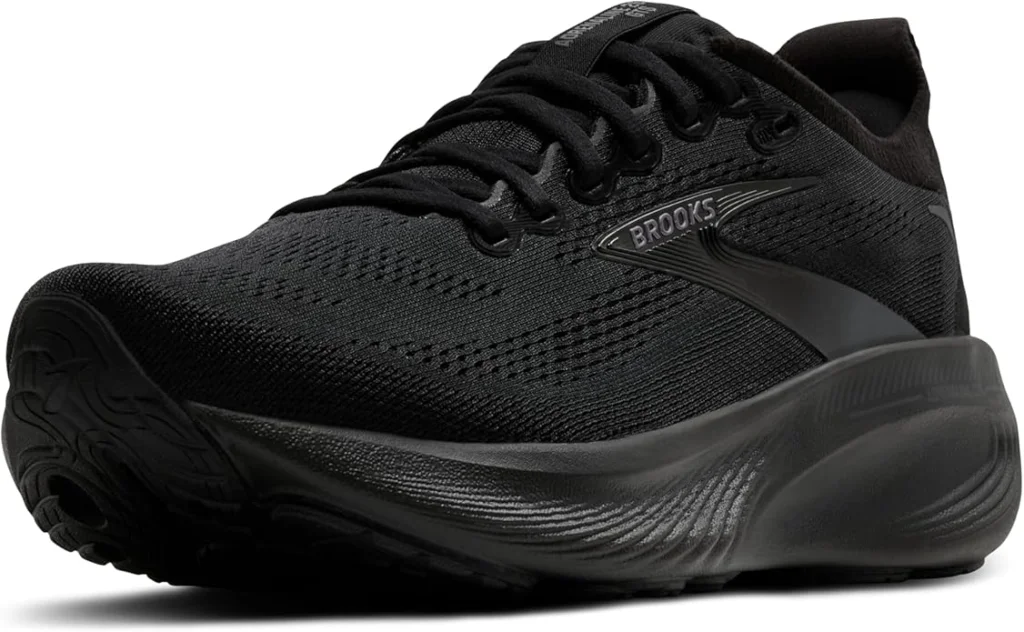
If clogs are not your thing, the Brooks Adrenaline GTS 25 is the type of shoe worth considering.
The GuideRails support system is designed around stability rather than simply adding softness. The shoe also combines cushioning with a conventional lace-up fit, which allows you to control heel and midfoot security.
RunRepeat currently places the Adrenaline GTS 25 among its leading stability shoes for nurses and reports lab measurements for its cushioning, heel stability, platform and traction.
Why consider it
- Stability-focused design
- GuideRails support
- Cushioned platform
- Secure lace-up fit
- Athletic construction
- Good option for walking-heavy shifts
Potential drawbacks
- Premium price
- Requires lacing
- Mesh upper is less protective against spills
- Athletic appearance may not meet every dress code
Best for: Nurses who want the feel of a running/walking shoe rather than a clog.
Verdict: Best athletic-style stability option in this selection.
🛒 Check Price on Amazon7. HKR Women’s Walking Shoes – Best Budget Elastic Entry
Best for: Nurses who want a low-cost walking shoe with easy entry
Price: About $36.94 at the time of writing
Customer rating: About 4.0/5
Customer reviews: 45,000+
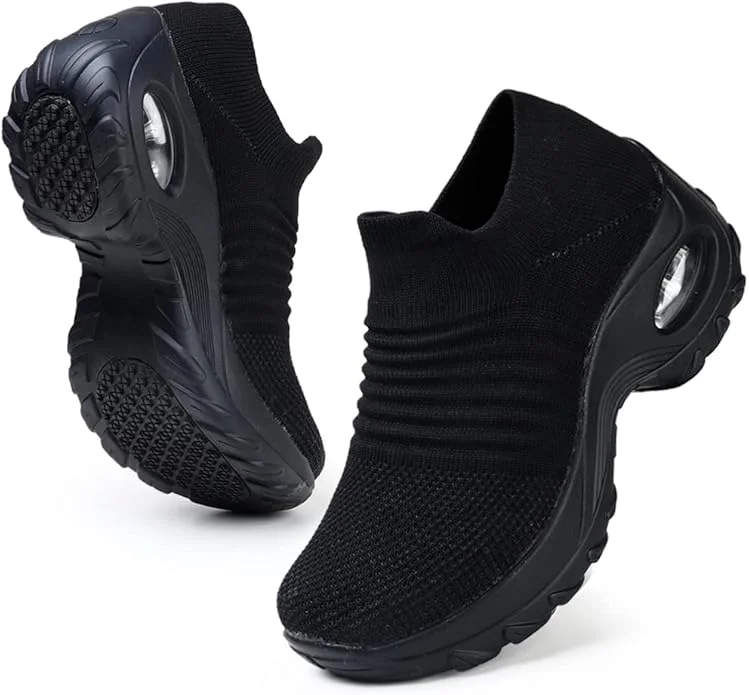
The HKR walking shoe is a popular budget-oriented design built around an elastic entry, knit upper and cushioned footbed.
Its biggest strength is convenience. You get a sneaker-like shape without dealing with traditional laces.
The tradeoff is that a stretchy knit upper generally does not provide the same structured support as a more substantial stability shoe.
Why consider it
- Affordable
- Easy elastic entry
- Knit upper
- Cushioned footbed
- Arch-support insert
- Lightweight everyday design
Potential drawbacks
- Less structured than premium stability shoes
- Knit upper may not suit wet or messy environments
- Moderate support
- Fit can be less precise than a lace-up
Best for: Nurses who prioritize convenience and price.
Verdict: A reasonable budget choice for nurses who prefer flexible, easy-entry footwear.
🛒 Check Price on Amazon8. STQ Women’s Slip-On Sneakers – Best Budget True Slip-On
Best for: Nurses who want the quickest possible entry
Price: About $35.99 at the time of writing
Customer rating: 4.3/5
Customer reviews: 1,600+
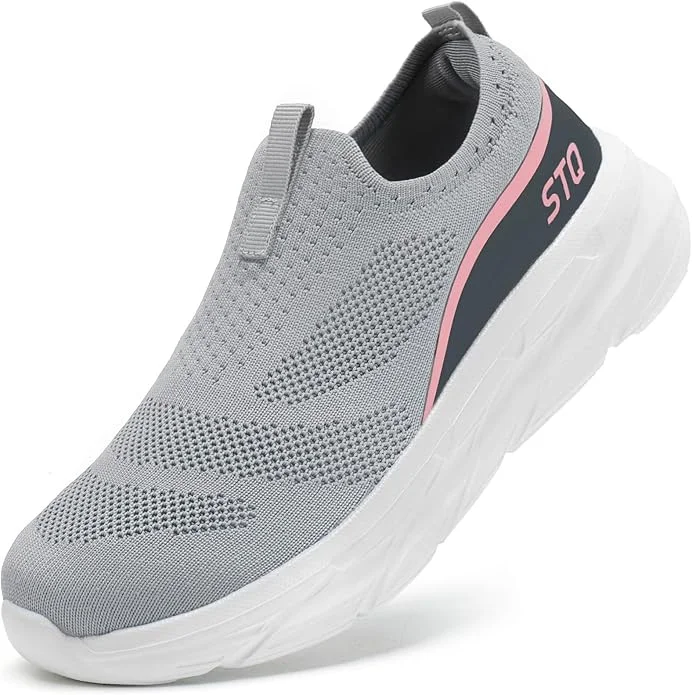
The STQ Slip-On is designed around simplicity.
There are no traditional laces to adjust. You step in, secure the shoe and go.
That makes it appealing to healthcare workers who dislike bending down repeatedly or want a casual sneaker that is easy to put on before a shift.
The tradeoff is fit control. A true slip-on cannot provide the same degree of adjustment as a lace-up shoe.
Why consider it
- True slip-on design
- Wide toe area
- Memory-foam cushioning
- Arch-support insole
- Lightweight feel
- Affordable
Potential drawbacks
- Limited fit adjustment
- Less structured than stability footwear
- Fabric upper
- Not the strongest choice for severe support needs
Best for: Nurses who value speed and convenience over maximum structure.
Verdict: Best budget option if easy entry is your top priority.
🛒 Check Price on Amazon9. Orthofeet Women’s Kita – Best Premium Hands-Free Option
Best for: Nurses who want hands-free entry and an orthotic-oriented design
Price: About $129 at the time of writing
Customer rating: About 4.2/5
Customer reviews: 1,800+
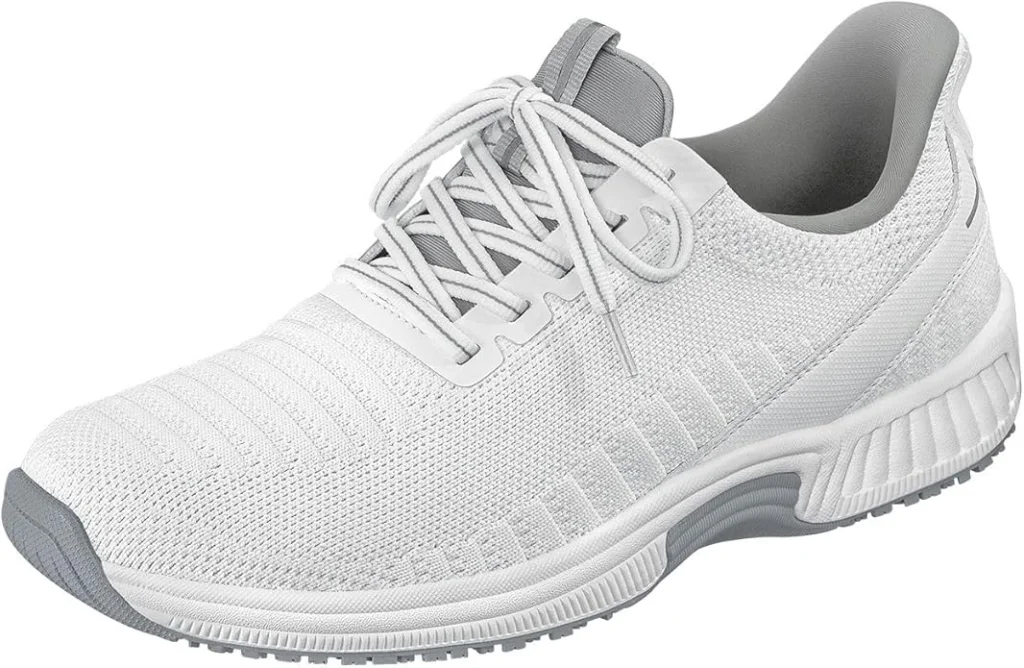
The Orthofeet Kita is aimed at people who need more than basic cushioning.
Its hands-free entry, roomy toe area and orthotic-oriented footbed make it especially interesting for nurses who struggle with conventional shoes or need additional internal space.
The design is also useful for people who want to avoid repeatedly bending down to put on their footwear.
Product information for this model describes a hands-free design, orthotic insole, additional pronation support and extra room around the toes.
Why consider it
- Hands-free entry
- Orthotic-oriented footbed
- Roomier toe area
- Additional support options
- Cushioned construction
- Useful for people with foot discomfort
Potential drawbacks
- Premium price
- Less traditional nursing-shoe appearance
- Still requires initial setup
- Not every hospital permits every athletic-style upper
Best for: Nurses who prioritize easy entry and extra foot accommodation.
Verdict: Best premium hands-free option in this group.
🛒 Check Price on Amazon10. STQ Women’s Walking Shoes – Best High-Review Budget Pick
Best for: Budget shoppers who want an easy-entry walking shoe
Price: About $42.99 at the time of writing
Customer rating: About 4.1/5
Customer reviews: 70,000+
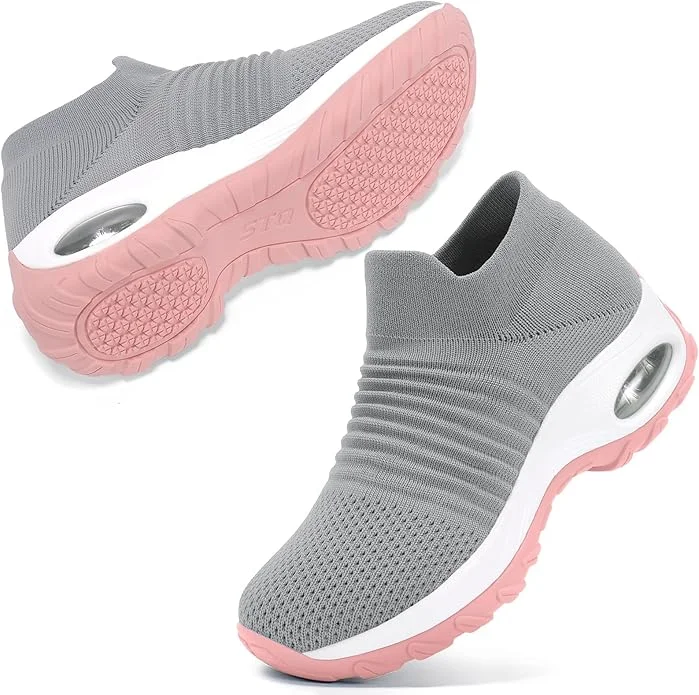
The STQ Walking Shoe stands out because of its enormous customer-review footprint.
It combines an elastic-cuff entry with a cushioned sole, knit upper and arch-support-oriented construction.
However, a large review count should be treated as a useful buying signal, not proof that a shoe will work for every person with plantar fasciitis.
Why consider it
- Large review base
- Easy elastic entry
- Cushioned sole
- Arch-support design
- Soft heel padding
- Affordable price
Potential drawbacks
- Knit upper
- Less structured than premium shoes
- Fit can vary
- Not ideal for people who need strong motion control
Best for: Budget buyers who want an easy-entry walking shoe.
Verdict: A practical low-cost option, particularly if you prefer flexible sneakers over clogs.
🛒 Check Price on AmazonBest Nursing Shoes for Plantar Fasciitis: Comparison Table
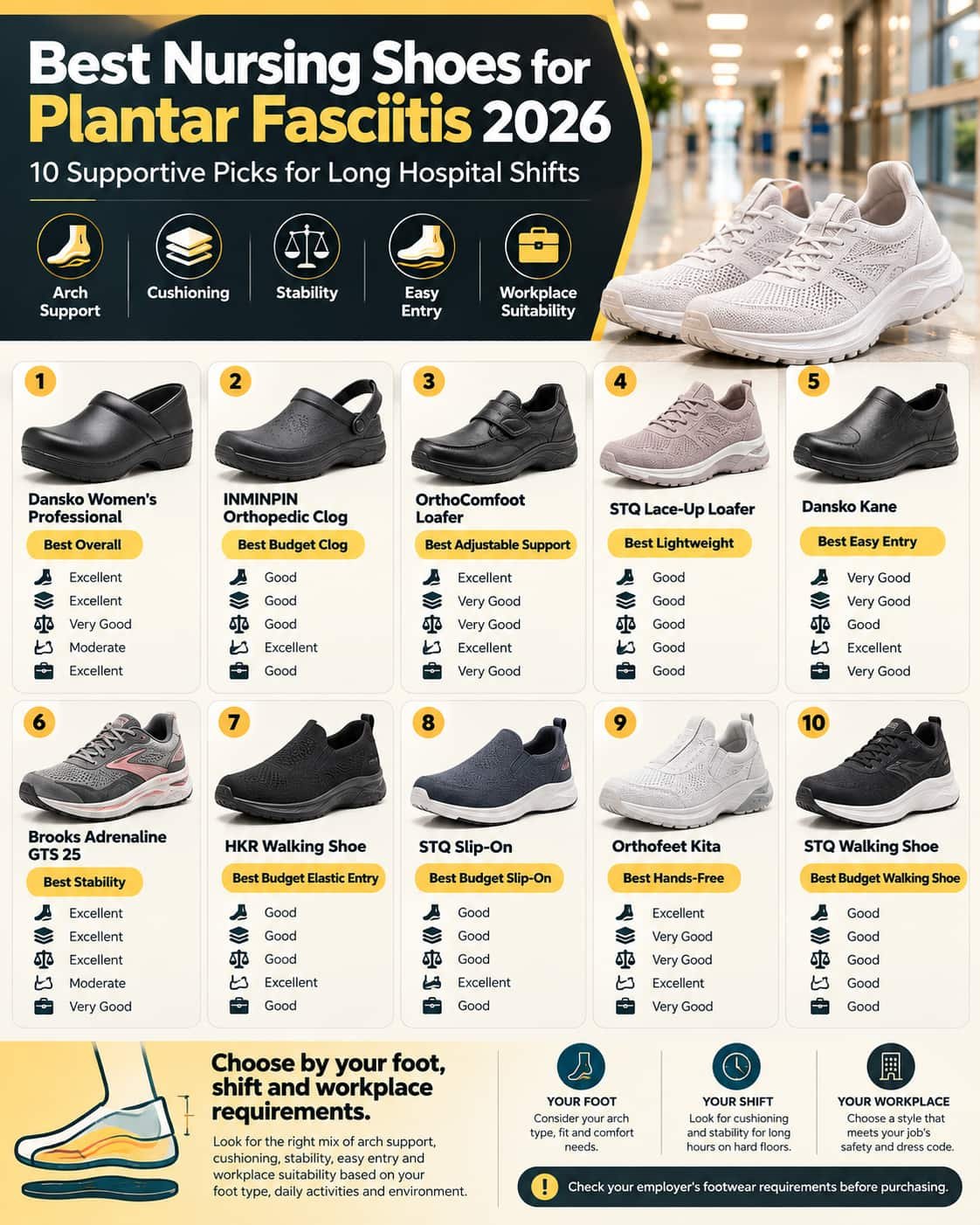
| Shoe | Price* | Best For | Entry | Support Style | Cushioning | Main Advantage |
| Dansko Women’s Professional | ~$159.95 | Overall | Clog | Structured | Firm/moderate | Traditional nursing design |
| INMINPIN Orthopedic Clog | ~$33.59 | Budget | Slip-on | Arch support | High | Low price |
| OrthoComfoot Loafer | ~$59.50 | Adjustable support | Slip-on | Removable insole | Moderate | Customizable setup |
| STQ Lace-Up Loafer | ~$39.99 | Lightweight | Lace-up | Arch-support insole | High | Very light |
| Dansko Kane | ~$94.95 | Easy entry | Mule | Structured | Moderate | Simple slip-on design |
| Brooks Adrenaline GTS 25 | ~$150.26 | Stability | Lace-up | GuideRails | High | Athletic stability |
| HKR Walking Shoe | ~$36.94 | Budget | Elastic | Moderate | Moderate | Easy entry |
| STQ Slip-On | ~$35.99 | Fast entry | Slip-on | Moderate | Moderate | True slip-on |
| Orthofeet Kita | ~$129 | Hands-free | Hands-free | Orthotic-oriented | High | Easy entry + foot room |
| STQ Walking Shoe | ~$42.99 | Budget | Elastic | Moderate | Moderate | Large review base |
Which Shoe Is Best for Your Type of Shift?
If you stand in one place for most of your shift
Look for a stable platform with enough cushioning to avoid feeling every hard surface underneath you.
Consider: Dansko Professional, Brooks Adrenaline GTS 25 or Orthofeet Kita.
If you walk constantly
A lighter athletic shoe may feel more natural than a heavy clog.
Consider: Brooks Adrenaline GTS 25, STQ Lace-Up or HKR Walking Shoes.
If you work in a busy emergency department
Secure fit and traction deserve more attention than easy slip-on convenience.
A shoe that feels loose around the heel can become annoying when you’re repeatedly turning and accelerating.
If your feet are wide
Look for a rounded toe area and, where available, wider sizing.
RunRepeat specifically recommends paying attention to toe-box shape because feet can increase in volume after hours of walking and standing.
Our guide to the best nursing shoes for flat feet is also useful if your plantar-fasciitis symptoms occur alongside flat feet or overpronation.
If you need to use custom orthotics
Prioritize removable footbeds.
OrthoComfoot, Orthofeet and several athletic shoes are more suitable for this than a fixed-footbed clog.
What About Slip Resistance?
This is where buyers need to slow down.
A shoe marketed as comfortable, orthopedic or supportive is not automatically a certified workplace slip-resistant shoe.
Hospital floors can become slippery because of water, cleaning solutions and other liquids. RunRepeat also treats slip resistance as a separate testing category rather than assuming that every nursing shoe performs equally on wet floors.
Before purchasing, check your employer’s policy for:
- Slip-resistant footwear
- Closed-toe requirements
- Closed-heel requirements
- Approved outsole materials
- Uniform colors
- Wipeable or liquid-resistant uppers
If traction is your highest priority, don’t make the decision based solely on a product’s name or a generic “non-slip” claim.
Mesh vs Leather vs EVA: Which Is Better for Nurses?
There is no universal winner.
Mesh
Advantages:
- Breathable
- Lightweight
- Comfortable in warm environments
Downside:
- Less protection from spills
- Usually harder to wipe clean thoroughly
Leather
Advantages:
- More protective
- Easier to wipe
- Professional appearance
- Often more durable
Downside:
- Less breathable
- Can feel heavier
EVA and molded materials
Advantages:
- Easy to clean
- Lightweight
- Water-resistant properties on some designs
- Useful for clogs
Downside:
- Can feel less breathable
- Casual appearance
RunRepeat also highlights this exact tradeoff between breathable uppers and protection from liquids when evaluating nursing shoes.
Can Shoes Actually Cure Plantar Fasciitis?
No shoe should be presented as a cure.
Footwear can be part of a broader strategy for managing symptoms and reducing aggravating factors, but plantar fasciitis can require more than a shoe change.
The 2023 clinical practice guideline from the American Physical Therapy Association’s orthopedic and sports physical therapy academies covers examination and treatment approaches for plantar-fasciitis-related heel pain.
Depending on the individual situation, management may include appropriate exercise, stretching, activity modification, orthoses and professional evaluation.
If your heel pain continues despite changing footwear, consider speaking with a podiatrist, physical therapist or other qualified healthcare professional.
What Nurses on Reddit Say About Plantar-Fasciitis Shoes
One useful lesson from nursing communities is that shoe recommendations are highly personal.
In one nursing discussion, people recommended everything from Orthofeet and HOKA to Brooks and Skechers, while another nurse described getting significant relief from Skechers after experiencing problems with other brands.
Another discussion about plantar fasciitis included nurses mentioning Brooks Adrenaline, stretching, physical therapy and seeing a podiatrist, while others reported that HOKA shoes did not work for them.
That leads to a useful rule:
A shoe can be excellent for plantar fasciitis and still be wrong for your feet.
This is why fit, foot shape and personal response matter more than popularity alone.
Questions Nurses Commonly Ask
Are clogs good for plantar fasciitis?
They can be. A structured clog with a supportive footbed, stable heel area and suitable fit may work very well for some nurses. But clogs are not automatically better than sneakers.
Are running shoes good for plantar fasciitis?
They can be, particularly when you need cushioning, a secure fit and stability. A running shoe may be a better choice than a clog if you walk continuously during your shift.
Is more arch support always better?
No. The arch support should match your foot. Too little support may feel unstable, while an aggressive arch can create pressure and discomfort.
Should plantar-fasciitis shoes be soft or firm?
Both cushioning and stability matter. Some people prefer a softer shoe, while others feel better in a firmer and more structured platform.
Should nurses use orthotics?
Orthotics can be useful for some people, particularly when a shoe has a removable footbed. If you have persistent pain or specific foot mechanics, a professional evaluation can help determine whether an orthotic is appropriate.
Can I wear the same nursing shoes every day?
You can, but inspect them regularly. Watch for worn tread, compressed cushioning, damaged uppers and changes in how your feet feel during or after shifts.
How long should nursing shoes last?
There is no universal replacement interval. Work environment, body weight, walking volume, shoe construction and rotation all influence lifespan. Replace them when cushioning, traction, fit or structural support noticeably deteriorates.
Are expensive nursing shoes worth it?
Sometimes. Premium shoes can provide better materials, more refined support systems and improved durability, but a $150 shoe is not automatically better for your feet than a $50 shoe.
What is better for plantar fasciitis: Dansko or Brooks?
They serve different preferences. Dansko is more structured and clog-oriented, while Brooks offers a conventional athletic-shoe fit with adjustable lacing and stability options. Try to match the shoe to your foot rather than choosing by brand popularity.
Are slip-on shoes good for nurses?
They can be convenient, especially during busy shifts, but true slip-ons provide less fit adjustment than lace-up shoes. If your heel needs a secure lockdown, a lace-up may be preferable.
7 Practical Tips for Nurses With Plantar Fasciitis
1. Try shoes with your work socks
A shoe that fits with thin everyday socks may feel different with compression or nursing socks.
2. Shop later in the day
If your feet swell during a shift, checking fit later in the day can provide a more realistic fit.
3. Walk before deciding
Don’t judge the shoe while sitting down. Walk, turn and stand in it.
4. Check the toe box
Your toes should have room to move without the shoe feeling excessively loose.
5. Don’t ignore heel movement
A comfortable forefoot cannot compensate for excessive heel movement.
6. Check your hospital’s footwear policy
Before ordering, verify the requirements for traction, heel coverage, toe coverage and materials.
7. Give yourself a return option
If possible, purchase from a retailer with a suitable return policy. Plantar-fasciitis footwear is particularly personal, and comfort after several hours matters more than a five-minute fitting.
A Better Way to Choose: Match the Shoe to the Problem
Instead of asking:
“What is the best nursing shoe for plantar fasciitis?”
ask:
“What is the biggest problem I need my shoe to solve?”
| Your priority | Start with |
| Structured support | Dansko Professional |
| Athletic stability | Brooks Adrenaline GTS 25 |
| Easy entry | STQ Slip-On |
| Hands-free entry | Orthofeet Kita |
| Budget clog | INMINPIN Orthopedic Clog |
| Adjustable support | OrthoComfoot |
| Lightweight feel | STQ Lace-Up |
| Budget walking shoe | HKR |
| Dansko slip-on | Kane |
This approach is more useful because plantar fasciitis does not look exactly the same for every nurse.
Final Verdict: Best Nursing Shoes for Plantar Fasciitis in 2026
For a traditional nursing clog, Dansko Women’s Professional is the strongest overall choice in this selection.
For athletic-style stability, Brooks Adrenaline GTS 25 is the better starting point.
For hands-free convenience, Orthofeet Kita stands out.
For a budget clog, INMINPIN Orthopedic Clogs offer an inexpensive way to try a structured clog design.
For adjustable support, OrthoComfoot is particularly interesting because its removable insole setup gives you more flexibility.
For quick entry at a lower price, STQ Slip-On is worth considering.
But don’t choose solely from a ranking.
Your ideal shoe depends on:
Foot shape + pain pattern + stability needs + shift type + workplace rules + personal comfort.
If plantar-fasciitis pain continues or worsens, footwear alone may not be enough. Professional evaluation can help determine whether exercise, orthotics, activity changes or other treatment approaches are appropriate. The current APTA clinical practice guideline is a useful evidence-based reference for plantar-fasciitis management.
For nurses comparing other footwear categories, you can also explore our guides to the best nursing sneakers, the best HOKA shoes for nurses, the best New Balance shoes for nurses, and the best Skechers nursing shoes.
Affiliate Disclosure
Some links on this page are affiliate links. If you purchase through one of these links, UrbanStyleFootwear may earn a commission at no additional cost to you.
Prices, ratings, review counts and availability can change. Always check the retailer for the latest information before purchasing.
This guide is for footwear information and general education. It is not a substitute for diagnosis or treatment from a qualified healthcare professional.