
Best Waterproof Shoes for Nurses 2026
✅ Expert Footwear Analysis | 🛒 Amazon Options | 📅 Updated September 2026
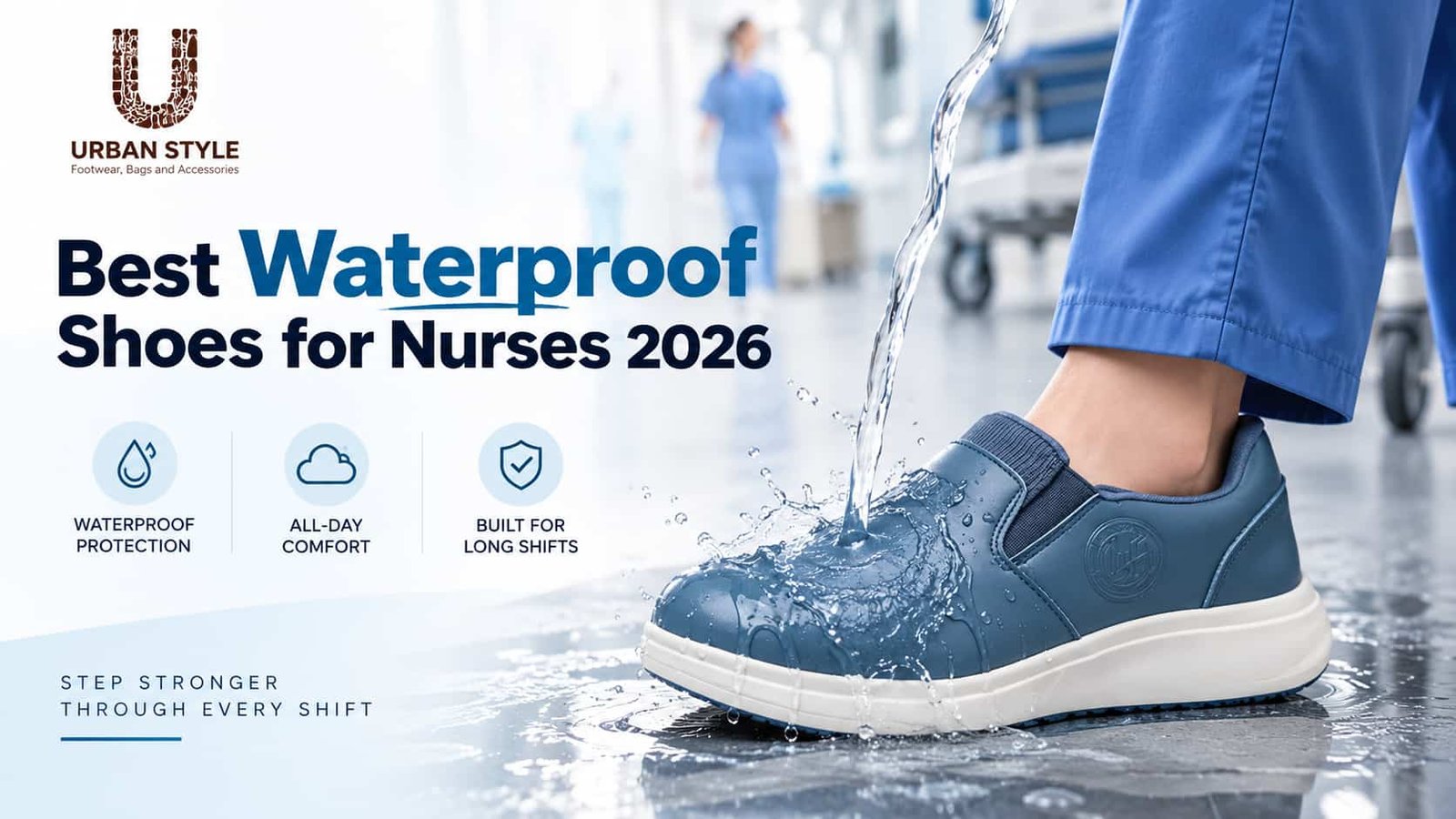
The best waterproof shoes for nurses should do more than resist water. They should provide dependable traction, a secure fit, practical cushioning, and easy cleaning for long clinical shifts. Based on the supplied product specifications, Crocs Bistro is the strongest overall waterproof work-clog option, while Crocs On The Clock is a strong alternative for long shifts, Sticky offers a budget-friendly healthcare-focused option, and ZXT and NITTI provide lightweight waterproof clog alternatives.
Top Picks: Best Waterproof Shoes for Nurses 2026
Our top choices are organized around different nursing needs, from everyday waterproof protection and hospital-floor traction to easy cleaning and lightweight comfort.
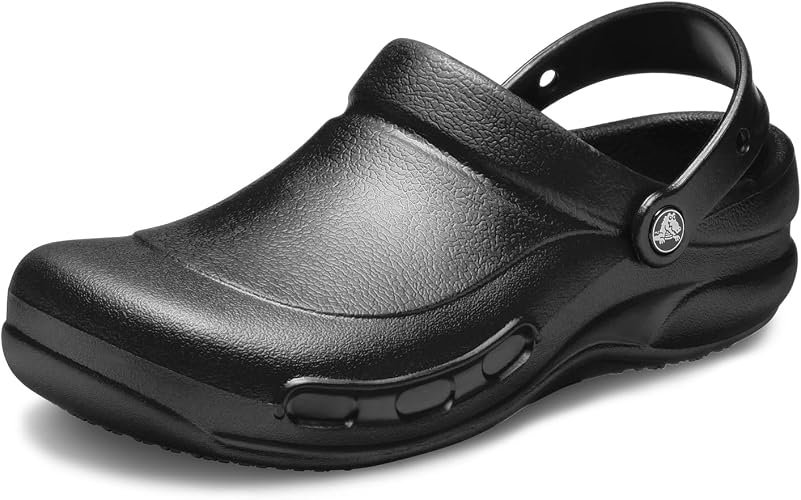
Crocs Unisex-Adult Bistro Work Clogs
Best for: Nurses who want waterproof protection, enclosed toe coverage, slip-resistant treads, and easy cleaning.
🛒 Check Price on Amazon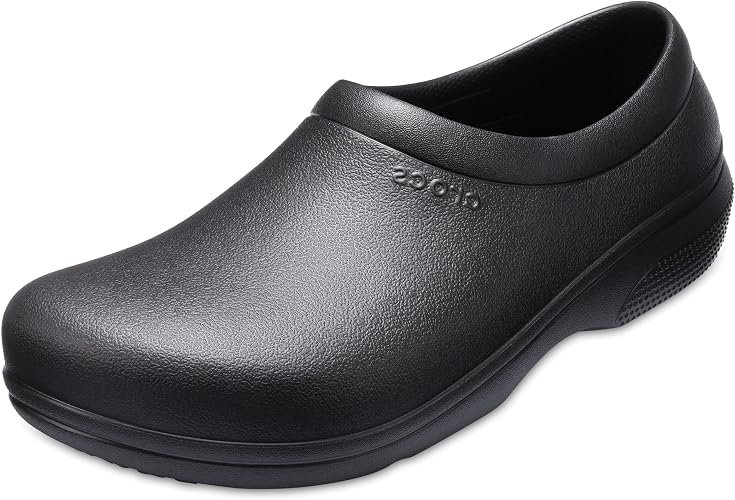
Crocs Unisex On The Clock Clog
Best for: Healthcare workers who prioritize enclosed coverage, washable construction, and workplace-focused slip-resistant traction.
🛒 Check Price on Amazon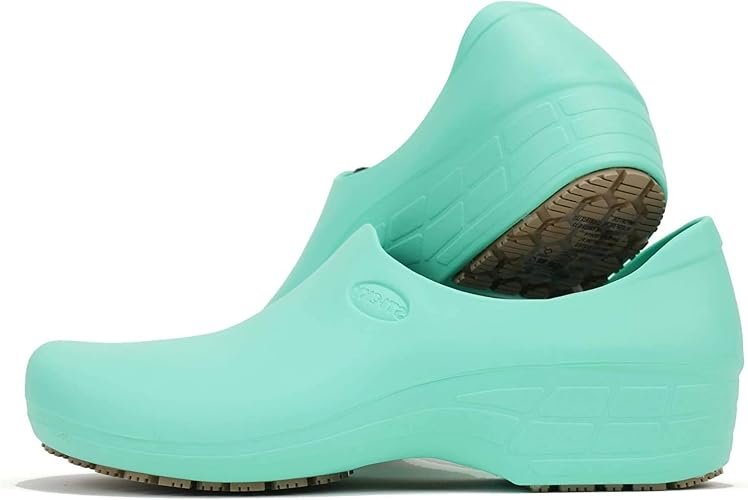
Sticky Nursing Shoes Women
Best for: Nurses looking for waterproof work shoes with a wipeable design, moisture-wicking insole, and slip-resistant construction.
🛒 Check Price on Amazon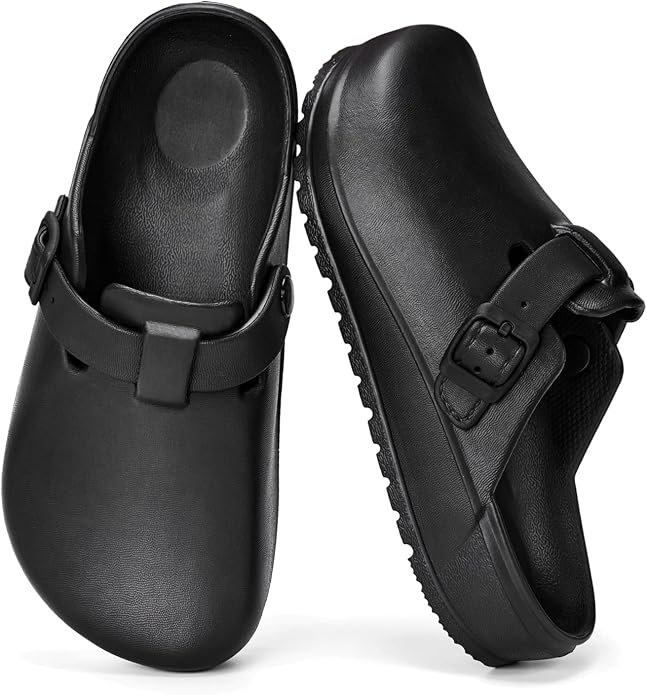
ZXT Arch Support Work Clogs
Best for: Nurses who want a lightweight waterproof clog with memory foam, medium arch support, deep heel cup, and adjustable strap.
🛒 Check Price on Amazon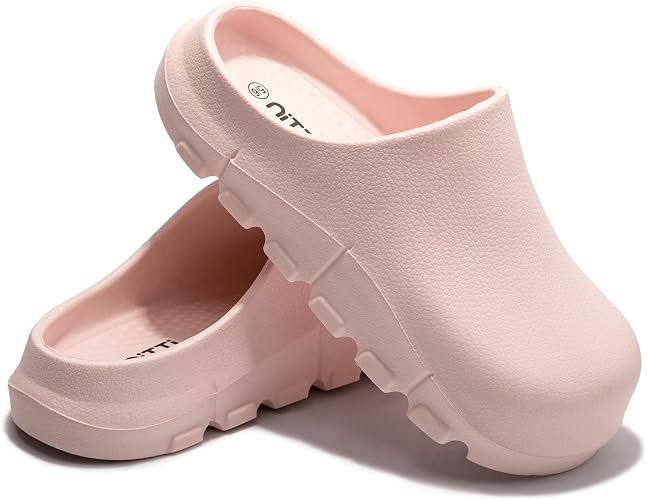
NITTI Women’s Garden Clogs
Best for: Those who prefer lightweight waterproof EVA clogs with medium arch support, a roomy toe area, and easy cleaning.
🛒 Check Price on AmazonMore Options From Our 2026 Review
These three models are also included in the full comparison. Their water protection differs from the five primary waterproof picks.
As an Amazon Associate, Urban Style Footwear may earn from qualifying purchases. Product availability, pricing, and seller information can change.
Introduction
A 12-hour hospital shift can expose a nurse’s footwear to conditions that ordinary sneakers are not designed around. A spill near a medication cart, a wet floor after cleaning, repeated walking between patient rooms, and hours of standing at a bedside all create different demands from a normal commute or workout.
That is why waterproof nursing shoes are not simply about keeping rain out. For clinical work, water protection needs to be considered alongside traction, cleanability, fit, cushioning, and workplace requirements.
There is an important distinction between waterproof and water-resistant footwear. The supplied product data includes both categories. NITTI, Crocs Bistro, Sticky, ZXT, and Crocs On The Clock are listed as waterproof, while LARNMERN is listed as water resistant, Skechers is listed as not water resistant, and Dansko is listed as water repellent. Those differences matter when the reason for buying is exposure to liquids rather than occasional outdoor moisture.
This guide evaluates all eight supplied products based on their published product information. It does not claim personal testing, laboratory testing by Urban Style Footwear, or long-term wear experience.
The focus is practical: which products make the most sense for nurses who want water protection, which ones offer better workplace-oriented features, which products are easier to clean, and where each option has a meaningful limitation.
For a broader starting point, nurses comparing waterproof shoes with conventional work sneakers, clogs, and other styles can also review our guide to the best shoes for nurses.
What Are Waterproof Shoes for Nurses?
Waterproof nursing shoes are work shoes designed to limit water penetration and protect the foot from wet conditions. Depending on the construction, they may use molded EVA, synthetic materials, coated uppers, or other water-resistant constructions.
For healthcare work, waterproofing is only one part of the decision. A waterproof shoe can still be unsuitable if it lacks sufficient traction, feels unstable, has an uncomfortable fit, or violates a facility’s dress code.
That distinction is especially important because waterproof does not automatically mean slip-proof. Slip performance depends on the outsole, tread, floor, contaminant, and test conditions.
The supplied products also demonstrate why shoppers should read specifications carefully. LARNMERN is described as water resistant rather than waterproof in its specification table, while the Skechers product is specifically listed as “Not Water Resistant” despite having 3M Scotchgard treatment described as repelling water. Dansko is listed as water repellent.
For nurses who want a dedicated comparison of traction rather than water protection, our guide to the best slip-resistant shoes for nurses focuses specifically on grip and workplace traction.
Why Do Waterproof Shoes Matter for Nurses?
Waterproof shoes matter when nurses regularly encounter spills, wet surfaces, cleaning fluids, or other moisture during their shifts. They can also simplify cleanup when the upper is designed to be wiped or washed.
Healthcare flooring can create a particular slip concern. NIOSH identifies nursing and residential care among industries with high numbers of nonfatal fall injuries and notes that wet or contaminated floors are common contributors to slips. Its guidance also identifies slip-resistant footwear as one potential intervention.
That does not mean waterproofing itself prevents falls. Instead, it solves a different problem: reducing water penetration and making moisture exposure easier to manage.
The footwear choice also needs to account for prolonged standing. A recent systematic review of footwear used in prolonged-standing occupations found that footwear characteristics can affect foot comfort and fatigue. The review reported that softer soles may reduce impact and fatigue but can offer less support, while harder soles may improve stability but can create localized pressure or discomfort.
Nursing-specific research also supports taking footwear comfort seriously. A study involving 636 nurses found that foot and ankle pain was common and that lower shoe comfort was independently associated with foot and ankle pain.
For nurses who spend much of a shift standing, our dedicated guide to the best shoes for nurses who stand all day goes deeper into cushioning, stability, and long-shift comfort.
Waterproof vs. Water-Resistant Nursing Shoes
The terms are often used interchangeably in product listings, but they should not be treated as identical.
Waterproof: The supplied product data specifically classifies NITTI, Crocs Bistro, Sticky, ZXT, and Crocs On The Clock as waterproof.
Water resistant: LARNMERN is listed as water resistant. Its description says the upper provides protection from light moisture.
Water repellent: Dansko’s supplied specification lists its water resistance level as water repellent.
Not water resistant: The Skechers Squad SR specification supplied here lists the water resistance level as not water resistant, although the product description says its 3M Scotchgard treatment repels water.
For a nurse working around frequent liquid exposure, these distinctions are more useful than a generic “weather-ready” marketing phrase.
What Should Nurses Look For in Waterproof Shoes?
1. Water Protection
Start with the level of water protection the job actually requires.
A nurse who occasionally encounters splashes has different needs from someone working in an environment where liquid exposure is frequent. Fully waterproof molded footwear can be attractive for cleanup-heavy work, while a water-resistant upper may be enough for occasional moisture.
Look for:
- A clearly stated waterproof or water-resistant classification
- Materials that can be wiped clean
- Minimal exposed fabric when frequent liquid exposure is expected
- A construction appropriate for your unit
Main tradeoff: Fully waterproof molded shoes can sacrifice some airflow compared with more breathable mesh footwear.
2. Slip Resistance
Do not assume that waterproof automatically means slip resistant.
ASTM F3445-24 establishes minimum performance requirements for evaluating footwear slip resistance using the ASTM F2913 whole-shoe tester. ASTM explains that F2913 evaluates relative slip performance under controlled laboratory conditions and can include contaminants such as water, oil, and grease.
That is useful because hospital floors can become contaminated with liquids, but laboratory performance should not be interpreted as a guarantee of performance in every real-world situation.
Look for:
- Specific slip-resistance claims
- A documented testing standard where supplied
- Tread appropriate to the working environment
- A workplace policy that permits the shoe
Main tradeoff: Aggressive tread may improve traction but can be harder to clean.
3. Cleanability
Waterproof nursing footwear becomes much more practical when it can also be cleaned easily.
Crocs Bistro, Crocs On The Clock, ZXT, NITTI, and Sticky all have supplied information supporting easy cleaning or wipeability.
This matters when a nurse needs to remove visible contamination after a shift. Molded EVA or synthetic construction can be easier to wipe than an exposed knit or mesh upper.
Best for easy cleaning: Crocs Bistro and Sticky have particularly clear supplied cleaning claims.
4. Fit and Foot Security
A waterproof shoe still needs to fit properly.
Pay attention to:
- Toe-box room
- Heel security
- Width
- Instep pressure
- Overall length
- Ability to accommodate the socks you normally wear
The supplied ZXT product includes an adjustable buckle, while Bigant includes adjustable instep straps. Crocs On The Clock includes a fit note stating that it runs large and recommends sizing down if between sizes.
Nursing footwear research also indicates that comfort and shoe dimensions matter. A recent study of clinical nurses found relationships between footwear comfort and foot dimensions and concluded that different widths can be important when designing medical footwear.
5. Cushioning and Long-Shift Comfort
Waterproof construction does not automatically make a shoe comfortable for a 12-hour shift.
The supplied products use different approaches. Crocs Bistro uses a Croslite footbed and contoured footbed, ZXT uses memory foam and a deep heel cup, NITTI uses EVA, Sticky includes a padded footbed, and LARNMERN uses a cushion bladder foam midsole and anti-fatigue footbed.
The right choice depends on whether you prefer a softer feel, more structured support, or a lightweight molded construction.
A recent systematic review supports the idea that there is a balance between cushioning and support rather than one universally ideal level of softness.
6. Workplace Compatibility
Never assume that a product marketed as a “nursing shoe” is automatically acceptable at your hospital.
Check whether your employer requires:
- Closed toes
- Closed heels
- Specific colors
- Wipeable or cleanable materials
- Specific slip-resistance requirements
- Specific footwear styles
OR and perioperative environments can have additional attire and workplace requirements. AORN guidance specifically addresses shoes and other surgical attire in perioperative settings.
Nursing Workplace Considerations
ICU
ICU nurses may spend long periods standing beside beds while also walking between rooms, equipment, and workstations. A waterproof clog can be useful if spills and easy cleanup are major concerns.
For ICU work, prioritize:
- Secure fit
- Slip resistance
- Easy cleaning
- Sustained comfort
The Crocs Bistro and Crocs On The Clock are the strongest supplied options for this combination.
ER
Emergency departments can involve rapid movement, frequent changes in direction, and unpredictable exposure to liquids.
A waterproof clog offers protection and easy cleaning, but nurses who prefer a more athletic shoe should recognize that only some of the supplied products provide a sneaker-like construction.
LARNMERN is the most athletic-looking option among the supplied waterproof/water-resistant choices, but its specification says water resistant rather than waterproof.
Nurses who want more options for fast-paced clinical environments can also compare our guide to the best shoes for nurses.
OR
Operating-room footwear can have additional cleaning and attire requirements. AORN’s guidance addresses footwear as part of perioperative attire, so facility policy should take priority over general online recommendations.
For OR nurses, easy cleaning may matter more than breathable mesh. Crocs Bistro and Crocs On The Clock are therefore more logical starting points from this supplied list.
Outpatient Clinics
Outpatient nurses may alternate between sitting, standing, and walking.
A fully waterproof clog may be more protection than necessary if the environment is relatively dry. In that case, comfort, weight, fit, and appearance may become more important.
Long-Term Care and Nursing Homes
Long-term-care nurses can spend substantial time walking between rooms and assisting patients.
The best option should balance water protection with comfort and heel security. NITTI and ZXT are lightweight options, while Crocs On The Clock provides a more work-focused construction.
Urgent Care
Urgent-care environments sit between outpatient and higher-acuity settings. A shoe that can handle occasional spills while remaining comfortable for repeated walking can make more sense than a heavily protected clog.
Commuting
A waterproof work shoe does not necessarily need to be your commuting shoe.
If you walk to work or use public transportation, consider whether the outsole, weight, flexibility, and overall comfort make sense outside the clinical environment. A separate commuting shoe can be reasonable if your work footwear is optimized for spills and cleaning rather than outdoor walking.
What Does Research Say About Slip Risk for Nurses?
Waterproofing and slip resistance solve different problems, and nurses should evaluate them separately. Waterproof construction helps limit water penetration, while slip resistance relates to how effectively the outsole interacts with the floor when contaminants such as water or cleaning solutions are present.
This distinction matters in healthcare because NIOSH identifies healthcare and social assistance as industries with high numbers of nonfatal fall injuries, with nursing and residential care specifically identified as higher-risk settings. NIOSH also notes that many workplace slip incidents occur on the same level and recommends measures such as appropriate slip-resistant footwear as part of fall prevention. NIOSH healthcare slip, trip and fall prevention guidance
Hospital-specific NIOSH research provides additional context. In an investigation of slip, trip, and fall events among hospital workers, liquid contaminants such as water and cleaning solutions were involved in 36% of the reported events. Wet-to-dry transitions and changes between floor surfaces were also common circumstances surrounding these incidents.
For a waterproof nursing shoe, that means water protection should not be treated as a substitute for traction. A shoe can keep moisture away from the foot but still require an outsole designed and tested for appropriate slip performance.
ASTM F3445-24 provides a standardized framework for evaluating slip resistance of completed footwear using the ASTM F2913 whole-shoe tester. The standard establishes minimum slip-resistance performance requirements, while also cautioning that controlled laboratory results do not establish performance for every real-world situation. ASTM F3445-24 footwear slip-resistance standard
What this means when shopping: prioritize products that clearly identify both their water-protection level and their slip-resistance characteristics. For nurses working around frequent spills, the combination is more useful than choosing a shoe simply because the product title contains the word “waterproof.”
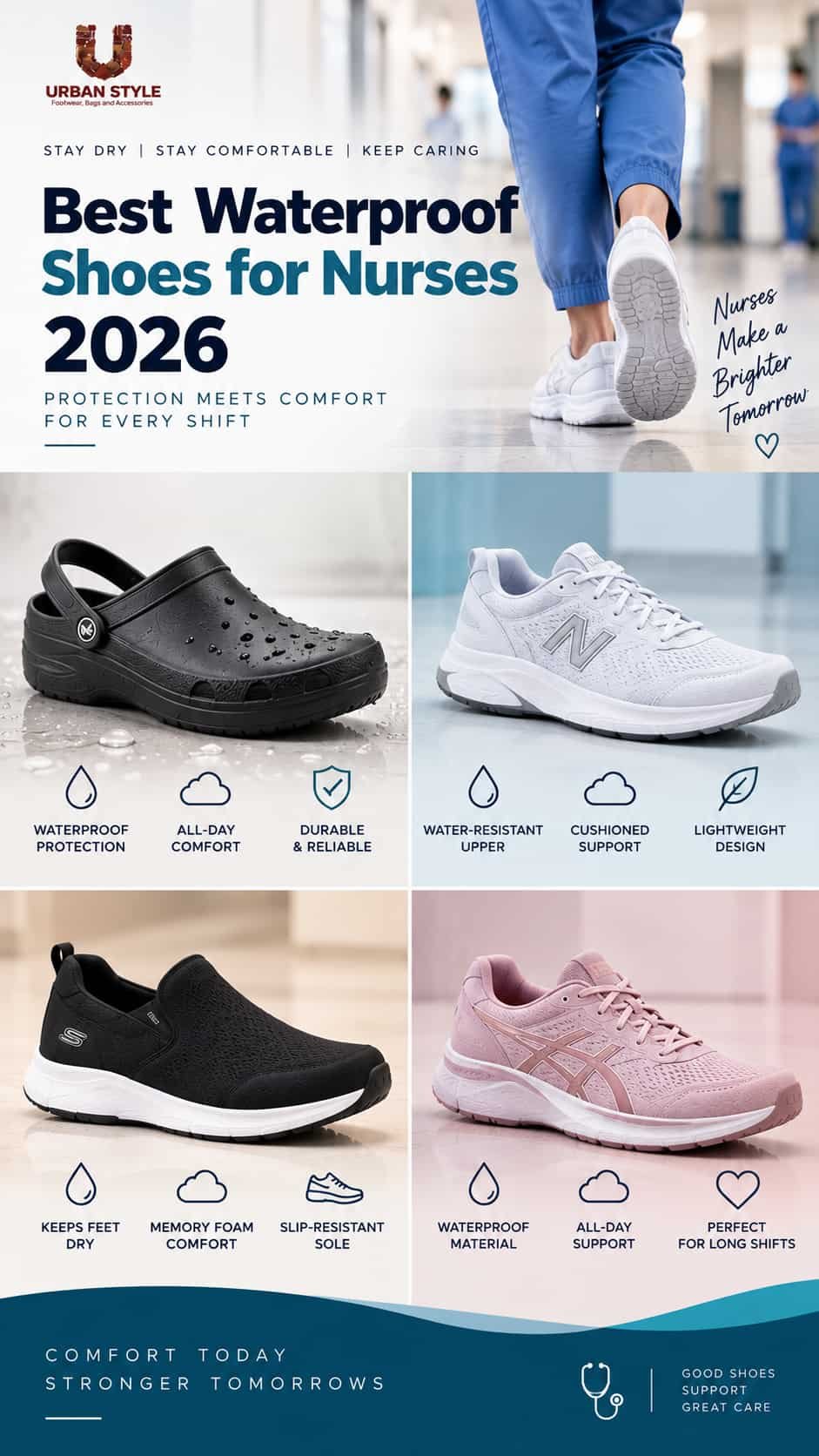
Best Waterproof Shoes for Nurses: Product Reviews
1. Crocs Unisex-Adult Bistro Work Clogs
Best For: Overall waterproof healthcare work
Why It Works: The supplied product data is unusually aligned with healthcare work. It is listed as waterproof, slip resistant, easy to clean, and specifically marketed for healthcare, hospitality, and food-service workers.
Expert Analysis: The Bistro is the strongest overall match in this supplied group because it combines the article’s core priorities rather than relying on waterproofing alone. The enclosed toe design provides additional coverage around the front of the foot, while the supplied Crocs Lock tread is designed for slip resistance.
The supplied product description also says the clog can be cleaned with soap and water and dried quickly. That is a meaningful advantage for nurses who prioritize wipeability.
The 4.5-star rating and 74,670 supplied reviews also give it the largest review base among these products.
Pros:
- Waterproof classification
- Slip-resistant construction
- Easy cleaning
- Enclosed toe
- Healthcare-specific positioning
- 4.5/5 from 74,670 supplied reviews
Cons:
- Clog construction may not suit nurses who prefer sneakers
- Roomy fit may require careful sizing
- Low-arch classification may not suit every foot shape
Main Tradeoff: The Bistro prioritizes waterproof coverage and cleanability over a traditional athletic-shoe feel.
Who Should Buy: Nurses who want a waterproof, easy-clean work clog and whose facility permits this style.
Who Should Skip: Nurses who need a conventional lace-up sneaker or whose employer does not permit this type of clog.
Verdict: The best overall waterproof nursing option in this supplied product set.
🛒 Check Price on Amazon2. Crocs Unisex On The Clock Clog
Best For: Long shifts and workplace-focused features
Why It Works: The supplied data lists waterproof construction, washable materials, slip resistance, enclosed toe and heel construction, and ASTM F2913-24 and F3445-24 claims.
Expert Analysis: This is one of the strongest choices when the priority is a work-specific waterproof clog rather than a general-purpose garden or casual shoe.
The product also includes a fit warning: it runs large, with a recommendation to size down if between sizes. That is useful information because a roomy or oversized clog can compromise heel security.
The supplied price is $37.49 with a stated 17% savings, but Amazon pricing can change.
Pros:
- Waterproof classification
- Slip-resistant
- Washable
- Enclosed toe and heel
- Supplied ASTM F2913-24 and F3445-24 claims
- 4.3/5 from 35,893 supplied reviews
Cons:
- Runs large according to supplied product information
- Low-arch classification
- Clog format may not suit everyone
Main Tradeoff: Strong workplace-oriented specifications come in a clog format rather than a traditional sneaker.
Who Should Buy: Nurses wanting waterproof coverage, easy cleaning, and work-focused traction features.
Who Should Skip: Nurses who need a lightweight athletic sneaker or prefer a more traditional lace-up fit.
Verdict: A strong alternative to the Bistro, particularly for nurses who value the supplied workplace certifications and washable construction.
🛒 Check Price on Amazon3. Sticky Nursing Shoes Women
Best For: Easy cleaning and healthcare-focused use
Why It Works: The supplied product is specifically positioned for nurses, healthcare, and food-service workers. It combines a waterproof upper and outsole with a wipeable design and moisture-wicking insole.
Expert Analysis: Sticky is interesting because it targets the actual workplace rather than simply adding waterproofing to a casual shoe. The supplied data also describes the construction as lightweight and breathable.
Its 4.1-star rating from 17,056 supplied reviews gives it a substantial review base.
The main limitation is that the supplied specifications do not provide a detailed width range, heel-to-toe drop, or specific ASTM slip-testing information.
Pros:
- Waterproof upper and outsole
- Wipeable and easy to clean
- Moisture-wicking insole
- Lightweight construction
- Healthcare-specific positioning
Cons:
- Width options not specified
- Specific slip-testing standard not supplied
- Clog design may not suit nurses who prefer sneakers
Main Tradeoff: Strong cleaning and water-protection features, but less detailed technical specification data than some alternatives.
Who Should Buy: Nurses who prioritize water protection and simple cleanup.
Who Should Skip: Buyers who want extensive technical specifications before purchasing.
Verdict: One of the most practical choices when easy cleaning is the main reason for buying waterproof nursing footwear.
🛒 Check Price on Amazon4. ZXT Arch Support Work Clogs
Best For: Lower-cost waterproof arch-support option
Why It Works: ZXT combines waterproof EVA construction with memory foam, a deep heel cup, adjustable buckle, slip-resistant tread, and easy soap-and-water cleaning.
Expert Analysis: The biggest appeal is the combination of waterproofing and adjustability. The adjustable strap may be useful for nurses who prefer to control how securely the clog sits around the instep.
The supplied price is $31.99, making it one of the lower-cost options in the group. However, price should not be treated as proof of quality or durability.
The supplied data does not provide a formal slip-resistance certification, width range, or specific durability testing.
Pros:
- Waterproof
- Memory foam
- Deep heel cup
- Adjustable buckle
- Easy to clean
- Slip-resistant tread
Cons:
- Technical certification information not supplied
- Width range not specified
- Less established review base than the Crocs options
Main Tradeoff: Strong feature list at a lower supplied price, but less documented testing information.
Who Should Buy: Nurses seeking an affordable waterproof clog with adjustable fit features.
Who Should Skip: Nurses who specifically require documented ASTM testing or a traditional sneaker.
Verdict: A practical value option when waterproofing, cushioning, and adjustability matter more than formal certification data.
🛒 Check Price on Amazon5. NITTI Women’s Garden Clogs
Best For: Lightweight waterproof EVA footwear
Why It Works: NITTI uses EVA throughout the supplied construction and is classified as waterproof. It also includes medium arch support, a deep heel cup, slip-resistant soles, and easy-clean positioning.
Expert Analysis: This is the most important product to approach according to use case rather than simply product title. It is primarily presented as a garden and casual clog, even though the supplied data mentions healthcare workers as part of the broader use context.
That means it can make sense for a nurse who prioritizes waterproofing and lightweight construction, but the buyer should verify that the style satisfies the employer’s footwear rules.
Pros:
- Waterproof EVA construction
- Lightweight
- Medium arch support
- Deep heel cup
- Slip-resistant sole
- Easy-clean design
Cons:
- Primarily positioned as garden/casual footwear
- Width range not specified
- No supplied workplace certification
- May not meet every hospital dress code
Main Tradeoff: Excellent focus on lightweight waterproof construction, but weaker workplace-specific positioning.
Who Should Buy: Nurses whose facility permits this type of clog and who prioritize lightweight waterproof coverage.
Who Should Skip: Nurses whose hospital requires a specific healthcare footwear style or documented workplace certification.
Verdict: A useful waterproof alternative, but workplace approval should be checked before purchase.
🛒 Check Price on Amazon6. LARNMERN Men’s Chef Shoes Non Slip Work Waterproof Slip-On
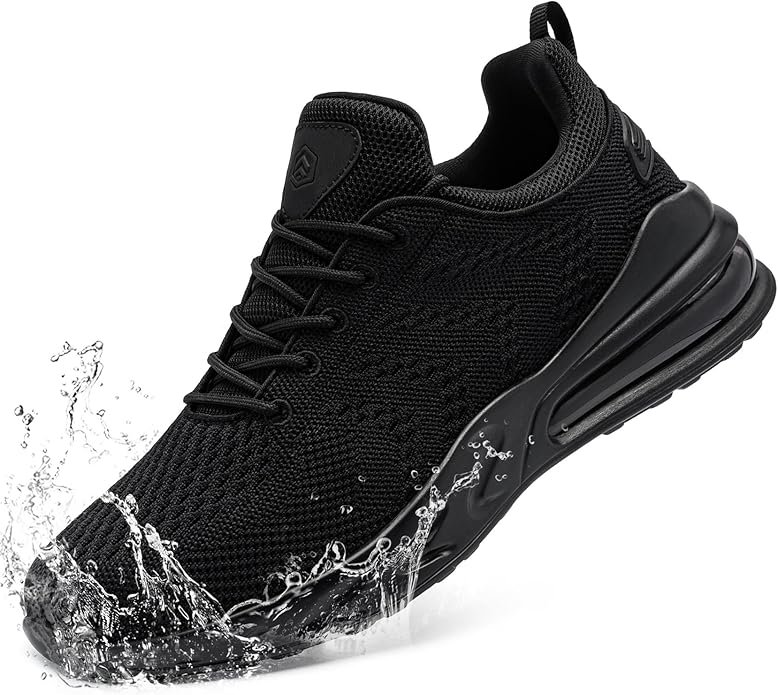
Best For: Water-resistant work sneaker style
Why It Works: LARNMERN is the most sneaker-like option among the supplied products and includes a mesh upper, rubber outsole, cushion bladder foam midsole, anti-fatigue footbed, medium arch classification, and slip-resistant construction.
Expert Analysis: This product deserves inclusion because it demonstrates an important distinction in the waterproof category. The product title uses “waterproof,” but the supplied specification table lists its water resistance level as Water Resistant. The product description also specifically mentions protection from light moisture.
For that reason, it should not be treated as equivalent to a fully waterproof molded clog.
Pros:
- More sneaker-like construction
- Water-resistant upper
- Rubber outsole
- Slip-resistant
- Cushion bladder foam midsole
- Anti-fatigue footbed
Cons:
- Specification lists water resistant rather than waterproof
- Mesh upper may not be ideal for heavy fluid exposure
- Men’s product
- Specific waterproof testing not supplied
Main Tradeoff: More conventional sneaker feel, but less water protection than the products explicitly classified as waterproof.
Who Should Buy: Nurses who prefer a sneaker format and mainly need protection from light moisture.
Who Should Skip: Nurses dealing with frequent liquid exposure who specifically need waterproof construction.
Verdict: A useful water-resistant alternative, not the strongest choice when true waterproofing is the primary requirement.
🛒 Check Price on Amazon7. Dansko XP 2.0 Clogs
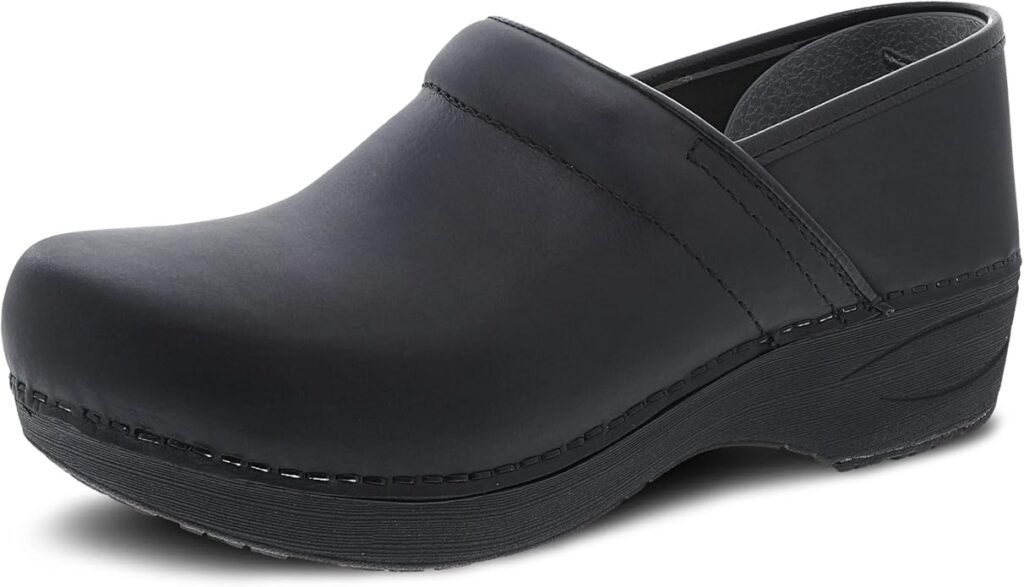
Best For: Support-oriented clog construction
Why It Works: The Dansko XP 2.0 uses a leather upper, EVA midsole, dual-density PU footbed, Natural Arch technology, memory foam, removable footbed, and slip-resistant rubber outsole.
Expert Analysis: This is a strong footwear option for nurses who prioritize support and long-standing comfort, but it should not be classified as a fully waterproof shoe based on the supplied data. Its listed water-resistance level is Water Repellent.
That makes it better suited to light moisture exposure than repeated liquid saturation.
Pros:
- EVA midsole
- Dual-density PU footbed
- Arch-support features
- Memory foam
- Removable footbed
- Slip-resistant rubber outsole
- Rocker bottom
Cons:
- Listed as water repellent rather than waterproof
- Higher supplied price of $164.95
- Clog format
- Supplied product data identifies the style for women
Main Tradeoff: More support-oriented construction, but less water protection and a much higher supplied price than the budget options.
Who Should Buy: Nurses who prioritize support features and only need limited water protection.
Who Should Skip: Nurses specifically searching for a fully waterproof shoe for frequent liquid exposure.
Verdict: A strong support-oriented work clog, but not one of the top waterproof picks from this product set.
🛒 Check Price on Amazon8. Skechers Women’s Squad Slip On
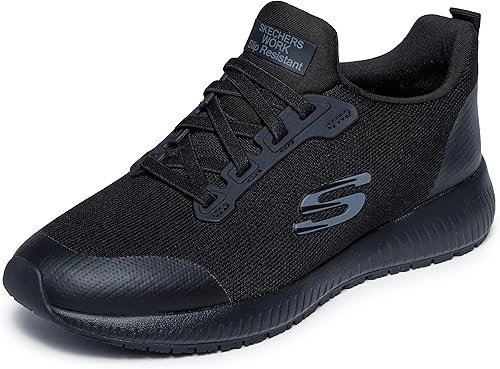
Best For: Slip-resistant work sneaker alternative
Why It Works: Skechers Squad SR offers memory foam cushioning, relaxed fit, slip-resistant traction for wet, dry, and oily surfaces, and 3M Scotchgard water-repellent treatment according to the supplied description.
Expert Analysis: This is a useful comparison because it looks more like a conventional work sneaker than the molded waterproof clogs.
However, there is an important contradiction in the supplied information: the product description says 3M Scotchgard treatment repels water, while the specification table lists the water resistance level as Not Water Resistant.
For a waterproof-shoe buying guide, that means it should not be presented as a waterproof product.
Pros:
- Memory foam
- Relaxed fit
- Slip-resistant
- Wet, dry, and oily surface recommendation
- 3M Scotchgard treatment
- 56,572 supplied reviews
Cons:
- Specification lists not water resistant
- Not classified as waterproof
- Less suitable for heavy liquid exposure
- Supplied data does not provide ASTM F3445-24 certification
Main Tradeoff: More familiar sneaker construction, but weaker water protection than the waterproof clogs.
Who Should Buy: Nurses who prioritize a work-sneaker feel and slip resistance over full waterproofing.
Who Should Skip: Nurses specifically searching for waterproof footwear.
Verdict: A good work-shoe comparison but not a top waterproof recommendation.
🛒 Check Price on AmazonMain Comparison Table
| Product | Supplied Price | Rating | Reviews | Water Protection | Best For | Key Feature | Main Tradeoff |
| Crocs Bistro | $33.74 | 4.5 | 74,670 | Waterproof | Overall | Easy clean + slip resistant | Clog format |
| Crocs On The Clock | $37.49 | 4.3 | 35,893 | Waterproof | Hospital work | ASTM claims + washable | Runs large |
| Sticky Nursing Shoes | $49.90 | 4.1 | 17,056 | Waterproof | Easy cleaning | Wipeable + healthcare use | Limited technical specs |
| ZXT Work Clogs | $31.99 | 4.0 | 1,246 | Waterproof | Value | Memory foam + adjustable strap | No supplied ASTM data |
| NITTI Garden Clogs | $25.99 | 4.0 | 1,537 | Waterproof | Lightweight use | EVA + easy clean | Garden/casual positioning |
| LARNMERN | $49.90 | 4.0 | 9,595 | Water resistant | Sneaker feel | Foam + rubber outsole | Not specified as waterproof |
| Dansko XP 2.0 | $164.95 | 4.4 | 14,769 | Water repellent | Support | Arch support + removable footbed | High price |
| Skechers Squad SR | $44.97 | 4.4 | 56,572 | Not water resistant | Work sneaker | Memory foam + slip resistance | Not waterproof |
Decision Matrix
| Nursing Need | Recommended Product | Why |
| Best overall waterproof option | Crocs Bistro | Strong combination of waterproofing, cleaning, enclosed toe, and traction |
| Hospital-focused waterproof clog | Crocs On The Clock | Supplied workplace and ASTM claims |
| Easy cleaning | Crocs Bistro | Soap-and-water cleaning is specifically supplied |
| Healthcare-focused budget alternative | Sticky | Specifically positioned for nursing and healthcare |
| Lower-cost waterproof clog | ZXT | Waterproof, cushioned, adjustable, and supplied at $31.99 |
| Lightweight waterproof construction | NITTI | EVA construction and waterproof classification |
| Sneaker-style alternative | LARNMERN | More conventional sneaker construction, but water resistant |
| Support-focused option | Dansko XP 2.0 | Arch support, EVA midsole, PU footbed, memory foam |
| Work sneaker alternative | Skechers Squad SR | Slip-resistant and memory foam, but not waterproof |
How to Choose the Right Waterproof Nursing Shoe
If You Deal With Frequent Spills
Start with waterproof molded construction.
Crocs Bistro, Crocs On The Clock, Sticky, ZXT, and NITTI all have supplied waterproof classifications. Of those, Crocs Bistro and On The Clock have the strongest workplace-specific positioning.
If Easy Cleaning Is Your Priority
Look for a shoe that can be wiped or washed without relying heavily on exposed fabric.
Crocs Bistro specifically states that it can be cleaned with soap and water. Sticky, ZXT, and Crocs On The Clock also provide supplied easy-clean or washable information.
If Slip Resistance Is Your Main Concern
Do not judge traction solely from the word “non-slip.”
Look for specific testing information where available. ASTM F3445-24 is a current performance specification for footwear slip resistance using the ASTM F2913 whole-shoe tester.
Among the supplied products, Crocs On The Clock has the clearest supplied ASTM references.
If You Prefer a Sneaker
LARNMERN and Skechers provide more conventional work-sneaker alternatives.
However, neither should be presented as equivalent to the waterproof clogs. LARNMERN is listed as water resistant, while Skechers is listed as not water resistant in the supplied specification table.
If You Have a Wide Forefoot
Do not assume that a roomy shoe is automatically the same as a wide shoe.
The supplied Crocs Bistro information describes a roomy fit, while Bigant includes adjustable instep straps designed to accommodate wider or narrower feet. However, neither product’s supplied information gives a standardized width measurement.
Always check the current Amazon size chart and product-specific fit guidance before ordering.
If You Work 12-Hour Shifts
Comfort should be evaluated as a combination of cushioning, fit, stability, and weight rather than cushioning alone.
Research on prolonged standing suggests that footwear design involves a balance between cushioning and support.
For a broader long-shift comparison, see our guide to the best nursing shoes for night shift.
Are Waterproof Clogs Better Than Waterproof Sneakers for Nurses?
Not necessarily.
Waterproof clogs can be excellent for nurses who prioritize easy cleaning, quick on/off, and fluid protection. Waterproof or water-resistant sneakers can be more appealing to nurses who prefer a conventional heel-to-toe fit and athletic-shoe feel.
The choice also depends on workplace policy. A clog that performs well on paper is not useful if your facility requires a different style.
Nurses interested specifically in clog construction can compare these options with our guide to the best nursing clogs 2026.
How Should Waterproof Nursing Shoes Fit?
Your heel should remain reasonably secure without painful pressure, while your toes should have enough room to avoid compression.
Try shoes with the socks you normally wear at work. If your feet tend to change in volume during long shifts, avoid selecting a shoe that feels excessively tight when you first try it.
Also check the instep. Slip-on clogs can feel convenient, but the foot still needs adequate security for walking, turning, and moving around patients.
Are Waterproof Shoes Breathable?
Usually, waterproof construction involves some compromise in airflow.
Molded EVA or synthetic constructions can be easier to clean and more resistant to liquid, while mesh-based uppers generally allow more airflow.
If your workplace has relatively low fluid exposure, you may prefer a more breathable work sneaker. If spills and cleaning are the dominant concern, easier cleaning and water protection may deserve greater priority.
Do Nurses Need Waterproof Shoes?
Not every nurse needs fully waterproof footwear.
Waterproof shoes make more sense for nurses who frequently encounter spills, wet floors, cleaning fluids, or other liquid exposure. Nurses in dry outpatient environments may get more benefit from prioritizing cushioning, fit, breathability, and weight.
For a broader comparison of work footwear, see our best shoes for healthcare workers who are not nurses.
Are Waterproof Nursing Shoes Slip Resistant?
No. Waterproof and slip resistant describe different properties.
A waterproof shoe can resist liquid penetration while still having poor traction. Conversely, a slip-resistant shoe may provide good traction but have an upper that allows water to penetrate.
Look for both characteristics separately.
What Is the Difference Between Waterproof and Water-Resistant Nursing Shoes?
Waterproof is the stronger claim in the supplied product data. Water-resistant footwear is designed to resist some moisture but should not automatically be treated as fully waterproof.
For this product group, LARNMERN is listed as water resistant, while Dansko is listed as water repellent and Skechers is listed as not water resistant.
Can Nurses Wear Crocs?
They can if their employer permits the specific style.
The Crocs Bistro and On The Clock supplied here are designed around work use and include closed-toe and slip-resistant features. However, individual hospitals and units may have their own requirements.
Always verify your facility’s footwear policy.
Are Expensive Waterproof Nursing Shoes Worth It?
Not automatically.
The supplied products range from $25.99 to $164.95, but higher price does not automatically mean better waterproofing.
Dansko XP 2.0 is the most expensive supplied option and offers a more support-focused construction, but it is listed as water repellent rather than waterproof. Meanwhile, lower-priced Crocs, Sticky, ZXT, and NITTI products are explicitly classified as waterproof.
The better question is whether the shoe’s features match your work environment.
How Often Should Nurses Replace Waterproof Shoes?
There is no reliable universal replacement interval for every nurse or shoe.
Inspect the outsole, cushioning, upper, footbed, and overall fit. If the outsole is visibly worn, the cushioning has noticeably changed, the upper is damaged, or the shoe no longer feels secure, reassess whether it remains suitable for work.
Replacement should be based on the condition of the footwear and the demands of the job rather than an arbitrary number of months.
Can Waterproof Shoes Be Used for 12-Hour Shifts?
They can, but waterproofing alone does not determine long-shift comfort.
For a 12-hour shift, consider cushioning, fit, stability, weight, heel security, and how the shoe feels after extended standing and walking.
A waterproof shoe that is uncomfortable after several hours is not a good solution simply because it keeps water out.
Expert Nursing Shoe Tips
Measure Your Feet Later in the Day
If your feet tend to feel larger after work, try footwear later in the day rather than relying only on a morning fitting.
Wear Your Normal Work Socks
A shoe that fits without socks can feel different with the socks you actually wear during a shift.
Check the Toe Box
Your toes should not be compressed against the front or sides of the shoe.
Check Heel Security
A roomy clog can be comfortable but may feel unstable if the heel moves excessively during walking.
Do Not Confuse Softness With Support
A soft footbed can feel immediately comfortable, but the overall shoe still needs to provide a secure and appropriate platform.
Clean According to the Manufacturer’s Instructions
Waterproof does not mean every shoe should be submerged or machine washed. Follow the product-specific cleaning instructions.
Let Wet Footwear Dry Properly
If footwear becomes wet inside, allow it to dry fully before the next shift. Avoid using excessive heat unless the manufacturer specifically permits it.
Rotate Shoes When Practical
A second pair can give footwear more time to dry between shifts and can also allow you to alternate different constructions.
Inspect the Outsole
Visible tread wear matters for work shoes because traction depends partly on the condition of the outsole.
Check Your Facility’s Policy
Before ordering, verify whether your hospital permits clogs, slip-on footwear, specific colors, or particular outsole requirements.
Final Verdict
There is no single waterproof shoe that fits every nursing environment.
If your priority is the strongest overall combination of waterproofing, easy cleaning, enclosed coverage, and work-focused traction, choose the Crocs Bistro.
If you want a workplace-oriented waterproof clog with the supplied ASTM references, choose the Crocs On The Clock.
If easy cleaning and healthcare-specific positioning matter most, Sticky is a strong alternative.
If you want a lower-cost waterproof clog with memory foam and an adjustable strap, ZXT is the value choice.
If lightweight EVA waterproof construction is your priority and your facility permits the style, NITTI is worth considering.
LARNMERN is better treated as a water-resistant sneaker alternative, while Dansko XP 2.0 is better viewed as a support-oriented water-repellent clog. Skechers Squad SR is a slip-resistant work sneaker, but the supplied specification does not classify it as water resistant.
For nurses who are still deciding between waterproof footwear and more conventional work shoes, start with our broader best shoes for nurses 2026 guide.
Affiliate Disclosure
Some links on this page are affiliate links. If you purchase through them, Urban Style Footwear may earn a commission at no additional cost to you. Our recommendations are based on the product information, footwear characteristics, and buying criteria discussed in this guide, not on the size of the commission.