
Best Nursing Sneakers 2026: Top Picks for 12-Hour Shifts
✅ Expert Footwear Analysis | 🛒 Amazon US Options | 📅 Updated September 2026
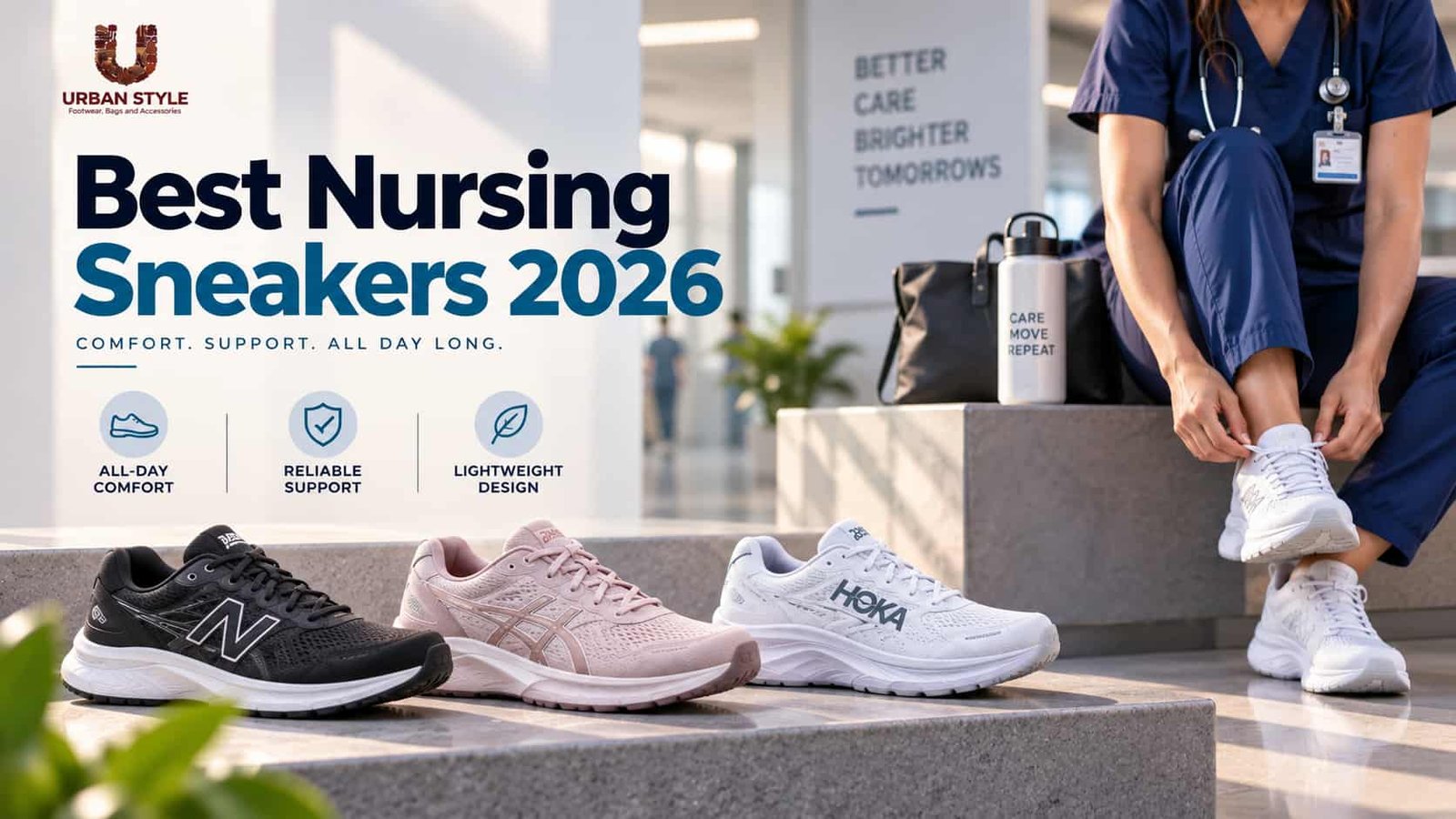
The best sneakers for nurses in 2026 combine cushioning that holds up over 12-hour shifts, a stable platform that reduces foot fatigue, and a fit that accommodates swelling. Based on published specifications, the New Balance 608 V5 offers the strongest value for most nurses, while the Brooks Adrenaline GTS 25 leads for stability and the Skechers D’Lites Fresh Start leads for maximum cushioning.
🛒 Top Picks: Best Nursing Sneakers 2026
Hand-picked picks based on published specifications, cushioning technology, and nurse-focused construction. Tap any card to check the current price on Amazon US.
⭐ Top 6 Standout Picks
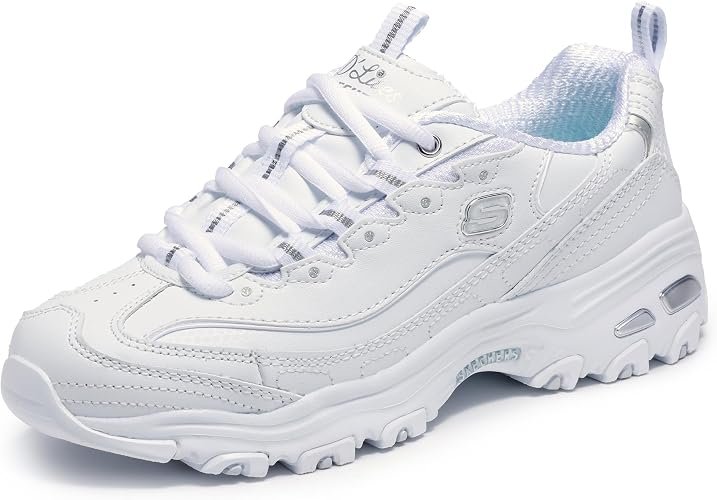
Skechers D’Lites Fresh Start
Highest-rated sneaker in the guide with Air-Cooled Memory Foam, leather upper, and flexible rubber outsole.
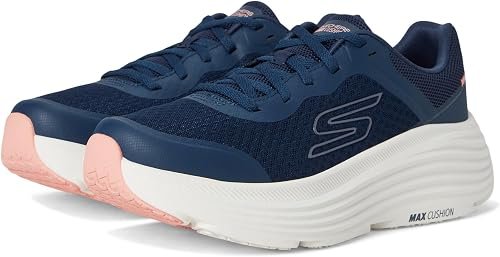
Skechers Max Cushioning Endeavour
Air-Cooled Goga Mat insole with Natural Rocker Technology and machine washable construction.
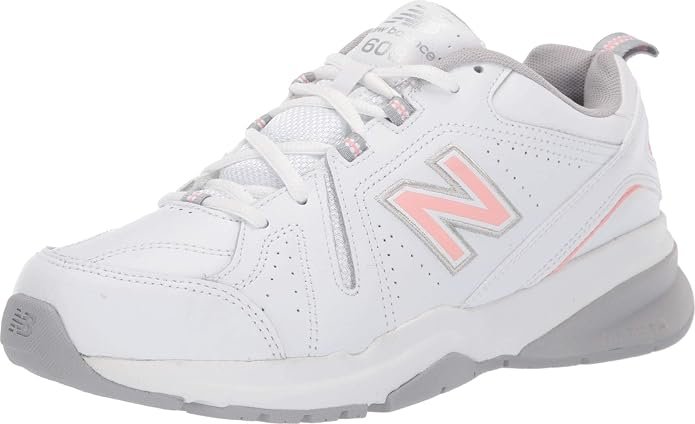
New Balance 608 V5
ABZORB heel pad, suede leather upper, and slip-resistant outsole. Best balance of price and performance.
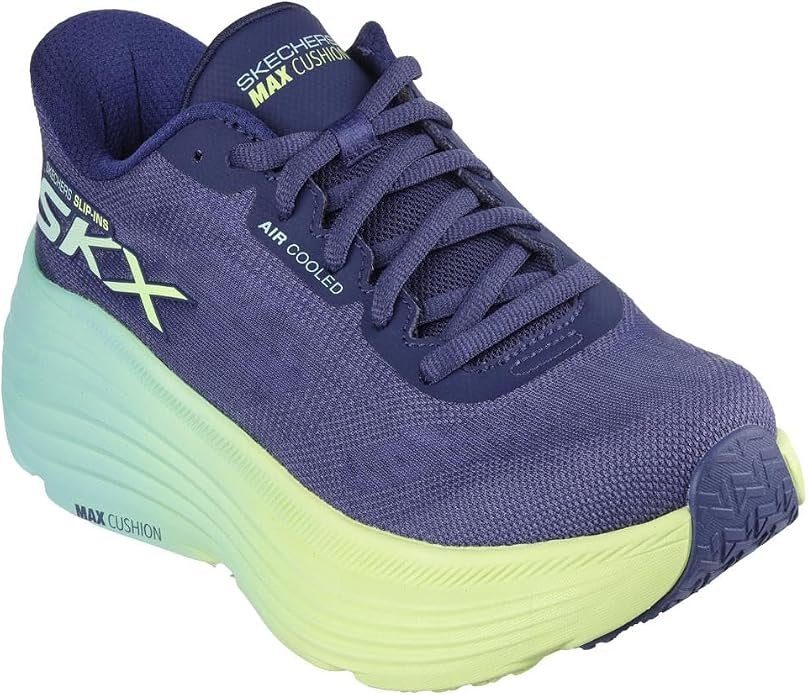
Skechers Endeavour Hallandale
Hands-free slip-in with Heel Pillow for secure fit, plus max cushioning and machine washable construction.
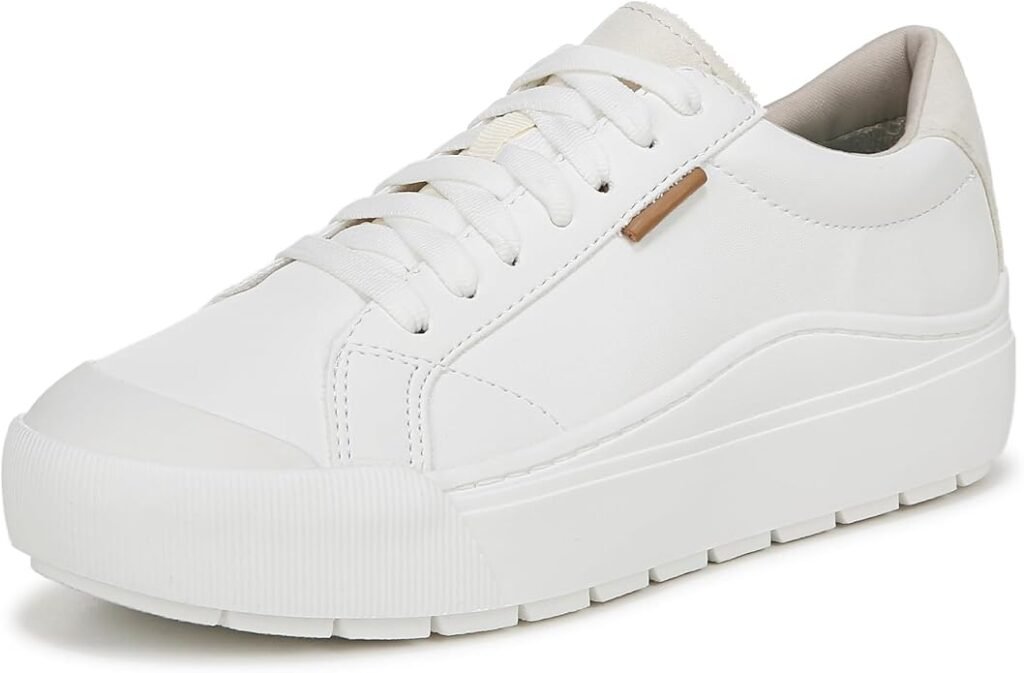
Dr. Scholl’s Time Off Sneaker
B+ ball girth in medium sizing with BLOOM foam cushioning and anti-odor insole. Ideal for wider forefeet.
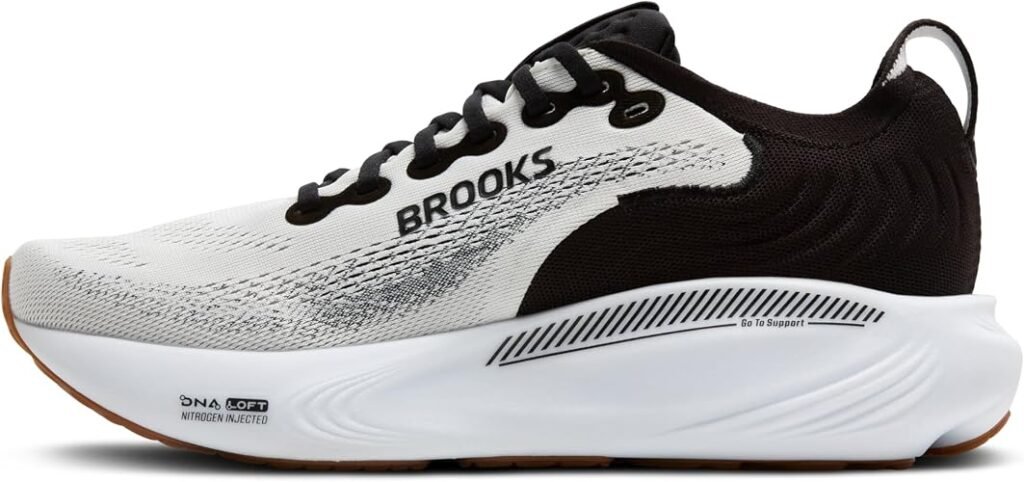
Brooks Adrenaline GTS 25
GuideRails holistic support with DNA LOFT v3 cushioning. PDAC A5500 diabetic and APMA accepted.
📋 Full Shortlist: 4 More Picks
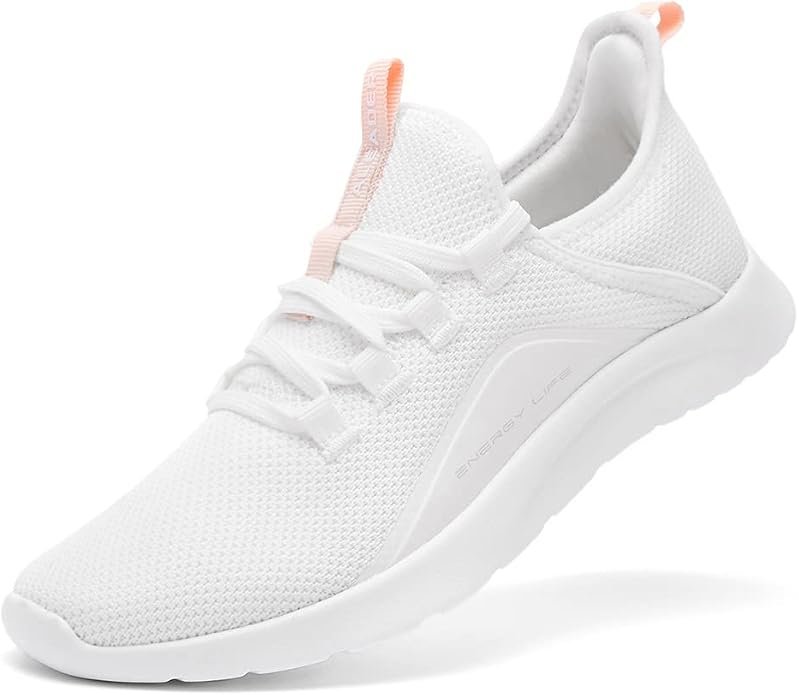
ALEADER Energycloud Slip On
Knit upper with Energycloud midsole and memory foam sockliner at a budget price.
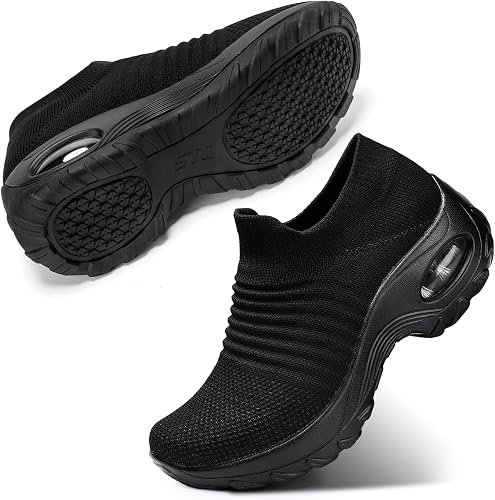
STQ Walking Shoes Slip On
Lowest-priced sneaker in the guide with breathable knit and slip-resistant outsole.
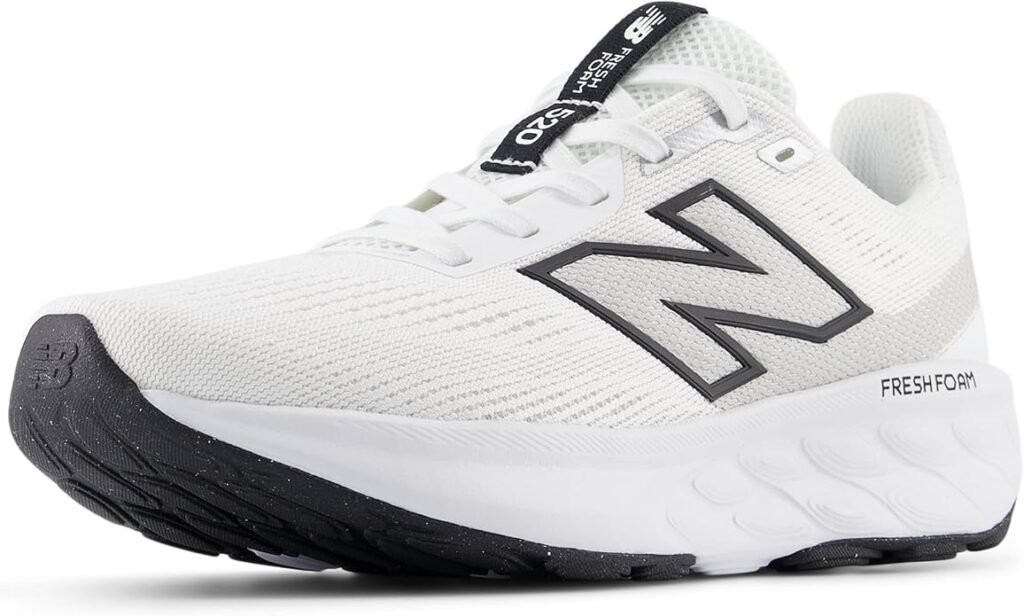
New Balance Fresh Foam 520 V9
Lightweight at 208 grams with Fresh Foam cushioning and 10 mm heel-to-toe drop.
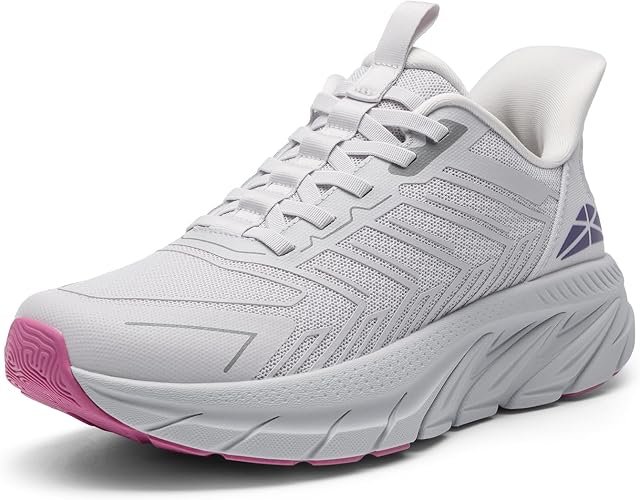
ALLSWIFIT Slip On Sneakers
High-density foam insole with arch support, no-tie elastic laces, and textured outsole.
Introduction
A nurse working a 12 hour shift in a Boston hospital logs the equivalent of a 5K in steps before lunch. Most of that walking happens on hard tile, linoleum, and concrete-like flooring that reflects impact straight back into the foot and lower leg. By hour eight, the difference between a shoe that supports the foot and one that just covers it becomes obvious in the knees, lower back, and arches.
Nursing sneakers are not the same as running shoes. Running shoes are engineered for forward motion on forgiving surfaces. Nurses need footwear that handles pivoting, lateral movement, standing in one position, and sudden direction changes on unforgiving floors. A cushioned shoe with a narrow forefoot may feel fine on a running track but slip or pinch on a hospital corridor.
This guide reviews 10 nursing sneakers available on Amazon US, based on published specifications and construction details. It covers how to evaluate cushioning, stability, slip resistance, fit, and durability, and it explains which sneakers work best for specific nursing environments and foot types. Nurses who prefer a different silhouette can compare athletic options against our guide to the best nursing clogs, and anyone still deciding on a category can review the comparison in clogs vs sneakers for nurses.
What Are Nursing Sneakers?
Nursing sneakers are athletic-style work shoes designed for healthcare professionals who stand and walk for most of their shift. They share several features that distinguish them from casual sneakers or performance running shoes. Most have a closed toe and closed heel for workplace compliance, a rubber outsole with a tread pattern designed for traction on hard floors, and some combination of foam cushioning or supportive insoles for underfoot comfort.
Nursing sneakers differ from ordinary footwear in three practical ways. First, they are selected for extended periods of standing and walking rather than short-duration exercise. Second, fit and comfort are especially important when footwear is worn throughout a long clinical shift. Third, traction becomes an important consideration because healthcare workers can encounter smooth floors and occasional liquid contamination. Workplace safety guidance from the CDC’s National Institute for Occupational Safety and Health (NIOSH) identifies slips, trips, and falls as important hazards for healthcare workers and recommends measures to reduce these risks. NIOSH healthcare workplace safety guidance
A running shoe may prioritize running-specific cushioning and flexibility, while a nursing sneaker needs to balance cushioning, stability, traction, durability, and workplace requirements. The ideal combination depends on the nurse’s work environment, walking demands, foot shape, and employer’s footwear policy.
If you want the broadest category overview, our pillar guide to the best shoes for nurses covers every silhouette from sneakers to clogs to slip-ons.
Why Do Nursing Sneakers Matter for Nurses?
Nursing sneakers matter because nurses can spend long periods standing and walking during clinical work. Footwear therefore becomes an important part of overall work comfort. Research into prolonged-standing occupations indicates that footwear characteristics can influence foot comfort and fatigue, making cushioning, support, fit, and sole construction relevant factors when selecting work shoes.
Flooring is another consideration. Clinical environments commonly involve firm indoor flooring, and nurses may spend many hours repeatedly walking and standing on these surfaces. A well-designed sneaker can provide cushioning and stability, but a taller or softer midsole does not automatically make a shoe better or more stable. The appropriate balance depends on the wearer and the demands of the job.
Slip resistance is particularly important in healthcare environments where water, cleaning solutions, and other liquids may contaminate walking surfaces. ASTM F3445-24 establishes minimum slip-resistance performance requirements for footwear and references whole-shoe testing under ASTM F2913. ASTM also notes that laboratory test results do not guarantee performance under every real-world condition. ASTM F3445-24 slip-resistance standard
For a broader look at traction-focused options, see our guide to the best slip-resistant shoes for nurses.
Clinical ergonomics are also relevant for nurses who spend extended periods standing. AORN ergonomic guidance for perioperative settings identifies prolonged standing as a contributor to musculoskeletal strain and includes supportive footwear among measures that can help address prolonged-standing demands. AORN ergonomic guidance on prolonged standing
Verify your employer’s footwear policy. Some hospitals require all-white shoes. Others specify closed heels, particular colors, or specific materials. Confirm the requirements for your unit before purchasing, because a shoe that performs well for comfort and traction may still fail to meet a facility’s workplace requirements.
What Should Nurses Look For in Nursing Sneakers?
Cushioning
What it is: Cushioning is the material between the foot and the ground that absorbs impact. In nursing sneakers, cushioning usually comes from an EVA, TPU, or PEBA foam midsole, sometimes supplemented with a gel insert or memory foam insole.
Why it matters: Nurses who stand in one position for long periods benefit from moderate cushioning. Nurses who walk long distances may prefer slightly firmer foam for energy return.
What to look for: A midsole that compresses under pressure but recovers. Look for terms like “Air-Cooled Memory Foam,” “Fresh Foam,” or “DNA LOFT” in the product listing, which indicate specific cushioning technologies.
Tradeoff: Very soft cushioning can feel comfortable for the first hour and fatiguing by hour six if the shoe lacks structure.
Stability
What it is: Stability refers to how well a shoe controls foot motion and keeps the foot centered over the platform. A wide base, a firm heel counter, and a midsole that resists excessive compression all contribute.
Why it matters: Nurses who overpronate or need extra support during lateral movement benefit from stability features.
What to look for: A heel counter that holds the heel securely. A forefoot platform wide enough to accommodate toe splay without the foot rolling over the edge. Terms like “GuideRails” or “medial post” indicate stability construction.
Tradeoff: Highly stable shoes can feel stiff or heavy, particularly during the break-in period.
Slip Resistance
What it is: Slip resistance depends on the outsole compound and tread pattern. Rubber outsoles with siping (small slits in the tread) and lug patterns that channel liquid away from the contact surface generally provide better traction on wet hard floors.
Why it matters: Nurses in ER, ICU, dialysis, and GI labs regularly encounter spilled fluids. Even in dry units, a spill can happen at any time.
What to look for: Rubber outsole. Tread pattern with visible channels or lugs. References to ASTM F2913 or F3445 testing in the product specifications.
Tradeoff: Deep treads can trap debris and are more difficult to clean than smooth outsoles.
Fit and Width
What it is: Fit affects everything from heel security to toe room. A shoe that is too narrow compresses the forefoot and can aggravate bunions or neuromas.
Why it matters: Feet swell during long shifts, so a shoe that feels snug at 6 a.m. may feel tight by 2 p.m. A shoe that is too long allows the heel to slip.
What to look for: Toe box volume that allows toes to spread without pressure. A heel that locks in place without pinching. Width options if your foot is wider than a standard B width. The Dr. Scholl’s Time Off, for example, uses a B+ ball girth in medium widths, which is a half girth wider than the industry standard.
Tradeoff: A roomy toe box can feel loose for nurses with narrow feet.
Breathability
What it is: Breathability affects foot temperature and moisture. Mesh uppers allow air circulation. Leather and synthetic leather uppers are more durable and easier to wipe but hold heat.
Why it matters: Nurses who work in warm units or wear compression socks may prefer a more breathable upper.
What to look for: Engineered mesh or knit uppers. Ventilation panels rather than a fully mesh upper if you need both breathability and cleanability.
Tradeoff: Mesh uppers are harder to wipe clean and offer less water resistance. If fluid exposure is a concern, our guide to the best waterproof shoes for nurses covers fully sealed alternatives.
Durability
What it is: Durability in nursing sneakers relates primarily to midsole compression and outsole wear. EVA foam loses cushioning over time. Rubber outsoles abrade on hard flooring.
Why it matters: A shoe that loses its cushioning after two months is not a good value even at a low price.
What to look for: Durable rubber outsole. Midsole material that specifies compression resistance. Replace shoes when the midsole feels flat or the outsole tread is visibly worn.
Nursing Workplace Considerations
Unit-specific demands. ICU nurses may spend more time standing at bedsides and monitors. ER nurses pivot and move quickly, which we cover in more detail in our guide to the best nursing shoes for ER and surgical nurses. OR nurses may need shoes that can be wiped clean of blood or irrigation fluid. Outpatient clinic nurses may have more opportunity to sit between patients. Match the sneaker to the environment.
Dress codes. Many U.S. hospitals require closed-toe shoes. Some specify all-white or all-black. Verify before purchasing, especially if your unit has infection control requirements.
Shift length. An 8 hour shift and a 12 hour shift place different demands on footwear. Nurses working 12 hour shifts should prioritize cushioning that maintains its properties over time and a fit that accommodates swelling.
Commuting. Shoes that work in a hospital may not be comfortable for a commute that involves walking to a train or parking far from the entrance. Some nurses keep a separate pair of commuting shoes and change at work.
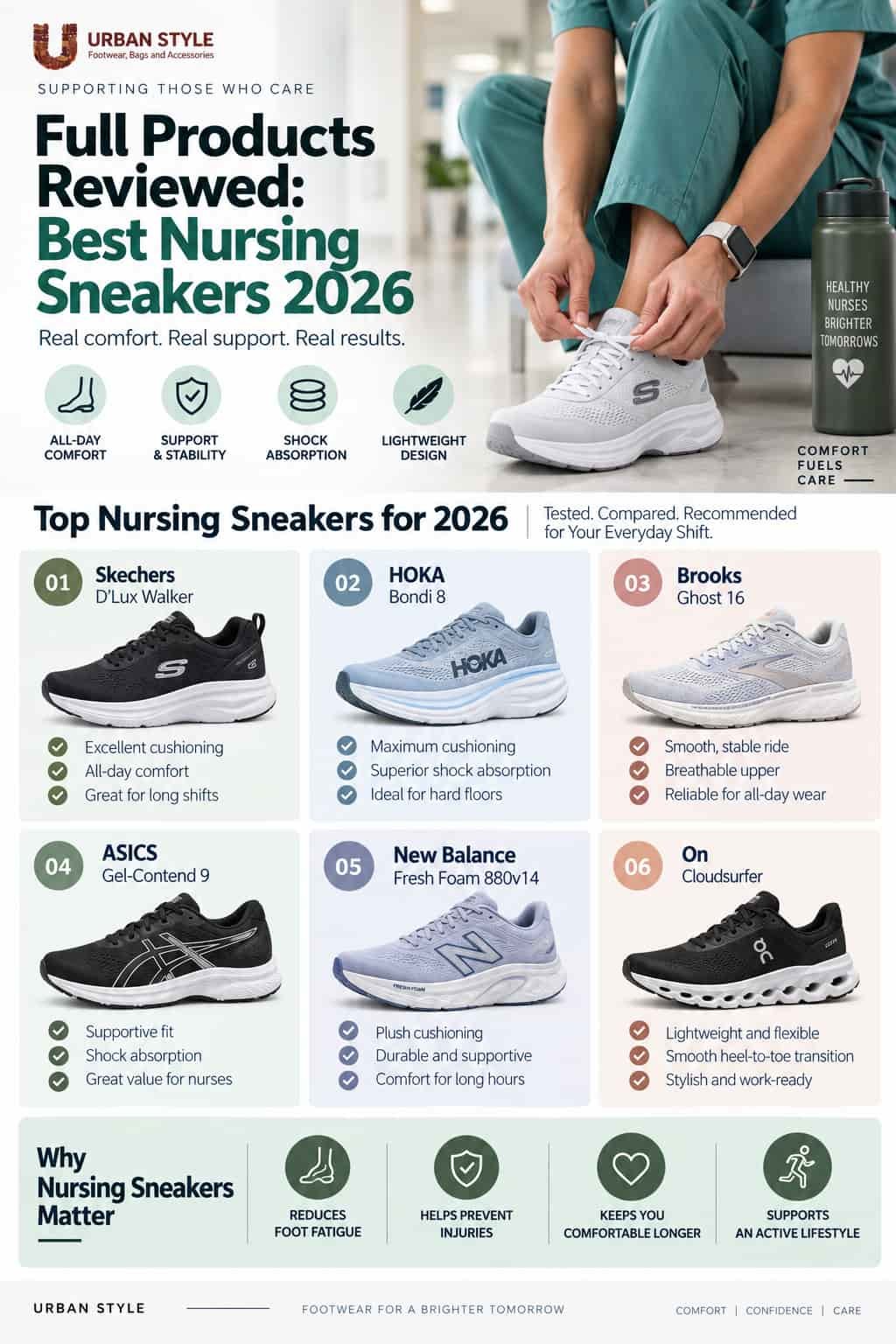
Product Reviews
Skechers Women’s D’Lites Fresh Start Sneaker
Skechers Women’s D’Lites Fresh Start Sneaker
Best For: Nurses who want maximum cushioning in a classic athletic silhouette.
Why It Works: The D’Lites Fresh Start uses an Air-Cooled Memory Foam insole and a cushioned midsole with a flexible rubber outsole. The leather and synthetic upper provides more structure than a full mesh shoe. The 1 inch platform adds a slight lift. At 4.6 stars with 40,579 reviews and an Amazon Overall Pick badge, it has one of the highest ratings in this guide.
Expert Analysis: The Air-Cooled Memory Foam insole is the key comfort feature. Memory foam molds to the foot over time, which can reduce pressure points during long standing periods. The 1 inch platform raises the heel slightly, which some nurses find comfortable for standing but which may feel less stable than a flat platform. The leather and synthetic upper is easier to wipe clean than mesh but less breathable. Nurses who want to see the broader Skechers nursing lineup can compare models in our guide to the best Skechers nursing shoes.
Pros:
- 4.6-star rating, highest in this guide
- Air-Cooled Memory Foam insole
- Leather and synthetic upper for durability
- Flexible rubber traction outsole
Cons:
- 1 inch platform may feel less stable than a flat shoe
- Water resistance level: Not specified as waterproof
Main Tradeoff: The 1 inch platform adds height but can reduce ground feel compared with a lower-profile sneaker. Nurses who need maximum stability may prefer a flatter shoe.
Who Should Buy: Nurses who want maximum cushioning in a classic athletic look.
Who Should Skip: Nurses who prefer a lower, flatter platform for stability.
Verdict: The highest-rated sneaker in this guide with strong cushioning. The platform height is the main consideration.
Skechers Women’s Max Cushioning Endeavour
Skechers Women’s Max Cushioning Endeavour
Best For: Nurses who want maximum cushioning with a natural rocker for smooth transitions.
Why It Works: The Max Cushioning Endeavour uses an Air-Cooled Goga Mat insole and Ultra Light midsole cushioning. The Natural Rocker Technology supports smooth heel-to-toe transitions. The engineered mesh upper provides breathability with synthetic overlays for structure. The shoe is machine washable and made with vegan materials. At 4.5 stars with 5,866 reviews, it has strong adoption.
Expert Analysis: The Air-Cooled Goga Mat is a Skechers-specific insole that adds cushioning and airflow. Combined with the Ultra Light midsole, this is one of the softer rides in the guide. The Natural Rocker Technology reduces toe flexion during walking, which may benefit nurses who experience forefoot pressure. The tradeoff is that a very soft, rockered platform can feel less stable for nurses who need more ground feel. The machine washable feature is rare in nursing footwear.
Pros:
- Maximum cushioning
- Air-Cooled Goga Mat insole
- Natural Rocker Technology
- Machine washable
- Vegan materials
Cons:
- Not water resistant
- Very soft cushioning may lack stability for some nurses
Main Tradeoff: The soft rockered platform trades stability for cushioning. Nurses with balance concerns may prefer a firmer shoe.
Who Should Buy: Nurses who prioritize underfoot softness and want a machine washable option.
Who Should Skip: Nurses who need a firmer, more stable platform.
Verdict: A strong maximum-cushioning option with the bonus of machine washability. Best for nurses who prefer a soft ride.
New Balance Women’s 608 V5 Casual Comfort Cross Trainer
New Balance Women’s 608 V5 Casual Comfort Cross Trainer
Best For: Nurses who want a reliable, moderately cushioned work sneaker at an accessible price.
Why It Works: The 608 V5 uses an IMEVA midsole with an ABZORB heel pad, which absorbs impact at the heel, the area that takes the most force during walking. The suede leather upper provides more structure than a mesh shoe, and the lace-up closure allows for fit adjustment. The outsole is slip resistant. At 4.4 stars across 45,057 reviews, it has a substantial user base. Nurses who want to compare the full New Balance nursing lineup can review models in our guide to the best New Balance shoes for nurses.
Expert Analysis: The ABZORB heel pad is a cushioning insert positioned specifically at the heel, not throughout the entire midsole. This means the shoe provides impact absorption where it is needed most during walking but does not wrap the whole foot in soft foam. The suede upper is more durable than mesh and easier to clean, though it will not breathe as well. The moderate cushioning level is a good middle ground for nurses who find maximum cushioning too soft.
Pros:
- ABZORB heel cushioning
- Suede leather upper for durability and cleanability
- Slip resistant outsole
- 27 percent discount from list price
- 45,000+ reviews
Cons:
- Water resistance level: Not water resistant
- Moderate cushioning may not suit nurses who want maximum softness
Main Tradeoff: The shoe is not water resistant, and the moderate cushioning is less plush than the Skechers options. Nurses who want maximum softness should consider a different model.
Who Should Buy: Nurses who want a balanced work sneaker with heel-focused cushioning at a strong value.
Who Should Skip: Nurses who need waterproofing or maximum cushioning.
Verdict: A solid entry-level nursing sneaker with a specific heel cushioning feature that addresses a common source of foot fatigue. The combination of price, durability, and cushioning makes it the best overall value in this guide.
Skechers Women’s Max Cushioning Endeavour Hallandale
Skechers Women’s Max Cushioning Endeavour Hallandale
Best For: Nurses who want hands-free entry with maximum cushioning.
Why It Works: The Hallandale uses Skechers Hands Free Slip-ins technology with a Heel Pillow that holds the foot in place without bending down. The Air-Cooled Goga Mat insole and ultra-light Soft Stride cushioning foam provide maximum cushioning. The engineered monomesh upper provides ventilation. The Natural Rocker Technology supports smooth heel-to-toe transitions. The shoe is machine washable and made with vegan materials. At 4.5 stars with 1,531 reviews, it has a strong rating.
Expert Analysis: The Heel Pillow is a padded collar that secures the heel without requiring laces. This addresses a common problem with slip-on shoes, which can allow the heel to lift during walking. The combination of max cushioning and hands-free entry is unusual in one shoe. The tradeoff is the higher price at $100.00, which is significantly more than the Skechers Max Cushioning Endeavour lace-up version.
Pros:
- Hands-free slip-in design
- Heel Pillow for heel security
- Maximum cushioning with Goga Mat insole
- Machine washable
- Vegan materials
Cons:
- Not water resistant
- $100.00 price point is high compared with other Skechers models
Main Tradeoff: The Hallandale costs more than its lace-up sibling without offering different cushioning. The hands-free design is the main added value, which may not justify the price for every nurse.
Who Should Buy: Nurses who want hands-free entry with maximum cushioning and a secure heel fit.
Who Should Skip: Nurses who want the same cushioning at a lower price or who prefer a traditional lace-up.
Verdict: A premium slip-on version of the Max Cushioning Endeavour with a secure Heel Pillow. The higher price is the main consideration.
Dr. Scholl’s Shoes Women’s Time Off Sneaker
Dr. Scholl’s Shoes Women’s Time Off Sneaker
Best For: Nurses with wide feet who need anatomical cushioning and arch support.
Why It Works: The Time Off uses anatomical cushioning with anti-odor insole technology and arch support that includes 15 percent plant-based BLOOM foam. The lace-up front with padded collar provides a snug fit. Medium widths have a B+ ball girth, which is a half girth wider than the industry standard B, and wide widths have a D ball girth. The water-resistant faux-leather upper and approximately 1 inch platform add a retro look. At 4.1 stars with 10,170 reviews and 1K+ bought in the past month, it has strong adoption.
Expert Analysis: The B+ ball girth in medium widths is a meaningful differentiator for nurses with wider forefeet. Most sneakers at this price point offer only a standard B width in women’s sizing. The BLOOM foam is a plant-based material that provides cushioning and addresses sustainability concerns. The anti-odor insole technology may be useful for nurses who wear the same shoes across multiple shifts. The tradeoff is that the Dr. Scholl’s sneaker is not waterproof despite the water-resistant upper.
Pros:
- B+ width in medium sizing (wider than standard)
- BLOOM foam cushioning
- Anti-odor insole technology
- Water-resistant faux-leather upper
- 1 inch platform
Cons:
- Not fully waterproof
- Moderate cushioning may not suit nurses who want maximum softness
Main Tradeoff: The B+ width in medium sizing may feel too wide for nurses with narrow feet. The moderate cushioning is a good middle ground but lacks the plushness of the Skechers models.
Who Should Buy: Nurses with wider forefeet who need anatomical cushioning and arch support.
Who Should Skip: Nurses with narrow feet or those who want maximum cushioning.
Verdict: A strong choice for nurses with wide feet, thanks to the B+ ball girth in medium widths. The BLOOM foam and anti-odor insole add practical value.
ALEADER Women’s Energycloud Lightweight Slip On
ALEADER Women’s Energycloud Lightweight Slip On
Best For: Nurses who want a lightweight, budget-friendly slip-on with memory foam cushioning.
Why It Works: The ALEADER Energycloud uses a stretchy knit upper for breathability and flexibility. The Energycloud midsole combined with a memory foam sockliner provides step-in comfort. The slip-on design with a decorative lace makes it easy to put on and take off. At $40.99 with 32 percent savings, 4.3 stars, and 14,668 reviews, it offers solid value at a low price.
Expert Analysis: The knit upper is the standout feature here. Unlike leather or synthetic uppers, a knit upper flexes and stretches with the foot, which can reduce pressure points during long standing periods. The Energycloud midsole is a foam compound designed for cushioning. The tradeoff is that knit uppers are harder to wipe clean and offer no water resistance. Nurses in wet units should consider a different shoe.
Pros:
- Knit upper for flexibility and breathability
- Energycloud midsole
- Memory foam sockliner
- Affordable price at $40.99
- 32 percent discount
Cons:
- Not water resistant
- Knit upper is harder to wipe clean
Main Tradeoff: The knit upper breathes well but does not handle fluid exposure. Nurses in high-spill units should choose a different shoe.
Who Should Buy: Nurses who want a lightweight, breathable slip-on for dry units.
Who Should Skip: Nurses in high-spill environments or who need a wipeable upper.
Verdict: A budget-friendly slip-on with a flexible knit upper and memory foam cushioning. Best suited to dry environments.
STQ Walking Shoes Women Slip On Sneakers
STQ Walking Shoes Women Slip On Sneakers
Best For: Nurses who want the lowest-priced slip-on sneaker with a breathable knit upper.
Why It Works: The STQ walking shoe uses a breathable knit upper that wraps the foot like a sock. The cushioned sole absorbs shock, and the rubber outsole is slip resistant. The slip-on design with an elastic cuff makes it easy to put on and take off. The insole is moisture-wicking and sweat-absorbent. At $30.00 with 30 percent savings and 73,839 reviews, it is the lowest-priced sneaker in this guide.
Expert Analysis: At $30.00, this is a budget shoe, and the construction reflects that. The moderate cushioning and low arch profile are less structured than higher-priced options. The breathable knit upper is comfortable for short shifts but may not provide enough underfoot protection for 12 hour shifts on hard floors. The slip-resistant outsole is listed but does not carry a specific ASTM certification in the supplied data.
Pros:
- Lowest price at $30.00
- Breathable knit upper
- Slip-on design with elastic cuff
- 73,000+ reviews
- Moisture-wicking insole
Cons:
- Moderate cushioning
- Low arch profile
- No ASTM slip-resistance certification specified
Main Tradeoff: The low price point means the cushioning and support are basic. For 12 hour shifts on hard floors, the shoe may not provide adequate underfoot protection.
Who Should Buy: Nurses who need a low-cost secondary shoe or who work shorter shifts.
Who Should Skip: Nurses who need maximum cushioning, structured arch support, or certified slip resistance.
Verdict: A budget slip-on that covers the basics. Not a replacement for a properly cushioned work shoe for 12 hour hospital shifts.
Brooks Women’s Adrenaline GTS 25 Running Shoe
Brooks Women’s Adrenaline GTS 25 Running Shoe
Best For: Nurses who need maximum stability and a certified diabetic-friendly shoe.
Why It Works: The Adrenaline GTS 25 uses GuideRails holistic support, which supports the body’s natural motion path while keeping excess movement in check. The DNA LOFT v3 cushioning is nitrogen-infused for lightweight softness. The breathable engineered mesh upper with flat-knit collar provides a secure fit. It is a certified PDAC A5500 diabetic shoe and carries the APMA Seal of Acceptance. At 4.4 stars with 3,296 reviews, it is the #1 Best Seller in Women’s Road Running Shoes.
Expert Analysis: GuideRails are not a traditional medial post. Instead of forcing the foot into a specific motion path, they provide support at the sides of the foot to limit excessive movement. For nurses who overpronate slightly or who want a stable platform without a rigid correction, this is a relevant construction difference. The PDAC A5500 certification is meaningful for nurses with diabetes who need footwear that meets Medicare therapeutic shoe requirements. The tradeoff is that this is a premium shoe at $149.99, and the stability features may feel unnecessary for nurses with neutral gait.
Pros:
- GuideRails holistic support system
- DNA LOFT v3 cushioning
- PDAC A5500 diabetic shoe certification
- APMA Seal of Acceptance
- #1 Best Seller in Women’s Road Running Shoes
Cons:
- Highest price at $149.99
- Not water resistant
Main Tradeoff: The premium price and stability features may not be necessary for nurses with a neutral stride. The shoe is also not water resistant.
Who Should Buy: Nurses who need stability support, nurses with diabetes, and nurses who want APMA-accepted cushioning.
Who Should Skip: Nurses who need a waterproof shoe or who prefer a firmer ride.
Verdict: The most supportive sneaker in this guide with meaningful certifications. The price is the main consideration.
New Balance Women’s Fresh Foam 520 V9 Running Shoes
New Balance Women’s Fresh Foam 520 V9 Running Shoes
Best For: Nurses who want a lightweight sneaker with Fresh Foam cushioning.
Why It Works: The Fresh Foam 520 V9 uses a Fresh Foam midsole designed for an ultra-cushioned, lightweight ride. The breathable engineered mesh upper helps create a durable runner for daily use. The shoe weighs only 208.2 grams (about 7.3 ounces), which is the lightest in this guide. The approximate 10 mm heel-to-toe drop gives the shoe a familiar running profile. At 4.3 stars with 2,842 reviews, it has solid adoption.
Expert Analysis: The lightweight construction is the key feature here. At 208.2 grams, this shoe reduces the energy cost of walking compared with heavier options. The 10 mm heel-to-toe drop is on the higher end for running shoes, which means the heel sits noticeably higher than the forefoot. This works well for heel strikers but may feel different for nurses who are used to flatter shoes. The Fresh Foam midsole is described as neutral support, so nurses who need stability features should look at the Brooks Adrenaline GTS 25 instead.
Pros:
- Lightweight at 208.2 grams
- Fresh Foam cushioning
- Breathable engineered mesh upper
- 10 mm heel-to-toe drop
- Neutral support
Cons:
- Not water resistant
- Neutral support only (no stability features)
Main Tradeoff: The lightweight build and neutral support mean this shoe is best for nurses with a neutral stride. Nurses who need stability support should look elsewhere.
Who Should Buy: Nurses who prioritize a lightweight feel and neutral cushioning.
Who Should Skip: Nurses who need stability features or waterproofing.
Verdict: A lightweight, cushioned sneaker that works well for nurses with a neutral stride. The lack of stability features is the main limitation.
ALLSWIFIT Women’s Slip On Walking Shoes Sneakers
ALLSWIFIT Women’s Slip On Walking Shoes Sneakers
Best For: Nurses who want a stable slip-on with a high-density foam insole.
Why It Works: The ALLSWIFIT slip-on uses a cushioned EVA midsole with a high-density foam insole for arch support. The out-turned collar and no-tie elastic laces make it easy to put on. The layered mesh upper with elastic Lycra lining provides breathability. The non-slip rubber outsole has a textured design for grip. At $45.59 with 20 percent savings, 4.3 stars, and 6,742 reviews, it offers a solid combination of features.
Expert Analysis: The high-density foam insole provides more arch support than standard flat insoles. The no-tie elastic laces eliminate the need to bend down, which is useful for nurses who need to change shoes quickly. The tradeoff is that the slip-on design may allow more heel movement than a lace-up shoe, especially for nurses with narrow heels.
Pros:
- High-density foam insole with arch support
- No-tie elastic laces
- Layered mesh upper with Lycra lining
- Non-slip rubber outsole
- Affordable at $45.59
Cons:
- Not water resistant
- Slip-on design may allow heel movement
Main Tradeoff: The slip-on design trades fit security for convenience. Nurses who want a locked-in fit should consider a lace-up alternative.
Who Should Buy: Nurses who want a stable slip-on with arch support and easy on-off.
Who Should Skip: Nurses who need a secure laced fit or waterproofing.
Verdict: A well-rounded slip-on with arch support and easy entry. The lack of lace lockdown is the main consideration.
Comparison Table
| Product | Price | Rating | Reviews | Best For | Key Feature | Width Options | Main Tradeoff |
| Skechers D’Lites Fresh Start | $52.49 | 4.6 | 40,579 | Best overall rating | Air-Cooled Memory Foam | Standard | 1 inch platform |
| Skechers Max Cushioning Endeavour | $57.00 | 4.5 | 5,866 | Max cushion | Goga Mat insole, rocker | Standard | Very soft ride |
| New Balance 608 V5 | $58.75 | 4.4 | 45,057 | Best value | ABZORB heel cushioning | Standard | Not water resistant |
| Skechers Endeavour Hallandale | $100.00 | 4.5 | 1,531 | Hands-free slip-on | Heel Pillow, machine washable | Standard | Higher price |
| Dr. Scholl’s Time Off | $75.00 | 4.1 | 10,170 | Wide feet | B+ ball girth, BLOOM foam | B+ medium, D wide | Moderate cushioning |
| ALEADER Energycloud | $40.99 | 4.3 | 14,668 | Budget slip-on | Knit upper, memory foam | Standard | Not water resistant |
| STQ Walking Shoes | $30.00 | 4.1 | 73,839 | Lowest price | Breathable knit, elastic cuff | Standard | Basic cushioning |
| Brooks Adrenaline GTS 25 | $149.99 | 4.4 | 3,296 | Best support | GuideRails, PDAC A5500 | Standard | Highest price |
| New Balance Fresh Foam 520 V9 | $69.99 | 4.3 | 2,842 | Lightweight | 208.2 grams, Fresh Foam | Standard | Neutral support only |
| ALLSWIFIT Slip On | $45.59 | 4.3 | 6,742 | Stability slip-on | High-density foam insole | Standard | Slip-on heel movement |
Decision Matrix
| Nursing Need | Recommended Product | Why |
| 12 hour shifts | Brooks Adrenaline GTS 25 or Skechers D’Lites | Stability and cushioning hold up over long shifts |
| Wide feet | Dr. Scholl’s Time Off | B+ ball girth in medium sizing is wider than industry standard |
| Slip resistance | New Balance 608 V5 | Slip resistant outsole listed in specifications |
| Easy cleaning | Skechers D’Lites or New Balance 608 V5 | Leather and suede uppers are easier to wipe than mesh |
| Budget | STQ Walking Shoes or ALEADER Energycloud | Lowest prices in the guide |
| Maximum cushioning | Skechers D’Lites or Skechers Max Cushioning Endeavour | Memory foam and Goga Mat insoles |
| Stability | Brooks Adrenaline GTS 25 | GuideRails holistic support system |
| Lightweight feel | New Balance Fresh Foam 520 V9 | 208.2 grams, the lightest in this guide |
| Hands-free entry | Skechers Endeavour Hallandale or ALLSWIFIT | Slip-in designs with Heel Pillow or elastic laces |
| Diabetic nurses | Brooks Adrenaline GTS 25 | PDAC A5500 certification |
How to Choose Nursing Sneakers
Start with your shift length and unit type. A nurse working 12 hour shifts in an ICU needs different footwear from a nurse working 8 hour shifts in an outpatient clinic. Longer shifts and higher-acuity units generally demand more cushioning and more stability.
Identify your foot’s specific needs. If you have a wide forefoot or bunions, prioritize a shoe with a roomy toe box and available width options. The Dr. Scholl’s Time Off is a strong example with its B+ ball girth in medium sizes. If you have high arches, look for structured arch support or removable footbeds that accommodate orthotics. If your feet swell significantly, choose a shoe with adjustable lacing or a flexible fit.
Verify your workplace policy. Closed toes and closed heels are commonly required. Some hospitals specify shoe color. Confirm before purchasing.
Consider the tradeoffs honestly. A waterproof shoe is easier to clean but less breathable. A maximum cushioning shoe is softer but potentially less stable. A budget shoe is accessible but may lack the midsole density for long shifts. There is no shoe that excels at everything.
For nurses who experience heel pain, our guide to the best shoes for nurses with plantar fasciitis covers shoes with specific heel cushioning features. For a broader brand comparison, our guide to the best HOKA shoes for nurses covers maximum-cushion alternatives from that brand, and our roundup of the best ASICS nursing shoes covers gel-cushioned options.
FAQ
What are the best sneakers for nurses working 12 hour shifts?
The best sneakers for 12 hour shifts combine cushioning that maintains its properties over time, a stable platform, and a fit that accommodates swelling. The Brooks Adrenaline GTS 25 offers the strongest stability support, and the Skechers D’Lites Fresh Start offers maximum cushioning with the highest rating in this guide.
Are running shoes good for nurses?
Running shoes can work for nursing if they provide adequate stability and traction. However, many running shoes are designed for forward motion on pavement, not for pivoting, lateral movement, and standing on hard tile. A running shoe with a wide base and a rubber outsole may be suitable. A shoe with a very soft, unstable platform may not.
Do nurses need slip-resistant shoes?
Slip resistance is relevant for all nurses, but especially for those who work in environments with frequent spills, such as ERs, dialysis units, and GI labs. Shoes with ASTM F2913 or F3445 certification have been objectively tested for traction on contaminated surfaces. Even in dry units, a rubber outsole with some tread is safer than a smooth sole.
Should nursing sneakers be waterproof?
Waterproof shoes are easier to wipe clean and protect the foot from fluid exposure. However, waterproof construction reduces breathability. Nurses in high fluid exposure environments should prioritize waterproofing. Nurses in dry environments may prefer a more breathable mesh shoe with a wipeable upper.
Are clogs or sneakers better for nurses?
Clogs offer structured arch support, easy cleaning, and a roomy toe box. Sneakers offer breathability, lighter weight, and more flexibility. Clogs with rocker bottoms may reduce forefoot pressure. Sneakers with mesh uppers may be more comfortable in warm units. The choice depends on the unit and the individual foot.
How should nursing sneakers fit?
They should fit with approximately a thumb’s width of space between the longest toe and the front of the shoe. The heel should be secure without slipping. The widest part of the foot should align with the widest part of the shoe. Feet swell during long shifts, so a shoe that feels snug in the morning may feel tight in the afternoon.
Do nurses need wide shoes?
Not all nurses need wide shoes, but nurses with wide feet, bunions, or a history of forefoot pressure should look for width options or shoes with a roomy toe box. The Dr. Scholl’s Time Off uses a B+ ball girth in medium widths, which is a half girth wider than the industry standard.
How much cushioning should nursing sneakers have?
Moderate to maximum cushioning is generally recommended for nurses who stand and walk for 8 to 12 hours. Very soft cushioning can feel comfortable initially but may lack the support needed for long shifts. A midsole with moderate firmness that maintains its properties over time is often more comfortable than a very soft foam that compresses quickly.
Are expensive nursing sneakers worth it?
A higher price often corresponds to better materials, more sophisticated cushioning systems, and certifications such as APMA acceptance or PDAC A5500. However, a less expensive shoe with a supportive footbed can work for some nurses. The key is whether the shoe meets the specific demands of your shift and your foot.
How often should nurses replace work shoes?
There is no universal replacement schedule. Replace shoes when the midsole feels compressed or flat, when the outsole tread is visibly worn, or when you notice increased foot fatigue that was not present when the shoes were new. Nurses who rotate between two pairs may extend the usable life of each pair.
Can nurses wear regular sneakers?
Regular sneakers may not meet workplace dress codes if they have open heels or non-compliant colors. They may also lack the slip resistance, cleanability, and support features of purpose-built nursing sneakers. A regular sneaker with a rubber outsole and a closed heel may work for low-risk environments, but nurses in high-spill units should choose a shoe with documented slip resistance.
What should nurses look for in nursing sneakers?
The most important factors are fit (toe box room, heel security, width), cushioning that maintains its properties, stability (wide base, heel counter), slip resistance (rubber outsole, ASTM testing), and cleanability (wipeable upper, removable insole). Breathability and weight are secondary considerations that depend on the work environment.
Expert Nursing Shoe Tips
Measure your feet later in the day. Feet swell as the day progresses. Measuring or fitting shoes in the afternoon or evening gives a more accurate sense of how a shoe will fit during a shift.
Size for the larger foot. Most people have one foot slightly larger than the other. Choose a size that fits the larger foot comfortably, and use lacing adjustments or an insert to manage the smaller foot.
Check the toe box with your toes, not your fingers. Your toes should be able to spread and wiggle without pressing against the front or sides of the shoe. If they feel cramped at rest, they will feel worse after hours of standing.
Use a heel lock lacing technique if your heel slips. If the shoe fits well in length but the heel lifts during walking, try a runner’s loop lacing pattern, which pulls the heel back into the heel counter.
Rotate between two pairs of shoes if possible. Alternating shoes gives the midsole foam time to recover between shifts. It also reduces the daily wear on each pair.
Watch for compressed cushioning. When the midsole of a shoe feels flat or hard compared with when it was new, the foam has likely lost its ability to absorb impact. This is a sign to replace the shoe, even if the upper still looks intact.
Clean shoes regularly. Wipe leather and suede uppers with a disinfectant wipe. Machine washable shoes should be washed according to the manufacturer’s instructions and air dried. Do not put shoes in a dryer, as heat can degrade adhesives and foam.
Replace insoles before replacing shoes. If the shoe’s upper and midsole are in good condition but the insole has flattened, a replacement insole can restore comfort.
Final Verdict
If your priority is maximum cushioning, choose the Skechers D’Lites Fresh Start. The Air-Cooled Memory Foam insole and 1 inch platform provide the most underfoot softness in this guide, with the highest rating at 4.6 stars.
If your priority is stability, choose the Brooks Adrenaline GTS 25. The GuideRails holistic support system and PDAC A5500 certification make it the most supportive sneaker for nurses who need motion control.
If you have wide feet, choose the Dr. Scholl’s Time Off. The B+ ball girth in medium widths is a half girth wider than the industry standard, and the D width in wide sizing accommodates even wider forefeet.
If your priority is lightweight feel, choose the New Balance Fresh Foam 520 V9. At 208.2 grams, it is the lightest sneaker in this guide, with Fresh Foam cushioning and a neutral ride.
If you want hands-free entry, choose the Skechers Endeavour Hallandale. The Heel Pillow and Hands Free Slip-ins design provide secure slip-on convenience with maximum cushioning.
If your priority is the lowest price, choose the STQ Walking Shoes. At $30.00, it covers the basics with a breathable knit upper and slip-resistant outsole.
Overall winner: The New Balance 608 V5 is the best overall sneaker for most nurses because it combines a meaningful heel cushioning feature, a durable suede leather upper, a slip-resistant outsole, and an accessible price. It does not have the maximum cushioning of a Skechers or the stability features of a Brooks, but for the widest range of nurses in the widest range of environments, it covers the essentials without a significant weakness.
Affiliate Disclosure
Some links on this page are affiliate links. If you purchase through them, Urban Style Footwear may earn a commission at no additional cost to you. Our recommendations are based on the product information, footwear characteristics, and buying criteria discussed in this guide, not on the size of the commission.