
How to Choose Nursing Shoes: A 2026 Guide for Long Shifts
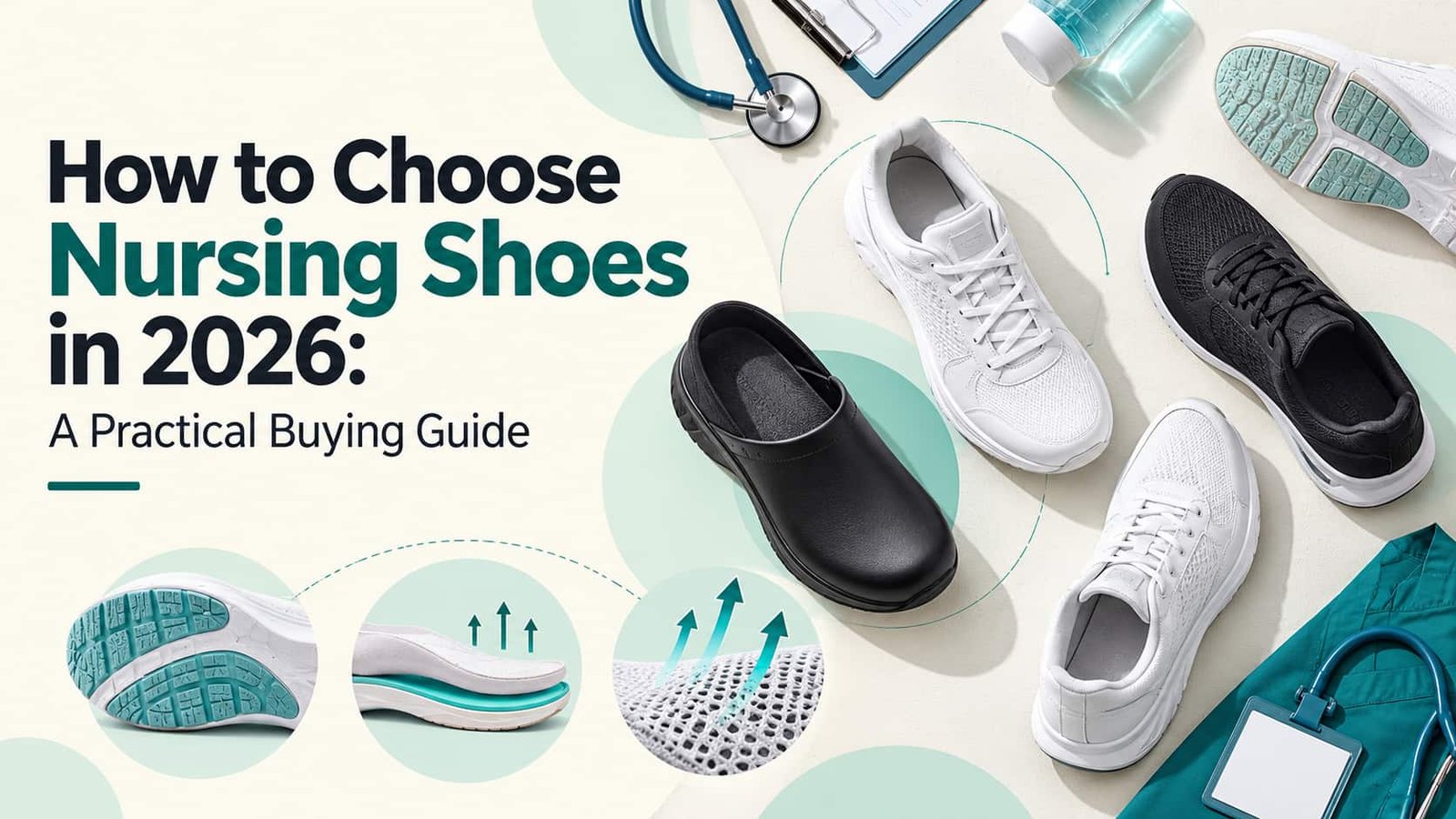
Choosing nursing shoes means matching four things to your shift: cushioning that holds up over 12 hours, a slip-resistant outsole for hard and wet floors, enough toe room and a heel that stays put, and an upper you can wipe clean. Start with your floor and your dress code, then compare shoes on those features.
Introduction
Picture a nurse finishing a 12-hour med-surg shift. Her feet ache by hour nine, her heel lifts with every step, and a spill near the med cart soaked through her old sneakers. The shoes that felt comfortable in the store are now the problem.
Nursing shoes have a harder job than most footwear. They need to handle long hours on hard floors, fluid exposure, frequent cleaning and quick movement between patients, all while meeting a workplace dress code. A poor choice can mean sore feet, an unsafe slip on a wet corridor, or a pair you cannot wear to work.
This guide explains how to choose nursing shoes step by step. It covers the features that matter, how those features trade off against each other, the workplace rules to check first, and the questions that help you narrow the field. At the end, you will find eight shoes worth comparing. Prices and ratings reflect Amazon US listings at the time of writing and may change.
What Are Nursing Shoes?
Nursing shoes are closed-toe work footwear designed for long periods of standing and walking. Most have a supportive midsole, an outsole built for indoor floors, and an upper that can be wiped clean. Many also have a removable footbed, which lets you add an insert or dry the shoe between shifts.
They differ from running shoes and fashion sneakers in what they prioritize. Running shoes are built for forward motion on roads and tracks. Fashion sneakers prioritize style. Nursing shoes prioritize standing comfort, grip on hard surfaces and easy cleaning.
Some nurses wear clogs, others wear slip-on or lace-up sneakers, and a smaller group wears mules or walking shoes. Each type solves different problems, which is why the rest of this guide compares them by feature rather than by brand.
Tap the statement that sounds most like your week, and see where to start.
I stand most of a 12-hour shift on hard floors
Start with cushioning and a closed-toe shoe with a slip-resistant outsole. Check your unit’s footwear policy first.
My shifts involve frequent spills or cleaning
Prioritize a wipeable upper and water resistance. Clogs are often easier to clean than laced shoes.
My feet swell by the afternoon
Look for an adjustable closure and a roomy toe box. Try shoes at the end of the day.
I need a shoe I can slip on between patients
A slip-on with a firm heel counter saves time. Confirm the heel stays put when you walk quickly.
Why Shoe Choice Matters for Nurses
Your feet carry a steady load through a shift. Standing still on hard floors puts constant pressure on the heel and forefoot, and walking adds repeated impact. A shoe with weak cushioning or poor fit can turn a manageable shift into an uncomfortable one by the last few hours.
Floors matter as much as shoes. Wet or polished tile is a common slip hazard in hospitals and clinics. The U.S. Occupational Safety and Health Administration publishes guidance on slips, trips, and falls that covers workplace hazards like these. Footwear is one factor alongside floor conditions, cleanup practices and the way work is organized.
Workplace rules also shape what you can buy. Some hospitals require closed-toe and closed-heel shoes. Some restrict colors or styles. Some specify slip-resistant footwear for certain units. Check your employer’s policy before you narrow down a list, because a shoe that suits a clinic may not meet an operating room standard.
What Should Nurses Look For?
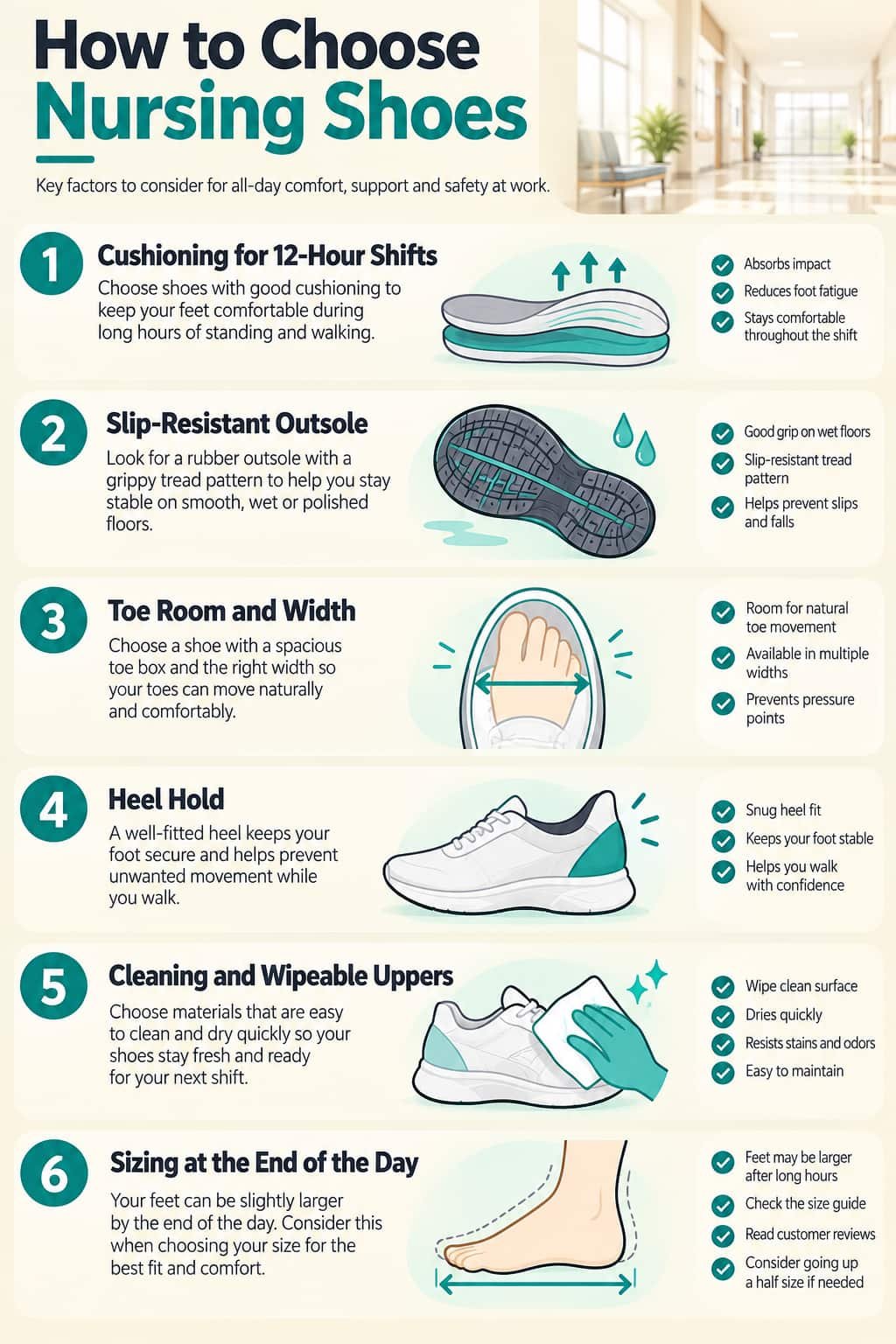
Six features do most of the work in choosing a nursing shoe. Each one involves a tradeoff, so the goal is to find the feature that solves your biggest problem rather than the shoe with the longest list of features.
1. Cushioning
Cushioning is the foam or insert between your foot and the floor. It absorbs impact, but foam compresses with use, so a shoe that feels soft in the store may feel flatter by hour ten. Memory foam and layered footbeds are common in this category.
Tradeoff: Very soft shoes can feel less stable on uneven surfaces.
Who needs it most: Nurses who stand for most of the shift on hard floors.
2. Slip Resistance
The outsole pattern and rubber compound control grip on wet or polished floors. Many listings describe a slip-resistant outsole, but a listing does not confirm a workplace standard. Treat the claim as a starting point, and check your unit’s requirement.
Tradeoff: The grippiest soles can be heavier and less flexible.
Who needs it most: Nurses in ER, surgical or cleaning-heavy areas, where floors get wet often.
3. Fit and Width
Feet often swell by the afternoon, so a shoe should fit at the end of the day as well as the start. Look for enough toe room, a heel that does not lift and a width you can actually buy. Many budget shoes come in one width only, so check width options before ordering.
Tradeoff: A roomy toe box can reduce stability if the heel is loose.
Who needs it most: Nurses with wide forefeet, bunions or afternoon swelling.
4. Heel Security
When the heel slides, the foot moves forward with every step, jamming the toes and causing friction. A closed heel, a firm heel counter or a strap helps hold the foot in place. Open backs and slip-on mules can work well, but they hold the heel less firmly.
Tradeoff: A closed back can feel warmer, while an open back is quicker to put on and take off.
Who needs it most: Nurses who walk quickly between patients or move between units often.
5. Cleanability
Fluids, cleaning products and blood can reach your shoes during a shift. Wipeable uppers and removable footbeds make cleanup faster, and a removable footbed lets you dry the shoe fully between shifts.
Tradeoff: Waterproof or water-resistant uppers are often less breathable, so feet can feel warmer.
Who needs it most: Nurses in wound care, procedural areas or units with frequent fluid exposure.
6. Weight and Closure
A lighter shoe reduces fatigue over many steps. Closure matters too: slip-ons save time between patients, laces allow precise fit, and buckles or straps let you adjust as swelling changes.
Tradeoff: The lightest shoes often have thinner uppers and less structure.
Who needs it most: Nurses who walk long distances in a shift or change position often.
Clogs or Sneakers: Which Is Better?
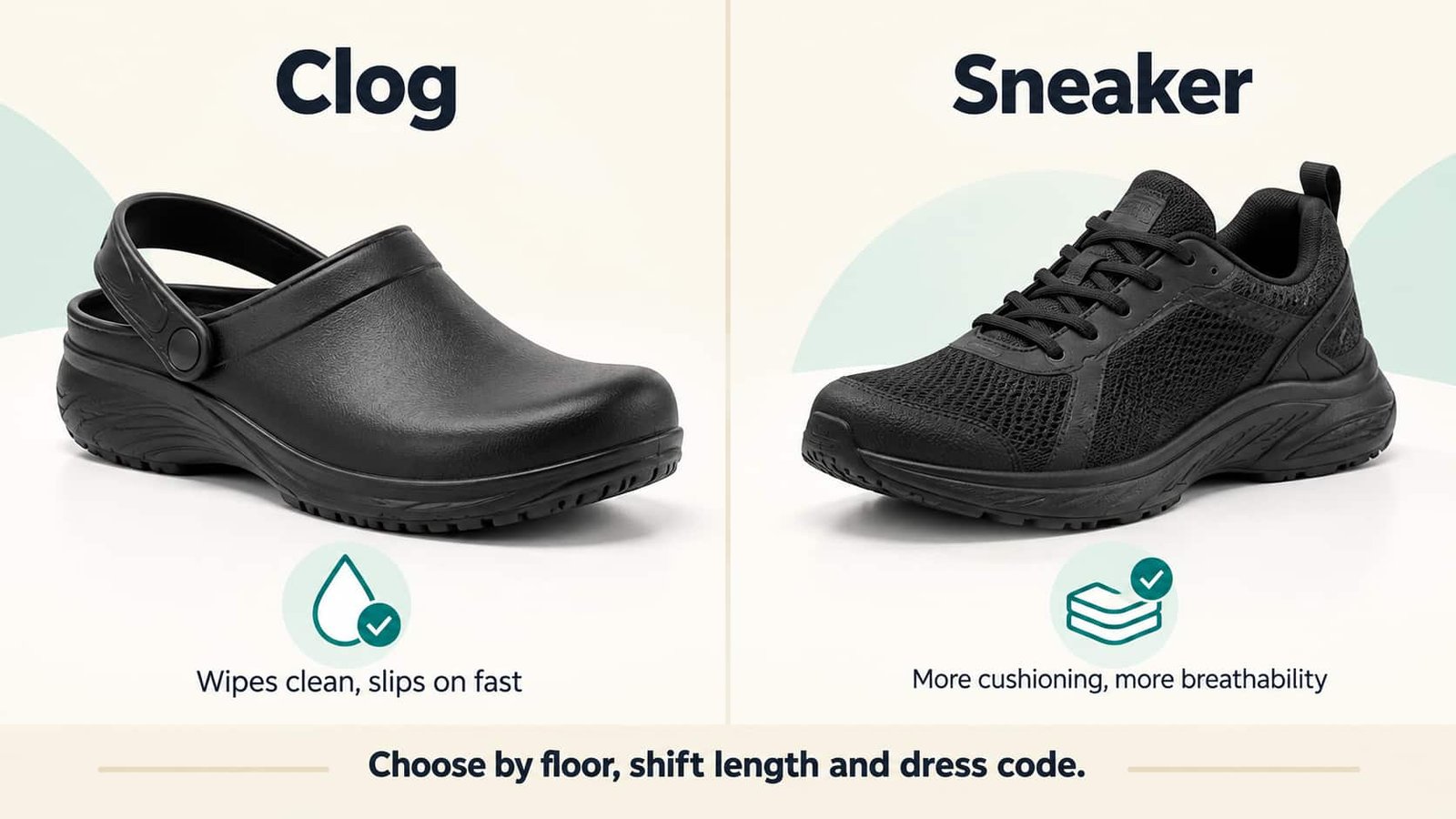
Neither type is better for every nurse. Clogs usually wipe clean well and slip on quickly, which helps when you need to change shoes often. Sneakers usually offer more cushioning and breathability, which helps on long walks.
If your floors are wet and your shifts are spent in one area, a closed clog may be the better choice. If you walk the length of a corridor many times a shift, a sneaker with strong cushioning may suit you better. For a deeper comparison, read our guide to clogs vs sneakers for nurses.
Nursing Workplace Considerations
Footwear policies vary by employer and by unit. Operating rooms, ICUs, emergency departments, outpatient clinics and long-term care facilities can each have different expectations. Some require closed-toe and closed-heel shoes, some restrict colors, and some specify slip-resistant footwear for particular areas.
Before buying, check your dress code and ask your unit manager about slip-resistance requirements. Keep your receipt and the product page, so you can show the features if your workplace asks.
Sizing and Fit Checklist
Fit affects comfort more than any other feature in this guide. Use this checklist when you try shoes on:
- Shop late in the day, when feet are at their largest.
- Wear your work socks, or socks of similar thickness.
- Stand with your weight forward and check that your toes have room.
- Walk briskly around the store and check that the heel does not lift.
- Measure both feet. If one is larger, fit to the larger foot.
- Check the width. If the forefoot feels pinched, look for a wide option or a roomier last.
For a closer look at shoe size conversions, our shoe size conversion chart is a useful reference.
Eight Nursing Shoes Worth Comparing
Prices and ratings are from Amazon US listings and may change.
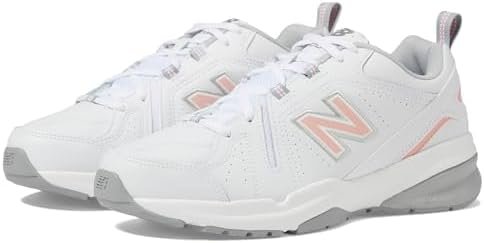 🏆 BEST OVERALL
Cushioned everyday lace-up. Suede upper, not water resistant.
🛒 Check Price on Amazon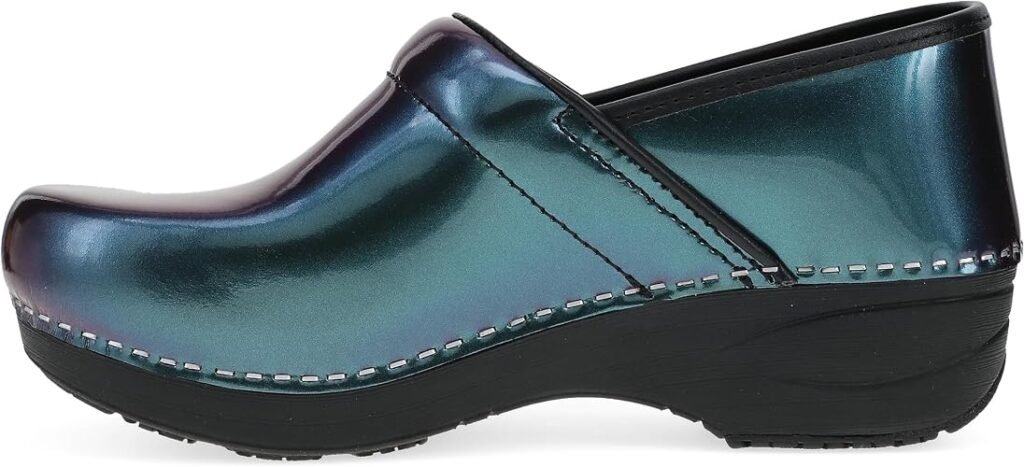 🥾 BEST SUPPORT
Removable footbed and closed structure. Premium price.
🛒 Check Price on Amazon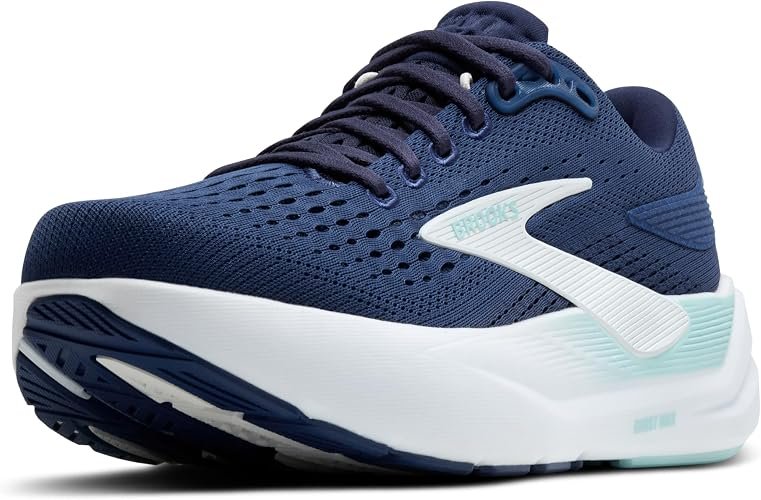 ☁️ MAX CUSHION
High cushioning and a wide base. Running-shoe design.
🛒 Check Price on Amazon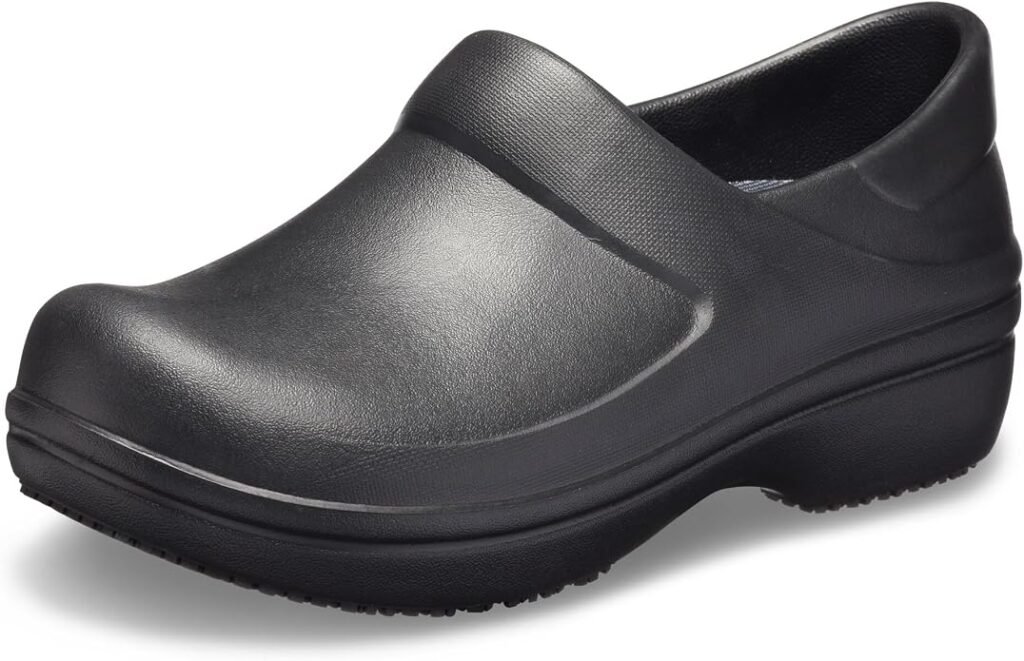 💧 BEST FOR SPILLS
Waterproof and wipe-clean. Runs large, so size down.
🛒 Check Price on Amazon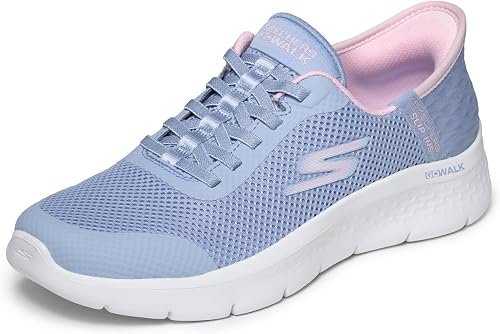 👟 BEST SLIP-ON
Hands-free slip-in and machine washable. Casual styling.
🛒 Check Price on Amazon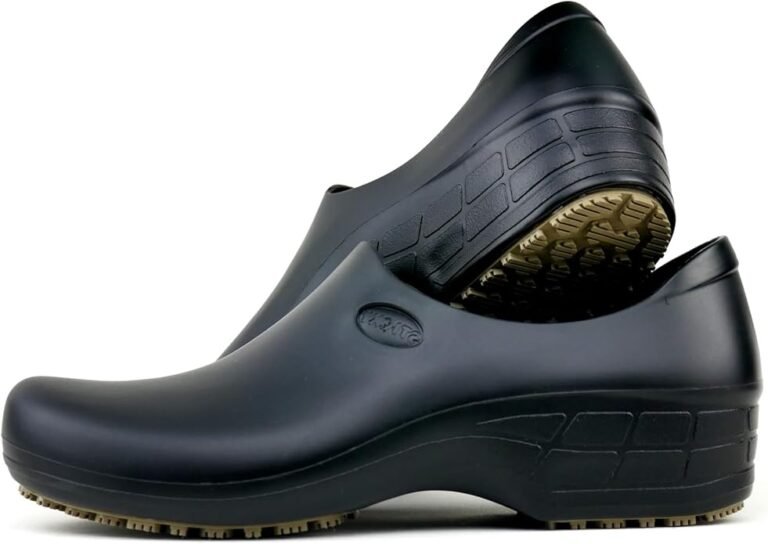 🧼 EASY-CLEAN PICK
Waterproof clog with a moisture-wicking insole. Less cushioning.
🛒 Check Price on Amazon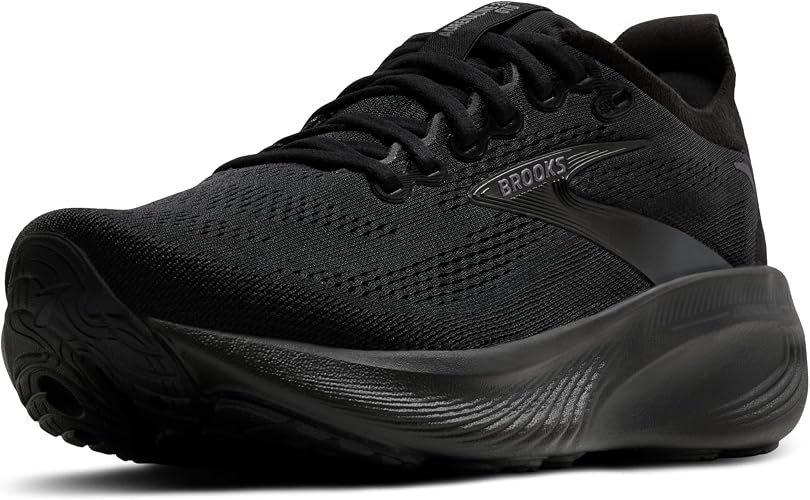 🦶 STABILITY PICK
Structured stability support. Running design.
🛒 Check Price on Amazon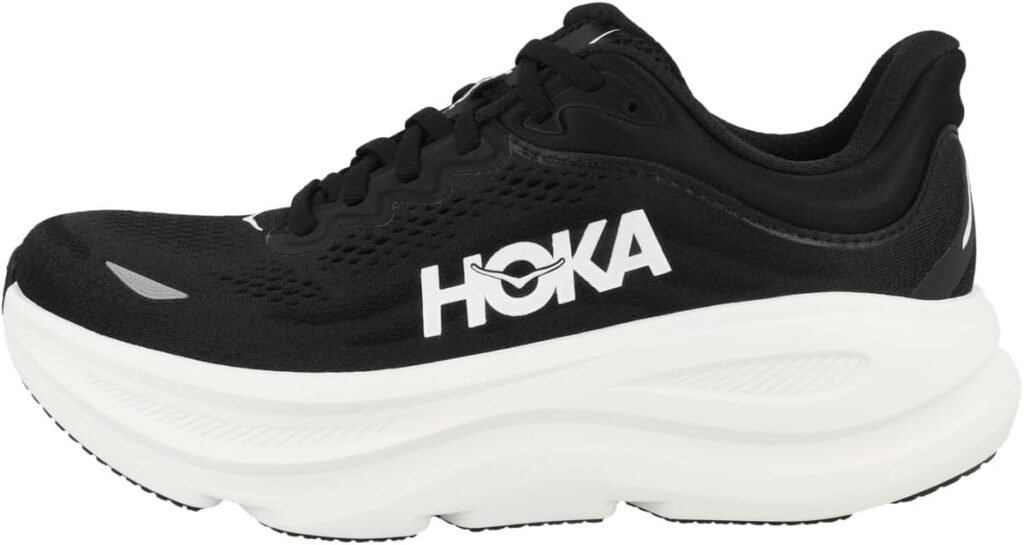
Each shoe below solves a different problem. Read the “Best for” and “Main tradeoff” lines first, then the full review if the shoe fits your needs. Prices and ratings are from Amazon US listings and may change.
1. New Balance Women’s 608 V5
Best for: Nurses who want a cushioned everyday lace-up at a moderate price.
The ABZORB heel pad and IMEVA midsole add cushioning, and the suede upper molds to the foot over time. The lace-up closure lets you adjust fit through the shift, and the listing describes a moderate cushioning level with neutral pronation correction. It is not water resistant, and suede needs more care than a wipeable upper.
Main tradeoff: Adjustable everyday comfort comes with a suede upper that does not clean as easily as leather or rubber.
Skip this if: You work with frequent fluids or need a wipe-clean upper.
2. Dansko XP 2.0 Clogs
Best for: Nurses who stand all shift and want a closed clog with a removable footbed.
The closed clog design, roomy toe box and removable footbed accommodate custom orthotics. The listing describes a rocker bottom and a stability-style arch profile, and the 1.75-inch platform heel supports a rolling stride. The footbed can be removed for drying or for an insert.
Main tradeoff: Structure and orthotic room come at the highest price in this group.
Skip this if: You are on a tight budget or prefer a low heel.
3. Brooks Women’s Ghost Max 3
Best for: Nurses who walk long distances between units and want maximum cushioning.
The high stack of nitrogen-infused DNA Loft v3 cushioning and wide base suit walking-heavy shifts. The GlideRoll Rocker supports heel-to-toe transitions, and the linear last offers room for a range of foot shapes and orthotics.
Main tradeoff: Strong cushioning comes with a running-shoe design that may not meet every dress code.
Skip this if: Your workplace requires a work-specific shoe or you work near spills.
4. Crocs Women’s Neria Pro II
Best for: Nurses in spill-prone areas who want a waterproof clog that wipes clean.
The waterproof Croslite build and enclosed toe suit wet floors. The listing describes the Crocs Lock tread as designed for slick hospital floors, and the upper wipes down quickly after fluid exposure. The clog runs large, so most people should size down.
Main tradeoff: Easy cleaning and waterproofing come with a fit that usually requires sizing down.
Skip this if: You need a snug heel and cannot size down.
5. Skechers Go Walk Flex Grand Entry
Best for: Nurses who want a hands-free slip-in with a machine-washable upper.
The Heel Pillow holds the foot in place, and the ULTRA GO cushioning and air-cooled memory foam insole add comfort. The bungee closure adjusts fit without laces, which saves time between patients.
Main tradeoff: Quick entry and washability come with a casual look and no water resistance.
Skip this if: Your workplace requires a work-specific style or you work near frequent spills.
6. Sticky Nursing Shoes Women’s Clogs
Best for: Nurses in kitchens, cleaning-heavy areas or wet environments on a budget.
The waterproof upper and rubber outsole handle wet work, and the moisture-wicking insole helps keep feet dry. The clog format is simple to wipe down after a shift.
Main tradeoff: Water protection and value come with less cushioning for long standing.
Skip this if: You stand for most of the shift and need more padding.
7. Brooks Adrenaline GTS 25
Best for: Nurses who need structured stability support.
The GuideRails support system and DNA Loft v3 cushioning guide the stride. The listing describes the shoe as suited to overpronation. A stability construction can help control inward roll for some wearers, though it is a running shoe rather than a clinical work shoe.
Main tradeoff: Stability comes with a running design and a price above the mid-range.
Skip this if: You need a slip-resistant work shoe or do not need stability support.
8. Hoka Women’s Bondi 9
Best for: Nurses who want very high cushioning for long standing and walking shifts.
The maximum foam cushioning and lightweight engineered mesh upper suit long hours on your feet. High stack height adds cushioning, but a taller platform does not automatically make a shoe more stable.
Main tradeoff: Cushioning is excellent, but the running design and price may not suit every nurse.
Skip this if: You are on a budget or your workplace requires a work-specific shoe.
Comparison Table
| Product | Price | Rating | Reviews | Key Feature | Best For | Main Tradeoff |
|---|---|---|---|---|---|---|
| New Balance 608 V5 | $59.95 | 4.4 | 45,045 | ABZORB heel cushioning | Everyday lace-up | Suede upper, not water resistant |
| Dansko XP 2.0 | $169.95 | 4.4 | 14,757 | Removable footbed, rocker bottom | Long standing shifts | Premium price |
| Brooks Ghost Max 3 | $109.95 | 4.3 | 3,222 | High-stack cushioning | Walking-heavy shifts | Running-shoe design |
| Crocs Neria Pro II | $37.49 | 4.0 | 24,614 | Waterproof, wipe-clean | Spill-prone areas | Runs large |
| Skechers Go Walk Flex | $71.66 | 4.4 | 18,135 | Hands-free slip-in | Quick wear | Casual styling |
| Sticky Nursing Shoes | $44.90 | 4.1 | 17,056 | Waterproof clog | Wet floors, budget | Less cushioning |
| Brooks Adrenaline GTS 25 | $137.00 | 4.5 | 2,428 | Stability support | Overpronation | Running design |
| Hoka Women’s Bondi 9 | $165.25 | 4.5 | 3,141 | Maximum cushioning | Long standing shifts | Premium price |
Decision Matrix
| Nursing Need | Recommended Product | Why |
|---|---|---|
| 12-hour standing shifts | Dansko XP 2.0 | Removable footbed and closed structure |
| Wet or spill-heavy floors | Crocs Neria Pro II | Waterproof, wipe-clean build |
| Lowest price | Crocs Neria Pro II or Sticky Nursing Shoes | Lowest prices in this group |
| Maximum cushioning | Hoka Women’s Bondi 9 | Maximum foam cushioning |
| Quick slip-on wear | Skechers Go Walk Flex | Hands-free entry with Heel Pillow |
| Stability support | Brooks Adrenaline GTS 25 | GuideRails support system |
| Everyday lace-up | New Balance 608 V5 | Adjustable fit at a moderate price |
How to Choose: A Step-by-Step Checklist
- Check your dress code. Confirm closed-toe and closed-heel rules, color limits and any slip-resistance requirement.
- Identify your floor. Dry tile, wet kitchens and procedural areas call for different priorities.
- Estimate your standing and walking time. Long standing favors cushioning and a removable footbed.
- Check fit at the end of the day. Leave about a thumb’s width of room in front of your longest toe.
- Pick a closure. Laces adjust fit, slip-ons save time, and straps allow changes as swelling shifts.
- Decide on cleaning needs. Wipeable uppers suit fluid exposure. Washable fabrics suit light use.
- Compare the tradeoffs. Choose the shoe that solves your biggest problem.
Related Reading for Foot Pain and Fit
If your feet have specific needs, these guides go deeper on the fit issues most nurses raise. Our best shoes for nurses who stand all day covers long standing in more depth. For heel pain, read our nursing shoes for plantar fasciitis guide. If you have wide forefeet or bunions, see walking shoes for women with bunions.
For fit aids, our best insoles for nursing shoes and custom orthotics for nursing shoes explain when an insert helps. To make a pair last, read our nursing shoe rotation and durability guide.
FAQ
What should nurses look for in nursing shoes?
Focus on cushioning that holds up over long shifts, a slip-resistant outsole, enough toe room and width, a secure heel and an upper that wipes clean. Then check your workplace dress code before buying.
Do nurses need slip-resistant shoes?
Many do, especially on hard or wet floors. Check your employer’s requirements, since a product listing does not confirm a workplace standard.
Should nursing shoes be waterproof?
Water-resistant or waterproof shoes help in areas with frequent spills. In dry units, a wipeable leather or synthetic upper may be enough.
Are clogs or sneakers better for nurses?
Clogs usually wipe clean and slip on quickly. Sneakers often offer more cushioning and breathability. Your floor, dress code and foot shape should decide.
How should nursing shoes fit?
Try shoes at the end of the day. Leave about a thumb’s width of room in front of your longest toe, and make sure the heel does not lift.
Do nurses need wide shoes?
Some do, particularly if the forefoot feels pinched by the end of a shift. Not every model comes in multiple widths, so check the listing.
How much cushioning should nursing shoes have?
Moderate to maximum cushioning suits most nurses who stand and walk for long periods. Choose the feel you prefer at the start of a shift, since foam compresses over time.
Are expensive nursing shoes worth it?
Not always. Compare the features you need, such as cleanability, cushioning, width and heel security, rather than price alone.
How often should nurses replace work shoes?
There is no universal schedule. Replace shoes when cushioning feels flat, the outsole is worn smooth, the upper cracks, or your feet tire more than usual.
Can nurses wear regular sneakers?
Some workplaces allow plain closed-toe sneakers, while others restrict styles or colors. Check your dress code first.
Do insoles help nursing shoes?
They can help if the shoe has a removable footbed and the insert does not crowd your toes. Check that the combined fit works at the end of a shift.
Expert Nursing Shoe Tips
- Measure later in the day, when feet are at their largest.
- Wear your work socks when you try shoes on.
- Check toe room by standing with your weight forward.
- Test heel hold by walking briskly in the store.
- Break in gradually, especially with leather or stiff heel counters.
- Air out and dry shoes between shifts, and remove removable footbeds to dry.
- Rotate two pairs so foam can recover between shifts.
- Watch the outsole. Smooth tread can reduce grip even when the upper looks fine.
Final Verdict
- For long standing shifts, choose the Dansko XP 2.0.
- For wet or spill-heavy floors, choose the Crocs Neria Pro II.
- For maximum cushioning, choose the Hoka Women’s Bondi 9.
- For a hands-free slip-on, choose the Skechers Go Walk Flex.
- For a lower-priced lace-up, choose the New Balance 608 V5.
No single shoe fits every nurse. Match the pick to your floor, your shift length and your workplace rules.
Affiliate Disclosure
Some links on this page are affiliate links. If you purchase through them, Urban Style Footwear may earn a commission at no additional cost to you. Our recommendations are based on the product information, footwear characteristics, and buying criteria discussed in this guide, not on the size of the commission.