
Best Nursing Shoes for Pregnant Nurses: 7 Comfortable Picks for 2026
✅ Footwear Analysis | 🛒 Amazon US Options | 📅 Updated September 2026
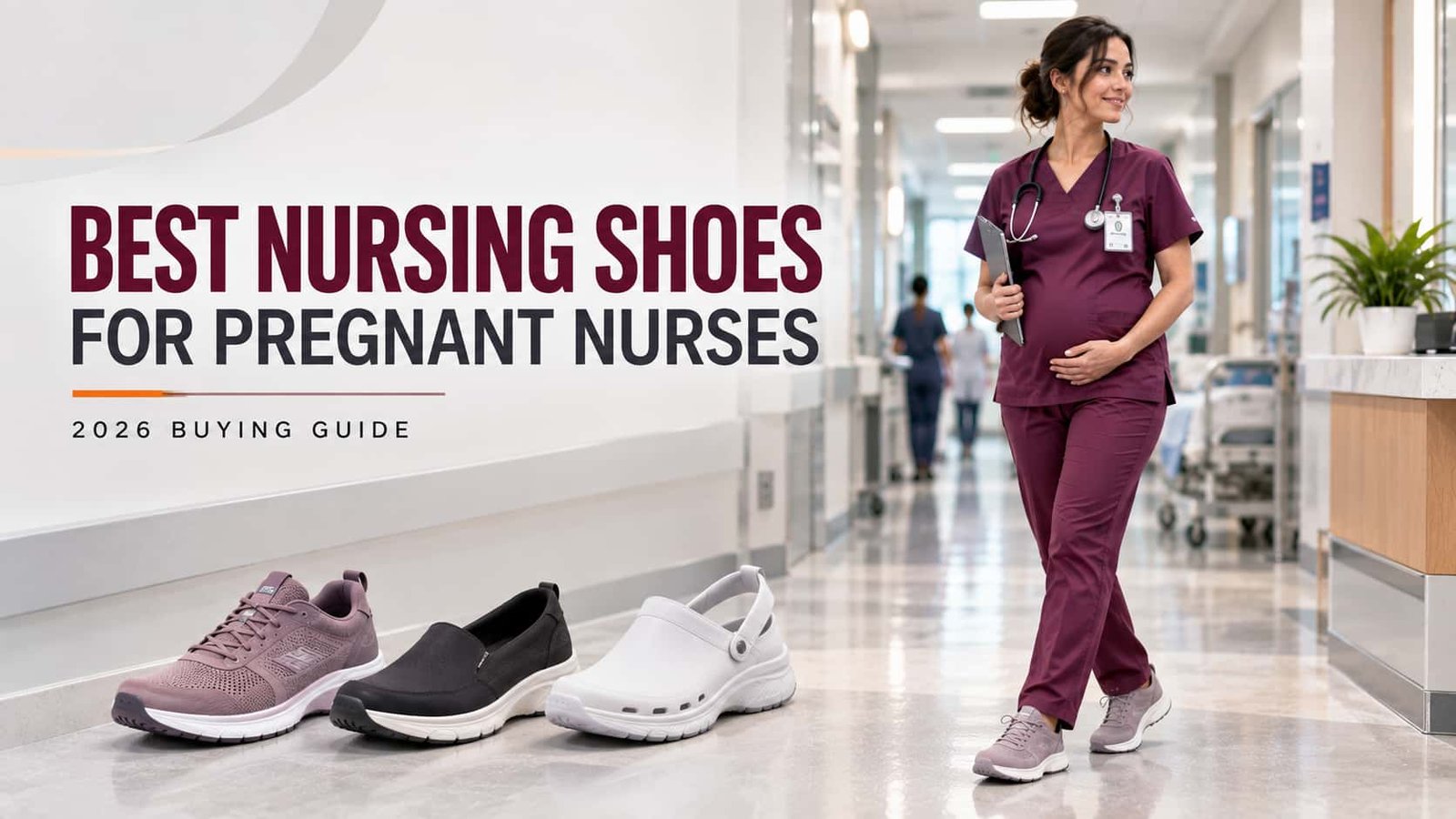
The best nursing shoes for pregnant nurses should give growing and sometimes swollen feet enough room while providing cushioning, a secure fit, and dependable traction for long shifts. Easy on/off can also matter as pregnancy progresses. The right choice depends on your foot shape, swelling, work environment, and your employer’s footwear requirements.
Top Picks for Pregnant Nurses
Seven practical options for cushioning, easy on/off, traction and wet work areas.
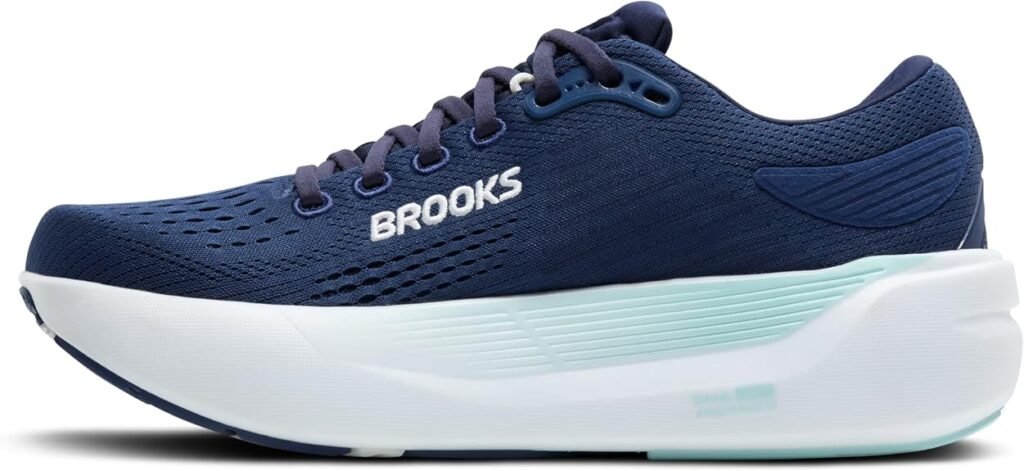
Brooks Women’s Ghost Max 3
Wide base + DNA LOFT v3 cushioning
🛒 Check Price on Amazon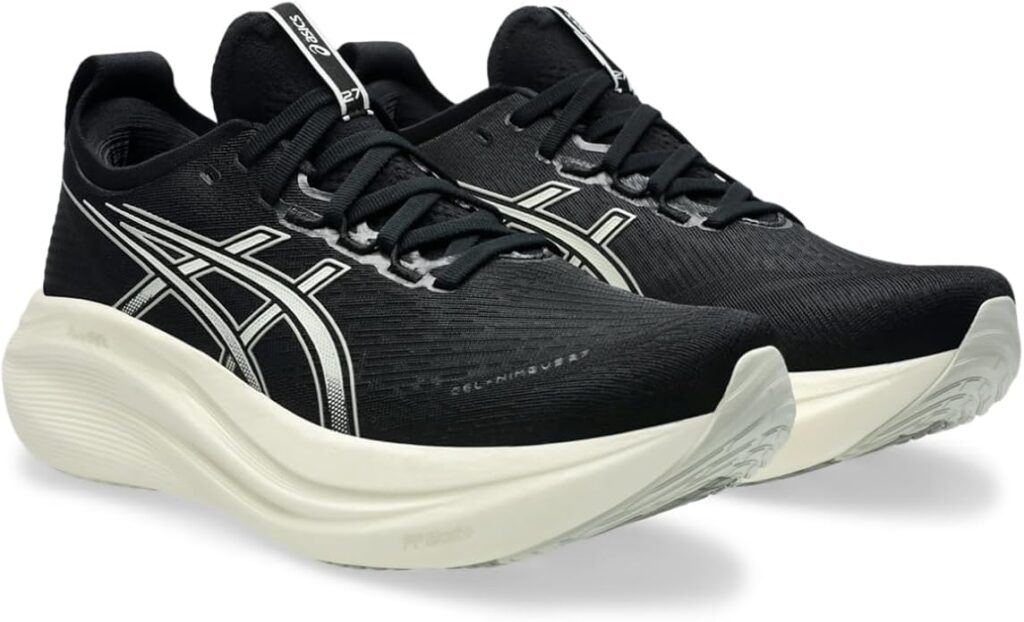
ASICS Women’s Gel-Nimbus 27
PureGEL + FF BLAST PLUS ECO cushioning
🛒 Check Price on Amazon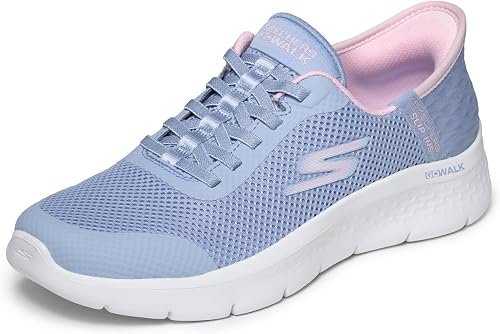
Skechers Women’s Go Walk Flex Grand Entry
Hands-free Slip-ins + Heel Pillow
🛒 Check Price on Amazon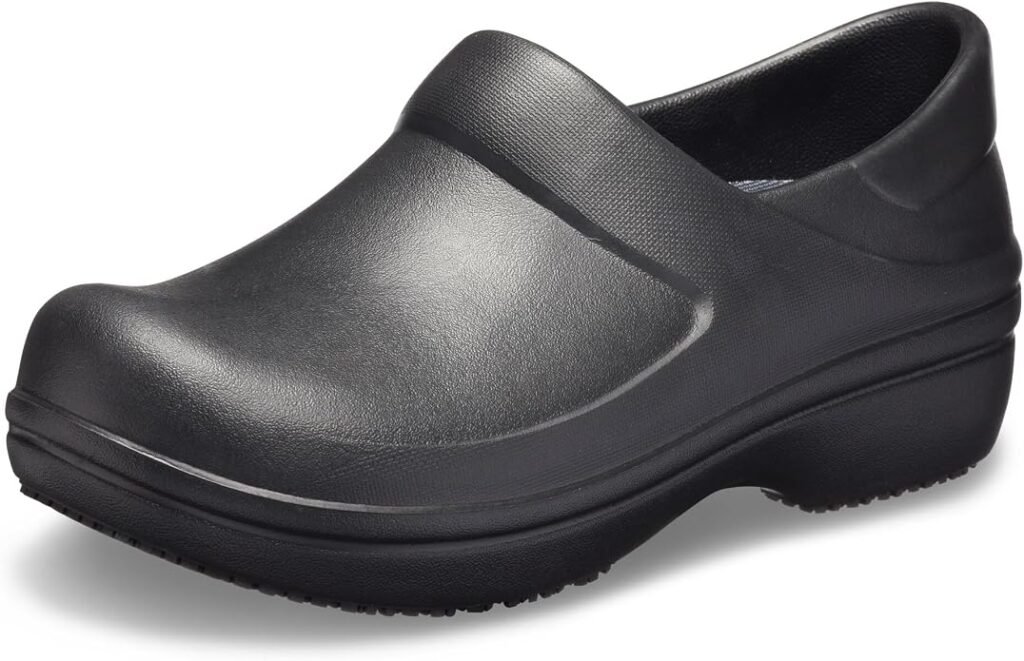
Crocs Women’s Neria Pro II
Waterproof + slip-resistant design
🛒 Check Price on Amazon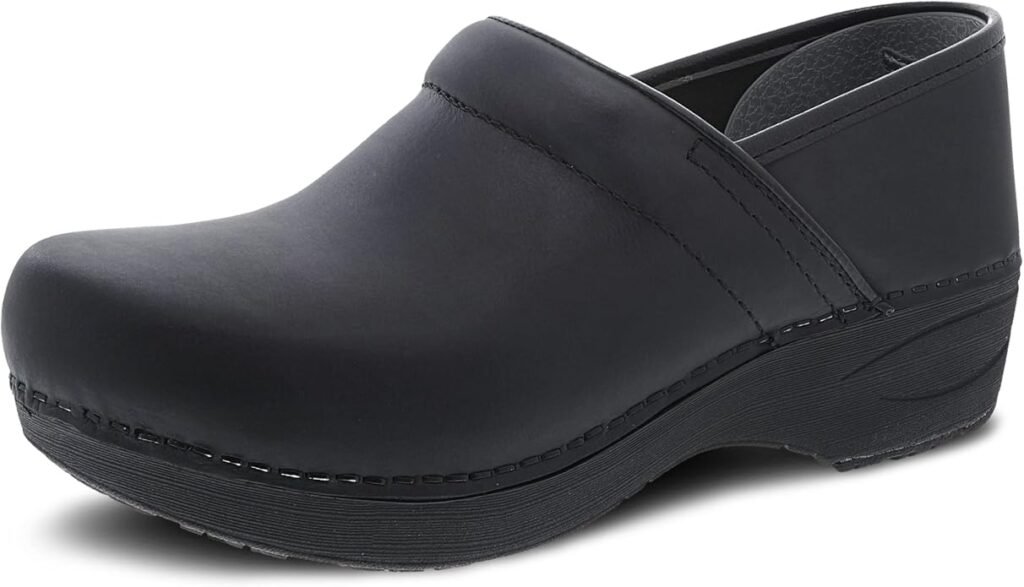
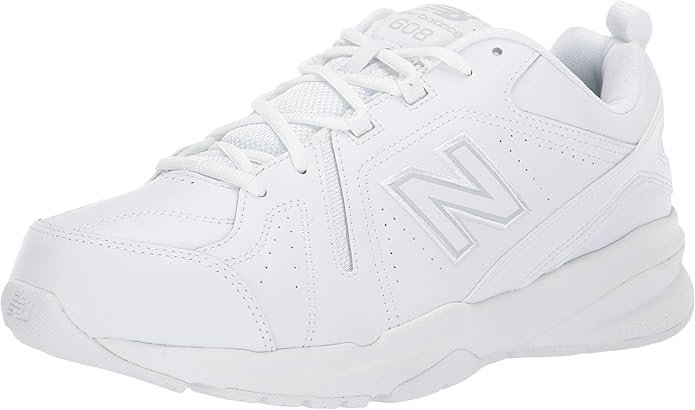
New Balance Women’s 608 V5
ABZORB heel cushioning + lace-up fit
🛒 Check Price on Amazon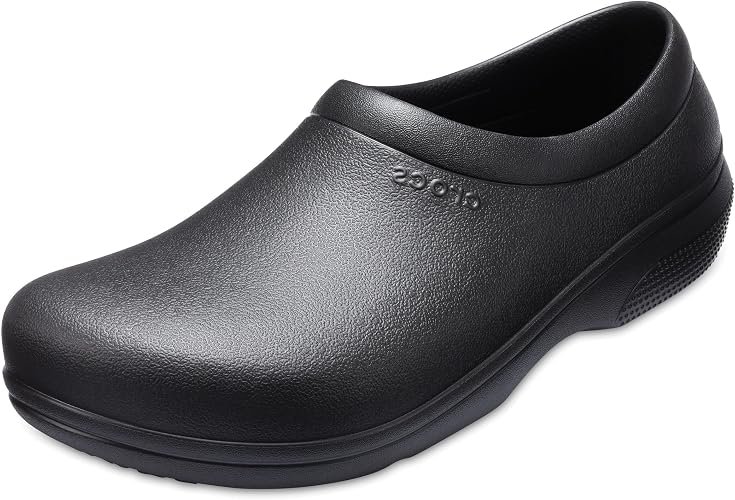
Crocs Unisex On The Clock Clog
Waterproof + washable + slip resistant
🛒 Check Price on AmazonWhy Pregnancy Changes What You Need From Nursing Shoes
A pair of shoes that feels comfortable at the beginning of pregnancy may not feel the same several months later. Feet and ankles can swell, especially later in the day, and prolonged standing can make that swelling more noticeable. The NHS specifically recommends comfortable shoes and avoiding tight straps or footwear that pinches swollen feet.
That matters for nurses because a work shift can combine several hours of standing with repeated walking between patient rooms, medication areas, workstations, elevators, and treatment spaces. A shoe that feels fine for a short errand may become uncomfortable when worn continuously during a long clinical shift.
The goal is not simply to find the softest nursing shoe. You need a balance of forefoot room, cushioning, stability, traction, adjustability, and practical cleaning.
This guide compares seven women’s or women-friendly options from the supplied Amazon product data. The selection includes traditional lace-up walking shoes, cushioned running shoes, slip-on sneakers, and enclosed work clogs.
For broader footwear options, nurses can also compare this guide with our guide to the best shoes for nurses, while nurses who spend most of their shifts standing can see how different designs compare in our guide to best shoes for nurses who stand all day.
What Are Nursing Shoes for Pregnant Nurses?
“Nursing shoes” are not one specific shoe category. They can include athletic walking shoes, running-inspired sneakers, clogs, work shoes, and other closed-toe footwear suitable for a healthcare workplace.
For pregnancy, the important distinction is how the shoe accommodates changing foot comfort during a shift.
A useful nursing shoe may have:
- Enough forefoot volume for natural toe movement
- Cushioning appropriate for hard floors
- A secure heel fit
- Adjustable laces, straps, or a practical slip-on design
- A suitable outsole for the work environment
- Materials that can be cleaned according to workplace expectations
- Enough flexibility for normal walking without feeling unstable
Pregnancy does not automatically mean you need a particular brand, heel-to-toe drop, or shoe category. A well-fitting sneaker can work very differently from a clog, and the better choice depends on your feet and your unit.
For nurses specifically shopping for women’s footwear, our guide to best nursing shoes for women provides another comparison point.
Why Do Nursing Shoes Matter During Pregnancy?
Pregnancy can make fit more important than usual.
The NHS notes that gradual swelling of the feet and ankles is common during pregnancy and can become more noticeable later in the day. It recommends comfortable footwear and avoiding shoes, socks, or straps that are too tight.
For a nurse working an extended shift, that creates a practical problem: the shoe has to remain comfortable when your feet are not exactly the same size or shape at the end of the shift as they were when you put it on.
1. Foot swelling can change the fit
A shoe that feels snug first thing in the morning may feel restrictive later.
Look for enough room around the forefoot and avoid designs that create pressure over the top of the foot. Adjustable laces can be useful because they allow some fit changes, while slip-on shoes can make getting dressed easier.
2. Long shifts increase the importance of cushioning
Hospital floors are generally firm surfaces, and nurses may spend much of a shift walking or standing.
Cushioning is the material and construction under the foot that reduces the firmness you feel from the ground. More cushioning is not automatically better, but it can be useful for nurses who prefer a softer underfoot feel.
3. Traction matters around healthcare spills
OSHA identifies wet floors, spills, cords, and clutter as hospital slip and trip hazards. In patient-care areas, fluids and equipment can create additional hazards.
That does not mean a particular shoe makes you immune to slipping. It means outsole traction and workplace conditions deserve attention when selecting work footwear.
4. Easy entry can become more valuable
A lace-up shoe gives excellent control over fit, but bending down and tightening laces may become less convenient later in pregnancy.
Hands-free or slip-on footwear can make getting ready easier. The tradeoff is that some slip-on shoes provide less ability to fine-tune the fit than a lace-up design.
What Should Pregnant Nurses Look For?
1. A forgiving fit
The most important starting point is fit.
Do not automatically size up simply because you are pregnant. Instead, look for a shoe that gives your toes enough room without allowing excessive heel movement.
If your feet swell during shifts, try shoes later in the day when your feet are closer to their largest typical work-shift size.
A useful rule is simple: your toes should not be forced against the front or side walls of the shoe.
2. Cushioning without excessive softness
Running and walking shoes often provide more cushioning than traditional work shoes.
The supplied products include several maximum-cushioning options, including the ASICS Gel-Nimbus 27 and Brooks Ghost Max 3.
The tradeoff is that highly cushioned running shoes may not offer the same workplace-specific features as a dedicated work clog.
3. Secure heel fit
A comfortable forefoot is only half the equation.
If the heel lifts excessively with each step, your foot can move inside the shoe. Lace-up shoes generally provide more opportunities to adjust the upper around the heel and midfoot.
The Skechers Go Walk Flex Grand Entry uses a hands-free slip-in design and an integrated heel pillow intended to hold the foot securely.
4. Slip resistance
For hospital work, look for product specifications that actually identify slip resistance rather than assuming a shoe is safe because it has a rubber outsole.
The Crocs Neria Pro II and Crocs On The Clock supplied data specifically list slip resistance and workplace-oriented features.
Always check your employer’s footwear policy because individual units may have additional requirements.
5. Cleaning and fluid exposure
Pregnant nurses do not need a waterproof shoe by definition, but some work environments make wipeable or water-resistant footwear much more practical.
The Crocs Neria Pro II is listed as waterproof and washable, while the Crocs On The Clock is also listed as waterproof and washable in the supplied product data.
By comparison, the running and walking shoes in this list are generally not water resistant.
Nursing Workplace Considerations During Pregnancy
The right shoe also depends on where you work.
Hospital floors
Large hospitals may involve long corridors, hard flooring, frequent turns, elevators, and repeated movement between patient rooms.
A cushioned walking or running shoe can make sense if your workplace permits athletic footwear. A work clog can be more practical if cleaning and slip resistance are higher priorities.
ICU environments
ICU nurses can spend substantial time standing near beds while also moving between rooms and equipment.
A secure fit matters because loose footwear can become distracting when you are moving around equipment. Check whether your unit requires specific toe or heel coverage.
Emergency departments
OSHA notes that high traffic and compact treatment spaces in emergency departments can increase slip and trip concerns, with wet floors, cords, and equipment among the hazards.
For ED nurses, prioritize a shoe with the combination of fit, traction, and workplace compatibility that matches the unit.
Operating rooms
OR environments can involve fluids, tubing, equipment, and cords on the floor. OSHA specifically identifies these as slip and trip hazards in surgical suites.
A washable or water-resistant work shoe may be more practical than a fabric running shoe if your workplace allows it.
Outpatient clinics
Clinic nurses may walk less than inpatient nurses, although that varies considerably.
A lightweight walking sneaker can be sufficient if your shift has less fluid exposure and your employer permits athletic footwear.
Long-term care and nursing homes
Footwear needs can vary widely in long-term care. Some nurses may walk extensively between resident rooms, while others spend more time standing in specific areas.
Comfort, secure fit, and traction remain important, but cleaning requirements should also be checked.
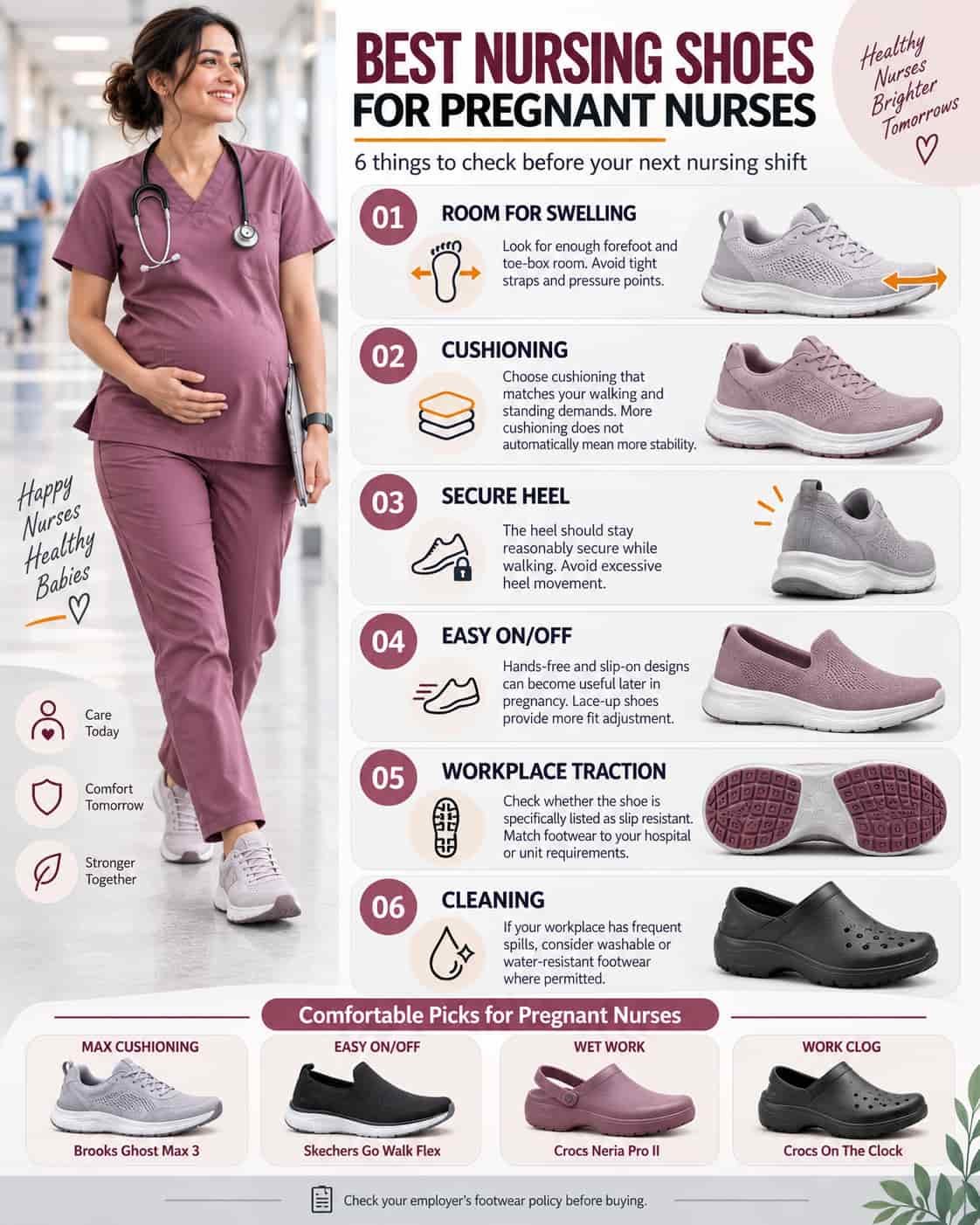
7 Best Nursing Shoes for Pregnant Nurses in 2026
1. Brooks Women’s Ghost Max 3 Running Shoe
Best for: Maximum cushioning and a broad, stable platform
The Brooks Ghost Max 3 is one of the strongest choices in this list for a pregnant nurse who prioritizes underfoot cushioning.
The supplied product data describes a high stack of DNA LOFT v3 cushioning, a wide base, GlideRoll Rocker geometry, engineered mesh, and a construction designed for running and walking. It is listed with maximum cushioning and neutral pronation.
A high stack means there is more material between your foot and the ground. That can create a softer underfoot feel, although more cushioning does not automatically mean greater workplace stability.
Pros:
- Maximum cushioning
- Wide base
- Breathable mesh construction
- Rocker geometry for transitions
- Listed for walking and medical use
Cons:
- Not water resistant
- Running-shoe design may not meet every workplace dress code
- Premium pricing compared with basic work shoes
Main tradeoff: Excellent cushioning and a broad base versus less workplace-specific protection than an enclosed work clog.
Who should buy: Pregnant nurses who want a highly cushioned walking/running shoe and whose employer permits athletic footwear.
Who should skip: Nurses who need waterproof, washable work footwear or a dedicated slip-resistant work shoe.
Verdict: A strong choice when cushioning and a stable-feeling platform are the main priorities.
🛒 Check Price on Amazon2. ASICS Women’s Gel-Nimbus 27 Running Shoes
Best for: Soft cushioning with a traditional lace-up fit
The ASICS Gel-Nimbus 27 offers another maximum-cushioning option. The supplied data lists PureGEL technology, FF BLAST PLUS ECO cushioning, an OrthoLite X-55 sockliner, mesh construction, and maximum cushioning.
The lace-up design is useful when foot volume changes because the upper can be adjusted more precisely than many slip-on shoes.
The important limitation is workplace practicality. The supplied data lists the shoe as not water resistant and primarily as a running shoe.
Pros:
- Maximum cushioning
- Lace-up adjustment
- Mesh upper
- Foam and gel cushioning
- Designed for road and treadmill use
Cons:
- Not water resistant
- Athletic appearance may not fit every dress code
- Not specifically a hospital work shoe
Main tradeoff: Strong cushioning and adjustable fit versus limited fluid protection.
Who should buy: Nurses who want a cushioned sneaker and have a workplace that allows athletic footwear.
Who should skip: Nurses working in areas where wipeability or water resistance is a primary requirement.
Verdict: A practical pregnancy option when soft cushioning and adjustable fit matter more than work-specific construction.
🛒 Check Price on Amazon3. Skechers Women’s Go Walk Flex Grand Entry
Best for: Easy on/off during pregnancy
The Go Walk Flex Grand Entry is particularly interesting for pregnancy because of its hands-free slip-in construction.
The supplied data lists a hands-free slip-in design, Heel Pillow, ULTRA GO cushioning, Air-Cooled Memory Foam, machine-washable construction, and a lightweight, flexible profile. It is also listed as not water resistant.
For someone who increasingly dislikes bending down to tie shoes, this can be a meaningful practical advantage.
The downside is that it is not a dedicated healthcare work shoe and does not have the same water-resistant positioning as the Crocs work models in this list.
Pros:
- Hands-free slip-in design
- Heel Pillow
- Machine washable
- Lightweight
- Moderate-to-high cushioning
Cons:
- Not water resistant
- Less adjustable than a lace-up shoe
- Casual athletic styling
Main tradeoff: Excellent convenience versus less ability to fine-tune the fit.
Who should buy: Pregnant nurses who value easy entry and a lightweight walking shoe.
Who should skip: Nurses who need a waterproof work shoe or extensive upper adjustment.
Verdict: One of the most practical choices for later pregnancy when bending down and tying shoes becomes inconvenient.
🛒 Check Price on Amazon4. Crocs Women’s Neria Pro II Work Clogs
Best for: Wet work areas and easy cleaning
The Neria Pro II is a very different proposition from the running shoes.
The supplied product data lists an enclosed toe, slip resistance, washable construction, waterproofing, maximum cushioning, and a medical-specific use case. It also lists a relaxed fit and enhanced arch support.
For nurses who frequently encounter spills, that work-oriented construction may be more useful than a breathable running shoe.
There is a fit consideration: the supplied listing says the shoe runs large and recommends sizing down if between sizes.
Pros:
- Waterproof
- Washable
- Slip resistant
- Enclosed toe
- Maximum cushioning
Cons:
- Clog design is not ideal for everyone
- Relaxed fit may not suit nurses wanting a close athletic fit
- Workplace requirements still need to be checked
Main tradeoff: Excellent work practicality versus less sneaker-like fit and feel.
Who should buy: Pregnant nurses who prioritize easy cleaning, fluid protection, and slip resistance.
Who should skip: Nurses who strongly prefer a lightweight athletic sneaker with a conventional lace-up fit.
Verdict: One of the more practical options for wet or messy clinical environments.
🛒 Check Price on Amazon5. Dansko XP 2.0 Clogs
Best for: Nurses who prefer a structured work clog
The Dansko XP 2.0 takes a more structured approach to nursing footwear.
The supplied data lists a roomy toe box, padded instep collar, TPU heel counter, EVA midsole, dual-density PU footbed, Natural Arch technology, memory foam, removable footbed, rocker bottom, and slip-resistant rubber outsole. It is also listed as water resistant.
The removable footbed can be useful for nurses who use compatible orthotics.
The major consideration is the clog geometry. A 1.75-inch heel and rocker-bottom construction will not feel like a conventional flat walking sneaker.
Pros:
- Roomy toe box
- Slip-resistant outsole
- Water-resistant
- Removable footbed
- Structured heel counter
- Arch support
Cons:
- Clog geometry takes adjustment
- Higher price than budget work shoes
- Heel height may not suit every pregnant nurse
Main tradeoff: Structured work-shoe features versus a less conventional walking feel.
Who should buy: Nurses who already like clogs and want a structured, work-focused design.
Who should skip: Nurses who prefer flat athletic sneakers or dislike clog-style footwear.
Verdict: A strong option for nurses who prefer structured clogs and need work-oriented features.
🛒 Check Price on Amazon6. New Balance Women’s 608 V5
Best for: Traditional lace-up walking comfort
The New Balance 608 V5 is a conventional cross-training shoe with a leather upper, lace-up closure, ABZORB heel cushioning, IMEVA midsole, cushioned footbed, and rubber outsole. The supplied data lists moderate cushioning, neutral pronation, and slip resistance.
This makes it a useful middle-ground option for someone who prefers a traditional sneaker rather than a highly cushioned running shoe or clog.
Its leather construction may also feel more structured than a soft mesh sneaker.
Pros:
- Lace-up adjustment
- Moderate cushioning
- ABZORB heel cushioning
- Rubber outsole
- Slip-resistant specification
Cons:
- Not water resistant
- Heavier-looking traditional sneaker profile
- Less cushioning than maximum-cushion running shoes
Main tradeoff: Structured everyday comfort versus the softer ride of maximum-cushion models.
Who should buy: Nurses who want a familiar lace-up walking shoe with moderate cushioning.
Who should skip: Nurses specifically seeking maximum cushioning or waterproof work footwear.
Verdict: A sensible option for nurses who prefer a conventional athletic shoe rather than a specialized work clog.
🛒 Check Price on Amazon7. Crocs Unisex On The Clock Clog
Best for: Slip-resistant, washable work footwear
The Crocs On The Clock is designed around workplace use. The supplied data lists slip resistance, washable construction, waterproofing, EVA cushioning, an enclosed toe, hard-ground use, and medical/work applications.
That combination is particularly relevant for nurses working around frequent spills.
The shoe is a pull-on clog, so it is easier to put on than a lace-up sneaker. However, the fit should be evaluated carefully because a pull-on design gives you less adjustment than laces.
Pros:
- Waterproof
- Washable
- Slip resistant
- Lightweight
- Medical/work use
- Enclosed toe
Cons:
- Less adjustable than lace-up footwear
- Low-arch construction may not suit everyone
- Clog feel is different from a running shoe
Main tradeoff: Work practicality and easy cleaning versus less customizable fit.
Who should buy: Pregnant nurses who prioritize cleanability, water resistance, and slip resistance.
Who should skip: Nurses who want a conventional cushioned running shoe.
Verdict: A practical work-focused choice when cleaning and traction are more important than athletic-shoe styling.
🛒 Check Price on AmazonMain Comparison Table
| Product | Price* | Rating | Reviews | Best For | Key Feature | Water Resistance | Main Tradeoff |
|---|---|---|---|---|---|---|---|
| Brooks Women’s Ghost Max 3 | $109.95 | 4.3/5 | 3,222 | Maximum cushioning | Wide base + DNA LOFT v3 | Not water resistant | Athletic shoe rather than work-specific |
| ASICS Women’s Gel-Nimbus 27 | $109.95 | 4.4/5 | 2,793 | Cushioned lace-up fit | PureGEL + FF BLAST PLUS ECO | Not water resistant | Less work-specific |
| Skechers Go Walk Flex Grand Entry | $71.66 | 4.4/5 | 18,135 | Easy on/off | Hands-free Slip-ins + Heel Pillow | Not water resistant | Less adjustable than laces |
| Crocs Neria Pro II | $37.49 | 4.0/5 | 24,614 | Wet work areas | Waterproof + slip resistant | Waterproof | Clog fit |
| Dansko XP 2.0 | $169.95 | 4.4/5 | 14,757 | Structured clog | Roomy toe box + rocker bottom | Water resistant | Higher price and clog geometry |
| New Balance 608 V5 | $59.95 | 4.4/5 | 45,045 | Traditional sneaker | ABZORB heel cushioning | Not water resistant | Moderate rather than maximum cushioning |
| Crocs On The Clock | $37.49 | 4.3/5 | 35,891 | Work-focused traction | Waterproof + washable | Waterproof | Less adjustable than lace-up shoes |
*Prices, ratings, and review counts may change over time.
Decision Matrix: Which Shoe Fits Your Nursing Situation?
| Nursing Need | Recommended Product | Why |
| Maximum cushioning | Brooks Ghost Max 3 | Maximum cushioning and a wide base |
| Easy on/off | Skechers Go Walk Flex Grand Entry | Hands-free slip-in construction |
| Wet or messy work | Crocs Neria Pro II | Waterproof, washable, slip resistant |
| Slip-resistant work clog | Crocs On The Clock | Work-oriented construction and slip resistance |
| Structured clog | Dansko XP 2.0 | Roomy toe box, heel counter and rocker bottom |
| Traditional sneaker | New Balance 608 V5 | Lace-up fit with moderate cushioning |
| Cushioned lace-up | ASICS Gel-Nimbus 27 | Maximum cushioning and adjustable lacing |
How to Choose Nursing Shoes During Pregnancy
Step 1: Identify when your feet are most uncomfortable
If your feet feel normal in the morning but swell by the end of your shift, shop for the later-day fit rather than the early-morning fit.
The NHS notes that pregnancy swelling can become more noticeable later in the day and after standing.
Step 2: Decide whether you need a sneaker or work clog
Choose a sneaker when:
- Your employer permits athletic shoes
- You want more cushioning
- You prefer lace-up adjustment
- Your workplace has relatively low fluid exposure
Consider a work clog when:
- Your workplace permits clogs
- Spills are common
- You prioritize wipeability
- You want waterproof or water-resistant construction
Step 3: Test the toe area
Stand up while wearing the shoe.
Your toes should have enough room to move without pressing against the front or sides.
Do not confuse a wide toe box with a shoe that is simply oversized. You want room where your toes need it while maintaining a secure heel.
Step 4: Check the heel
Walk around before deciding.
If the heel repeatedly lifts or your foot slides forward, the shoe may not be giving you the security you need.
Step 5: Match traction to the workplace
If you regularly work around wet surfaces, a shoe with a supplied slip-resistant specification is worth considering.
OSHA identifies wet floors and spills as healthcare workplace hazards, but footwear is only one part of workplace safety.
Step 6: Think about the final months of pregnancy
A shoe that requires extensive bending and complicated lacing may become less convenient later.
This is where a hands-free option such as the Skechers Go Walk Flex can have a practical advantage.
FAQs About Nursing Shoes for Pregnant Nurses
What are the best nursing shoes for pregnant nurses?
The best choice depends on your main need. Brooks Ghost Max 3 is a strong option for maximum cushioning, Skechers Go Walk Flex Grand Entry is useful for easy on/off, while Crocs Neria Pro II and On The Clock are more focused on waterproofing, cleanability, and slip resistance. Workplace rules should guide the final choice.
Should pregnant nurses buy wider shoes?
A wider or more forgiving shoe can be useful when pregnancy-related swelling makes your usual footwear feel tight. The goal is not simply to buy a larger size. Look for enough width and toe-box volume while keeping the heel secure. Tight footwear can become uncomfortable as feet swell.
Should I buy nursing shoes one size larger during pregnancy?
Not automatically. Increasing the size can create extra length without solving a width problem and may allow your heel to move excessively. Try the shoe later in the day and focus on toe room, forefoot width, and heel security. If your feet change significantly, reassess your size rather than assuming you need one size larger.
Are slip-on nursing shoes good during pregnancy?
They can be useful because they reduce the need to bend down and tie laces. The Skechers Go Walk Flex Grand Entry is particularly convenient because its supplied specifications identify a hands-free slip-in design. The tradeoff is that slip-on shoes generally offer less fit adjustment than lace-up footwear.
Are clogs good for pregnant nurses?
Clogs can work well for nurses who prefer their fit and whose workplace permits them. The Crocs Neria Pro II and On The Clock offer workplace-oriented features such as slip resistance and waterproofing. Dansko XP 2.0 adds a more structured clog construction. However, clog geometry does not suit every wearer.
Do pregnant nurses need slip-resistant shoes?
Not every nurse needs the same outsole specification, but traction deserves attention in healthcare settings. OSHA identifies wet floors and spills as slip hazards in hospitals and patient-care areas. If your unit frequently encounters wet surfaces, consider footwear specifically listed as slip resistant and verify your employer’s requirements.
Are running shoes suitable for nursing shifts?
They can be, provided your employer permits them and the shoe fits your work environment. Running shoes such as the Brooks Ghost Max 3 and ASICS Gel-Nimbus 27 provide substantial cushioning, but they are not water resistant in the supplied data. A work clog may be more practical where cleaning and fluid exposure are major concerns.
Are waterproof nursing shoes better during pregnancy?
Waterproofing can be useful in environments with frequent spills, but it does not automatically make a shoe more comfortable. Waterproof work shoes can be practical in clinical settings where fluid exposure is a concern. For nurses in cleaner environments, breathable athletic footwear may be more appealing.
How should nursing shoes fit when your feet swell?
Try shoes when your feet are closer to their largest typical size, often later in the day. Avoid tight straps or pressure points. You need enough room around the toes and forefoot without creating excessive heel movement. Pregnancy-related swelling can increase as the day progresses.
Is maximum cushioning always better for a pregnant nurse?
No. Maximum cushioning can provide a softer underfoot feel, but the right amount depends on personal preference and work demands. A shoe should also provide a secure fit and appropriate stability. Some nurses may prefer moderate cushioning because it feels more controlled during walking.
How do I clean nursing shoes?
Follow the manufacturer’s cleaning instructions first. Waterproof or washable work shoes can be convenient in environments with frequent spills. Fabric running shoes may require more careful cleaning and drying. Avoid putting a shoe through a washing machine unless the manufacturer specifically says that it is machine washable.
When should I replace nursing shoes?
Replace them when the outsole is visibly worn, the cushioning has noticeably compressed, the upper or seams are damaged, the heel no longer feels secure, or the shoe no longer provides a comfortable work fit. There is no single replacement interval that applies to every nurse because usage, body weight, walking volume, and shoe construction differ.
Expert Nursing Shoe Tips for Pregnancy
Measure later in the day
If swelling is part of your pregnancy experience, measuring later in the day can give you a more useful picture of how the shoe may fit during a long shift.
Wear your actual work socks
Sock thickness changes how much room remains inside the shoe. Try footwear with the type of socks you expect to wear at work.
Do not ignore heel movement
A roomy toe box is useful only when the shoe remains secure. Excessive heel movement can make a shoe feel unstable even if the forefoot feels comfortable.
Break shoes in before a long shift
Do not make the first wear of a new shoe a 12-hour shift.
Wear it for shorter periods first and identify pressure points before relying on it for a full clinical day.
Keep a second pair available
A second pair can be useful when one pair becomes damp or needs cleaning. Rotating footwear can also give each pair more time to dry between uses.
Our nursing shoe rotation and durability guide goes deeper into rotation, outsole wear, and replacement considerations.
Consider your foot shape, not just the brand
A popular running shoe can still be a poor match if the toe box or heel does not fit your foot.
If you have particularly wide feet, compare your options with our guide to best nursing shoes for bunions because toe-box and forefoot fit become even more important.
Check the dress code before ordering
Some healthcare facilities allow athletic shoes while others have rules about color, materials, toe coverage, heel coverage, or slip resistance.
Do not assume that a shoe marketed for nurses automatically satisfies your facility’s policy.
Final Verdict
There is no single nursing shoe that suits every pregnant nurse.
If your priority is maximum cushioning: the Brooks Women’s Ghost Max 3 is the strongest match from this selection.
If your priority is easy on/off: the Skechers Women’s Go Walk Flex Grand Entry is the most practical choice because of its hands-free slip-in design.
If your priority is wet-work practicality: the Crocs Women’s Neria Pro II offers waterproofing, washability, and slip resistance.
If you prefer a structured clog: the Dansko XP 2.0 offers a roomy toe box, heel counter, arch-support features, and a removable footbed.
If you want a traditional lace-up sneaker: the New Balance 608 V5 provides moderate cushioning, heel cushioning, and a conventional adjustable fit.
If you want a cushioned running-style shoe: the ASICS Gel-Nimbus 27 provides maximum cushioning with a lace-up construction.
For pregnant nurses, the most important decision is not choosing the shoe with the longest feature list. It is matching fit, swelling tolerance, cushioning, traction, cleaning needs, and workplace rules to the reality of your shift.
If your feet are becoming wider or more sensitive during pregnancy, do not force yourself into a shoe that feels tight simply because it was comfortable before pregnancy.
If you are also comparing general women’s work footwear, our guide to best nursing shoes for women can help you broaden the comparison. Nurses who prefer athletic footwear can also compare this list with our guide to best HOKA shoes for nurses, while nurses considering clogs can review our best Crocs for nurses guide.
Medical note: Gradual foot and ankle swelling can occur during pregnancy. Sudden or rapidly increasing swelling, especially when accompanied by symptoms such as severe headache or vision changes, warrants prompt medical advice.
Affiliate Disclosure
Some links on this page are affiliate links. If you purchase through them, Urban Style Footwear may earn a commission at no additional cost to you. Our recommendations are based on the product information, footwear characteristics, and buying criteria discussed in this guide, not on the size of the commission.