
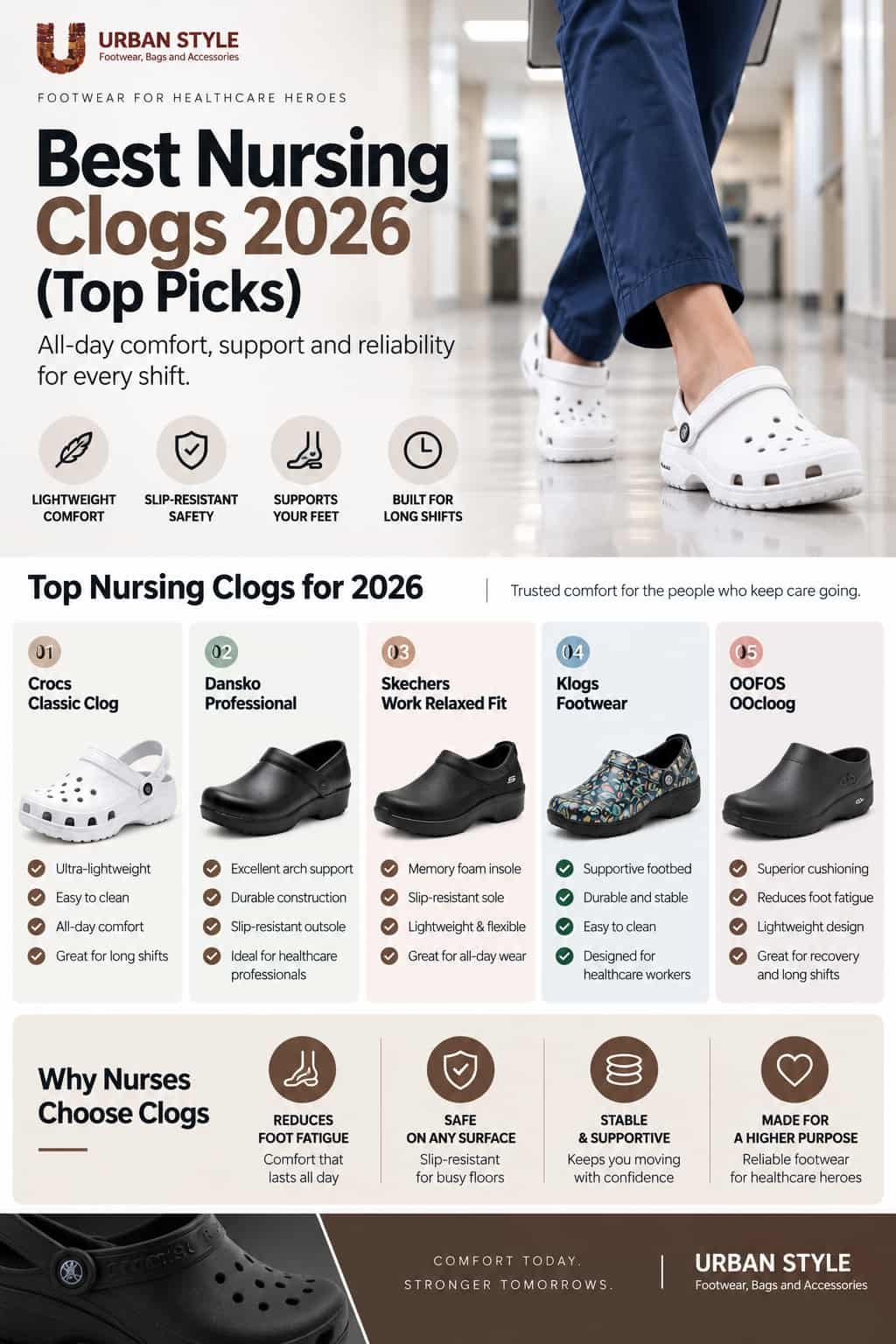
Best Nursing Clogs 2026 (Top Picks)
✅ Expert Footwear Analysis | 🛒 Amazon Options | 📅 Updated September 2026
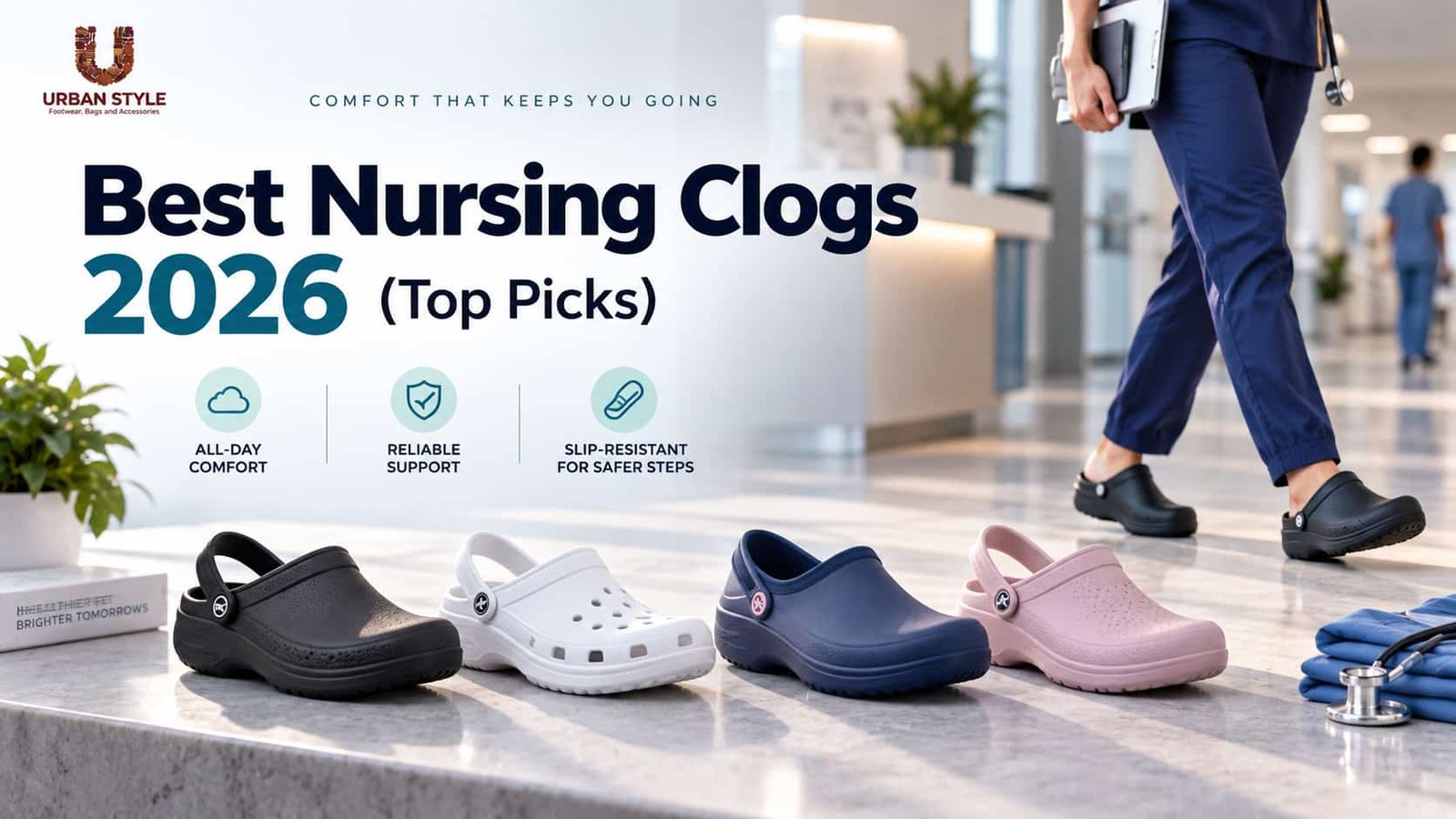
The best nursing clogs in 2026 balance arch support, slip resistance, and cleanability for 8 to 12 hour shifts on hard hospital floors. Based on published specifications, the Dansko XP 2.0 offers the strongest combination of support and slip resistance for most nurses, while the Crocs On The Clock and Dansko Kane serve specific needs for fluid exposure and easy cleaning.
🛒 Top Picks: Best Nursing Clogs 2026
Hand-picked picks based on published specifications, slip resistance certifications, and nurse-focused construction.
⭐ Top 6 Standout Picks
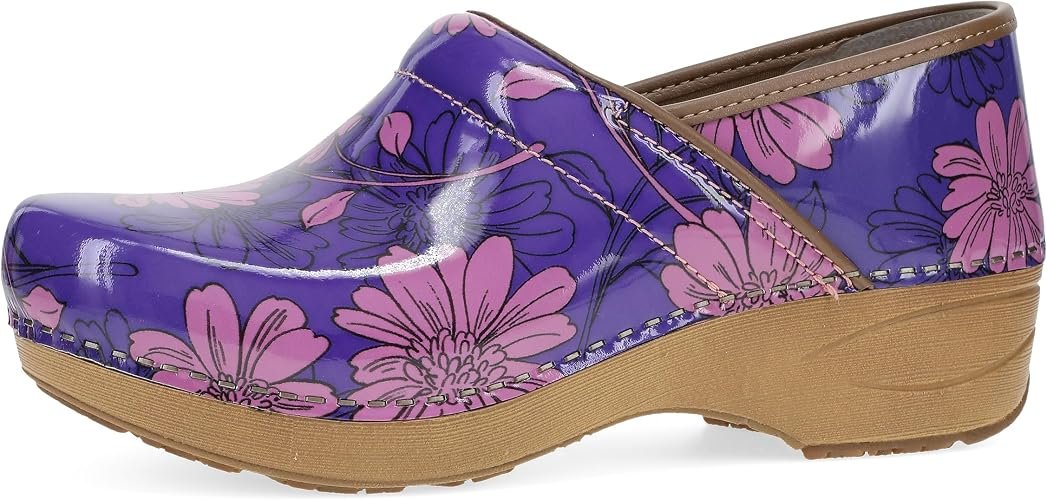
Dansko XP 2.0 Clogs
Balanced arch support, TPU heel counter, and slip resistance on wet and oily floors. The most versatile clog for nurses.
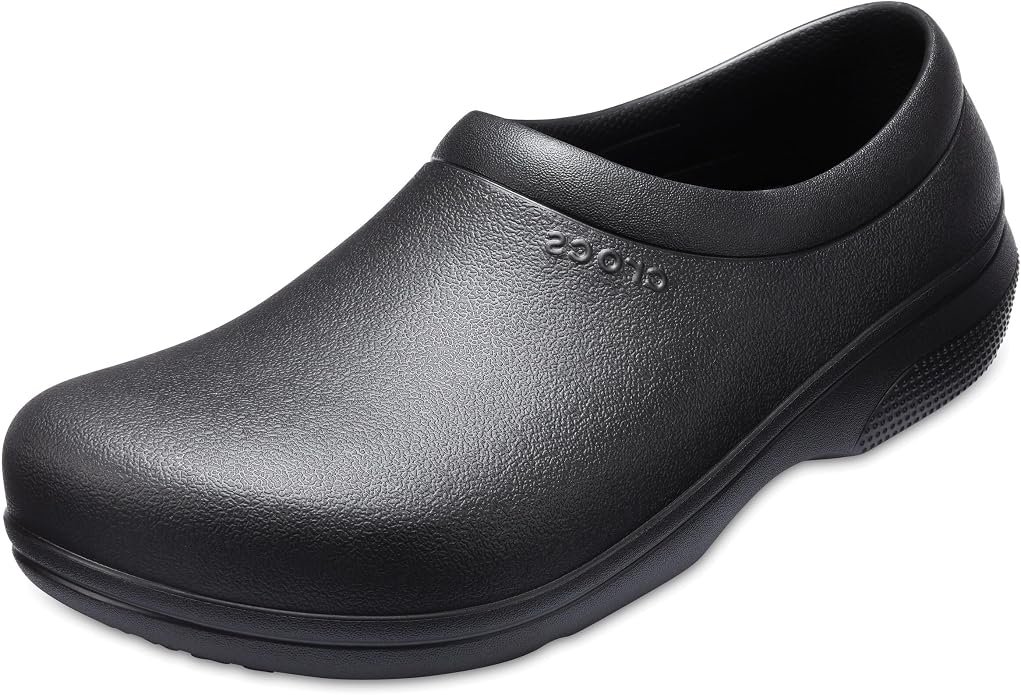
Crocs On The Clock Clog
Unisex waterproof clog with ASTM F2913 and F3445 certification. Built for high-spill units and fluid exposure.
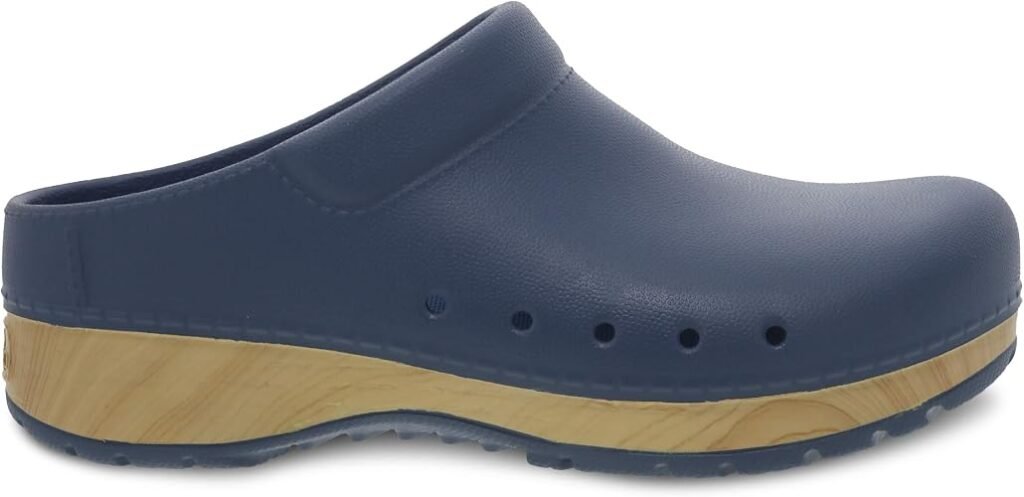
Dansko Kane Mule Clog
Wipe-clean injected EVA upper with perforated ventilation and a removable cushioned footbed for orthotic use.
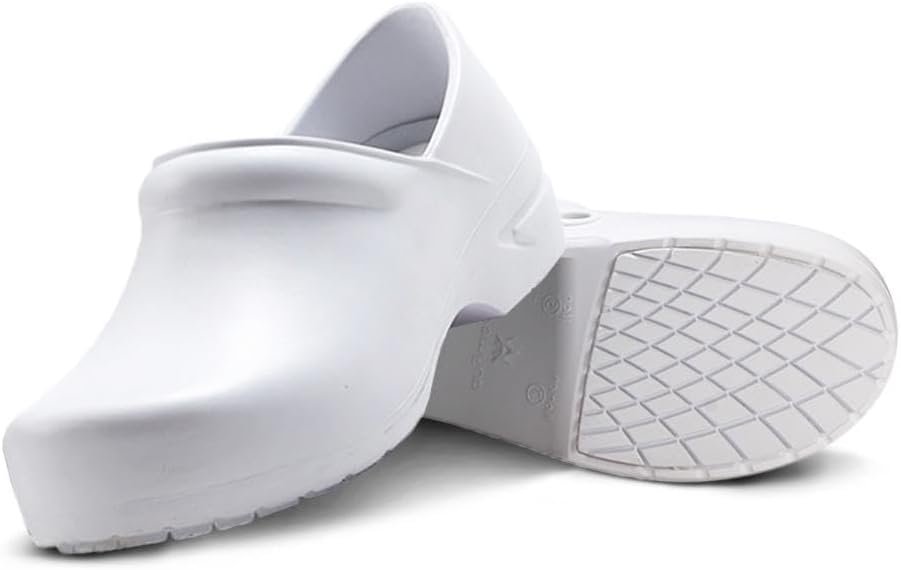
Anywear Guardian Angel Clogs
Memory foam footbed with antimicrobial insole fabric, water-resistant upper, and ventilation holes for airflow.
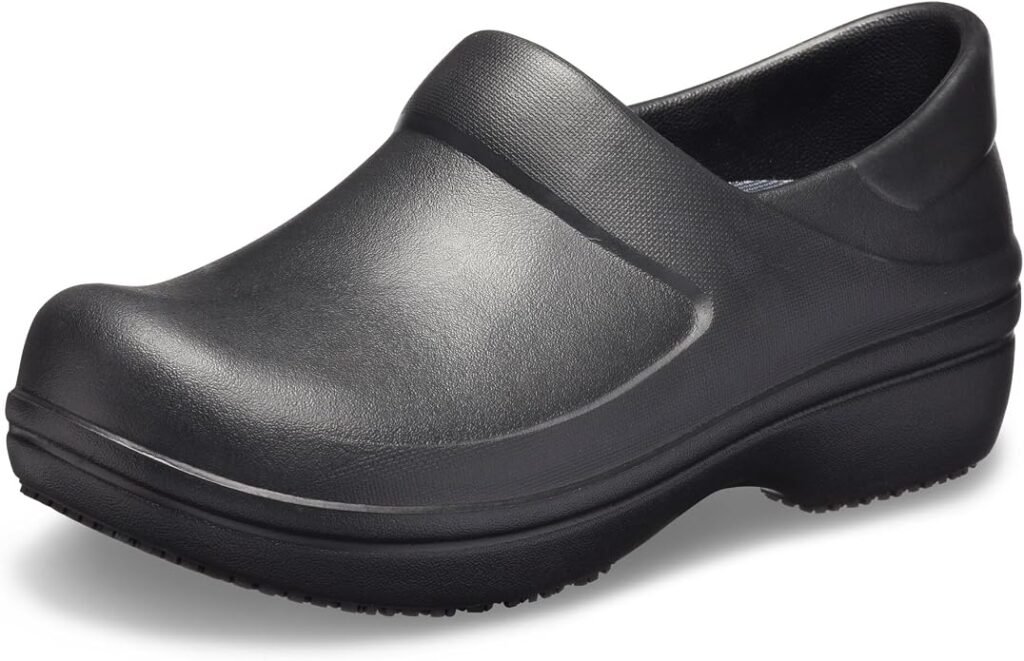
Crocs Neria Pro II Clogs
Fully waterproof Croslite clog with ASTM slip certification and wipeable upper at one of the lowest price points.
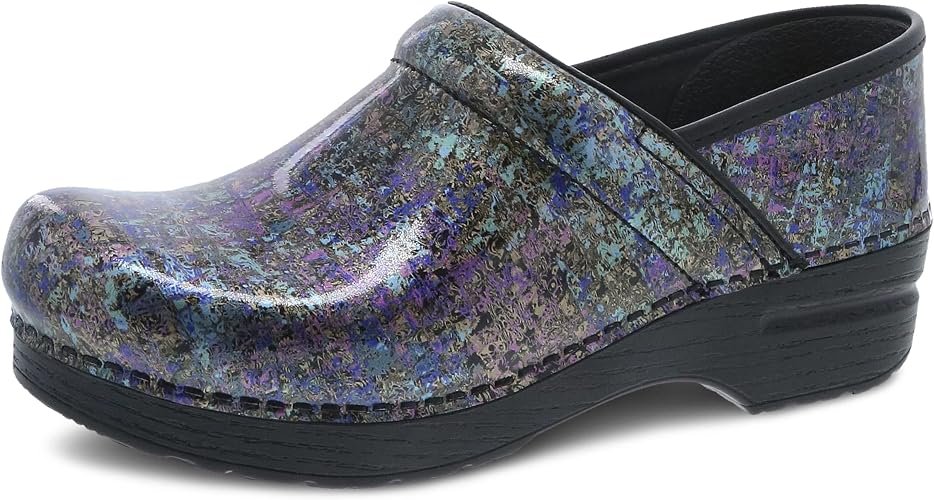
Dansko Professional Clogs
Classic clog shape with wide heel strike for rearfoot stability, leather upper, and polyurethane outsole for durability.
📋 Full Shortlist: 6 More Top Picks
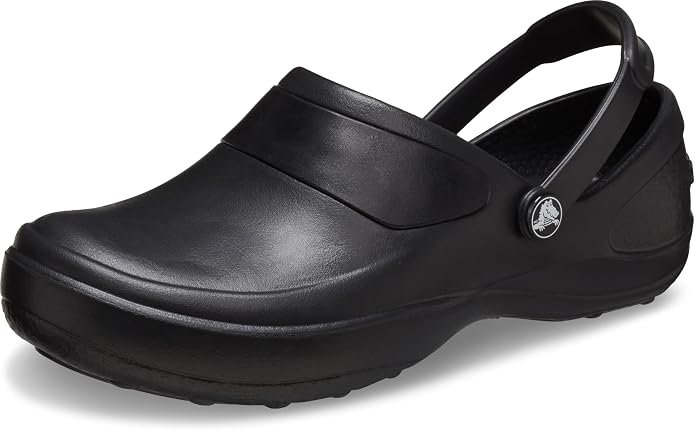
Crocs Mercy Work Clogs
Highest-rated pick. ASTM F2913 tested, easy soap-and-water cleanup.
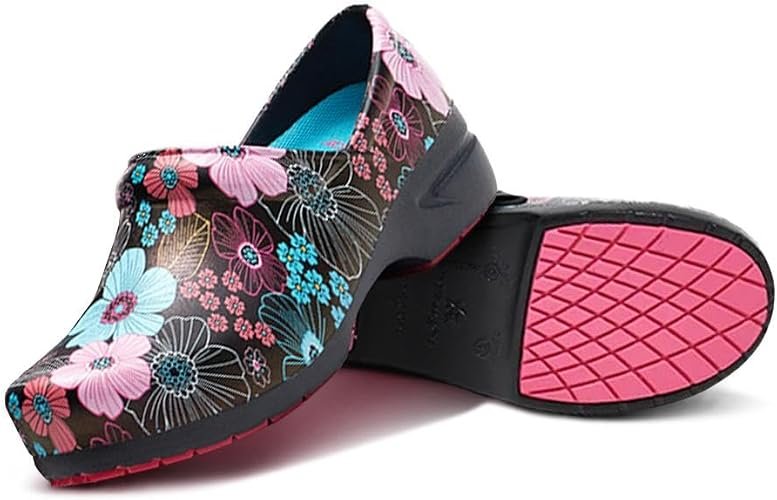
Anywear SR Angel Clogs
Ventilated upper with high-rebound EVA cushioning for airflow.
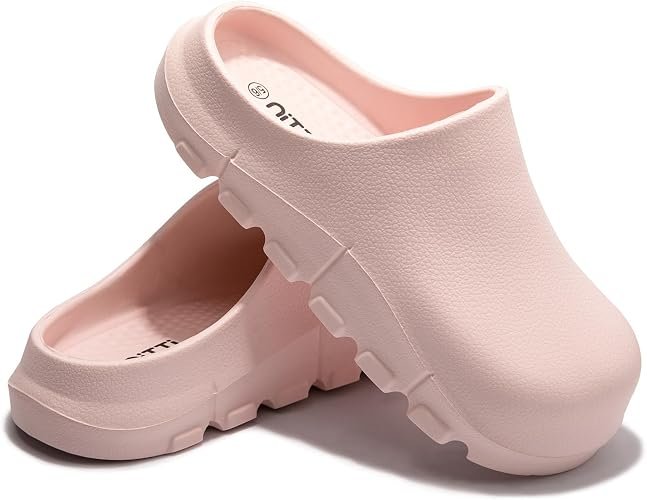
NITTI Garden Clogs
Waterproof EVA with medium arch support and deep heel cup.
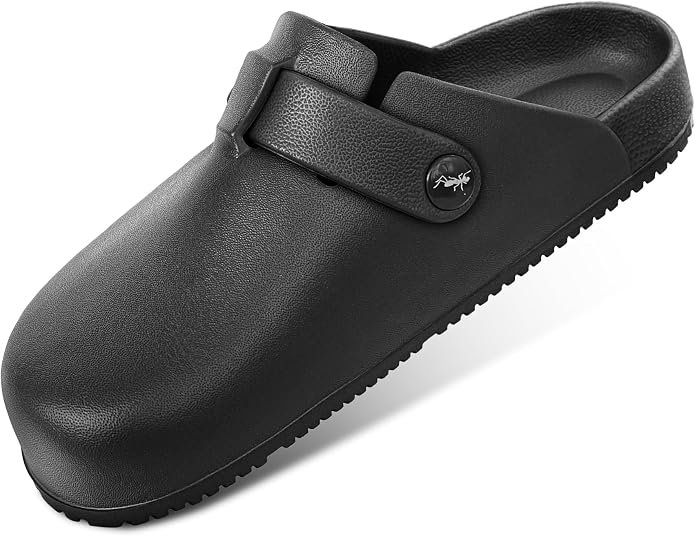
Bigant Nursing Clogs
Adjustable instep straps for wide or narrow feet at a low price.
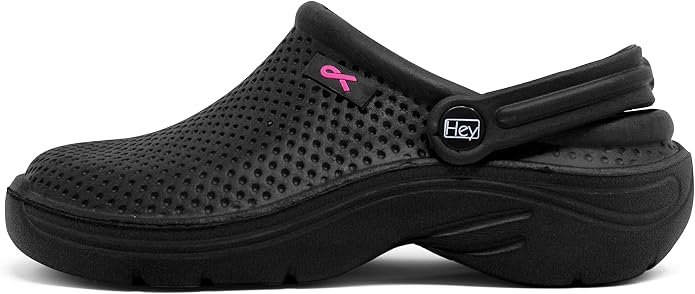
Hey Medical EVA Clogs
Lowest price in the guide. Adjustable sling-back strap for security.
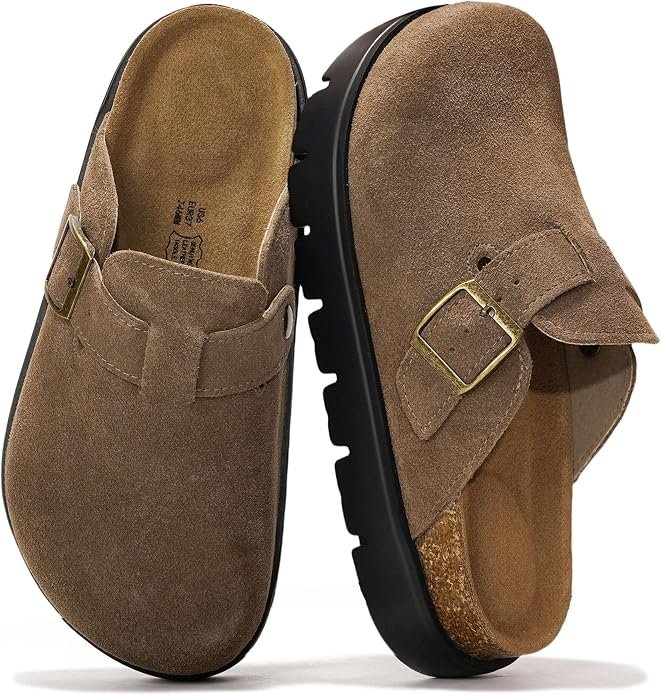
Project Cloud Leather Clogs
Genuine leather upper with cork footbed that molds to the foot.
Introduction
A nurse working a 12 hour shift in a Houston hospital logs over 4 miles of walking across hard tile, linoleum, and concrete-like flooring before clocking out. By mid-shift, the difference between a clog that supports the arch and one that simply covers the foot becomes measurable in fatigue. Hospital floors do not absorb force the way outdoor terrain does, so every step transmits impact back through the foot and lower leg.
Clogs offer a specific solution to that problem. Their enclosed or semi-enclosed upper keeps the foot stable, the roomy toe box allows the forefoot to spread under load, and a rocker or platform outsole changes how force moves through the stride. Nurses who prefer clogs often cite easier cleaning, simpler on-and-off between patient rooms, and better airflow than a fully laced sneaker.
This guide reviews 12 nursing clogs available on Amazon. It explains how to evaluate key factors such as arch support, slip resistance, cleanability, and fit, and highlights which clog features may work best for different nursing environments, including the ICU, ER, and long-term care. Nurses who want to compare nursing clogs with athletic footwear can also explore our guide to the best nursing sneakers.
What Are Nursing Clogs?
Nursing clogs are closed-toe or semi-enclosed work shoes with a backless or partially backless heel, a roomy toe box, and a thick or rockered outsole. They are designed for professionals who stand and walk on hard surfaces for long periods. The term “clog” covers a wide range of construction types, from traditional leather clogs with polyurethane soles to injected EVA molded clogs with removable footbeds.
What separates a nursing clog from a casual clog is usually slip resistance, cleanability, and support. Many healthcare-specific clogs carry ASTM F2913 or ASTM F3445 testing, which evaluates slip resistance on contaminated surfaces. Some also include removable footbeds that accommodate custom orthotics. Construction varies widely, so two clogs at the same price point may perform very differently depending on the outsole compound, footbed density, and upper material.
Why Do Nursing Clogs Matter for Nurses?
Nursing clogs matter because they address three problems common to hospital work: long hours on hard floors, frequent slip risk from spills, and the need for footwear that can be cleaned quickly between patients. A clog with a rockered outsole may help reduce the amount of toe flexion required during walking, which some nurses may find comfortable over long shifts, although individual comfort and gait response can vary.
The American Podiatric Medical Association’s footwear guidance emphasizes the importance of choosing footwear that fits properly and provides appropriate support for foot health. Research involving nurses also shows why footwear comfort deserves attention. A study of 636 nurses found that foot and ankle pain was common and that lower shoe comfort was independently associated with foot and ankle pain. A 2023 scoping review of nurses working in prolonged-standing environments similarly identified pain, numbness, burning feet, bunions, structural deformities, and calluses among the reported foot and ankle problems.
Flooring is the other factor. Hospital work commonly involves prolonged standing and walking on hard indoor surfaces, which places greater importance on footwear comfort and stability. A recent systematic review of footwear used in prolonged-standing occupations found that footwear characteristics such as sole hardness, cushioning, and support can influence foot comfort, although the ideal balance depends on the activity and individual needs.
Slip resistance matters in clinical environments, especially where floors may become contaminated with liquids. The CDC/NIOSH guidance on preventing slips, trips, and falls in healthcare identifies appropriate slip-resistant footwear as one measure that can help reduce workplace slip risk.
For footwear testing, ASTM F3445-24 specifies performance requirements for evaluating slip resistance using the ASTM F2913 whole-shoe test method. ASTM F2913 evaluates the dynamic coefficient of friction between footwear and flooring under controlled laboratory conditions and can include contaminants such as water, oil, and grease.
However, an ASTM test result should not be interpreted as a guarantee that a shoe will prevent every slip in every hospital environment. ASTM itself notes that controlled laboratory results do not establish performance for every real-world situation.
Nurses who want a broader look at traction-focused options can compare clogs against our guide to the best slip-resistant shoes for nurses.
Verify your employer’s footwear policy. Some hospitals require closed heels, all-white shoes, or a specific color palette. Others prohibit backless clogs for safety reasons. Confirm the requirements for your unit before purchasing.
What Should Nurses Look For in Nursing Clogs?
Arch Support
What it is: Arch support determines how evenly your weight is distributed across the foot. A clog with a contoured footbed, a raised arch profile, and a deep heel cup spreads load across the midfoot and hindfoot. Without that contour, pressure concentrates at the heel and ball of the foot.
Why it matters: Nurses who stand in one position at a medication cart or bedside for extended periods may notice pressure build-up without proper arch support.
What to look for: A footbed with a visible arch contour. Removable footbeds are useful if you wear orthotics. Some clogs list “Dansko Natural Arch technology” or “medium arch support” in their specifications, which tells you the footbed has been shaped rather than left flat.
Tradeoff: Firm arch support requires a short break-in period. A very soft EVA footbed may feel more comfortable on day one but lose support over months of use.
Slip Resistance
What it is: Slip resistance depends on the outsole rubber compound and tread design. Rubber with siping (small cuts in the tread) and lug patterns that channel liquid away from the contact surface provides better traction on wet tile than smooth or shallow treads.
Why it matters: Nurses in ER, ICU, dialysis, and GI labs regularly encounter spilled fluids. Even in dry units, a spill can happen at any time.
What to look for: Rubber outsole. Tread pattern with visible channels. References to ASTM F2913 or F3445 testing in the product listing.
Tradeoff: Deep-tread outsoles trap debris and can be harder to clean than smooth outsoles.
Cleanability
What it is: Cleanability affects infection control and the usable life of the shoe. Uppers that can be wiped down with a disinfectant cloth stay cleaner than porous materials that absorb liquid.
Why it matters: Fluid exposure is common in many units. A wipeable clog makes post-shift cleanup quick and helps reduce cross-contamination risk.
What to look for: Smooth, non-porous upper material like injected EVA or patent leather. Removable insoles. Machine washable or hand-wash friendly construction.
Tradeoff: Wipeable uppers tend to be less breathable than mesh, which can increase foot moisture over a 12 hour shift. For fully sealed alternatives, see our guide to the best waterproof shoes for nurses.
Fit and Toe Box
What it is: Toe box volume determines whether your toes can spread naturally without pressure. Feet also swell over long shifts, so a clog that fits well at 6 a.m. may feel tight by 2 p.m.
Why it matters: A cramped toe box concentrates pressure at the ball of the foot and can aggravate bunions or neuromas.
What to look for: A wide, rounded toe box that allows toes to spread. A heel that locks the foot without slipping. Adjustable straps if the fit needs to vary.
Tradeoff: A roomy toe box can feel loose for nurses with narrow feet.
Heel Security
What it is: Clogs are designed to slip on and off easily, which means the heel is not fully enclosed in most models. This can cause the foot to lift slightly during walking.
Why it matters: Nurses who move quickly between patient rooms cannot risk a shoe slipping off mid-stride.
What to look for: A heel counter or instep collar that holds the foot in place. Adjustable straps for personalized fit.
Tradeoff: A more secure heel design usually means the clog is slightly harder to remove at the end of a shift.
Weight
What it is: Weight affects fatigue over a 12 hour shift. Very heavy clogs require more energy to lift with every step.
Why it matters: Nurses who walk long distances per shift benefit from lighter clogs.
What to look for: “Lightweight” or “injected EVA” language in the product description. Many EVA clogs weigh well under 1 pound per shoe.
Tradeoff: Lighter clogs often have less durable outsole construction. Nurses who need maximum durability may prefer a slightly heavier leather clog.
Nursing Workplace Considerations
Unit-specific requirements. ICU nurses may benefit from quieter outsoles that do not squeak on linoleum during night rounds. ER nurses may need faster on-and-off during codes and traumas. OR nurses may need clogs that can be wiped clean of blood and irrigation fluid. Long-term care nurses may walk longer distances per shift and benefit from lighter clogs. Each environment places different demands on footwear, so match the clog to the unit.
Dress codes. Many U.S. hospitals require closed-toe shoes. Some require closed heels as well, which rules out traditional backless clogs. Nurses who need a fully enclosed option should check out our guide to the best nursing shoes for ER and surgical nurses, which covers closed-heel designs.
Commuting. If you walk to a train or park in a hospital garage, you may need a pair of commuting shoes separate from your work clogs. Some nurses keep a spare pair in a locker.
Cleaning routines. Fluid exposure is common in many units. A wipeable clog makes post-shift cleanup quick. Nurses who prefer mesh sneakers may need to plan for washing or sanitizing their shoes after heavy exposure.
Airflow and moisture. Wearing clogs for 12 hours without ventilation can lead to foot moisture and odor. Ventilated clogs and moisture-wicking socks help manage this.
Product Reviews
Dansko XP 2.0 Clogs
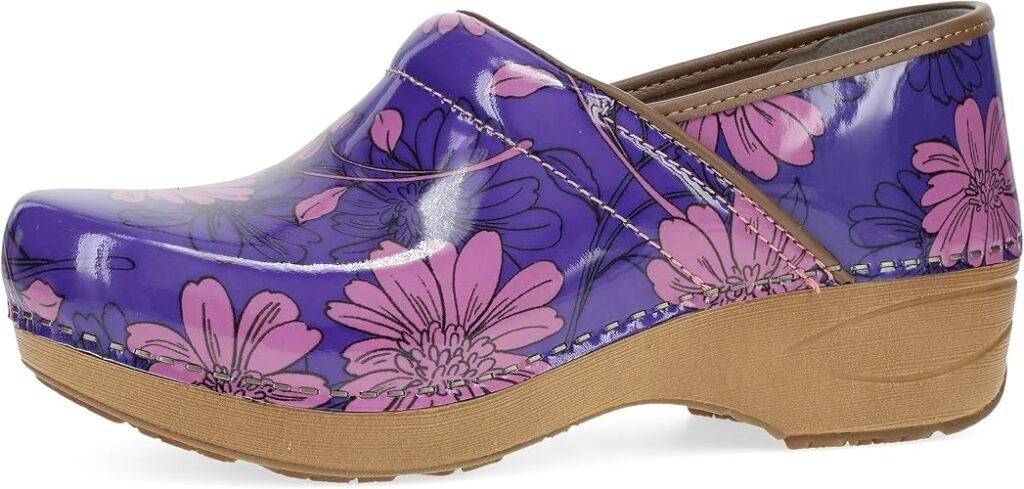
Best For: Nurses who need structured arch support, slip resistance, and orthotic accommodation in a lightweight clog.
Why It Works: The XP 2.0 uses an EVA midsole for stability and shock absorption, plus a dual-density PU footbed with Dansko Natural Arch technology and memory foam. The TPU heel counter stabilizes the rearfoot, and the padded instep collar reduces heel lift during walking. The removable footbed accommodates custom orthotics. The rubber outsole is slip resistant on dry, wet, and oily or wet surfaces. The 1.75 inch heel supports the rocker bottom design.
Expert Analysis: The rocker geometry on the XP 2.0 reduces the amount of toe flexion required during walking. For nurses who experience forefoot pressure during a 12 hour shift, that geometry can reduce peak load at the ball of the foot. The dual-density PU footbed is firmer than memory foam alone, which supports stability rather than pure softness. This is a design choice: firm arch support over soft cushioning. The tradeoff is a short break-in period.
Pros:
- Removable footbed for orthotics
- Slip resistant on dry, wet, and oily or wet surfaces
- TPU heel counter for rearfoot stability
- Lighter weight than earlier XP models
Cons:
- Higher price compared with EVA clogs
- Heel height of 1.75 inches may not suit nurses who prefer a flat platform
Main Tradeoff: The price point is significantly above budget EVA clogs. Nurses who do not need orthotic accommodation or structured arch support may find comparable comfort in a less expensive model.
Who Should Buy: Nurses with high arches, plantar fasciitis, or a need for removable footbeds. Nurses who work in units where spills are common and need documented slip resistance.
Who Should Skip: Nurses who prefer a flat, flexible platform or a very lightweight shoe.
Verdict: The most balanced clog in this guide when support, slip resistance, and orthotic accommodation are the priority. The tradeoff is price and a short break-in period. Nurses who want to see the full Dansko lineup side by side can compare models in our guide to the best Dansko nursing shoes.
🛒 Check Price on AmazonDansko Women’s Professional Slip-On Clogs
Best For: Nurses who want the original structured clog shape with a wide heel strike for stability.
Why It Works: The Professional uses a leather upper and a polyurethane outsole with a wide heel strike, which spreads contact force across a broader area during heel landings. The rocker bottom supports forward motion, and the classic clog shape has been adopted by healthcare workers across multiple professions. At 4.3 stars with 8,429 reviews, it has a substantial user base.
Expert Analysis: The wide heel strike is the defining stability feature here. Compared with the XP 2.0, the Professional has a firmer, more traditional feel. The leather upper is durable and easier to wipe clean than mesh, though it will not breathe as well. The polyurethane outsole is generally more abrasion-resistant than EVA, which matters for nurses who walk long distances per shift.
Pros:
- Leather upper for durability
- Wide heel strike for rearfoot stability
- Polyurethane outsole for abrasion resistance
- Rocker bottom supports forward motion
Cons:
- Not explicitly listed as slip resistant in the supplied data
- Firmer ride than EVA clogs
Main Tradeoff: The Professional is not described as water resistant in the supplied specifications. Nurses in high-spill environments should prioritize clogs with documented slip resistance and water-resistant uppers.
Who Should Buy: Nurses who want a durable leather clog with structured support and a firm platform.
Who Should Skip: Nurses who need documented slip resistance or maximum cushioning.
Verdict: A classic structured clog that has earned its place in healthcare. The main limitation is the lack of explicit slip-resistance and water-resistance claims in the supplied data.
🛒 Check Price on AmazonDansko Kane Slip-On Mule Clog
Best For: Nurses who want the easiest possible post-shift cleanup in a lightweight clog.
Why It Works: The Kane uses an injected EVA upper with a molded construction and a removable, cushioned EVA footbed. The Dansko Natural Arch technology adds arch support. Perforated uppers provide ventilation. The wipe-clean upper makes cleanup simple, and the slip-on mule design has no strap to adjust.
Expert Analysis: The Kane is the lightest of the Dansko clogs in this guide. The perforated upper is designed to vent moisture, which addresses one of the common complaints about waterproof clogs. However, the perforations mean the shoe is not water resistant, so it is not ideal for high-fluid-exposure environments. The removable EVA footbed can be replaced with an orthotic.
Pros:
- Lightweight injected EVA construction
- Wipe-clean upper
- Removable EVA footbed
- Perforated uppers for ventilation
Cons:
- Not water resistant
- Moderate to high cushioning may not suit nurses who want firmer support
Main Tradeoff: The Kane is not water resistant despite being a clog. Nurses in dialysis, ER, or other high-fluid-exposure units should choose a fully waterproof clog instead.
Who Should Buy: Nurses in dry units who want an easy-clean, lightweight clog with removable footbed support.
Who Should Skip: Nurses in high-fluid-exposure environments or those who need a waterproof clog.
Verdict: A practical, lightweight clog with the simplest cleanup in this guide. The lack of water resistance limits its use in some clinical settings.
🛒 Check Price on AmazonCrocs Unisex On The Clock Clog
Best For: Nurses who want a unisex, waterproof, ASTM-certified clog with a roomier fit.
Why It Works: The On The Clock Clog uses Crocs Lock slip-resistant tread and is tested to ASTM F2913-24 and ASTM F3445-24 standards, plus CE and EN ISO 20347:2012 OB, SRC. The enclosed toe and heel construction is designed to align with typical workplace safety guidelines. The clog is waterproof, washable, and uses the Iconic Crocs Comfort cushioning system. At 4.3 stars with 35,889 reviews and 100+ bought in the past month, it has strong adoption.
Expert Analysis: The ASTM certifications are the key differentiator here. ASTM F3445 specifies minimum slip resistance requirements evaluated using the ASTM F2913 whole shoe tester, which simulates contaminated surfaces. For nurses in environments where spills are routine, that objective testing matters more than marketing labels. The On The Clock has a low arch profile and moderate cushioning, which is less structured than a Dansko but lighter on the foot. To compare other Crocs work options, see our guide to the best Crocs for nurses.
Pros:
- ASTM F2913-24 and F3445-24 certification
- Waterproof and washable
- Enclosed toe and heel
- Unisex sizing
Cons:
- Runs large (product listing suggests sizing down if between sizes)
- Arch type listed as low arch
Main Tradeoff: The low arch profile and relaxed fit may not suit nurses who need firm arch support or a snug heel fit. Nurses who prefer structured footbeds should consider a Dansko model instead.
Who Should Buy: Nurses who want a waterproof, certified slip-resistant clog with a unisex fit and moderate cushioning.
Who Should Skip: Nurses who need high arch support or a more structured footbed.
Verdict: A practical, safety-certified clog that works across a range of healthcare roles. The unisex fit and ASTM certifications make it a strong pick for high-spill environments.
🛒 Check Price on AmazonCrocs Women’s Neria Pro II Work Clogs
Best For: Nurses who want a waterproof women’s clog with ASTM slip resistance at a value price point.
Why It Works: The Neria Pro II is a fully waterproof clog with a Croslite foam construction, an enclosed toe, and a slip-resistant outsole with Crocs Lock tread. It is tested and certified to ASTM F2913-24 and ASTM F3445-24, plus CE and EN ISO 20347:2012 OB, SRC. The upper is easy to wipe clean. The 25 percent discount brings the price below similar clogs. At 4.0 stars with 24,616 reviews, it has a strong following among healthcare workers.
Expert Analysis: The Neria Pro II uses a maximum cushioning profile, which is softer than the On The Clock. The fit is relaxed with extra room at the heel, and the enhanced arch support is more pronounced than on the unisex Crocs model. The tradeoff is that the softer cushioning may compress more quickly over time. The waterproof upper limits breathability, so nurses in warm units may notice foot moisture over long shifts.
Pros:
- ASTM F2913-24 and F3445-24 certification
- Fully waterproof
- Easy to wipe clean
- Maximum cushioning Croslite foam
Cons:
- Relaxed fit with extra room at the heel
- Arch support listed as low arch
Main Tradeoff: The relaxed fit and low arch profile may not suit nurses who need a snug, structured fit. The waterproof construction also reduces breathability compared with mesh uppers.
Who Should Buy: Nurses in high-spill environments, nurses who need a waterproof shoe, and nurses who want ASTM-certified slip resistance.
Who Should Skip: Nurses who need firm arch support or a performance fit.
Verdict: The most safety-certified women’s clog in this guide. The waterproof build and ASTM testing make it a strong choice for messy environments, provided the fit works for the individual foot.
🛒 Check Price on AmazonCrocs Mercy Work Clogs
Best For: Nurses who want a well-reviewed Crocs work clog with easy soap and water cleanup.
Why It Works: The Mercy Work Clog uses Crocs Lock slip-resistant treads and is ASTM F2913-11 tested and CE certified to EN ISO 20347:2012 OB, SRC. The clog is easy to clean with soap and water, and it is designed for food service, hospitality, and healthcare workers. At 4.7 stars with 189,422 reviews, it has the highest review count and rating in this guide.
Expert Analysis: The 4.7-star rating across nearly 190,000 reviews is unusually strong and suggests broad user satisfaction across multiple industries. The roomy fit requires sizing down for a secure feel, which is a common characteristic of Crocs clogs. The clog is waterproof and lightweight.
Pros:
- Highest-rated option in this guide at 4.7 stars
- ASTM F2913-11 tested and CE certified
- Easy to clean with soap and water
- Waterproof
- Wide review base
Cons:
- Open toe style listed in supplied data
- Roomy fit may require sizing down
Main Tradeoff: The open toe style listed in the supplied specifications is not compliant with most clinical dress codes that require closed-toe footwear. Nurses should verify the current listing shows a closed-toe variant before purchasing.
Who Should Buy: Nurses who want a highly rated Crocs work clog for non-restrictive environments, or who can verify a closed-toe variant is available.
Who Should Skip: Nurses in units that require fully closed-toe footwear.
Verdict: A highly rated Crocs work clog with strong certification and a large user base. The open-toe specification in the supplied data is a limitation for many hospital environments.
🛒 Check Price on AmazonAnywear SR Angel Nursing Clogs
Best For: Nurses who want a lightweight, ventilated clog with high-rebound cushioning.
Why It Works: The SR Angel uses high-rebound EVA cushioning to absorb impact and reduce fatigue over long shifts. The oil-resistant rubber outsole is slip resistant, and the injected molded EVA construction keeps the shoe lightweight. Ventilation holes keep feet cooler, and the water-resistant construction shields against spills. At 3.8 stars with 6,463 reviews, it has a niche following among nurses who prioritize airflow.
Expert Analysis: The ventilation holes are the standout feature here. Unlike fully waterproof clogs, the SR Angel allows air to move through the shoe, which reduces moisture build-up over 12 hour shifts. The tradeoff is that water resistance is not the same as waterproofing, so heavy fluid exposure could still penetrate. The high-rebound EVA is designed to maintain cushioning longer than standard EVA.
Pros:
- High-rebound EVA cushioning
- Ventilated for airflow
- Lightweight injected molded construction
- Slip-resistant oil-resistant rubber outsole
- Water-resistant
Cons:
- Runs small (product listing recommends sizing up)
- Water-resistant, not waterproof
- 3.8-star rating is lower than competing clogs
Main Tradeoff: The SR Angel runs small, and the water-resistant construction may not hold up to heavy fluid exposure. Nurses who need a fully waterproof clog should consider the Crocs On The Clock or Neria Pro II instead.
Who Should Buy: Nurses who want a lightweight, ventilated clog with impact-absorbing cushioning.
Who Should Skip: Nurses in high-fluid-exposure units or those who need a fully waterproof shoe.
Verdict: A lightweight, ventilated option for nurses who prioritize airflow. The sizing recommendation and water-resistant rather than waterproof construction are the main limitations.
🛒 Check Price on AmazonAnywear Guardian Angel Nursing Clogs
Best For: Nurses who want a memory foam footbed, water resistance, and ventilation in one clog.
Why It Works: The Guardian Angel uses memory foam cushioning in the footbed, a water-resistant upper, and a slip-resistant rubber outsole. Ventilation holes keep feet cool. The upper is described as Certainty Infused IMVEA II, and the insole uses Certainty Antimicrobial Fabric. The construction is designed for healthcare environments with a focus on both cushioning and moisture management. At 4.0 stars with 1,688 reviews, it has a moderate user base.
Expert Analysis: The combination of memory foam cushioning and ventilation holes is unusual in a clog. Most clogs prioritize either cushioning or airflow, not both. The Guardian Angel tries to deliver both, though the water-resistant upper is not fully waterproof. The antimicrobial insole fabric is a feature that may appeal to nurses concerned about odor and hygiene over long shifts.
Pros:
- Memory foam footbed
- Water-resistant upper
- Slip-resistant rubber outsole
- Ventilation holes for airflow
- Antimicrobial insole fabric
Cons:
- Runs small (product listing recommends sizing up)
- Water-resistant, not waterproof
- 4.0-star rating is mid-range
Main Tradeoff: The Guardian Angel runs small, so nurses should size up. The water-resistant construction handles splashes but not immersion, so it is not ideal for the messiest clinical units.
Who Should Buy: Nurses who want memory foam comfort with ventilation and water resistance in one clog.
Who Should Skip: Nurses in high-fluid-exposure units or those who want a fully waterproof design.
Verdict: A middle-ground clog that balances cushioning, ventilation, and water resistance. The sizing recommendation is the primary consideration.
🛒 Check Price on AmazonNITTI Women’s Garden Clogs with Arch Support
Best For: Nurses who want an affordable waterproof EVA clog with medium arch support.
Why It Works: The NITTI Garden Clog uses high-elastic EVA material with a roomy toe area and medium arch support. The waterproof construction and easy-clean upper make it practical for messy environments. The slip-resistant EVA outsole provides grip during walking. At $25.99 with 1,505 reviews and 400+ bought in the past month, it is one of the most affordable options in this guide.
Expert Analysis: The EVA construction is lightweight and easy to clean, though EVA tends to compress faster than polyurethane or rubber over months of use. The deep heel cup is a useful feature that helps protect the foot from hard surfaces. The medium arch support is described as firm enough to relieve pressure for some wearers, though the supplied data does not include APMA certification or ASTM testing.
Pros:
- Affordable price at $25.99
- Waterproof EVA construction
- Medium arch support
- Deep heel cup
- Roomy toe area
Cons:
- No ASTM slip-resistance certification specified
- EVA may compress faster than PU or rubber
Main Tradeoff: The NITTI clog lacks documented ASTM certification, so nurses in high-spill environments should verify slip resistance is adequate for their unit. EVA compression over time is a general concern with this material.
Who Should Buy: Budget-conscious nurses who need a waterproof clog for moderate shift lengths or as a secondary pair.
Who Should Skip: Nurses who need ASTM certification or long-term durability in a primary work shoe.
Verdict: A budget-friendly waterproof clog with arch support and a roomy toe box. The lack of ASTM certification is the primary limitation.
🛒 Check Price on AmazonBigant Women Clogs Slip-on Nursing Garden Shoes
Best For: Nurses who need an adjustable instep strap for a customized fit.
Why It Works: The Bigant clog uses EVA construction with adjustable instep straps that accommodate wider or narrower feet. The cushioned heel supports walking comfort, and the abrasive sole construction provides slip resistance. The slip-on design makes it easy to put on and take off. At $26.99 with 5,268 reviews and 200+ bought in the past month, it has a strong user base for a budget clog.
Expert Analysis: The adjustable strap is the distinguishing feature. Nurses with wide forefeet or high insteps often struggle with clog sizing, and the strap allows the fit to be tightened or loosened as needed. The EVA construction is lightweight, but the not-water-resistant specification means it is not ideal for units with frequent spills. The slip-resistant sole is described as abrasive, which suggests a textured surface, though no ASTM certification is specified.
Pros:
- Adjustable instep straps
- Affordable price at $26.99
- Lightweight EVA construction
- Slip-resistant sole
- 5,000+ reviews
Cons:
- Not water resistant
- No ASTM certification specified
Main Tradeoff: The Bigant clog is not water resistant, which limits its use in high-spill environments. The lack of ASTM certification means nurses in demanding units should consider a certified alternative.
Who Should Buy: Nurses with wide forefeet who want an adjustable fit at a low price.
Who Should Skip: Nurses in high-fluid-exposure units or those who need documented slip resistance.
Verdict: A budget clog with a rare adjustable strap that can help with fit. The lack of water resistance limits its clinical range.
🛒 Check Price on AmazonHey Medical Uniforms Women’s Lightweight EVA Clogs
Best For: Nurses who want the absolute lowest price on a lightweight EVA clog.
Why It Works: The Hey Medical clog uses an ultra-lightweight EVA construction with a flexible, soft design. The slip-resistant outsole plus an adjustable sling-back strap provides a secure fit. The EVA material is water-friendly and cleans easily with a hand-wash. At $16.99 with 3,606 reviews and 300+ bought in the past month, it is the lowest-priced clog in this guide.
Expert Analysis: At this price point, nurses should expect basic construction. The adjustable sling-back strap is a useful addition because it improves heel security during walking. The EVA material is soft and lightweight, which is comfortable for short shifts but may compress faster under heavier loads. The water-resistant rating means it can handle splashes but not immersion.
Pros:
- Lowest price at $16.99
- Adjustable sling-back strap
- Ultra-lightweight EVA construction
- Water-friendly and hand-washable
- Slip-resistant outsole
Cons:
- Water-resistant, not waterproof
- Lower rating (3.8 stars) than competing clogs
- EVA may compress faster than PU or rubber
Main Tradeoff: The Hey Medical clog is a budget option that covers the basics but does not offer the arch support, ASTM certification, or durability of higher-priced alternatives.
Who Should Buy: Nurses who need a low-cost secondary clog or who work shorter shifts.
Who Should Skip: Nurses who need maximum arch support, ASTM-certified slip resistance, or long-term durability in a primary work shoe.
Verdict: A very low-cost clog that covers the essentials. Not a replacement for a properly supported work clog for 12 hour hospital shifts.
🛒 Check Price on AmazonProject Cloud Genuine Leather Platform Clogs
Best For: Nurses who want a leather clog with a cork footbed, memory foam padding, and a platform sole.
Why It Works: The Project Cloud clog uses a genuine leather upper, lining, and insole with a cork footbed that molds to the shape of the foot over time. Memory foam padding adds cushioning. The platform sole adds height and stability. The water-resistant finish handles splashes. At 4.2 stars with 2,065 reviews and a 12 percent discount, it offers a premium leather option at a mid-range price.
Expert Analysis: The cork footbed is the standout feature. Cork molds to the shape of the foot over time, providing personalized arch support after a break-in period. The leather upper is durable and easier to wipe clean than mesh. The tradeoff is that leather requires more maintenance than EVA or Croslite, and the platform sole adds weight compared with lightweight EVA clogs.
Pros:
- Genuine leather upper and lining
- Cork footbed molds to the foot
- Memory foam padding
- Water-resistant
- 12 percent discount
Cons:
- Heavier than EVA or Croslite clogs
- Leather requires more maintenance
Main Tradeoff: The Project Cloud clog is heavier and requires more upkeep than synthetic clogs. Nurses who want a lightweight, low-maintenance clog should consider a Crocs or EVA option instead.
Who Should Buy: Nurses who want a leather clog with a cork footbed and are willing to invest in a longer break-in period.
Who Should Skip: Nurses who want a lightweight, minimal-maintenance clog.
Verdict: A premium leather clog with a cork footbed that molds to the foot over time. The weight and maintenance requirements are the primary tradeoffs.
🛒 Check Price on AmazonComparison Table
| Product | Price | Rating | Reviews | Best For | Key Feature | Water Resistance | Main Tradeoff |
|---|---|---|---|---|---|---|---|
| Dansko XP 2.0 | $144.46 | 4.4 | 14,767 | Best overall | Removable footbed, slip-resistant | Water repellent | Higher price |
| Dansko Professional | $139.95 | 4.3 | 8,429 | Best support | Wide heel strike, leather upper | Not specified | No explicit slip resistance |
| Dansko Kane | $94.95 | 4.2 | 7,170 | Easy-clean | Wipe-clean EVA upper | Not water resistant | Not for wet environments |
| Crocs On The Clock | $37.49 | 4.3 | 35,889 | Best for spills | ASTM F2913 and F3445 | Waterproof | Low arch |
| Crocs Neria Pro II | $37.49 | 4.0 | 24,616 | Best value | ASTM certified, Croslite | Waterproof | Relaxed fit |
| Crocs Mercy Work | $44.95 | 4.7 | 189,422 | Highest rated | ASTM F2913 tested | Waterproof | Open toe style |
| Anywear SR Angel | $49.95 | 3.8 | 6,463 | Ventilated | High-rebound EVA | Water resistant | Runs small |
| Anywear Guardian Angel | $49.95 | 4.0 | 1,688 | Memory foam | Antimicrobial insole | Water resistant | Runs small |
| NITTI Garden Clogs | $25.99 | 4.0 | 1,505 | Budget waterproof | EVA construction | Waterproof | No ASTM certification |
| Bigant Clogs | $26.99 | 4.1 | 5,268 | Adjustable fit | Instep straps | Not water resistant | No ASTM certification |
| Hey Medical | $16.99 | 3.8 | 3,606 | Lowest price | Adjustable sling-back | Water resistant | Basic construction |
| Project Cloud | $52.90 | 4.2 | 2,065 | Leather clog | Cork footbed | Water resistant | Heavier |
Decision Matrix
| Nursing Need | Recommended Product | Why |
|---|---|---|
| 12 hour shifts | Dansko XP 2.0 | Dual-density footbed maintains support over long periods |
| Wide feet | Bigant Clogs | Adjustable instep straps accommodate wider forefeet |
| Slip resistance | Crocs On The Clock or Crocs Neria Pro II | ASTM F2913 and F3445 certified |
| Easy cleaning | Dansko Kane or Crocs On The Clock | Wipe-clean or waterproof uppers |
| Budget | Hey Medical or NITTI | Lowest prices in the guide |
| Maximum cushioning | Crocs Neria Pro II | Maximum cushioning Croslite foam |
| Stability | Dansko Professional | Wide heel strike for rearfoot stability |
| Orthotic accommodation | Dansko XP 2.0 or Dansko Kane | Removable footbeds |
| Memory foam comfort | Anywear Guardian Angel | Memory foam footbed with antimicrobial fabric |
| Ventilation | Anywear SR Angel | Ventilation holes for airflow |
| Leather option | Project Cloud | Genuine leather upper with cork footbed |
How to Choose Nursing Clogs
Match the clog to your unit’s demands. High-spill units like ER, dialysis, and GI labs benefit from fully waterproof, ASTM-certified clogs. Dry units like outpatient clinics may be fine with a lighter, more ventilated clog. Units with long walking distances per shift benefit from a lighter clog, while units with long standing periods benefit from a firmer, more structured footbed.
Decide whether you need a removable footbed. If you wear custom orthotics or over-the-counter insoles, you need a clog with a removable footbed. The Dansko XP 2.0 and Dansko Kane both meet this requirement. Most Crocs clogs have non-removable footbeds.
Verify slip resistance certifications. ASTM F2913 and ASTM F3445 testing provides an objective benchmark. Clogs without this certification may still be slip resistant, but the claim is not verified. Nurses in high-risk environments should prioritize certified options.
Check water resistance level. Waterproof is different from water-resistant. Waterproof clogs can handle immersion and heavy fluid exposure. Water-resistant clogs handle splashes only. Nurses in wet units should choose waterproof. Nurses in dry units may prefer a ventilated, water-resistant clog for better breathability.
Consider the heel security design. Traditional backless clogs can slip off during fast walking. Clogs with an instep collar, TPU heel counter, or adjustable strap provide more security. Nurses who move quickly between patient rooms should prioritize heel security.
Weigh the tradeoffs between support and cushioning. Firm arch support and deep cushioning are not the same. Clogs like the Dansko XP 2.0 prioritize structured arch support. Clogs like the Crocs Neria Pro II prioritize soft cushioning. The right choice depends on your foot type and how your feet respond to each feel.
Verify your employer’s footwear policy. Some hospitals require closed heels, specific colors, or non-backless designs. Confirm the requirements for your unit before purchasing a clog. Nurses who cannot wear clogs should compare options in our guide to the best nursing sneakers.
If you are looking at complementary brands, our guide to the best Alegria shoes for nurses covers another line of structured clogs, and our roundup of the best Nurse Mates shoes covers value-focused nursing footwear.
FAQ
What are the best nursing clogs for 12 hour shifts?
The best nursing clogs for 12 hour shifts combine structured arch support, durable cushioning, and slip resistance. The Dansko XP 2.0 offers the strongest balance of those features. The Crocs Neria Pro II offers a softer cushioning profile. Nurses who need maximum stability may prefer the Dansko Professional with its wide heel strike.
Are clogs better than sneakers for nurses?
Clogs and sneakers serve different needs. Clogs tend to offer easier cleaning, better airflow in some designs, and simpler on-and-off. Sneakers tend to offer more breathable mesh uppers, more flexible platforms, and often more cushioning options. The right choice depends on your unit and your foot type.
Do nursing clogs need to be slip resistant?
Yes, slip resistance is important for most nursing environments. Hospitals have hard, often wet floors, and spills are common. Clogs with ASTM F2913 or F3445 certification have been objectively tested for slip resistance on contaminated surfaces. Even in dry units, a rubber outsole with visible tread is safer than a smooth sole.
Are waterproof clogs necessary for nursing?
Waterproof clogs are necessary in units with frequent fluid exposure, such as ER, dialysis, and wound care. In dry units, a water-resistant or ventilated clog may be more comfortable because it allows airflow. The tradeoff is that waterproof clogs tend to trap moisture, which can increase foot sweat over 12 hour shifts.
How should nursing clogs fit?
Nursing clogs should fit with about a thumb’s width of space between the longest toe and the front of the clog. The heel should be secure without lifting during walking. Clogs with an adjustable strap or instep collar allow for a more personalized fit. Feet swell during long shifts, so a clog that fits well in the morning may feel tight in the afternoon.
Do nurses need arch support in clogs?
Arch support is helpful for most nurses, but especially for those with flat feet, high arches, or a history of arch discomfort. Clogs with contoured footbeds or removable insoles provide more structured support than flat-footbed clogs. The Dansko Natural Arch technology and the Anywear memory foam footbed are examples of arch-support features.
Are Crocs good for nursing?
Crocs make several nursing-friendly clogs, including the On The Clock and Neria Pro II models. These clogs are waterproof, easy to clean, and carry ASTM F2913 and F3445 slip resistance certification. The main limitations are a low arch profile and a relaxed fit. Nurses who need structured arch support may prefer Dansko or a clog with a removable footbed.
How long do nursing clogs last?
There is no universal replacement schedule. Clogs should be replaced when the outsole tread is visibly worn, when the midsole feels compressed or flat, or when you notice increased foot fatigue that was not present when the clogs were new. Nurses who rotate between two pairs may extend the usable life of each pair.
Are expensive nursing clogs worth it?
A higher price often corresponds to better materials, more structured footbeds, and certifications like ASTM slip resistance. However, less expensive clogs can work for some nurses, especially those who work shorter shifts or want a secondary pair. The key is whether the clog meets the specific demands of your shift and your foot.
Can nurses wear backless clogs in the hospital?
Backless clogs are permitted in some hospitals and prohibited in others. Units with strict infection control or safety requirements may require closed heels. Verify your employer’s footwear policy before purchasing. Nurses who need a closed-heel design should look at sneakers or fully enclosed clogs.
What is the lightest nursing clog?
The Hey Medical Uniforms EVA Clog and the Dansko Kane are among the lightest clogs in this guide. Injected EVA construction is generally lighter than leather or polyurethane clogs. Weight affects fatigue over 12 hour shifts, so nurses who walk long distances may prefer a lighter clog.
How do I clean nursing clogs?
Waterproof clogs like the Crocs On The Clock and Neria Pro II can be wiped with a disinfectant cloth or washed with soap and water. Leather clogs like the Project Cloud model should be wiped with a damp cloth and conditioned periodically. EVA clogs like the Hey Medical and NITTI are hand-wash friendly. Always follow the manufacturer’s cleaning instructions for your specific clog.
Expert Nursing Clog Tips
Measure your feet later in the day. Feet swell as the day progresses. Fitting clogs in the afternoon or evening gives a more accurate sense of how they will feel during a shift. This is especially important for clogs without adjustable straps.
Size for the larger foot. Most people have one foot slightly larger than the other. Choose a size that fits the larger foot comfortably, and use a heel insert or thicker sock to manage the smaller foot.
Check the toe box with your toes, not your fingers. Your toes should be able to spread and wiggle without pressing against the front or sides of the clog. If they feel cramped at rest, they will feel worse after hours of standing.
Give structured clogs a break-in period. Firm leather clogs and structured footbeds take time to mold to your feet. Wear them for shorter periods first, then extend the time as they soften. Do not wear a new structured clog for a full 12 hour shift on day one.
Watch for heel lift during walking. If the clog slips off during walking, tighten any adjustable strap or consider a different size. Heel lift increases the risk of blisters and reduces stability. Clogs with a TPU heel counter or padded instep collar reduce heel lift.
Clean clogs after every shift in high-exposure units. Wiping down waterproof and EVA uppers with a disinfectant cloth reduces the risk of cross-contamination. Leather clogs should be wiped with a damp cloth and allowed to air dry away from heat.
Let clogs dry fully between shifts. Moisture trapped in the footbed can lead to odor and material degradation. Remove the footbed (if removable) and let both the clog and the footbed air dry overnight.
Rotate between two pairs if possible. Alternating clogs gives the midsole foam time to recover between shifts. It also reduces the daily wear on each pair.
Watch for compressed cushioning. When the footbed of a clog feels flat or hard compared with when it was new, the foam has likely lost its ability to absorb impact. This is a sign to replace the footbed or the clog, even if the upper still looks intact.
Replace removable footbeds before replacing clogs. If the clog’s upper and outsole are in good condition but the footbed has flattened, a replacement insole can restore comfort.
Final Verdict
If your priority is maximum support, choose the Dansko XP 2.0. The dual-density PU footbed, TPU heel counter, and removable insole provide the strongest combination of arch support and orthotic accommodation in this guide.
If your priority is slip resistance, choose the Crocs On The Clock or Crocs Neria Pro II. Both carry ASTM F2913 and F3445 certification, making them the most objectively tested options for wet environments.
If your priority is easy cleaning, choose the Dansko Kane. The wipe-clean injected EVA upper and removable footbed make post-shift cleanup the simplest in this guide.
If your priority is waterproofing, choose the Crocs On The Clock or Crocs Neria Pro II. Both are fully waterproof, unlike the water-resistant options that handle splashes only.
If you have wide feet or need adjustable fit, choose the Bigant Clogs. The adjustable instep straps accommodate wider or narrower forefeet.
If your priority is the lowest price, choose the Hey Medical Uniforms EVA Clog. At $16.99, it covers the essentials for nurses who work shorter shifts or want a secondary pair.
If you want a leather clog, choose the Project Cloud Genuine Leather Platform Clog. The cork footbed molds to the foot over time, and the leather upper is durable and easy to wipe clean.
Overall winner: The Dansko XP 2.0 is the best overall nursing clog for most nurses because it combines structured arch support, removable footbed accommodation, slip resistance on wet and oily floors, and lightweight construction. It does not have the lowest price or the maximum cushioning in this guide, but for the widest range of nurses across the widest range of environments, it covers the essentials without a significant weakness. Nurses with specific needs like waterproofing, budget priority, or maximum cushioning should choose from the category leaders above.
Affiliate Disclosure
Some links on this page are affiliate links. If you purchase through them, Urban Style Footwear may earn a commission at no additional cost to you. Our recommendations are based on the product information, footwear characteristics, and buying criteria discussed in this guide, not on the size of the commission.