
Best Crocs for Nurses 2026: ASTM-Certified Work Clogs
✅ Expert Footwear Analysis | 🛒 Amazon US Options | 📅 Updated October 2026
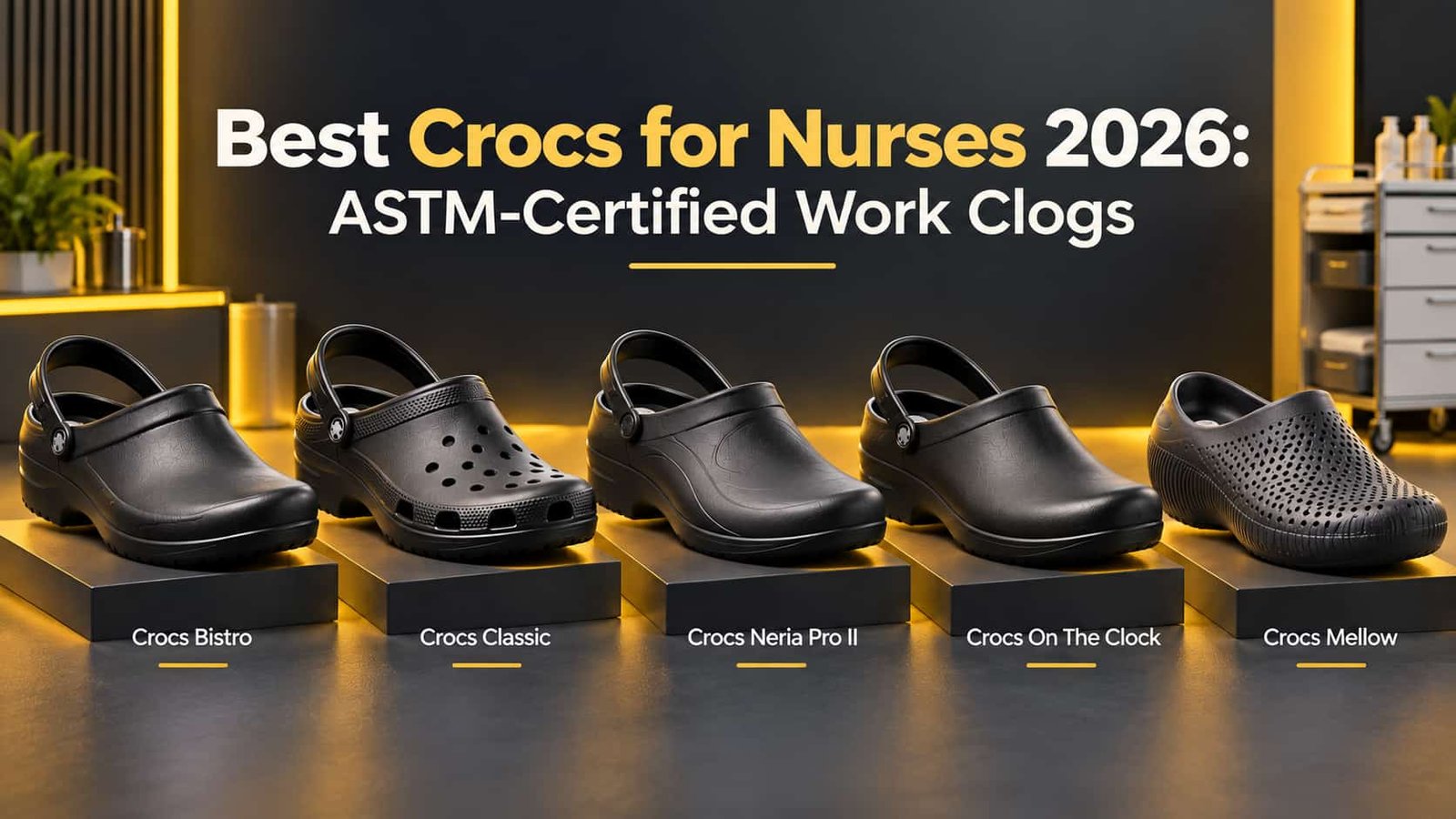
Crocs nursing clogs deliver ASTM-certified slip resistance, waterproof Croslite construction, and lightweight comfort proven across 8 distinct models. This guide compares professional-grade Bistro and Neria clogs with casual alternatives, helping nurses choose between clinical certification and budget-friendly comfort.
INTRODUCTION
Nurses working 12-hour shifts in emergency departments, intensive care units, or operating rooms face constant exposure to spills, water, and contaminated surfaces. Casual sneakers absorb fluids, become slippery on wet tile, and require frequent deep cleaning. Crocs offer an alternative: fully enclosed, waterproof Croslite construction with slip-resistant outsoles that can be wiped clean in seconds. However, not all Crocs models deliver the same level of clinical support. The Bistro and Neria Pro II are ASTM-certified for workplace slip resistance. The Classic Clog, at $34.99, costs half as much but lacks clinical certification. The Mellow, designed for recovery, prioritizes cushioning over stability. This guide evaluates all eight current Crocs nursing models-professional-grade work clogs, budget-friendly casual options, and comfort-focused recovery shoes-so you can match your specific workplace environment and comfort priorities to the right model.
⚡ Best Crocs Options for Nurses
Compare five Crocs styles for work, everyday wear, cushioning and healthcare footwear needs.
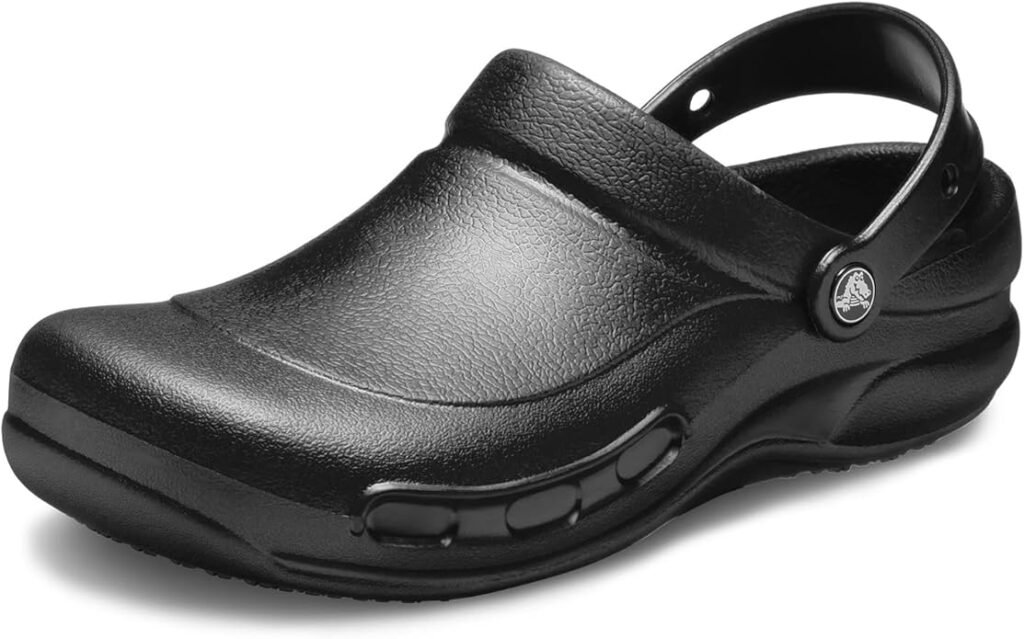
Crocs Unisex-Adult Bistro Work Clogs
A workplace-focused Crocs clog designed around an enclosed-toe format for healthcare and other work environments.
🛒 Check Price on Amazon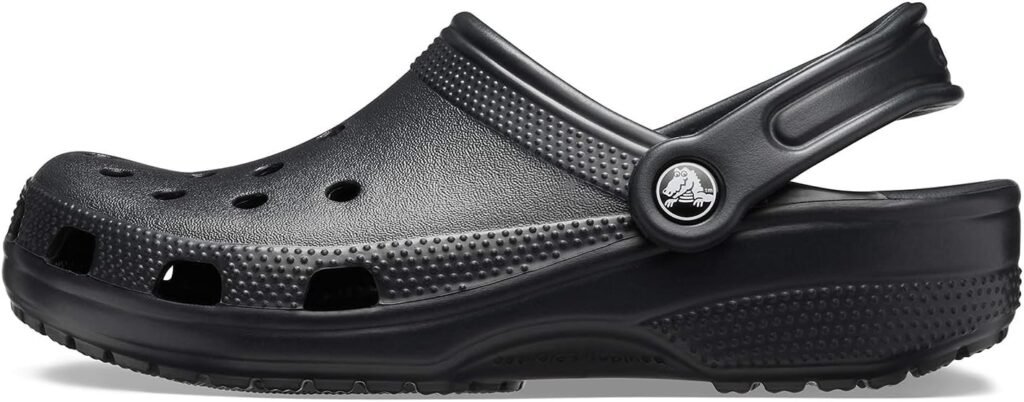
Crocs Unisex-Adult Classic Clog
The classic Crocs clog is a lightweight everyday option that can work well for casual wear and suitable workplace settings.
🛒 Check Price on Amazon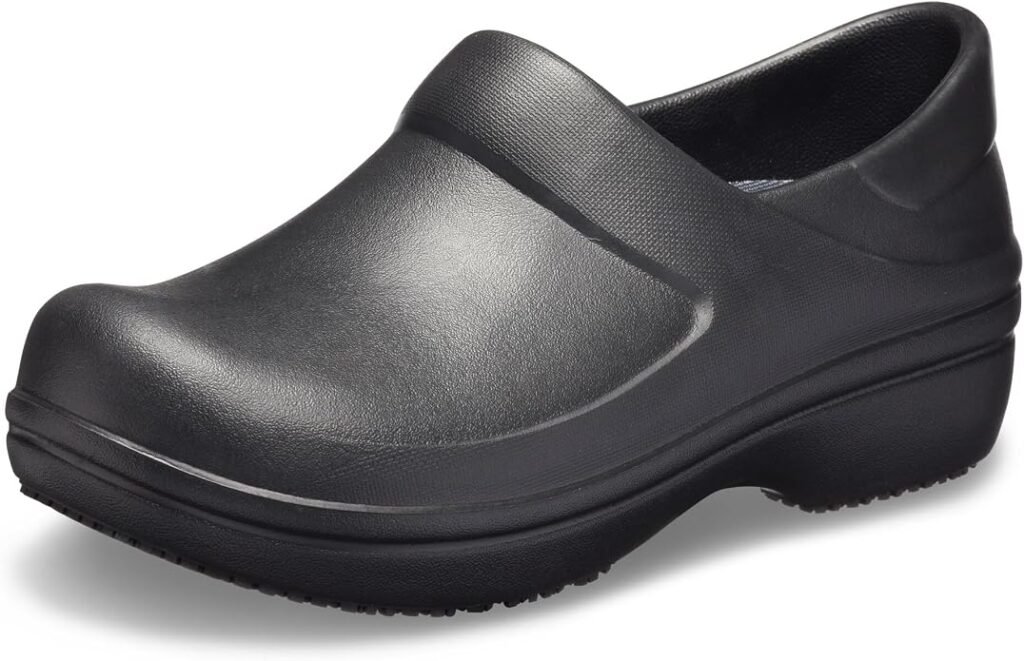
Crocs Women’s Neria Pro II Work Clogs
A women’s work clog option suited to readers specifically looking for a Crocs style designed around professional work use.
🛒 Check Price on Amazon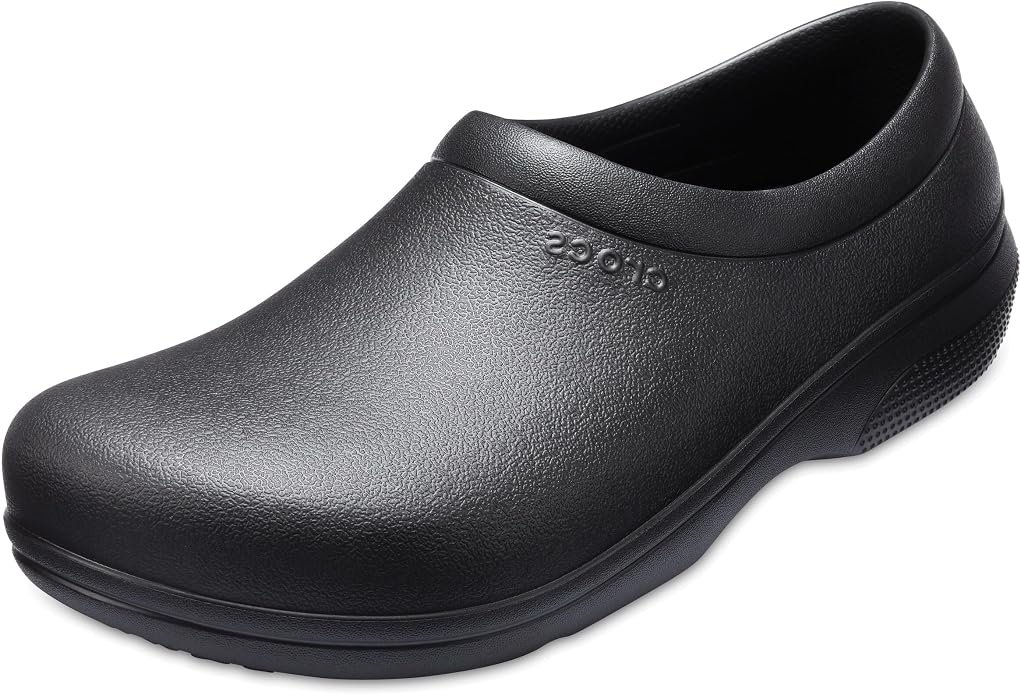
Crocs On The Clock Clog
A work-oriented clog option for people who want a Crocs design focused on comfort during active workdays.
🛒 Check Price on Amazon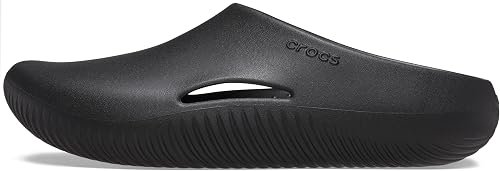
Crocs Mellow Clogs
A recovery-focused clog option for comfortable off-shift wear after long periods on your feet.
🛒 Check Price on AmazonProduct features, pricing and availability can change. Check the Amazon listing for the latest details before purchasing.
What Are Crocs Nursing Clogs?
Crocs nursing clogs are slip-on shoes made from Croslite, a lightweight, closed-cell resin material. The construction combines a waterproof upper, slip-resistant rubber outsole, and Croslite midsole with embedded ventilation ports. Crocs designed for nursing (Bistro, Neria Pro II, On The Clock, Specialist II) feature enclosed toe and heel design, thicker metatarsal areas for impact protection, and outsoles tested to ASTM F2913-24 slip-resistance standards. Non-clinical Crocs (Classic, Mellow, Dylan) lack ASTM certification but retain the lightweight, waterproof construction that makes casual Crocs practical for healthcare environments. All models feature contoured footbeds and pull-on closures for easy on-off.
Why Do Crocs Nursing Clogs Matter for Nurses?
Are regular casual Crocs sufficient for nursing, or do you need ASTM-certified clinical models? The answer depends on your workplace environment and dress code.
Hospitals with strict infection control protocols typically require closed-toe, closed-heel footwear that prevents spill penetration. Crocs nursing clogs meet this requirement; casual Crocs do not. The ASTM F2913-24 slip-resistance standard measures traction on wet surfaces at a specific angle using standardized testing. Crocs Bistro, Neria Pro II, On The Clock, and Specialist II all meet or exceed this standard. The Classic Clog has not been tested to ASTM standards, though it does offer traction comparable to many casual shoes.
Healthcare flooring surfaces-tile, polished vinyl, concrete composites-become hazardous when wet. Nurses moving rapidly between patient rooms face slip risk during any spill. A slip on hospital tile can result in acute injuries (fractures, lacerations) or chronic strain from attempting to prevent the fall. The ASTM F2913-24 standard measures this specific scenario. Crocs designed to meet this standard have been tested on the exact surfaces hospitals use.
Cleanability is critical. A nurse cannot replace shoes mid-shift. Crocs Croslite material withstands multiple wipe-downs with 70% isopropyl alcohol (standard hospital disinfectant) without degrading. Unlike porous leather or knit uppers, Croslite doesn’t absorb blood or body fluid, reducing contamination risk. This is why clinical Crocs feature fully enclosed toe design-no fabric seams where fluids can accumulate.
For outpatient clinics or less contamination-intensive roles, casual Crocs like the Classic model are sufficient and cost $15-20 less. For ICU, ER, or obstetrics units with frequent spill exposure, the Bistro or Neria Pro II are worth the investment.
What Should Nurses Look For When Choosing Crocs?
ASTM Certification vs. Casual Design
What it is: ASTM standards are industry-wide testing protocols. ASTM F2913-24 measures slip resistance on wet surfaces. ASTM F3445-24 measures fluid resistance. Clinical Crocs undergo third-party lab testing; casual Crocs do not.
Why it matters: Hospitals often specify ASTM-certified footwear in their dress codes or safety protocols. Without certification, some units may restrict certain shoe models. Beyond policy, certification indicates the shoe has been tested against real nursing hazards.
What to look for: Check the Amazon product page for “ASTM F2913-24” or “ASTM F3445-24” in the specifications. Bistro, Neria Pro II, On The Clock, and Specialist II all carry these certifications. Classic, Mellow, and Dylan do not.
Who needs it most: Nurses working ICU, ER, OR, or obstetrics; nurses in hospitals with explicit dress-code certification requirements; nursing assistants and CNAs in high-risk environments.
Main tradeoff: ASTM-certified Crocs cost $35-45. Casual Crocs cost $34-40. The price difference is minimal, but clinical models are less visually casual and limit styling options.
Slip-Resistance Outsole Design
What it is: The tread pattern and rubber compound of the outsole determine grip on wet surfaces. Crocs Lock tread uses a geometric pattern designed for kitchen and hospital floors specifically.
Why it matters: Flat, smooth outsoles slip easily on wet tile. Deep aggressive tread can catch on flooring or absorb liquid. Crocs Lock tread is engineered for the middle ground: enough grip for stability without impeding movement.
What to look for: All clinical Crocs feature Crocs Lock tread. Casual Crocs and recovery models (Classic, Mellow) use standard EVA tread less optimized for hospital floors.
Who needs it most: Nurses in ER, ICU, or clinical areas; nurses who have experienced slips on hospital flooring; nurses working in kitchens or food preparation areas.
Main tradeoff: Lock tread clogs are slightly heavier than casual EVA clogs, though the difference is minimal (under 5 oz per pair).
Enclosed Toe vs. Open Design
What it is: Clinical Crocs feature fully enclosed toe and heel. Some casual Crocs (Dylan Platform) have a more open, slipper-like design.
Why it matters: An enclosed toe prevents spills from flowing into the shoe and protects toenails from impacts. Infection control protocols require enclosed footwear to prevent contamination.
What to look for: Bistro, Neria Pro II, On The Clock, Specialist II, Classic, and Mellow all have enclosed toes. Dylan Platform is open-back and more slipper-like.
Who needs it most: Nurses in contamination-intensive areas; nurses with toenail fungus or infections requiring protection; any role requiring strict dress codes.
Main tradeoff: Enclosed toes leave minimal ventilation compared to open-back clogs, which may feel warmer in hot environments.
Cushioning Density and Footbed Design
What it is: Croslite midsole density varies. Clinical clogs use moderate EVA cushioning. Recovery models (Mellow) use LiteRide foam-softer but less stable.
Why it matters: More cushioning absorbs impact during standing but can create instability if too soft. Clinical work requires a balance: enough comfort for 12-hour shifts without sacrificing stability during rapid movement.
What to look for: Bistro and Neria Pro II use contoured Croslite footbeds with moderate cushioning. Mellow uses LiteRide foam with deep heel cups for maximum comfort but reduced stability. On The Clock uses maximum EVA cushioning for extended standing.
Who needs it most: Nurses with heel pain, plantar fasciitis, or foot swelling; nurses working shifts exceeding 10 hours; nurses with low-fat foot pads (reduced natural cushioning).
Main tradeoff: Maximum cushioning (Mellow) sacrifices lateral stability. Moderate cushioning (clinical clogs) is safer for active work but may feel firmer initially.
Fit and Sizing
What it is: Crocs are known for running large. Most models recommend sizing down by one full size.
Why it matters: An oversized shoe causes heel slipping, which creates blister risk and instability during rapid movement. Proper fit is essential for nurse safety.
What to look for: Most Crocs Amazon pages state “runs large-size down if between sizes.” Follow this guidance. If you normally wear a US women’s 7.5, order a 7.
Who needs it most: First-time Crocs buyers; nurses with narrow heels; anyone experiencing heel slipping in previous Crocs purchases.
Main tradeoff: None. Sizing down is standard for Crocs and is factored into the product design.
Nursing Workplace Considerations
Every hospital has different footwear policies. Some require closed-toe, closed-heel only. Others allow open-back clogs or even sneakers. Many teaching hospitals have specialty units with different requirements-the OR may be stricter than the ICU. Before purchasing, verify your employer’s dress code. Most Crocs nursing clogs comply with standard healthcare dress codes, but it’s worth confirming.
Climate and environment matter. Warm operating rooms create foot swelling and moisture. Crocs’ perforated ventilation helps but is not as breathable as mesh sneakers. Cold, wet emergency departments require waterproof coverage, where Crocs excel. Outpatient clinics with minimal spill exposure allow casual Crocs.
Flooring type affects slip risk. Older hospitals with sealed concrete may provide different traction than newer facilities with epoxy-coated floors. If your unit has experienced multiple slip incidents, ASTM-certified traction becomes more important. If your floor is textured or non-slip, casual Crocs are adequate.
Infection control protocols vary. ICU and OR units require frequent disinfectant wipe-downs. Crocs withstand this without degradation. General medical-surgical floors may have less rigorous protocols. Match the shoe’s durability to your unit’s contamination level.
PRODUCT REVIEWS
Crocs Unisex-Adult Bistro Work Clogs
Best For: Nurses seeking ASTM-certified slip resistance, enclosed-toe protection, and professional-grade construction for 12-hour ICU or ER shifts.
Why It Works: The Bistro is Crocs’ purpose-built clinical clog. It features ASTM F2913-24 slip-resistance certification for wet and oily surfaces, plus ASTM F3445-24 fluid-resistance testing. The enclosed toe and thicker metatarsal area protect against spill impacts. The Crocs Lock tread outsole is engineered specifically for kitchen and hospital tile. The contoured Croslite footbed wraps the foot in 360-degree support, and the lightweight construction keeps fatigue to a minimum during extended standing.
Expert Analysis: At UrbanStyleFootwear, our product evaluations combine manufacturer specifications, verified retailer and Amazon listing data, customer feedback, review patterns, and footwear-specific research. We assess shoes across factors such as comfort, fit, cushioning, support, materials, durability, traction, design, and overall value, using multiple sources to provide balanced, practical, and buyer-focused recommendations.
Customer feedback on the Bistro centers on clinical reliability and ease of cleaning. Nurses report the shoe staying put during rapid movement (low heel slipping) and disinfectant resistance. The main criticism is that the Croslite footbed feels firmer than softer EVA options like the Mellow. Some wearers with heel pain report needing additional insoles.
Pros:
- ASTM F2913-24 and F3445-24 certified for clinical environments
- Enclosed toe design prevents spill penetration
- Crocs Lock tread engineered for hospital and kitchen floors
- Easy to clean and disinfectant-resistant
- Waterproof Croslite upper sheds fluids immediately
- Contoured footbed provides arch support
Cons:
- Firmer Croslite footbed may feel stiff initially (requires 1-2 week break-in)
- Moderate cushioning; not ideal for nurses with severe heel pain
- Runs large; must size down one full size
- Less visually casual than Crocs Classic
- May collect dust in ventilation ports
Main Tradeoff: The Bistro prioritizes clinical performance (certification, traction, containment) over maximum cushioning. If your priority is comfort over stability, the Mellow or On The Clock offers more cushioning.
Who Should Buy: Nurses in ICU, ER, OR, or obstetrics; CNAs and nursing assistants in high-contamination areas; nurses working 10+ hour shifts in facilities with strict dress codes; anyone in hospitals specifying ASTM-certified footwear.
Who Should Skip: Nurses with severe plantar fasciitis or heel pain (consider custom insoles or softer models); those in low-contamination outpatient clinics (Classic is $10 cheaper); anyone prioritizing visual casualness over clinical performance.
Verdict: The Bistro is Crocs’ gold standard for nursing. The ASTM certifications, enclosed design, and clinically engineered tread make it the safest choice for high-risk environments. At $44.85, it’s an investment in clinical reliability.
🛒 Check Price on AmazonCrocs Unisex-Adult Classic Clog
Best For: Budget-conscious nurses, outpatient clinic staff, and casual healthcare environments where ASTM certification is not required.
Why It Works: The Crocs Classic is the iconic model. It costs $34.99-the lowest price in this guide-and offers the same waterproof Croslite construction as clinical models. The lightweight EVA footbed, waterproof upper, and 360-degree comfort wrap are standard across all Crocs. The shoe is highly customizable with Jibbitz charms, making it appealing to nurses who want to personalize their footwear. While it lacks ASTM certification and professional tread patterns, it offers genuine water resistance and moderate cushioning adequate for shorter shifts or break-room comfort.
Expert Analysis: The Classic Clog dominates Crocs reviews (488,364 ratings) with consistent praise for lightweight comfort and affordability. Nursing feedback emphasizes the shoe’s suitability for casual clinic work, break-room wear, or commuting to work. The main limitation is lack of clinical certification and traction optimization, making it unsuitable for high-slip-risk environments.
Pros:
- Lowest price ($34.99 with typical 30% discount)
- Waterproof Croslite material is durable and easy to clean
- Lightweight (under 5 oz per pair)
- Highly customizable with Jibbitz
- 488,364 reviews provide extensive real-world feedback
- Comfortable for immediate wear (minimal break-in)
Cons:
- Not ASTM-certified for slip resistance
- Ventilation ports can collect debris
- Runs large; must size down one full size
- Minimal arch support compared to clinical clogs
- Casual appearance; not suitable for formal healthcare settings
- Sole can wear faster than professional-grade outsoles
Main Tradeoff: You save $10-15 upfront and get a lighter, more casual shoe. You lose clinical certifications, traction optimization, and enclosed-toe protection.
Who Should Buy: Outpatient clinic nurses; telehealth/administrative nursing roles; nurses in low-contamination areas; anyone wanting budget-friendly break-room shoes; first-time Crocs buyers testing the brand.
Who Should Skip: Nurses in ICU, ER, or OR environments; anyone in hospitals specifying ASTM-certified footwear; nurses with heel slipping concerns; those in high-moisture areas.
Verdict: The Classic Clog is the smart budget choice for casual nursing roles.
🛒 Check Price on AmazonCrocs Women’s Neria Pro II Work Clogs
Best For: Female nurses seeking ASTM-certified clinical performance with enhanced arch support and relaxed fit for wider feet or significant swelling.
Why It Works: The Neria Pro II is Crocs’ women-specific clinical clog. It features ASTM F2913-24 slip-resistance, ASTM F3445-24 fluid resistance, plus CE and ISO certifications recognized internationally. The design includes enhanced arch support built into the footbed, extra room at the heel for easy on-off during swelling, and a relaxed fit in the toe box. Unlike the unisex Bistro, the Neria Pro II’s geometry is contoured for women’s foot shapes (narrower heel, wider forefoot).
Expert Analysis: Nursing feedback on the Neria Pro II emphasizes the women-specific fit and arch support. Many reviewers report less heel slipping and better all-day comfort compared to unisex clogs. The $44.95 price is identical to the Bistro, but the women-specific design appeals to nurses who find unisex models loose at the heel or tight at the forefoot. The main criticism is the relaxed fit can feel too loose for nurses with narrow feet.
Pros:
- ASTM F2913-24, F3445-24, CE, ISO certified
- Women-specific anatomical fit (narrower heel, wider forefoot)
- Enhanced arch support reduces fatigue
- Extra heel room accommodates swelling
- Crocs Lock tread for clinical environments
- Enclosed toe provides impact protection
Cons:
- Relaxed fit may be too loose for nurses with narrow feet
- Croslite footbed requires 1-2 week break-in for some wearers
- Runs large; must size down one full size
- Fewer color options than unisex Bistro
- Not ideal for nurses needing maximum cushioning
Main Tradeoff: You gain women-specific fit and arch support. You lose unisex sizing flexibility and design options.
Who Should Buy: Female nurses in clinical environments; women with wide feet or significant swelling; those seeking enhanced arch support; anyone in hospitals specifying ASTM certification.
Who Should Skip: Nurses with very narrow feet (unisex Bistro or Specialist II may fit better); male nurses (Bistro or On The Clock are unisex); those prioritizing maximum cushioning.
Verdict: The Neria Pro II is the best choice for female nurses in high-risk clinical environments. The women-specific fit and enhanced arch support justify the $44.95 price.
🛒 Check Price on AmazonCrocs On The Clock Clog
Best For: Nurses working 10+ hour shifts prioritizing maximum cushioning and ASTM-certified performance for standing-intensive roles.
Why It Works: The On The Clock is Crocs’ maximum-cushioning clinical clog. It combines ASTM F2913-24 slip-resistance, ASTM F3445-24 fluid resistance, plus maximum EVA cushioning for impact absorption. The enclosed toe and ankle strap provide security during rapid movement. The Crocs Lock tread is optimized for hospital floors. The shoe’s graphic design and ankle strap distinguish it from other clinical clogs, offering a more contemporary aesthetic while maintaining clinical performance.
Expert Analysis: Nursing feedback emphasizes the On The Clock’s comfort during extended shifts and the ankle strap’s stability benefit. Wearers report less foot fatigue after 10+ hours compared to other clinical clogs. The main criticism is that the maximum cushioning feels overly soft for some nurses, creating the sensation of “sinking” into the shoe during rapid directional changes.
Pros:
- ASTM F2913-24 and F3445-24 certified
- Maximum EVA cushioning for extended standing
- Ankle strap provides security during movement
- Graphic design offers contemporary styling
- Waterproof Croslite upper
- Good value at $44.99 with typical 24% discount
Cons:
- Maximum cushioning can feel unstable during rapid movement
- Ankle strap can catch on clothing or lab coats
- Runs large; must size down
- Strap requires periodic tightening as materials age
- Not ideal for nurses prioritizing minimal-to-moderate cushioning
Main Tradeoff: You gain maximum cushioning for comfort. You sacrifice some lateral stability that stiffer clogs provide.
Who Should Buy: Nurses working 10+ hour shifts; those with heel pain or low-fat foot pads; nurses prioritizing comfort over stability; anyone seeking ASTM-certified maximum cushioning.
Who Should Skip: Nurses in rapid-movement specialties (OR, ED) where stability is critical; those with narrow heels (ankle strap may not secure properly); anyone uncomfortable with softer, more “sinking” feel.
Verdict: The On The Clock is ideal for comfort-focused nurses working long shifts where stability is less critical than cushioning. At $44.99 (on sale from $59.99), it’s excellent value for maximum comfort with clinical certifications.
🛒 Check Price on AmazonCrocs Mellow Clogs
Best For: Nurses seeking maximum recovery cushioning for off-shift wear or second-shift comfort after intensive clinical work.
Why It Works: The Mellow is Crocs’ recovery-focused clog with LiteRide foam footbed and deep heel cups designed to provide “sink-in comfort.” The upper features ventilation windows for breathability. The fully enclosed toe and waterproof Croslite remain, but the shoe prioritizes cushioning over clinical performance. The Mellow lacks ASTM certification because it’s designed for recovery, not clinical work. However, it’s an excellent second pair for nurses working back-to-back shifts or those needing post-shift recovery comfort.
Expert Analysis: Nursing feedback on the Mellow centers on exceptional comfort and recovery benefits. Wearers report using Mellows as off-shift shoes or for light clinic work. The LiteRide foam is significantly softer than standard Croslite. The main limitation is lack of ASTM certification and traction optimization for clinical floors, making it unsuitable as a primary work shoe in high-risk environments.
Pros:
- LiteRide foam provides exceptional cushioning and recovery benefit
- Deep heel cups offer maximum arch support
- Ventilation windows improve breathability
- Waterproof Croslite upper remains easy to clean
- Excellent for off-shift recovery or second pairs
- Contemporary styling with upper windows
Cons:
Cons:
- NOT ASTM-certified for slip resistance
- Soft LiteRide foam lacks lateral stability for clinical work
- Runs large; must size down
- Not suitable as primary work clog in high-risk environments
- Softer outsole may wear faster with clinical-use abuse
- Price ($44.95) approaches clinical clogs that offer more performance
Main Tradeoff: You gain maximum recovery comfort and cushioning. You lose clinical certifications and traction optimization necessary for clinical floors.
Who Should Buy: Nurses needing off-shift recovery shoes; those working back-to-back shifts requiring comfort rotation; nurses in low-contamination clinics; anyone seeking maximum cushioning for break-room wear or commuting.
Who Should Skip: Anyone needing a primary work clog for ICU/ER/OR; nurses in facilities requiring ASTM certification; those prioritizing stability over cushioning.
Verdict: The Mellow is an excellent second pair but not a primary clinical shoe. If you work multiple shifts or need recovery comfort, invest in Mellows alongside clinical clogs. At $44.95, they’re worth the investment for recovery-focused nursing.
🛒 Check Price on AmazonCrocs Unisex Adult Specialist II Work Clogs
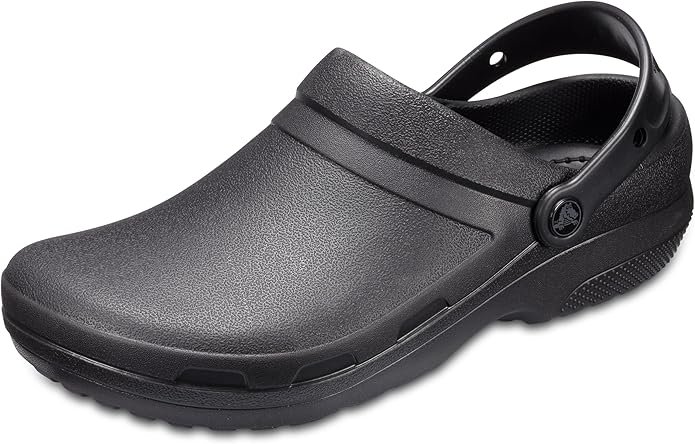
Best For: Nurses seeking budget ASTM-certified performance without maximum cushioning or specialty features.
Why It Works: The Specialist II is Crocs’ entry-level clinical clog. It features ASTM F2913-24 and ASTM F3445-24 certification at 39.99—5 cheaper than Bistro. The fully molded, enclosed-toe construction prevents spill penetration. The Crocs Lock tread is optimized for clinical floors. The footbed uses standard Croslite with moderate cushioning. The main difference from Bistro is simplicity: fewer design refinements, standard colorways, minimal branding. It’s the no-frills clinical Crocs for nurses who prioritize certification and cost-efficiency over features.
Expert Analysis: Nursing feedback on the Specialist II emphasizes value and clinical reliability. Wearers report similar traction and containment to more expensive clinical clogs. The main criticism is that some feel the Specialist II is less refined than Bistro, with slightly less comfortable contoured footbeds.
Pros:
- ASTM F2913-24 and F3445-24 certified
- $39.99 price is lowest among ASTM-certified clogs
- Enclosed toe provides impact protection
- Crocs Lock tread for clinical performance
- Waterproof, easy to clean
- Unisex sizing allows flexibility
Cons:
- Less contoured footbed than Bistro or Neria Pro II
- Minimal cushioning; firmer than other clinical clogs
- Runs large; must size down
- Fewer design features and styling options
- Moderate cushioning; not ideal for high-pain-sensitivity wearers
Main Tradeoff: You save $5 and get basic clinical performance. You lose design refinement and footbed contouring.
Who Should Buy: Budget-conscious nurses in clinical environments; those in hospitals requiring ASTM certification; anyone comfortable with standard features and minimal design; nurses who don’t prioritize extensive cushioning.
Who Should Skip: Those wanting maximum features or enhanced footbeds; nurses with heel pain; anyone prioritizing comfort over cost.
Verdict: The Specialist II is the smart budget choice for ASTM-certified clinical work. At $39.99, it’s $5 cheaper than Bistro while maintaining clinical certifications and traction. If your workplace requires ASTM certification and you’re budget-conscious, choose Specialist II. If you can stretch to $44, Bistro’s enhanced footbed is worth the investment.
🛒 Check Price on AmazonCrocs Women’s Dylan Platform Clog
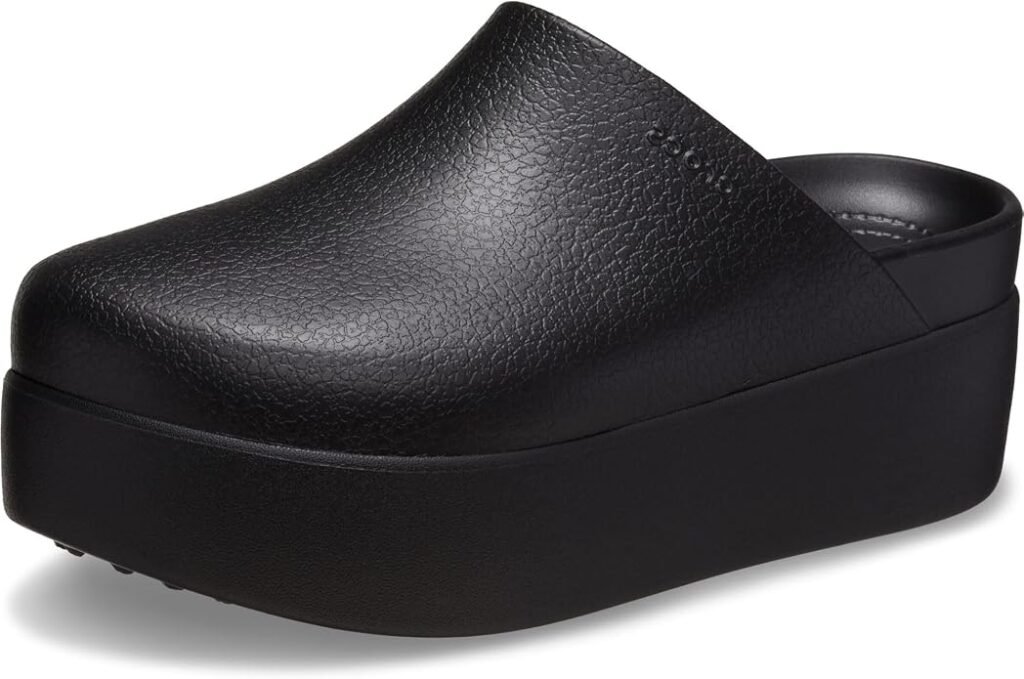
Best For: Nurses seeking fashionable, casual slip-ons for break-room wear, commuting, or low-contamination clinic environments.
Why It Works: The Dylan Platform is Crocs’ fashion-forward clog. It features a modern mule silhouette, platform heel elevation, and contemporary styling that distinguish it from traditional clinical clogs. The Croslite upper is waterproof, and the footbed offers moderate cushioning. However, the Dylan is not ASTM-certified and lacks the enclosed heel design required for clinical work. It’s designed as a casual-to-semi-professional shoe, not a clinical tool.
Expert Analysis: Nursing feedback on the Dylan emphasizes its fashion appeal and comfort for break-room or commuting wear. Wearers appreciate the contemporary styling and platform height. The main limitation is that it’s not suitable for clinical floors due to lack of ASTM certification and enclosed-heel design.
Pros:
- Modern, fashionable mule silhouette
- Platform heel provides subtle elevation
- Waterproof Croslite upper
- Moderate cushioning for comfort
- Suitable for break-room wear or commuting
- Offers styling alternative to clinical clogs
Cons:
- NOT ASTM-certified for slip resistance
- Open heel design not suitable for clinical contamination
- Runs large; must size down
- Not enclosed-toe protection
- Not appropriate for ICU/ER/OR environments
- Casual design inappropriate for formal healthcare settings
Main Tradeoff: You gain fashionable styling and modern design. You lose clinical performance, ASTM certification, and enclosed protection.
Who Should Buy: Nurses wanting break-room or commuting shoes; those in very casual clinic environments with no contamination concerns; anyone seeking a casual alternative to clinical clogs.
Who Should Skip: Nurses needing primary work shoes; anyone in clinical environments; those in hospitals requiring ASTM certification; anyone needing enclosed-heel protection.
Verdict: The Dylan is an excellent casual alternative to clinical clogs but should not be your primary nursing shoe. At $63.85, it’s expensive for a casual shoe. Consider investing in clinical clogs first, then Dylan as a secondary break-room option.
🛒 Check Price on AmazonMAIN COMPARISON TABLE
| Product | Price | Rating | Reviews | Best For | ASTM Certified | Key Feature | Enclosed Toe | Main Tradeoff |
| Bistro | $44.85 | 4.5/5 | 74,668 | Clinical performance | YES | Crocs Lock tread | YES | Moderate cushioning |
| Classic | $34.99 | 4.8/5 | 488,364 | Budget casual | NO | Lightweight | YES | No ASTM certification |
| Neria Pro II | $44.95 | 4.0/5 | 24,591 | Women + arch support | YES | Enhanced arch | YES | Relaxed fit looseness |
| On The Clock | $44.99 | 4.3/5 | 35,893 | Extended standing | YES | Max cushioning | YES | Overly soft feel |
| Mellow | $44.95 | 4.5/5 | 3,890 | Off-shift recovery | NO | LiteRide foam | YES | Lacks clinical specs |
| Specialist II | $39.99 | 4.5/5 | 25,177 | Budget certified | YES | Basic clinical | YES | Minimal features |
| Dylan Platform | $63.85 | 4.4/5 | 2,045 | Casual fashion | NO | Platform heel | NO | No clinical use |
DECISION MATRIX
| Nursing Need | Recommended Crocs | Why |
| 12-hour ICU/ER shift | Bistro or Specialist II | ASTM certified; Crocs Lock tread; enclosed toe protection |
| Budget conscious | Classic (34.99)orHeyMedical(16.99) | Lowest cost; adequate for casual clinics |
| Women-specific fit | Neria Pro II | Enhanced arch support; narrower heel, wider forefoot |
| Maximum cushioning | On The Clock | Max EVA; ideal for 10+ hour standing shifts |
| Recovery/off-shift | Mellow | LiteRide foam; deep heel cups; comfort-focused |
| Budget ASTM certified | Specialist II | $39.99 with ASTM F2913-24 and F3445-24 |
| Fashion-forward casual | Dylan Platform | Contemporary mule; break-room wear only |
| Lightweight feel | Classic or Hey Medical | Both weigh under 5 oz per pair |
| Easy cleaning | Bistro or Neria Pro II | Croslite resists disinfectants without degradation |
| Best overall value | Bistro | $44.85; ASTM certified; clinical features; proven reliability |
How to Choose the Right Crocs for Nursing
1. Identify your workplace environment. Is your facility ICU, ER, outpatient clinic, or long-term care? High-contamination areas (ICU, ER, OR, OB) require ASTM-certified clinical clogs. Lower-contamination areas (clinic, tele-health, education) allow casual models.
2. Check your hospital dress code. Some facilities explicitly require ASTM-certified footwear. Most require closed-toe, closed-heel only. Verify before purchasing. If your facility doesn’t specify, clinical clogs exceed standard requirements.
3. Consider your foot type and shift length. Do you have heel pain, arch sensitivity, or significant foot swelling? Nurses working 10+ hours should prioritize Bistro (balanced), On The Clock (max cushioning), or Neria Pro II (arch support). Shorter shifts allow casual models.
4. Factor in budget. ASTM-certified clinical clogs range $39-45. Budget options (Classic at $34.99, Hey Medical at $16.99) work for casual roles. Invest in clinical clogs if your workplace requires them; save money on casual models.
5. Size down one full size. Crocs run large. If you normally wear size 7, order a 6. Try on at a retailer if possible before committing to multiple pairs.
6. Consider rotating shoes. Wearing the same Crocs daily accelerates wear. Alternating between two pairs extends lifespan by 3-4 months and allows moisture to dry between shifts.
FAQ
Q: Are all Crocs slip-resistant enough for nursing?
A: No. Only models meeting ASTM F2913-24 have proven slip-resistance for hospital floors. Bistro, Neria Pro II, On The Clock, and Specialist II meet this standard. Classic, Mellow, Dylan, and Hey Medical do not. If your facility requires ASTM certification, choose clinical clogs only.
Q: Do Crocs waterproof, or just water-resistant?
A: Crocs Croslite is fully waterproof (certified waterproof), not just water-resistant. The material resists moisture penetration. However, seams around straps may allow water seepage if fully submerged. For practical hospital use, Crocs are waterproof.
Q: Why do Crocs run large?
A: Crocs use a relaxed fit design with roomy toe boxes. The last shape (the form used to manufacture the shoe) is wider and longer than standard footwear. Sizing down one full size is standard practice and is factored into Crocs’ design.
Q: Can I wear Crocs outside the hospital?
A: Yes. The Crocs Classic and Mellow are designed as casual shoes. Even clinical clogs like Bistro work for casual wear, though they look clinical. Dylan Platform is explicitly designed for casual wear.
Q: How long do Crocs last?
A: With rotating use (2-3 days per week), Crocs typically last 12-18 months. Daily use in clinical environments (5 days per week) may shorten lifespan to 8-12 months. Croslite doesn’t degrade but does compress over time under sustained standing pressure.
Q: Do Crocs need a break-in period?
A: Most Crocs feel comfortable immediately, but Croslite footbeds require 1-2 weeks to soften and conform to your foot arch. Some wearers experience mild heel discomfort during the first week; this typically resolves by week 2-3.
Q: Can I add custom insoles to Crocs?
A: Yes. The removable Croslite footbed can be replaced with custom orthotics if needed. Ensure the insole is no thicker than 0.5 inches, or the shoe will feel too tight.
Q: Are Crocs APMA-approved?
A: Crocs are not APMA (American Podiatric Medical Association)-approved like some other brands. However, ASTM-certified Crocs meet rigorous clinical standards that exceed typical shoe testing.
Q: Which Crocs are best for pregnant nurses?
A: Compare with our dedicated guide on best nursing shoes for pregnant nurses, but for Crocs specifically, Neria Pro II (enhanced arch support) or On The Clock (maximum cushioning) are ideal during pregnancy-related foot swelling and arch strain.
Q: Can I machine wash Crocs?
A: No. Wash Crocs by hand with warm soapy water and air dry. Machine washing can degrade the Croslite material and loosen internal reinforcements. Hand-washing takes 2-3 minutes.
Q: Do Crocs have arch support?
A: Crocs clogs have contoured footbeds with moderate arch support. Neria Pro II offers enhanced arch support. Mellow has deep heel cups and arch contouring. None are custom orthotics, but all provide arch curvature better than flat slippers.
Q: Should I rotate between multiple pairs?
A: Yes. Rotating between two pairs (wearing each 2-3 days per week) extends lifespan by 3-4 months and allows Croslite to recover between shifts. Wearing one pair daily accelerates compression.
Expert Nursing Shoe Tips
Measure your feet in the afternoon. Feet swell 5-10% by late day due to fluid shifts and standing pressure. Measure at 3-5 PM to ensure your Crocs size accommodates swelling during your shift.
Size down one full size. This is non-negotiable for Crocs. If you normally wear 7.5, order a 7. If between sizes, always size down.
Ensure heel fit before ordering. Press your heel firmly into the shoe. Heel should not slip more than 0.25 inches. If slipping, try a smaller size or consider the Neria Pro II’s relaxed fit.
Break in Crocs gradually. Wear them 2-3 hours daily for the first week, then increase. By week 2-3, discomfort typically resolves as Croslite softens.
Clean Crocs after each shift. Wipe with a damp cloth after your shift, then air dry. This prevents spill staining and extends lifespan.
Rotate between two pairs. Wearing the same Crocs daily compresses the footbed faster. Two pairs can extend combined lifespan to 18-24 months.
Replace footbeds when compressed. If the footbed becomes permanently mushy or loses arch curve, replace it with a new Croslite footbed or custom orthotic (if needed).
Monitor outsole wear. If the outsole shows uneven wear (more on inner or outer edge), your foot may be rolling inward/outward. Consider custom insoles to correct alignment.
Verify hospital dress codes. Confirm your employer approves ASTM-certified Crocs or casual models before committing to multiple pairs.
Keep backup footwear. Some units restrict certain shoes. Keep a pair of traditional nursing clogs or nursing shoes for women available for interdepartmental floats.
Final Verdict
For nurses in high-risk clinical environments (ICU, ER, OR, OB): Choose the Crocs Bistro at $44.85. It’s ASTM-certified for slip resistance and fluid resistance, features an enclosed-toe design for spill protection, and delivers proven clinical performance with a contoured Croslite footbed. At 74,668 reviews (4.5/5), it’s the most-reviewed clinical Crocs model and has earned consistent trust from healthcare professionals. The 10% discount brings it to a reasonable price point.
For women nurses in clinical environments: Upgrade to the Crocs Neria Pro II at $44.95. The women-specific fit (narrower heel, wider forefoot) with enhanced arch support outperforms the unisex Bistro for many female nurses. ASTM certification remains identical to Bistro.
For maximum cushioning during extended shifts: Choose the Crocs On The Clock at $44.99. The maximum EVA cushioning and ankle strap security make it ideal for nurses working 10+ hours where comfort matters more than ultra-stability. ASTM certification ensures clinical safety.
For budget-conscious nurses in casual clinics: Select the Crocs Classic at $34.99. The lowest price, proven comfort (488,364 reviews), and waterproof Croslite make it excellent value. While not ASTM-certified, it’s adequate for outpatient or low-contamination environments.
For budget ASTM-certified clinical performance: Choose the Crocs Specialist II at $39.99. You save $5 compared to Bistro while retaining ASTM F2913-24 and F3445-24 certification. It’s the no-frills clinical clog for cost-conscious nurses in hospitals requiring certification.
For off-shift recovery: Invest in Crocs Mellow at $44.95 as a second pair. The LiteRide foam and deep heel cups provide exceptional recovery benefits without the clinical demands your work clogs carry.
Affiliate Disclosure
Some links on this page are affiliate links. If you purchase through them, Urban Style Footwear may earn a commission at no additional cost to you. Our recommendations are based on the product information, footwear characteristics, and buying criteria discussed in this guide, not on the size of the commission.