
Best Nursing Shoes for Night Shift: 7 Picks for 2026
Updated September 2026 | U.S. Nursing Footwear Buyer Guide
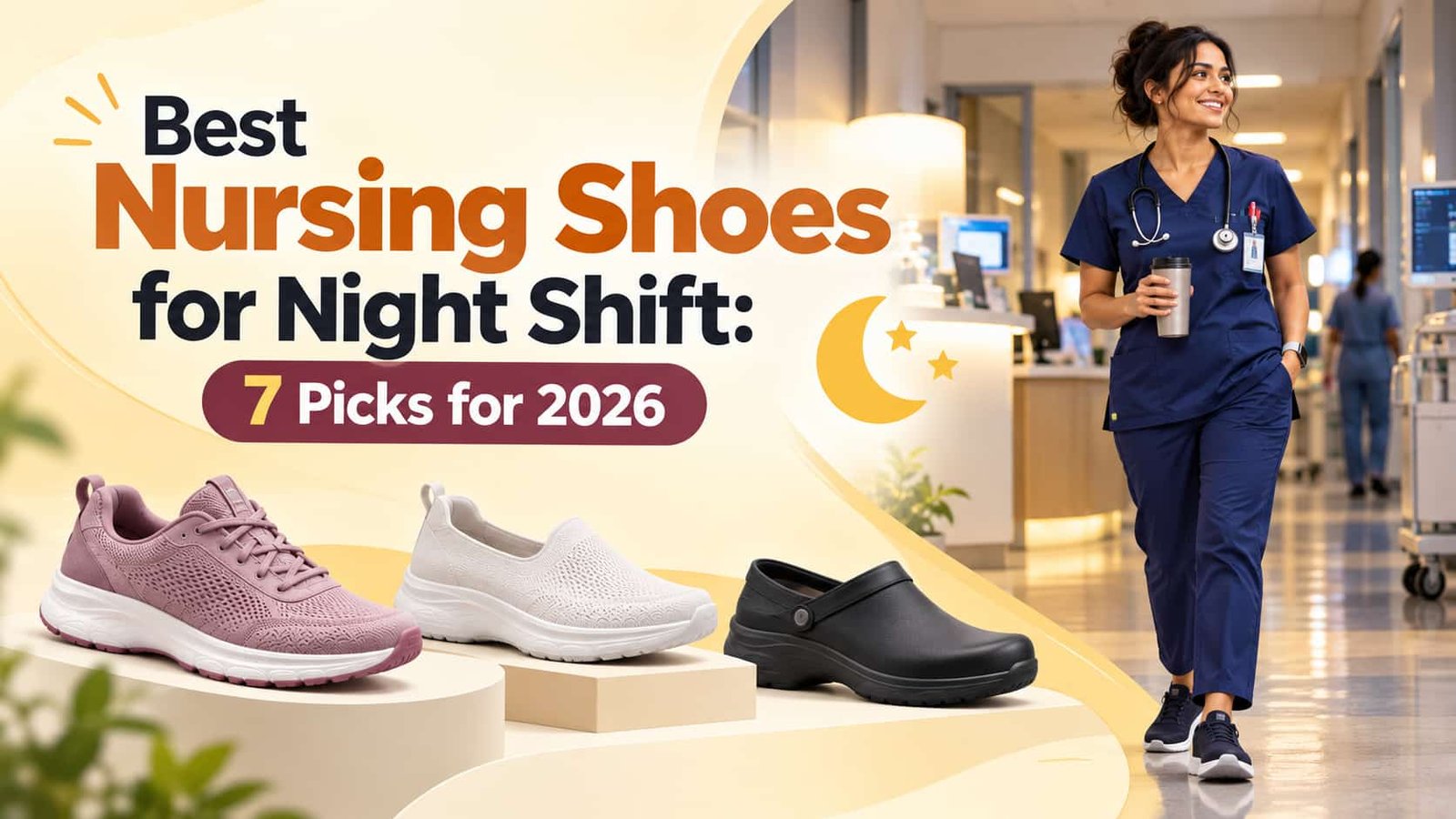
Best nursing shoes for night shift are not simply the softest shoes you can find. The right pair needs to balance cushioning, secure fit, traction, cleanability, weight, and workplace requirements for long hours spent walking and standing. This guide compares seven options for different priorities, including slip-resistant clogs, lightweight slip-ons, waterproof work shoes, and cushioned everyday footwear.
⚡ Quick Answer
For night-shift nurses, the most useful shoe characteristics are secure fit, dependable traction, enough cushioning for prolonged standing, easy cleaning, and a construction that matches your unit’s requirements.
A shoe that feels comfortable for an hour at home may behave differently after several hours of walking hospital corridors, standing at a workstation, moving between patient rooms, and dealing with occasional spills.
Night work adds another consideration: fatigue. NIOSH notes that nurses commonly work long shifts and nights, and that nonstandard schedules and extended work hours can contribute to fatigue.
That does not mean a particular shoe can prevent fatigue or injury. It means footwear should remove avoidable sources of discomfort and fit problems while meeting workplace requirements.
⚡ Top Picks for Night-Shift Nurses
Compare seven nursing shoes selected for different night-shift priorities, including traction, cushioning, waterproofing, lightweight comfort and easy cleaning.
Dansko XP 2.0
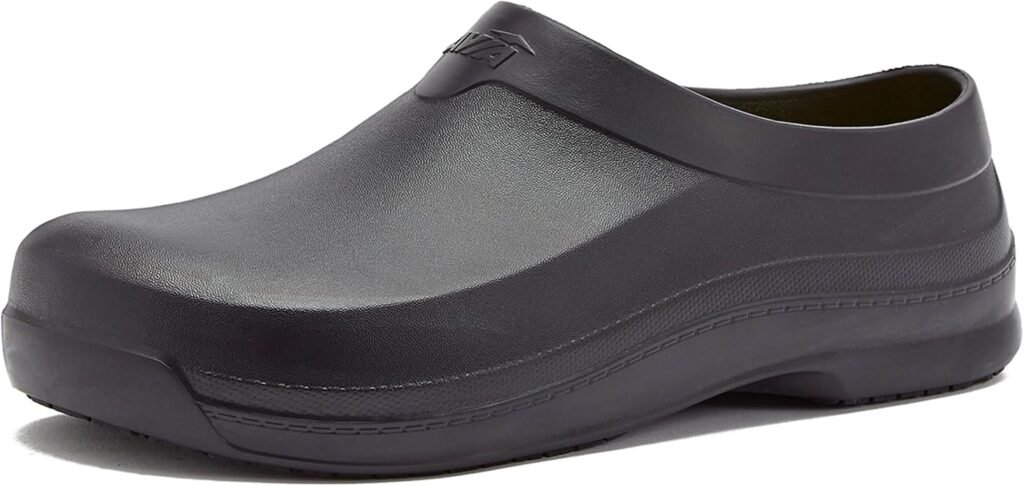
Avia Flame Slip Resistant Clogs
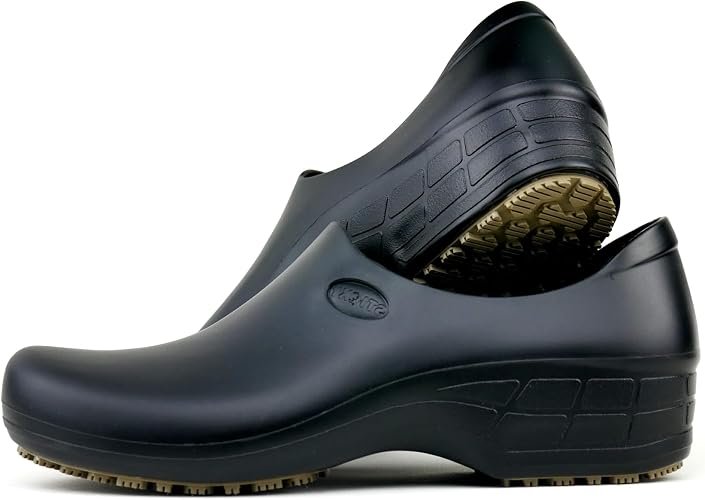
Sticky Nursing Shoes for Women
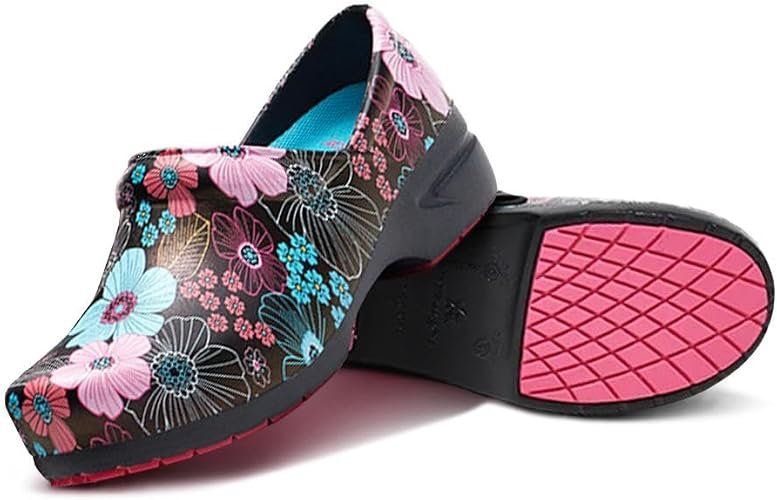
Anywear SR Angel Nursing Clogs
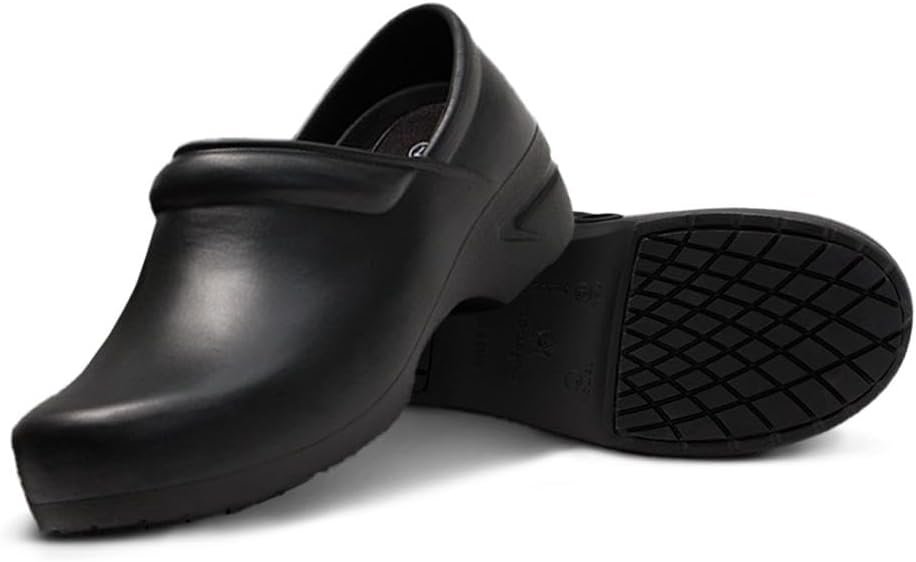
Anywear Guardian Angel Nursing Clogs
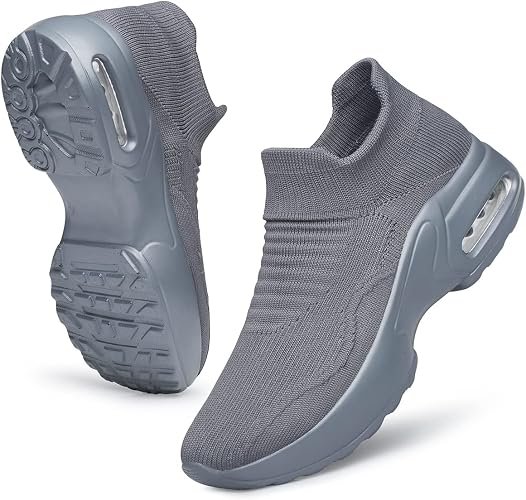
YHOON Women’s Walking Shoes
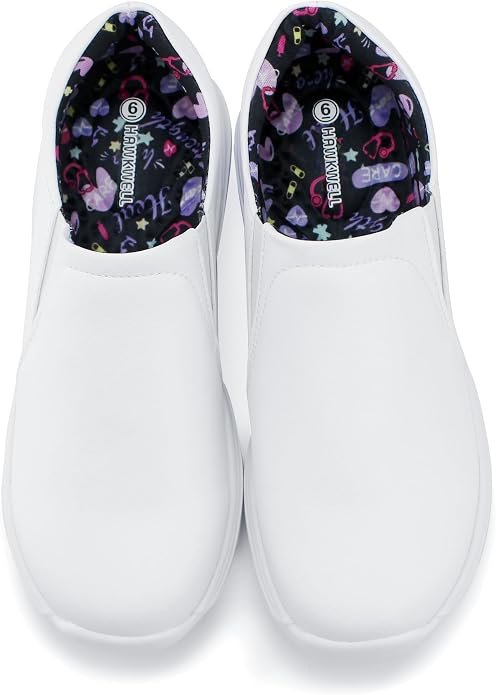
Hawkwell Women’s Slip-On Nursing Shoes
What Makes a Good Night-Shift Nursing Shoe?
Night-shift nursing footwear is regular work footwear viewed through the demands of a long, physically active shift.
The clock does not change the basic mechanics of walking, but the work schedule can make small footwear problems more noticeable. A loose heel, crowded toe box, poor traction, heavy construction, or difficult-to-clean upper can become an irritation when repeated for many hours.
A practical night-shift shoe should therefore answer five questions:
- Does it stay secure while walking quickly between rooms?
- Does the cushioning match the amount of standing and walking you do?
- Does the outsole suit your workplace flooring?
- Can you clean it appropriately after a messy shift?
- Does it comply with your employer’s footwear policy?
There is no single construction that works for every nurse. A hospital-floor nurse who spends most of the shift walking may want something different from an outpatient nurse who spends more time standing at a workstation.
If you want a broader starting point, our guide to the best shoes for nurses covers general nursing footwear considerations.
Why Does Night-Shift Work Change Your Shoe Priorities?
Night shifts can involve long periods of standing and walking at the same time that the body is naturally oriented toward sleep.
NIOSH explains that night work can conflict with the body’s circadian rhythm and that night-shift workers may experience shorter or poorer-quality sleep.
Footwear cannot solve sleep deprivation. It can, however, be selected to avoid unnecessary footwear-related discomfort.
For example, a nurse working from 7 p.m. to 7 a.m. may spend the shift walking between patient rooms, medication areas, nursing stations, supply rooms, and break areas. The shoe needs to remain comfortable across repeated movement rather than only during a short walk.
Long shifts increase the importance of fit
A shoe that feels slightly narrow at the beginning of a shift may become much more noticeable after hours of wear.
Look for:
- Enough toe-box room
- A secure heel
- A closure system that matches your foot
- Appropriate width
- Cushioning that does not feel excessively soft
- A stable platform
- A manageable overall weight
If you routinely spend most of your shift standing, compare your options with our guide to the best shoes for nurses who stand all day.
What Should Nurses Look For in Night-Shift Shoes?
1. Slip Resistance
Traction should be one of the first things to check if you work around spills, cleaning solutions, fluids, or wet flooring.
OSHA identifies wet floors, spills, clutter, cords, and blocked pathways as hospital slip and trip hazards. Its hospital guidance also identifies waterproof footwear as one control that can help decrease slip/fall hazards.
That does not mean every shoe labeled “non-slip” is equally suitable for every hospital.
Instead, check:
- Whether slip resistance is specifically stated
- What outsole material is used
- Whether the shoe is intended for healthcare or work environments
- Whether your employer specifies a particular standard
- Whether the outsole is appropriate for your flooring
For a more focused comparison, see our guide to the best slip-resistant shoes for nurses.
2. Cushioning
Cushioning affects how the shoe feels underfoot during repeated walking and standing.
A cushioned shoe does not automatically mean a better shoe for everyone. Too little cushioning can feel harsh on hard flooring, while a very soft platform may not provide the stable feel some nurses prefer.
The important question is whether the cushioning matches your work pattern.
For example:
- Long walking shifts: prioritize cushioning and a comfortable transition through the step.
- Mostly standing: look for cushioning combined with stability.
- Shorter outpatient shifts: moderate cushioning may be enough.
- High-volume hospital floors: a more substantial midsole may be worth considering.
3. Fit and Width
Fit is more important than brand reputation.
A useful night-shift shoe should hold your heel without excessive movement while leaving enough space for your toes to spread naturally.
Watch for:
- Toe pressure
- Heel movement
- Tight instep
- Narrow forefoot
- Excessive volume
- Socks bunching inside the shoe
If you need more room around the forefoot, our best nursing shoes for bunions guide can provide additional fit considerations.
4. Cleanability
Nurses work around environments where shoes can encounter dirt, fluids, and other workplace messes.
A shoe with an easy-clean upper can make post-shift maintenance simpler.
Water resistance and waterproofing are not the same thing, so check the actual product specification instead of assuming that a closed upper is waterproof.
For wet or spill-heavy environments, our guide to the best waterproof shoes for nurses covers this category in more detail.
5. Weight
A heavy shoe may not bother everyone, but lightweight construction can be attractive for nurses who walk large distances during a shift.
The tradeoff is that a lighter shoe does not automatically provide more cushioning, stability, or protection.
The goal is balance.
7 Best Nursing Shoes for Night Shift
1. Dansko XP 2.0
Best for: Structured support and long periods on your feet
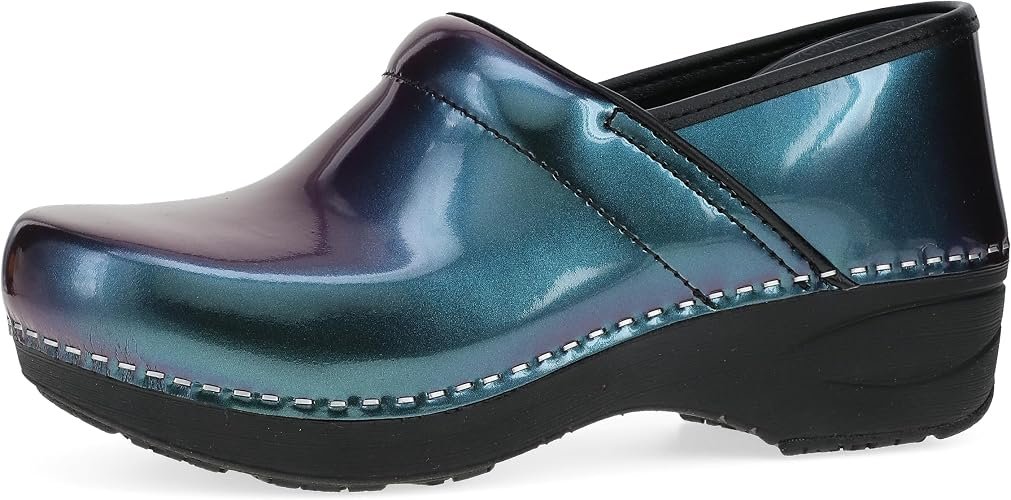
The Dansko XP 2.0 is the most structured option in this group. Its supplied product information lists a roomy toe box, padded instep collar, TPU heel counter, EVA midsole, dual-density PU footbed, memory foam, removable footbed, rocker bottom, and slip-resistant rubber outsole. It is also listed as water resistant.
The combination is particularly relevant for nurses who prefer a traditional work clog rather than a soft athletic sneaker.
The roomy toe box gives the forefoot more space, while the heel counter provides structure around the rear of the shoe. The removable footbed is also useful for nurses who already use compatible orthotics.
The rocker-bottom geometry is another important difference. A rocker sole changes how the foot moves through the step, which some wearers may prefer during extended periods of walking.
Pros
- Roomy toe box
- Padded instep collar
- TPU heel counter
- EVA midsole
- Memory foam footbed
- Removable footbed
- Slip-resistant rubber outsole
- Water-resistant construction
- Designed for work use
Cons
- $169.95 price is substantially higher than the budget options
- Clog geometry will not suit every foot
- 1.75-inch heel is different from a flat athletic sneaker
Main tradeoff: You pay considerably more for a structured clog with multiple work-oriented features.
Who should consider it: Nurses who prefer clogs, want a structured platform, or value a removable footbed.
Who should skip it: Nurses who prefer flexible running shoes or dislike clog-style footwear.
Verdict: A strong choice for nurses who want structured footwear and are comfortable with clog geometry.
🛒 Check Price on Amazon2. Avia Flame Slip Resistant Clogs
Best for: Slip-resistant work use on a budget
The Avia Flame is positioned specifically as a work clog for people who spend long periods on their feet. The supplied listing describes oil- and slip-resistant technology, a rubber tread pattern, anatomical cradle construction, molded EVA sock, roomy toe, and a low 1-inch heel.
The listing also states that the footwear was tested in accordance with ASTM F2913. That is a product-listing claim, so buyers should still verify the current manufacturer’s or retailer’s information if their employer requires a particular footwear standard.
At the supplied $23.79 price, it is one of the least expensive options in the comparison.
Its closed-toe clog format makes it more work-oriented than a casual walking sneaker.
Pros
- Low price
- Slip-resistant positioning
- Rubber tread
- EVA cushioning
- Roomy toe construction
- Low 1-inch heel
- Easy slip-on design
- Easy-clean positioning
Cons
- Clog style is not ideal for everyone
- Water resistance is listed, but the product is not presented as fully waterproof
- Less athletic-style cushioning than dedicated running footwear
Main tradeoff: Strong workplace-oriented features at a low price, with a clog format rather than a conventional sneaker.
Who should consider it: Nurses who prioritize traction and low cost.
Who should skip it: Nurses who strongly prefer lace-up athletic shoes.
Verdict: A practical budget choice when work-oriented traction matters more than running-shoe styling.
🛒 Check Price on Amazon3. Sticky Nursing Shoes for Women
Best for: Budget waterproof footwear
Sticky Nursing Shoes are designed around a straightforward workplace combination: waterproof construction, slip resistance, wipeability, and moderate cushioning.
The supplied listing identifies a waterproof upper and outsole, moisture-wicking insole, TPR material, lightweight construction, padded footbed, and pull-on design. The product is specifically positioned for healthcare and food-service work.
For night-shift nurses working around frequent spills, waterproofing can be more useful than a breathable mesh upper.
The limitation is cushioning. The supplied data rates the cushioning as moderate, with a basic insole. That makes this more of a workplace-protection choice than a maximum-cushioning option.
Pros
- Waterproof construction
- Slip-resistant positioning
- Easy-clean design
- Moisture-wicking footbed
- Pull-on format
- Moderate cushioning
- $44.90 supplied price
Cons
- Basic cushioning
- Less structured than premium clogs
- Not the obvious choice for nurses seeking maximum underfoot cushioning
Main tradeoff: Strong wet-work practicality at a moderate price, but less cushioning refinement.
Who should consider it: Nurses who prioritize waterproofing and easy cleanup.
Who should skip it: Nurses who want maximum cushioning for extensive walking.
Verdict: A useful budget-oriented option when waterproofing is more important than premium cushioning.
🛒 Check Price on Amazon4. Anywear SR Angel Nursing Clogs
Best for: Lightweight cushioning and wet-floor work
The Anywear SR Angel uses injected EVA construction with rubber components and is listed as lightweight, water resistant, ventilated, and slip resistant. Its supplied listing also describes high-rebound EVA cushioning and a maximum cushioning level.
One detail matters before buying: the supplied listing says the shoe runs small and recommends sizing up by one size for women.
That is the type of product-specific fit information worth checking before ordering.
Ventilation holes can also make this style different from a fully enclosed waterproof clog. If you want airflow during a long shift, that can be useful, but you should consider your unit’s requirements and the type of exposure you encounter.
Pros
- Lightweight EVA construction
- Maximum cushioning listed
- Water resistant
- Slip-resistant rubber outsole
- Ventilation holes
- Medical-specific positioning
- $49.95 supplied price
Cons
- Runs small according to supplied fit guidance
- 3.8/5 rating is lower than several alternatives in this comparison
- Clog construction will not suit everyone
Main tradeoff: Lightweight cushioning and ventilation at the expense of a more traditional sneaker fit.
Who should consider it: Nurses who prefer lightweight clogs and need some moisture resistance.
Who should skip it: Nurses who prefer adjustable lace-up shoes.
Verdict: Worth considering if lightweight clog construction is your preference and the sizing guidance works for you.
🛒 Check Price on Amazon5. Anywear Guardian Angel Nursing Clogs
Best for: Water-resistant work clogs with cushioning
The Anywear Guardian Angel is another clog-oriented option, but the supplied data places more emphasis on water and fluid resistance, memory-foam cushioning, ventilation, and easy cleanup.
The listing describes a slip-resistant rubber outsole, water-resistant construction, memory foam footbed, maximum cushioning level, and neutral pronation.
Like the SR Angel, the listing says the shoe runs small and recommends sizing up by one size for women.
This makes the fit check particularly important.
The ventilated design may appeal to nurses who dislike fully sealed footwear, while the water-resistant construction gives it more workplace utility than a typical mesh walking shoe.
Pros
- Water resistant
- Slip-resistant rubber outsole
- Memory foam
- Maximum cushioning listed
- Ventilation holes
- Easy-clean positioning
- $49.95 supplied price
Cons
- Runs small according to supplied listing
- Clog geometry may not suit everyone
- Not the same as a fully waterproof shoe
Main tradeoff: Good balance of cushioning, airflow, and moisture resistance, but with a clog shape and sizing consideration.
Who should consider it: Nurses who want a ventilated work clog.
Who should skip it: Nurses who need a conventional lace-up sneaker.
Verdict: A useful middle-ground option for nurses who want cushioning and water resistance without a fully sealed shoe.
🛒 Check Price on Amazon6. YHOON Women’s Walking Shoes
Best for: Lightweight slip-on comfort on a budget
The YHOON walking shoe takes a different approach from the work clogs. It uses a breathable air-mesh upper, elastic slip-on construction, an air-cushion sole, and an anti-slip textured outsole.
The supplied listing specifically identifies medical and maternity use, while also describing the shoe as lightweight, breathable, flexible, and moderately cushioned.
This makes it attractive for nurses who want a sneaker-like appearance and easy on/off.
The main limitation is water resistance: the supplied data lists it as not water resistant.
That matters if your night shift frequently involves wet areas or fluid exposure.
Pros
- $32.98 supplied price
- Slip-on design
- Elastic cuff
- Breathable mesh
- Lightweight construction
- Air-cushion sole
- Slip-resistant outsole
- Moderate cushioning
Cons
- Not water resistant
- Less workplace protection than waterproof clogs
- Less adjustable than a lace-up shoe
Main tradeoff: Very lightweight and easy to wear, but not suitable when water resistance is a major priority.
Who should consider it: Nurses in relatively dry environments who want a lightweight slip-on.
Who should skip it: ER, OR, or other settings where frequent fluid exposure makes water resistance more important.
Verdict: A low-cost option for nurses who prioritize lightweight slip-on comfort over wet-work protection.
🛒 Check Price on Amazon7. Hawkwell Women’s Slip-On Nursing Shoes
Best for: Easy-clean clinical-style footwear
Hawkwell uses a synthetic upper, lightweight EVA bottom, stretch goring, padded heel collar, and yoga-foam insole. The supplied listing also identifies the shoe as water resistant, slip resistant, stain resistant, lightweight, and designed for medical use.
The stretch-goring design gives it a convenient slip-on format without making it a completely loose clog.
The stain-resistant synthetic upper is another useful feature for nurses who want footwear that can be wiped down after work.
Cushioning is listed as moderate, so this is not the model to choose solely because you want the softest possible underfoot feel.
Pros
- Water resistant
- Slip resistant
- Stain resistant
- Lightweight EVA bottom
- Stretch-goring slip-on design
- Padded heel collar
- Moderate cushioning
Cons
- Moderate rather than maximum cushioning
- Less adjustable than lace-up footwear
- Clinical styling may not appeal to everyone
Main tradeoff: Practical workplace construction and easy cleaning without the cushioning level of a heavily cushioned athletic shoe.
Who should consider it: Nurses who want an easy-clean slip-on with work-focused features.
Who should skip it: Nurses who need maximum cushioning for very high walking volume.
Verdict: A practical option when easy cleaning, water resistance, and slip-on convenience are high priorities.
🛒 Check Price on AmazonMain Comparison Table
| Product | Price* | Rating | Reviews | Best For | Key Feature | Water Resistance | Main Tradeoff |
|---|---|---|---|---|---|---|---|
| Dansko XP 2.0 | $169.95 | 4.4/5 | 14,757 | Structured support | Roomy toe box + rocker bottom | Water resistant | Higher price and clog geometry |
| Avia Flame Slip Resistant Clogs | $23.79 | 4.1/5 | 2,655 | Slip-resistant work use | Rubber tread + EVA cushioning | Water resistant | Clog design |
| Sticky Nursing Shoes | $44.90 | 4.1/5 | 17,057 | Waterproof budget option | Waterproof + wipeable construction | Waterproof | Basic cushioning |
| Anywear SR Angel | $49.95 | 3.8/5 | 6,463 | Lightweight cushioning | EVA construction + ventilation | Water resistant | Runs small; clog fit |
| Anywear Guardian Angel | $49.95 | 4.0/5 | 1,686 | Water-resistant shifts | Memory foam + ventilation | Water resistant | Runs small; clog fit |
| YHOON Women’s Walking Shoes | $32.98 | 4.3/5 | 14,488 | Lightweight slip-on | Air-cushion sole + mesh | Not water resistant | Less protection around fluids |
| Hawkwell Women’s Slip-On | $49.99 | 4.1/5 | 2,772 | Easy-clean clinical style | Stain-resistant upper + EVA bottom | Water resistant | Moderate cushioning |
*Prices, ratings and review counts are based on the supplied product data and may change.
Decision Matrix
| Nursing Need | Product to Consider | Why |
| Structured support | Dansko XP 2.0 | Roomy toe box, heel counter, EVA midsole and removable footbed |
| Slip-resistant work focus | Avia Flame | Rubber tread and work-clog positioning |
| Waterproof budget option | Sticky Nursing Shoes | Waterproof construction and wipeable design |
| Lightweight cushioned clog | Anywear SR Angel | Lightweight EVA with maximum cushioning listed |
| Water-resistant clog | Anywear Guardian Angel | Memory foam, ventilation and water resistance |
| Lightweight slip-on | YHOON | Mesh upper, elastic slip-on and air-cushion sole |
| Easy-clean slip-on | Hawkwell | Stain-resistant upper, water resistance and slip-resistant outsole |
Are Running Shoes Good for Night-Shift Nurses?
They can be, particularly when your work environment is relatively dry and your employer permits athletic footwear.
Running and walking shoes often provide more cushioning and a more familiar athletic fit than traditional nursing clogs. However, a running shoe is not automatically a nursing shoe.
The key difference is workplace protection.
A breathable mesh sneaker may feel comfortable while walking on dry hospital floors, but it may be less suitable than a water-resistant work shoe if your unit regularly exposes footwear to spills.
If you prefer athletic footwear, our best HOKA shoes for nurses guide is a useful comparison point.
Clogs vs. Sneakers for Night Shift
Neither construction is universally better.
Choose a clog if you prioritize:
- Easy on/off
- Easy cleaning
- Water resistance
- Work-oriented outsole designs
- A roomier upper
- Simple construction
Choose a sneaker if you prioritize:
- Adjustable lacing
- Athletic cushioning
- Familiar walking-shoe geometry
- Breathable mesh
- A more conventional shoe feel
The right choice also depends on your employer.
Some facilities have specific requirements for closed toes, closed heels, colors, slip resistance, or footwear materials. Always check your hospital or unit policy before purchasing.
If you prefer Crocs-style work footwear, our guide to the best Crocs for nurses covers that category separately.
How to Choose the Right Night-Shift Shoe
Start With Your Workplace
Before looking at cushioning or brands, identify your work environment.
An ICU, emergency department, operating room, outpatient clinic, and long-term-care facility can have different footwear demands.
OSHA specifically identifies wet floors, fluids, cords, equipment, and high-traffic spaces as potential slip and trip hazards in healthcare settings.
If your shift involves frequent fluid exposure, waterproof or water-resistant footwear may make more sense than a mesh running shoe.
Think About Your Shift Pattern
Ask yourself how you actually move during work.
Do you:
- Walk continuously between patient rooms?
- Stand mostly at one workstation?
- Spend time in an operating room?
- Move between multiple floors?
- Work in an outpatient clinic?
- Spend part of the shift outside?
- Commute in the same shoes?
Your answers should influence your footwear choice.
Check the Fit at the Right Time
Feet can feel different after a full day of activity than they do first thing in the morning.
When possible, try shoes with the socks you normally wear for work and check:
- Toe room
- Heel security
- Forefoot width
- Instep pressure
- Overall volume
- Ease of walking
A shoe should not need to be painfully tight to feel secure.
For a more general buying checklist, see our guide on how to choose nursing shoes.
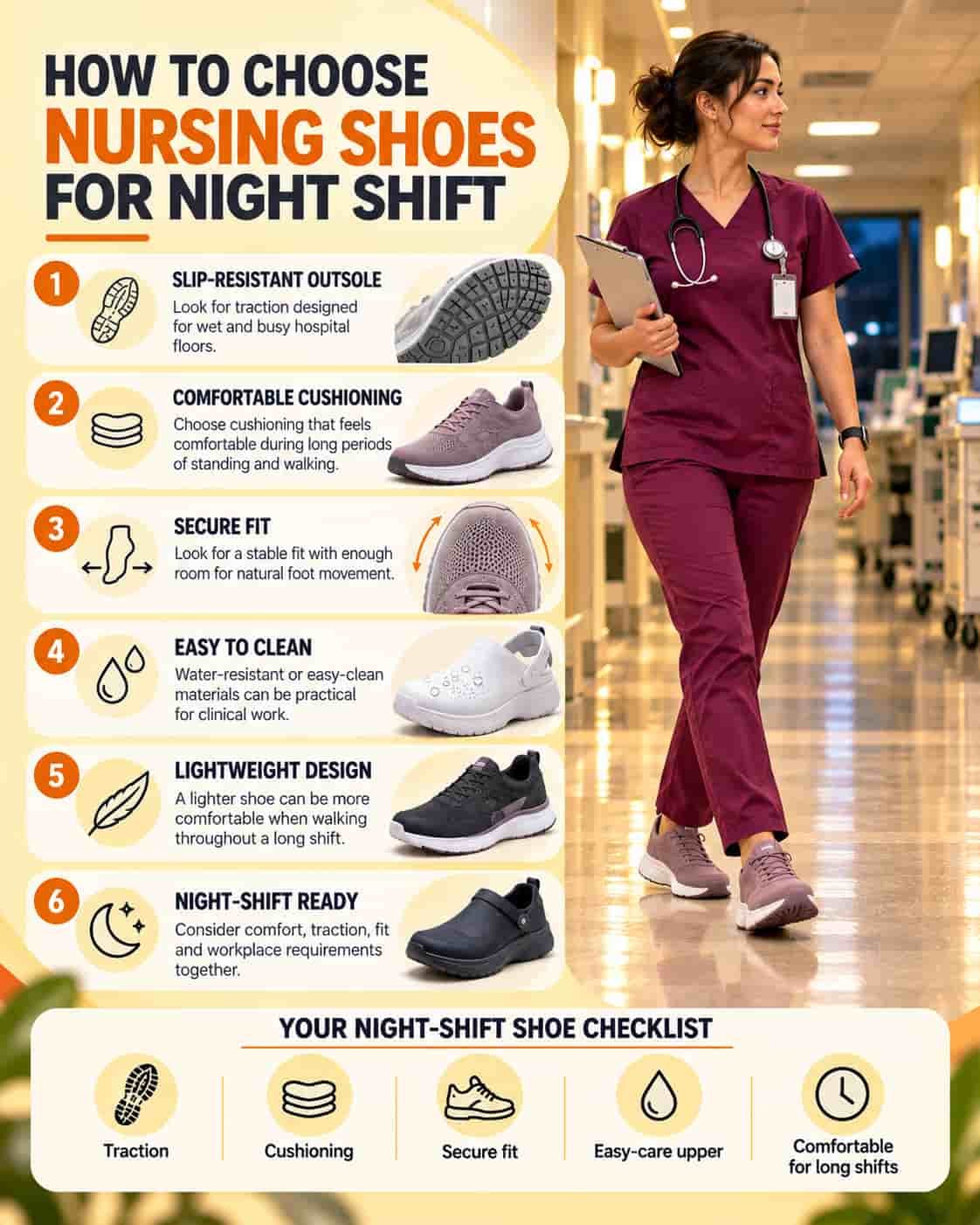
Practical Night-Shift Shoe Tips
Keep a backup pair
If your schedule allows it, rotating between two suitable pairs can give you flexibility when one pair becomes wet or needs cleaning.
Clean shoes according to their materials
Do not assume every shoe can be machine washed.
Check the manufacturer’s care instructions, especially for leather, synthetic leather, EVA, mesh, and glued components.
Pay attention to the outsole
The upper may still look good while the tread becomes worn.
Since traction matters in healthcare environments, inspect the outsole rather than judging the shoe only by its appearance.
Do not ignore fit problems
Persistent heel movement, toe pressure, or rubbing is a reason to reassess the size or model.
Consider your socks
A shoe that feels right with thin casual socks may feel different with thicker clinical socks.
Break in new footwear gradually
If possible, avoid making your first wear of a new shoe a particularly long shift. This gives you a chance to identify fit issues before committing to extended wear.
Frequently Asked Questions
What are the best shoes for nurses working night shifts?
The right option depends on your work environment and footwear priorities. Dansko XP 2.0 suits nurses who prefer structured clogs, while Avia Flame emphasizes work-oriented traction. Sticky is useful when waterproofing matters, and YHOON suits nurses who want a lightweight slip-on sneaker.
Are night-shift nursing shoes different from regular nursing shoes?
Not necessarily. The main difference is the work pattern. Night-shift nurses may spend long periods walking or standing while working during a biologically unusual time. The shoe still needs to provide appropriate fit, traction, cushioning, and workplace compatibility.
Do night-shift nurses need slip-resistant shoes?
If your workplace has wet floors, spills, or other slip hazards, slip resistance can be an important consideration. OSHA identifies wet floors and spills as healthcare slip hazards, so nurses should follow their employer’s footwear requirements and choose appropriate footwear for the environment.
Should nursing shoes be waterproof?
Not every nurse needs waterproof footwear. It becomes more useful when your work regularly involves spills, fluids, or wet areas. A breathable shoe may be more comfortable in a dry environment, while a waterproof work shoe provides a different type of workplace protection.
Are clogs or sneakers better for nurses?
Neither is universally better. Clogs often emphasize easy cleaning and work-oriented construction, while sneakers generally offer adjustable lacing and athletic-shoe geometry. Your workplace policy, foot shape, walking volume, and preference should determine the choice.
How should nursing shoes fit?
Your heel should remain reasonably secure without excessive movement, while the forefoot should have enough space to avoid toe pressure. The shoe should not pinch the instep or feel unstable when walking.
Are expensive nursing shoes worth it?
A higher price can make sense if the shoe provides features that matter to you, such as a removable footbed, structured support, specific outsole construction, or materials you prefer. Price alone does not determine whether a shoe is appropriate.
Are slip-on nursing shoes good for long shifts?
They can be, especially if you value easy on/off and a simple fit. The main issue is heel security. A slip-on should still feel stable while walking quickly and changing direction.
Are lightweight nursing shoes better?
Lightweight footwear can be appealing for nurses who walk extensively, but low weight should not be the only consideration. Cushioning, stability, fit, traction, and workplace requirements still matter.
How often should nurses replace their work shoes?
There is no universal replacement schedule that applies to every nurse. Inspect the outsole, cushioning, upper, and fit. If the shoe becomes visibly worn, loses its useful tread, develops structural problems, or no longer feels supportive, it may be time to replace it.
Can nurses wear regular walking shoes?
Some can, depending on workplace policy. A regular walking shoe may work well in a dry, low-risk environment, but nurses should confirm whether their employer requires specific characteristics such as slip resistance, closed toes, closed heels, or particular colors.
What should nurses prioritize for a 12-hour night shift?
Start with fit, then consider cushioning, stability, traction, cleanability, weight, and workplace requirements. There is no reason to prioritize maximum cushioning if the shoe does not fit securely or meet your unit’s rules.
Final Verdict: Which Night-Shift Nursing Shoe Should You Choose?
There is no single shoe that fits every nurse or every hospital environment.
Instead, match the shoe to the problem you are actually trying to solve.
If you want structured support and a traditional work clog: consider Dansko XP 2.0.
If slip-resistant work construction and low price are your priorities: consider Avia Flame Slip Resistant Clogs.
If waterproofing is the priority: consider Sticky Nursing Shoes.
If you want lightweight EVA cushioning: consider Anywear SR Angel.
If you want water resistance with memory-foam cushioning: consider Anywear Guardian Angel.
If you want an inexpensive lightweight slip-on sneaker: consider YHOON Women’s Walking Shoes.
If easy cleaning and a clinical-style slip-on matter most: consider Hawkwell Women’s Slip-On Nursing Shoes.
The most important point is to avoid choosing solely from a star rating or price. Your unit, shift pattern, flooring, foot shape, and employer requirements all affect whether a shoe makes sense for you.
And if your needs extend beyond night work, our best nursing shoes for women guide can help you compare more general options.
Nursing Shoe Rotation
If you work several night shifts each week, owning more than one suitable pair can be practical.
A rotation allows you to use a different pair when one needs cleaning or drying and lets you compare different constructions for different shifts.
For a deeper look at rotation strategy, durability, and when to change footwear, see our nursing shoe rotation and durability guide.
Affiliate Disclosure
Some links on this page are affiliate links. If you purchase through them, Urban Style Footwear may earn a commission at no additional cost to you. Our recommendations are based on the supplied product information, footwear characteristics, and buying criteria discussed in this guide, not on the size of the commission.