

Rubber Shoe Soles Explained: Natural, Synthetic, Gum and Carbon Rubber
Editorial Guide | Footwear Materials |
Summarise this rubber soles guide with AI
Open an assistant and submit the prefilled request. The assistant reads the page only after you submit it.
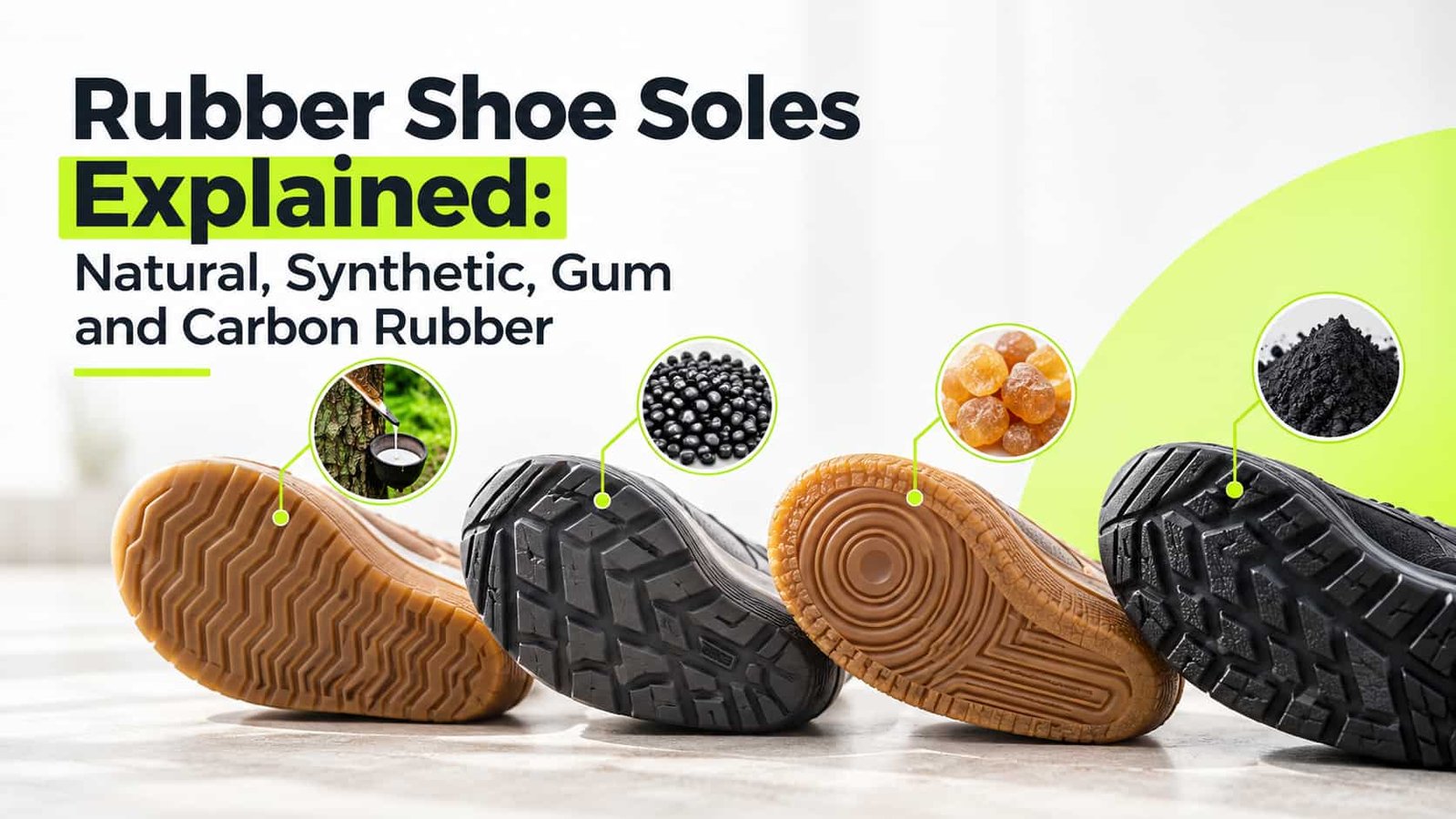
Rubber soles are the outsoles most shoes use for grip, abrasion resistance and water tolerance. They come in several types: natural rubber, synthetic rubber, gum rubber and carbon rubber. Each differs in grip, weight, durability and cost. Carbon rubber resists wear best, gum rubber gives a classic look and good grip on wet surfaces, and natural rubber is flexible but less durable.
Key Takeaways
- “Rubber sole” covers several materials. Natural, synthetic, gum and carbon rubber behave differently, so read the sole description.
- Carbon rubber is usually the most wear-resistant. It is common on high-wear outsoles, though wear still depends on use and tread.
- Gum rubber suits grip and classic styles. It has a warm colour and grips well on many surfaces.
- Softer rubber grips better but wears faster. Hardness is a trade-off between grip and longevity.
- Repair and replacement are often possible. A stitched or cemented sole can often be replaced, which extends the life of the upper.
Rubber Soles at a Glance
| Feature | Rubber soles |
| Role | Outsole, the part that touches the ground |
| Common types | Natural, synthetic, gum, carbon |
| Grip | Generally good on dry and wet surfaces; varies with tread and hardness |
| Abrasion resistance | Varies; carbon rubber is typically the most resistant |
| Weight | Usually heavier than EVA or TPU |
| Flexibility | Varies by rubber type and thickness |
| Repair | Often possible by resoling, especially on stitched or cemented shoes |
| Care | Clean with mild soap, avoid harsh solvents |
| Typical use | Boots, sneakers, work shoes, repairs, everyday footwear |
These are general tendencies. Individual soles vary widely, so check the specific product’s description.
What a Rubber Sole Is
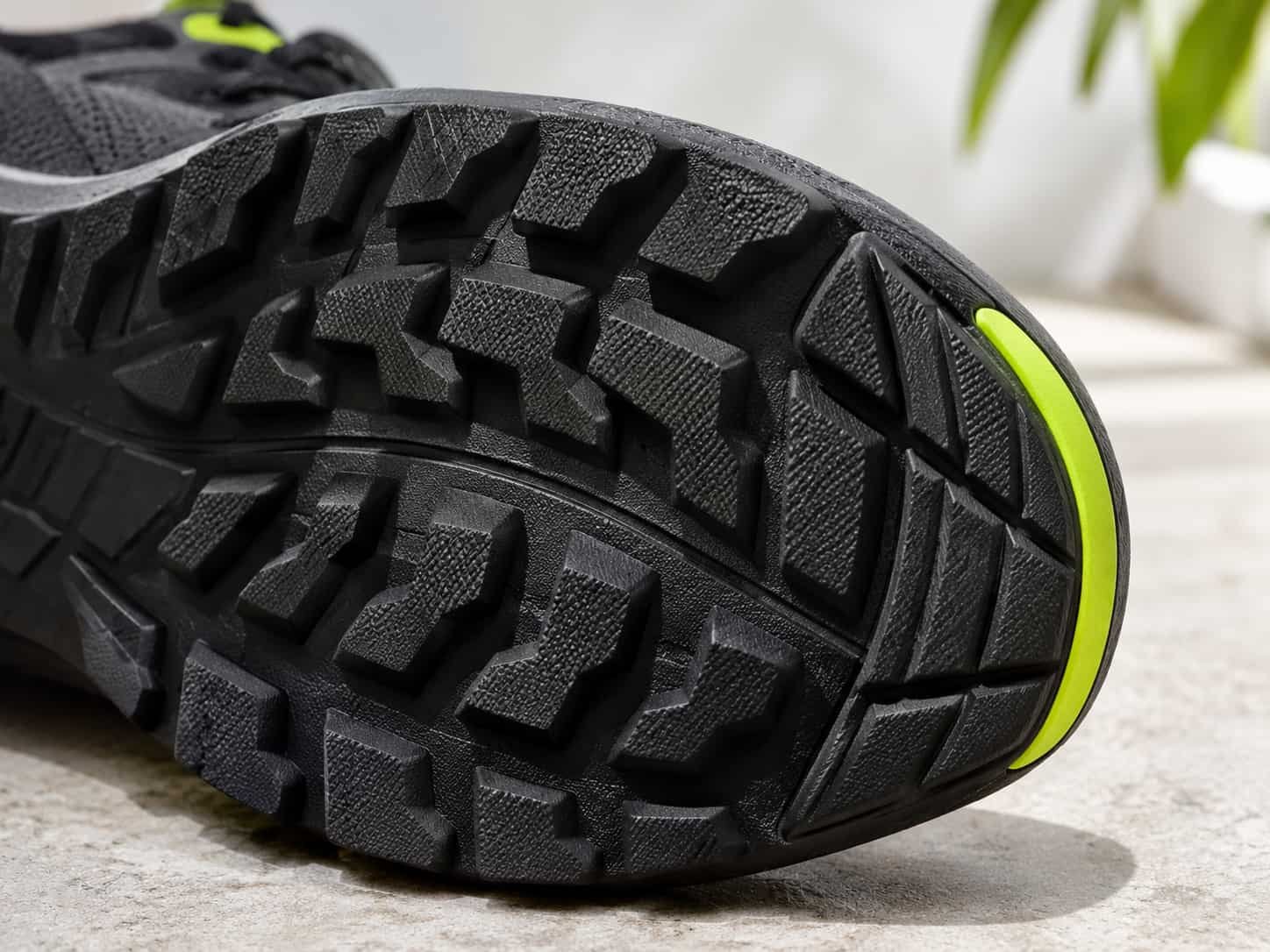
A rubber sole is an outsole made mainly from rubber, the material that sits under the shoe and meets the ground. In footwear, rubber is valued because it is tough, grips well and resists water. It is usually moulded, cut or vulcanised into a shape that includes a tread pattern.
Rubber is not one material. The term covers natural rubber, which comes from latex, and synthetic rubbers, which are made from petrochemicals. Makers also blend rubbers, add fillers and vary the hardness. Each choice changes how the sole feels, grips and wears, which is why two “rubber” soles can perform very differently.
For a wider comparison of sole materials, read the shoe materials guide and insole vs midsole vs outsole.
Natural Rubber Soles
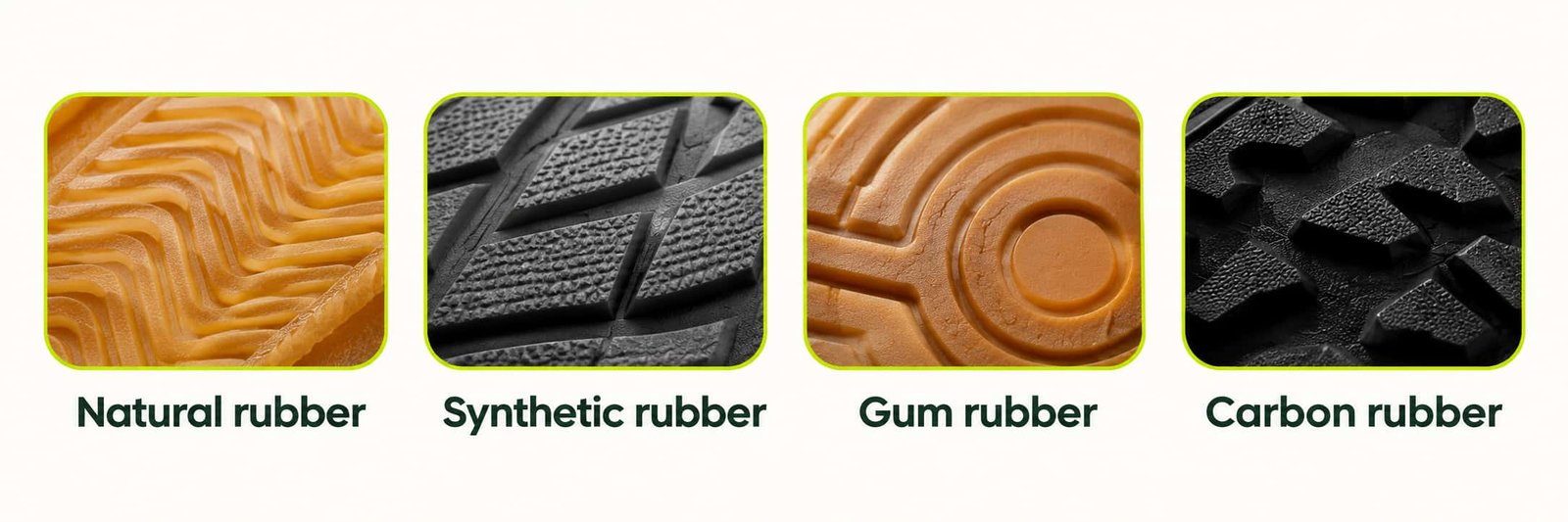
Natural rubber is harvested as latex from rubber trees and processed into a usable material. It is valued for flexibility and elasticity. A natural rubber sole bends easily and gives a supple feel underfoot.
The trade-off is wear. Natural rubber can wear faster than carbon rubber and can degrade with heat, oil and ozone exposure over time. It is often blended with synthetic rubber or fillers to improve durability. Natural rubber soles suit light, flexible footwear more than heavy-duty boots.
Synthetic Rubber Soles
Synthetic rubbers are made from petrochemical feedstocks and can be engineered for specific properties. Their main advantages are consistency and control over hardness, abrasion and resistance to heat and oil. Many modern outsoles use synthetic rubber blends.
Synthetic rubber is a broad category. Some compounds grip better on wet surfaces, and others wear longer. Because the formulations vary by maker, the product’s sole description is the best guide to how a particular sole will behave.
Gum Rubber Soles
Gum rubber is a natural-coloured rubber, often a warm tan or cream, that is common on classic footwear and walking shoes. It is traditionally made from natural rubber and sometimes blended with synthetic compounds. Gum soles are associated with good grip on many surfaces, including wet ground, which is why they appear on work boots, deck shoes and casual footwear.
Gum soles usually wear faster than carbon rubber, and they can stain or discolour in sun and with some cleaning products. For a related sole type, see what is a gum sole.
Carbon Rubber Outsoles
Carbon rubber is a hard, black rubber compound made with carbon black as a filler. The carbon increases abrasion resistance, which is why carbon rubber is used on high-wear areas, such as the heel and the forefoot on sneakers and boots.
Carbon rubber is generally firmer than natural or gum rubber, so it can give less grip on some smooth surfaces. Makers often use carbon rubber only in key wear zones and combine it with softer compounds elsewhere, a design choice that balances durability and grip. Carbon rubber is common on performance and everyday sneakers.
Rubber Compared with EVA, PU and TPU
| Feature | Rubber | EVA foam | PU | TPU |
| Main role | Outsole | Midsole or insole | Midsole or coating | Overlay, heel counter, outsole |
| Abrasion resistance | Good to high (carbon highest) | Low to moderate | Moderate | Good |
| Cushioning | Low to moderate | High | Moderate | Moderate |
| Weight | Heavier | Lighter | Varies | Varies |
| Grip | Good | Not a ground-contact outsole | Varies | Varies |
| Typical use | Outsoles | Midsoles, slides | Midsoles, synthetic uppers | Overlays, outsoles |
Rubber and EVA are often used together: rubber on the outside for grip and wear, EVA on the inside for cushioning. For EVA specifically, see what is EVA foam, and for TPU, see what is TPU in shoes. For a head-to-head on EVA and rubber, read rubber vs EVA soles.
Grip and Traction
Grip depends on the rubber compound, the hardness and the tread pattern. Softer rubber generally grips better on smooth and wet surfaces because it conforms to the ground. Harder rubber lasts longer but can slip more on smooth floors.
Tread matters as much as the compound. Deep, well-spaced lugs help on loose or wet ground, while shallow patterns can be better for indoor or city use. Some makers use specific lug designs for trail, city or work use.
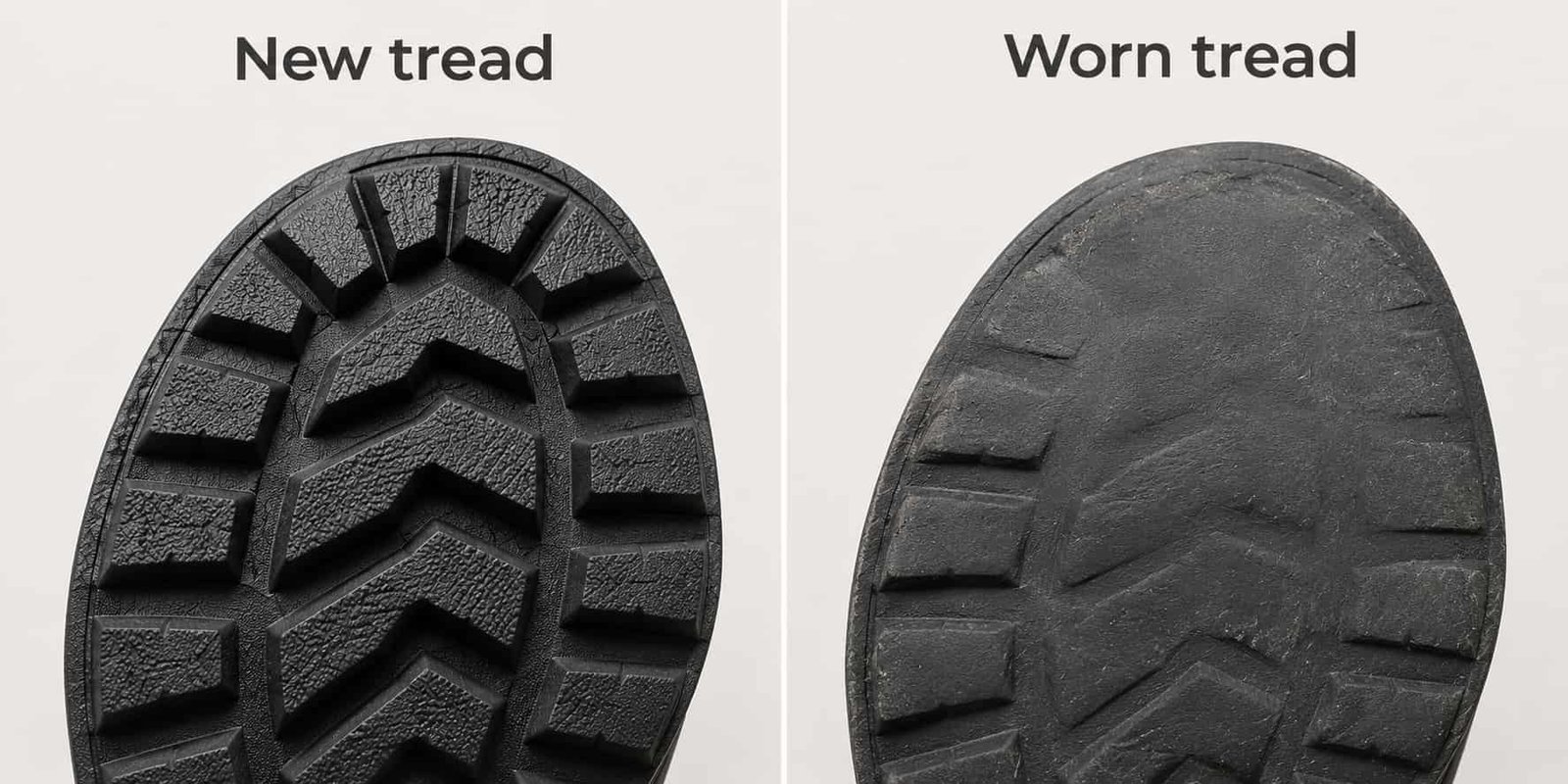
Traction also changes with wear. As tread wears down, grip falls, so replace a sole before it becomes smooth. For more on this, see shoe traction.
Durability and Wear
There is no reliable fixed lifespan for a rubber sole. Durability depends on the compound, the tread depth, the use, the surface and the shoe’s construction.
Carbon rubber is usually the most wear-resistant, but it does not last forever. Gum and natural rubber wear more quickly on hard surfaces. Heat, oils and ozone can harden or crack rubber over time. Storing shoes in hot cars or direct sun shortens their life.
Two wear signs matter most: a smooth, flat tread, and cracks or chunks missing from the sole. When either appears, the shoe may need resoling or replacement. Stitched and cemented soles are usually easier to replace than glued-on soles.
Cowboy Boots, Heels and Moccasins
Different shoe types use rubber soles in different ways.
- Cowboy boots. Rubber soles are often added to leather boots for grip and comfort on hard surfaces. A rubber sole can also protect the leather from wear. Check whether the sole is cemented or stitched.
- Heels. Rubber heel tips are common on dress shoes and boots because they grip floors and resist wear. Heel-only rubber is a separate part from the full outsole.
- Moccasins. Some moccasins use a thin rubber or gum sole, often sewn to the upper. They suit light walking on soft ground but offer limited protection on rough surfaces.
If you are fitting a new sole to a boot or dress shoe, ask a cobbler which rubber type suits the job, since the wrong compound can slip or wear unevenly.
Repairing and Replacing Rubber Soles
Resoling is one of the most useful things a stitched or cemented shoe offers. A cobbler can remove a worn rubber sole and attach a new one, which can extend the life of the upper considerably. Glued-on soles are harder to replace and often need a full replacement.
Heel tips are the easiest repair. They wear fastest on the heel and can be replaced separately on many shoes. For a sole that has begun to split or peel, a repair service may help. For a broader guide to fixing footwear, see how to fix peeling shoes, though rubber soles and peeling uppers are different problems.
When buying replacement soles, check the rubber type, thickness and whether the sole is designed for stitched or cemented use. Replacement soles bought online vary in quality, so choose a reputable supplier or cobbler.
Cleaning White Rubber Soles
White rubber soles yellow and mark easily, and cleaning helps keep them looking fresh.
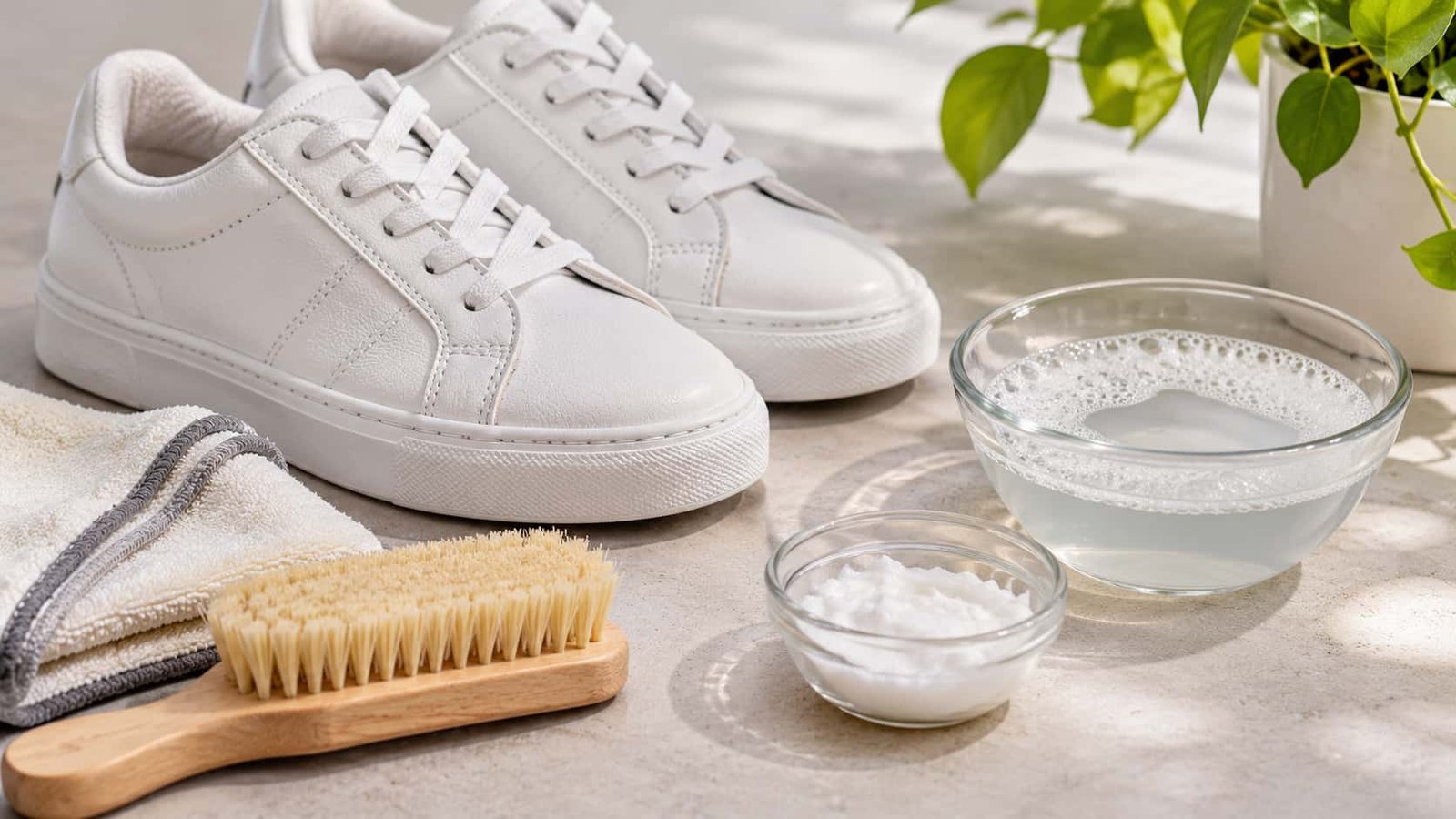
- Brush off loose dirt with a soft brush.
- Mix mild soap with warm water and scrub the sole gently.
- For stubborn marks, use a paste of baking soda and water, applied with a soft brush.
- Rinse and dry at room temperature, away from direct sun.
- Avoid bleach and harsh solvents, which can discolour or weaken rubber.
Yellowing is often caused by sun exposure and oxidation, so store white soles away from direct light. For a fuller cleaning routine, see how to clean shoes and maintain them.
Who Should Choose Which Rubber Sole
| Your situation | Suits you well | Consider another type if |
| Daily wear on hard floors | Carbon rubber for wear resistance | You need maximum cushioning |
| Wet or muddy ground | Gum rubber or deep-tread rubber for grip | You need very light footwear |
| Work boots | Oil-resistant rubber with good tread | You need a non-slip rating for specific floors |
| Classic or leather boots | Gum or leather-friendly rubber | You want a very soft, flexible sole |
| Repair and resoling | Stitched or cemented shoes with replaceable soles | The shoe is glued and cannot be resoled |
| Light, flexible use | Natural or blended rubber | You need long-term abrasion resistance |
For help narrowing options by type and use, the shoe finder can help you filter.
A practical rule: Choose carbon rubber for high-wear areas, gum or deep-tread rubber for grip in wet or rough conditions, and check that the sole can be replaced. For cushioning, look at the midsole and not just the outsole.
Myths Worth Dropping
- “All rubber soles are the same.” They vary by compound, hardness and tread.
- “Rubber soles never wear out.” They wear and can crack with heat, oils and age.
- “Carbon rubber is the best for every shoe.” It is very wear-resistant but can grip less on some smooth surfaces.
- “Rubber soles are always heavy and unhealthy.” Weight and comfort depend on design. Rubber is a common, durable material.
- “Rubber and PU soles are interchangeable.” PU and rubber behave differently in wear, flexibility and grip.
Frequently Asked Questions
What is a rubber sole?
A rubber sole is an outsole made mainly from rubber. It sits under the shoe and provides grip, abrasion resistance and water tolerance.
What are the main types of rubber soles?
The main types are natural rubber, synthetic rubber, gum rubber and carbon rubber. Each differs in grip, weight, flexibility and wear resistance.
Are rubber soles good for your feet?
Rubber soles are durable and provide grip, but they are not cushioned on their own. Comfort depends on the midsole, insole and fit. If you have foot pain, speak to a qualified professional.
What are the downsides of rubber soles?
They are often heavier than EVA or TPU, they can harden or crack with age, and their grip can fall as the tread wears. They also offer less cushioning on their own.
How do you fix a worn rubber sole?
A cobbler can resole a stitched or cemented shoe by removing the worn sole and attaching a new one. Heel tips can often be replaced separately. Glued-on soles are harder to replace.
When were rubber shoe soles invented?
Vulcanised rubber, which made rubber soles practical, was developed in the 19th century, and rubber-soled footwear became widespread in the late 1800s and early 1900s. Check a specialist history source for exact dates.
Is PU or rubber better for soles?
Neither is better in every case. Rubber is more abrasion-resistant and grips well, while PU is lighter and more flexible in some uses. Choose by the job and the surface.
How do you clean white rubber soles?
Brush off loose dirt, clean with mild soap and warm water, use baking soda paste for stubborn marks, rinse, and dry away from direct sun. Avoid bleach and harsh solvents.
Final Thoughts
Rubber soles are the most common outsole material because they grip, resist abrasion and tolerate water. Natural, synthetic, gum and carbon rubber each behave differently, and the best choice depends on the shoe and the surface. Look after the sole, check the tread, and replace or resole it before it becomes smooth.
For the wider picture, start with the shoe materials guide, then compare rubber vs EVA soles and shoe traction.
External References
- Wikipedia, “Natural rubber” (source and properties of natural rubber): en.wikipedia.org/wiki/Natural_rubber
- Wikipedia, “Vulcanization” (the process that makes rubber durable for soles): en.wikipedia.org/wiki/Vulcanization
- Wikipedia, “Carbon black” (filler used in carbon rubber compounds): en.wikipedia.org/wiki/Carbon_black


