What Is Microfiber Leather? Is It Better Than Real Leather?
Editorial Guide | Footwear Materials |
Summarise this microfiber leather guide with AI
Open an assistant and submit the prefilled request. The assistant reads the page only after you submit it.
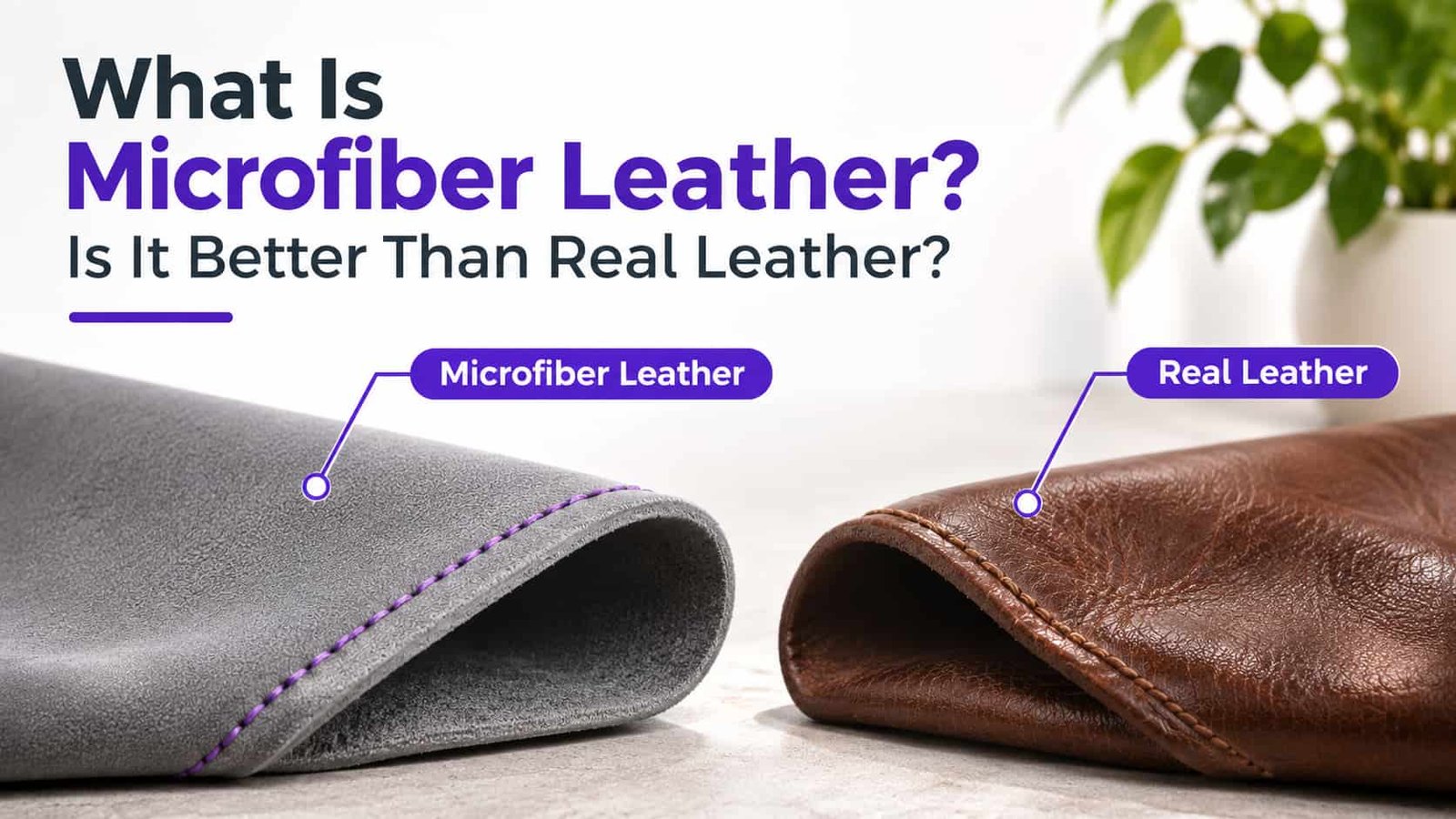
Microfiber leather is a synthetic material made from ultra-fine polyester or polyamide fibres, woven or non-woven, and bonded to a polyurethane layer that gives a leather-like surface. It contains no animal hide. It is often more uniform and easier to clean than real leather, but it breathes less and does not develop a patina. It is not better than real leather in every way, and the right choice depends on use.
Key Takeaways
- Microfiber leather is a synthetic, not a hide. It is built from very fine fibres and a polymer coating.
- It is more uniform than real leather. Colour and surface are consistent from piece to piece.
- It is easier to clean but breathes less. The surface wipes clean, and it does not transmit air like real leather.
- It does not age like real leather. It does not develop a natural patina, and wear shows as surface change.
- Better depends on the job. For controlled, low-maintenance use it can suit well; for a shoe you want to resole for years, real leather is usually the stronger choice.
Microfiber Leather at a Glance
| Feature | Microfiber leather |
| What it is | Synthetic, built from fine fibres and a polymer coating |
| Animal hide | None |
| Look and feel | Uniform, soft, leather-like |
| Breathability | Lower than real leather |
| Water | Resists light surface wet, not fully waterproof |
| Ageing | Does not develop a natural patina |
| Repair | Limited; damage is hard to fix |
| Cost | Often lower than good real leather |
| Care | Wipe clean, use gentle cleaners |
| Typical use | Car interiors, furniture, bags, wallets, some shoes |
These are general tendencies. Quality varies widely between makers, so check each product’s material details.
What Microfiber Leather Is
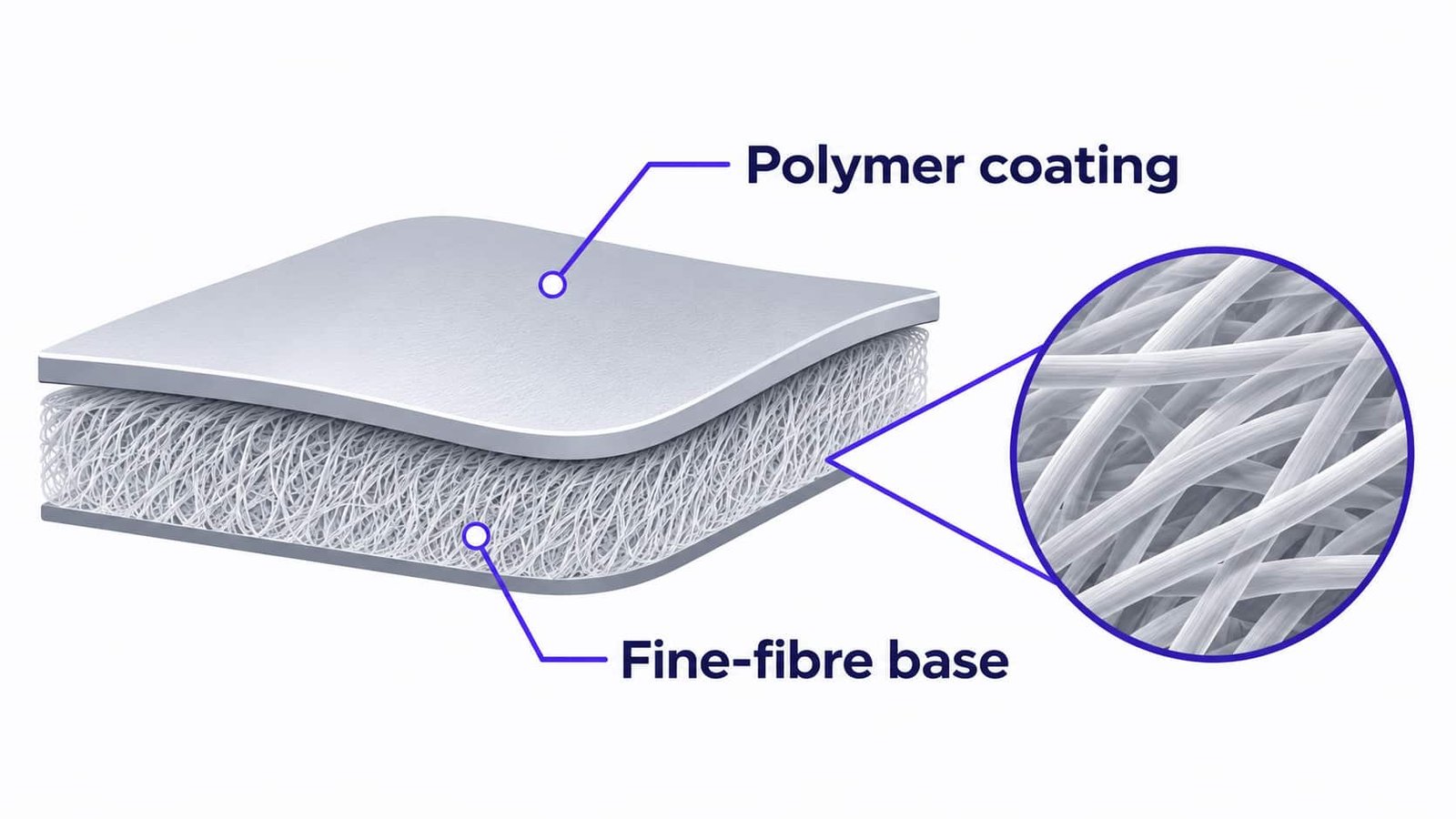
The term “microfiber leather” is used for a family of synthetic materials. Each is built from very fine fibres, usually polyester or polyamide, that are woven or non-woven into a base. That base is then coated with a polymer, often polyurethane, and finished to look and feel like leather.
The name is a reminder that the fibres are finer than most conventional textile yarns. Fineness helps the material feel soft and drape well, and it helps the coating bond evenly. What the name does not tell you is how thick the coating is, how dense the base is or how well the layers are bonded. Those details decide how the material performs.
For a wider view of how leather and synthetics compare in shoes, the shoe materials guide covers each family.
How Microfiber Leather Is Made
Manufacturing varies between producers, so treat the steps below as a general outline. Fine synthetic fibres are spun and formed into a non-woven or woven base. The base is often densified or needled to give it body. A polymer coating, usually polyurethane, is then applied to the surface, cured and embossed to create a grain pattern. Colour and a protective finish are added at the end.
Two features matter most to buyers. The first is the density of the base, which affects strength and how the material holds its shape. The second is the bond between base and coating, which strongly affects how long the surface lasts. A dense base with a well-bonded coating usually performs better than a loose base with a thin, poorly bonded finish.
Compared with Real Leather
| Feature | Microfiber leather | Real leather |
| Source | Synthetic fibres and polymer | Animal hide |
| Uniformity | Very consistent | Natural variation |
| Breathability | Lower | Generally higher, depends on finish |
| Patina | No natural patina | Develops with use |
| Repair | Limited | Often conditioned and repaired |
| Cost | Often lower | Often higher |
| Vegan | Yes, no animal material in the surface | No |
| Wear pattern | Surface coating wears or changes | Creases soften, surface ages |
Real leather usually wins on breathability, repairability and natural ageing. Microfiber leather usually wins on uniformity, price and ease of cleaning. Neither is better for every use, so the question to ask is what the product needs to do.
For how real leather grades differ, see full grain vs top grain and what is genuine leather.
Compared with PU and Faux Leather
Microfiber leather is often confused with PU leather and general faux leather. They overlap, but they are not identical.
- PU leather is a polyurethane coating on a fabric base. Some microfiber leathers use a PU coating, so the two can be closely related.
- Faux leather is a general term for any imitation leather. Microfiber leather is one kind of faux leather, usually with a denser, more fibre-based base.
- Microfiber leather is defined more by its fine-fibre base than by its coating alone.
Because the terms are used loosely in marketing, check the product’s material description rather than the name. For a fuller explanation of PU, see what is synthetic leather, and for the PU and PVC comparison, see PU vs PVC shoes.
Comfort and Breathability
Microfiber leather is often comfortable to touch. It is soft, draped and consistent, which many people find pleasant in car seats and on furniture. In footwear, it can feel supple from the first wear, although the upper’s stiffness depends on its thickness and coating.
Breathability is the main limit. The polymer layer and dense base restrict airflow, so heat and moisture can build up, particularly in warm weather or during long wear. A breathable lining and an open insole help, but the upper itself will usually breathe less than real leather or an open knit.
This is an editorial judgment based on how coated synthetics behave. It is not a standardised laboratory result.
Durability and Ageing
There is no reliable fixed lifespan for microfiber leather. Durability depends on the fibre density, the coating, the bond between them, the use and the care.
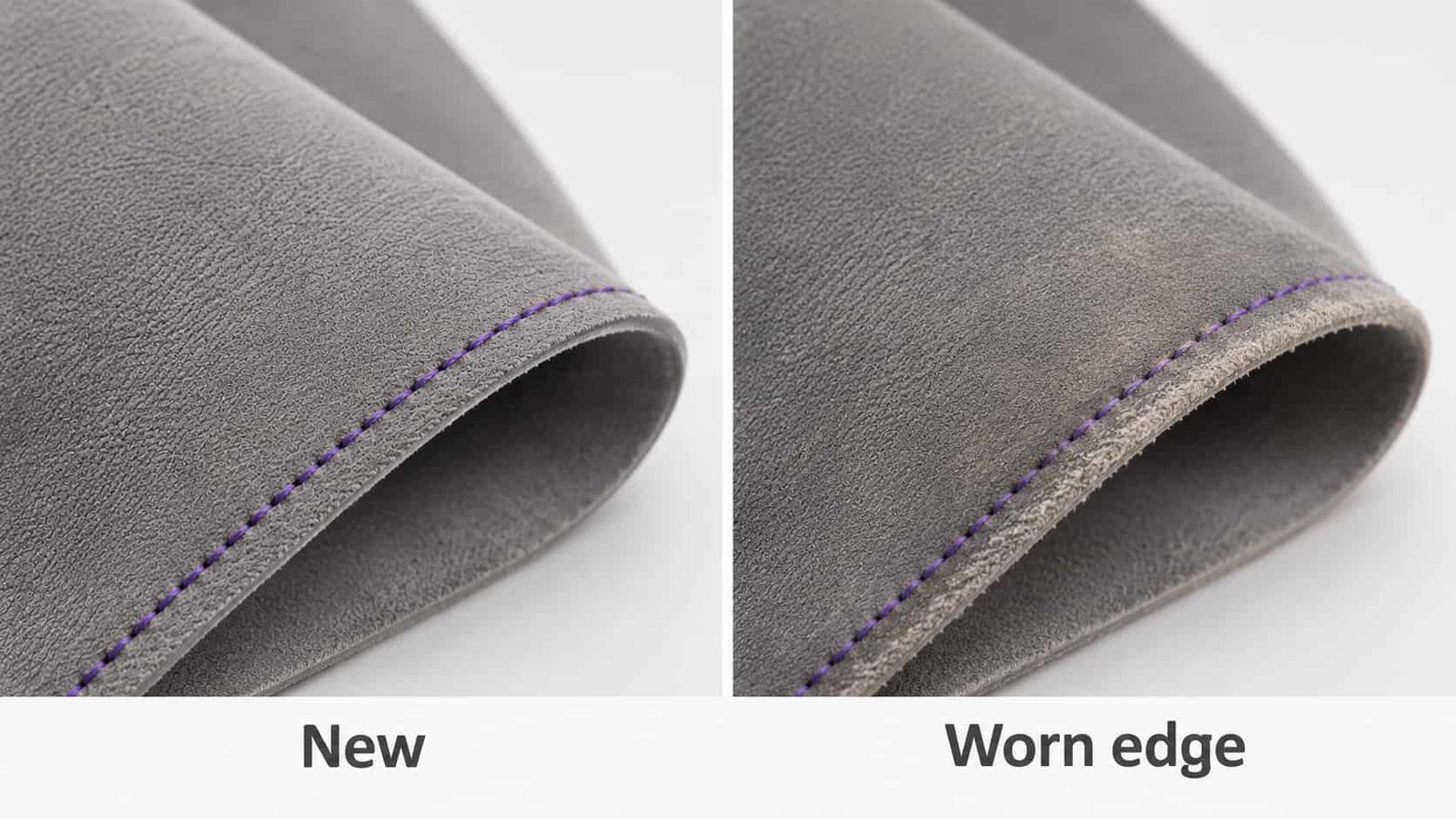
The surface is the usual weak point. Abrasion, friction at flex points, sun and heat can wear the coating or change its finish. Once the surface has worn through, repair is limited. Unlike real leather, microfiber leather does not soften and develop a patina with use. Wear tends to appear as a change in surface finish, shine or texture.
Some people also report peeling or flaking in lower-quality products, which usually points to a weak coating bond. If you are buying a product for heavy use, look for a dense base and a well-finished surface, and ask the seller about the coating.
Water and Weather
Microfiber leather resists light surface wet, and water tends to bead or wipe off when the coating is intact. That makes it practical for car interiors and everyday accessories. It is not fully waterproof, though. Water can soak into a damaged surface, reach seams and stitching, or be absorbed by a less dense base.
Heat and sun can also affect the surface over time. Dry the material with a soft cloth after it gets wet, and avoid leaving it in a hot car or in direct sun. For background on how waterproof and water-resistant materials differ, see waterproof vs water resistant shoes.
Where Microfiber Leather Is Used
Microfiber leather appears in several everyday products:
- Car interiors. Steering wheel covers, seat covers and trim are common uses, where a uniform, cleanable surface matters.
- Furniture. It is used in sofas and chairs as a leather-look alternative.
- Accessories. Wallets, watch straps and bag linings are common.
- Footwear. Some shoes and boots use microfiber leather in the upper, often as a vegan-friendly leather-look option.
Use in footwear is less common than in car interiors and accessories. For shoes, check how the material is built and how it is attached to the sole.
Cleaning and Care
Microfiber leather is generally easy to clean, but the wrong products can damage the coating. Use gentle methods.
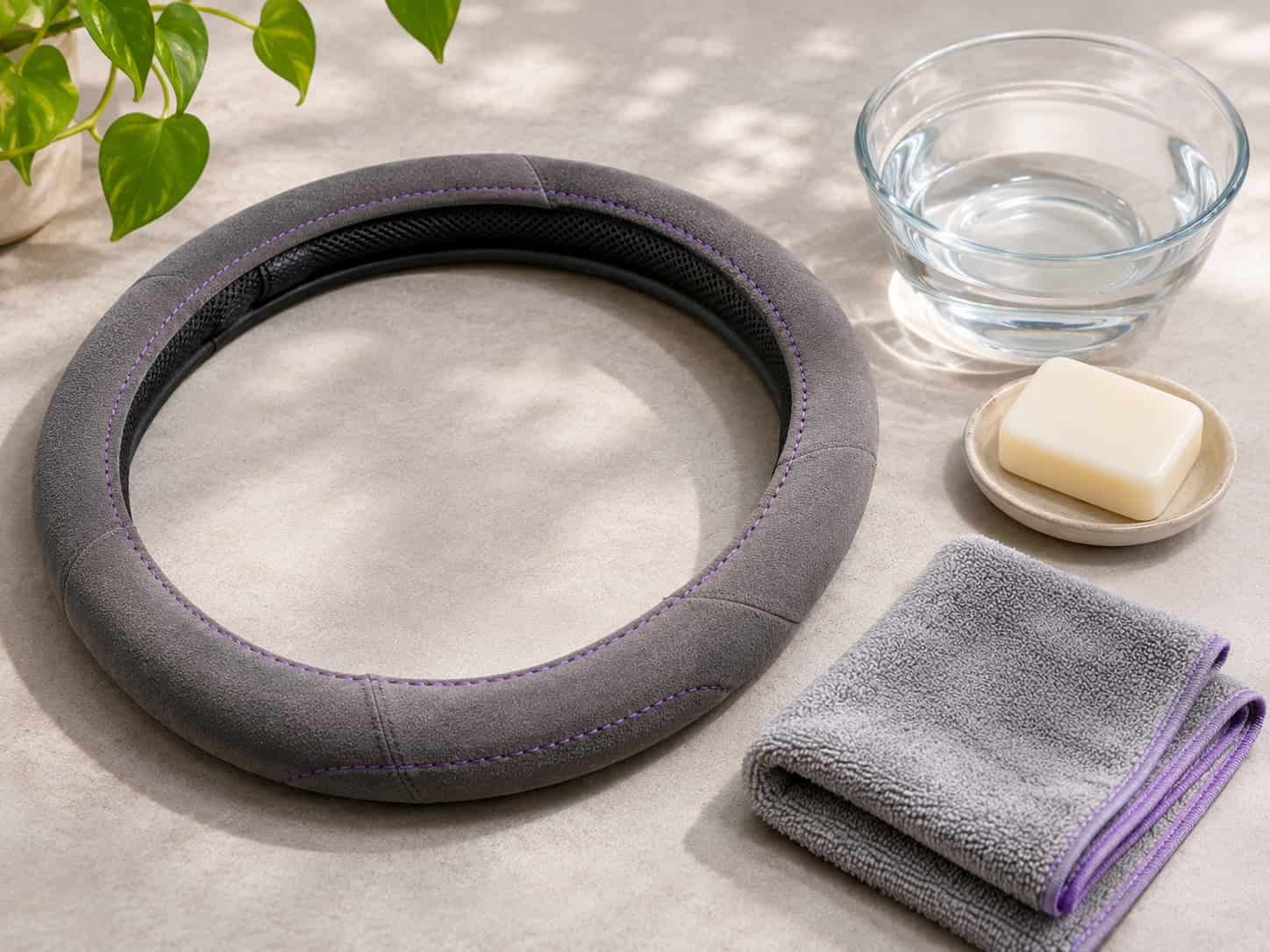
- Wipe dust off first with a soft, dry cloth.
- Clean marks gently with a damp cloth and a little mild soap.
- Rinse lightly with clean water and wipe dry with a soft cloth.
- Dry at room temperature, away from heat and direct sun.
- Test any new product on a hidden area before using it on the whole surface.
Avoid alcohol, acetone, bleach, strong solvents and abrasive scrubbers, which can strip or dull the coating. Do not use heavy oils or waxes unless the maker recommends them. For a broader cleaning routine across materials, see how to clean shoes and maintain them.
Who Should Choose Microfiber Leather
| Your situation | Microfiber leather may suit you if | Consider real leather if |
| Use | You want a uniform, easy-clean surface for a car, sofa or accessory | You want a material that ages and can be repaired |
| Care | You want simple wipe-clean upkeep | You are happy to condition and polish |
| Climate | Your conditions are mostly dry or mild | You face heat, humidity or frequent wet weather |
| Budget | You want a leather look at a lower price | You want to keep the item for many years |
| Vegan choice | You prefer no animal material on the surface | Animal material is not a concern for you |
| Repair | You accept that damage may not be repairable | You want the option to repair or re-finish |
For help narrowing choices in footwear, the shoe finder can help you filter by material and use.
Myths Worth Dropping
- “Microfiber leather is better than real leather in every way.” It is more uniform and easier to clean, but it breathes less and cannot be repaired the same way.
- “Microfiber leather is the same as PU.” Some are similar, but microfiber leather is defined by its fine-fibre base as well as its coating.
- “Microfiber leather is waterproof.” It resists light wet, but it is not fully waterproof.
- “Microfiber leather ages like real leather.” It does not develop a natural patina.
- “All microfiber leather is the same quality.” Density, coating and bonding vary widely.
Frequently Asked Questions
What is microfiber leather?
Microfiber leather is a synthetic material made from very fine fibres, usually polyester or polyamide, bonded to a polymer coating. It contains no animal hide and is designed to look and feel like leather.
Is microfiber leather real leather?
No. It is synthetic and contains no animal hide. Its surface is designed to imitate leather, but it is a manufactured material.
Is microfiber leather better than real leather?
Not in every way. It is more uniform, often cheaper and easier to clean, and it is vegan. Real leather breathes better, can be repaired and develops a patina. The better choice depends on the use.
Is microfiber leather waterproof?
Not fully. It resists light surface wet and wipes clean when the coating is intact. Water can soak into damage, seams or a less dense base.
How long does microfiber leather last?
There is no reliable fixed lifespan. Durability depends on fibre density, the coating, the bond between them, use and care. Surface wear and peeling are the usual problems, and repair is often limited.
How do you clean microfiber leather?
Wipe off dust, clean marks with a damp cloth and a little mild soap, rinse lightly, and dry at room temperature. Avoid alcohol, acetone, bleach and abrasive scrubbers.
Is microfiber leather the same as PU leather?
They are related but not identical. PU is a polyurethane coating on a fabric base. Microfiber leather is defined mainly by its fine-fibre base, and it often also has a polymer coating.
Does microfiber leather peel or flake?
It can, particularly in lower-quality products where the coating bond is weak. Choosing a denser base and a well-finished surface reduces this risk.
Final Thoughts
Microfiber leather is a synthetic material built from fine fibres and a polymer coating. It is uniform, easy to clean and free of animal hide, but it breathes less, does not develop a patina and is hard to repair. It is not better than real leather in every way. It suits uniform, low-maintenance uses, while real leather suits long-term, repairable items.
Before you buy, check the material details, ask about the base and coating, and match the material to how the item will be used. For the wider picture, start with the shoe materials guide.
External References
- Wikipedia, “Microfiber” (the fine synthetic fibre and its uses): en.wikipedia.org/wiki/Microfiber
- Wikipedia, “Artificial leather” (definition of synthetic and imitation leather): en.wikipedia.org/wiki/Artificial_leather
- Federal Trade Commission, Guides for Select Leather and Imitation Leather Products (16 CFR Part 24): ecfr.gov (16 CFR Part 24)