

Neoprene Shoes: What It Is and How to Clean It
Editorial Guide | Footwear Materials |
Summarise this neoprene shoes guide with AI
Open an assistant and submit the prefilled request. The assistant reads the page only after you submit it.
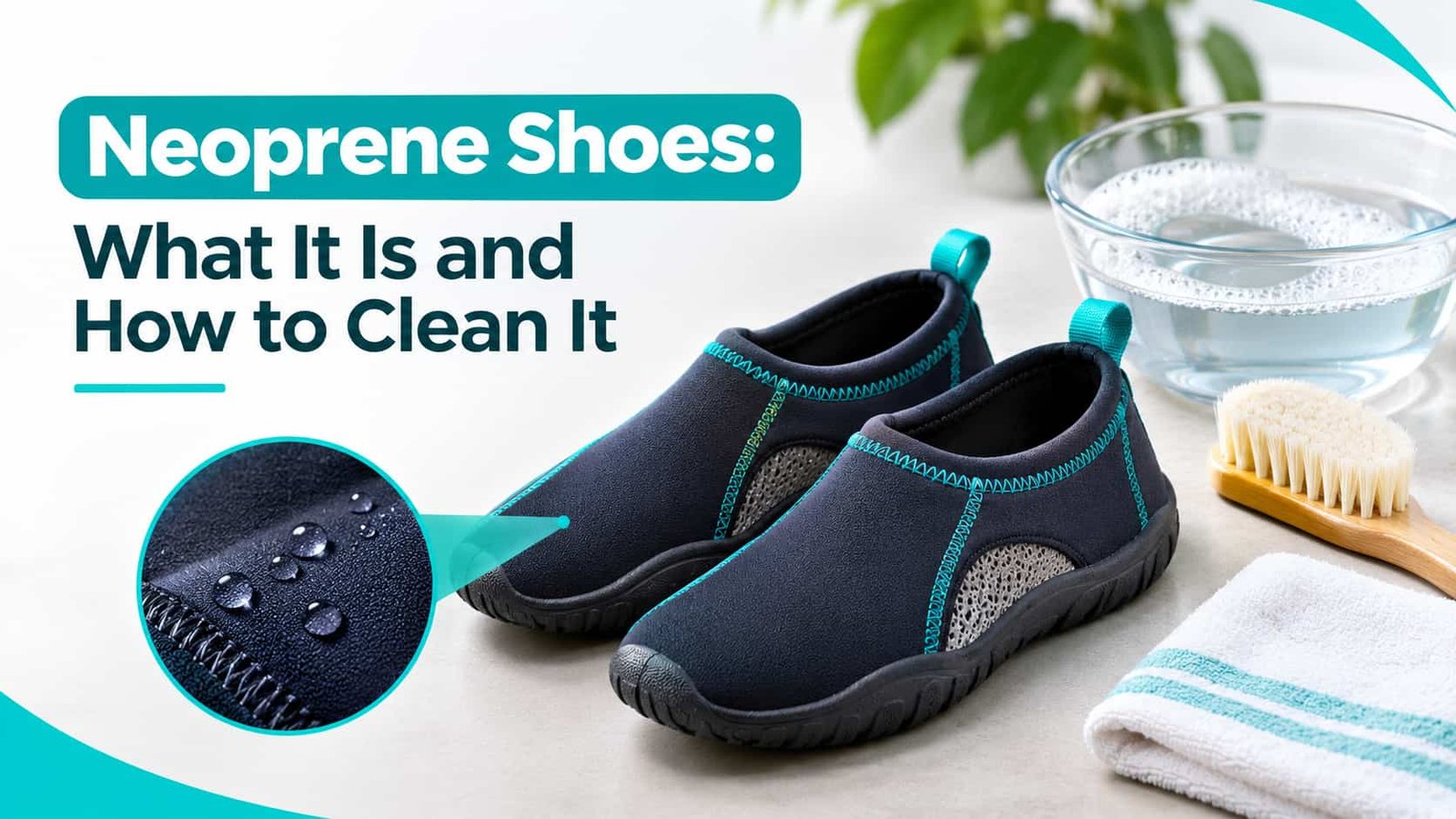
Neoprene is a closed-cell synthetic foam rubber, usually made from chloroprene. It is used in water shoes because it insulates against cold water and cushions the foot. It is not fully waterproof, since water can enter through the fabric, seams and openings. Neoprene shoes suit river, reef, rafting and wet-wading use, and they need rinsing and thorough drying after salt or silt exposure.
Key Takeaways
- Neoprene is a foam rubber, not a fabric. It is a closed-cell synthetic material, used for wetsuits and water footwear.
- It insulates better than most water-shoe materials. Its trapped gas cells slow heat loss, which is why it is used for cold-water wear.
- It is not fully waterproof. Water can enter through the surface fabric, seams and openings, so expect some wetting.
- Cleaning and drying matter most. Rinse out salt, silt and grit, and dry thoroughly to prevent odour and breakdown.
- Choose by use. Neoprene suits rivers and cold wet work, while quick-dry synthetics often suit warm, fast-draining use better.
Neoprene Shoes at a Glance
| Feature | Neoprene shoes |
| Material | Closed-cell synthetic foam rubber (chloroprene-based) |
| Main uses | River, reef, rafting, wading, cold-water and wet work |
| Warmth | Good, traps heat in cold water |
| Water | Not fully waterproof; water enters through openings and fabric |
| Drying | Slower than quick-dry synthetics |
| Cushioning | Usually soft and flexible |
| Durability | Can stretch, tear or degrade with sun, oils and heat |
| Care | Rinse, clean gently, dry fully |
These are general tendencies. Water shoes vary a lot in construction, so check each pair’s material and drying details.
What Neoprene Is
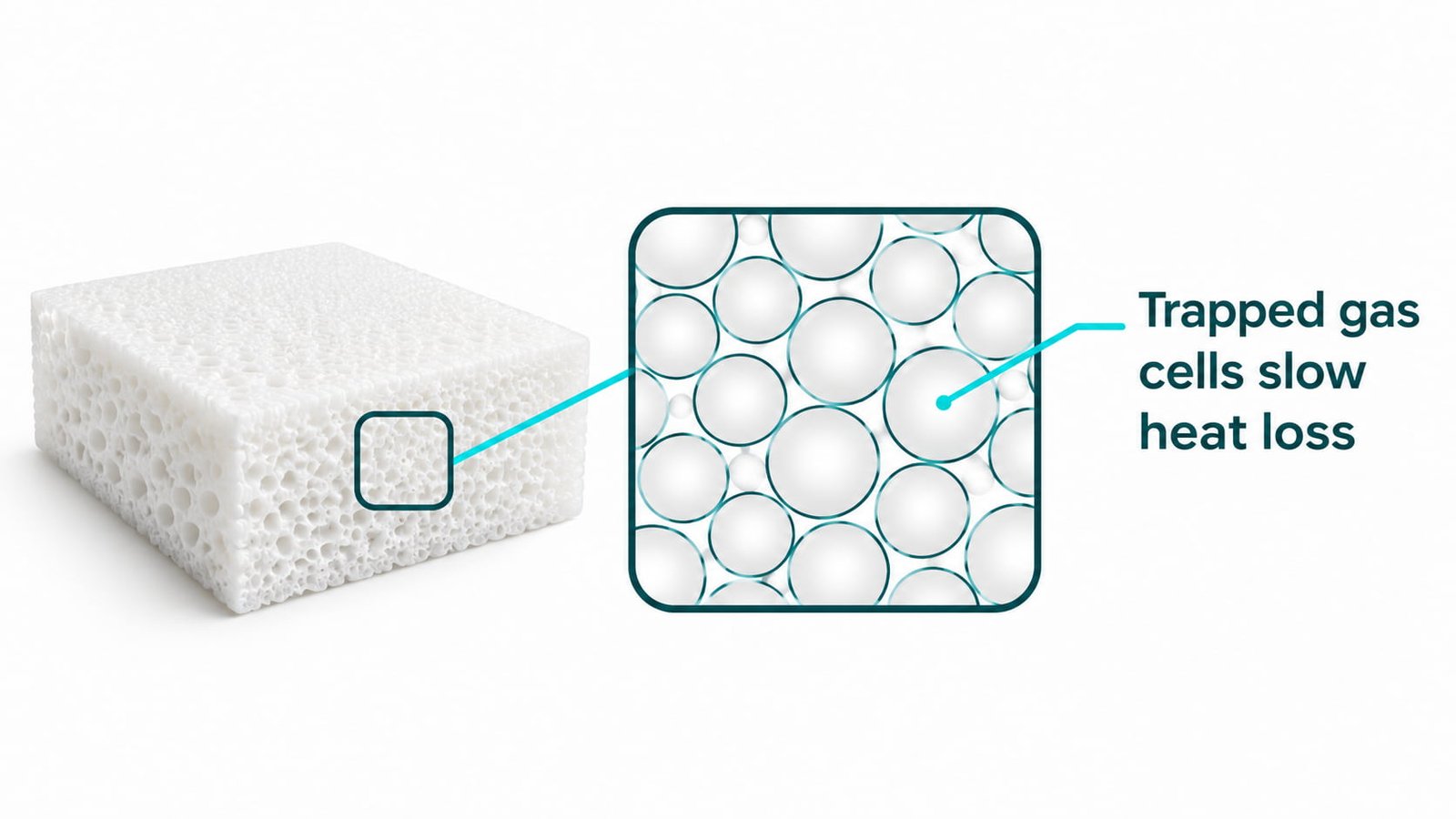
Neoprene is a synthetic rubber, developed in the 1930s, that is usually made from chloroprene. In footwear it is produced as a foam, with a large number of small closed cells. Those trapped gas cells are the reason neoprene insulates: they slow the flow of heat, so the foot stays warmer in cold water than it would in a thin, open material.
Neoprene is often called “wetsuit material” because it is used in wetsuits, and it is also used for knee pads, gloves and water booties. Shoes may use a neoprene body with a rubber sole, or a neoprene sock-style liner under a separate outer shell.
For a wider view of materials in footwear, the shoe materials guide covers leather, textiles and synthetics side by side.
How Neoprene Is Made into Shoes
Neoprene is produced as sheets of foam, which are cut into shoe parts and joined. Makers often bond the foam to a fabric layer on one or both sides, which adds strength and a smoother finish. Seams are stitched or taped, and the sole is usually a separate rubber outsole bonded to the upper.
The construction matters as much as the material. A neoprene upper with taped seams and a firm outsole will perform differently from a thin neoprene sock with a flimsy sole. Check the product details before deciding.
Where Neoprene Shoes Are Used
Neoprene shoes are common in several settings:
- River and whitewater use. Paddlers and rafters wear them for warmth and foot protection on wet rocks.
- Reef and surf. Neoprene shoes protect feet on sharp reef and cold water, though protection depends on sole thickness.
- Wet wading and fishing. Neoprene booties help in cold streams and marshes.
- Cold-water swimming and winter water sports. The insulation suits cold conditions.
- Some water-sport and aqua fitness shoes. Lighter neoprene styles are used for gentle wet activity.
Neoprene is less common for dry-land walking or hot-weather wear, since it traps heat.
How Neoprene Handles Water
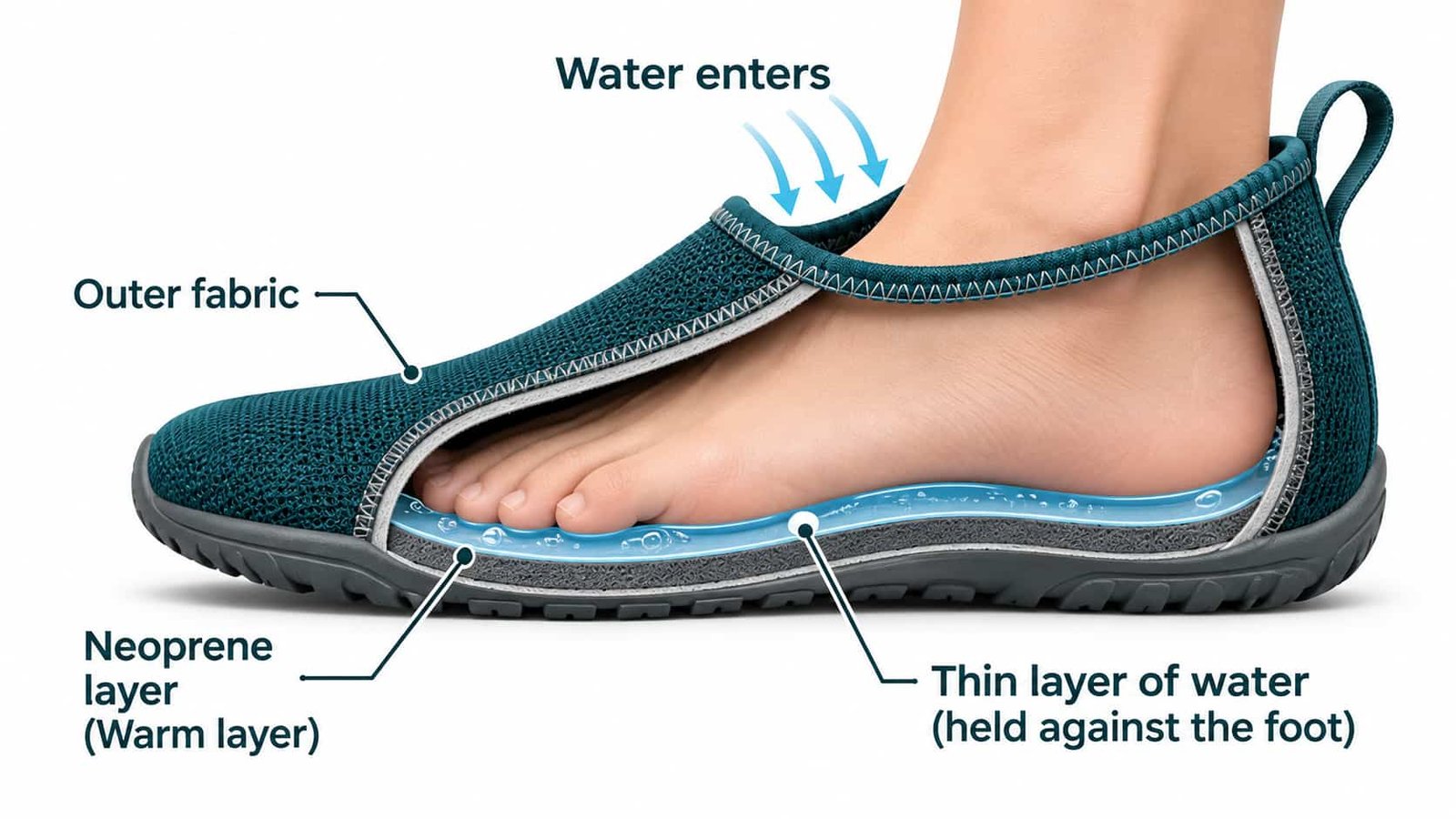
Neoprene is water-resistant rather than waterproof. The closed-cell foam itself does not absorb much water, but water can enter through the outer fabric, through seams and at the top of the shoe. Once inside, the water is held against the foot, which is where warmth comes from in cold conditions, since a thin layer of water is warmed by the body.
This is an important point for buyers. Neoprene does not keep the foot dry in the way a membrane boot does. It manages wet feet by keeping them warm. If you need a dry foot in heavy wet conditions, look at a waterproof shoe with a membrane and sealed seams, and check how waterproof shoes work and waterproof vs water resistant shoes.
Warmth, Comfort and Fit
Neoprene’s main strength is warmth in cold water. The foam traps heat, so feet stay warmer for longer than in a thin synthetic mesh. Many wearers also value the cushioning and the snug, flexible feel.
Fit matters more than it does with dry shoes. Neoprene stretches slightly and can feel loose when wet, so choose a snug fit that still allows for a sock if you plan to wear one. Too tight a fit can restrict circulation, which is uncomfortable in cold water. If you have circulation concerns or a medical condition, ask a doctor before spending long periods in cold water.
For more on how shoe fit and cushioning work, see insole vs midsole vs outsole.
Neoprene Compared with Other Water-Shoe Materials
| Feature | Neoprene | Quick-dry synthetic mesh | Rubber-only water shoe |
| Warmth in cold water | Good | Lower | Lower |
| Drying speed | Slower | Faster | Fast |
| Grip on wet rock | Depends on sole | Depends on sole | Often good |
| Water entry | Through openings and fabric | Passes through easily | Often low, depends on design |
| Stretch and fit | Stretches, snug | Varies | Often firm |
| Best for | Cold, wet, river work | Warm, fast-draining use | Reef, sand, quick wet use |
Neoprene is a trade-off. It warms you when cold but takes longer to dry. Quick-dry synthetics dry faster but do not insulate. Choose according to water temperature and how much drying time you have.
Durability and Wear
Neoprene is durable in use, but it is sensitive to some conditions. Sun exposure, heat, oils, certain solvents and salt residue can make it stiff, brittle or sticky over time. Repeated stretching can also weaken the foam or seams.
Common wear points are the heel, the toe and the seams, where rocks, grit and repeated flexing act on the material. The outsole can wear away on rock, so check tread depth regularly.
There is no reliable fixed lifespan for neoprene shoes. Use, storage, water type and care all affect how long a pair lasts. Store them dry, out of direct sun, and rinse them after each use in salt or silt water.
How to Clean Neoprene Shoes
Neoprene needs regular rinsing and gentle cleaning, especially after salt or silt exposure.
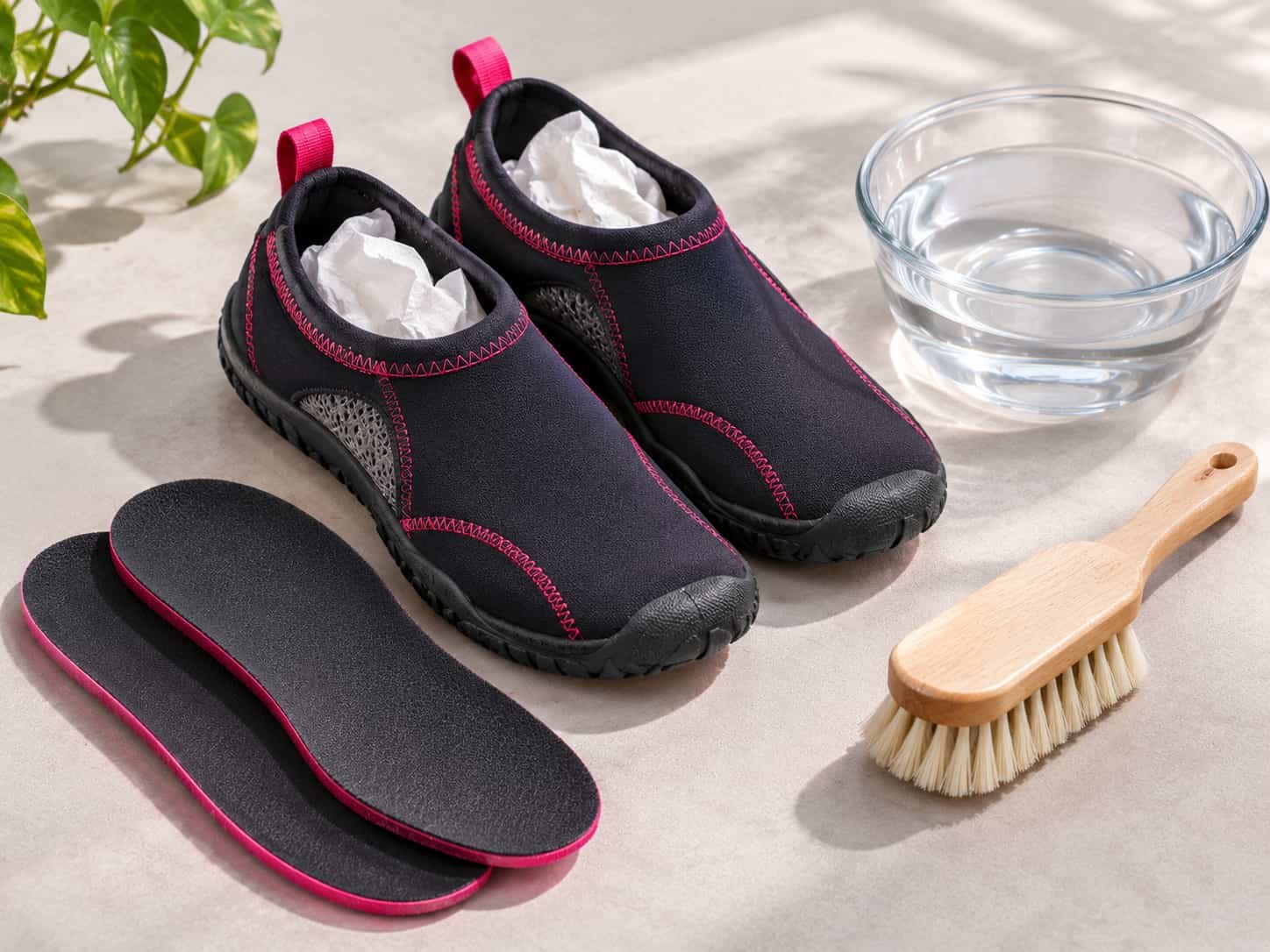
- Rinse straight after use. Use fresh water to remove salt, silt and grit before the material dries.
- Remove the insoles and laces. Wash them separately.
- Clean gently. Use lukewarm water with a little mild soap and a soft brush or cloth.
- Rinse thoroughly. Remove all soap, since residue can attract dirt.
- Dry fully using the method below.
Avoid hot water, bleach, strong solvents, petrol, paint thinners and harsh detergents. These can damage the foam and bonding. Do not put neoprene shoes in a tumble dryer, and keep them away from radiators and direct sun, which can make the material brittle.
For a broader routine across materials, see how to clean shoes and maintain them.
How to Dry Neoprene Shoes
Drying is where many problems start. A wet neoprene shoe left damp for days can develop odour, mildew and weaker bonding.
- Shake out water after rinsing and press out excess gently. Do not wring hard.
- Stuff the shoes with paper to help them hold their shape and absorb moisture.
- Air dry in a shaded, ventilated place, away from heat and sun.
- Replace the paper as it becomes damp, until the shoes feel dry inside.
- Dry insoles separately so they do not hold moisture against the foot.
Allow enough time for a full dry. The inside lining and foam can stay damp long after the surface feels dry, so check before wearing them again.
Who Should Buy Neoprene Shoes
| Your situation | Neoprene may suit you if | Consider another material if |
| Water temperature | You paddle, wade or swim in cold water | You mostly use warm water |
| Activity | You raft, kayak, wade or fish in rivers | You need quick-drying shoes for hot days |
| Grip | You pair the shoe with a good outsole | You need maximum grip on slick rock |
| Drying | You can rinse and dry thoroughly | You want a shoe that dries in minutes |
| Dry feet | You accept some wetting for warmth | You need fully dry feet in heavy rain |
| Budget | You want a warm water shoe at a moderate price | You want the lowest possible price |
For help narrowing options by use and fit, the shoe finder is a practical next step.
A practical rule: Buy neoprene shoes for cold-water and wet-wading use, and plan to rinse and dry them after every outing. For warm, fast-draining use, a quick-dry synthetic is usually the more comfortable choice.
Myths Worth Dropping
- “Neoprene is fully waterproof.” It is water-resistant. Water can enter through openings and fabric.
- “Neoprene keeps feet dry.” It keeps feet warm, not dry. The body warms the thin layer of water inside.
- “Neoprene shoes never need cleaning.” Salt and silt can damage the foam, so rinse after use.
- “Neoprene dries quickly.” It dries more slowly than quick-dry synthetics, so allow time.
- “Neoprene is the same as rubber.” Neoprene is a foam, while rubber soles are a separate outsole material.
Frequently Asked Questions
What is neoprene in shoes?
Neoprene is a closed-cell synthetic foam rubber, usually chloroprene-based. In shoes it is used for warmth and flexibility in water footwear, and it insulates well in cold water.
Is neoprene waterproof?
Not fully. Neoprene is water-resistant, and water can enter through the outer fabric, seams and openings. It keeps feet warm when wet rather than dry.
Do neoprene boots keep feet dry?
Generally no. They keep feet warm in cold water, but some water usually gets in. For dry feet in heavy wet conditions, choose a waterproof shoe with a membrane.
Is neoprene good for shoes?
It is good for specific water and cold-water uses, such as river and wading shoes. It is less suited to hot weather or dry-land walking, because it traps heat.
How do you clean neoprene water shoes?
Rinse off salt, silt and grit with fresh water, remove the insoles and laces, clean gently with lukewarm water and a little mild soap, rinse thoroughly, and dry fully in a shaded, ventilated place. Avoid hot water, bleach and tumble drying.
Should I wear socks with neoprene shoes?
It depends on the fit and the water temperature. Thin socks can add comfort and help with fit, but a thick sock can make the shoe too tight. Check the sizing guidance for the specific shoe.
Are neoprene shoes good for walking?
They can be comfortable for wet, rocky walking, but they are not ideal for long dry-land walks because they trap heat. For walking, look at a shoe designed for that use.
Why do neoprene shoes smell?
Smell usually comes from salt, silt, sweat and damp left inside the shoe. Rinsing after use and drying fully, with paper inside, reduces odour.
Final Thoughts
Neoprene is a closed-cell foam rubber that insulates well and suits river, reef and cold-water use. It is water-resistant rather than waterproof, so it warms the foot more than it keeps it dry. Rinse after use, dry thoroughly, and choose neoprene for cold, wet conditions rather than hot, dry days.
For the wider picture, start with the shoe materials guide, then compare TPU in shoes if you are looking at other synthetic sole and overlay materials.
External References
- Wikipedia, “Neoprene” (the polymer, its foam form and uses): en.wikipedia.org/wiki/Neoprene
- Wikipedia, “Wetsuit” (neoprene insulation and water entry in cold-water wear): en.wikipedia.org/wiki/Wetsuit
- Wikipedia, “Closed-cell foam” (why trapped gas cells insulate): en.wikipedia.org/wiki/Closed-cell_foam


