

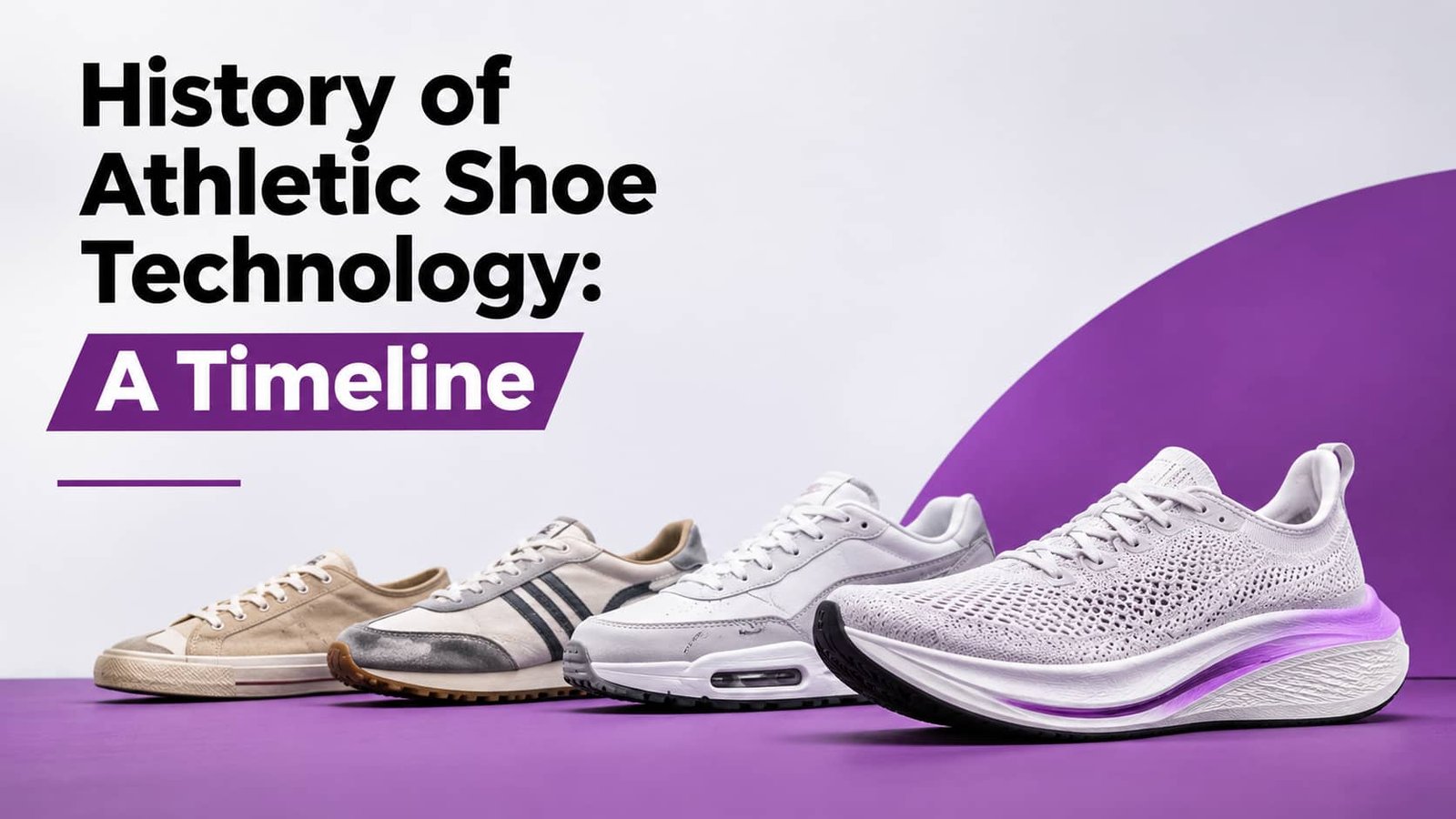
History of Athletic Shoe Technology: A Timeline
Footwear Technology Guide | Updated November 2026
Summarise This Guide with AI
Submit the prefilled request in the assistant of your choice. The assistant reads this page only after you submit it. The summary covers the key shoe technologies, the research on carbon plates, and the World Athletics rules.
Shoe technology developed in stages. Early rubber soles made sneakers practical in the late 1800s, grid soles and Air cushioning changed comfort from the 1970s, and carbon-plated racing shoes arrived in the late 2010s. Each shift solved a problem runners and players had, and each raised new questions about performance, cost and fairness.
Key Takeaways
- Most shoe technologies began as answers to a specific problem: grip, cushioning, or energy return.
- The rubber sole was the first big step that made sneakers useful for sport, not just for casual wear.
- Visible cushioning, such as the Nike Air Max 1, changed how shoes looked as well as how they felt.
- Carbon-plated racing shoes raised the most debate, and independent research has found that the foam and shape matter as much as the plate.
- World Athletics now limits sole thickness and the number of rigid plates in competition shoes, which shows how technology and sport rules interact.
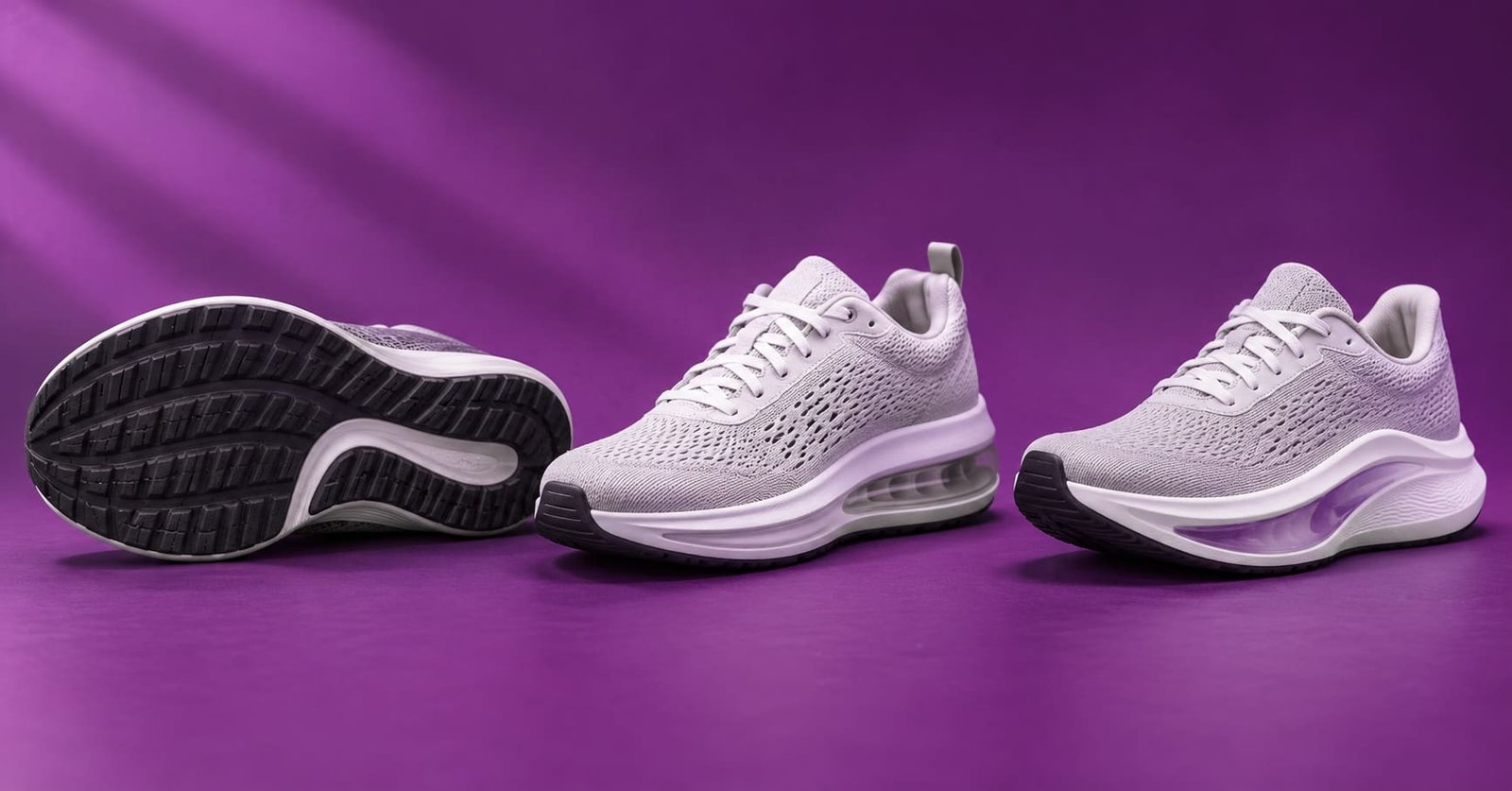
Before the Air: Rubber, Canvas and the First Sneakers
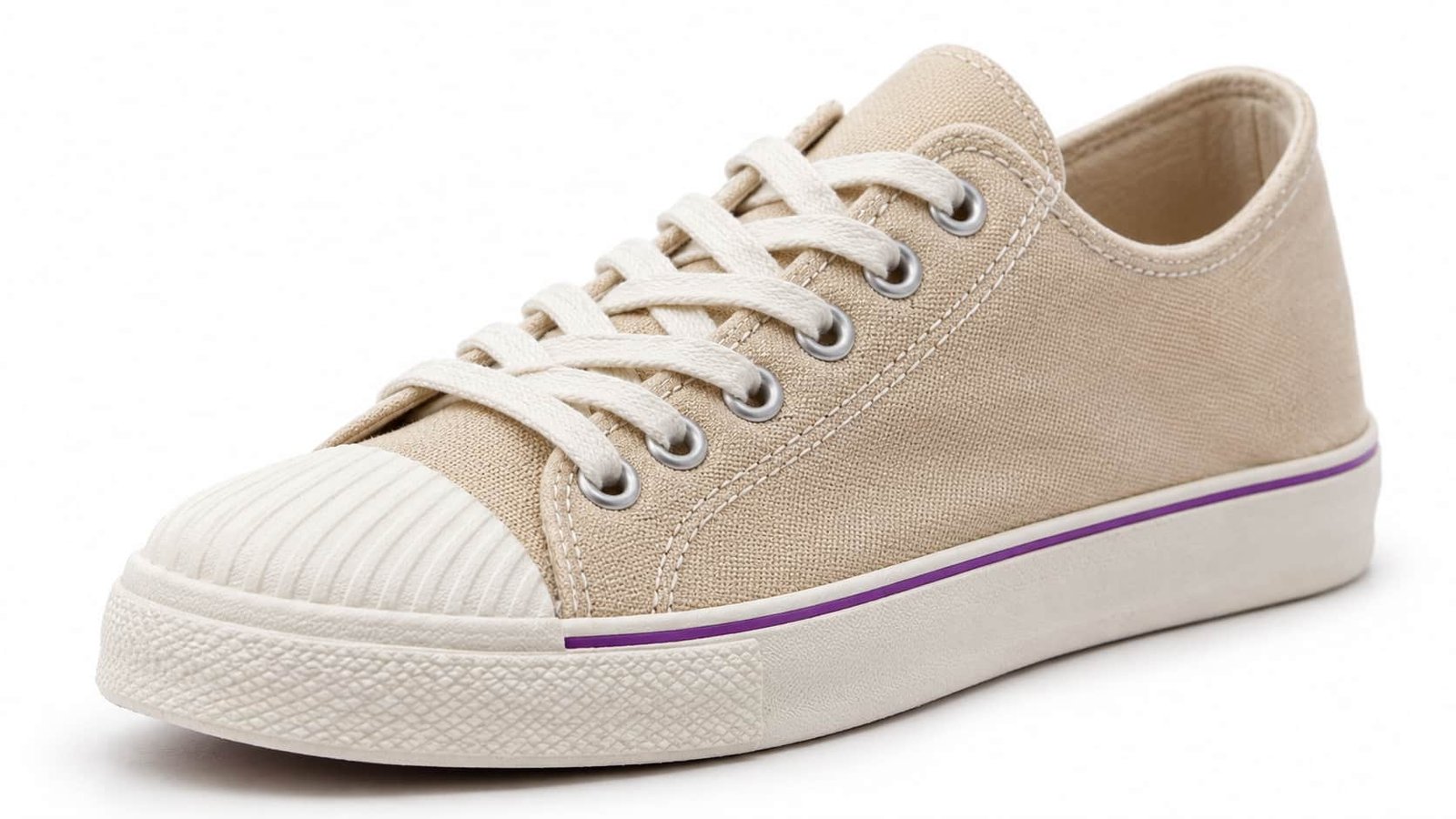
Long before brands raced each other on cushioning, the sneaker was a practical idea: a canvas upper with a rubber sole that made quiet, grippy footwear. The name is often linked to the rubber soles themselves, which made little noise on floors compared with leather shoes.
The earliest shoes of this kind were called plimsolls in Britain, a name that came from the Plimsoll line marking the safe waterline on ship hulls. In the United States, the U.S. Rubber Company began selling modified versions in 1892, with thicker rubber soles and laces. Britannica’s history of sneakers traces this early step as the beginning of the sneaker as a sport and everyday shoe. You can read its overview at Britannica’s history of sneakers.
These early soles were simple by today’s standards. Their main technology was vulcanised rubber, which gave a durable, non-slip surface on indoor courts and playing fields. The shoe did not do much to cushion the foot. That gap became the focus of the next hundred years of design.
For background on the parts of a sneaker, the guide to the anatomy of a shoe explains the upper, midsole and outsole. The shoe materials pillar covers how rubber and foam are chosen today.
The Grid Sole and the Coach’s Experiment
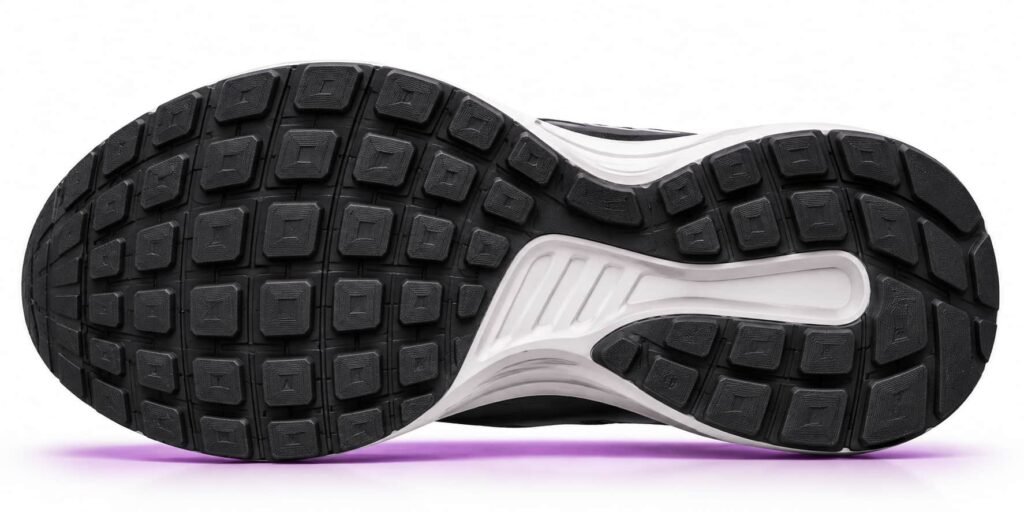
By the 1970s, running had grown rapidly, and the standard flat-soled trainer was no longer enough for many athletes. One of the best-known steps came from the Nike co-founder and coach Bill Bowerman. Britannica notes that the Nike Waffle Trainer, released in 1974, had a grid sole that Bowerman developed by experimenting with his wife’s waffle iron.
The grid pattern was a practical improvement in traction and weight. Rubber lugs were placed in a pattern that gripped the ground while leaving open areas to reduce weight. It was a clear example of solving a performance problem with a shape rather than a new material. The waffle sole also showed how a small, low-cost change could create a visible identity for a shoe.
Grid soles influenced later outsole designs, but they did not change how much a shoe cushioned the foot. For that, the industry needed a new idea about the midsole.
Air Arrives: From Tailwind to Visible Cushioning
The story of Nike Air is one of the most documented in footwear history. Nike’s own archive describes Frank Rudy, an engineer who had worked on pressurised systems and proposed a sealed, gas-filled cushioning unit. Rudy first applied the technology to ski boots, and then turned his attention to running shoes. Nike’s archive also notes that early work on visible Air began around 1980, and that prototypes were not ready for the market at first.
The first Air shoe to reach runners was the Nike Tailwind. Its Air unit was encased in foam, which meant wearers could not see the cushioning. Nike’s own Air history notes that some athletes doubted the technology because they could not see it working. The Tailwind also had production problems, and the sole reportedly became fragile in temperature changes. The early lesson was clear: a new technology needs to be both proven and practical.
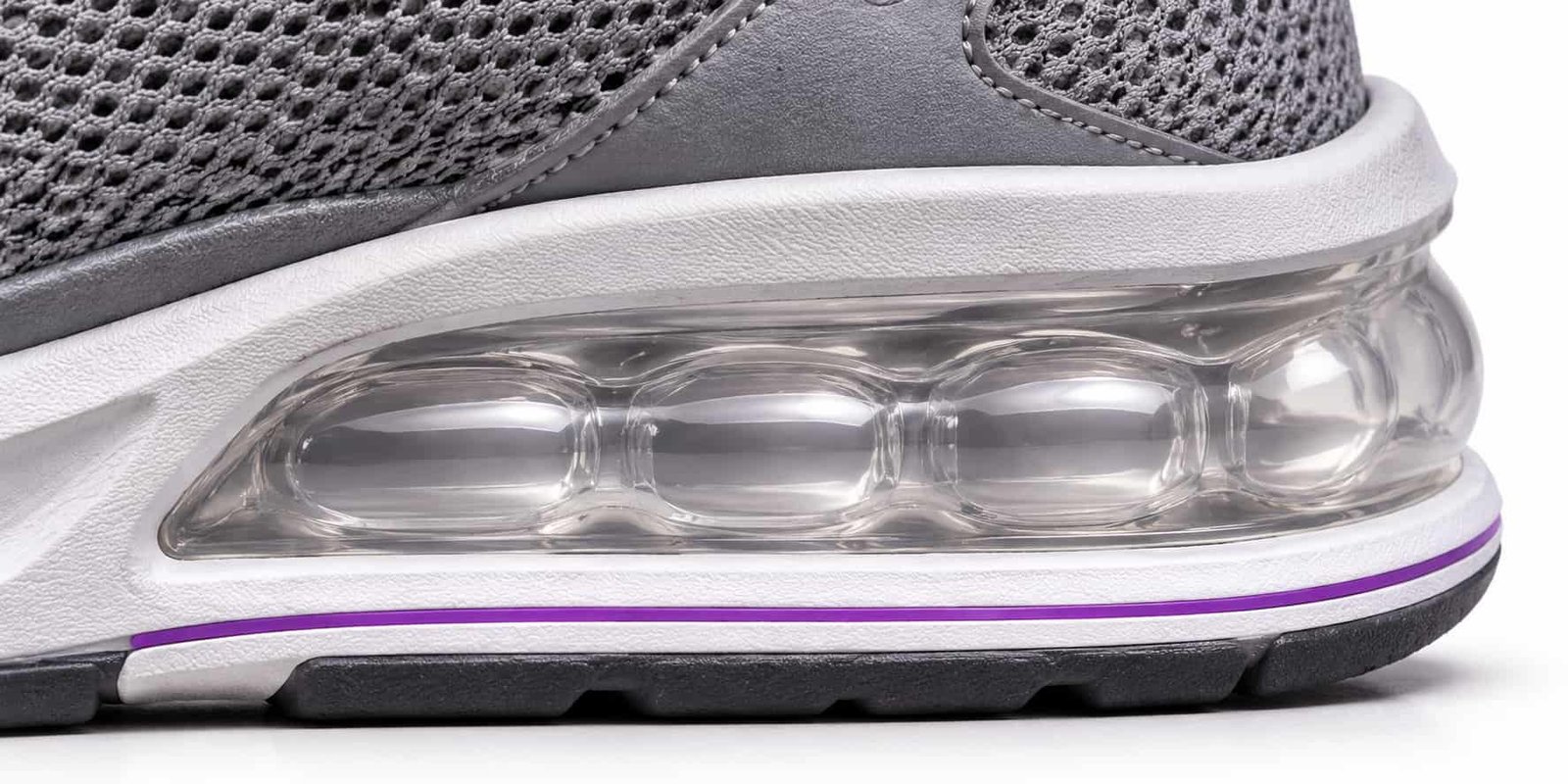
The breakthrough came with the Air Max 1. Nike’s archive describes how the design team, led by the designer Tinker Hatfield, drew on the exposed structure of the Centre Pompidou in Paris to justify a midsole that showed its Air unit. The idea was not only to cushion the foot but to make the cushioning visible. The Air Max 1 released on March 26, 1987, and it turned a technical feature into a design signature. You can read Nike’s account of the design at Nike’s history of the Air Max 1.
The Air Max 1 matters for two reasons. It proved that cushioning could be a selling point people could see and understand. It also linked performance technology to culture in a way few shoe features had before. Later Air models, from the Air Max 90 to the Air Max 270, built on that foundation, but the 1987 model remains the reference point.
Air is not the only cushioning technology. Foam compounds, gels and other systems each have trade-offs in weight, feel and durability. For a closer look at the foam side, read running shoe foam and EVA foam explained.
The Carbon Plate Era
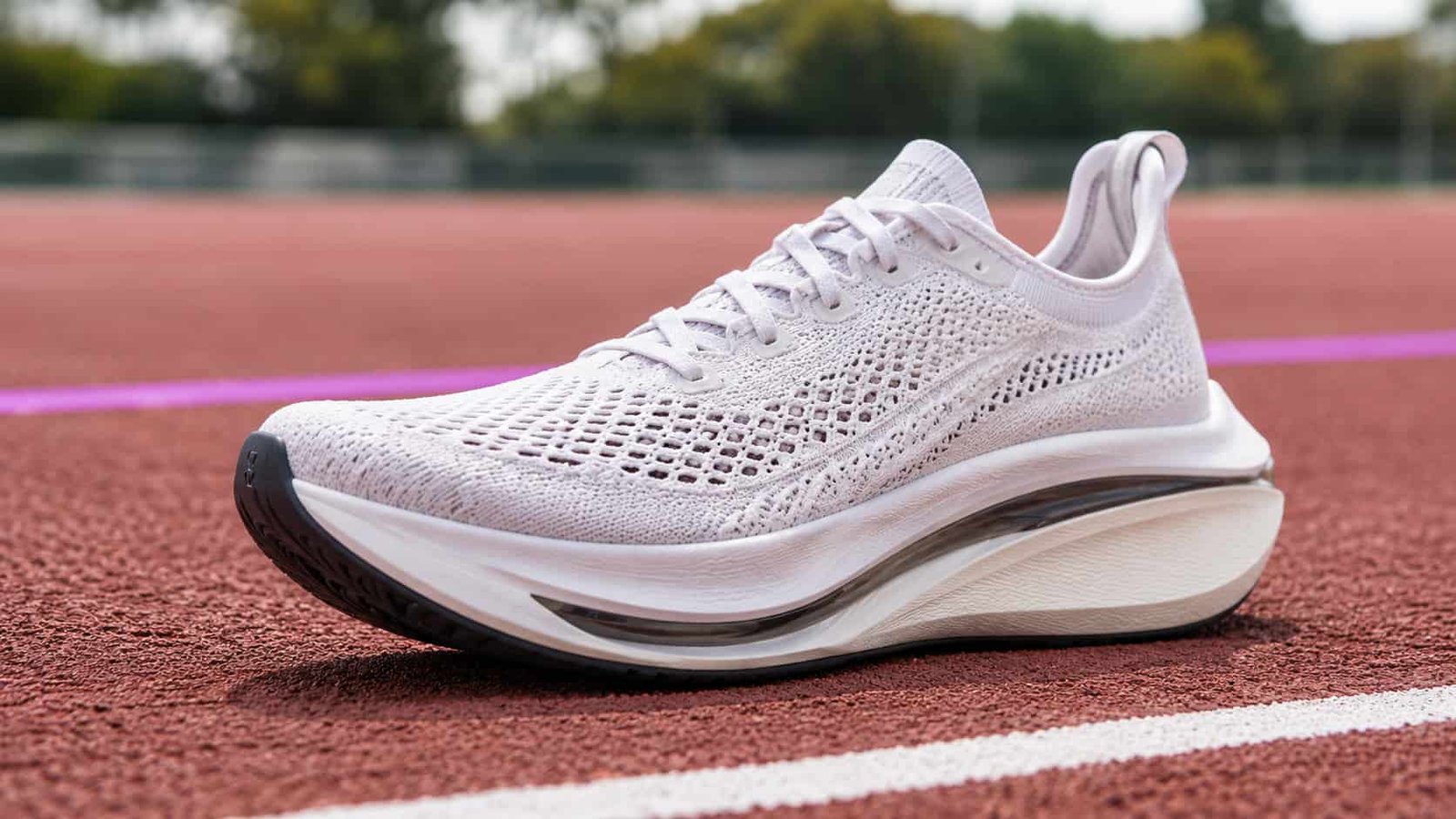
The most debated shoe technology of the last decade is the carbon-plated racing shoe. The idea is simple to describe: a thick, resilient foam midsole combined with a stiff, curved plate, often carbon fibre, that helps the foot roll forward and return energy with each stride. The reality is more complex, and the research shows why.
The Nike Vaporfly 4% was introduced in 2017, and it quickly became the reference for marathon racing shoes. A 2019 randomised crossover study in Sports Medicine found that the Nike Vaporfly improved running economy by about 4.2% compared with a marathon racing shoe, and by about 2.6% compared with a track spike. Running economy is the amount of oxygen a runner uses at a given pace, so a lower figure means more efficient running. You can read the study summary at PubMed.
Later research looked at where those gains come from. A 2022 study in the Journal of Sport and Health Science tested Vaporfly shoes with the carbon plate cut in the forefoot. Running economy did not significantly change between the intact and cut versions, which suggests the plate’s stiffening effect on the forefoot plays a limited role in the energy savings. The authors concluded that the savings likely came from a combination of foam, geometry and the interaction between them. The full study is available through PubMed Central.
This is the key lesson for readers. Carbon plates are part of the story, but the midsole as a whole is what changes the energy return. A single feature rarely explains a shoe’s performance on its own. Readers comparing super shoes should look at the complete stack, not only the plate.
It is also worth noting the difference between research done by independent labs and tests run by a brand. Some presentations from manufacturer labs were not peer reviewed, and the company’s public claims went further than the independent data at times. Use peer-reviewed sources when you want to understand the evidence, and treat manufacturer claims as a starting point.
For a deeper look at how plates and foam work together, the guide to carbon plate running shoes explains the design choices in more detail.
Rules Catch Up With Technology
Once carbon-plated shoes became common in elite racing, governing bodies had to decide what counted as fair. World Athletics, the international federation for athletics, responded in stages.
On 31 January 2020, World Athletics announced that competition shoes must not contain more than one rigid embedded plate or blade. The same announcement limited the sole thickness for road shoes, and it introduced a moratorium on shoes that did not meet the requirements. You can read the original announcement at World Athletics’ press release on modified shoe rules.
On 28 July 2020, World Athletics amended the rules again. The updated table set a maximum sole thickness of 40mm for road events and 25mm for cross country, and it set lower limits for track events, including 20mm for some track distances. The amendment also linked shoe use to availability, so a shoe must have been on sale for a set period before athletes can use it in competition. The full update is at World Athletics’ press release on shoe technology and Olympic qualification.
These rules do not ban the technology. They set limits on thickness and plate count, and they require shoes to be available to all athletes. The aim is to balance innovation with fairness, and the rules are reviewed as technology changes. For readers, the rules are a useful reference point. A shoe that meets the rule can still be a high-performance shoe for everyday running, because the limits apply to competition, not to what you can buy.
Timeline at a Glance
| Period | Technology | What it solved | Reference |
|---|---|---|---|
| Late 1800s | Rubber-soled canvas sneakers | Grip and quiet movement | Britannica |
| 1974 | Grid sole (Waffle Trainer) | Traction and lower weight | Britannica |
| Late 1970s | Air cushioning (Tailwind) | Shock absorption in a sealed unit | Nike archive |
| 1987 | Visible Air (Air Max 1) | Cushioning shown as design | Nike archive |
| 2017 | Carbon-plated racing shoe (Vaporfly 4%) | Energy return and running economy | Sports Medicine, 2019 |
| 2020 | World Athletics shoe rules | Sole thickness and plate limits in competition | World Athletics |
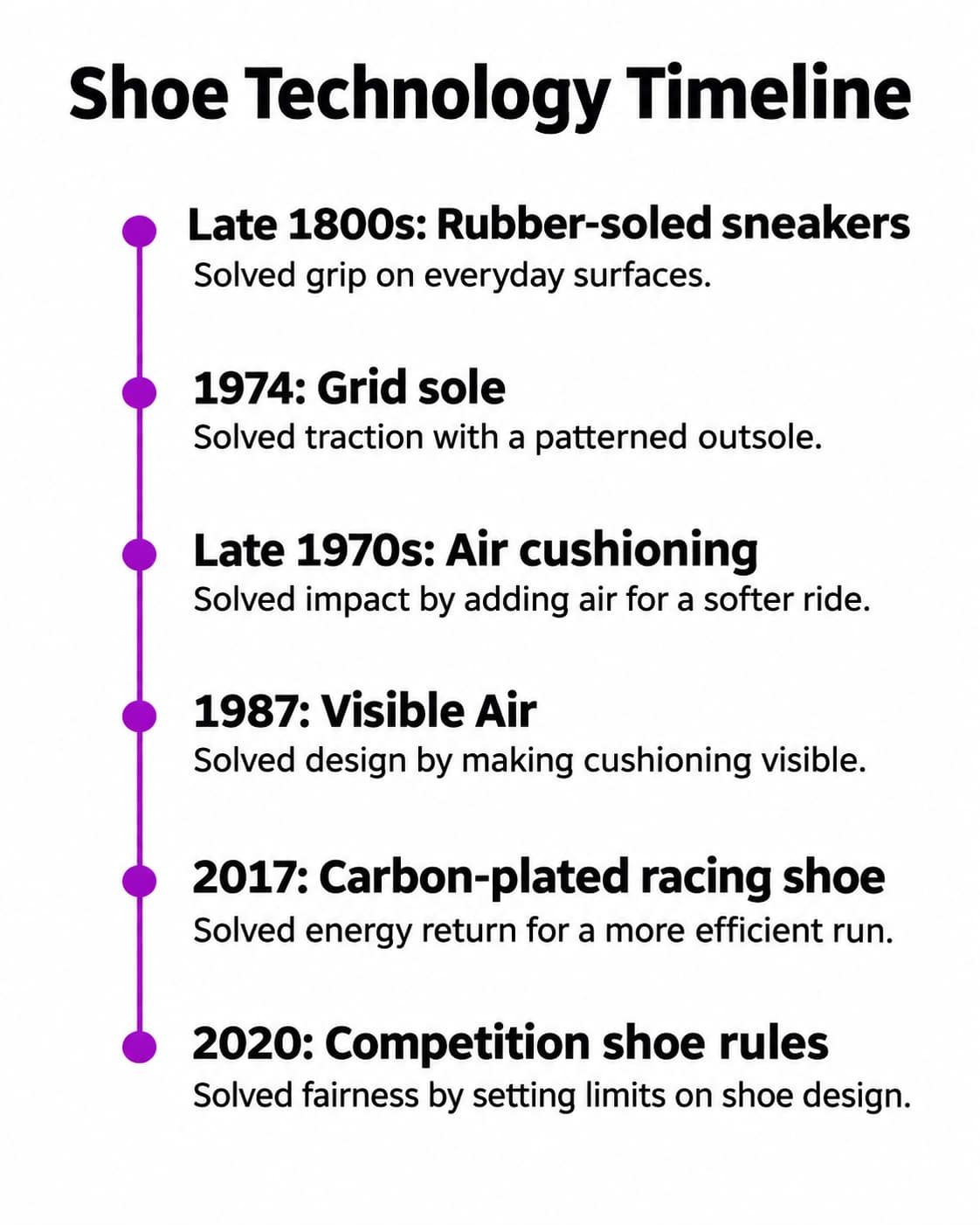
The table shows that each era solved a different problem. Early sneakers were about grip. Grid soles were about traction and weight. Air was about cushioning. Carbon plates were about energy return. Rules followed when a technology affected fairness.
What the Timeline Teaches About Performance and Comfort
Readers often assume that newer always means better. The timeline shows that is not always true. The Air Tailwind was a breakthrough but had production problems. Visible Air was a design breakthrough but was not the same as a better running shoe for every runner. Carbon plates improved running economy in research, but independent studies show the foam and geometry matter as much as the plate.
Performance and comfort are not the same thing. A shoe can lower the energy cost of running for some athletes at a given pace and still feel stiff or unsuitable for a casual walker. The results of lab studies describe averages across a group, and they may not predict how a shoe will feel on your foot.
There is also a practical question about durability. Foams and plates change over time, and their properties can shift with use and temperature. Readers should look for information on how long a shoe keeps its cushioning, not only its initial performance. The guide on how long running shoes last covers the factors that affect wear.
Finally, the history of shoe technology is a story of trade-offs. Each innovation brought new benefits and new costs, from weight and price to durability and fairness. Understanding the sequence helps you judge new claims more carefully.
Practical Decision Guide
The right technology depends on how you use your shoes.
- Everyday walkers: Focus on fit, comfort and a durable outsole. Early-era designs such as grip-focused soles and modern cushioned trainers may suit daily use better than racing shoes.
- Recreational runners: A cushioned trainer with a stable midsole is often a good place to start. Carbon-plated shoes are designed for speed and may feel firm for shorter, slower runs.
- Competitive runners: Check the sole thickness and plate count against the rules for the events you enter. Research the specific model’s midsole, and try it at race pace where possible.
- Budget-conscious buyers: Newer technology is not always more expensive, and older designs can still be practical for some uses. Compare comfort and durability rather than the year a technology was introduced.
- Anyone with foot or joint concerns: Individual needs vary. A physiotherapist, podiatrist or sports medicine clinician can advise on cushioning and support for your situation.
Common Myths About Shoe Technology
Myth: The carbon plate is the only reason super shoes are fast. Research suggests the foam, geometry and plate work together. Removing the plate did not significantly change running economy in one study.
Myth: Visible Air means better cushioning. Visible Air is a design feature. The cushioning depends on the unit, the foam around it and the rest of the shoe.
Myth: Shoe technology has no rules. World Athletics sets limits on sole thickness and rigid plates for competition, and it requires shoes to be available for a set period before use.
Myth: Newer shoes always work better for everyone. Lab studies report averages. Your feet, weight, pace and running style affect how a shoe feels and performs.
Myth: Lab results tell you the full story. Studies have limits. Manufacturer studies, independent research and real-world feel can give different pictures of the same shoe.
Frequently Asked Questions
When were sneakers first made?
Rubber-soled canvas shoes were made in the late 1800s. Britannica notes that U.S. Rubber began selling modified plimsolls with thicker soles and laces in 1892.
What was the Waffle Trainer?
The Nike Waffle Trainer, released in 1974, had a grid sole that Bill Bowerman developed by experimenting with his wife’s waffle iron. Its grid pattern improved traction and reduced weight.
Who invented Nike Air?
Nike’s archive credits Frank Rudy, an engineer who proposed a gas-filled cushioning unit to Nike. Nike’s Air technology was developed with input from many people over several years.
What was the first Air Max?
The Nike Air Max 1 released on March 26, 1987. It was designed by Tinker Hatfield and was the first Nike shoe to show its Air unit clearly.
What is a carbon plate in a running shoe?
It is a stiff, usually curved plate, often made from carbon fibre, embedded in the midsole. It is designed to help the foot roll forward and return energy with each stride. Research suggests it works together with the foam and shape of the midsole.
Are carbon-plated shoes allowed in competition?
World Athletics allows shoes that meet its rules, which include limits on sole thickness, a limit of one rigid embedded plate, and an availability requirement. Check the current rules for the events you plan to enter.
Do carbon-plated shoes improve running economy?
A 2019 randomised crossover study in Sports Medicine reported improvements in running economy for the Nike Vaporfly compared with other shoes. Later independent research found the plate’s stiffness played a limited role, and the foam and geometry mattered more.
How do I choose a running shoe with the right technology?
Start with fit, comfort and your running goals. Consider the midsole’s cushioning and stability, and try shoes for a few runs before deciding. A professional fitter or clinician can help if you have foot or joint concerns.
Conclusion
Shoe technology moved from grip to cushioning to energy return, and each step solved a real problem for athletes and everyday wearers. The sequence also shows that newer does not always mean better for every runner, and that rules are part of how technology is shaped.
The most useful next step is to match the technology to your needs. Start with the anatomy of a shoe to understand the parts, then read the deeper guides on carbon plate running shoes and shoe brand technologies before you choose. For the wider materials picture, see the shoe materials pillar.
Sources
- Britannica. History of sneakers. https://www.britannica.com/topic/history-of-sneakers
- Nike. The history of the Air Max 1, Department of Nike Archives. https://www.nike.com/gb/a/air-max-1-history
- Nike. Never Done Imagining: the power of Air, Department of Nike Archives, 18 August 2025. https://www.nike.com/ca/a/never-done-imagining-power-of-air
- Hoogkamer, W. et al. Randomized crossover study on running economy in marathon racing shoes versus track spikes. Sports Medicine, 2019; 49(2):331–342. https://pubmed.ncbi.nlm.nih.gov/30374945/
- Whiting, C. S., Hoogkamer, W., and Kram, R. Longitudinal bending stiffness does not affect running economy in Nike Vaporfly shoes. Journal of Sport and Health Science, 2022; 11(3):285–292. https://pmc.ncbi.nlm.nih.gov/articles/PMC9189697
- World Athletics. World Athletics modifies rules governing competition shoes for elite athletes, 31 January 2020. https://worldathletics.org/news/press-release/modified-rules-shoes
- World Athletics. World Athletics amends rules governing shoe technology and Olympic qualification system, 28 July 2020. https://worldathletics.org/news/press-release/shoe-technology-rules-tokyo-qualification-roa


