

What Is Genuine Leather? Meaning, Quality, and How to Judge It
Editorial Guide | Footwear Materials |
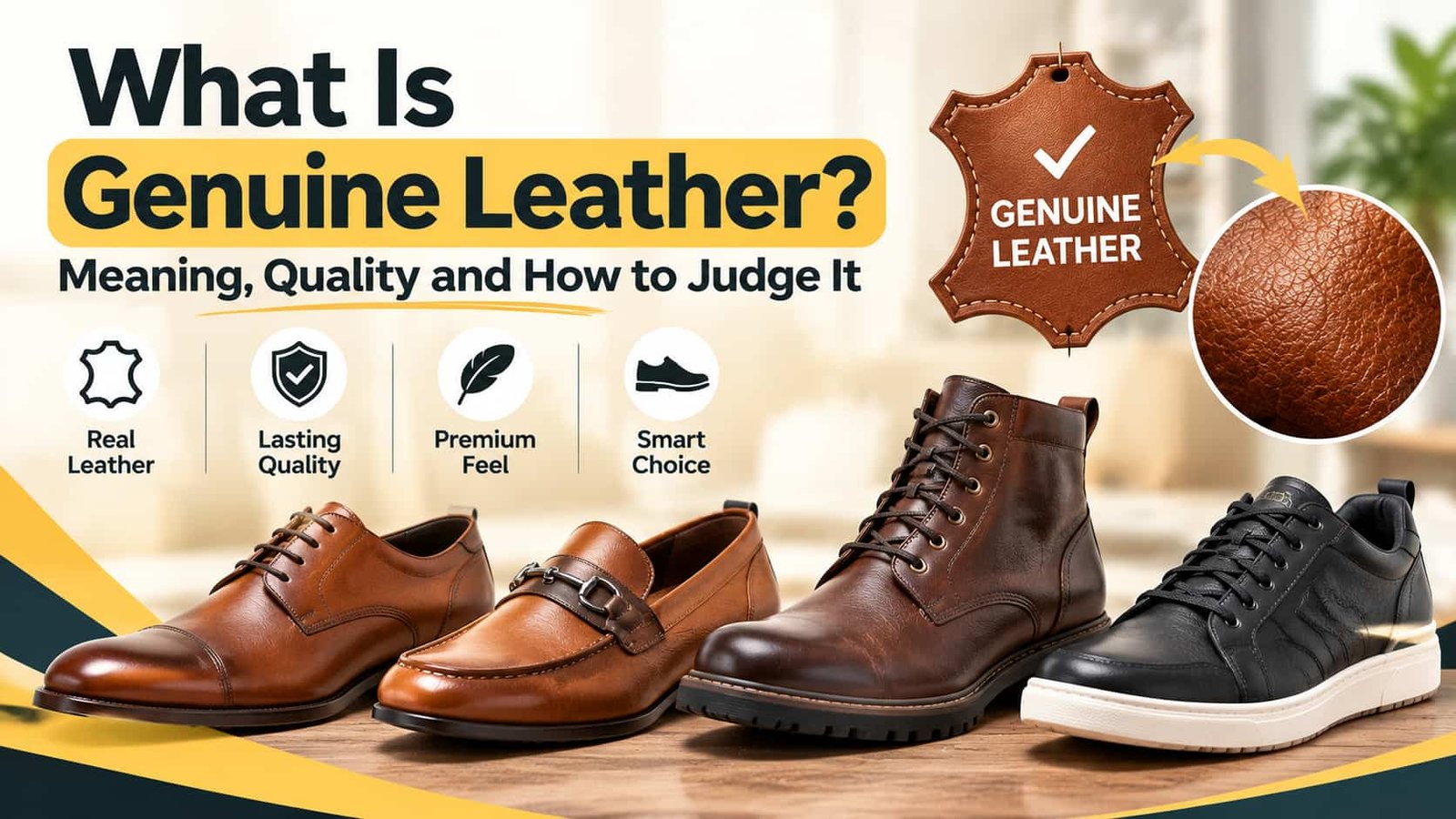
Genuine leather is real leather made from animal hide, as opposed to synthetic or bonded materials. The term does not describe a quality grade, so it can cover anything from a high-quality top layer to a lower split of the hide. Judge a shoe by its grade, finish and construction, not by the word “genuine” alone.
Key Takeaways
- “Genuine leather” means real leather, not a quality grade. It confirms the material is animal hide but says nothing about which layer was used.
- The lower layers of the hide are often what gets labelled “genuine.” These split layers are usually weaker and less uniform than grain leather.
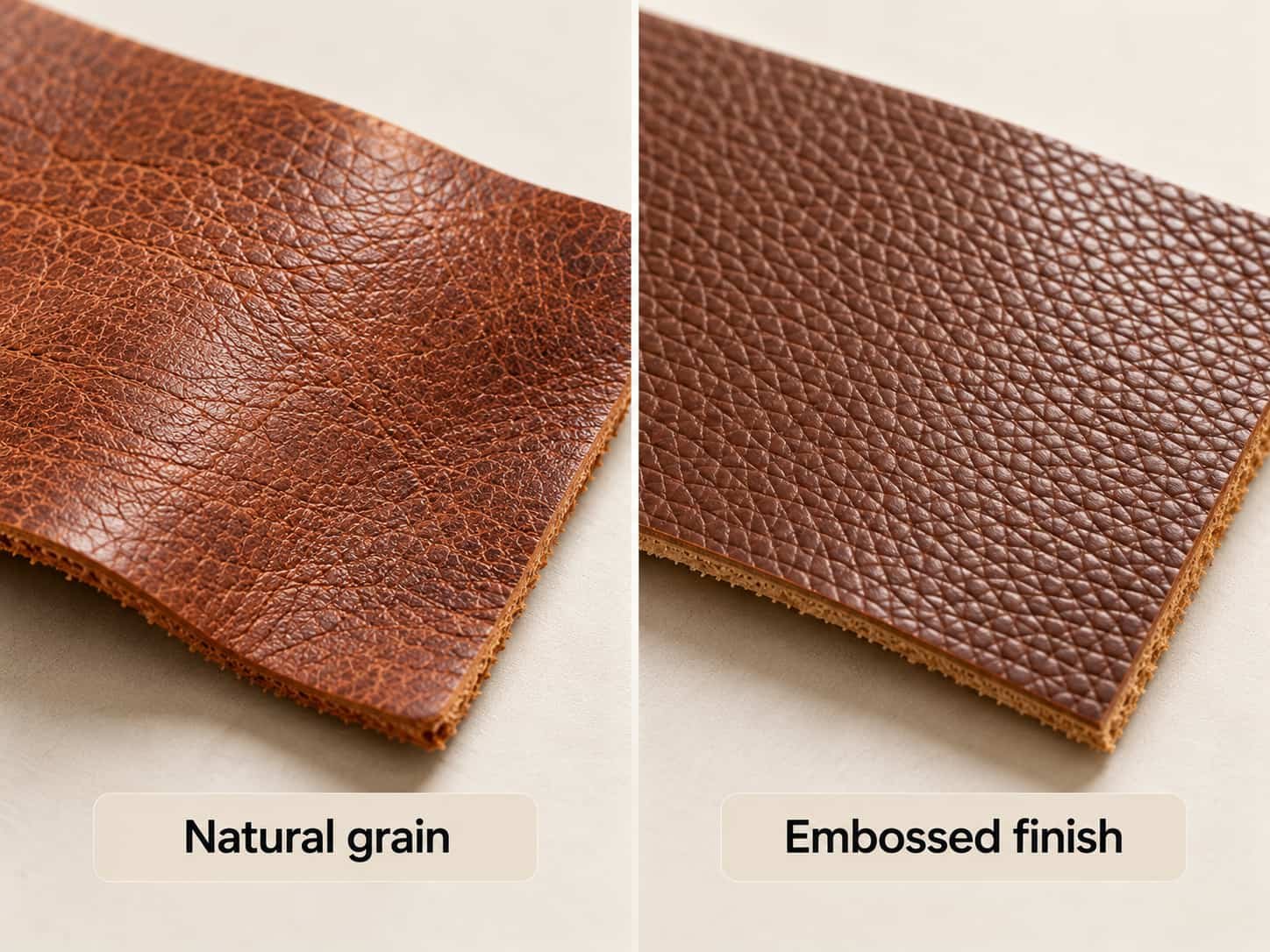
- Finishes can hide the grade. A coated or embossed surface can look like a premium leather even when the underlying layer is a split.
- Labels and marketing use the term differently. A brand’s “genuine leather” may not match what a buyer expects.
- Check the grade, finish and construction before you judge value.
What the Term Means
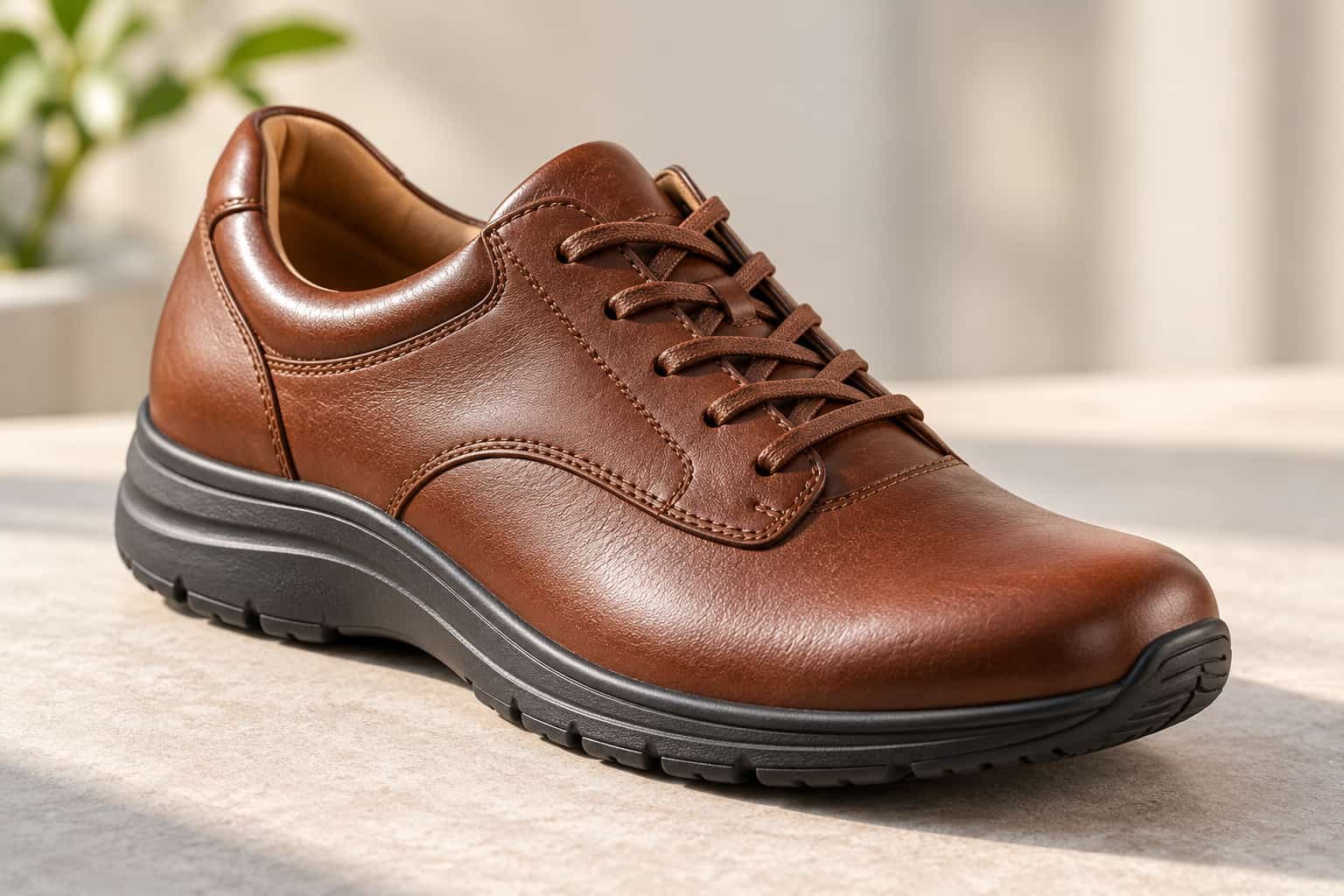
“Genuine leather” is a descriptive phrase, not a formal grade. In everyday use it means the product is made from real leather rather than from plastic-based materials such as polyurethane (PU) or polyvinyl chloride (PVC), which are often sold as “faux,” “vegan” or “synthetic” leather.
The phrase tells you the material is animal hide that has been tanned, which is what distinguishes it from synthetic substitutes. It does not tell you which part of the hide was used, how much it was processed, how thick it is, or how well it was finished. Two shoes labelled “genuine leather” can differ greatly in feel, strength and lifespan.
For that reason, treat “genuine” as the start of your check, not the end. It confirms the category and leaves the quality question open.
If you are new to leather in shoes, our shoe materials guide explains where leather fits alongside textiles, synthetics and sole materials.
Where Genuine Leather Comes From in the Hide
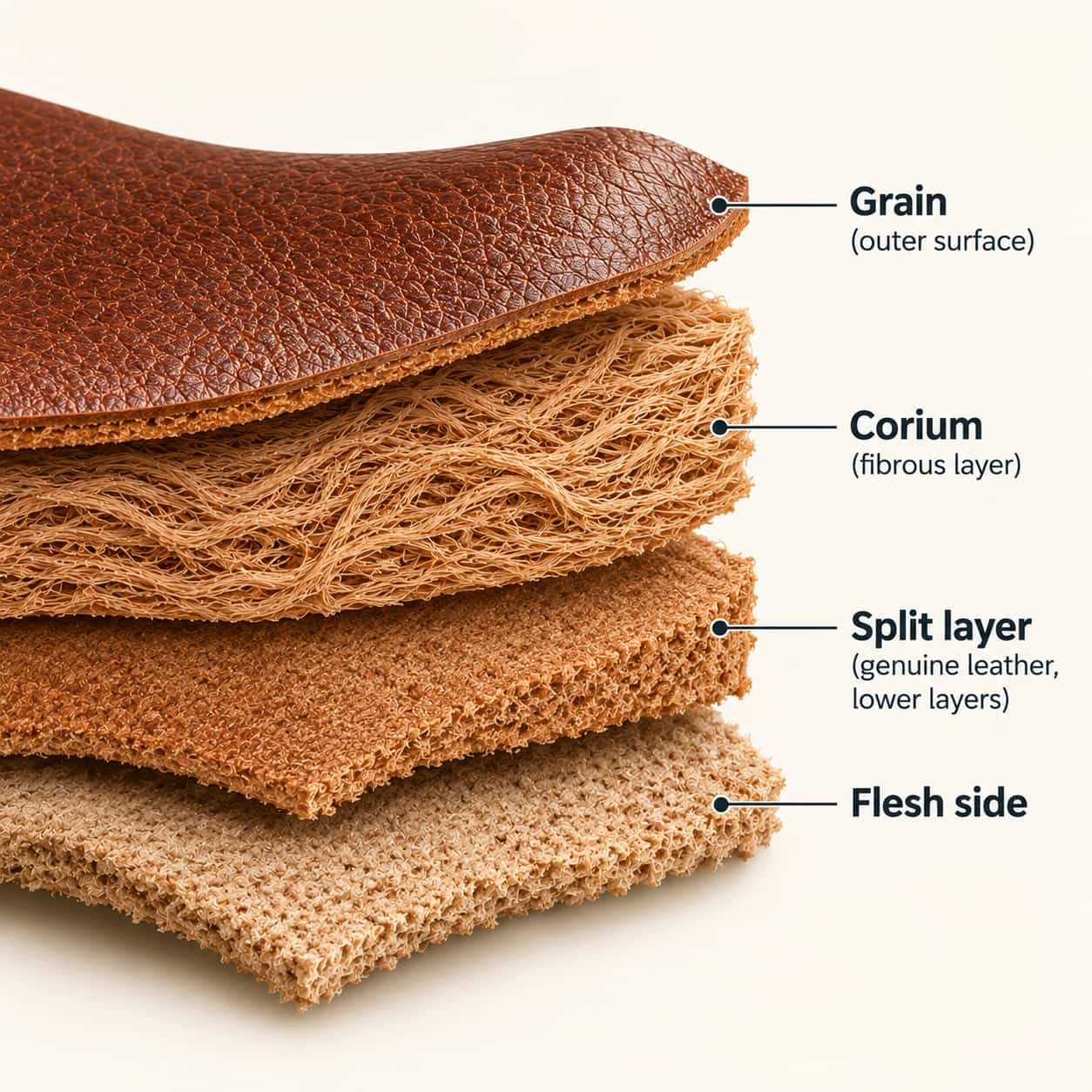
A hide has layers. The outermost is the grain, which carries the natural pores and surface texture. Beneath it is the corium, a dense fibrous layer that gives leather most of its strength. The lowest layer is the flesh side, which is less refined.
Leather is often separated into two broad parts. The grain layer, which is the top part of the hide, can be processed as full grain, top grain or corrected grain, depending on how much of the surface is removed or treated. The lower part, which is split from the hide during processing, is usually called split leather.
“Genuine leather” can describe either part, and the label does not say which. That is the core issue. A split layer is still real leather, but it lacks the strength and surface consistency of the grain. Manufacturers often coat or emboss split leather so that it looks like a finished grain surface.
Why the Label Can Mislead
Shoppers often assume “genuine leather” sits near the top of the quality scale. In practice it is frequently used for mid-level or lower-cost leather, where the surface has been coated or embossed to look like a higher grade.
Several things make the term confusing:
- It is not a grade. A product can be genuine leather and still be a low-quality split.
- Finishes change the appearance. Coatings and embossing can make split leather look like full grain at a glance.
- Marketing language varies. Brands use “genuine,” “real,” “premium” and “natural leather” in different ways, and none of these words is a standard.
The practical lesson is that the word on the label tells you the category, while the product description, the finish and the build tell you the quality. Our article on how to tell if shoes are real leather covers the checks that help you decide.
Genuine Leather Compared With Other Leathers
The table below compares genuine leather with the grades most often confused with it. These are typical relationships, not fixed rules, and results vary by tannery and brand.
| Type | What It Is | Surface | Typical Use |
|---|---|---|---|
| Full Grain | Outer grain kept with minimal processing | Natural pores and marks | Premium shoes and boots |
| Top Grain | Outer layer after sanding and finishing | Even, often coated | Mid-range dress and casual shoes |
| Genuine Leather (Split or Lower Layers) | Lower layers of the hide, often finished or embossed | Coated or patterned, less natural | Lower-cost shoes and accessories |
| Bonded Leather | Leather fibres pressed with a binder | Uniform, not true grain | Low-cost products, linings and trims |
| Synthetic (PU or PVC) | Plastic-based material | Uniform, not leather | Budget and vegan footwear |
Genuine leather sits in a wide middle band. Its quality can range from close to top grain to close to bonded material, which is why the grade and finish matter more than the category name.
For a fuller comparison of the two most confused grades, see full grain vs top grain
What Affects Quality and Durability
Because “genuine” does not set a standard, judge a shoe on these points.
Grade and layer. Grain layers generally offer more strength and breathability than split layers. A shoe that does not say which layer it uses leaves you guessing.
Thickness. Thicker leather is often more robust, but thickness alone does not guarantee quality.
Finish. A thick, well-bonded coating protects the surface. A thin or poorly bonded finish can crack or peel, especially at the flex points of the vamp and toe.
Construction. A stitched or welted sole can be repaired, which extends the life of the upper. A glued sole usually cannot be resoled, which often shortens the life of the whole shoe.
Care and conditions. Repeated soaking, direct heat and neglect shorten the life of any leather. Regular cleaning and conditioning help.
Lifespan varies widely, and no reliable fixed number of years applies to genuine leather in general. Treat any single figure you see online as unverified.
Regulatory Context
European Union. Directive 94/11/EC on labelling of footwear materials requires shoe labels to indicate the main materials of the upper, the lining and sock, and the outer sole. The EU rules use material categories such as leather, coated leather and other materials.
United Kingdom. The Footwear (Indication of Composition) Labelling Regulations 1995 mirror the EU approach for footwear sold in the UK.
United States. The Federal Trade Commission’s Guides for Select Leather and Imitation Leather Products (16 CFR Part 24) cover footwear and address misleading claims about leather and imitation leather. The guides relate to how products that are not leather are described, and they are the most relevant reference for the “genuine” wording.
Because these rules and their interpretation change, consult the official text rather than relying on any summary, including this one. This article does not offer legal advice.
How to Check a Label or Listing
Use these steps to judge a shoe labelled “genuine leather”:
- Read the material breakdown. Look for the upper, lining and sole materials on the label or in the product description.
- Look for a grade term. Phrases such as “full grain,” “top grain” or a specific layer name are more informative than “genuine” alone.
- Check the finish. Heavy embossing or a glossy coating can hide the underlying grade. A natural-looking surface with visible variation often suggests a higher grade, though this is not conclusive.
- Inspect the construction. A stitched or welted sole is usually a better sign of repairability than a glued sole.
- Ask the seller or brand. A reputable brand should be able to tell you the leather type and layer. Vague answers are a reason for caution.
- Compare price with claims. A very low price for a “genuine leather” shoe may signal a lower-grade split leather with a finish.
No single check is conclusive, so use several together.
Caring for Genuine Leather Shoes
Care depends on the finish and the grade, so these general steps apply to most finished genuine leather:
- Brush off dust. Use a soft, dry cloth after wearing.
- Treat marks gently. Use a damp cloth and a mild leather cleaner. Test on a hidden area first.
- Dry at room temperature. Keep shoes away from radiators, hair dryers and direct sun.
- Condition lightly. Apply a thin layer of a conditioner suited to finished leather, then buff off the excess.
- Use shoe trees. They help the shoes hold their shape between wears.
Avoid soaking the leather, using harsh solvents, or drying the shoes on heat. These can crack the finish or stiffen the leather. For a full routine across materials, read how to clean shoes and maintain them.
Who Should Choose Genuine Leather
| Your priority | Genuine leather may suit you if… | Consider a higher grade if… |
| Budget | You want a real-leather look at a lower price | You want to keep shoes for years |
| Appearance | You are happy with a finished, uniform surface | You prefer natural grain character |
| Breathability | Your climate is mild | You live somewhere hot and humid |
| Repairability | The sole is stitched or welted | The sole is glued and cannot be resoled |
| Care | You can clean and condition regularly | You want a more resilient surface |
For help narrowing options by use and preference, try the shoe finder.
Practical rule: if you are buying for daily wear and value the shoe’s appearance over its longevity, genuine leather with a stitched sole can be a reasonable choice. If you want maximum durability, prioritise a grain leather with a visible grade, a well-bonded finish and a repairable sole.
Common Myths
Myth: Genuine leather is the highest grade of leather.
It is a category, not a grade. It can describe high-quality grain or lower split layers.
Myth: “Genuine” means the shoe will last.
Lifespan depends on the layer, finish, construction and care, not on the word on the label.
Myth: Genuine leather is always better than synthetic.
Real leather has advantages in breathability and repairability, but a well-made synthetic can perform adequately for some uses, and a poor leather can wear out quickly.
Frequently Asked Questions
What is genuine leather?
Genuine leather is real leather made from animal hide, as opposed to synthetic materials such as polyurethane or PVC. The term confirms the material is leather, but it does not indicate which layer of the hide was used or how well it was finished. For that reason, it describes a category rather than a quality grade. Check the grade and construction before judging a shoe on the word alone.
Is genuine leather real leather?
Yes. In general use, “genuine leather” means the product contains real leather rather than a plastic-based substitute. However, the label does not say which part of the hide was used or how much it was processed. A product can be real leather and still be a lower-grade split layer with a coated finish.
Is genuine leather good quality?
It can be, but quality varies widely. Genuine leather may come from the grain or from lower split layers, so two shoes with the same label can perform very differently. Judge a specific pair by its grade, finish, thickness and sole construction. A well-made pair with a visible grade term is usually a safer bet than an unspecified one.
Is genuine leather better than top grain leather?
Not usually. Top grain is a specific grade taken from the upper part of the hide, while genuine leather is a broad category that can include lower layers. Top grain generally has a more consistent surface and often better performance than an unspecified genuine leather. Read the product description to see which grade a shoe actually uses. For the grade-specific explanation, read what is top grain leather
Is genuine leather the same as real leather?
In everyday language, yes, they usually mean the same thing: animal hide rather than synthetic material. The difference lies in marketing. Brands sometimes use “genuine” to sound premium, even when the leather is a lower layer. The word tells you the material category, but not the quality.
Does genuine leather breathe?
It can breathe reasonably well, particularly if the surface is not heavily coated. Breathability depends on the layer used, the finish and the lining. Heavily coated or embossed split leather can breathe less, so a shoe may feel warmer in hot weather. If you sweat heavily, check the lining and consider a more breathable upper.
How long does genuine leather last?
There is no reliable fixed lifespan. Durability depends on the layer, the finish, how the sole is attached and how the shoes are cared for. A stitched or welted sole can be repaired, which often extends the life of the upper. Treat any single figure you see online as unverified.
How can I tell if a shoe is genuine leather?
Start with the material information on the label or product listing, which should cover the upper, lining and sole. Look for a grade term such as full grain or top grain, since “genuine” alone says little. Inspect the finish, check the sole construction, and ask the brand directly if the details are unclear. No single check settles the question.
Is genuine leather waterproof?
Not by default. A finished surface may resist light moisture, but repeated soaking can damage the leather and its coating. Look for an explicit water-resistance treatment in the product information, and remember that such treatments can wear off. Dry wet shoes slowly at room temperature, away from heat.
How should I care for genuine leather shoes?
Brush off dust with a dry cloth after wearing, and treat marks with a damp cloth and a mild leather cleaner. Test any product on a hidden area first. Let the shoes dry at room temperature, away from radiators and direct sun, and use shoe trees to hold their shape. Condition lightly and avoid harsh solvents.
Conclusion
Genuine leather is real leather, and that is all the word reliably tells you. It is a useful category label but not a quality grade. The lower layers of the hide often carry this name, so a shoe’s finish and construction can matter as much as the material itself.
Before you buy, look for a grade term, check the finish, inspect the sole construction, and read the product description carefully. For the wider context of how leather fits into footwear, start with our shoe materials guide.
Sources
- EUR-Lex. Directive 94/11/EC on labelling the materials used in the main components of footwear. Read the directive.
- Legislation.gov.uk. The Footwear (Indication of Composition) Labelling Regulations 1995. Read the regulations.
- Electronic Code of Federal Regulations (eCFR). 16 CFR Part 24, Guides for Select Leather and Imitation Leather Products — Federal Trade Commission. Read the guidance.
- Leather Working Group. Information about leather manufacturing, environmental performance and processing standards. Visit the website.


