
How to Clean White Sneakers with Toothpaste: Safe Step-by-Step Guide (2026)
White sneakers look great when they’re fresh, but scuffs, dirt and everyday stains show up quickly. The good news is that you may not need a specialized sneaker-cleaning kit for every small mark.
White, non-gel toothpaste can help remove surface dirt and scuff marks from some white sneaker materials, especially rubber and certain finished leather or synthetic uppers. The key is using a small amount, gentle pressure and the right technique for the material.
Toothpaste contains mild abrasive ingredients such as hydrated silica and calcium carbonate that help remove surface stains from teeth. That abrasive action is also why toothpaste can sometimes help lift marks from footwear. However, shoes are made from many different materials, so toothpaste should not be treated as a universal cleaner.
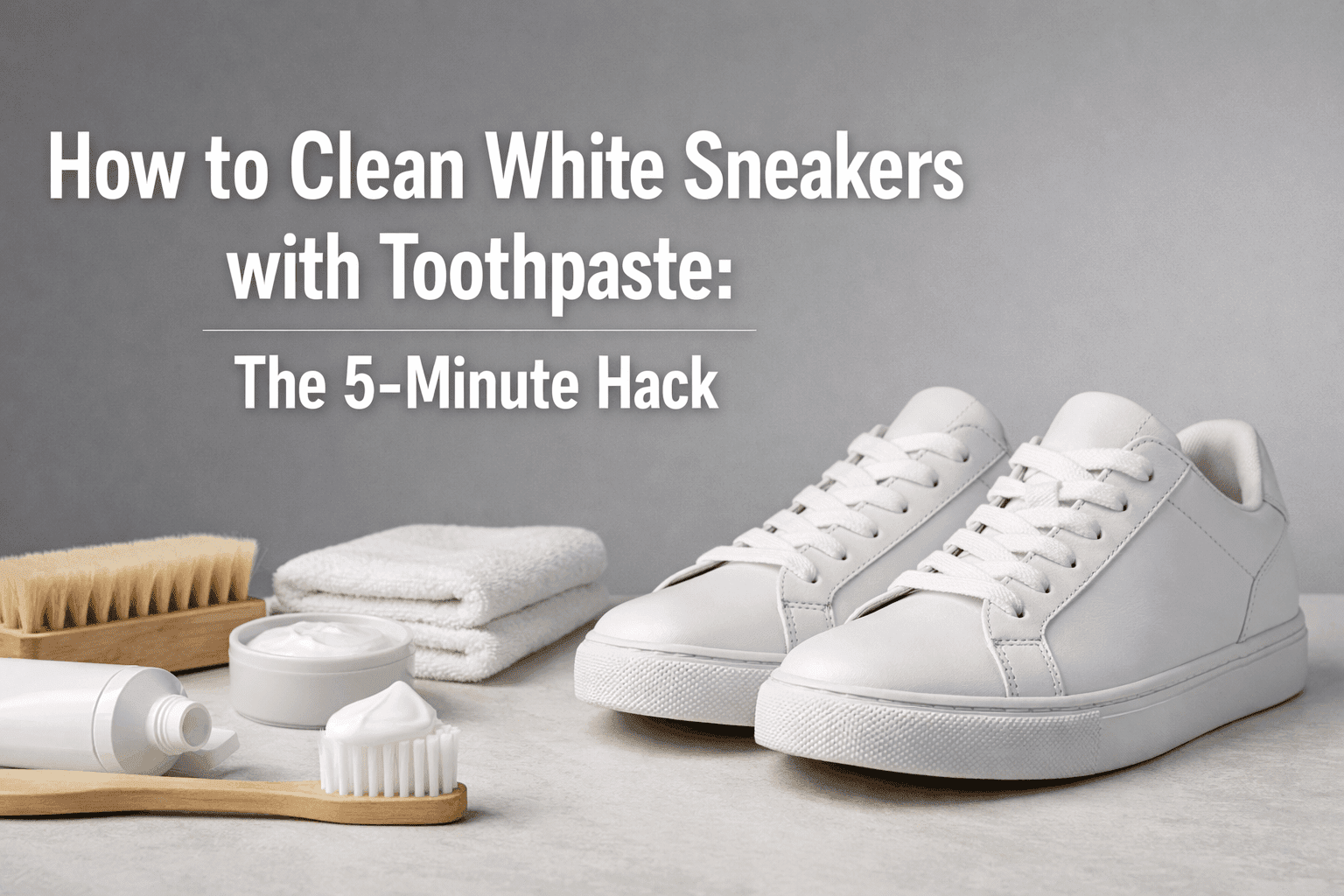
Quick answer: Use a small amount of plain white, non-gel toothpaste on a soft toothbrush or cloth, gently work it into the stained area, then wipe away the residue with a damp cloth. Always test an inconspicuous area first and avoid using toothpaste on suede or nubuck.
Quick Answer: Does Toothpaste Clean White Sneakers?
Yes, toothpaste can clean some white sneakers, particularly surface scuffs and dirt on rubber midsoles and certain finished leather or synthetic surfaces.
For a basic spot-cleaning method:
- Remove loose dirt and debris.
- Use plain white, non-gel toothpaste.
- Apply a small amount to a soft toothbrush or cloth.
- Gently scrub the stained area.
- Leave it for around 5–10 minutes if needed.
- Wipe the area thoroughly with a damp cloth.
- Let the sneakers air-dry naturally in a well-ventilated area.
For delicate materials such as suede, nubuck and some knitted uppers, use the manufacturer’s recommended cleaner instead.
Toothpaste is an abrasive cleaning option, not a replacement for a material-specific shoe cleaner. Check How to Remove Bad Shoe Smell Instantly
Can You Use Toothpaste on All White Sneakers?
Can I Use Toothpaste on My Sneakers?
Choose your shoe material and the problem you’re trying to fix. We’ll suggest the safest starting method.
Always check the manufacturer’s care instructions and test a small, hidden area before using a household cleaning product.
No. The material matters.
| Shoe material | Toothpaste? | Best approach |
| Rubber midsoles | Yes | Toothpaste + soft brush |
| Finished leather | With caution | Small amount + gentle pressure |
| Synthetic leather | With caution | Spot-test first |
| Canvas | With caution | Use very little and remove residue completely |
| Mesh | Usually not first choice | Mild soap/detergent + soft brush |
| Knit | Use caution | Follow manufacturer’s care instructions |
| Suede | No | Suede brush/eraser and suitable cleaner |
| Nubuck | No | Nubuck-specific cleaning products |
If you’re unsure what your sneaker is made from, check the care label or the manufacturer’s product-care instructions before applying a household cleaning product.
Why Does Toothpaste Work on Shoe Scuffs?
Toothpaste is formulated with mild abrasives that help remove surface stains and debris from teeth. Common abrasive ingredients include hydrated silica and calcium carbonate.
That does not mean toothpaste chemically “bleaches” a sneaker.
Instead, the cleaning effect on footwear is mainly mechanical: the toothpaste and brush help loosen and lift surface grime and marks.
This is why toothpaste can be particularly useful for:
- Rubber midsoles
- Rubber toe caps
- Small surface scuffs
- Some finished synthetic surfaces
- Some finished leather surfaces, after a spot test
The same abrasiveness is also the reason you should avoid aggressive scrubbing.
For more information about toothpaste abrasives, see Colgate’s explanation of hydrated silica and abrasive toothpaste.
What You Need
You only need a few items:
- Plain white, non-gel toothpaste
- Soft-bristle toothbrush
- Microfiber cloth or clean soft cloth
- Small bowl of water
- Optional: mild shoe-cleaning solution for materials that should not be treated with toothpaste
Do You Need Baking Soda?
Not necessarily.
The original version of this guide recommended mixing toothpaste with baking soda as the default method. I would not recommend that as the starting point.
Baking soda can be useful in other shoe-cleaning situations, particularly for odor control and certain stain-removal methods, but adding another abrasive to toothpaste is unnecessary for a simple scuff-cleaning job.
Start with plain toothpaste. If it doesn’t work, switch to a material-appropriate cleaner rather than repeatedly increasing the abrasiveness.
Step-by-Step: How to Clean White Sneakers with Toothpaste
Step 1: Check the Shoe Material
Before cleaning, identify whether your sneakers are:
- Leather
- Synthetic leather
- Canvas
- Mesh
- Knit
- Suede
- Nubuck
- Rubber
This step matters because a method that works on a rubber sole may be inappropriate for suede or delicate mesh.
Never assume that because a sneaker is white, the same cleaning method is suitable for every part of it.
Step 2: Remove Loose Dirt
Start with the shoes dry.
Use a soft brush or dry cloth to remove:
- Dust
- Loose dirt
- Small pieces of mud
- Sand
- Debris from the outsole
If the shoes are covered in wet mud, allow the mud to dry first and brush away the loose material.
This prevents you from rubbing loose dirt deeper into the upper.
Step 3: Remove the Laces
If your sneakers have removable laces, take them out.
Cleaning the laces separately makes it easier to reach the tongue, eyelets and areas underneath the laces.
Wash white laces separately using mild detergent and water, then allow them to air-dry.
Step 4: Spot-Test the Toothpaste
This step is easy to skip and can save your shoes.
Apply a tiny amount of white, non-gel toothpaste to a hidden area.
Gently rub it with a soft toothbrush or cloth, then wipe the area clean.
Check for:
- Discoloration
- Surface dullness
- Texture changes
- Residue
- Damage to the finish
If the material reacts badly, stop and use a cleaner designed for that material.
Step 5: Apply a Small Amount of Toothpaste
Use only a small amount.
You do not need to cover the entire shoe with toothpaste.
Put a pea-sized amount on a soft toothbrush or cloth and apply it directly to the stained area.
For a small scuff, less is better.
Step 6: Scrub Gently
Use small circular motions with light pressure.
For rubber soles
You can use slightly more pressure because rubber is generally more resistant to surface abrasion than delicate uppers.
Focus on:
- Midsole scuffs
- Toe caps
- Rubber sidewalls
- Small black marks
For finished leather
Use much lighter pressure.
Do not aggressively scrub the surface because excessive abrasion can dull or remove the finish.
A small amount of toothpaste may help with a superficial mark, but a dedicated leather cleaner is the safer long-term choice for valuable leather sneakers.
Nike also lists white, non-gel toothpaste as an option for cleaning dirt, stains and scuff marks on Air Force 1 footwear.
For synthetic leather
Use the same cautious approach as finished leather.
Test first, use very little toothpaste and avoid repeatedly scrubbing the same spot.
For canvas
Toothpaste can be more difficult to remove completely from absorbent fabric.
If you use it, apply a very small amount and wipe the area thoroughly afterward.
For heavily soiled canvas, a mild detergent solution may be a better choice.
For mesh and knit
Be careful.
Mesh and knit uppers can have delicate fibers that may snag or fray if aggressively brushed.
For these materials, a mild soap or sneaker-cleaning solution with a soft brush is generally a better starting point.
Nike’s mesh-care guidance recommends gentle hand cleaning, soft brushing and avoiding harsh chemicals.
Step 7: Wipe Away the Residue
After cleaning the mark, use a clean damp microfiber cloth to remove the toothpaste.
Do not leave a thick layer of dried toothpaste on the shoe.
Rinse or clean the cloth as necessary and continue wiping until the visible residue is gone.
For canvas and other absorbent materials, pay particular attention to leftover white residue.
Step 8: Air-Dry Naturally
Allow the sneakers to dry in a well-ventilated area.
Avoid:
- Clothes dryers
- Radiators
- Heat guns
- Very high heat
- Aggressive hair-drying
High heat can affect adhesives, materials and shoe shape.
For the safest approach, follow the footwear manufacturer’s drying instructions.
How to Clean White Rubber Soles with Toothpaste
This is where the toothpaste method is most useful.
Rubber midsoles and toe caps often develop:
- Black scuff marks
- Grey dirt
- Surface grime
- Marks from floors and pavements
To clean them:
- Brush away loose dirt.
- Apply a small amount of white non-gel toothpaste.
- Scrub gently with a toothbrush.
- Concentrate on the scuffed areas.
- Wipe with a damp microfiber cloth.
- Repeat once if necessary.
If the mark does not improve after one or two gentle attempts, stop scrubbing harder.
More pressure is not always better. You can damage a surface coating or simply wear down the rubber.
How to Clean White Leather Shoes with Toothpaste
Toothpaste can sometimes remove superficial dirt and scuffs from finished leather, but it should be treated as a spot-cleaning hack rather than a complete leather-care system.
Use this process:
- Remove loose dust.
- Spot-test an inconspicuous area.
- Apply a very small amount of white non-gel toothpaste.
- Use a soft cloth or soft toothbrush.
- Rub gently.
- Wipe away the toothpaste completely.
- Allow the shoe to dry naturally.
- If required, use a suitable leather conditioner according to the manufacturer’s instructions.
For expensive leather sneakers, a dedicated leather cleaner is the safer choice.
How to Clean White Canvas Shoes with Toothpaste
Canvas is more absorbent than smooth rubber or finished leather.
If you want to try toothpaste:
- Remove loose dirt.
- Test a hidden area.
- Apply a very small amount of toothpaste.
- Gently work it into the stain.
- Avoid soaking the canvas.
- Wipe thoroughly with a clean damp cloth.
- Remove all visible residue.
- Let the shoes air-dry naturally.
For large or deep stains, a mild detergent solution is usually more practical than covering the canvas in toothpaste.
How to Clean White Mesh Sneakers
Mesh requires a different approach.
Although some sneaker-cleaning guides mention toothpaste for mesh, it is not my first recommendation for delicate performance footwear.
Instead:
- Brush away dry dirt.
- Remove the laces.
- Mix a small amount of mild detergent or shoe cleaner with cool or lukewarm water.
- Use a soft brush.
- Gently brush in the direction of the material.
- Wipe away the cleaning solution with a damp cloth.
- Allow the shoes to air-dry.
Avoid aggressive brushing because mesh and knit fibers can snag or fray.
For Nike Flyknit and similar mesh footwear, Nike specifically recommends gentle hand cleaning and warns against harsh chemicals and bleach.
Can Toothpaste Remove Yellow Shoe Soles?
Sometimes, but it depends on why the sole has turned yellow.
Toothpaste may help with surface dirt or superficial discoloration, but it cannot reliably reverse every type of yellowing.
Yellowing may result from:
- Material aging
- Oxidation
- Adhesive changes
- Dirt and residue
- Previous cleaning products
- Environmental exposure
If the yellow color is caused by material oxidation rather than surface dirt, repeatedly scrubbing with toothpaste is unlikely to restore the original color.
Do not keep increasing the pressure just because the yellowing remains.
For severe sole discoloration, a purpose-made sole treatment may be more appropriate.
Toothpaste vs. Baking Soda for Shoes
These two products are often grouped together online, but they serve different purposes.
| Method | Best use | Main advantage | Main concern |
| White toothpaste | Surface scuffs and small marks | Convenient abrasive action | Can be too abrasive |
| Baking soda | Odor control and some cleaning applications | Mild powder and odor neutralizer | Residue and abrasion |
| Mild detergent | General fabric cleaning | Better suited to washing dirt away | Must be rinsed/wiped properly |
| Sneaker cleaner | Material-specific cleaning | Designed for footwear | Costs more |
| Leather cleaner | Leather uppers | Designed for leather finishes | Must match the leather type |
| Suede cleaner | Suede and nubuck | Protects the nap | Requires material-specific technique |
For a simple white rubber scuff, toothpaste can be convenient.
For an entire dirty sneaker, a proper footwear cleaner is usually the better approach.
Toothpaste vs. Washing Machine
Putting sneakers in a washing machine may seem easier, but it isn’t appropriate for every shoe.
Some fabric sneakers can tolerate careful washing, while leather, suede and structured footwear may be damaged.
Potential problems include:
- Loss of shape
- Excess moisture
- Adhesive problems
- Material damage
- Hardware damage
- Longer drying time
Nike advises hand-cleaning mesh/Flyknit footwear rather than putting it in the washing machine. Adidas also recommends a controlled hand-cleaning process for sneakers.
Always check the manufacturer’s care instructions first.
Toothpaste vs. Dedicated Sneaker Cleaner
A dedicated sneaker cleaner makes more sense when:
- The shoes are expensive
- The entire upper is dirty
- The material is delicate
- You clean sneakers frequently
- The shoe has a specialized coating
- You want a repeatable cleaning routine
Toothpaste is best thought of as a small household spot-cleaning option, not a universal sneaker-care product.
What Not to Use on White Sneakers
Avoid experimenting with increasingly aggressive household chemicals just because a stain is stubborn.
Don’t use colored gel toothpaste
Blue, red or other colored toothpaste can leave unwanted residue or color on porous materials.
Use plain white, non-gel toothpaste if you are testing this method.
Don’t aggressively scrub delicate materials
A toothbrush can become an abrasive tool when used with heavy pressure.
This is particularly important for:
- Leather finishes
- Mesh
- Knit
- Synthetic coatings
Don’t use toothpaste on suede or nubuck
Suede and nubuck have a textured surface, or nap, that requires different care.
Toothpaste can leave residue and disturb the texture.
Use a suede or nubuck brush and a cleaner specifically designed for the material instead.
Don’t assume more product means better cleaning
A thick layer of toothpaste does not make the method more effective.
Start small.
Don’t use excessive heat to dry sneakers
Let shoes dry naturally unless the manufacturer gives different instructions.
How to Keep White Sneakers Cleaner for Longer
Cleaning is easier when dirt does not have time to build up.
Try these habits:
Wipe small scuffs early
A fresh surface mark is usually easier to remove than an old, embedded stain.
Clean the midsoles regularly
The rubber midsole is often the first part of a white sneaker to look dirty.
A quick wipe once a week can prevent heavy buildup.
Don’t wait until the shoe is heavily stained
Small spot cleaning takes less effort than a full deep clean.
Store sneakers somewhere dry and ventilated
Avoid leaving damp shoes inside closed bags for long periods.
Follow the manufacturer’s care instructions
Different sneaker materials require different cleaning methods.
When Should You Stop Using the Toothpaste Method?
Stop if:
- The material changes color
- The surface becomes dull
- The finish starts looking damaged
- The fabric begins fraying
- The stain does not improve after gentle cleaning
- The shoe is made from suede or nubuck
- The manufacturer specifically advises against household cleaners
A cleaning hack is not worth damaging an expensive pair of sneakers.
Quick Decision Guide
Have a small scuff on a white rubber sole?
→ Toothpaste can be worth trying.
Have a finished leather sneaker?
→ Spot-test first and use minimal pressure.
Have a dirty canvas sneaker?
→ Toothpaste can work for small marks, but mild detergent is often more practical for larger areas.
Have mesh or knit sneakers?
→ Start with mild detergent and a soft brush.
Have suede or nubuck sneakers?
→ Do not use toothpaste. Use material-specific products.
Have severe yellowing?
→ Toothpaste may not solve oxidation or material aging. Consider a specialized cleaner or professional restoration.
Frequently Asked Questions
Does toothpaste actually clean white shoes?
Yes, toothpaste can help remove surface dirt and scuff marks from some white shoe materials. Its mild abrasive ingredients help mechanically loosen surface marks. It is most useful for spot cleaning rather than deep cleaning an entire sneaker.
What kind of toothpaste should I use to clean white sneakers?
Use a small amount of plain white, non-gel toothpaste. Avoid colored gel toothpaste because it may leave unwanted residue or staining on porous materials.
Can I use Colgate to clean white shoes?
A plain white, non-gel Colgate toothpaste can be used as a spot-cleaning option on suitable shoe materials. However, the specific shoe material matters more than the toothpaste brand. Always spot-test first.
Can toothpaste clean white leather shoes?
It can sometimes help with superficial dirt and scuff marks on finished leather, but leather should be treated carefully because toothpaste is abrasive. Use very light pressure and consider a dedicated leather cleaner for valuable footwear.
Can I clean white mesh shoes with toothpaste?
It is possible, but toothpaste is not the first choice for delicate mesh. A mild detergent or sneaker cleaner with a soft brush is generally a better starting point because aggressive brushing can damage mesh or knit fibers.
Can toothpaste remove yellow soles?
It may improve surface dirt or discoloration, but it will not necessarily reverse yellowing caused by oxidation or aging. If the sole itself has chemically changed color, repeated scrubbing may not solve the problem.
Can I mix toothpaste and baking soda to clean shoes?
You can find this combination recommended as a household cleaning hack, but it is not necessary for most sneaker scuffs. Toothpaste is already abrasive, so start with plain toothpaste and gentle pressure instead of automatically adding more abrasive material.
How long should I leave toothpaste on white shoes?
For a small spot, you do not need a long soaking period. After gently scrubbing, you can wipe it away. If you choose to let it sit, around 5–10 minutes is sufficient for a spot-cleaning attempt. Do not allow a thick layer to remain on the shoe for an extended period.
Can I use toothpaste on suede shoes?
No. Avoid toothpaste on suede and nubuck. These materials require specialized cleaning techniques because their textured surfaces can be damaged or left with visible residue.
Can I put white sneakers in the washing machine?
It depends on the shoe. Some washable textile footwear may tolerate machine washing, but many sneakers, particularly leather, suede and structured footwear, should be cleaned by hand. Always follow the manufacturer’s care instructions.
Why did my white sneakers turn yellow after cleaning?
Yellowing can have several causes, including material oxidation, adhesive changes, residue or previous cleaning treatments. If yellowing does not respond to gentle surface cleaning, it may not be a simple dirt problem.
How often should I clean white sneakers?
There is no fixed schedule. For frequently worn white sneakers, a quick spot clean whenever scuffs appear and a more thorough clean when dirt accumulates is a practical routine.
Final Verdict: Is the Toothpaste Hack Worth Trying?
Yes, for the right job.
White, non-gel toothpaste can be a convenient household option for small scuffs and surface dirt, especially on rubber midsoles and some finished leather or synthetic surfaces.
But it is not a universal white-shoe cleaner.
The safest approach is:
Identify the material → spot-test → use a small amount → scrub gently → wipe thoroughly → air-dry naturally.
If the sneaker is made from suede, nubuck, delicate mesh or a specialty material, use the manufacturer’s recommended cleaning method instead.
If you regularly deal with shoe-care problems, you may also find our guide on how to remove bad shoe smell useful for keeping the inside of your sneakers fresh.
And if you’re replacing an old pair after cleaning it, our shoe size conversion calculator can help you compare US, UK, EU and CM sizing before buying.
The goal isn’t to scrub harder. It’s to use the gentlest method that actually works for the material..
- Best Crocs for Nurses 2026: ASTM-Certified Work Clogs & Reviews
- Best Dansko Nursing Shoes 2026: Professional Clogs Guide
- Best CNA Shoes 2026: 9 Comfortable Picks for Long Shifts
- Best Shoes for Pharmacy Technicians 2026 – Comfort & Slip Resistance
- 11 Best Shoes for Healthcare Workers in 2026: Hospital & Clinical Picks