
How to Remove Bad Smell from Shoes: 7 Proven Methods That Work
Quick Answer
The fastest way to reduce shoe smell is to remove the moisture and odor source, not simply cover it with perfume. For suitable shoe interiors, a light mist of 70% isopropyl alcohol may provide quick odor reduction, but it is not appropriate for every material and should be patch-tested first.
For an overnight solution, use a baking-soda sachet or another dry moisture absorber, remove and clean washable insoles, and allow the shoes to dry completely.
If the smell keeps returning, focus on the cause: sweaty feet, damp insoles, poor ventilation, repeated wear without drying, or a shoe material that retains moisture.
Best long-term fix: keep feet and shoes dry, change socks regularly, and rotate footwear so each pair has time to dry.
Introduction
Smelly shoes are usually a moisture problem before they are a shoe-quality problem. After a long workday, workout, commute, or walk in humid weather, sweat can build up inside closed footwear. When moisture, skin debris and microorganisms remain trapped in the shoe, unpleasant odor can develop.
The good news is that you usually don’t need to throw the shoes away. The right solution depends on how strong the odor is, how quickly you need to fix it, and what the shoe is made from.
In this guide, we’ll cover the fastest ways to reduce shoe smell, overnight deodorizing methods, how to clean the insoles, what works for leather and mesh, which popular hacks are worth skipping, and how to stop the odor from returning.
Why Do Shoes Smell?
Shoe odor usually develops when sweat and moisture remain trapped inside footwear. Sweat itself is not usually the main source of the smell. Microorganisms living on the skin can break down sweat and skin debris into compounds that have an unpleasant odor.
Closed shoes make the problem worse because they create a warm, damp environment with limited airflow.
Common causes include:
- Sweaty feet
- Wearing the same shoes repeatedly without allowing them to dry
- Damp or dirty insoles
- Wearing shoes without socks
- Poor ventilation
- Synthetic materials that retain heat and moisture
- Not drying shoes properly after exercise or rain
- Fungal or other foot conditions in some cases
This is why simply spraying perfume over a smelly shoe rarely solves the problem. You need to reduce moisture and clean the areas where odor accumulates.
How to Remove Shoe Smell Quickly
If you need your shoes to smell fresher within minutes, start with the least invasive method that suits the material.
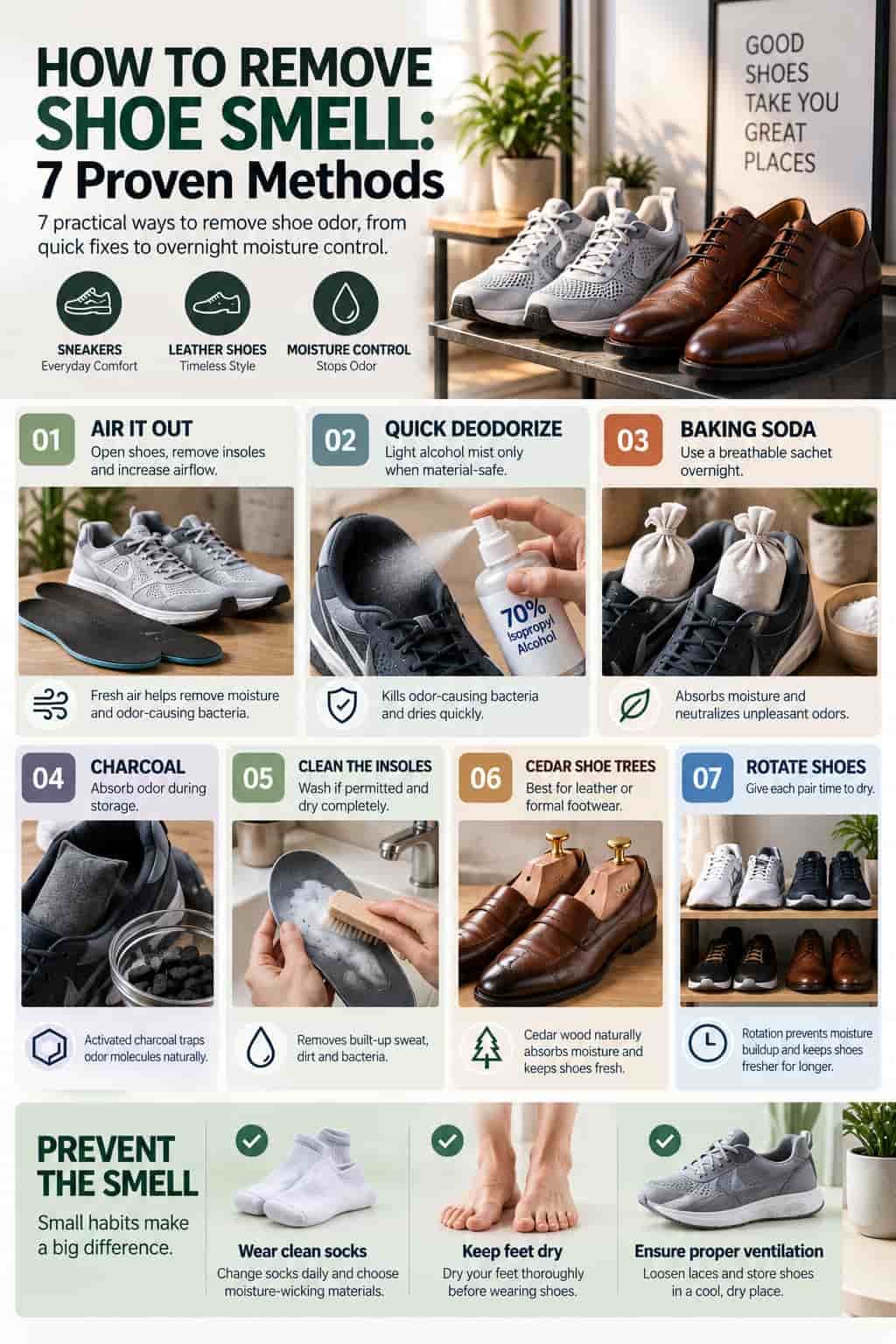
1. Air Them Out First
Remove the insoles if they are removable, loosen the laces and place the shoes in a cool, well-ventilated area.
Airflow won’t instantly remove deeply embedded odor, but it helps reduce trapped moisture and gives every other deodorizing method a better chance of working.
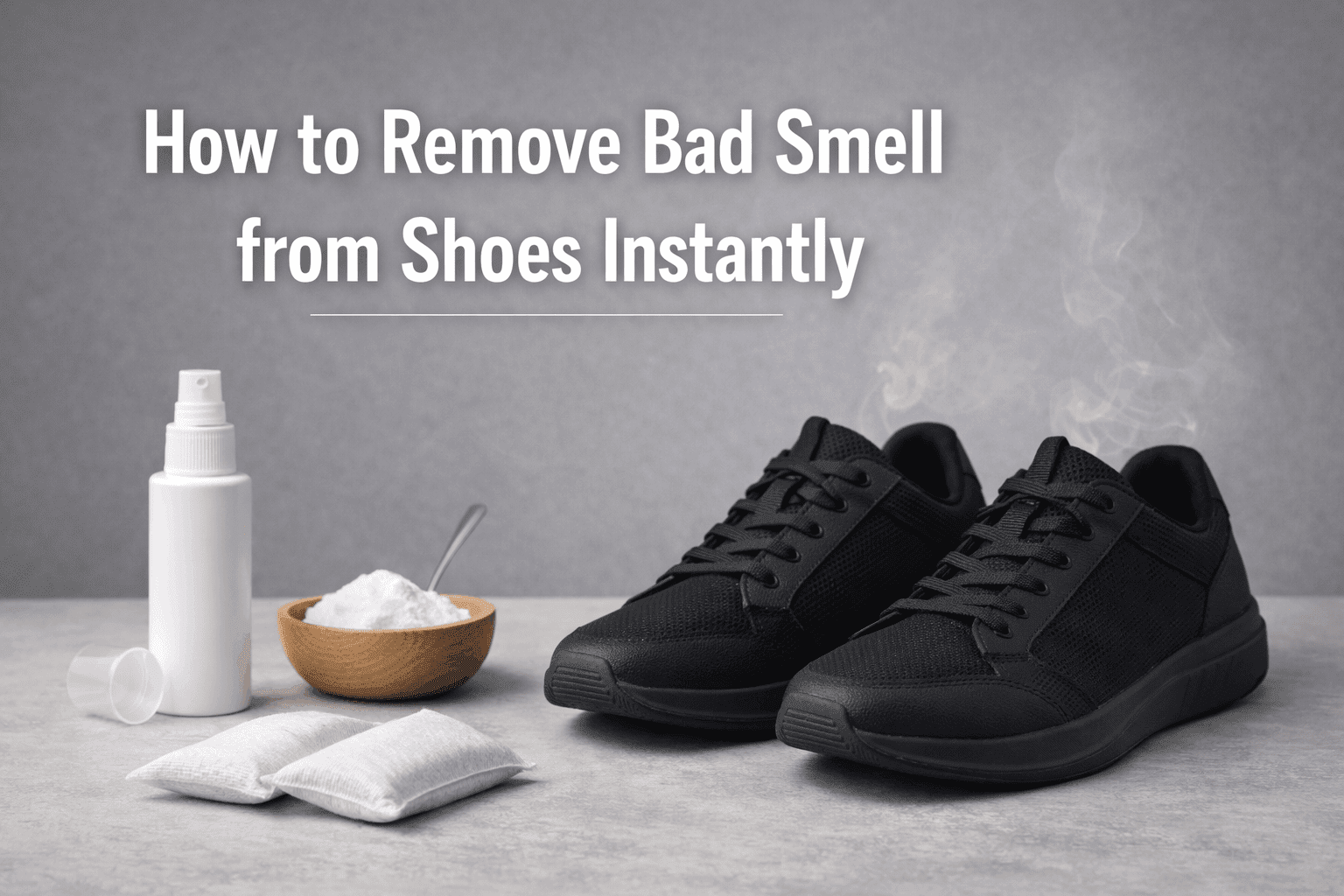
2. Try a Light Isopropyl Alcohol Mist
For appropriate washable or synthetic shoe interiors, a light mist of 70% isopropyl alcohol can be used as a quick deodorizing step.
How to use it:
- Remove the insole if possible.
- Test a small hidden area first.
- Lightly mist the inside lining. Do not soak it.
- Leave the shoe open in a well-ventilated area until completely dry.
Important: Avoid getting alcohol on leather, suede, painted surfaces or delicate finishes unless the manufacturer specifically says it is safe. Alcohol can affect dyes, finishes and some adhesives.
Alcohol can provide quick odor reduction, but it should not replace cleaning and drying when the smell is persistent. Check How to Clean White Sneakers
3. Use a Dry Odor Absorber
If you don’t want to use a liquid, place a dry baking-soda sachet, activated-charcoal insert or commercial shoe deodorizing insert inside the shoe.
These options are better suited to situations where you have several hours or overnight.
4. Replace or Clean the Insoles
If the upper of the shoe is clean but the smell keeps returning, inspect the insoles first. Porous insoles can retain sweat and odor.
Remove washable insoles, clean them according to their care instructions and let them dry completely before putting them back.
Do Tea Bags Remove Shoe Smell?
Dry tea bags are a popular home deodorizing trick because they can help absorb some moisture and add a mild scent.
However, they should be considered a freshening method rather than a reliable bacteria-killing treatment.
If you use tea bags, keep them completely dry and place them inside the shoes overnight. Don’t use wet tea bags because adding moisture can make the underlying problem worse.
What About Freezing Shoes?
Freezing is a popular internet hack, but it should not be your first choice for removing shoe odor.
Low temperatures can temporarily affect microbial activity, but freezing should not be treated as a dependable way to eliminate the microorganisms responsible for odor. It also isn’t suitable for every footwear material.
If your shoes smell, cleaning, drying, deodorizing and treating the insoles is a more practical approach.
If you have several hours, moisture absorption and proper drying are usually more useful than trying to cover the odor.
Baking Soda Sachet
Put baking soda inside a clean, thin sock or breathable pouch and place it inside the shoe overnight.
This keeps the powder contained and makes cleanup easier.
Activated Charcoal
Activated-charcoal shoe inserts or bags can help absorb odors while the shoes are stored.
They are particularly convenient if you want a reusable option.
Cedar Shoe Trees
Cedar shoe trees are especially useful for leather dress shoes. They help maintain shape while absorbing some moisture from the interior.
They are a prevention and maintenance tool, rather than an instant cure for heavily contaminated footwear.
How to Remove Shoe Odor by Material
Not every shoe should be treated the same way. Before applying a cleaner or deodorizer, check the manufacturer’s care instructions.
Mesh and Knit Shoes
Mesh and knit running shoes can usually tolerate more moisture than leather, but they still need thorough drying.
Best approach:
- Remove laces and removable insoles.
- Brush away loose dirt.
- Clean with a mild detergent solution when the manufacturer’s care instructions allow it.
- Rinse carefully if appropriate.
- Air-dry completely.
Don’t automatically put running shoes in a washing machine. Some manufacturers permit machine washing, while others specifically advise against it. Follow the shoe’s care label.
Leather Shoes
Leather requires a gentler approach.
Don’t soak leather shoes or saturate them with household cleaning solutions.
Instead:
- Remove the insoles if possible.
- Use a dry odor absorber such as a cedar shoe tree or suitable charcoal insert.
- Wipe the interior carefully with a suitable slightly damp cloth when appropriate.
- Let the shoes dry naturally.
- Condition the leather exterior using a product designed for that leather type.
Avoid experimenting with alcohol directly on finished leather or suede.
Suede and Nubuck
Suede and nubuck need even more caution. Avoid soaking them and don’t use ordinary household cleaners unless the manufacturer specifically recommends them.
Use a suede-safe brush and a product designed for the material.
Synthetic and PU Shoes
Synthetic footwear can trap heat and moisture, particularly when worn for long periods in hot or humid conditions.
After use, remove the insole when possible, open the shoe fully and allow air to circulate. Dry moisture absorbers can also help during storage.
How to Clean Smelly Shoe Insoles
If your shoes still smell after deodorizing, the insole may be holding the odor.
- Remove the insoles.
- Check the care instructions.
- Wash washable insoles with mild soap and water.
- Rinse without soaking longer than necessary.
- Press them gently with a clean towel to remove excess water.
- Leave them in a well-ventilated area until completely dry.
- Don’t put damp insoles back into the shoes.
If the insoles remain strongly odorous after cleaning and drying, replacement may be more practical than repeated treatment.
5 Practical Tips That Make the Biggest Difference
1. Treat the Insole First
If odor is strongest when you smell the insole, cleaning or replacing it can make a noticeable difference.
2. Don’t Store Shoes While Damp
Let shoes dry completely before putting them into a closed cupboard or shoe box.
3. Rotate Your Footwear
Alternating between pairs gives each pair more time to dry between wears. Cleveland Clinic also recommends avoiding the same shoes every day when dealing with foot odor.
4. Change Socks Regularly
Clean socks help keep sweat and skin debris from accumulating inside the footwear.
5. Deal With the Feet Too
Wash and dry your feet carefully, particularly between the toes. If excessive sweating or persistent odor continues despite good footwear hygiene, consider speaking with a healthcare professional.
Comparison Table: Odor Removal Methods
| Method | Speed | Best For | Main Benefit | Main Caution |
|---|---|---|---|---|
| Air drying | Minutes to hours | All suitable shoes | Removes trapped moisture | Not enough for deep odor |
| 70% isopropyl alcohol mist | Fast | Suitable synthetic/washable interiors | Quick odor reduction | Patch-test; avoid delicate materials |
| Baking soda sachet | Overnight | Sneakers and general footwear | Absorbs odor/moisture | Keep powder contained |
| Activated charcoal | Hours to days | Most enclosed footwear | Passive odor absorption | Not an instant cure |
| Clean/replaced insole | Hours to a day | Persistent insole odor | Targets a common odor reservoir | Check material care |
| Cedar shoe trees | Ongoing | Leather/formal shoes | Helps with moisture and shape | Maintenance rather than instant treatment |
| Washing/cleaning | Several hours | Washable mesh/canvas | Removes dirt and odor source | Follow manufacturer instructions |
7 Mistakes That Make Shoe Odor Worse
1. Spraying perfume over the smell
Fragrance can mask odor temporarily without addressing moisture or buildup.
2. Putting shoes away while damp
This gives moisture more time to remain trapped inside.
3. Using too much liquid cleaner
More moisture is not better. Over-wetting footwear can damage materials and make drying harder.
4. Using alcohol on every material
Alcohol is not automatically safe for leather, suede, painted finishes or delicate linings.
5. Using bleach
Bleach is unnecessary for routine shoe deodorizing and can damage materials.
6. Using direct high heat
Avoid radiators, high-heat dryers and other intense heat sources that can damage adhesives, finishes or footwear components.
7. Ignoring your feet
If your feet remain sweaty or develop persistent odor, treating the shoes alone may not solve the problem.
Need to Remove Shoe Smell in 10 Minutes?
Try this quick routine:
Step 1: Remove the insoles if they are removable.
Step 2: Loosen the laces and open the shoe as much as possible.
Step 3: Wipe obvious moisture from the inside with a clean, dry cloth.
Step 4: For a compatible synthetic or washable interior, use a very light mist of 70% isopropyl alcohol after patch-testing.
Step 5: Place the shoes in front of moving air.
Step 6: If you have more time, add a dry odor absorber after the interior is dry.
Important: This is an odor-reduction routine, not a substitute for washing heavily soiled shoes or addressing persistent foot odor.
How to Prevent Shoes From Smelling Again
Removing odor once is useful. Preventing it from returning is better.
- Let shoes dry completely before storing them.
- Rotate between pairs rather than wearing one pair continuously.
- Change socks after heavy sweating or exercise.
- Wash and dry your feet thoroughly.
- Remove removable insoles after intense workouts when practical.
- Store shoes in a ventilated area rather than a sealed, damp cupboard.
- Choose footwear with adequate ventilation for your activity and climate.
- Clean heavily used shoes regularly according to their material and manufacturer instructions.
For hot and humid environments such as Chennai, moisture management becomes especially important.
When Persistent Foot or Shoe Odor Needs More Attention
Shoe odor is usually manageable with cleaning, drying and moisture control. However, persistent foot odor can sometimes be associated with excessive sweating, fungal infections or other skin conditions.
Consider speaking with a healthcare professional if:
- strong odor continues despite regular washing and drying
- your feet are unusually sweaty
- you notice itching, peeling, redness or other skin changes
- there are sores or painful areas
- the odor is suddenly much stronger or different from usual
Cleveland Clinic recommends medical evaluation when home measures don’t adequately control persistent foot odor.
Frequently Asked Questions About Smelly Shoes
How do I remove shoe smell instantly?
Start by removing the insoles, opening the shoes for airflow and removing excess moisture. For compatible synthetic or washable interiors, a light mist of 70% isopropyl alcohol may provide quick odor reduction after patch-testing. For deeper odor, cleaning and drying the insoles is more effective.
Does rubbing alcohol remove shoe odor?
A light application of 70% isopropyl alcohol may reduce odor in some suitable shoe interiors, but it isn’t safe for every material and shouldn’t be used as a universal shoe cleaner. Always check the manufacturer’s care instructions and patch-test first.
Does baking soda remove shoe smell?
Baking soda can help absorb moisture and reduce odors. A sachet made with a sock or breathable pouch is less messy than sprinkling loose powder directly into the shoe.
Why do my shoes smell even after washing?
The insoles may still contain moisture or odor-causing buildup. Shoes may also have been stored before they were completely dry. Remove and clean the insoles separately and allow everything to dry fully.
Can I put shoes in the washing machine?
Only when the manufacturer’s care instructions permit it. Some washable mesh or canvas shoes can tolerate a gentle wash, while leather, suede and many structured shoes should not be machine washed.
Do tea bags remove shoe odor?
Dry tea bags can help freshen shoes and may absorb some moisture, but they should not be considered a dependable replacement for cleaning and drying.
Does freezing shoes kill bacteria?
Freezing should not be treated as a reliable way to eliminate odor-causing microorganisms. Cleaning, drying and treating the insole are more practical approaches.
How do I remove smell from leather shoes?
Avoid soaking leather. Remove the insole if possible, use a dry odor absorber such as a suitable cedar shoe tree, and follow the manufacturer’s leather-care instructions.
How can I stop my shoes from smelling?
Keep your feet dry, change socks regularly, allow shoes to dry between wears, clean removable insoles and avoid storing damp footwear in closed spaces.
When should I replace smelly shoes?
Consider replacing shoes when the odor repeatedly returns despite cleaning and drying, particularly if the lining, insole or cushioning has deteriorated or the footwear is no longer structurally sound.
Conclusion: The Best Way to Get Rid of Shoe Smell
The fastest way to deal with smelly shoes is not to cover the odor with fragrance. Control the moisture, clean the areas that hold sweat, and give the footwear enough time to dry.
For a quick refresh, airflow and a suitable deodorizing treatment can help. For overnight odor, use a baking-soda sachet or activated-charcoal insert. If the smell keeps returning, inspect the insoles and clean or replace them.
Most importantly, prevent the cycle from starting again: keep your feet dry, change socks regularly, rotate footwear and never store shoes while they are still damp.
If persistent odor continues despite good footwear and foot hygiene, the problem may not be the shoe alone. That’s when it makes sense to look more closely at foot sweating or possible skin conditions.
Looking after your footwear doesn’t have to be complicated. A few simple drying and cleaning habits can keep your favorite shoes fresher for longer.
Complete shoe care guide when discussing overall maintenance and drying. complete shoe care guide: How to clean sports shoes in India when discussing mesh/running shoes and humidity. how to clean sports shoes: how to clean shoes and maintain them as the broader supporting guide. complete shoe cleaning guide