
Worst Shoes for Nurses: 9 Types to Avoid in 2026
✅ Expert Footwear Analysis | 🛒 Amazon US Options | 📅 Updated October 2026
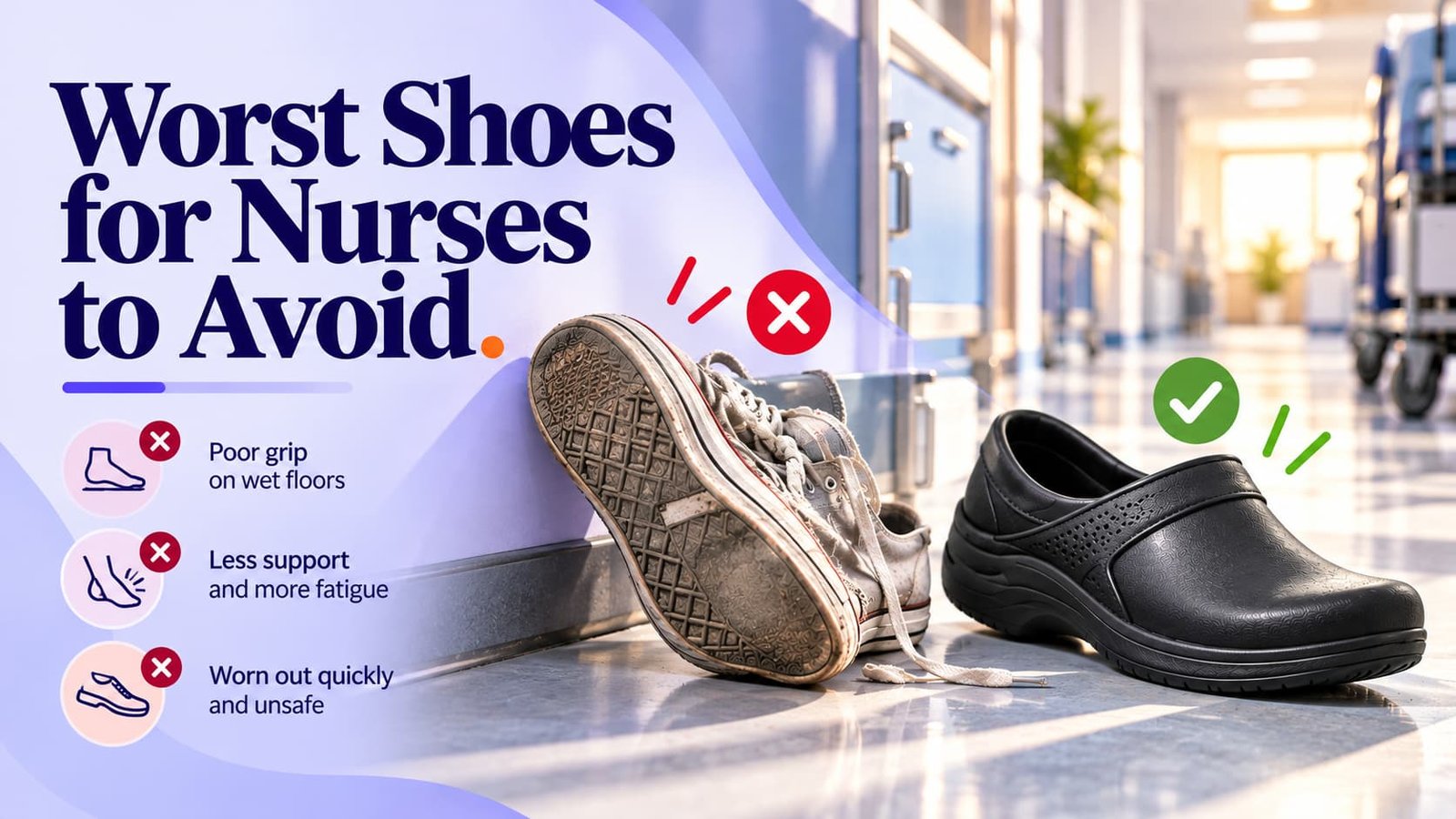
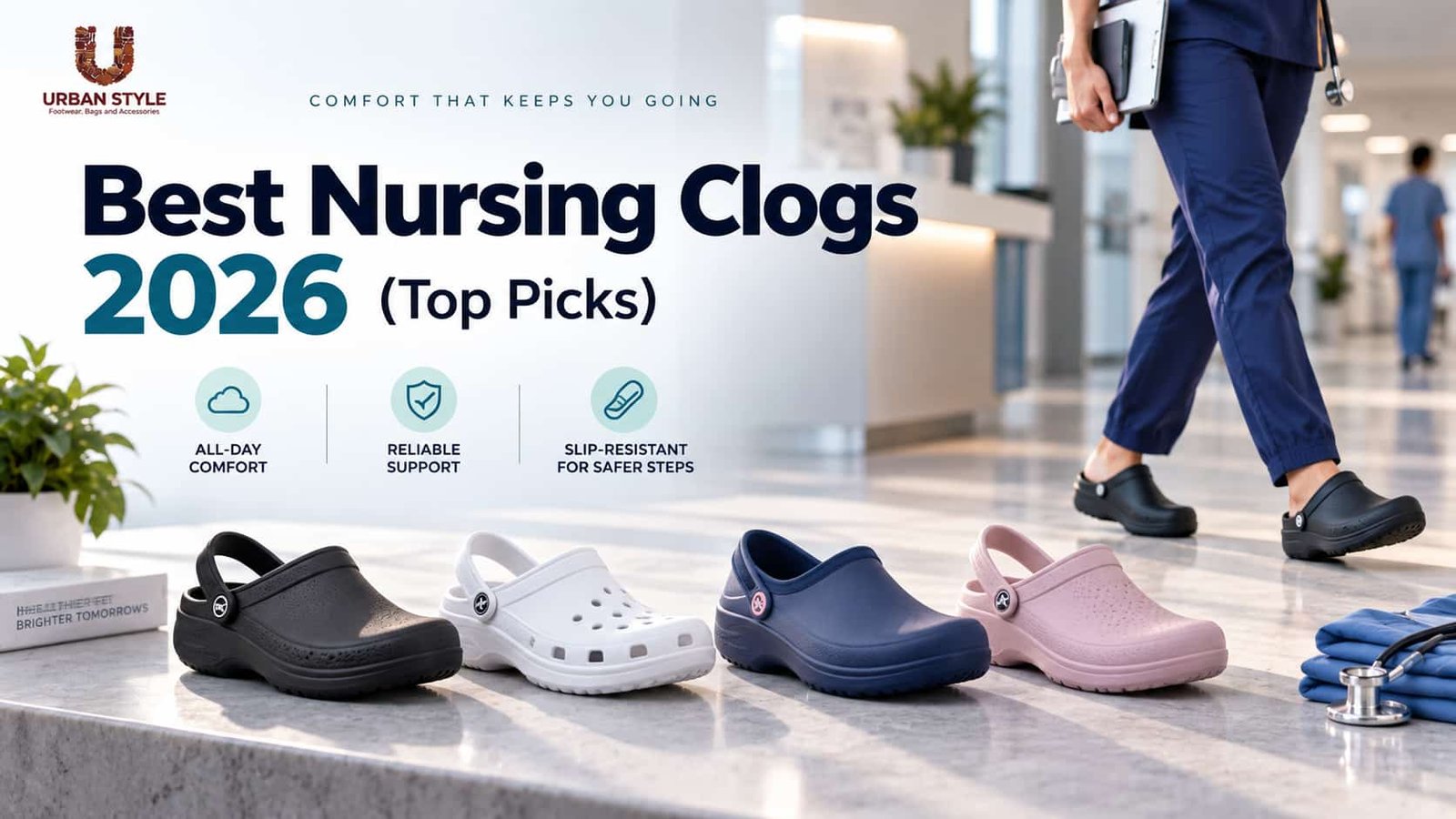
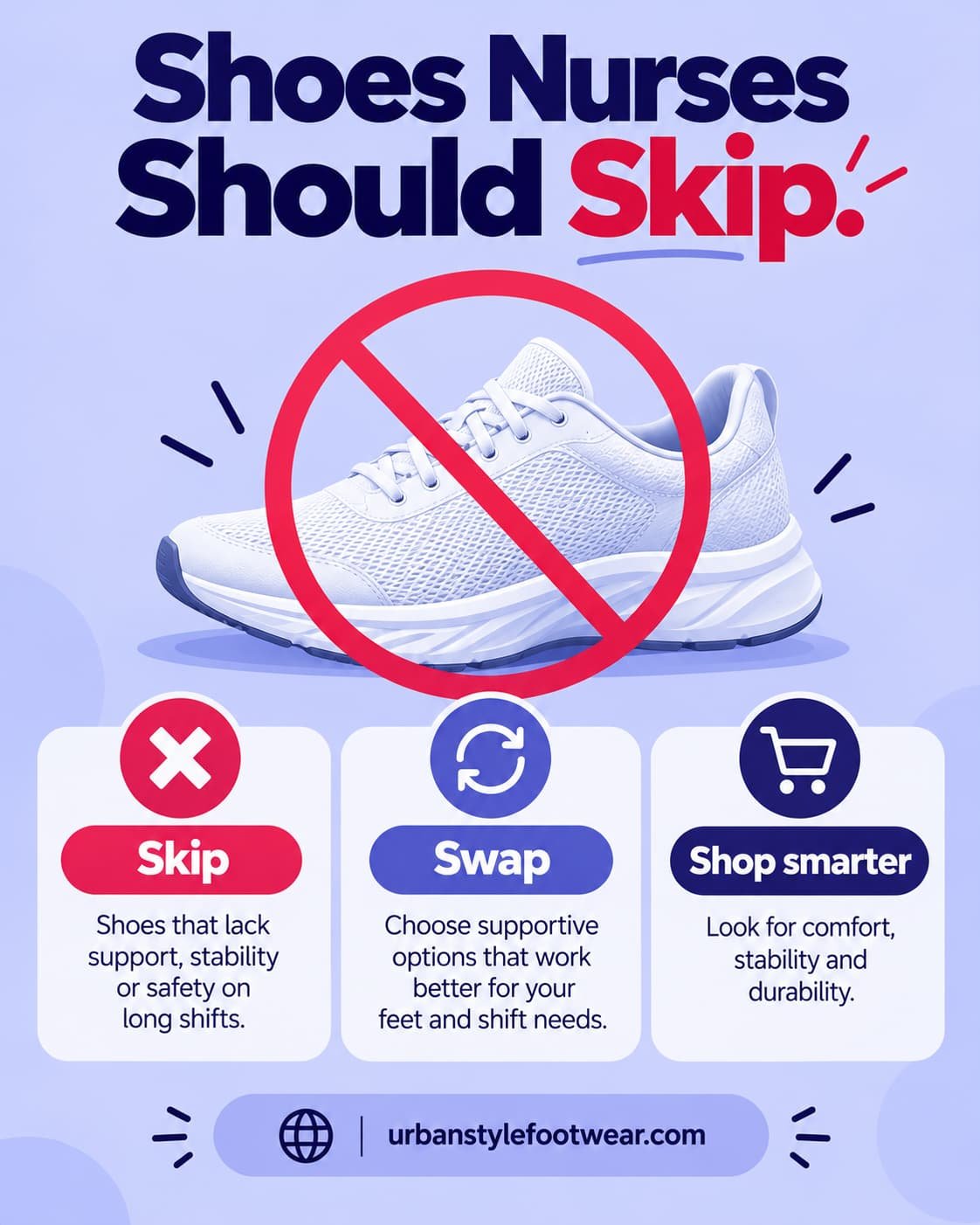
The worst shoes for nurses are the ones that fail the demands of a shift: thin soles on hard floors, smooth outsoles on wet tile, open toes near fluids, and loose or worn shoes that let the heel slide. Most of these are mismatches, not bad brands. Check your dress code, then match shoe to floor.
Why Nurses Get This Wrong
Picture a nurse on hour nine of a 12-hour shift in a Miami hospital. Her stylish canvas sneakers felt fine in the parking lot. On the unit, the thin sole passes every bit of floor hardness straight to her heels, and the smooth tread gave a little too much on the wet corridor by the supply room.
Most shoe mistakes come from buying for comfort in the store, not for a shift. Floors are hard, fluids are common, and dress codes can be strict. A shoe that works for errands can fail all three.
This guide names nine shoe types to avoid, explains what goes wrong with each and tells you what to look for instead. If you are starting from scratch, our how to choose nursing shoes guide walks through the buying checklist.
How We Evaluate Shoes
At UrbanStyleFootwear, our product evaluations combine manufacturer specifications, verified retailer and Amazon listing data, customer feedback, review patterns, and footwear-specific research. We assess shoes across factors such as comfort, fit, cushioning, support, materials, durability, traction, design, and overall value, using multiple sources to provide balanced, practical, and buyer-focused recommendations.
The 9 Shoe Types Nurses Should Avoid
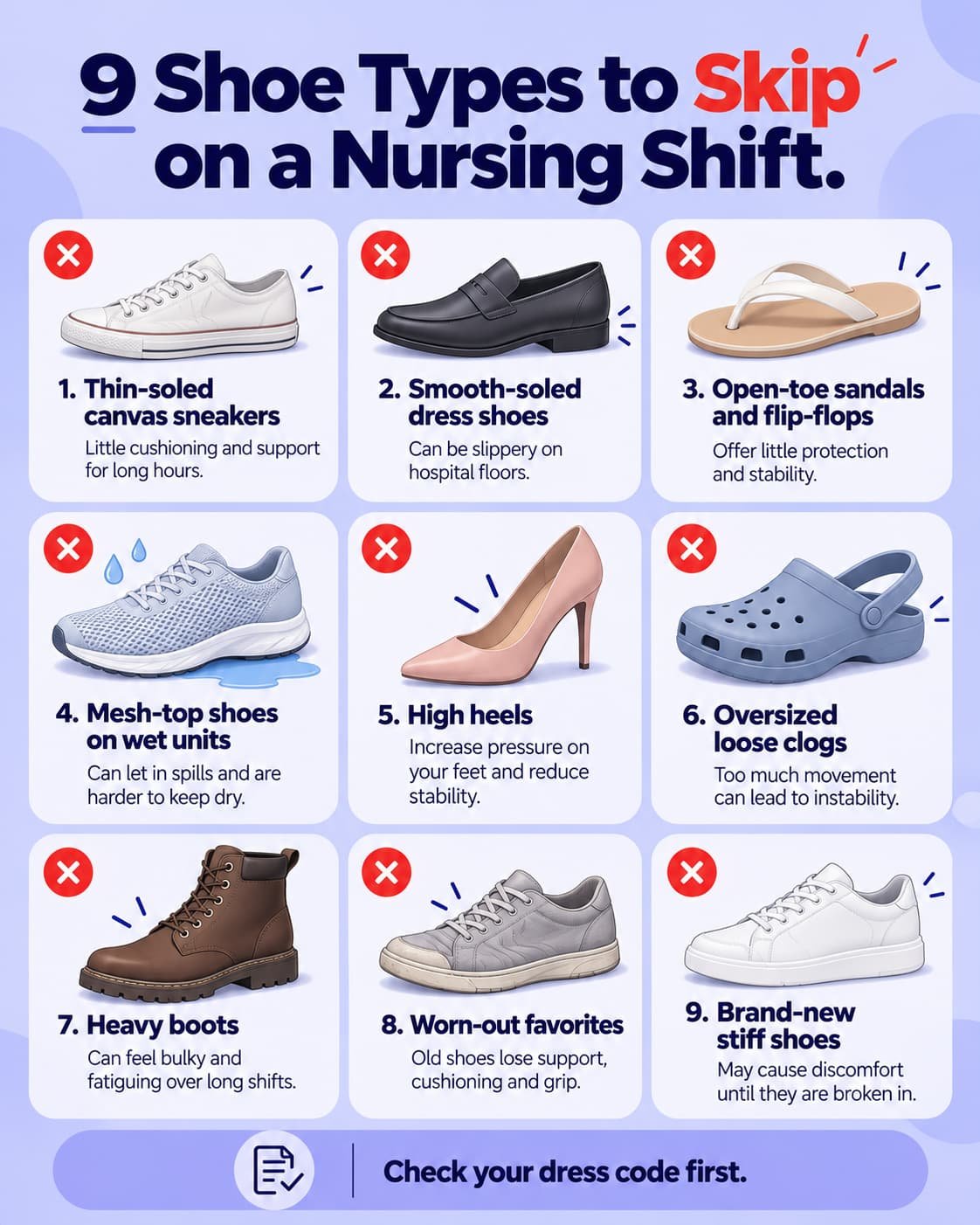
1. Thin-Soled Canvas Sneakers
Flat canvas shoes have little midsole between your foot and the floor. Hard hospital flooring then carries every step into the heel and forefoot. They suit short errands, not 12 hours.
Why it fails: Minimal cushioning, little arch shaping and a thin outsole that wears fast.
Choose instead: A work sneaker with a cushioned midsole. See our best nursing sneakers 2026.
2. Smooth-Soled Dress Shoes and Fashion Flats
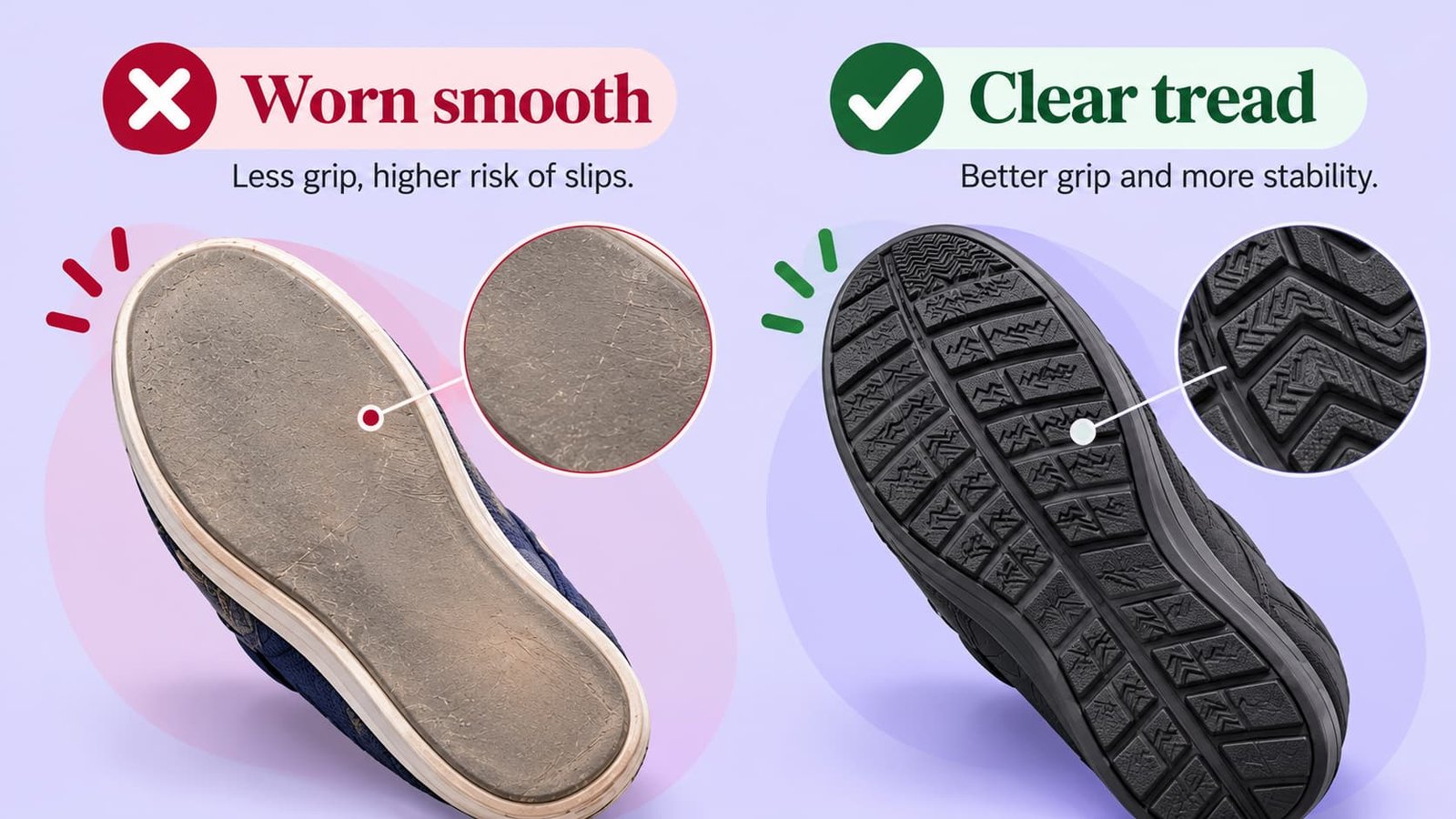
Smooth leather or flat rubber soles have little tread to channel liquid. On wet tile, that can mean less grip.
Why it fails: Slip risk on wet or polished floors, plus little cushioning. The Occupational Safety and Health Administration publishes guidance on slips, trips and falls, and footwear is one factor alongside wet floors and cleanup.
Choose instead: A visible tread pattern. Our best slip-resistant shoes for nurses guide covers options.
3. Open-Toe Sandals and Flip-Flops
Open toes expose your feet to dropped items, needles and spills, and many hospitals ban them outright.
Why it fails: No protection, little support and usually a policy violation.
Choose instead: A closed-toe, closed-heel shoe that meets your unit’s rules.
4. Mesh-Top Shoes in Wet Units
Breathable mesh is comfortable on dry floors. In ER, OR or procedure areas, it can soak up fluids and take a long time to dry.
Why it fails: Fluid absorption and harder cleaning.
Choose instead: A wipe-clean upper. Our best waterproof shoes for nurses guide lists options, and the ER and OR picks are in best nursing shoes for ER and surgical nurses.
5. High Heels and Steep Wedges
Heels push weight onto the forefoot and reduce stability. Over a long shift, that can leave the balls of the feet sore and the ankles less steady.
Why it fails: Poor stability and forefoot pressure.
Choose instead: A flat or low-heel shoe with a wide, stable base.
6. Loose or Oversized Clogs
Many clogs are comfortable, but a clog that is too big lets the heel slide forward and jams the toes. Several Crocs work clogs run large, so most buyers size down.
Why it fails: Heel slip, toe pressure and tripping on stairs.
Choose instead: A snug heel, or a strap. For the full comparison, see clogs vs sneakers for nurses, and for clog options see best nursing clogs 2026.
7. Heavy Boots and Bulky Work Shoes
Steel-toe boots and thick-soled work boots add weight that you lift thousands of times a shift. Unless your role requires them, the extra load tires the legs.
Why it fails: Weight and stiffness.
Choose instead: A lightweight clog or sneaker.
8. Worn-Out Favorites
A comfortable old pair may have a smooth outsole, flat foam and a collapsed heel. Familiar does not mean supportive.
Why it fails: Reduced grip and cushioning. Signs to watch for include smooth tread, a heel that squeezes flat and new aches. For the full list, see our nursing shoe rotation guide.
9. Brand-New Shoes on a Full Shift
Stiff leather and rigid heel counters can rub. Wearing a new pair for 12 hours on day one risks blisters.
Why it fails: Break-in discomfort.
Choose instead: A gradual wear-in, starting with part of a shift.
What About Standing All Day?
If long standing is your biggest problem, the shoe type matters less than cushioning, a supportive footbed and rest between wears. Our best shoes for nurses who stand all day guide goes deeper. For heel pain, see shoes for nurses with plantar fasciitis, and remember that a shoe cannot treat a condition. Persistent pain deserves a podiatrist.
Better Alternatives to Shop Instead
These six shoes are examples of fixes for the problems above. Each shows its main tradeoff.
Ratings come from Amazon US and may change. Check the listing for current details.
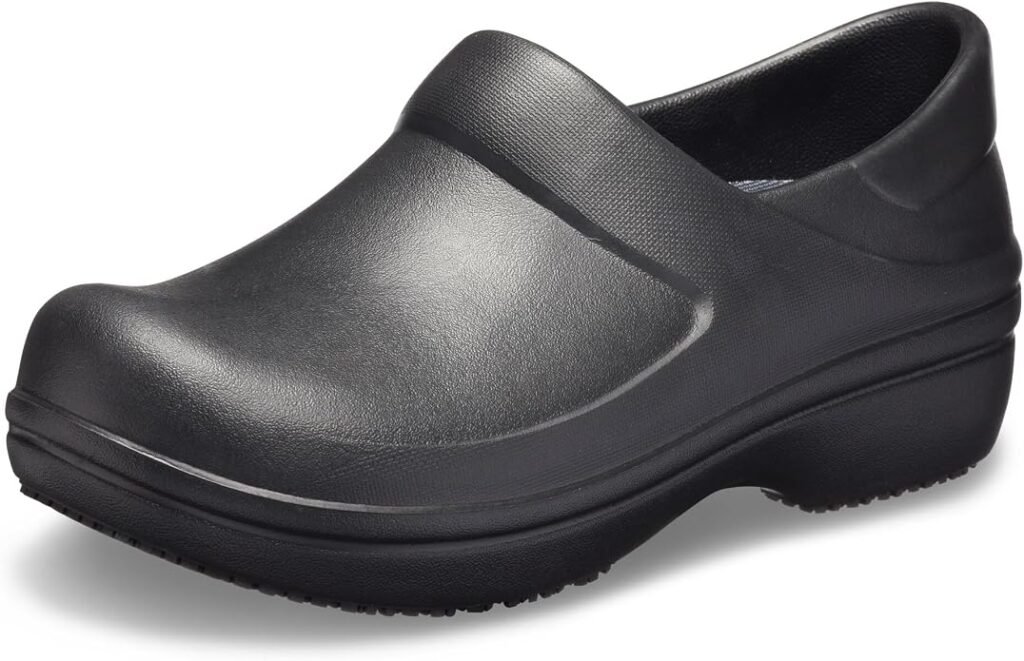 💧 BEST FOR SPILLS
Waterproof and wipe-clean. Runs large, so most people size down.
🛒 Check Price on Amazon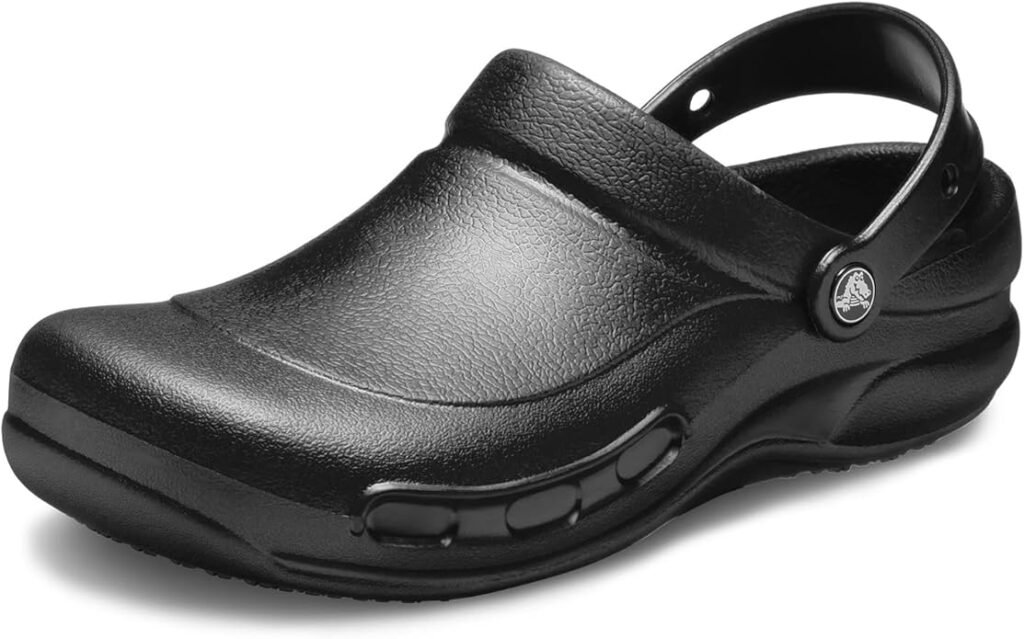 🏥 BEST FOR HOSPITALS
Enclosed toe with a slip-resistant tread. Moderate cushioning, runs large.
🛒 Check Price on Amazon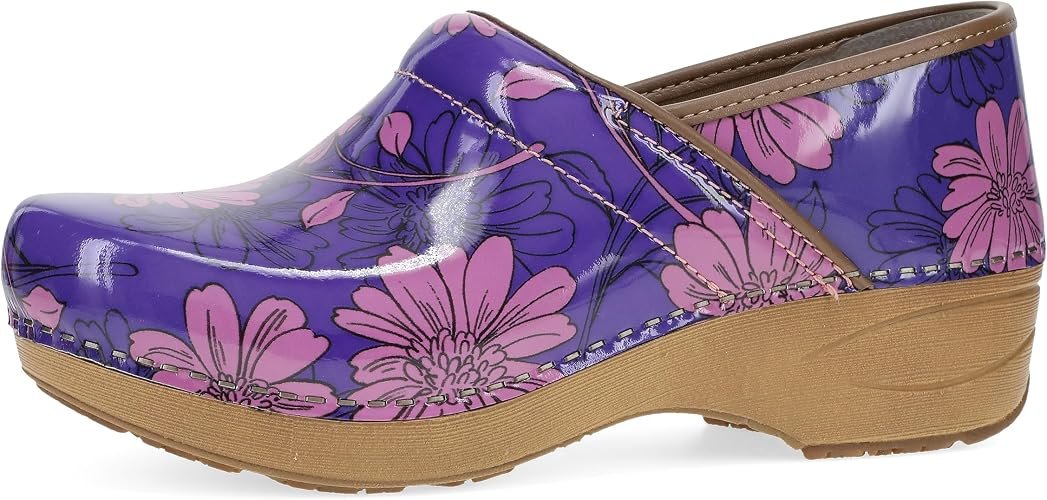 🥾 BEST SUPPORT
Closed clog with a rocker bottom and removable footbed. Premium price.
🛒 Check Price on Amazon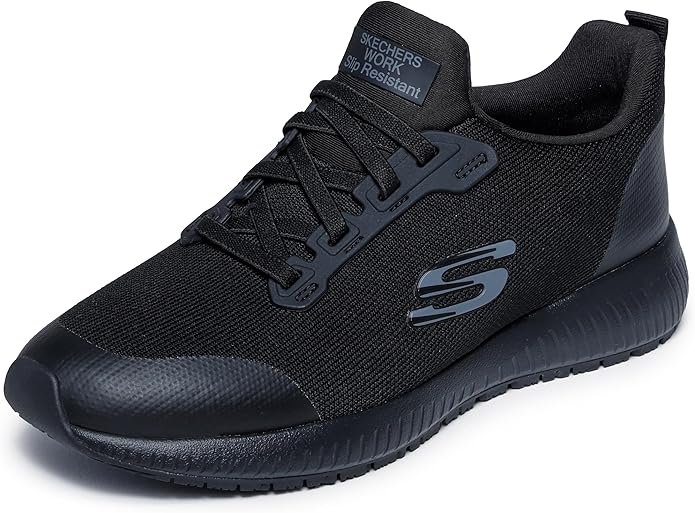 👟 BEST WORK SNEAKER
Slip-resistant outsole, memory foam and roomy fit. Not waterproof.
🛒 Check Price on Amazon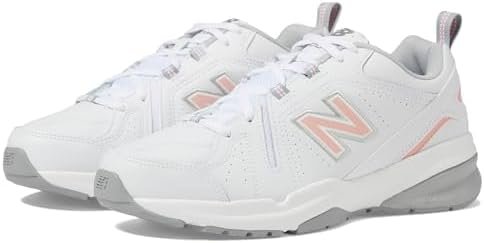 💰 BEST VALUE
Lace-up adjustability and a cushioned heel. Suede needs care.
🛒 Check Price on Amazon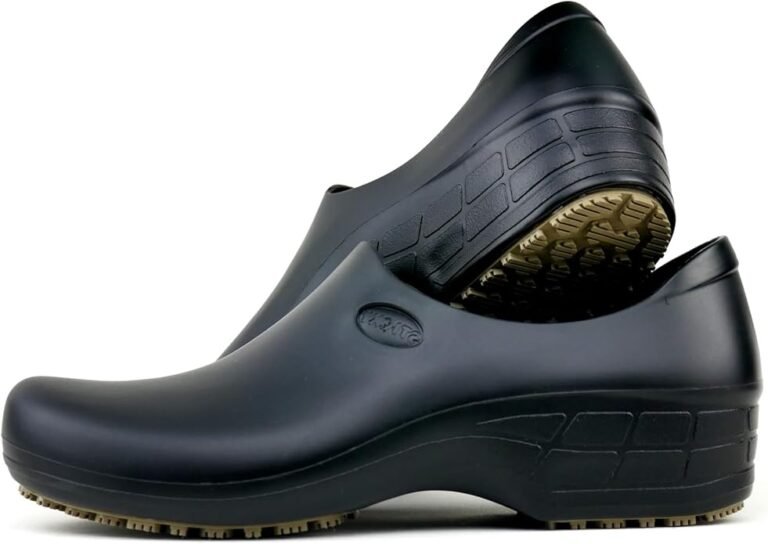 🧼 EASY-CLEAN PICK
Waterproof with a moisture-wicking insole. Basic cushioning.
🛒 Check Price on AmazonQuick Reference Table
| Avoid | Main Problem | Better Choice | Example |
|---|---|---|---|
| Thin canvas sneakers | Little cushioning | Work sneaker | Skechers Squad |
| Smooth dress soles | Less grip on wet tile | Visible tread | Crocs Bistro |
| Open-toe sandals | No protection | Closed toe and heel | Dansko XP 2.0 |
| Mesh in wet units | Absorbs fluids | Wipe-clean upper | Crocs Neria Pro II |
| High heels | Forefoot pressure | Flat, stable base | New Balance 608 V5 |
| Oversized clogs | Heel slip | Snug fit or strap | Size down in Crocs |
| Heavy boots | Weight | Lightweight shoe | Sticky Nursing Shoes |
| Worn favorites | Flat foam, smooth tread | Replace on wear signs | See rotation guide |
| Brand-new, full shift | Break-in rubbing | Gradual wear-in | Any new pair |
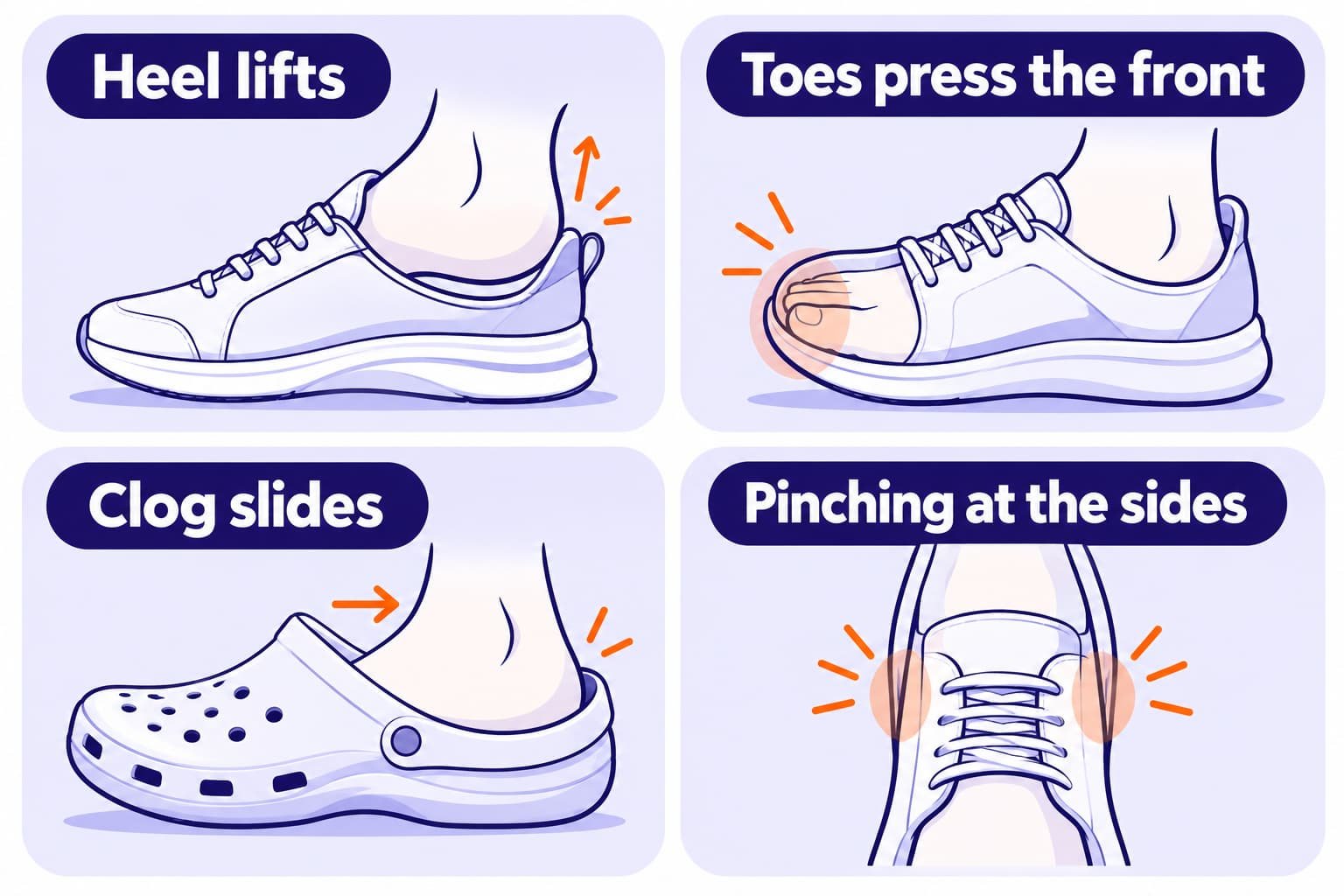
Fit Red Flags to Watch For
- The heel lifts when you walk. The shoe is too big, or the heel cup is too shallow.
- Toes press the front. Leave about a thumb’s width in front of your longest toe.
- The clog slides forward on stairs. Size down or choose a strapped style.
- Pinching at the sides. Look for a roomier toe box. See our guide to walking shoes for women with bunions for wide-toe-box features.
- New aches after a few shifts. Re-check fit, and see a podiatrist if the pain persists.
Nursing Workplace Considerations
Footwear policies vary by employer and unit. Some require closed-toe and closed-heel shoes, some limit colors or materials, and some require slip-resistant soles in specific areas. ASTM International publishes standards for footwear slip-resistance testing, and manufacturers may cite them, so ask which one your employer uses. Confirm your dress code in writing before you buy.
Self-Check: Is Your Shoe a Problem?
Tap the one closest to you.
My feet ache by mid-shift
Check for flat cushioning. A thin sole or compressed foam is the usual cause. Consider a supportive footbed.
I feel unsteady on wet floors
Turn the shoe over. A smooth or shiny tread is a warning sign. Choose a visible tread pattern.
My heel slides in my clogs
The clog may be too big. Try a half or full size down, or a strapped style.
My shoes stay damp after shifts
Pull the footbed and air-dry between wears. A wipe-clean upper helps in fluid-heavy units.
How to Avoid a Bad Buy in Five Steps
- Get the dress code in writing.
- Name your worst floor and match the outsole to it.
- Check the heel hold by walking briskly in the shoe.
- Try shoes on at the end of the day with work socks.
- Ramp up wear time with new shoes, instead of a full shift on day one.
FAQ
What are the worst shoes for nurses?
Thin-soled canvas sneakers, smooth-soled dress shoes, open-toe sandals, high heels and oversized clogs usually cause the most trouble. Each fails on cushioning, grip, protection or fit.
Are Crocs bad for nurses?
No. Enclosed Crocs work clogs are common in hospitals. Problems usually come from the wrong size, since many run large, or an open-toe style that breaks policy.
Are running shoes bad for nursing?
Not always. They are cushioned, but many have mesh uppers and no slip rating. Check your floors and dress code.
Can nurses wear sandals?
Usually not. Most employers require closed toes and heels. Check your policy.
Are expensive shoes always better?
No. Match features to your floor and schedule. See our best premium nursing shoes guide for when a higher price makes sense.
Why do my feet hurt after shifts?
Common causes include flat cushioning, poor fit and long standing. Persistent pain needs a podiatrist.
Should nursing shoes be waterproof?
Waterproof or wipe-clean uppers help in fluid-heavy units. Dry units may not need them.
How do I know when shoes are worn out?
Look for smooth tread, flat cushioning, a collapsed heel counter and new aches.
Are slip-on shoes safe?
They can be, if the heel stays secure. Test by walking briskly and taking stairs.
Do I need slip-resistant shoes?
Many units require them. Ask your manager which standard applies.
Expert Tips
- Try shoes on late in the day, when feet are largest.
- Wear your work socks when you test fit.
- Turn shoes over monthly and check the tread.
- Rotate two pairs so foam can recover.
- Keep a dry spare for wet shifts.
Final Verdict
- Skip thin canvas, smooth soles, open toes, heels and loose clogs.
- For wet units: Crocs Neria Pro II or Bistro.
- For structure: Dansko XP 2.0.
- For a work sneaker: Skechers Squad.
- For a lace-up on a budget: New Balance 608 V5.
No shoe suits every nurse. The best protection is matching shoe to floor and checking your dress code. For a full overview, start with our best shoes for nurses guide.
Affiliate Disclosure
Some links on this page are affiliate links. If you purchase through them, Urban Style Footwear may earn a commission at no additional cost to you. Our recommendations are based on the product information, footwear characteristics, and buying criteria discussed in this guide, not on the size of the commission.