

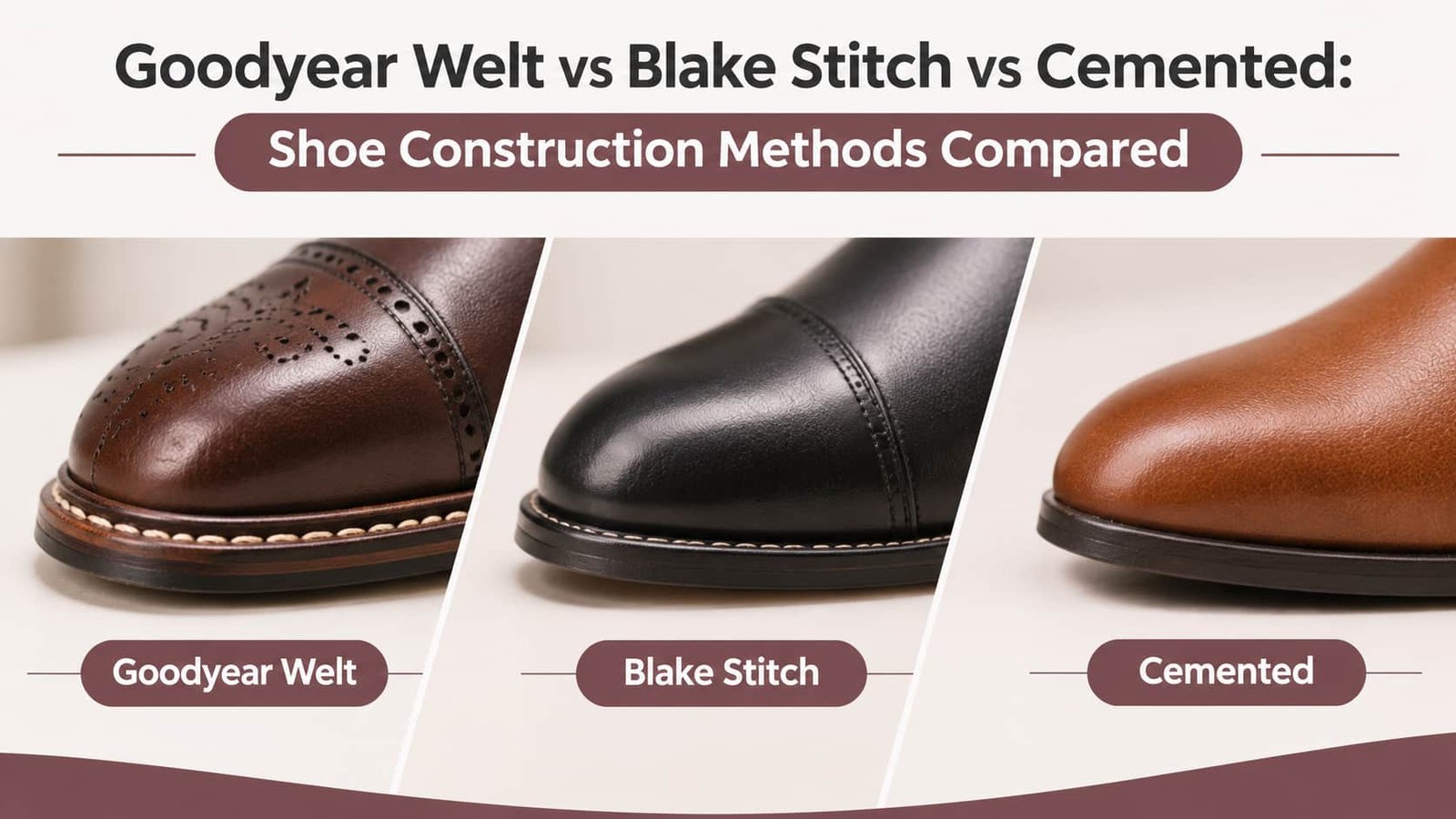
Goodyear Welt vs Blake Stitch vs Cemented: Shoe Construction Methods Compared
Summarise This Guide with AI
Open an assistant below and submit the prefilled request. The assistant reads this page only after you submit it. The guide compares Goodyear welt, Blake stitch, and cemented construction for durability, resoling, water resistance, and comfort.
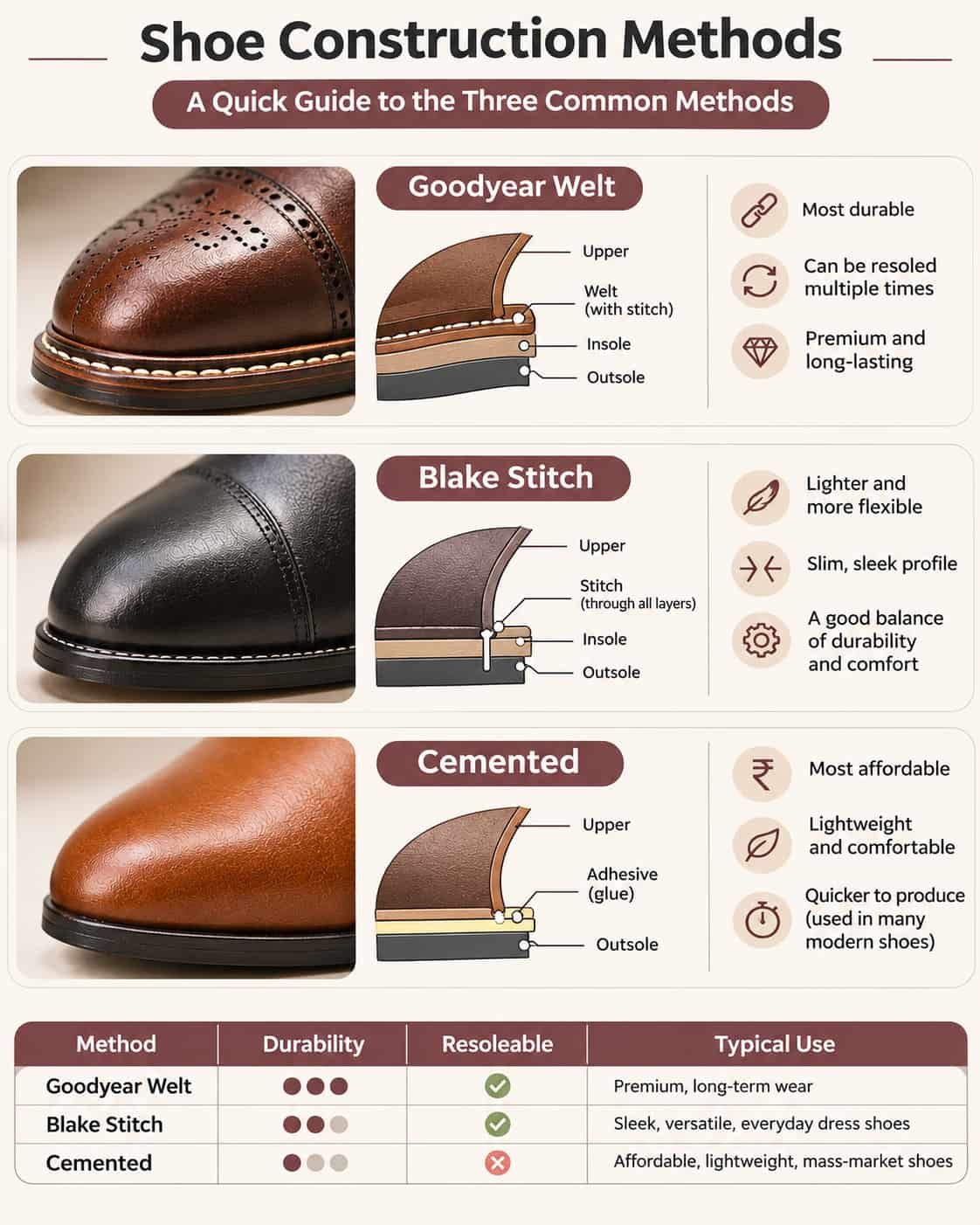
Shoe construction describes how the upper is joined to the sole. Goodyear welt uses a separate leather strip and two stitch lines, which makes it durable, water resistant, and easy to resole. Blake stitch sews the upper and sole together directly, making a slimmer, more flexible shoe that can still be resoled with the right machine. Cemented construction glues the sole on, which keeps the shoe light and inexpensive but usually makes it impossible to resole in practice.
Key Takeaways
- Goodyear welt is the most structured of the three, with a separate welt strip, and it is generally the easiest to resole.
- Blake stitch is lighter and more flexible, and it can be resoled, but it usually needs a Blake-type machine and a specialist cobbler.
- Cemented shoes are typically lighter and cheaper, but their soles are usually glued on, so they are not practical to resole.
- Water resistance depends on the whole shoe, but sources generally rank Goodyear welt highest for keeping water out, with Blake stitch behind it.
- Lifespan estimates vary by source and by use, so treat year ranges as rough guides rather than measured results.
Why Construction Matters More Than the Label
Most shoppers look at the upper, colour, and brand. Construction, the method used to join the upper to the sole, is easy to overlook, yet it shapes how the shoe bends, how it keeps out water, how long it lasts, and whether it can be repaired. Two shoes that look almost identical can behave very differently because of how they were put together.
Construction also has a practical effect on repair. A shoe that can be resoled can extend its life for years. A shoe that cannot be resoled is usually replaced when the sole wears through or separates. If you plan to keep a pair of shoes for a long time, the construction method matters as much as the leather.
If you are new to shoe parts, the anatomy of a shoe guide explains the upper, insole, midsole, and outsole, which are the layers that construction joins together.
The Three Methods at a Glance
The table below gives a quick overview. The ratings are a summary of how the sources describe each method, not measured scores.
| Feature | Goodyear welt | Blake stitch | Cemented |
|---|---|---|---|
| How the sole is attached | Stitched to a separate welt strip | Stitched straight through the insole and sole | Glued to the upper |
| Typical weight | Heaviest of the three | Lighter than Goodyear | Usually lightest |
| Flexibility | Stiffer at first | More flexible | Usually very flexible |
| Water resistance | Generally highest | Generally lower than Goodyear | Generally lowest |
| Resoling | Easy, widely supported | Possible with a Blake-type machine | Usually not practical |
| Typical price | Higher | Mid-range | Lower |
| Common on | Heritage boots and dress shoes | Italian and fashion-led dress shoes | Sneakers, casual and fast-fashion shoes |
Cemented Construction: Glued and Light
Cemented construction is the most common method in high-street and fast-fashion footwear. Stridewise describes it as the cheapest and most common way to sole a shoe, also known in the UK as “stuck on” construction. In a cemented shoe, the upper is glued to the outsole, with no stitching holding the sole in place.
The advantages are real. Cemented shoes can be light, flexible, and cheap to produce. Bespoke Unit notes that cement construction is cheaper, lighter, and more flexible than welted options, which explains why it suits casual sneakers and canvas shoes. The rubber sole can feel comfortable from the start, and the price is often lower than for welted shoes.
The main limitation is repairability. Because the sole is glued on, there is no seam to re-stitch. A Fine Pair of Shoes says a cemented sole is glued for life, with no seam to resole. Once the sole wears through or separates from the upper, the usual choice is to replace the shoe. For casual use, that trade-off may be acceptable, but it matters more for shoes you want to keep for years.
Blake Stitch: Sewn Through, Slim and Flexible
The Blake stitch sews the upper and outsole together through the insole in a single stitch line. Primer describes the upper as wrapped around the insole and attached between it and the outsole, with a single stitch attaching everything together. Bespoke Unit gives the history: the Blake machine was invented in 1856 by Lyman Reed Blake, and Gordon McKay later acquired the patent, which is why the method is also called the McKay stitch.
Blake stitching gives a slimmer, more flexible shoe than Goodyear welting, and it is often used in Italian and fashion-led dress shoes. Stridewise notes that the Blake stitch is more common in Italian shoes, where the upper is sewn directly to the sole and the result is a more flexible shoe. A Fine Pair of Shoes lists a more flexible feel, a sleeker profile, and easier resoling among the benefits.
Blake stitching has trade-offs. It is generally less water resistant than Goodyear welting, and the single stitch line means the sole is attached more directly to the upper. Resoling a standard Blake shoe requires a Blake-type machine, which many cobblers do not have. Stridewise points out that while a Blake can be resoled, it needs a specific machine, making the process more difficult and sometimes more expensive than resoling a Goodyear welt.
Blake rapid is a related method that stitches through both the midsole and outsole. Stridewise and Mel Compo’s guide describe it as a sturdier variant that suits bulkier shoes and can be resoled with a Blake machine.
Goodyear Welt: Layered, Structured and Resoleable
Goodyear welting is the most structured and most labour-intensive of the three methods. Bespoke Unit explains that the machine for Goodyear welting was invented by Charles Goodyear Jr. in 1869, which is where the name comes from. The process attaches the upper to a welt, a strip of leather, with one stitch through the welt, upper, and insole rib, then attaches the outsole to the welt with a second stitch.
The two-stitch system is what gives the method its reputation. Bespoke Unit describes the upper as attached to the welt by one stitch and the outsole attached to the welt by a second separate stitch. Because the welt sits between the upper and the outsole, water has further to travel to reach the inside of the shoe. Stridewise describes Goodyear welting as the best option for durability, solidity, water resistance, and longevity among the three methods it compares.
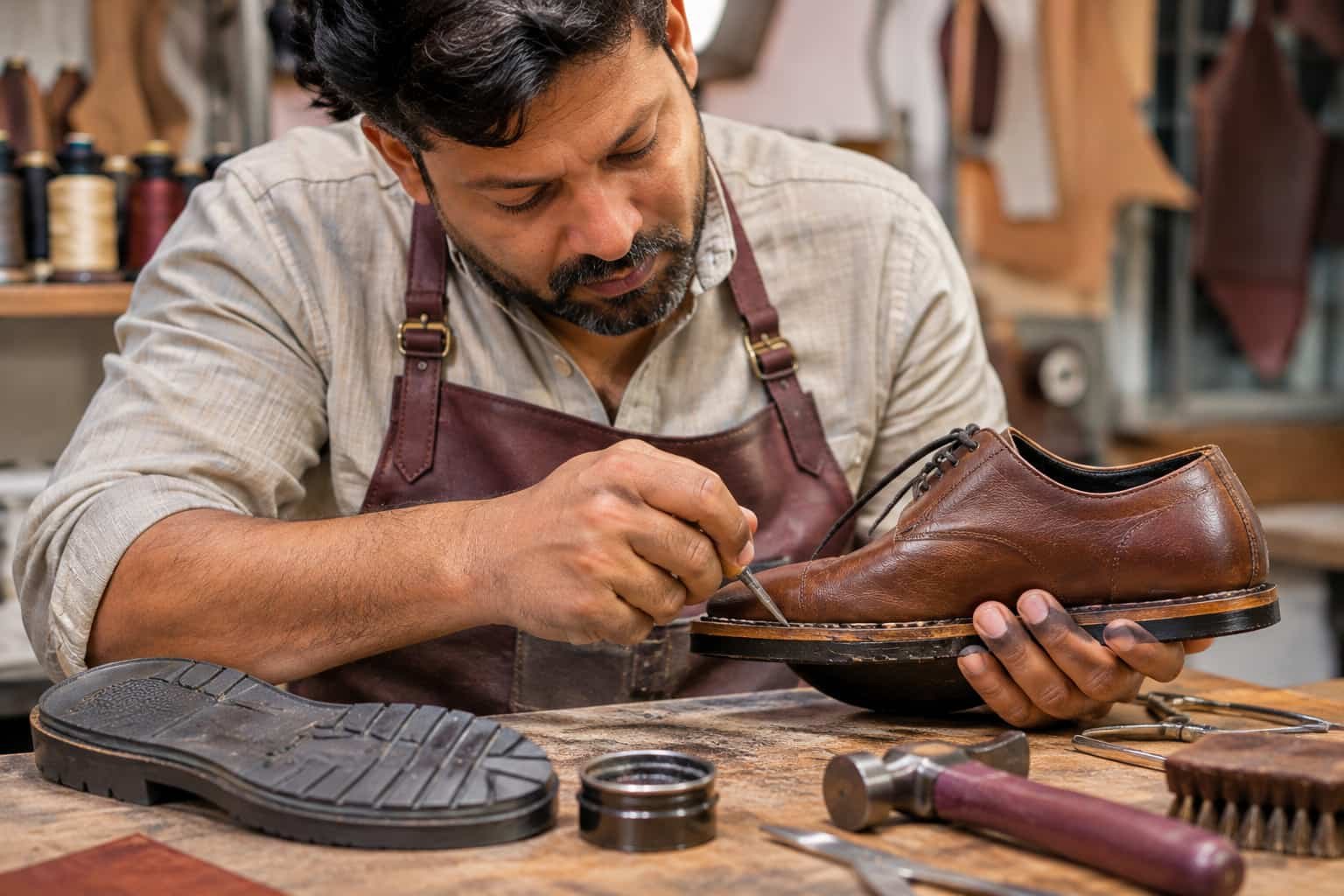
Goodyear welting is also the easiest to resole. Stridewise notes that any cobbler can resole a Goodyear welt, whereas a Blake rapid needs a Blake machine. The downsides are cost and weight. Bespoke Unit notes that the labour involved makes Goodyear welted shoes more expensive, and that the extra layers reduce some flexibility. Stiffness is most noticeable in new shoes.
Goodyear vs Blake: The Key Differences
Goodyear and Blake are the two methods most often compared. The table below sets out the differences that matter for buying and repair decisions.
| Consideration | Goodyear welt | Blake stitch |
|---|---|---|
| Layers between upper and sole | Welt strip and insole rib | Single stitch through insole and sole |
| Water resistance | Generally higher | Generally lower |
| Flexibility | Stiffer, more structured | More flexible, slimmer |
| Weight | Heavier | Lighter |
| Resoling | Any cobbler can do it | Needs a Blake-type machine |
| Cost | Higher | Lower |
| Typical use | Heritage boots, rugged dress shoes | Sleek dress shoes, fashion-led footwear |
Sources agree on the broad pattern, but they do not all agree on which is best. Stridewise ranks Goodyear highest for durability and water resistance. A Fine Pair of Shoes notes that Blake gives a better feel out of the box. The right choice depends on whether you prioritise repairability and weather protection, or a lighter and sleeker shoe.
Can Cemented Shoes Be Resoled?
This is one of the most common questions about construction. In practical terms, most cemented shoes cannot be resoled in the way a welted shoe can. The sole is glued to the upper, so there is no stitch line to re-run and no welt to reattach.
Some cobblers can remove a glued sole and replace it with a new one, but the result depends on the shoe, the glue, and the upper. A Fine Pair of Shoes states that a cemented shoe is effectively not resoleable in practical terms. Because repair is difficult and the upper may be damaged during removal, many cobblers advise against it.
If you want a shoe you can resole, look for Goodyear welt or Blake construction, and check the product description for the method. Our guide to how to resole shoes explains what a resole involves and what to ask a cobbler before you start.
Water Resistance and Weather
Water resistance depends on the whole shoe, including the upper material, the lining, and any coatings, as well as the construction. Construction matters because it determines how many seams and layers stand between the outside and the inside of the shoe.
Goodyear welting is generally rated highest for water resistance. The welt sits between the upper and the outsole, creating extra protection along the seam. Stridewise describes it as the most water-resistant of the three methods it compares. Bespoke Unit rates Goodyear as very good, Blake as poor, and cemented as poor on water resistance in its summary table, although the ratings are its own assessment.
Blake stitching is generally less water resistant, since the single stitch line goes through the sole and insole. Cemented shoes are typically least water resistant, because the glued seam is the only barrier. If you walk in wet weather or live where rain is frequent, these differences can matter more than the look of the shoe.
For a wider view of how water protection works, our guide to how waterproof shoes work explains membranes and coatings, and our guide to waterproof vs water-resistant shoes explains the difference between the two ratings.
Durability and Lifespan: What the Estimates Say
Durability is the most debated topic in construction. Sources give different estimates, and most are from retailers or shoemakers with a stake in the answer. The table below presents the ranges as estimates, not measured results.
| Method | Estimated lifespan (retailer view) | Resoling potential |
|---|---|---|
| Goodyear welt | Highest; built to last with multiple resoles | Repeatable, widely supported |
| Blake stitch | Medium-high; many years with care and resoling | Repeatable with a Blake machine |
| Cemented | Low; often cited as 1 to 3 years with regular wear | Usually not practical |
A Fine Pair of Shoes gives the 1 to 3 year range for cemented shoes, and Stridewise describes Goodyear as highest for lifespan. These are estimates from specialist sellers. Real lifespan depends on how often you wear the shoes, the surfaces you walk on, the quality of the leather and sole, and how you care for them.
For a broader sense of how long different shoes last, our guide on how long running shoes last explains the wear signs to watch for.
Comfort and Break-In
Comfort depends on construction, but it also depends on the last, the leather, and your foot. Sources describe Blake stitch as comfortable out of the box, since it is more flexible. Goodyear welt is stiffer at first and softens with wear, and A Fine Pair of Shoes notes that a cork footbed in Goodyear welted shoes can mould to the foot over time. Cemented shoes are often flexible and comfortable from the start, which is part of their appeal for casual wear.
Break-in is part of the Goodyear experience for many buyers. The added structure supports the foot, but the shoe needs time to adapt. Plan for that break-in period, and try shoes on at the end of the day when feet are slightly larger. If a shoe causes persistent pain or pressure, a podiatrist or clinician can assess the fit. This guide does not provide medical foot advice.
Our guide to the shoe last explains how the form a shoe is built around affects fit, which matters as much as construction for comfort.
How to Identify Each Construction
You can often identify the construction by looking at the edge of the sole and the inside of the shoe.
A Goodyear-welted shoe shows a strip of leather, the welt, running around the base of the upper, with a stitch line along it. Inside, you may see a stitch line along the insole rib. A Fine Pair of Shoes describes this as a strip of leather running around the base with a stitch line along it.
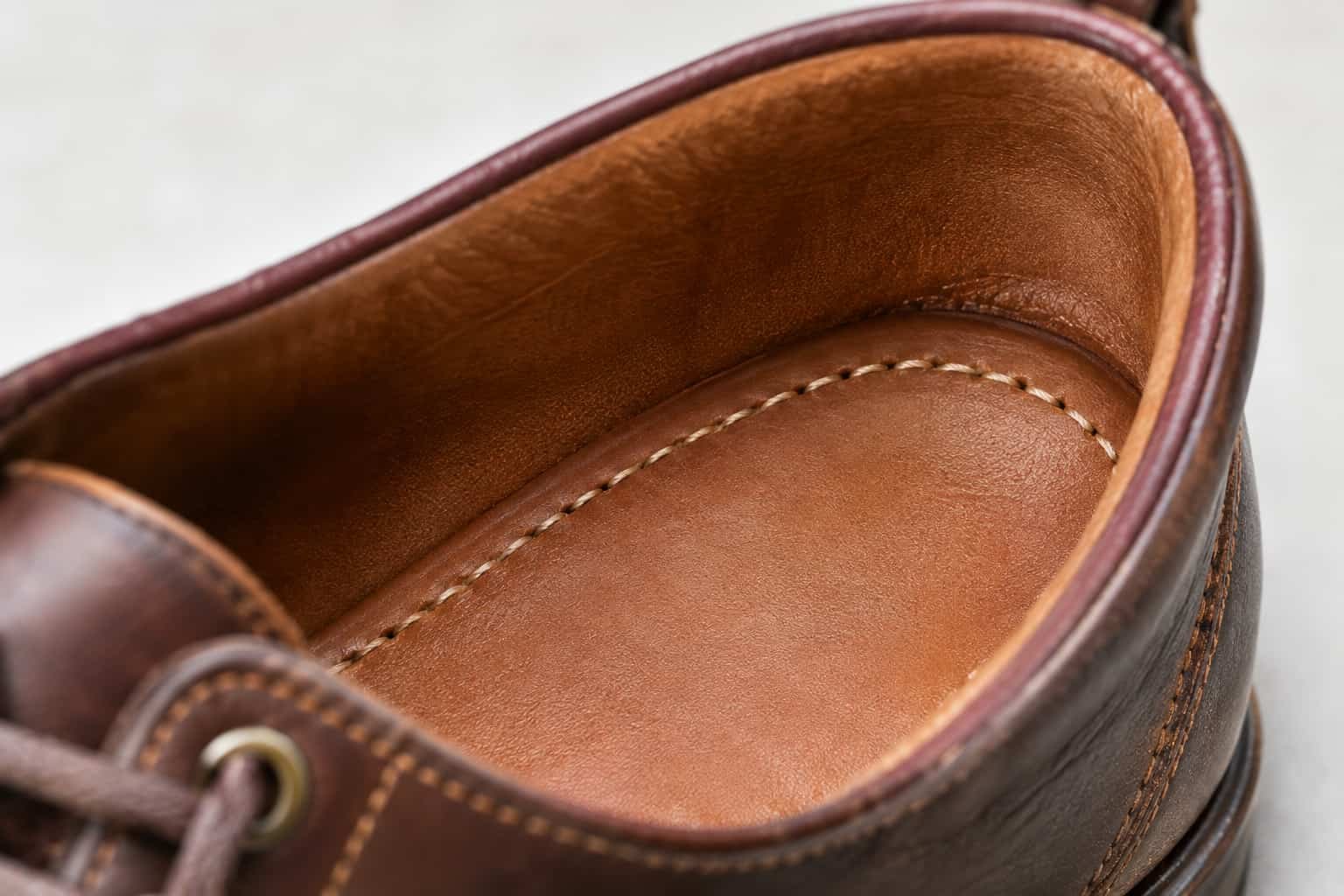
A Blake-stitched shoe has no separate welt. The edge is usually trimmed close to the sole, and the giveaway is inside: a line of stitching runs around the insole. A Fine Pair of Shoes says to look for that stitching on the inside.
A cemented shoe shows neither a welt nor a stitch line. The edge is a clean, glued join, and the sole is attached without visible stitching.
Be careful with faux welts. Some shoes have a decorative welt that imitates Goodyear construction but is not built that way. Check the product description and, if possible, look inside the shoe. A manufacturer or specialist retailer can confirm the method.
Other Methods Worth Knowing
Several other methods appear in the sources, and they are useful to recognise.
The storm welt is a variant of Goodyear welting that uses the same basic construction with a slightly different welt. Stridewise and other sources describe it as a Goodyear-type construction, sometimes called a split-reverse welt.
Blake rapid stitches through both the midsole and outsole, combining elements of Blake and Goodyear construction. Stridewise describes it as a sturdier alternative to the simple Blake stitch, and it is typically found on bulkier, rugged shoes.
Veldtschoen is a variant of the Norwegian or storm welt method that the Bespoke Unit guide describes as particularly water resistant because of its outward-turned upper. It is a specialist method and is usually made by hand or by small makers.
A Practical Decision Guide
Choose Goodyear welt if you want the easiest resoling, the highest water resistance, and a shoe you expect to keep for years. Expect a heavier, stiffer shoe and a higher price.
Choose Blake stitch if you want a slimmer, more flexible shoe for dressier wear, and you can find a cobbler with a Blake machine. Expect less water resistance than Goodyear and a more specialised repair process.
Choose cemented construction if you want a light, inexpensive shoe for casual or occasional wear, and you are happy to replace it when the sole wears out. Expect less water resistance and limited repair options.
If you are unsure, consider how often you will wear the shoe, the weather you face, and whether you plan to repair it. A shoe you wear daily in rain and expect to keep for years will suit Goodyear better than a cemented casual shoe.
Our shoe finder can help you compare shoes by purpose before you look at construction.
Trade-Offs and Limitations
Each method involves trade-offs.
Goodyear welt is durable and repairable, but it is heavier, more expensive, and stiffer at first. Blake stitch is slimmer and more flexible, but it is less water resistant and harder to resole without a specialist. Cemented construction is light and cheap, but it is hard to repair and usually has a shorter life.
Construction does not guarantee quality. Bespoke Unit notes that a shoe made with a Goodyear welt can still use poor leather, weak outsoles, or other low-quality materials. Stridewise and Helm’s comments make a similar point: the method is one factor among many, including the leather, the sole, and the finishing.
Finally, lifespan estimates come mostly from specialist sellers. Treat them as guides, and check independent reviews or cobbler feedback before relying on a specific figure.
Myths Worth Dropping
Myth: Goodyear welt is always the best choice. It is often the most durable and resoleable, but the right method depends on how you use the shoe, the weather you face, and your preference for weight and flexibility.
Myth: Cemented shoes can always be resoled. In practice, most cemented shoes are not practical to resole, because the sole is glued to the upper.
Myth: Blake stitch and Goodyear welt are the same. They are different methods with different layers, water resistance, and repair requirements.
Myth: Construction alone determines quality. Leather, sole material, and finishing also matter, and a well-made shoe with a simpler method can outlast a poorly made welted shoe.
Myth: A decorative welt means the shoe is Goodyear welted. Some shoes use a welt for appearance only. Check the product description or the inside of the shoe.
Caring for Each Construction
Care depends on construction as well as the material. For Goodyear-welted shoes, keep the welt clean and dry, and check the stitching regularly. A cobbler can re-stitch or replace the sole when it wears, which extends the shoe’s life. Let shoes dry at room temperature, and use a shoe tree to hold the shape.
Blake-stitched shoes benefit from similar care. Keep the upper conditioned and the sole dry, and take the shoe to a cobbler with a Blake machine for resoling. Ask about the machine before you need it.
Cemented shoes need care that protects the glued join. Avoid soaking them, since water can weaken the adhesive. Clean the upper and sole gently, and replace the shoe when the sole separates or wears through.
Our guide on how to clean shoes and maintain them covers safe cleaning steps for common materials. Our guide to full-grain vs top-grain leather explains how leather grade affects care and durability.
Frequently Asked Questions
What is the difference between Goodyear welt and Blake stitch?
Goodyear welt uses a separate leather strip and two stitch lines, which makes it more structured, more water resistant, and easier to resole. Blake stitch sews the upper and sole together in one line, which makes it slimmer and more flexible, but usually needs a Blake-type machine to resole.
Can cemented shoes be resoled?
In most cases, no, not in a practical way. The sole is glued to the upper, so there is no seam to re-stitch. Some cobblers can remove and replace glued soles, but results vary.
Is Goodyear welt better than Blake stitch?
It depends on what you need. Goodyear welt is generally more durable, more water resistant, and easier to resole. Blake stitch is generally lighter, more flexible, and sleeker.
How can I tell if a shoe is Goodyear welted?
Look for a strip of leather around the base of the shoe with a stitch line along it. Check the inside for a stitch line along the insole rib. Be aware that some shoes have decorative welts that are not Goodyear construction.
How long do cemented shoes last?
Retailer estimates vary, and one specialist seller gives a range of 1 to 3 years with regular wear. Real lifespan depends on use, surface, and care.
Does construction affect water resistance?
Yes. Goodyear welting is generally rated highest for water resistance, followed by Blake stitch, with cemented construction generally lowest. The leather and coatings also matter.
Is a more expensive construction always better?
Not always. A welted shoe with weak leather or a poor sole may not outlast a well-made shoe with a different method. Compare the whole product, not the method alone.
Conclusion
Goodyear welt, Blake stitch, and cemented construction take different routes to the same goal: attaching the upper to the sole. Goodyear welt is the most durable, water resistant, and easiest to resole. Blake stitch is slimmer and more flexible, with a more specialised repair route. Cemented construction is light and cheap, but it is usually not practical to repair. Your next step is to check the construction on the shoes you are considering and match it to how and where you will wear them. For a broader foundation, start with the shoe materials hub or browse the footwear knowledge section.
Sources
- Stridewise, “Goodyear Welt vs Blake Stitch vs Cement – Which is Best?” (updated August 1, 2024; author Nick English): https://stridewise.com/goodyear-welt-vs-blake-stitch-vs-cement/
- Bespoke Unit, “Shoe Construction Types” guide: https://bespokeunit.com/shoes/construction/
- Primer Magazine, “Understanding Shoe Construction: Goodyear Welt, Blake Stitch, & Cementing” (2014): https://www.primermagazine.com/2014/spend/understanding-shoe-construction-goodyear-welt-blake-stich-cementing


