

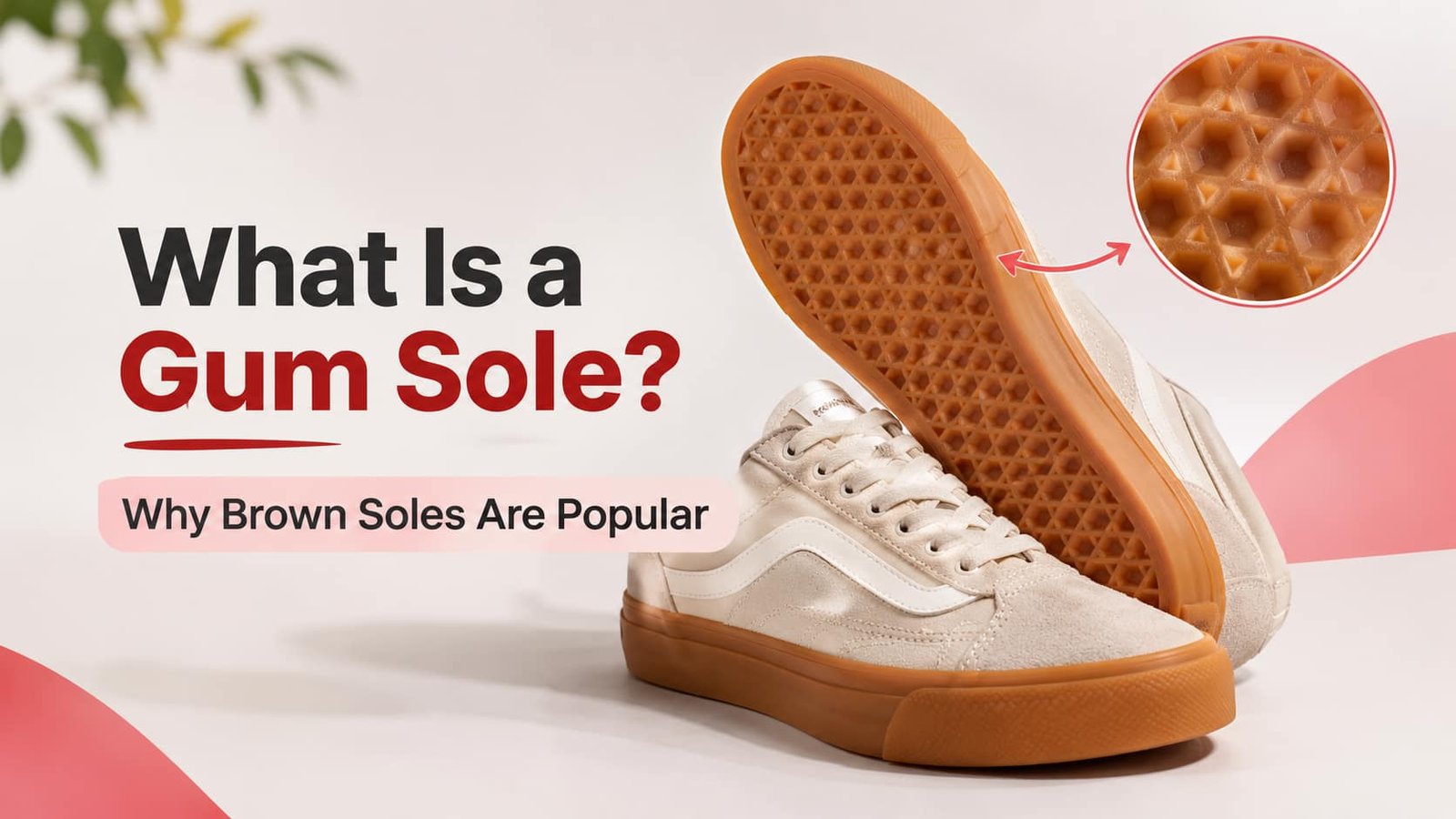
What Is a Gum Sole? Why Brown Soles Are Popular
Summarise this gum sole guide with AI
Open an assistant and submit the prefilled request. The assistant reads the page only after you submit it.
Quick answer: A gum sole is a shoe outsole made from natural rubber, usually latex tapped from rubber trees and heat-treated into solid rubber. It takes its name from the light-brown, caramel tone that forms during processing. Gum soles are flexible, grippy and durable, which is why they have been used on classic sneakers and skate shoes for decades. Many shoes sold as “gum sole” today use synthetic rubber in a similar shade, so the label alone does not always confirm natural rubber.
Key takeaways
- A gum sole is a rubber outsole, and the name refers to the colour and material family, not to chewing gum.
- Natural gum rubber comes from latex, the sap of rubber trees, and it keeps a caramel brown tone through processing.
- Many products labelled “gum sole” now use synthetic rubber, so check the product description if the material matters to you.
- Gum soles flex and grip well on pavement and boards, and they are often thinner than chunky cupsoles, which gives a closer feel to the ground.
- The brown tone is popular because it pairs easily with denim, canvas, suede and neutral palettes, and it carries a retro look.
- Routine brushing and gentle cleaning do most of the work. Chewing gum on a gum sole calls for patience, not harsh solvents.
What a gum sole is
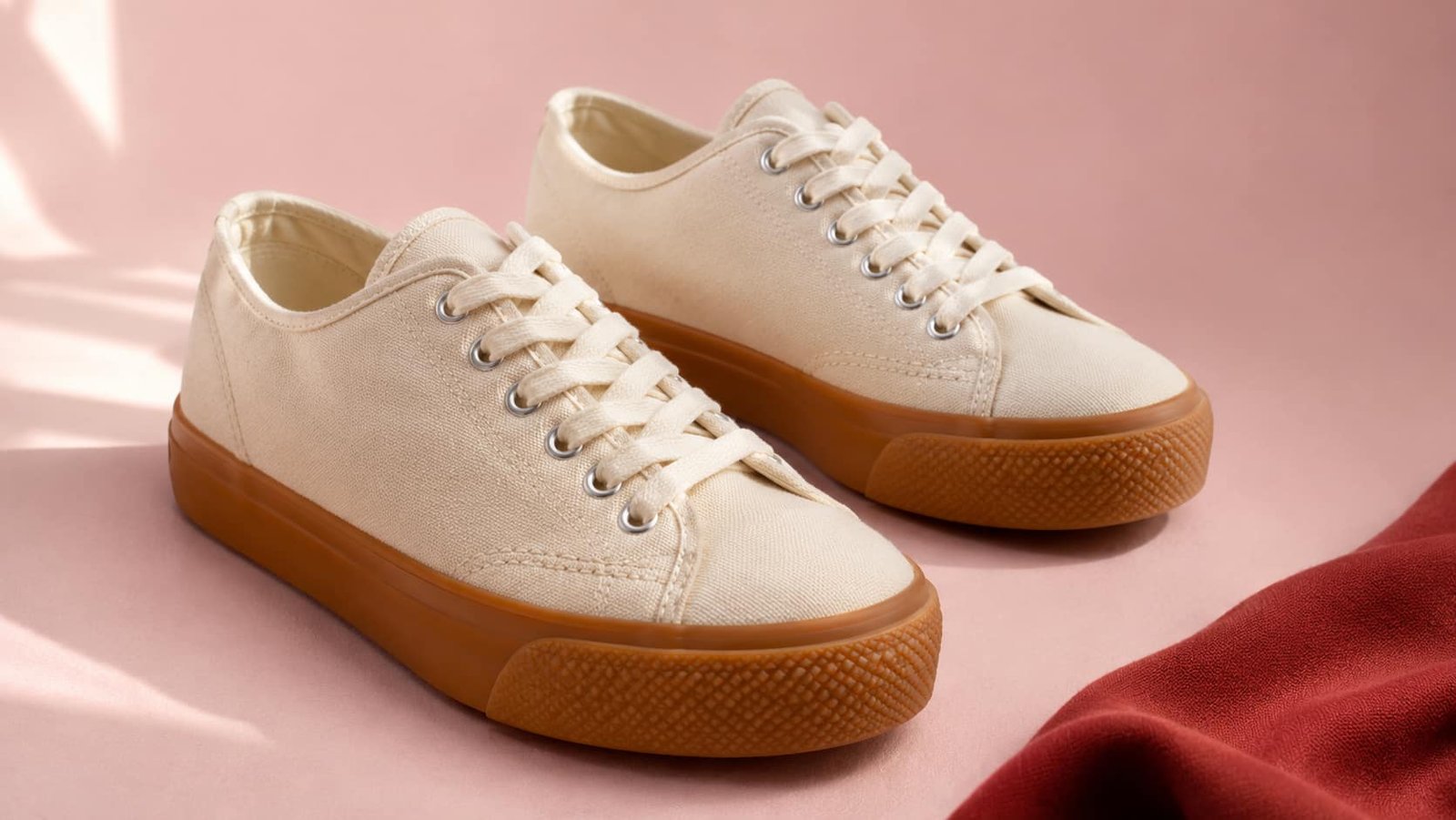
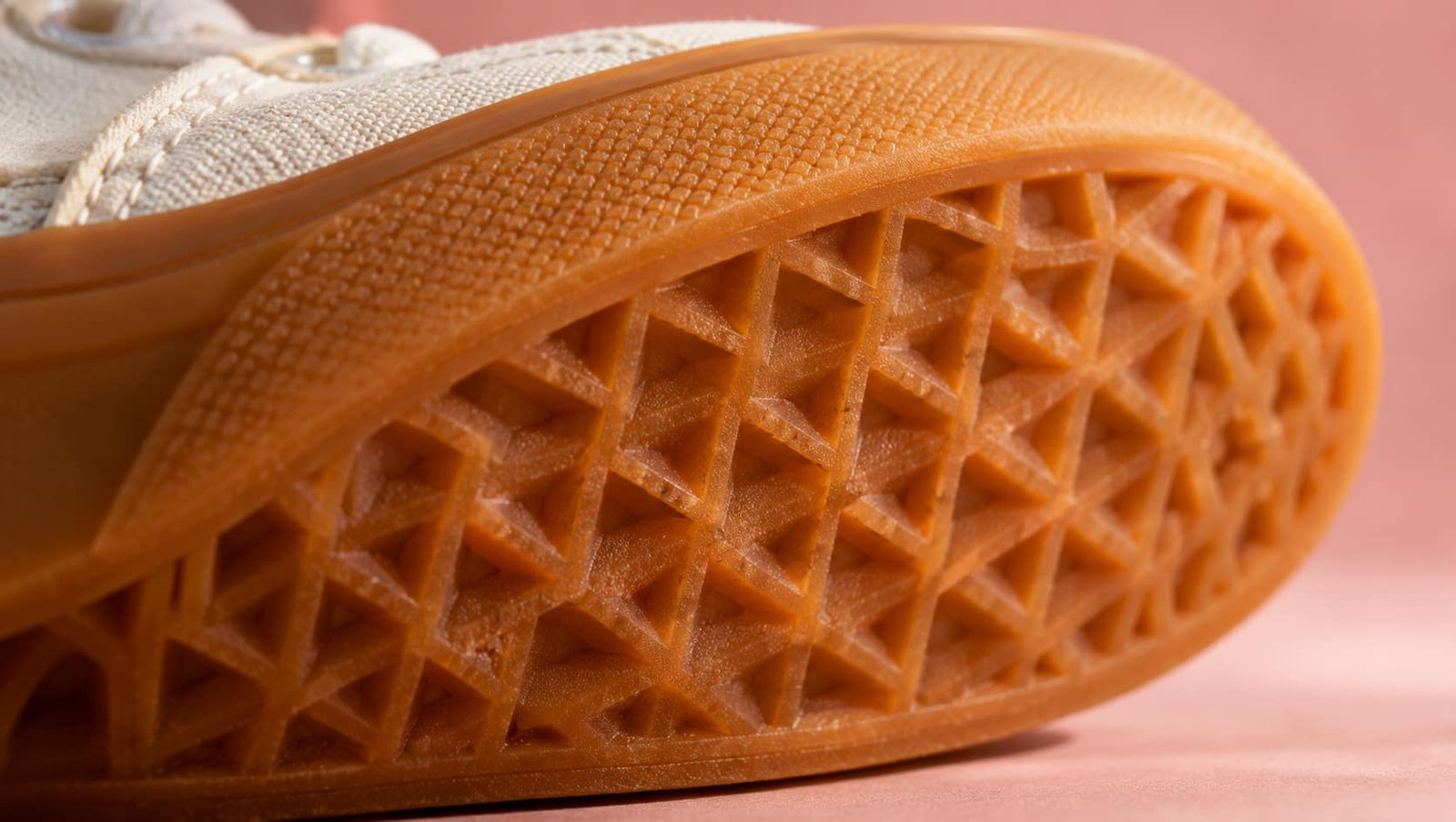
A gum sole is an outsole, the bottom layer that touches the ground, made from natural rubber that has a light brown or caramel colour. Vans, which has built a large part of its identity around these soles, describes the material as natural latex. The latex is collected as a liquid from rubber trees and then heat-treated, which breaks down its proteins and turns it into solid rubber. The caramel tone develops during that process, and it is the reason the sole looks the way it does.
Outsoles sit at the bottom of a shoe’s sole system, alongside the midsole that cushions and the insole that cradles the foot. If you want a clear picture of where the outsole ends and the rest of the shoe begins, the guide on how the insole, midsole and outsole differ explains the layers in plain terms, and the shoe anatomy overview shows where each part sits on a typical sneaker.
The phrase “gum sole” describes a material and a colour family. It does not describe a shoe style. A gum sole can appear on a low-top canvas sneaker, a slip-on, a suede retro trainer or a leather court shoe. What the shoes share is the outsole, not the silhouette.
Gum rubber is also a close relative of other rubber soles. For a wider look at how rubber outsoles are made and compared, the article on rubber shoe soles covers the general category, while this article focuses on the brown, natural-rubber version that gives the name its meaning.
Where the name comes from
The word “gum” in this context refers to rubber, which in older English was often called gum. The Oxford-style dictionary history on Etymonline traces the word “gumshoe” to 1906, when it described a plainclothes detective. The name came from the rubber-soled shoes those detectives wore to move quietly, and the rubber sole was the defining feature. Etymonline also notes that “gum” used for rubber shoes was already recorded by 1859. You can read the entry in the Etymonline gumshoe entry.
Over time, “gum sole” came to describe the brown or tan rubber itself, and the name stuck to sneakers and boots with that outsole. Vans traces its own link to rubber back to its founding. The company’s history begins with Paul and Jim Van Doren’s rubber company, which started making shoes and selling them directly to the public in 1966. Vans explains that skaters noticed how grippy vulcanised rubber soles were, and the brand later began building shoes with features skaters asked for, including gum soles.
Vulcanisation matters here. Primer Magazine’s explainer on gum soles describes vulcanisation as the process that heats rubber so it bonds permanently to canvas, cloth or other rubber parts. That process is part of why rubber soles became the standard for sneakers that needed both grip and durability. The Primer Magazine gum sole guide is a useful read if you want the broader cultural story.
Readers sometimes ask whether the name has anything to do with chewing gum. It does not. A gum sole is not sticky in the chewing-gum sense, even though natural rubber itself is tacky to the touch. Vans notes that gum soles are both durable and sticky in the sense that they grip well, and that the rubber can be reheated to form a watertight bond with a shoe’s fabric. That property is a manufacturing feature, not a sign that the sole will pick up gum from the pavement more often than any other rubber sole.
Natural gum rubber versus synthetic “gum” soles
This is the most important distinction for anyone shopping for a gum sole, and it is where many product pages blur the line.
Natural gum rubber is produced from latex. It is the material Vans describes and the material many heritage brands have used for decades. It has a caramel tone that comes from the processing, and it is valued for flexibility and grip.
Synthetic rubber, by contrast, is made from petroleum-based compounds. Primer Magazine notes that many sneakers labelled “gum sole” today use polybutadiene, a synthetic rubber that is very close to natural isoprene rubber. The same article points out that the trade name “gum sole” is used for the colour and feel as well as for the natural material. In other words, the brown shade is often reproduced with synthetic compounds, and the label can refer to either version.
This does not automatically make synthetic gum soles worse. Brands use synthetic compounds to control cost, consistency, colour and performance across large production runs. What matters is honesty in labelling. A gum sole made from natural rubber and a gum-coloured synthetic sole will look similar on a shelf and may feel different after months of wear. Look for the material description on the product page, and if the page does not specify, treat the “gum” label as a colour description.
A practical rule: If you care about natural rubber specifically, read the material section of the listing and the brand’s own product guide before buying. If the brand describes the outsole only as “gum rubber” without explaining the material, assume the sole may be a rubber blend and judge it by how it feels in the hand, how it bends and how the tread looks up close.
Gum sole, rubber sole and white sole compared
Shoppers searching “gum sole vs rubber sole” or “gum sole vs white sole” are usually trying to decide which outsole fits their needs. The three types overlap, so the comparison below focuses on the differences that actually affect choice.
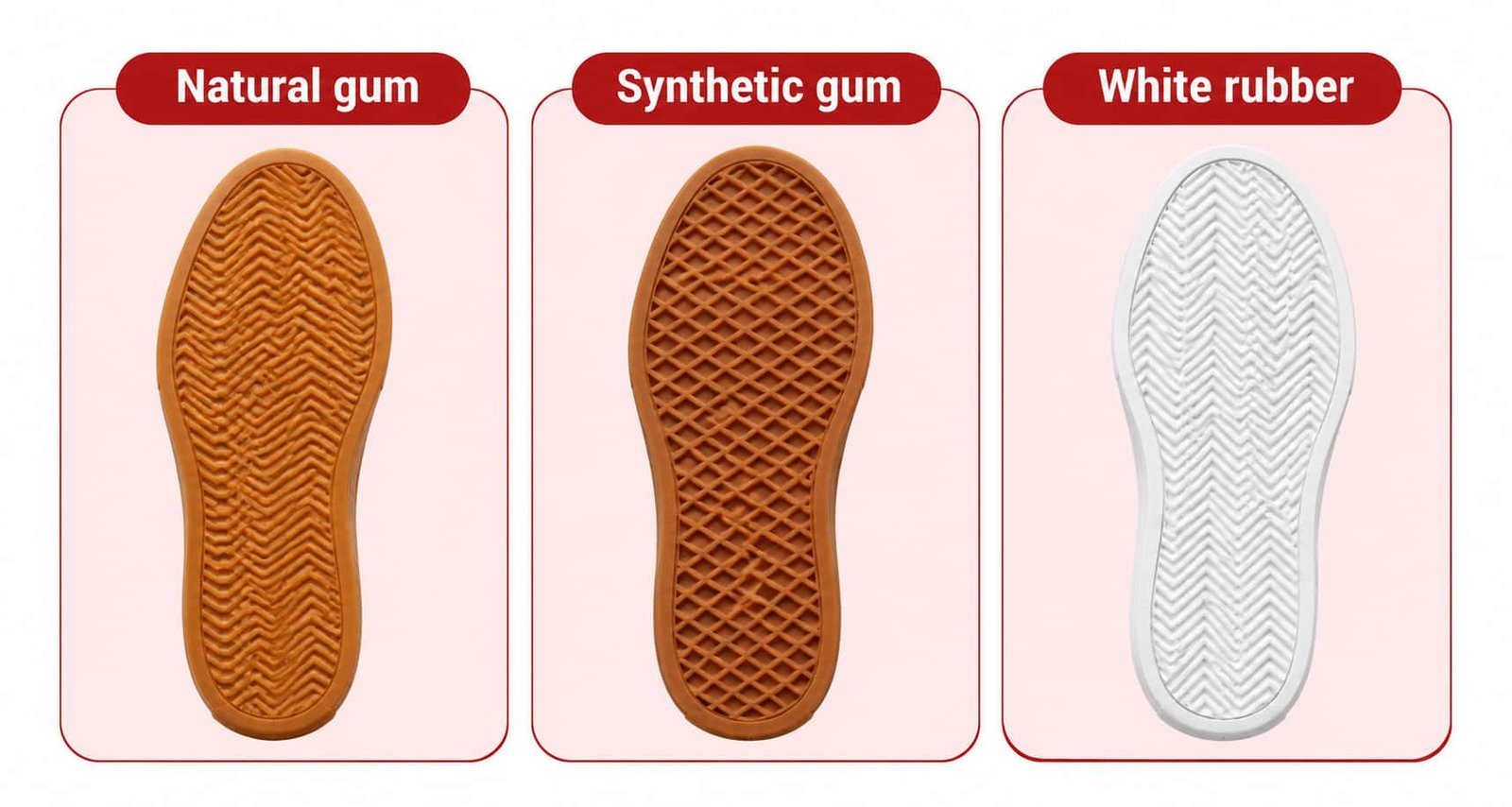
| Feature | Natural gum sole | Synthetic “gum” sole | White rubber sole |
|---|---|---|---|
| Main material | Natural latex rubber, heat-treated | Synthetic rubber such as polybutadiene, colour-matched to gum | Rubber compound formulated for a light colour |
| Typical colour | Caramel or light brown | Brown or tan tones, varying by brand | White or off-white |
| Flexibility | Bends easily, not stiff | Varies by compound and sole thickness | Varies by compound and sole thickness |
| Grip feel | Tacky, firm grip on smooth surfaces | Often similar, depending on tread | Often similar, depending on tread |
| Visible wear | Scuffs show, and the brown tone can hide dirt | Depends on the compound and finish | Dirt and marks show more clearly |
| Best for | Retro looks, casual wear, light skate use | Budget-friendly versions of the gum look | Clean, minimal looks with a bright finish |
The table shows that the colour is the easiest difference to see, but it is not the only one. The material source and the construction determine how a sole feels after a few months. A natural gum sole and a white rubber sole can both be flexible and grippy, and a synthetic gum sole can sometimes match the feel of natural rubber closely. This is why the product’s material description deserves as much attention as the photos.
Where the three types differ in everyday use is in how they handle dirt and marks. A brown outsole hides grime better than a white one, so for daily walking in the city the gum colour often looks cleaner for longer. White soles show scuffs quickly but look bright when clean. Neither is better in every case. It depends on how much visual maintenance you want to do.
Why brown soles became popular
The popularity of brown soles has a few overlapping causes.
The look is versatile. Brown and caramel tones sit between black and white in the wardrobe. They pair with navy, olive, grey, cream, denim and earthy tones without drawing too much attention. A gum sole can warm up a dark outfit and soften a light one. This is one reason gum-soled shoes keep showing up in neutral capsule wardrobes.
The look has heritage. Vans states that the style of its Skate Collection has hardly changed since 1976, and it describes the canvas and gum sole mix as a streetwear staple. That continuity is part of the appeal. People who wear gum soles often value the sense that the design has been around long enough to earn its place.
The colour signals an older, more textured style. Many retro sneakers from earlier decades used natural-toned soles, so the brown shade reads as vintage to some buyers. Newer shoes with gum soles borrow that signal on purpose, which is why brown outsoles appear on modern trainers as well as on reissued classics.
Skate culture gave it credibility. Vans links the gum sole to skaters’ needs, and the sole became a skate shoe feature because it grips boards well. That connection helped the look move from skateboarding into everyday fashion.
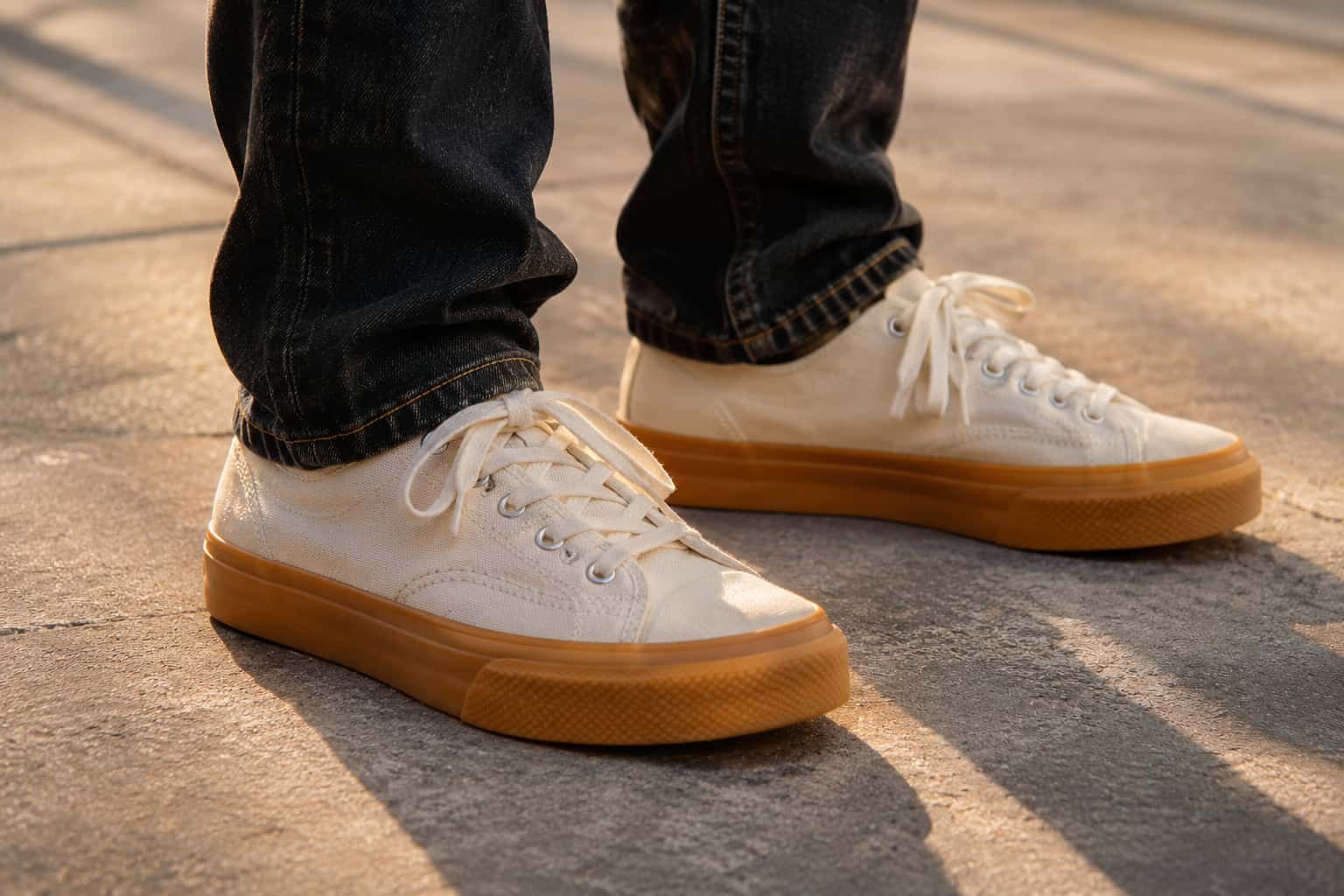
Consider a fictional example to make this concrete. Priya, a graphic designer who works from a small studio in Austin, wears dark jeans and a cream sweater most days. She wanted a pair of shoes that looked intentional without adding another black or white sneaker to the rotation. A canvas low-top with a gum sole gave her the warmth she was missing and the flexibility she needed for walking between meetings. She did not buy the shoe for skating or for performance. She bought it because the brown outsole tied her outfits together. Her experience reflects a common reason people choose gum soles: they are a styling decision as much as a functional one.
Where gum soles fit and where they fall short
Feel depends on the sole’s flexibility, thickness and tread, and gum soles tend to feel closer to the ground than many thick cupsoles.
Vans explains that gum soles are not rigid or stiff like some synthetic sole materials. According to the brand, the sole warps under pressure, presses into the surface’s small contours and then returns to its shape when the pressure lifts. Vans connects that behaviour to grip, because the sole keeps contact with a board or pavement and helps the foot stay firm. The brand also says gum soles are often thinner than other options, which gives skaters a shorter break-in period and more feedback from the board.
For everyday walkers, thinness can be a trade-off. A thinner sole gives you a better sense of the ground, but it does less to absorb hard impacts. Vans is direct about this: gum soles suit lower-impact tricks and everyday use, while high-impact skating calls for footwear built with more cushioning. The same logic applies to walking on hard floors all day. If your feet ache after long shifts, a thin gum sole may not be enough, and a shoe with a dedicated cushioning system may serve you better. The EVA foam guide explains one common midsole material that many cushioned shoes use, which can help you compare the two approaches.
Grip is one of the main reasons people buy gum soles. Natural rubber has a tacky surface, and the tread pattern on the outsole determines how well that tack translates into traction. Smooth gum soles grip polished floors differently from deeply lugged ones. Always judge the tread pattern, not just the colour.
Flexibility is another strength. A pliable outsole bends with the foot, which many people find comfortable for long walks. The trade-off is that very flexible soles offer less support for heavy loads or uneven terrain. This is not a flaw in gum rubber specifically. It is a general property of thin, flexible outsoles.
Where gum soles fit and where they fall short
Gum soles suit a wide range of everyday uses, but they are not a universal answer.
Good fits:
- Casual city walking on pavement, sidewalks and indoor floors
- Light skateboarding, including street skating and easy park runs, as Vans describes
- Retro and heritage looks where colour matters
- Wardrobes that lean toward neutral or warm tones
- Short errands, commuting and relaxed weekends
Less suitable uses:
- High-impact skating, where Vans recommends footwear built for more cushioning
- Long hikes or rough terrain, where a dedicated outsole with deeper lugs performs better
- Heavy-duty work boots or safety footwear, which need specific certifications
- Sports that demand a specific court or indoor surface
Searchers sometimes ask about gum soles for badminton, volleyball or tennis. The answer depends on the shoe, not the colour. Court sports often need outsoles designed for lateral movement and specific indoor surfaces, and many casual gum-sole sneakers are not built for those demands. If a product is marketed for court sports, read its own description and specifications rather than assuming the gum colour makes it suitable. The same applies to non-marking requirements, which depend on the compound and the floor. Check the manufacturer’s listing for those details.
For readers trying to find the right shoe for a particular activity, the shoe finder tool can help narrow down options by use case before you compare individual outsoles.
How long gum soles last
Vans describes gum soles as durable and notes that their ability to deform and recover helps them last for years. The brand contrasts this with harder soles that wear down faster under pressure from other surfaces. That claim is the manufacturer’s description of its own material, so treat it as a general property of natural rubber rather than a guaranteed lifespan.
Real-world lifespan depends on several variables: how often you wear the shoes, what surfaces you walk on, whether you skate, how thick the sole is and how well you maintain it. Gum soles on a shoe you wear only on weekends can last a long time. The same sole on a shoe you wear for daily long walks on concrete will show wear sooner.
Wear patterns are useful to watch. Check the heel and the ball of the foot first, because those areas take the most pressure. Look for smoothed tread, cracks in the sole’s surface and separation at the edges where the sole meets the upper. If the sole is separating, the shoe may still be repairable. The article on how to clean shoes and maintain them covers basic upkeep that can extend the life of any outsole, and the guide to how long running shoes last explains how to recognise wear patterns that signal it is time to replace a shoe.
Caring for gum soles
Gum soles need routine care, not complicated treatment. The main goal is to keep dirt from working into the rubber and to remove marks before they set.
Routine cleaning:
- Knock off loose dirt after each wear. Dried mud and grit scratch the surface when you brush them later.
- Use a soft brush with lukewarm water and a small amount of mild soap. Scrub the sole and the edge where it meets the upper.
- Rinse with a damp cloth to remove soap residue, then air-dry the shoes away from direct heat.
- Stuff the shoes with paper to hold their shape while they dry, and keep them out of direct sunlight.
Heavier marks: Scuffs and black marks from other shoes often come off with a gentle eraser or a damp cloth. Start with the mildest method and test any new cleaner on a hidden spot first, especially on suede or fabric uppers. Avoid strong solvents on the rubber and avoid soaking the shoe.
Chewing gum on the sole: This is a common concern because of the name. The safest approach is mechanical: let the gum harden by placing the shoe in a freezer bag in the freezer for a while, then lift the brittle gum off with a plastic scraper or a dull knife. Work slowly so you do not gouge the rubber. Some people use mild, citrus-based removers on rubber soles, but any product should be tested on a hidden area first, and it should be kept away from the upper if the upper is suede, nubuck or fabric. This is editorial advice based on general care practice, not a tested result from this site.
Suede and nubuck uppers: Many gum-sole sneakers pair the rubber with suede or nubuck. Use a suede brush for the upper and keep cleaning liquids away from it. The sole can take gentle washing, but the upper cannot. The shoe cleaning guide gives step-by-step instructions for mixed-material shoes.
Be cautious with heat. Rubber can soften or warp when exposed to high heat, such as a car dashboard in summer or a radiator. Keep shoes at room temperature, and do not place them near a heater to speed up drying.
A short buying checklist
When you shop for gum-sole shoes, these questions help separate the product you want from one that only looks the part.
- Read the material line. Does the listing say natural rubber, synthetic rubber or simply “gum rubber”? A clear description helps you know what you are buying.
- Check the tread. Look at the sole in photos from several angles. Deeper lugs suit uneven terrain. A smoother tread suits smooth floors and skateboards.
- Assess the thickness. Thin soles give more ground feel and less cushioning. Thicker soles absorb more impact but feel less direct.
- Match the upper to your life. Canvas handles rain less well than leather, and suede needs more care than smooth leather.
- Try the flex. Bend the sole by hand. A pair that bends easily at the ball of the foot may feel more natural for walking.
- Confirm the fit. Gum soles do not change fit, so choose your size using the brand’s size chart and recent customer feedback if available.
For readers who want a broader framework for judging outsoles, the how we test shoes methodology page explains how we approach evaluating footwear. This article does not include hands-on product testing, so the checklist above is a guide to what to examine, not a record of tests we ran.
Myths worth dropping
Myth: Gum soles are made from chewing gum. They are made from rubber, usually natural latex or a synthetic compound, and the name refers to the caramel colour.
Myth: Every gum-coloured sole is natural rubber. Primer Magazine notes that many sneakers labelled “gum sole” use synthetic rubber. The label alone does not confirm the material.
Myth: Gum soles are only for skaters. Skate heritage is part of their story, but they are now worn across casual and retro wardrobes. Vans itself describes them as suitable for everyday wear and light skating.
Myth: Brown soles always hide dirt perfectly. Brown hides everyday grime better than white, but heavy dirt, mud and marks still show. Routine brushing keeps the sole looking clean.
Myth: Gum soles are weatherproof. The sole material does not make a shoe waterproof. The upper, stitching and construction determine water resistance. For a clearer explanation of the difference, read the guide on waterproof versus water-resistant shoes.
Expert tips
- Choose the sole by the job. If the shoe will mostly be used for walking and style, a gum sole with moderate thickness works well. For skating or hiking, prioritise tread and cushioning.
- Clean small marks early. A quick brush after each wear prevents grit from embedding in the rubber.
- Rotate your shoes. Giving each pair a day to dry and recover reduces moisture build-up and extends the life of both the sole and the upper.
- Check the sole edge. A gap forming between the sole and upper is an early warning. Address it before the separation grows.
- Use the colour to your advantage. A gum sole pairs well with neutral and earthy palettes, and it can warm up outfits that would otherwise look flat.
Frequently asked questions
What is a gum sole?
A gum sole is an outsole made from natural rubber or a rubber-like synthetic in a light brown or caramel shade. The name describes the material family and the colour, not the shoe style.
Are gum soles natural rubber?
Some are and some are not. Natural gum soles come from latex, while many products labelled “gum sole” use synthetic rubber such as polybutadiene. Check the product’s material description to confirm.
Why are they called gum soles?
“Gum” was an old term for rubber, and the brown tone that develops during processing gave the sole its name. The word does not refer to chewing gum.
Are gum soles good for skateboarding?
Vans describes them as suitable for low-impact tricks and everyday skating on streets and light park runs. For high-impact tricks, the brand recommends footwear built for more cushioning.
Do gum soles last a long time?
Vans describes natural gum rubber as durable, and its ability to flex and recover helps it last. Actual lifespan depends on how often you wear the shoes, the surfaces you walk on and how well you maintain them.
How do I get chewing gum off a gum sole?
Freeze the gum until it hardens, then lift it off gently with a plastic scraper. If you use a cleaner, test it on a hidden spot first and keep it away from suede or fabric uppers.
Is a gum sole better than a white rubber sole?
Neither is better in every situation. Gum soles hide everyday dirt more easily and suit warm, neutral styling. White soles look bright when clean and suit minimal outfits. The right choice depends on your wardrobe, your maintenance habits and how you use the shoes.
Are gum soles waterproof?
The sole material does not make a shoe waterproof. Water resistance depends on the upper, the stitching and the construction, so check those details separately.
Verdict
A gum sole is a natural-rubber-style outsole with a caramel brown tone, and it earns its popularity through flexibility, grip, a thinner feel and a look that works across casual wardrobes. It has a clear heritage in skate culture and retro footwear, and the brown tone continues to make sense in neutral and warm palettes.
The main thing to remember is that the label does not always tell you what the sole is made from. Many shoes use synthetic rubber in a gum-coloured compound, so the product description matters. If you want natural rubber, look for that wording. If you want the look and the flex, a well-made synthetic gum sole may suit you just as well.
For everyday walking and casual style, a gum sole is a sensible choice. For high-impact skating, long hikes or court sports, choose a shoe designed for those demands and treat the gum colour as a bonus rather than a performance guarantee.
To explore more about how sole materials affect comfort and wear, start with the main shoe materials pillar, then read the guide on crepe sole shoes for another natural-material option.
Sources
- Vans. “Everything You Need to Know About Gum Soles.” Vans Stories, page dated 19 February 2025. https://www.vans.com/en-dk/vans-stories/everything-you-need-to-know-about-gum-soles
- Primer Magazine. “Gum Sole Sneakers” guide. https://www.primermagazine.com/2020/spend/gum-sole-shoes
- Etymonline. “gumshoe.” Origin and history of the term. https://www.etymonline.com/word/gumshoe


