

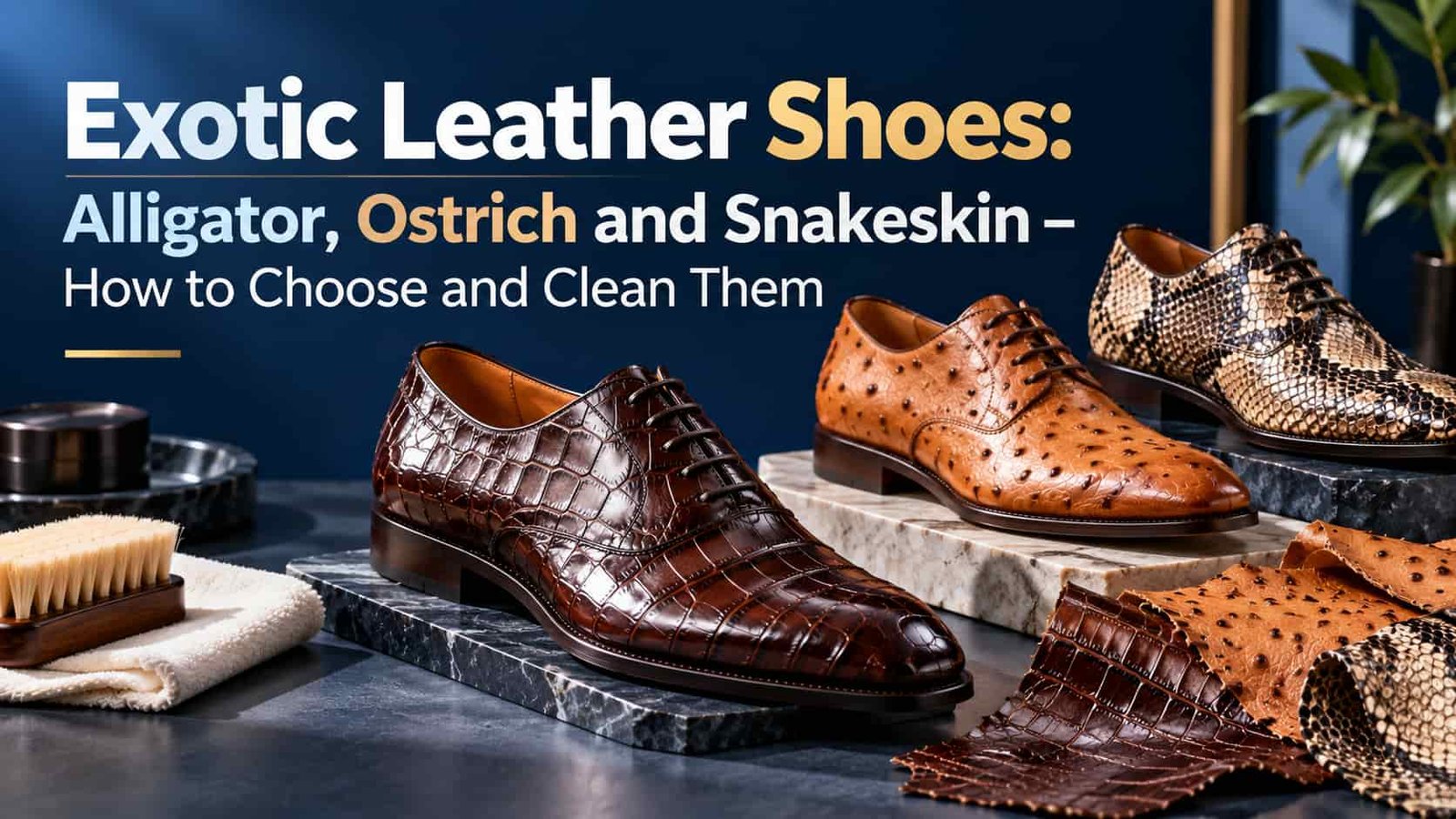
Exotic Leather Shoes: Alligator, Ostrich and Snakeskin – How to Choose and Clean Them
Get AI Summary
Want another explanation? Open an AI assistant and submit the article URL or review the summary prompt.
Exotic leather shoes are footwear made with distinctive animal skins such as alligator, crocodile, ostrich and certain snakeskin. Their appeal comes from recognizable natural patterns, texture and the way each hide takes color and finish. Before buying, learn how genuine skins differ from embossed cowhide, check the product’s sourcing and documentation, and follow care methods suited to the specific leather.
Quick Summary: What to Know Before You Buy
- Alligator and crocodile leather: Known for their scale patterns and formal, statement-making appearance. The exact pattern depends on the species, cut, tanning and finish.
- Ostrich leather: Often recognizable by raised follicle marks, sometimes called quill marks. The pattern and softness vary by hide and finishing.
- Snakeskin: Has overlapping scales that need gentle handling, especially when cleaning. Rubbing against the direction of the scales can cause damage.
- Embossed leather is different: Cowhide can be stamped or printed to imitate exotic patterns. A pattern alone does not prove that a shoe uses genuine exotic skin.
- Care matters: Use a soft cloth, minimal moisture and a product approved for the particular finish. Test first in a hidden area.
- Check legality and provenance: Some species and cross-border transactions are regulated. Ask for the scientific species name and relevant documentation when appropriate.
What Are Exotic Leather Shoes?
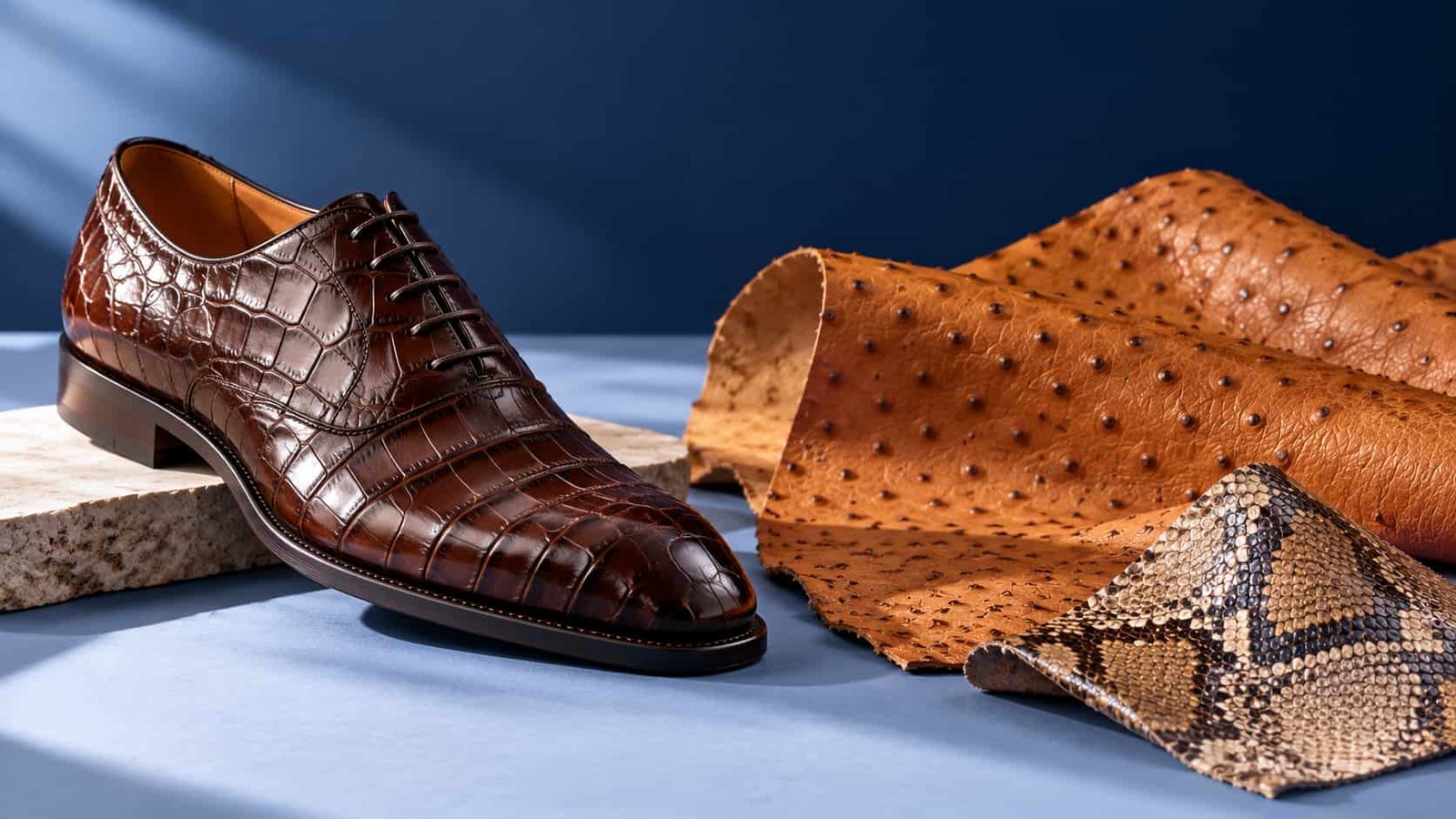
Exotic leather shoes use skins that have distinctive characteristics beyond the familiar grain of common cowhide. Examples include alligator, crocodile, ostrich, python and other snakeskin. Depending on the design, these materials may appear across the entire upper or be used only on a vamp, toe panel, strap or decorative accent.
The term exotic leather describes a broad category rather than a single material standard. Different animal species have different surface structures, and even two hides from the same species can look different after tanning, cutting, dyeing and finishing.
Exotic leather is commonly associated with dress shoes, loafers, cowboy boots and other statement footwear. Some designs emphasize a subtle texture, while others use large, clearly visible scales or quill patterns as the main visual feature.
A premium appearance does not automatically mean a shoe is better constructed. The leather is only one part of the finished product. Stitching, lining, sole construction, fit, finishing quality and the maker’s workmanship also affect comfort and service life.
For a wider explanation of the materials used across footwear, read Shoe Materials Explained.
Types of Exotic Leather Used in Shoes
1. Alligator and Crocodile Leather
Alligator and crocodile skins are prized for their scale patterns. Although the terms are sometimes used interchangeably in retail descriptions, alligator and crocodile refer to different animals. Their skin patterns can differ, but appearance alone may not reliably identify the species, particularly on heavily finished or small panels.
These leathers are often used in formal shoes, loafers and boots. A shoe may feature a large uninterrupted panel, or the maker may arrange smaller sections to create a balanced pattern across both shoes.
What to look for when buying:
- A clear description of the species used, rather than a vague “crocodile-style” label.
- Consistent finishing across the pair without assuming that natural scales must be perfectly identical.
- Neat edges, even stitching and a secure join between the exotic skin and other upper materials.
- Clear seller information and appropriate sourcing documents where required.
The price of an alligator or crocodile shoe may reflect material sourcing, usable hide area, tanning, pattern placement and specialist manufacturing. Price alone, however, does not verify species or authenticity.
2. Ostrich Leather
Ostrich leather is often recognized by raised follicle marks across the surface. These marks are commonly described as quill marks, although their prominence and distribution vary. Some products show a pronounced pattern, while others have a subtler or more selectively placed texture.
Ostrich leather appears in dress shoes, loafers and boots. Depending on the finish, it can have a soft, supple feel or a more structured surface. Color and texture are influenced by tanning and finishing, so not every ostrich leather shoe looks alike.
Buying advice: Look closely at the product photographs and ask which sections of the shoe use ostrich leather. A full exotic-leather upper is not the same as a shoe that uses ostrich leather only on a small decorative panel. Neither approach is automatically better; the important point is understanding what you are purchasing.
3. Snakeskin and Python Leather
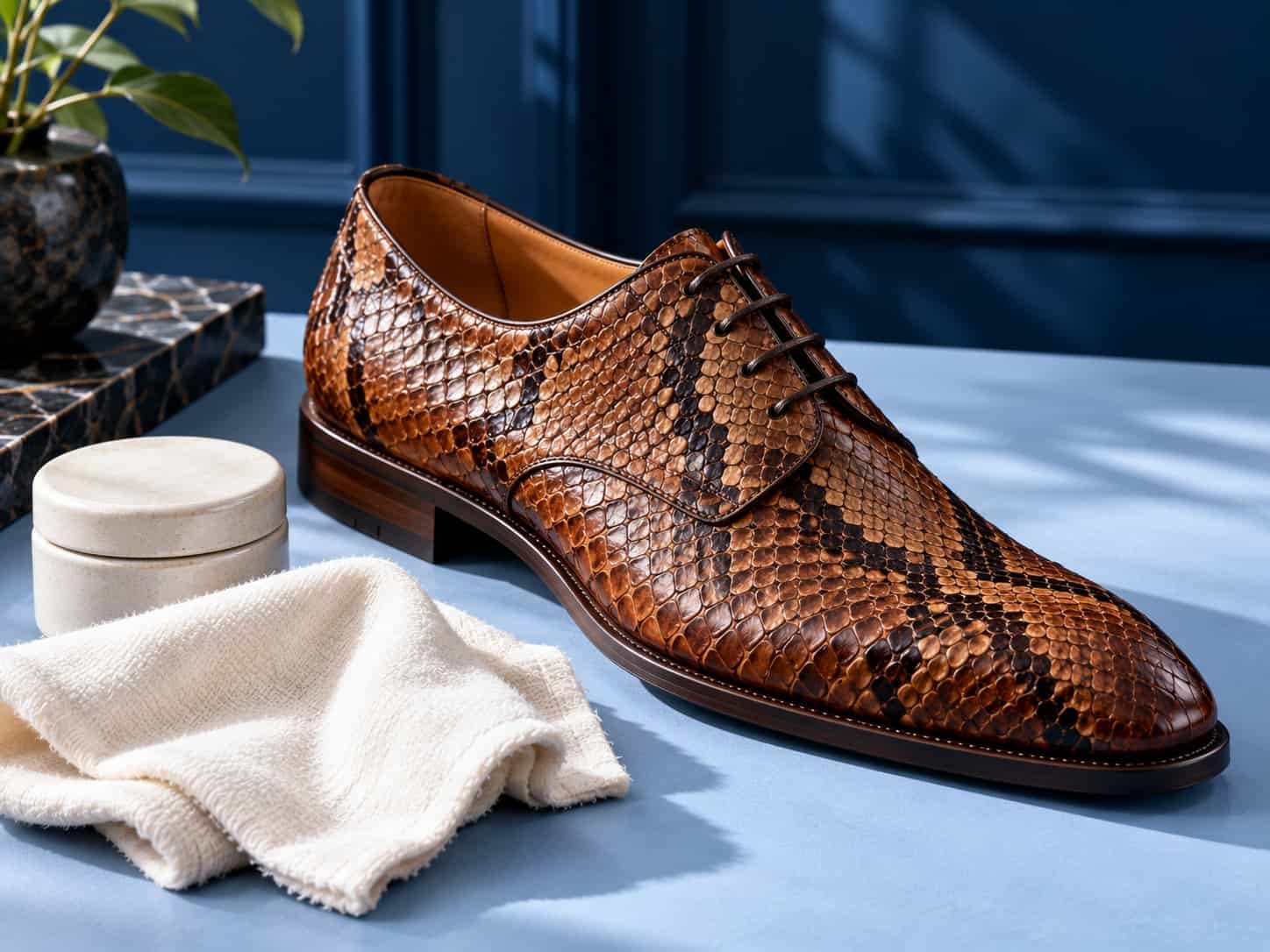
Snakeskin is distinctive because its overlapping scales create a patterned surface. Python is one type of snakeskin used in leather goods, but “snakeskin” is not a single species name. A seller should identify the material accurately rather than relying on a broad style label.
Snakeskin shoes can make a strong visual statement in dress shoes, boots and fashion footwear. The scales are also a care consideration: friction against their natural direction may lift or damage them.
Before buying, check:
- Whether the description names the species or simply describes a snakeskin pattern.
- Whether the product uses real snakeskin or a printed or embossed imitation.
- Whether the finish is matte, glossy, coated or otherwise treated.
- Whether the seller provides relevant sourcing details and any documentation required for the transaction.
For a useful specialist reference, see Lederzentrum Switzerland’s guide to cleaning and caring for snakeskin.
4. Lizard and Other Exotic Skins
Some footwear also uses lizard or other specialty skins. Their patterns, scale size and care requirements vary, so do not assume that a method suitable for ostrich or smooth cowhide will work equally well on every exotic material.
When a seller uses a broad phrase such as “exotic skin,” ask for the exact material and the care instructions. If the product combines several materials, care may need to be guided by the most delicate or sensitive component.
Exotic Leather Comparison
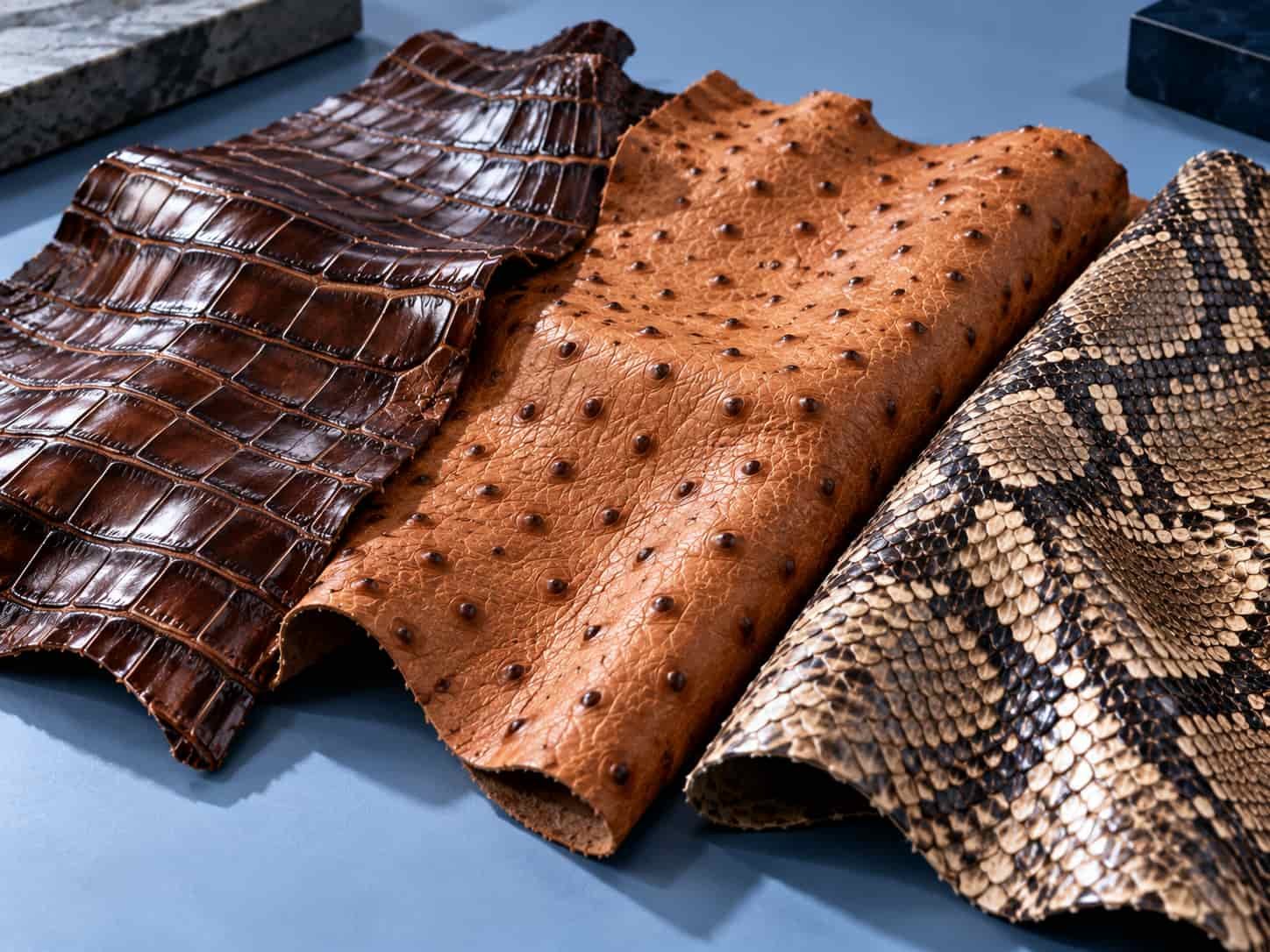
| Material | Recognizable feature | Common uses | Care consideration |
|---|---|---|---|
| Alligator or crocodile | Distinctive scale pattern | Dress shoes, loafers, boots | Avoid harsh cleaners and excessive moisture |
| Ostrich | Raised follicle or quill marks on many finishes | Loafers, dress shoes, boots | Use finish-compatible cleaner and conditioner |
| Snakeskin or python | Overlapping scales | Dress shoes, boots, statement footwear | Wipe gently in the direction of the scales |
| Embossed cowhide | Repeated stamped or printed pattern | Dress shoes and fashion footwear | Follow care instructions for the actual base leather and coating |
These are general material characteristics, not a definitive identification test. Tanning, coatings, dyeing and manufacturing can change how a leather looks and feels.
Genuine Exotic Leather vs Embossed Leather
One of the most important buying questions is whether the shoe uses genuine exotic skin or conventional leather embossed to imitate it.
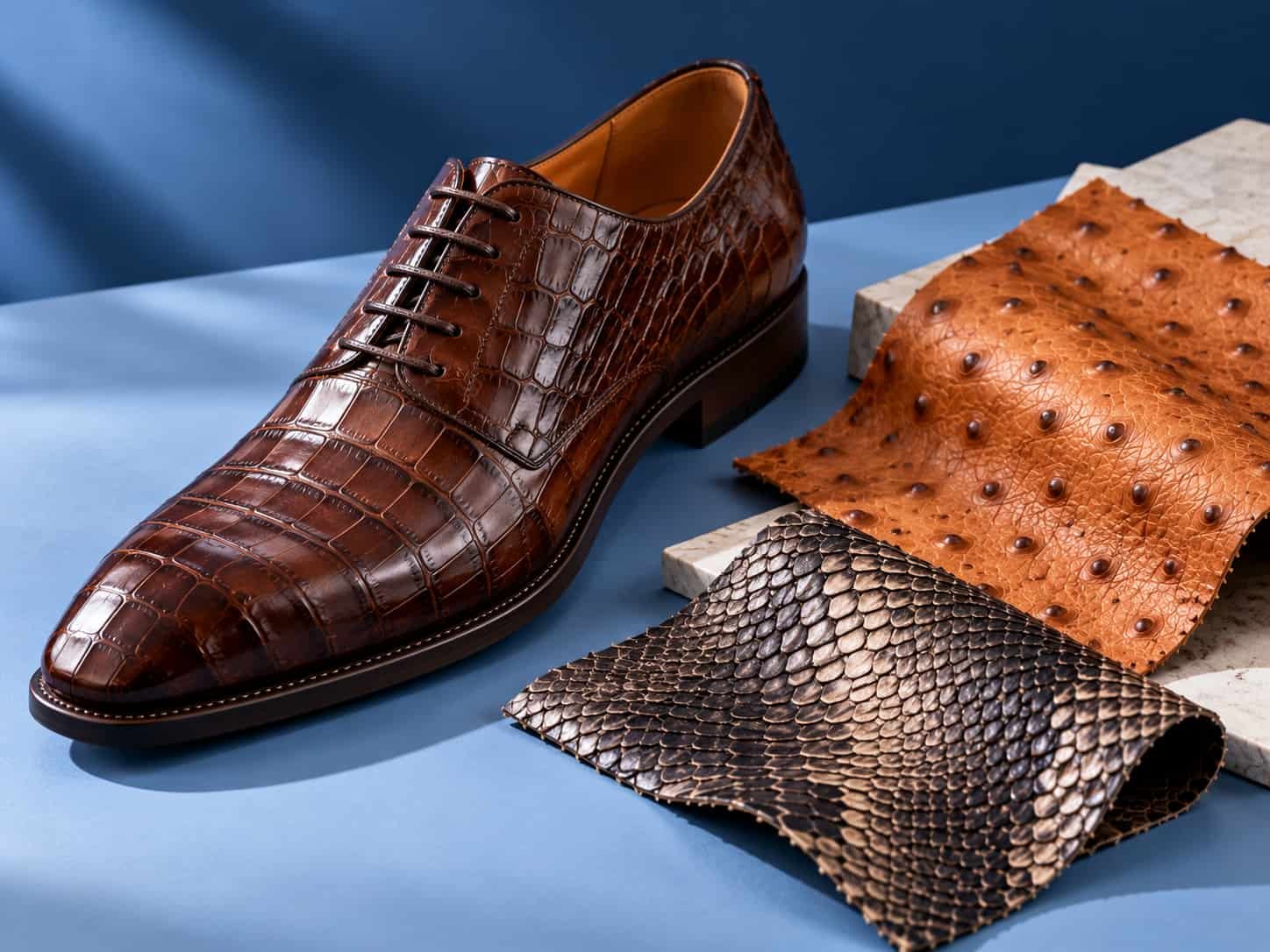
Embossed leather usually begins with another leather, often cowhide, that is pressed or finished with a pattern resembling scales or quill marks. Synthetic materials can also be printed or embossed to imitate exotic skins. These alternatives may offer a similar visual style at a different price point, but they are not compositionally identical to genuine exotic leather.
How to assess the difference
1. Read the product description carefully. Look for the named material and the part of the shoe where it is used. Terms such as “crocodile print,” “alligator embossed” or “snake-effect” may describe a pattern rather than the animal skin itself. Wording varies by seller, so ask for clarification if the description is ambiguous.
2. Inspect the material details. Look for a specific species or material declaration, not just a luxury-style name. Product photographs can help you understand the appearance but cannot, on their own, authenticate a hide.
3. Ask the seller directly. Request written confirmation of the material composition and whether the exotic skin covers the full upper or only selected panels. Ask about sourcing documentation where relevant.
4. Consider the construction separately. Genuine exotic leather does not guarantee good stitching, a comfortable fit or a durable sole. Examine the whole shoe rather than paying for the material name alone.
In the United States, the Federal Trade Commission’s Guides for Select Leather and Imitation Leather Products address misrepresentations about leather and imitation leather products, including footwear. Local rules vary, so check the requirements that apply to your market.
How to Choose Exotic Leather Dress Shoes
The best choice depends on where you intend to wear the shoes, how noticeable you want the pattern to be, your care routine and your budget. Start with the occasion and construction, then decide whether the particular leather suits your needs.
For formal occasions
A well-proportioned exotic leather dress shoe can complement a tailored outfit. Consider a restrained color and a balanced pattern if you want the texture to be the main detail rather than the entire focus of your look.
Check the toe shape, heel height, sole profile and overall finish. A striking upper cannot compensate for poor fit or an uncomfortable last.
For everyday use
Before buying exotic leather for frequent wear, consider exposure to rain, dust, friction and repeated flexing. Some finishes require more careful maintenance than ordinary smooth leather. If you prefer a shoe that needs minimal attention, a less delicate leather or a high-quality embossed alternative may be more practical.
For men’s exotic leather shoes
When comparing men’s exotic leather shoes, look beyond the pattern. Check whether the shoe has a comfortable fit at the widest part of the foot, adequate toe room, a secure heel and a sole appropriate for the surfaces where you will wear it.
Loafers, lace-up dress shoes and boots create different looks and fit differently. Do not choose a size based solely on another brand’s size chart; sizing and shape can vary by maker.
For women’s exotic leather shoes
For women’s styles, the same material checks apply to loafers, heels, flats and boots. Pay attention to heel stability, the shape of the toe box and the placement of decorative panels. A material may look different when stretched across a curved toe or heel, so review multiple product angles if available.
For exotic leather golf shoes
Do not assume that an exotic-looking upper makes a shoe suitable for golf. Check whether the actual model is designed for golf, offers the required grip and stability, and has a suitable outsole for the course. Also confirm the manufacturer’s cleaning instructions, especially if the upper uses delicate skins or mixed materials.
A practical buying checklist
Before purchasing, confirm:
- Material: Is it genuine exotic skin, embossed leather or a synthetic imitation?
- Coverage: Does the named material cover the full upper or selected panels?
- Construction: Are stitching, lining, sole attachment and finishing neat?
- Fit: Is there sufficient room for your toes and a secure heel hold?
- Care: Are suitable cleaning products and instructions available?
- Seller transparency: Can the seller explain the species, origin and relevant documents?
- Return policy: Can you return the shoes if the material description or fit is not as expected?
Are Exotic Leather Shoes Durable?
There is no reliable universal durability ranking that places every alligator, ostrich or snakeskin shoe above every conventional leather shoe. Durability depends on the actual hide, tanning, finish, construction, frequency of wear, storage and maintenance.
A well-made shoe can still be damaged by moisture, abrasion, unsuitable cleaners or prolonged exposure to heat. Similarly, an expensive material cannot compensate for weak stitching or a poorly attached sole.
Use these practical checks when assessing quality:
- Inspect seams and panel joins for gaps or loose threads.
- Look for clean finishing around the toe, heel and edges.
- Check that both shoes have a consistent overall finish while allowing for natural variation.
- Ask whether the sole can be repaired or replaced and whether the maker offers servicing.
- Confirm whether the seller provides care guidance for the specific leather and coating.
If longevity is your priority, consider the complete shoe: upper, lining, sole construction, repair options and your willingness to maintain it. Our shoe anatomy guide explains how the different components contribute to a finished shoe.
How to Clean Exotic Leather Shoes
Cleaning exotic leather requires a conservative approach. The aim is to remove surface dirt without stripping the finish, drying the leather or disturbing scales and textured areas. Because products differ, the manufacturer’s care instructions should take priority over a generic routine.
Step 1: Identify the material and finish
Before cleaning, establish whether the upper is alligator, crocodile, ostrich, snakeskin, embossed cowhide or a synthetic material. If you cannot confirm the material, avoid experimenting with cleaners. Contact the seller or a specialist shoe-care professional.
Step 2: Remove loose dust gently
Use a clean, soft cloth to remove loose dust. For delicate skins, avoid vigorous brushing. On snakeskin, work in the direction of the scales rather than rubbing against them. The specialist snakeskin care guide from Lederzentrum highlights the risk of lifting scales through friction.
Step 3: Use minimal moisture
If the manufacturer allows it, lightly dampen a soft cloth and gently wipe the surface. The cloth should not be soaking wet. Do not immerse the shoe, saturate seams or scrub textured areas aggressively.
For a snakeskin upper, follow the scale direction. If the finish is cracked, peeling or already lifting, stop and seek professional advice instead of trying to repair it with household products.
Step 4: Use only a compatible cleaner
Choose a cleaner specifically approved for the leather and finish. Test it on a hidden area first and wait to check for changes in color, sheen or texture. A product intended for smooth cowhide may not be appropriate for every exotic skin or coated finish.
Avoid household detergents, strong solvents, alcohol-based cleaners and unverified online remedies. They can affect the finish or cause discoloration. If the shoes are valuable or the material is uncertain, professional cleaning is the safer choice.
Step 5: Allow the shoes to air-dry
After cleaning, let the shoes dry naturally at room temperature. Keep them away from radiators, hair dryers, direct intense sunlight and other sources of concentrated heat. Do not put them away while damp.
Step 6: Condition only when appropriate
Some exotic leathers benefit from a compatible conditioner, while some finishes may be damaged or changed by unsuitable products. Use a small amount only if the manufacturer recommends it for that material and finish. Test first and avoid applying ordinary polish simply because it is designed for leather.
Quick Care Guide by Material
| Material | Gentle first step | Important caution |
| Alligator or crocodile | Soft cloth and the maker’s approved cleaner | Avoid unapproved creams and excessive moisture |
| Ostrich | Gentle wiping; compatible cleaner if required | Test products because finishes differ |
| Snakeskin | Light wiping with the direction of the scales | Do not rub against the scales |
| Lizard | Minimal friction and finish-compatible care | Small scales may be delicate |
| Embossed cowhide | Follow instructions for the base leather and coating | Do not assume it needs genuine exotic-skin care products |
For more general maintenance, use the website’s shoe cleaning and maintenance guide. Its advice should be adapted to the actual material rather than applied indiscriminately to every exotic skin.
How to Store and Maintain Exotic Leather
Good storage helps reduce avoidable damage between wears.
- Let shoes rest between wears. Give moisture from use time to dissipate before storing them.
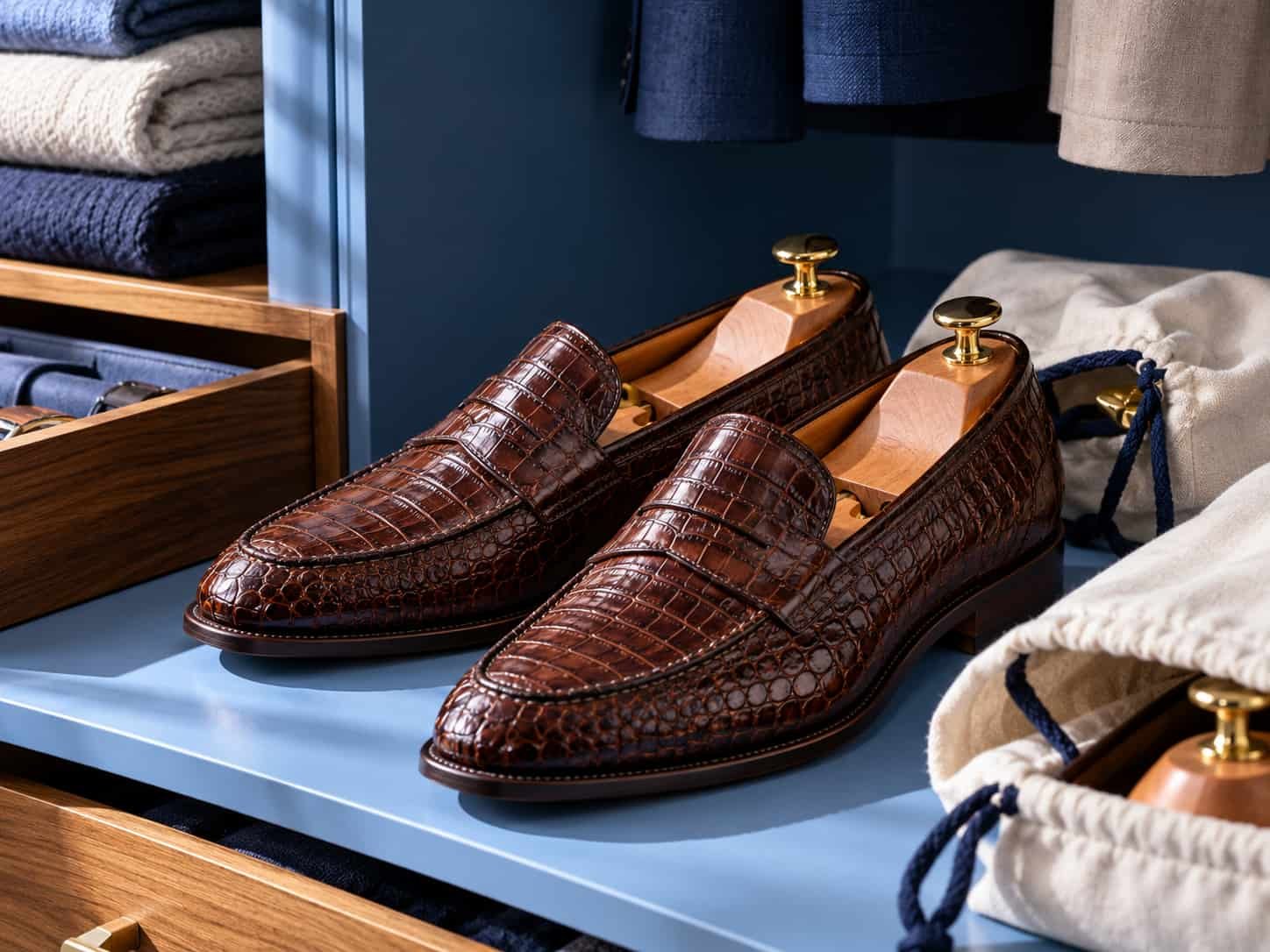
- Use shoe trees where suitable. A correctly sized shoe tree can help maintain shape. Avoid forcing one into a delicate or unusually shaped shoe.
- Keep them away from direct heat and strong sunlight. These can contribute to drying, fading or changes in the finish.
- Store them separately. Prevent rough soles, buckles or neighboring shoes from scratching the upper.
- Use a breathable storage bag. Follow the maker’s advice and avoid sealing damp shoes in an airtight container.
- Arrange repairs early. If scales lift, a coating cracks or a seam opens, stop wearing the shoes until the damage has been assessed.
Do not apply waterproofing sprays, waxes or polishes without checking compatibility. A treatment that works on ordinary smooth leather may alter the color, shine or texture of an exotic finish.
Ethical Sourcing and Wildlife Trade Regulations
Exotic leather purchases can raise questions about animal welfare, conservation and legal sourcing. The responsible first step is to identify the species accurately and understand where the material came from. A broad description such as “exotic skin” is not enough to determine the legal status of a product.
The Convention on International Trade in Endangered Species of Wild Fauna and Flora (CITES) regulates international trade in listed species through a permit and certificate system. The specific requirements depend on the species, its listing, the transaction and the countries involved. CITES explains the system in its official guide, How CITES Works.
Before buying or transporting exotic leather across borders:
- Ask for the exact species name, preferably including the scientific name.
- Ask the seller what sourcing information or documentation is available.
- Check the relevant CITES listing and national wildlife rules.
- Confirm import, export or re-export requirements before travelling with the item.
- Do not assume that a product sold online can legally be shipped to every country.
A CITES listing does not mean every trade in that species is automatically banned; rules vary by listing and transaction. Conversely, a seller’s claim that a product is “farm-raised,” “vintage” or “legal” should not be treated as sufficient proof on its own.
For a transaction involving a protected species, consult the relevant national wildlife authority or a qualified specialist before paying. Legal compliance, traceability and ethical sourcing are related questions, but they are not identical: a permit does not by itself answer every animal-welfare concern.
Common Buying Mistakes
Mistake 1: Assuming every scale pattern is genuine exotic leather
Embossing and printing can imitate animal patterns. Verify the composition in writing rather than relying on a photograph.
Mistake 2: Choosing by appearance alone
A striking upper can still have poor fit, uncomfortable lining or weak construction. Assess the entire shoe and its intended use.
Mistake 3: Using ordinary leather polish without checking
Some products can change a delicate finish or leave residue between scales. Follow the manufacturer’s instructions and test first.
Mistake 4: Scrubbing snakeskin against the scales
Friction in the wrong direction can lift scales and cause damage that may not be reversible. Use a gentle cloth and follow the natural direction.
Mistake 5: Ignoring species and sourcing details
A vague label does not tell you exactly which animal was used or whether a cross-border transaction requires documents. Ask before buying.
Mistake 6: Treating price as proof of authenticity
A high price does not establish that a shoe uses genuine alligator, ostrich or python leather. Clear material descriptions and credible seller information matter more than the price tag alone.
Frequently Asked Questions About Exotic Leather Shoes
What are exotic leather shoes?
Exotic leather shoes are made using distinctive animal skins such as alligator, crocodile, ostrich, python or other snakeskin. They may use the material across the full upper or only on selected panels. The exact material should be confirmed from the seller’s product description.
Are alligator and crocodile shoes the same?
No. Alligators and crocodiles are different animals, and their skins can have different scale characteristics. Retailers should identify the material accurately rather than treating the terms as interchangeable.
How can I tell if exotic leather shoes are genuine?
Start with the product description, species or material declaration, seller transparency and any relevant sourcing documents. Surface patterns and photographs alone cannot conclusively authenticate an exotic hide. For expensive purchases, seek written confirmation or an independent specialist assessment.
How do I clean snakeskin shoes?
Remove loose dust gently, then use a soft cloth with minimal moisture if the manufacturer’s instructions allow it. Wipe in the direction of the scales and avoid aggressive rubbing, soaking, strong cleaners and unapproved conditioners. For valuable or damaged shoes, consult a specialist.
Can I use regular leather conditioner on ostrich or alligator leather?
Not automatically. Exotic skins and their finishes vary, and a conditioner designed for smooth cowhide may alter the appearance or finish of another leather. Use only a product approved for the specific material and test it in a hidden area first.
Are exotic leather dress shoes suitable for everyday wear?
They can be, depending on their construction, finish, weather exposure and the care you are prepared to provide. If your daily routine involves frequent rain, rough surfaces or little time for maintenance, a more practical material may be a better choice.
Are exotic leather shoes legal to buy?
Legality depends on the species, the applicable national laws and whether the purchase or transport crosses borders. Some wildlife products are subject to CITES permits or other restrictions. Check the exact species and relevant rules before purchasing or travelling with the shoes.
Are embossed exotic-style shoes a good alternative?
They can be a reasonable option if you want the appearance of an exotic pattern without buying genuine exotic skin. Confirm whether the base material is leather or synthetic, understand the finish and choose based on construction, comfort, price and care requirements.
Why can exotic leather shoes be expensive?
Prices may reflect the type and availability of material, hide selection, tanning and finishing, the amount of usable skin, pattern placement and manufacturing labor. However, price varies by maker and construction, so it is not a reliable authenticity test.
Can exotic leather shoes get wet?
Avoid unnecessary exposure to water. The effect depends on the species, finish, construction and treatment. If the shoes become wet, blot gently, let them dry naturally and follow the manufacturer’s guidance. Do not use direct heat or apply an unapproved product to restore the finish.
Conclusion: Choose the Material, Not Just the Pattern
Exotic leather shoes stand out because of their distinctive textures, but choosing well requires more than liking the appearance. Understand whether the shoe uses genuine alligator, ostrich or snakeskin, check its construction and fit, verify sourcing information when needed, and follow care instructions tailored to the finish.
For a practical starting point, compare the material guidance in Shoe Materials Explained and use the shoe care and cleaning guide for broader maintenance advice. When the material or legal status is unclear, ask the seller before purchasing.
Sources and Further Reading
- Urban Style Footwear — Shoe Materials Explained: https://urbanstylefootwear.com/shoe-materials/
- Federal Trade Commission — Guides for Select Leather and Imitation Leather Products: https://www.ftc.gov/legal-library/browse/rules/leather-guides
- CITES — How CITES Works: https://cites.org/eng/disc/how.php
- CITES — Frequently Asked Questions: https://cites.org/eng/resources/faq.php
- Lederzentrum Switzerland — Cleaning and Caring for Snakeskin: https://www.lederzentrum.ch/en/instructions/other/cleaning-and-caring-for-snakeskin
- R.M.Williams — Your Guide to Leather: https://www.rmwilliams.com/nz/care-guides/your-guide-to-leather.html
- Urban Style Footwear — Anatomy of a Shoe: https://urbanstylefootwear.com/anatomy-of-a-shoe/
- Urban Style Footwear — How to Clean Shoes and Maintain Them: https://urbanstylefootwear.com/how-to-clean-shoes-and-maintain/


