
Men’s Shoe Size Chart (2026 Guide): US, UK, EU & Foot Length
⚡ Quick Answer
- A men’s shoe size should be selected by foot length and width, not by age or a previous shoe size alone.
- US, UK and EU shoe sizes use different sizing systems, so the same numerical size does not always represent the same measurement.
- Measure both feet and use the larger foot when checking a shoe size chart.
- For the best fit, compare your foot measurement with the specific brand’s size chart whenever one is available.
- If your foot is wider than average, check a men’s wide or extra-wide shoe size chart rather than automatically choosing a longer shoe.
If you are looking for a reliable men’s shoe size chart, the best starting point is your actual foot measurement. Shoe sizes are not universal measurements, and a US, UK or EU size can fit differently depending on the sizing system, brand and shoe shape.
A good size chart helps you compare your foot length with a corresponding shoe size. Measuring both feet before buying is especially useful when shopping online because it reduces the guesswork involved in choosing a size.
This guide explains men’s shoe sizes, international conversions, foot length in inches and centimeters, width, half sizes, measuring methods and common sizing mistakes.
Men’s Shoe Size Chart
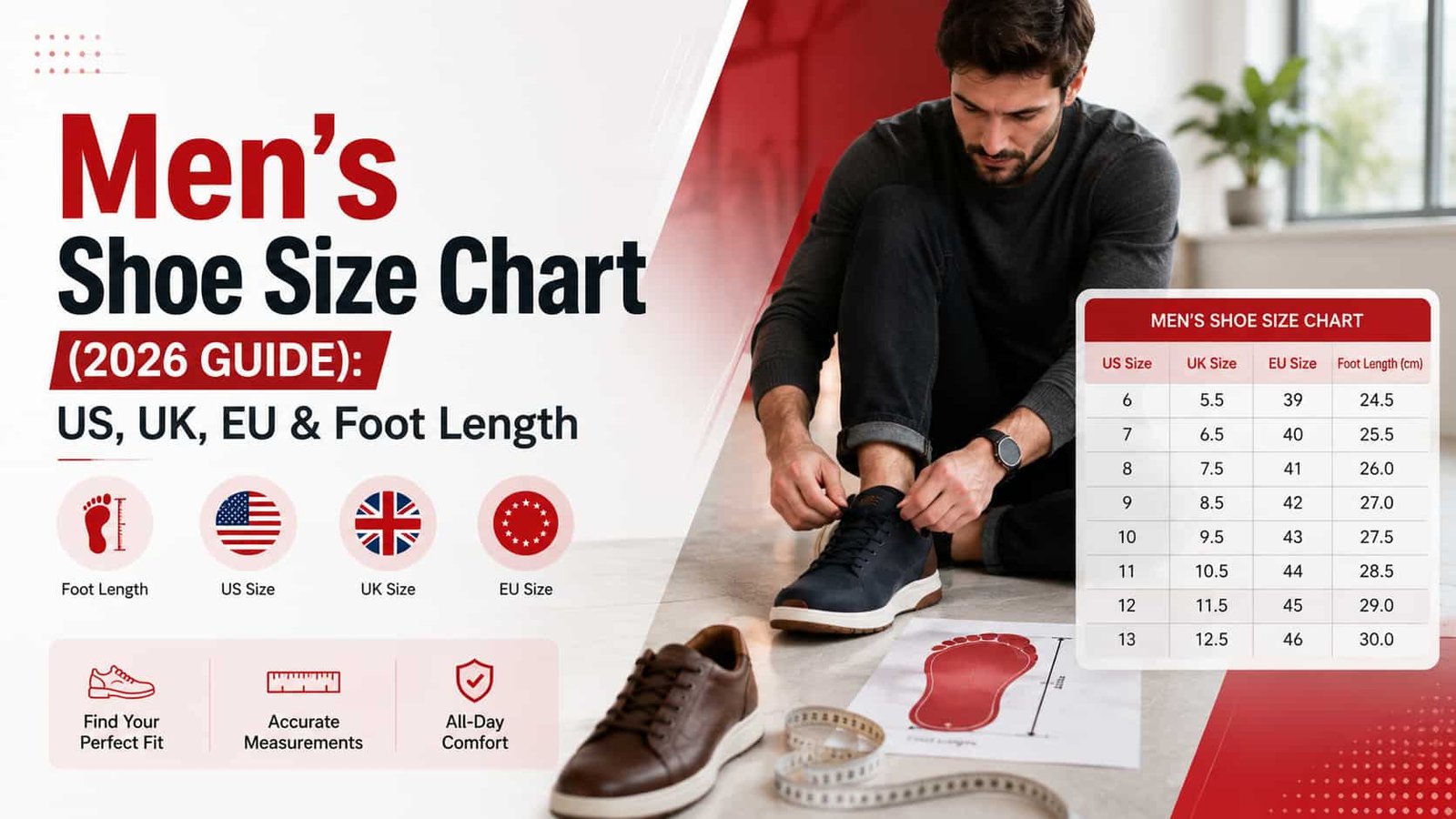
The following men’s shoe size chart provides a general reference for comparing common US, UK and EU men’s sizes with approximate foot-length ranges.
Important: International shoe sizing systems are not perfectly interchangeable. Treat these values as a general guide and check the manufacturer’s chart for the specific shoe you are buying.
| US Men’s Size | UK Men’s Size | EU Size | Approx. Foot Length (in) | Approx. Foot Length (cm) |
| 6 | 5 | 38.5 | 9.3 | 23.5 |
| 6.5 | 5.5 | 39 | 9.5 | 24.1 |
| 7 | 6 | 40 | 9.6 | 24.4 |
| 7.5 | 6.5 | 40.5 | 9.8 | 24.8 |
| 8 | 7 | 41 | 9.9 | 25.4 |
| 8.5 | 7.5 | 42 | 10.1 | 25.7 |
| 9 | 8 | 42.5 | 10.3 | 26.2 |
| 9.5 | 8.5 | 43 | 10.4 | 26.7 |
| 10 | 9 | 44 | 27.1 | 27.1 |
| 10.5 | 9.5 | 44.5 | 10.8 | 27.6 |
| 11 | 10 | 45 | 11.0 | 27.9 |
| 11.5 | 10.5 | 45.5 | 11.2 | 28.6 |
| 12 | 11 | 46 | 11.3 | 28.6 |
| 13 | 12 | 47 | 11.6 | 29.5 |
| 14 | 13 | 48 | 11.9 | 30.2 |
| 15 | 14 | 49 | 12.2 | 31.0 |
Note: The chart is a general conversion reference. Individual brands and shoe models can use different lasts and measurements.
For a more detailed conversion comparison, use the men’s shoe size conversion chart.
Find Your Starting Shoe Size
Enter your foot length and choose your measurement unit to get a general size reference.
This tool provides an approximate reference. Always compare your measurement with the shoe manufacturer’s size chart before purchasing.
How Men’s Shoe Sizes Work
Men’s shoe sizes are numerical labels used to identify an approximate shoe fit, but the number itself is not a universal measurement.
A men’s size 10 in one sizing system should not automatically be assumed to have the same dimensions as size 10 in another system.
Three things are particularly important:
- Sizing system
- Foot length
- Foot width
For example, a person may normally wear one size in a particular brand but need a different size in another brand because the shoes have different shapes.
Why does this matter?
The number printed inside a shoe is useful, but your foot measurement gives you more useful information.
If you know your foot length in centimeters or inches, you can compare it with a size chart before ordering.
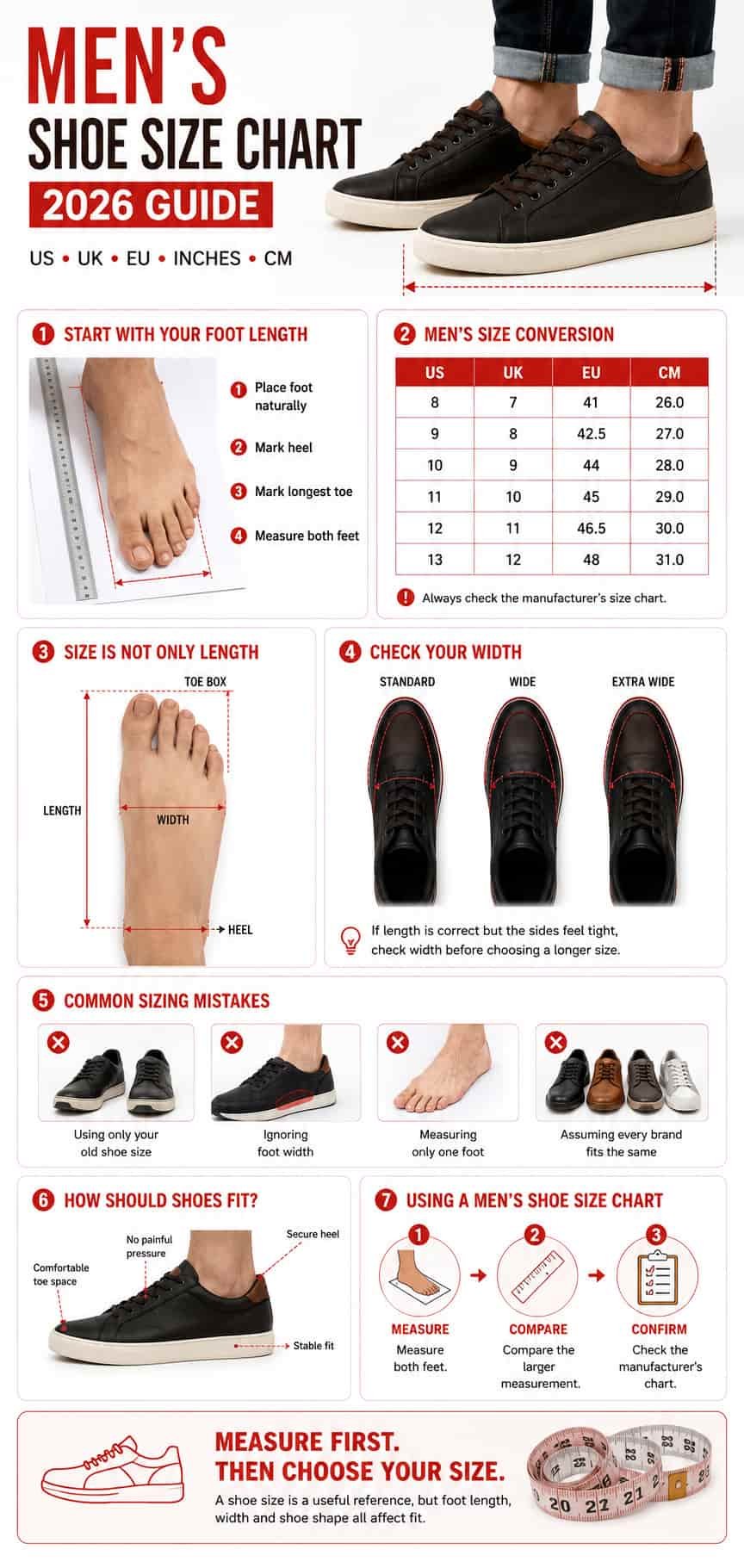
How to Measure Your Feet for Shoes
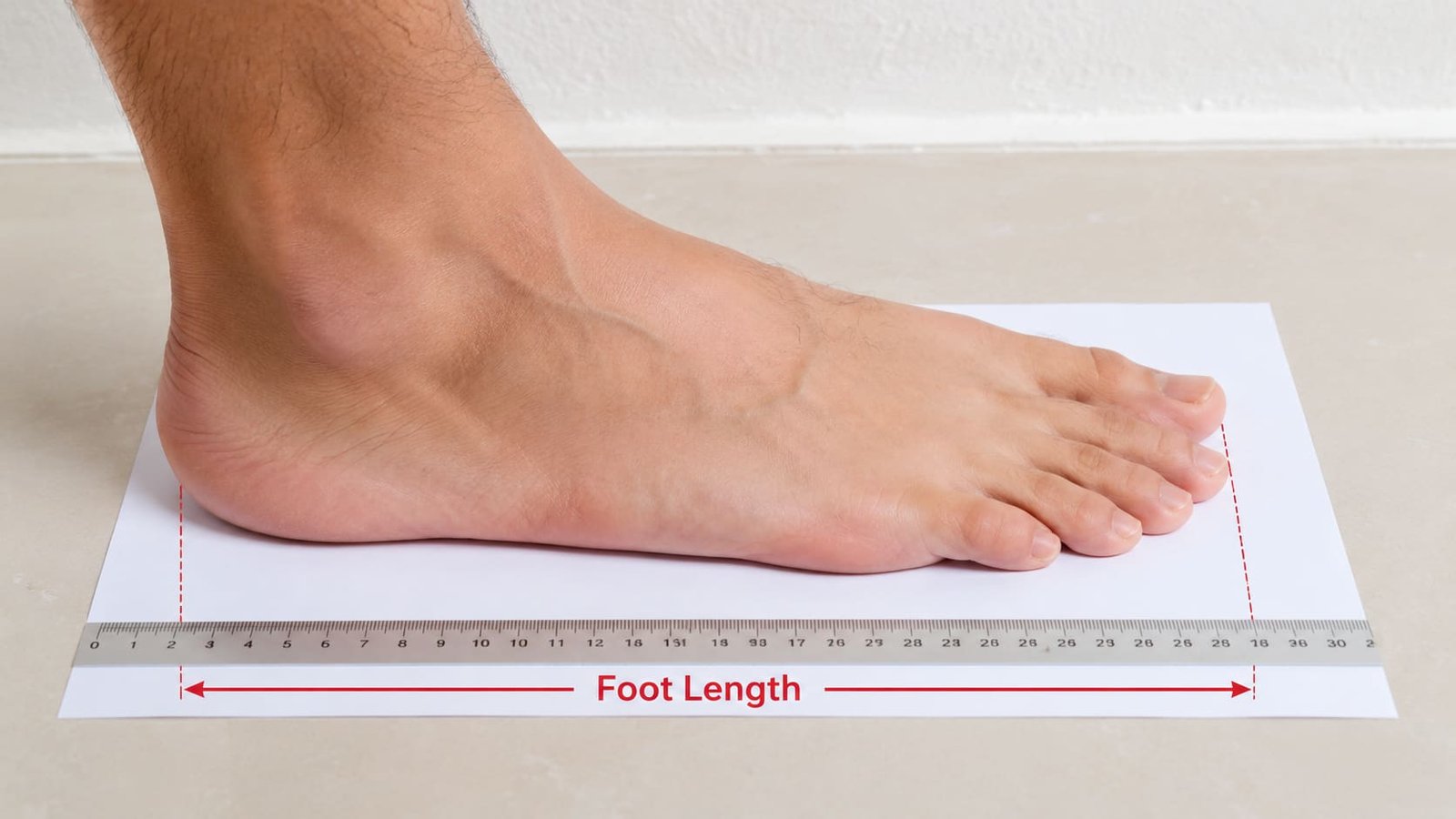
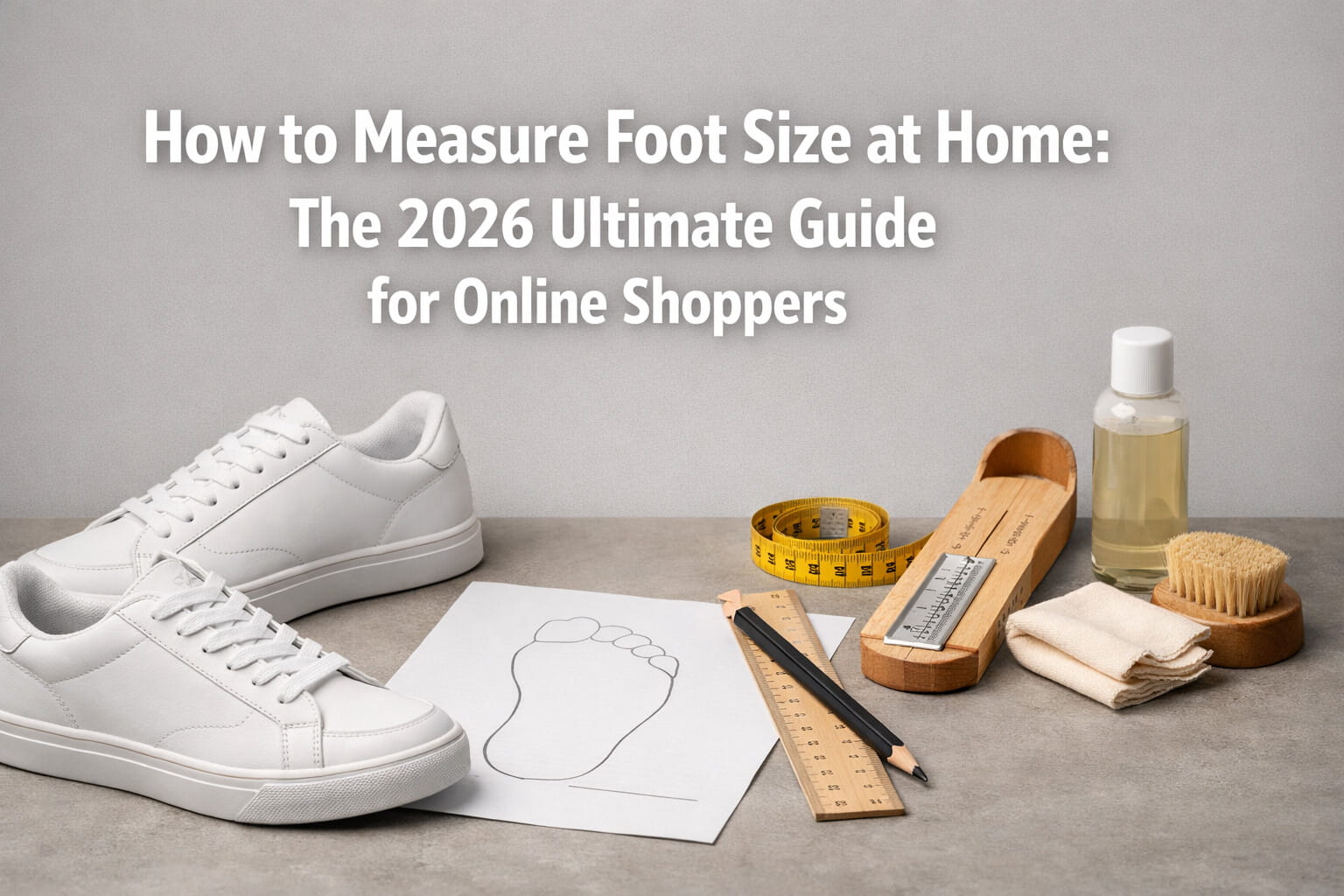
Measuring your feet at home is one of the easiest ways to improve your chances of choosing the right shoe size.
You need:
- A sheet of paper
- A pencil
- A ruler or measuring tape
- A flat floor
- The socks you normally wear with the shoes
For the complete step-by-step process, follow How to Measure Men’s Feet.
Step 1: Place the paper on the floor
Put a sheet of paper on a hard, flat surface.
Avoid measuring on a soft carpet because it can affect the position of your foot.
Step 2: Stand naturally
Stand with your weight distributed normally across both feet.
Do not sit down while measuring if you can avoid it. Standing gives you a more realistic indication of the space your foot occupies.
Step 3: Mark the heel and longest toe
Mark the back of your heel and the end of your longest toe.
Your longest toe is not necessarily your big toe.
Step 4: Measure the distance
Measure from the heel mark to the longest-toe mark.
Record the measurement in centimeters and inches if possible.
Step 5: Measure the other foot
Repeat the process for your other foot.
Do not assume both feet are exactly the same size.
Step 6: Use the larger measurement
If one foot is slightly longer, use the larger measurement when comparing shoe sizes.
This helps prevent choosing a size that is comfortable for one foot but too short for the other.
💡 Expert Tip
Measure your feet later in the day when they have experienced normal daily movement. Your feet can change slightly in volume during the day, so measuring at only one time may not represent how your shoes feel after several hours of wear.
Men’s Shoe Size in Inches
Knowing your foot length in inches can make a men’s shoe size chart easier to understand.
Foot length should be measured from the back of the heel to the longest toe.
Here is a general reference:
| Approx. Foot Length | General US Men’s Size Range |
| 9.3 in | 6 |
| 9.5 in | 6.5 |
| 9.6 in | 7 |
| 9.8 in | 7.5 |
| 9.9 in | 8 |
| 10.1 in | 8.5 |
| 10.3 in | 9 |
| 10.4 in | 9.5 |
| 10.7 in | 10 |
| 10.8 in | 10.5 |
| 11.0 in | 11 |
| 11.2 in | 11.5 |
| 11.3 in | 12 |
| 11.6 in | 13 |
These measurements are intended as a general guide rather than an exact universal conversion.
If you want a dedicated reference for this measurement system, see the men’s shoe size to inches chart.
Men’s Shoe Size in CM
Centimeters are especially useful when comparing shoe sizes because foot length can be measured directly.
For example, if your foot measures approximately 27 cm, you can compare that measurement with the shoe manufacturer’s chart rather than guessing based on your usual size.
A simple reference is:
| Approx. Foot Length | General US Men’s Size |
| 24.4 cm | 7 |
| 24.8 cm | 7.5 |
| 25.4 cm | 8 |
| 25.7 cm | 8.5 |
| 26.2 cm | 9 |
| 26.7 cm | 9.5 |
| 27.1 cm | 10 |
| 27.6 cm | 10.5 |
| 27.9 cm | 11 |
| 28.6 cm | 12 |
| 29.5 cm | 13 |
| 30.2 cm | 14 |
These values should be used as reference points rather than exact universal measurements.
You can find a more detailed comparison in the men’s shoe size to cm guide.
US to UK and EU Men’s Shoe Size Conversion
US, UK and EU shoe sizes use different systems.
This means you should not simply assume that the same number represents the same shoe size across countries.
For example, a men’s US size 10 is commonly associated with a UK size 9, while the corresponding EU size is often around 44. However, exact conversions can vary.
General conversion reference
| US Men’s | UK Men’s | EU |
| 7 | 6 | 40 |
| 8 | 7 | 41 |
| 9 | 8 | 42.5 |
| 10 | 9 | 44 |
| 11 | 10 | 45 |
| 12 | 11 | 46 |
| 13 | 12 | 47 |
| 14 | 13 | 48 |
If you are purchasing from an international retailer, compare your foot length as well as the converted size.
That gives you two reference points instead of relying entirely on a numerical conversion.
How to Choose the Right Men’s Shoe Size
Choosing the right size involves more than finding your usual number.
Use this process:
1. Measure both feet
Record the length of each foot.
2. Identify the larger foot
Use the larger measurement when comparing sizes.
3. Check the shoe’s size chart
Use the manufacturer’s chart whenever possible.
4. Check width
A shoe can be the correct length and still be too narrow.
5. Consider the shoe type
Running shoes, dress shoes, boots and sandals can have different shapes.
6. Consider your socks
Thick socks can change how a shoe fits.
7. Check reviews
Repeated comments about a shoe running large, small, narrow or wide can provide useful context.
8. Review the return policy
This is especially important when ordering footwear online.
Men’s Shoe Width Guide
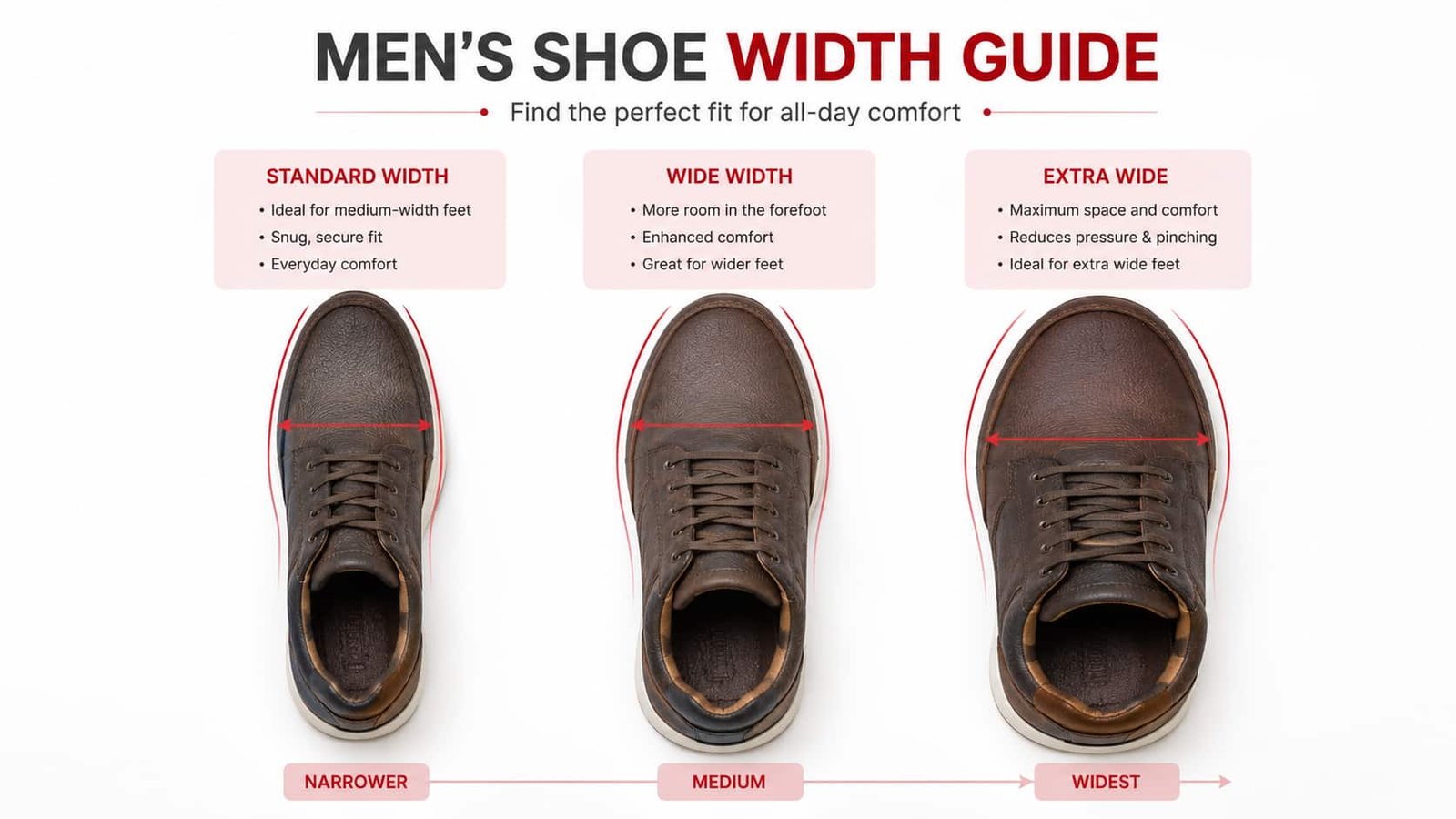
Shoe width is often overlooked.
A shoe that is too narrow can feel uncomfortable even when its length is correct. Increasing the shoe size may provide some additional room, but it also increases length.
If your feet are wider than average, a dedicated width option may provide a better fit.
You can compare options using the men’s shoe width guide.
For broader feet, see the wide men’s shoe size chart.
For feet requiring even more room, compare the extra-wide men’s shoe size chart.
Signs your shoes may be too narrow
- Pressure around the forefoot
- Toes feel squeezed together
- The sides of your feet feel compressed
- Your foot spills over the edge of the sole
- The upper feels stretched across the widest part of your foot
Signs the width may be too large
- Your foot moves from side to side
- The upper does not hold your foot securely
- You need excessive tightening
- Your foot slides inside the shoe
📌 Quick Reminder
If your shoe feels tight across the sides but comfortable from heel to toe, check the width before choosing a longer size.
What If One Foot Is Larger?
It is normal for one foot to be slightly different from the other.
When there is a noticeable difference, fit the larger foot first.
If the larger foot feels comfortable but the smaller foot has a little extra space, you may be able to improve the smaller side with suitable lacing or an appropriate insole.
Do not choose a size that makes your larger foot uncomfortable simply because the smaller foot fits better.
How Should Different Men’s Shoes Fit?
Different types of footwear have different fit requirements.
Running Shoes
Running shoes should provide a secure heel and enough room around the toes for comfortable movement.
Your foot should not slide excessively inside the shoe.
Walking Shoes
Walking shoes should feel stable and comfortable.
The heel should remain reasonably secure while your toes have enough room to move naturally.
Dress Shoes
Dress shoes can have structured uppers and different toe-box shapes.
Do not judge the fit only while standing still. Walk around and check whether the shoe creates pressure points.
Boots
Boots should hold the heel securely without squeezing the forefoot.
Consider the socks you expect to wear, particularly with cold-weather boots.
Sandals
Your heel and toes should remain comfortably positioned on the footbed.
Adjustable straps can help create a more secure fit.
Do Men’s Shoe Sizes Vary by Brand?
Yes. Men’s shoe sizes can vary between brands and even between different models from the same brand.
The reason is that the printed size is only one part of the fit.
Other factors include:
- Shoe last
- Toe-box shape
- Width
- Upper material
- Heel construction
- Sole design
- Intended use
- Manufacturing standards
This is why your usual shoe size is a useful starting point, but not the final answer.
If you regularly buy shoes from different brands, measuring your feet before ordering can save time and reduce returns.
When Should You Choose a Half Size?
Half sizes are useful when a full size is close but does not provide the right fit.
For example:
- Size 9 feels slightly short
- Size 10 feels too loose
- Size 9.5 may provide a better middle option
However, half sizes are not a solution for every fit issue.
If size 9 is the correct length but feels tight across the sides, a wider size may be more appropriate than 9.5.
For more information, see the men’s half size guide.
What Is the Average Men’s Shoe Size?
There is no single men’s shoe size that fits everyone, and averages vary by population and the data source used.
Average shoe size can be useful as general information, but it should not be used to choose your personal shoe size.
Your own foot measurement is much more useful when buying footwear.
For general reference, you can explore the average men’s shoe size guide.
📊 Size Snapshot
Best starting point: Your actual foot measurement
Measure: Both feet
Check: Length and width
Compare: Manufacturer’s size chart
Remember: Shoe sizes can vary between brands
Common Men’s Shoe Sizing Mistakes
Mistake 1: Buying Based Only on Your Old Size
Your previous shoe size may not be the best indication of your current fit.
Feet can change over time, and different shoes have different constructions.
Mistake 2: Ignoring Width
If a shoe is tight across the sides, moving to a longer size may create unnecessary space at the toes.
Mistake 3: Measuring Only One Foot
One foot may be longer or wider than the other.
Always measure both.
Mistake 4: Assuming US and UK Sizes Are the Same
They are different sizing systems.
Always check a conversion chart.
Mistake 5: Treating EU Sizes as Exact Conversions
EU sizing does not always map perfectly to US or UK sizing.
Use the manufacturer’s information whenever possible.
Mistake 6: Choosing a Bigger Shoe for Extra Growing Room
For adults, excessive space is not automatically beneficial.
A shoe should provide comfortable room without allowing excessive movement.
Mistake 7: Buying Without Checking the Return Policy
Online footwear can fit differently than expected.
A suitable return policy gives you more flexibility if the size is not right.
Men’s Shoe Buying Checklist
✅ Men’s Shoe Buying Checklist
- Measure both feet.
- Record your length in cm or inches.
- Use the larger foot as your reference.
- Check the manufacturer’s shoe size chart.
- Check width as well as length.
- Consider the type of shoe you are buying.
- Think about the socks you will wear.
- Read repeated fit comments in customer reviews.
- Check the return or exchange policy.
Measure
Measure both feet from heel to the longest toe.
Compare
Compare your measurement with the manufacturer’s chart.
Check Width
Make sure the shoe provides enough room across your foot.
Confirm Fit
Check heel security, toe space and overall comfort.
FAQs
What is the most common men’s shoe size?
There is no single men’s shoe size that fits most individuals universally. Average size can differ by population and the source of the data. An average can be useful for general information, but your own foot length and width are much more useful when selecting shoes.
How do I know my men’s shoe size?
Measure both feet from the back of the heel to the longest toe while standing naturally. Record the larger measurement and compare it with the manufacturer’s men’s shoe size chart. Checking both length and width gives you a better starting point than relying only on the size printed inside an old pair of shoes.
How accurate is a men’s shoe size chart?
A shoe size chart is useful as a reference, but it cannot guarantee an identical fit across every brand. Different manufacturers use different lasts, materials, toe-box shapes and construction methods. Use the chart together with your foot measurement and the specific brand’s recommendations.
How do I convert US men’s shoe size to UK?
US and UK men’s shoe sizes use different numbering systems. As a general reference, a US men’s size is often approximately one size larger than the corresponding UK men’s size. However, conversions can vary, so check the specific manufacturer’s chart when possible.
How do I convert men’s shoe size to EU?
EU sizing uses a different system from US and UK sizing. A US men’s size 10 is commonly around EU 44, but this is a general conversion rather than a guarantee. Foot length in centimeters can provide an additional reference when comparing international sizes.
Should I choose a bigger shoe if my feet are wide?
Not necessarily. If the shoe is the correct length but feels tight across the sides, a wider shoe may be a better choice than a longer shoe. Increasing the length can create unnecessary space around your toes and may cause the foot to move inside the shoe.
Should men’s shoes have extra room at the toes?
Your toes should have enough room to move comfortably without pressing against the front of the shoe. However, excessive space is not ideal because it can allow your foot to slide. The correct amount depends on the shoe type, construction and your individual foot.
Why are my two feet different sizes?
Small differences between feet are common. One foot may be slightly longer or wider than the other. When choosing shoes, pay attention to the larger foot so it does not feel restricted. The smaller foot can sometimes be accommodated through lacing or an appropriate insole.
Are half sizes important in men’s shoes?
Half sizes can be useful when a full size feels slightly too short or too long. They provide another option between two full sizes. However, a half size is not a replacement for a wider shoe when width is the actual problem.
Do men’s shoe sizes vary between brands?
Yes. The same numerical size can feel different between brands and shoe models. Differences in the shoe last, toe box, materials, width and construction can all affect fit. This is why checking the manufacturer’s size chart is particularly useful when buying a brand for the first time.
Should I measure my feet before buying shoes online?
Yes. Measuring your feet before buying online can reduce the risk of choosing the wrong size. Compare your measurements with the specific shoe’s size chart and check the return policy before placing the order.
How often should I measure my feet?
Adults do not usually need to measure their feet as frequently as growing children, but it is useful to remeasure when your usual shoes start fitting differently, when buying from a new brand or when you have experienced changes that may affect how your footwear fits.
Final Thoughts
The best way to use a men’s shoe size chart is to treat it as a starting point rather than an absolute rule.
Measure both feet, record the longer measurement, check the width and compare your results with the manufacturer’s sizing information. If you are changing between US, UK and EU sizing systems, use a conversion chart alongside your actual foot measurement.
A numerical shoe size tells you where to start. Your foot measurement, width and the shape of the shoe help determine whether that size will actually feel comfortable.
Before your next online footwear purchase, take a few minutes to measure your feet. It is a simple step that can make choosing men’s shoes much easier.