

What Is Patent Leather? Shine, Comfort, and Cracking Explained
Editorial Guide | Footwear Materials |
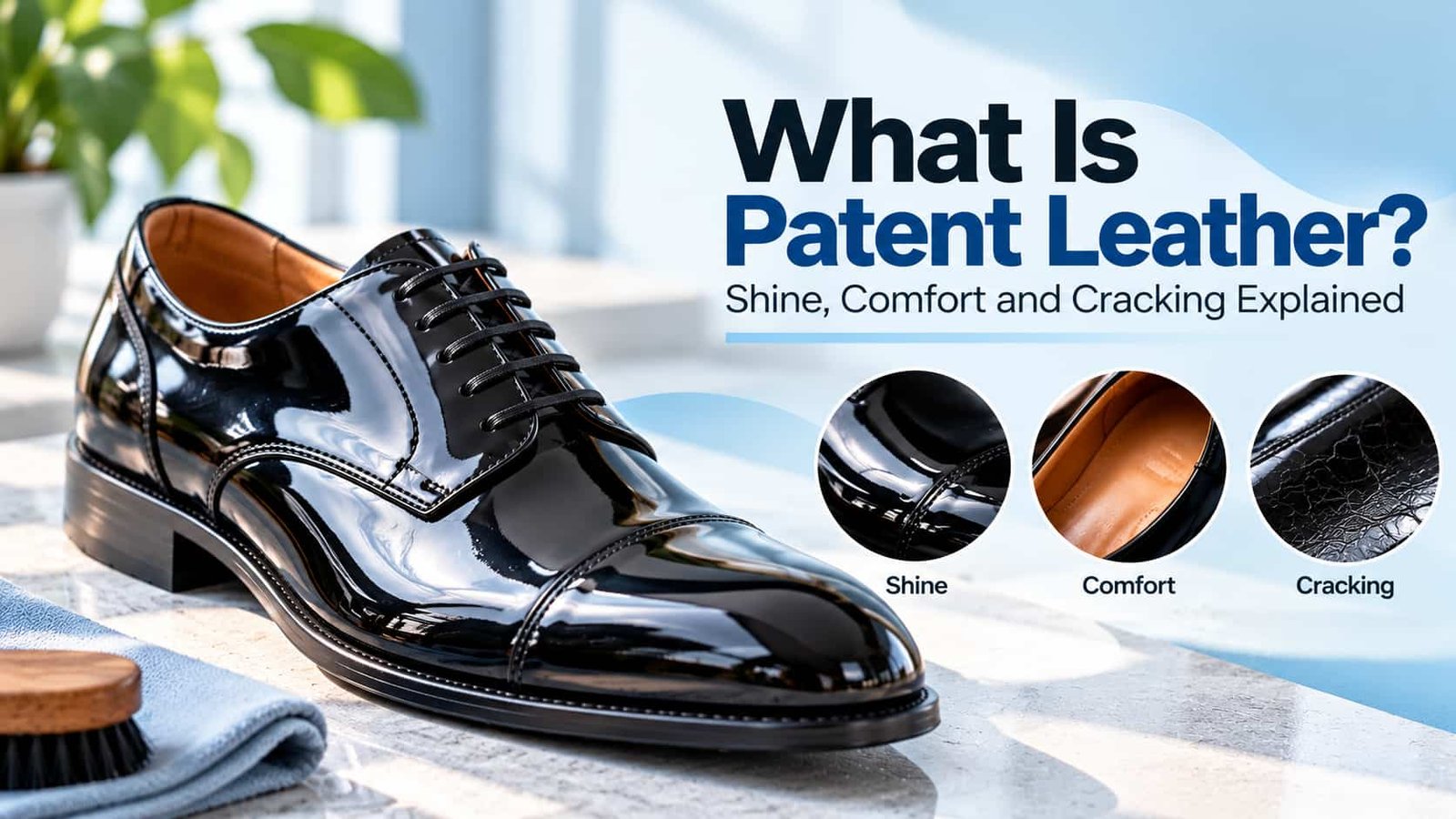
Patent leather is leather with a high-gloss coating applied to its surface, usually a polyurethane or lacquer-type finish. The shine comes from the coating, not the hide underneath. Because the finish seals the surface, patent leather tends to be less breathable and can crack at flex points over time. It suits formal and occasion shoes best, and it needs different care from unfinished leather.
Key Takeaways
- The shine is a coating. Patent leather is finished with a glossy layer, so the appearance depends on the finish as much as the hide.
- The finish changes comfort. A sealed surface breathes less, so shoes can feel warmer and hold more moisture.
- Cracking usually starts in the coating. Repeated bending at the vamp and toe box is where lines form first.
- It suits occasion wear more than daily heavy use. It looks sharp with formal dress, but it is less forgiving in wet or rough conditions.
- Care is simple but specific. Gentle cleaning and light conditioning help, and harsh solvents can damage the finish.
What Patent Leather Is
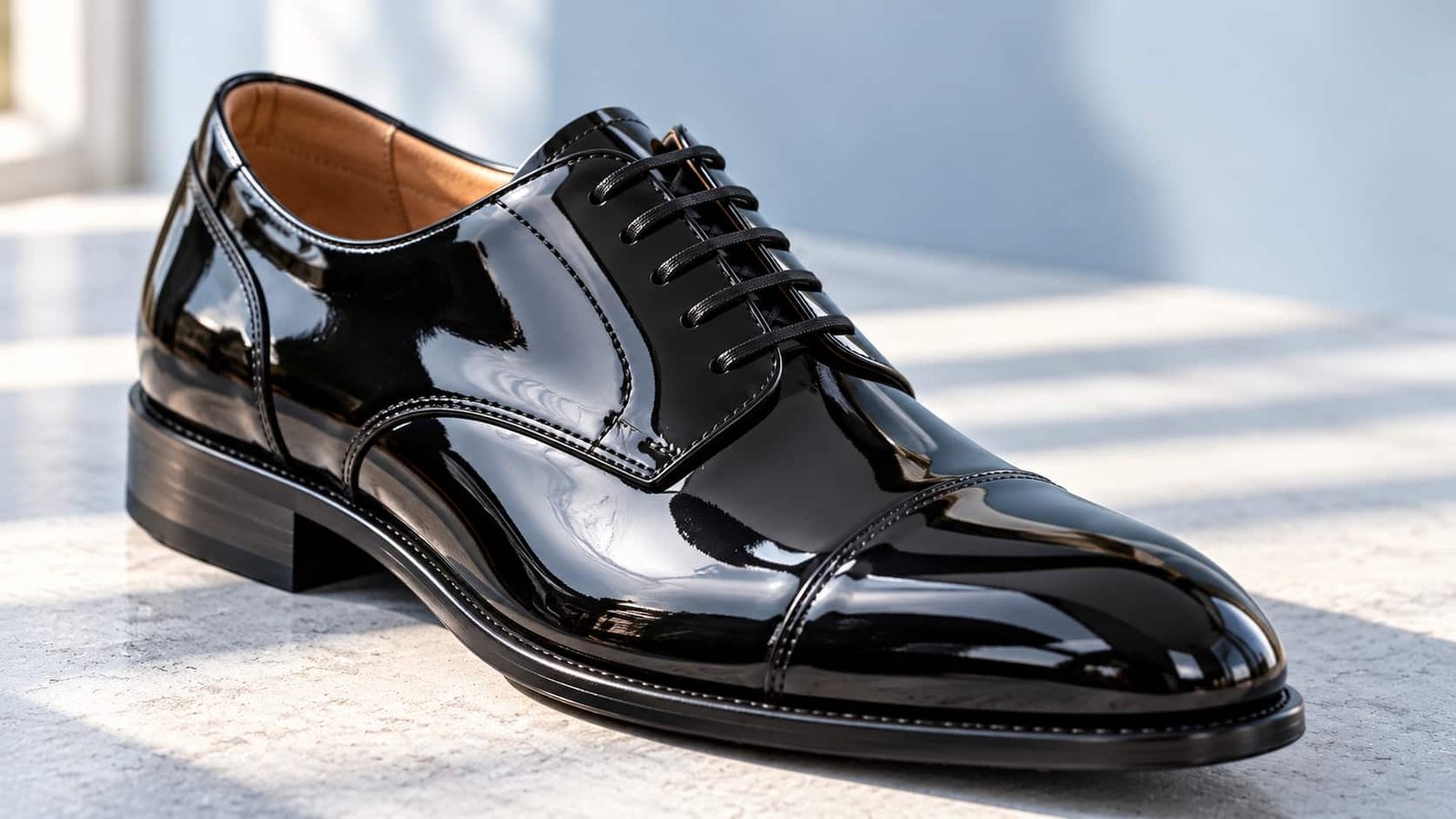
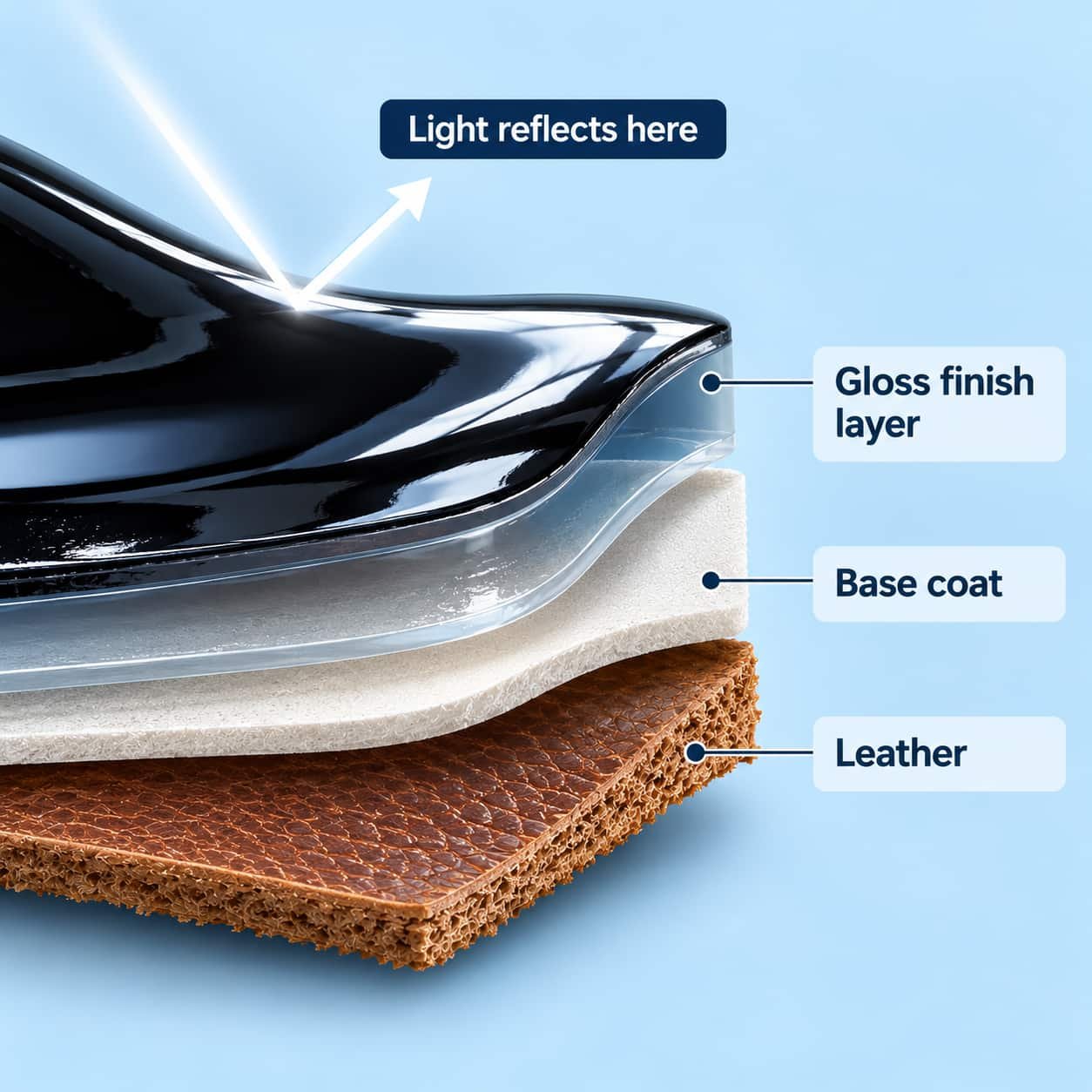
Patent leather is a leather that has been finished with a high-gloss coating. The coating is what makes it reflective, and it is what most people notice first. Under the finish sits a leather layer, which may be a grain layer or a split layer depending on the product. The label “patent” describes the finish, not the hide.
This distinction matters because the finish affects almost everything else about the shoe: how it looks in the shop, how it feels on the foot, how it breathes, and how it ages. Readers who understand that the coating controls these traits can make better choices.
If you are new to leather in shoes, our shoe materials guide explains where leather and its finishes fit among other footwear materials.
How the Shine Is Made
Manufacturers usually start with a leather that has a smooth, even surface. A base coat is applied first to fill and level the surface. Then one or more layers of a glossy finish are added. The finish is often a polyurethane-based or lacquer-type coating, and it is cured so that it bonds to the leather and dries to a hard, reflective surface. The exact method varies between producers, so the description here is general.
Each layer adds thickness and depth to the shine, and the finish is often polished or buffed once it is dry. The result is a surface that reflects light strongly and resists light stains. The same layer that creates the gloss also seals the pores of the leather, which changes how the material behaves in wear.
How Patent Leather Differs From Other Leathers
Patent leather is best compared by its finish. The table below shows how it sits against the other common finishes.
| Finish | Surface | Breathability | Care Effort | Typical Use |
|---|---|---|---|---|
| Patent | High gloss, sealed | Low | Low to medium | Formal and occasion shoes |
| Smooth Calf (Natural Finish) | Soft, matte to satin | Moderate | Medium | Dress and everyday shoes |
| Suede | Soft, napped, unfinished | Good | High | Casual shoes |
| Nubuck | Fine, brushed | Good | High | Casual and outdoor shoes |
| Top Grain (Coated) | Even, lightly finished | Moderate | Medium | Mid-range shoes |
These are typical relationships, and the actual performance depends on the coating thickness and the tannery. For a broader look at leather grades, see our guide to what is genuine leather.
Comfort and Breathability
A sealed surface holds in heat and moisture. In warm weather, patent leather can feel stuffy, and sweat is less likely to escape through the upper. This is an editorial judgment based on how coatings work, not a laboratory result. The lining, the insole and the fit also affect comfort, and a well-lined pair can feel much better than an unlined one.
Patent leather is also stiffer than many unfinished leathers. Some pairs need a short break-in period, and a rigid finish can rub at the heel or the toe if the fit is not right. Choosing a size with a little room, and checking the heel and toe fit while standing, reduces the chance of rubbing.
Why Patent Leather Cracks
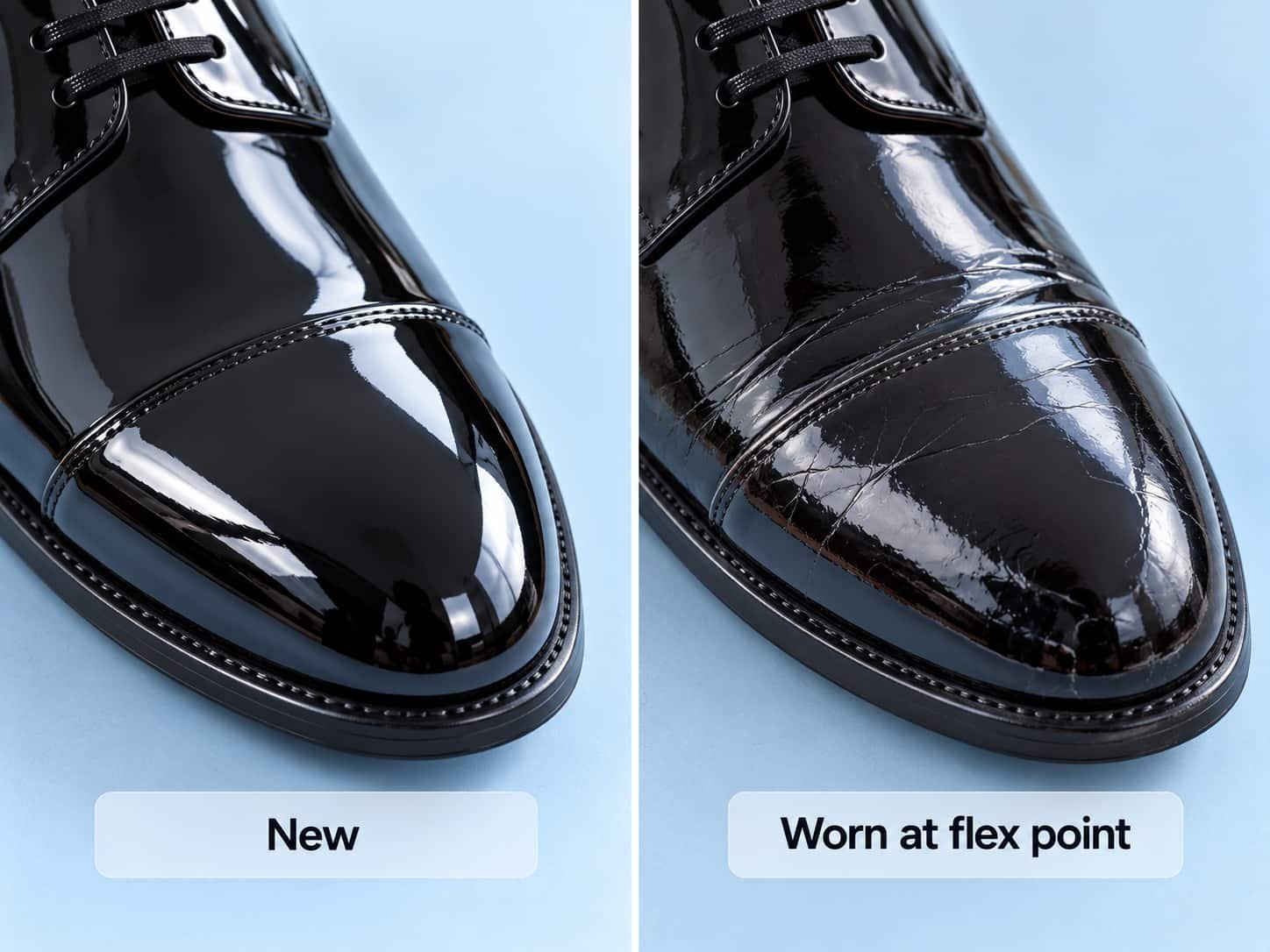
Cracking is the most common complaint about patent leather. It usually starts where the shoe bends most, such as across the vamp and the toe box. Repeated flexing stresses the finish until fine lines appear. Once the coating cracks, it can lift, and the exposed leather underneath can dry out.
Several factors make cracking more likely:
- Heat and dryness. Direct heat or very dry air can harden the coating and make it brittle.
- Repeated creasing. Shoes worn daily in the same flex pattern show lines sooner.
- Storage. Shoes stored pressed together can scuff or transfer colour, and stored in heat they can stiffen.
- Coating quality. A thin or poorly bonded finish is more likely to crack than a thicker, well-applied one.
Cracks that have reached the leather usually cannot be fully reversed. Light conditioning can help a surface that is only starting to dull, but it will not repair a deep crack. Preventing cracks through care and sensible wear is more effective than trying to repair them later.
Pros and Cons
Pros
- Strong visual impact, suited to formal occasions
- Easy to wipe clean, since the sealed surface resists light marks
- Holds a sharp, polished look with little effort
- Resists light water spots better than unfinished leather
Cons
- Lower breathability, which can feel warm in hot conditions
- Cracks at flex points over time
- Scuffs and shows marks more clearly than matte finishes
- Less forgiving of heat, storage and harsh cleaning products
Patent leather is not waterproof. A glossy surface can shed light moisture, but standing water or repeated soaking can still get into seams and damage the leather beneath.
How to Tell If a Shoe Is Patent Leather
A shoe is patent leather when its surface has a high, mirror-like gloss. Check these points before deciding:
- Look at the surface. A high, even gloss that reflects strongly is typical of patent. A matte or satin finish is not.
- Check the product description. Look for the word “patent” or “patent leather” alongside the material information.
- Look at the flex points. Patent finishes often show fine lines around the vamp, which are a sign of the coating being bent.
- Read the material information. The label should cover the upper, lining and sole. Patent usually refers to the upper finish, so check the upper material description.
- Ask the brand. A reputable brand should be able to say whether the finish is patent and whether the leather underneath is grain or split.
Some shoes use faux patent finishes made from PU or PVC. These look similar but are not leather. The product description should state the material clearly. Check the terms carefully, and read the disclosure wording rather than relying on the look alone.
Caring for Patent Leather Shoes
Patent leather is easy to maintain if you use gentle methods.
- Wipe after wearing. Use a soft, dry cloth to remove dust and light marks.
- Clean gently. Use a damp cloth with a little mild soap or a cleaner made for patent leather. Test on a hidden area first.
- Dry slowly. Let the shoes dry at room temperature, away from radiators and direct sun.
- Condition lightly. A small amount of product designed for patent leather can help keep the surface supple. Use sparingly, since too much can leave a sticky residue.
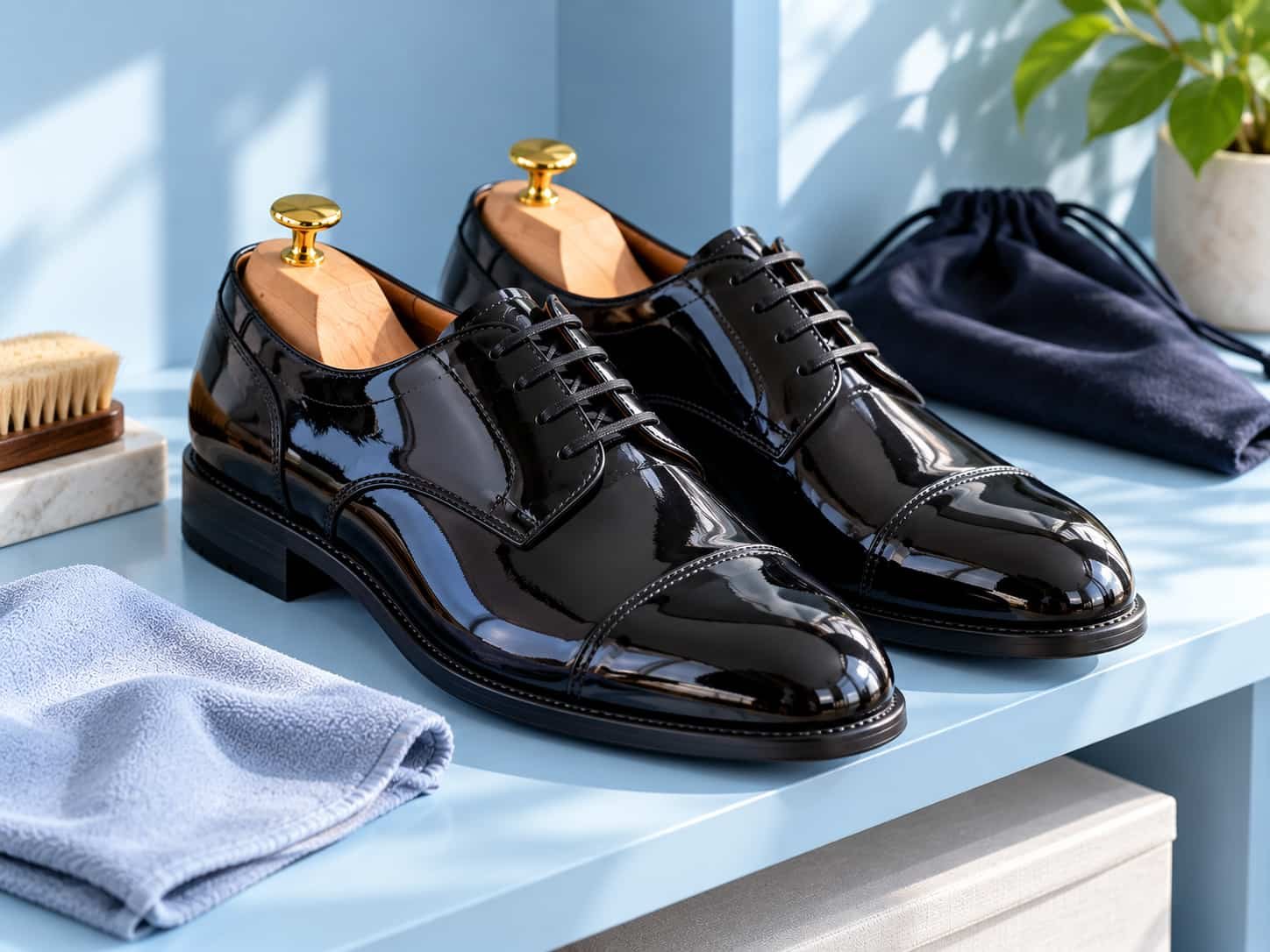
- Store carefully. Keep shoes separate, in a dust bag or box, so the glossy surfaces do not scratch or transfer colour.
- Use shoe trees. They help the shoes hold their shape and reduce creasing.
Avoid alcohol, acetone, strong solvents, petroleum products and heat sources. These can damage the coating and cause cracking. For a broader cleaning routine across materials, see how to clean shoes and maintain them. For a more detailed guide to patent finishes, see how to clean patent leather.
Who Should Choose Patent Leather
Is Patent Leather Right for You?
Compare your daily needs, style preferences and maintenance expectations before choosing a finish.
Patent Leather May Suit You
You want a sharp, polished look for formal events.
You rotate your shoes and store them carefully.
You mainly wear them in mild or dry conditions.
You are happy to clean the glossy finish gently.
You find a pair that delivers the polished style you want at your price.
Consider Another Finish
You prefer a softer, more understated appearance.
You need shoes for long hours and demanding daily use.
You want a more breathable option for hot, humid weather.
You prefer a finish that suits your usual cleaning routine.
You prioritize long-term value for frequent, heavy use.
Quick tip: Comfort and lifespan depend on the shoe’s construction, fit, materials and care—not just its surface finish.
For help narrowing options by use and preference, try the shoe finder.
Practical rule: patent leather works best as a second or occasion pair. Rotate it with other shoes, store it carefully, and use it in dry conditions.
Common Myths
Myth 1: Patent leather is a type of hide
This is the most common mix-up. “Patent” describes the finish, not the animal or the part of the hide used. The gloss comes from a coating applied to the surface, and the leather underneath can be grain or split, depending on the product. Two patent shoes can therefore feel and perform quite differently. The practical takeaway is to look for the leather type and the finish separately when you check a product.
Myth 2: Patent leather is waterproof
The glossy coating does shed light moisture well, which is why patent shoes wipe clean so easily. That shedding is not the same as waterproofing. Standing water, heavy rain and repeated soaking can still reach the seams, the stitching and the leather beneath the coating. If you expect to wear patent shoes in wet weather, choose a different material or keep them for dry occasions.
Myth 3: Patent leather never cracks if it is cared for
Good care does slow damage, but it cannot stop it entirely. The coating bends each time you walk, and it stiffens with heat and age. Over time, fine lines usually appear at the vamp and toe box, even in well-kept shoes. Care reduces how quickly this happens, and rotating your shoes gives the finish time to recover between wears.
Myth 4: Patent leather is always real leather
Many patent-look shoes use polyurethane (PU) or PVC rather than hide. These synthetics can look very close to real patent, especially in photographs. The product’s material information, which should cover the upper, lining and sole, is the most reliable guide. If that information is unclear, ask the brand before buying.
Frequently Asked Questions
What is patent leather?
Patent leather is a leather with a high-gloss finish applied to its surface. The shine comes from the coating, not from the hide underneath. Because the coating controls how the shoe looks, feels and wears, it is useful to judge the finish as well as the leather. Patent is commonly used for formal and occasion footwear.
Is patent leather real leather?
It can be, but not always. Many patent shoes are made from real leather with a glossy finish, while others use synthetic materials that imitate the look. The product’s material information should tell you which applies. If the description is vague, the safest step is to contact the brand and ask.
Is patent leather good for everyday wear?
It can work for occasional everyday use, but it is better suited to occasion and part-time wear. The sealed surface limits airflow, so the shoes may feel warm and hold moisture on long days. Flex points such as the vamp can also crack with repeated use. Rotating patent shoes with other pairs gives the finish time to recover and reduces stress on any single pair.
Why does patent leather crack?
Cracking happens because the coating bends each time you walk, and repeated bending eventually stresses the finish. The vamp and toe box take the most strain, so lines usually appear there first. Heat, dryness and age make the coating stiffer and more brittle. Careful storage and sensible wear slow the process, but they do not stop it entirely.
Is patent leather waterproof?
No. The gloss can shed light moisture and wipe clean easily, but it does not make the shoe waterproof. Standing water and repeated soaking can reach the seams and the leather beneath the coating. Dry wet patent shoes slowly at room temperature, away from heat, and avoid leaving them in damp conditions.
How do I clean patent leather shoes?
Start by wiping the shoes with a soft, dry cloth to remove dust. For marks, use a damp cloth with a little mild soap or a cleaner made for patent leather. Test any product on a hidden area first, and avoid alcohol, acetone and harsh solvents. Let the shoes dry slowly at room temperature, and use a suitable conditioner sparingly if the surface looks dull.
Can patent leather cracks be repaired?
Light dulling can sometimes be improved with a suitable conditioner or polish, which can make the surface look fresher. Deep cracks that have reached the leather usually cannot be fully reversed, and attempts to hide them may make the finish look worse. Prevention is more effective than repair, so store shoes carefully, rotate them and keep them away from heat. For severe damage, a professional shoe repair service can advise on options.
Does patent leather breathe?
Not well. The sealed surface limits airflow through the upper, so the shoes can feel warm and hold moisture in hot or humid conditions. The lining, the insole and the fit also affect comfort, and a well-lined pair can feel much better than an unlined one. If you need breathable shoes for long days, consider a material with an open surface, such as smooth calf or suede.
Is patent leather a good choice for formal events?
Yes, patent leather is widely used for formal and occasion footwear because of its polished, reflective look. Choose a pair with an even, well-applied finish and a comfortable fit, since the stiffness of patent can rub if the shoes are not sized correctly. Store them separately in a dust bag between wears, and check the soles and heels before the event.
Conclusion
Patent leather is a glossy finish, and that finish drives its look, comfort, breathability and cracking behaviour. It can suit formal and occasion shoes well, especially when you can rotate it and keep it clean, dry and stored carefully. For everyday heavy use, a more breathable and flexible finish is usually the better choice.
Before you buy, check the material information, look at how the finish is applied, and decide how often you will wear the shoes. For the wider context of leather and finishes, start with our shoe materials guide.
Sources
- Leather Working Group. Environmental and processing standards for leather. Visit website.
- Federal Trade Commission. Guides for Select Leather and Imitation Leather Products, 16 CFR Part 24. Read the guidance.
- EUR-Lex. Directive 94/11/EC on labelling of footwear materials. Read the directive.
- SATRA. Footwear testing and technical guidance. Visit website.


