
How to Waterproof Canvas Shoes with Wax: DIY Guide & Leather Care 2026
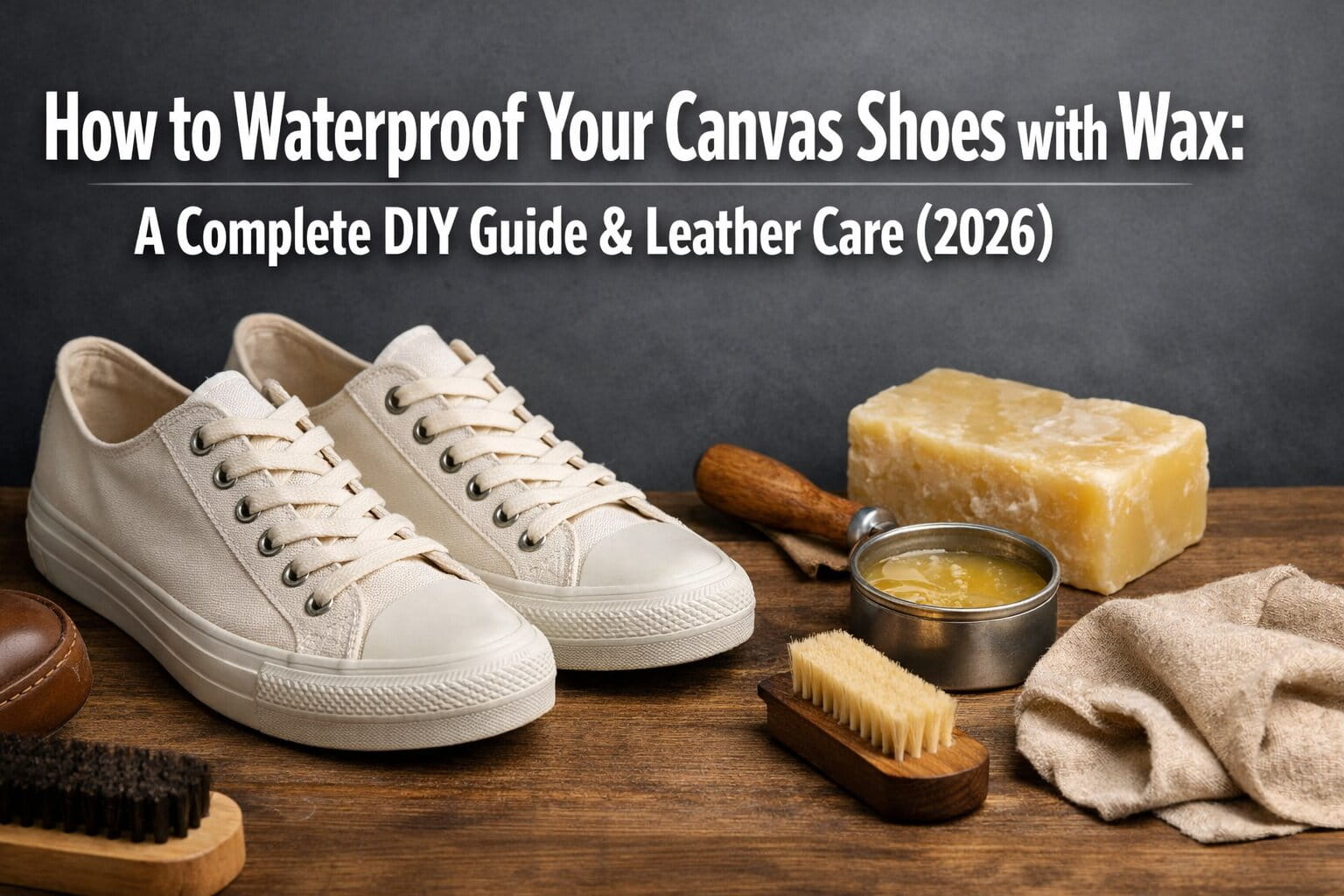
Canvas shoes are comfortable and versatile, but the open weave of many canvas fabrics can allow water to penetrate quickly. Applying a compatible fabric wax can increase water resistance by creating a protective wax finish over the textile.
It is important to distinguish water resistance from complete waterproofing. A wax treatment can help protect the canvas, but water may still enter through seams, eyelets, the tongue, openings and areas that were not adequately treated.
Can You Waterproof Canvas Shoes With Wax?
Yes, compatible canvas shoes can be treated with fabric wax to improve their water resistance. The type of canvas and the treatment already on the shoe matter, so always check the material before applying anything.
For example, Otter Wax’s official fabric-wax guide specifically lists canvas shoes, canvas, duck cloth, denim and other natural-dominant fabrics as suitable applications. It also says its heavy-duty fabric wax is not recommended for synthetic materials such as nylon, polyester and technical membranes.
That makes the material check one of the most important steps before you begin.
Waxed Does Not Mean Fully Waterproof
Waxing should be viewed as a water-resistance treatment, not a guarantee that a casual canvas sneaker will perform like a purpose-built waterproof shoe.
Water can still enter through construction points such as:
- Tongue openings
- Lace and eyelet areas
- Stitching
- Sole-to-upper joins
- Unwaxed panels
- Gaps around the collar
The final result also depends on the fabric’s density, previous treatments and how evenly the wax is applied.
What Is the Best Wax for Canvas Shoes?
A purpose-made fabric or canvas wax is the safest choice for this DIY project.
One example is Otter Wax Heavy-Duty Fabric Wax, which the manufacturer says is designed to add water resistance to canvas by building a protective wax finish. Its instructions recommend applying the wax with firm, even pressure, working in small sections, and using the edge of the bar around seams, hems and stitching.
Otter Wax also offers a Heat-Activated Fabric Dressing. Its instructions use melted wax applied to small sections of fabric, followed by smoothing and controlled low heat when needed.
Beeswax vs Ordinary Candle Wax
Do not assume that every product containing beeswax is suitable for shoes.
A dedicated fabric wax is preferable because the manufacturer specifies the intended material and application method.
Ordinary household candles may contain fragrances, dyes or other additives that are not designed for textile waterproofing. For predictable results, use a product specifically intended for canvas or fabric.
Is Waxing Right for Your Shoes?
Use these three checks before you start.
Wax is primarily suited to compatible canvas and heavy cotton fabrics.
Wax can improve water resistance, but it does not make every sneaker fully waterproof.
Wax can darken fabric, stiffen it and create a different texture.
How to Waterproof Canvas Shoes With Wax
Step 1: Identify the Material
Before cleaning or waxing the shoe, check what the upper is made from.
Wax is most appropriate for compatible canvas and natural-dominant fabrics. Otter Wax specifically lists canvas, duck cloth, denim, oilcloth and other natural-dominant fabrics among suitable materials.
Avoid assuming that a shoe described simply as a “sneaker” can be waxed.
Do not use ordinary canvas wax on technical mesh, Gore-Tex-style membranes or other synthetic materials unless the manufacturer specifically approves it.
Step 2: Clean and Dry the Canvas
Remove loose dirt, mud and surface debris before applying wax.
A dirty surface can make it harder to achieve an even finish.
Allow the shoe to dry completely before waxing.
If the shoe already has a factory-applied coating, check its care instructions first. Otter Wax notes that some synthetic treatments, including certain silicone, polyurethane and PFAS-based DWR coatings, can prevent its wax from bonding properly.
This is why material and coating identification should come before the waxing process.
Step 3: Test a Small Hidden Area
This step should not be skipped.
Apply a small amount of wax to an inconspicuous part of the shoe and check the result after it settles.
Look for:
- Color change
- Stiffness
- Uneven finish
- Texture changes
- Poor wax absorption
- Unexpected staining
Otter Wax specifically recommends testing its fabric wax on a small, discreet area before treating the entire item.
For white, cream or brightly colored canvas, this test is especially important.
Step 4: Apply the Wax in Small Sections
If the test is successful, begin treating the shoe.
Rub the fabric wax into the canvas using firm, even pressure and work in small sections.
Do not try to cover the entire shoe with one heavy application.
Use the edge of the wax bar around:
- Seams
- Stitching
- Hems
- Toe area
- Heel area
- High-wear sections
These recommendations are consistent with the application instructions published by Otter Wax for its Heavy-Duty Fabric Wax.
Step 5: Smooth the Wax
After applying the wax, smooth it into the fabric.
The goal is even coverage, not maximum thickness.
Heavy patches can create an uneven appearance and may make the shoe unnecessarily stiff.
Otter Wax recommends smoothing the wax into the fabric with your fingers or a smoothing tool so it bonds with the canvas.
Step 6: Use Low Heat Only When the Product Allows It
A hairdryer can be useful for some fabric-wax systems, but it should not automatically be treated as a required step.
For example, Otter Wax recommends carefully applying low heat to soften the wax and improve the smoothness and consistency of the finish.
If your product instructions allow heat:
- Use a low setting.
- Keep the dryer moving.
- Do not concentrate heat on one area.
- Keep excessive heat away from rubber and adhesive areas.
- Stop if the material becomes excessively hot.
The goal is to help distribute the wax, not to overheat the shoe.
Step 7: Allow the Shoes to Cure
Curing is an important part of the process.
Otter Wax recommends allowing newly waxed items to cure in a warm, dry place for 48 to 72 hours. Its FAQ notes that cooler temperatures, high humidity and heavier wax applications can extend the curing time.
This is more reliable than simply telling readers to wait exactly 24 hours for every wax product.
Best practice: Follow the curing time specified by the manufacturer of the wax you are using.
How Much Wax Should You Apply?
There is no universal amount because canvas fabrics differ in weight, density, porosity and previous treatment.
Otter Wax’s current coverage guidance explains that heavy untreated canvas can absorb considerably more wax than thinner or previously treated material.
For shoes, start with a light, even application.
You can add more to areas that still appear untreated, but removing excessive wax is more difficult.
Can You Wax Converse Shoes?
Compatible canvas Converse-style shoes can be waxed, but test the treatment first.
The main question is not the brand name. It is the material and existing finish of the upper.
If the shoe uses compatible canvas, a suitable fabric wax may improve its resistance to light moisture.
Before treating the entire shoe, test a hidden section because waxing can alter the original color and texture.
For canvas shoes with a synthetic coating, the result may be different. Otter Wax notes that some synthetic coatings can prevent wax from penetrating and bonding properly.
What About White Converse?
Use extra caution.
White canvas can show changes in:
- Color
- Texture
- Wax distribution
- Surface marks
If maintaining the original white appearance is your priority, test the treatment before making a full application.
Does Waxing Make Canvas Shoes Less Breathable?
It can reduce the amount of airflow through the fabric.
Wax creates a coating over the textile, so the final material will generally feel different from untreated canvas.
Otter Wax describes its Heavy-Duty Fabric Wax as producing a traditional waxed-canvas finish, while its Heat-Activated Fabric Dressing is designed to penetrate more deeply into compatible fabrics.
The practical trade-off is:
More protection from moisture can mean a different feel and reduced airflow compared with untreated canvas.
This is one reason heavily waxed canvas may be less appealing for hot-weather casual wear.
Waxed Canvas vs Waterproofing Spray
Both approaches can improve protection from moisture, but they produce different results.
| Feature | Fabric Wax | Waterproofing Spray |
| Main purpose | Creates a waxed protective finish | Adds a protective surface treatment |
| Appearance | More likely to change | Usually less noticeable |
| Texture | Can become stiffer | Usually closer to original |
| Application | More hands-on | Generally faster |
| Maintenance | Re-wax worn areas | Reapply according to product instructions |
| Best for | Waxed-canvas finish | Maintaining original look |
The correct choice depends on the shoe material and the result you want.
For example, Otter Wax’s product range distinguishes between Fabric Wax Bars and Heat-Activated Fabric Dressing, with different application methods and finishes.
What Materials Can You Wax?
| Material | Recommendation | Evidence / Reason |
| Cotton canvas | ✅ Suitable with compatible fabric wax | Listed as a suitable fabric by Otter Wax |
| Heavy cotton | ✅ Generally suitable | Natural-dominant fabric |
| Denim | ✅ Test first | Listed among compatible natural fabrics |
| Nylon | ❌ Avoid unless manufacturer approves | Not recommended by Otter Wax |
| Polyester | ❌ Avoid unless manufacturer approves | Not recommended by Otter Wax |
| Technical membranes | ❌ Avoid | Wax may interfere with the membrane/coating |
| Suede | ❌ Do not use canvas wax | Requires suede-specific care |
| Leather | ⚠️ Use leather-specific products | Different material and finish |
Otter Wax specifically recommends its Heavy-Duty Fabric Wax for natural and natural-dominant fabrics and says it is not recommended for synthetic fabrics such as nylon, polyester and technical membranes.
Beeswax Leather Is Not the Same as Waxed Canvas
This distinction is important if you are searching for Clarks Desert Boots Beeswax or Clarks Wallabees Beeswax.
Waxed canvas is a textile treated with wax.
Beeswax leather is leather with a specific finish.
For example, Clarks’ official Desert Boot Beeswax page identifies the upper material as beeswax brown leather and lists leather cleaners, restorers, polishes and protectors in its care guidance.
Therefore, the canvas-waxing method in this article should not be transferred directly to Clarks beeswax leather footwear.
How to Care for Clarks Desert Boots Beeswax
For Clarks Desert Boots Beeswax, treat the shoe as leather footwear.
Clarks identifies the Desert Boot Beeswax upper as leather and recommends dedicated care categories including cleaners, restorers, polishes and protectors.
A practical routine is:
- Remove loose dirt with a soft brush or cloth.
- Use a leather-compatible cleaner when needed.
- Apply an appropriate leather conditioner or protector according to the product instructions.
- Test unfamiliar products on a discreet area.
- Allow the shoe to dry naturally.
- Avoid applying canvas wax directly to the leather.
You can check the current material and care information directly on Clarks’ official Desert Boot Beeswax product page.
What About Clarks Wallabees Beeswax?
The same distinction applies to Clarks Wallabees Beeswax.
Clarks lists Beeswax among its current beeswax leather collection, which includes Wallabee and Desert Boot models.
That means these shoes belong in the leather-care section, not the canvas-waxing process.
If you own a specific Clarks model, check its current material and care information before applying any conditioner, polish or protector.
How Should You Clean Waxed Canvas Shoes?
Routine cleaning should be gentle.
Otter Wax states that fully washing waxed fabric can strip the wax and reduce performance, and recommends spot cleaning for most situations.
For everyday maintenance:
- Brush away dry dirt.
- Use a damp cloth on small marks.
- Use a soft brush when needed.
- Avoid aggressive detergents.
- Let the shoe dry naturally.
- Reapply wax to worn areas when necessary.
If the shoe requires deeper cleaning, follow the care instructions for both the shoe and the wax product.
Can Waxed Canvas Shoes Go in the Washing Machine?
Generally, avoid machine washing unless the shoe or wax manufacturer specifically says it is safe.
Repeated washing can remove the wax coating.
Otter Wax recommends spot cleaning waxed fabric and explains that full washing can strip wax and reduce performance.
For a waxed canvas sneaker, gentle spot cleaning is therefore the better default.
How Long Does Waxed Canvas Waterproofing Last?
There is no single lifespan that applies to every shoe.
Performance depends on:
- Fabric type
- Fabric density
- Amount of wax applied
- Frequency of wear
- Weather exposure
- Abrasion
- Cleaning
- Existing fabric treatment
Otter Wax recommends renewing wax as needed and notes that coverage and absorption vary according to the fabric and how thoroughly it is treated.
Instead of following an arbitrary three- or six-month schedule, inspect the shoe.
If water no longer beads as it previously did or untreated areas become visible, the finish may need maintenance.
Common Waxing Mistakes
Applying wax to synthetic material
Check the fabric first. Some synthetic coatings prevent wax from bonding properly.
Skipping the test patch
Manufacturers such as Otter Wax specifically recommend a discreet-area test before full application.
Applying too much wax
Start light and add more only where necessary.
Using excessive heat
Use low heat only when the product instructions recommend it.
Washing the shoes aggressively afterward
Full washing can strip the wax treatment.
Treating leather like canvas
Clarks’ Beeswax Desert Boot is leather and has its own leather-care system.
Quick Decision Guide
Wax your canvas shoes if:
- The upper is compatible canvas.
- You want better resistance to everyday moisture.
- You are comfortable with a waxed appearance.
- A slightly different fabric feel is acceptable.
- You are prepared to maintain the treatment.
Consider another protector if:
- You want to preserve the original appearance.
- The manufacturer recommends a spray treatment.
- The upper has a technical or synthetic construction.
- You do not want a stiffer waxed finish.
Do not use ordinary canvas wax if:
- The upper is suede.
- The shoe uses a technical membrane.
- The manufacturer specifically prohibits the treatment.
- You are dealing with beeswax leather that has its own care instructions.
Frequently Asked Questions
Can you waterproof canvas shoes with wax?
You can improve the water resistance of compatible canvas shoes with fabric wax. It does not guarantee that the entire shoe will become fully waterproof.
What is the best wax for canvas shoes?
A purpose-made fabric wax designed for canvas is the best starting point. Otter Wax, for example, specifically lists canvas shoes among the suitable applications for its Heavy-Duty Fabric Wax.
Can I wax Converse shoes?
Yes, if the upper is compatible canvas. Test a hidden area first because the wax can change the color, texture and flexibility of the shoe.
Can I use candle wax on canvas shoes?
A dedicated fabric wax is preferable. Household candle formulations can contain additives that are not intended for textile treatment.
Does waxing canvas make it waterproof?
No, not necessarily. Wax improves water resistance, but seams, openings and construction details can still allow water into the shoe.
Does waxing canvas reduce breathability?
It can. Wax changes the structure and feel of the fabric and can reduce airflow compared with untreated canvas.
How long should waxed canvas shoes cure?
The required time depends on the wax and application. Otter Wax recommends 48 to 72 hours for its fabric treatments in a warm, dry place.
Can I machine wash waxed canvas shoes?
Generally, avoid machine washing. Washing can remove the wax and reduce the protective finish.
Can I wax synthetic running shoes?
Do not assume that you can. Otter Wax specifically says its Heavy-Duty Fabric Wax is not recommended for synthetic fabrics such as nylon and polyester or for technical membranes.
Can I use canvas wax on Clarks Desert Boots Beeswax?
No. Treat them as leather footwear. Clarks identifies the Desert Boot Beeswax upper as leather and provides dedicated leather-care products.
Are Clarks Desert Boots Beeswax waterproof?
Do not treat the term “beeswax leather” as a guarantee of waterproof construction. Clarks identifies the material as beeswax leather and provides protectors designed to resist rain and stains, which is different from claiming the shoe is fully waterproof.
Final Verdict
Waxing can be a useful way to improve the water resistance of compatible canvas shoes, but the result depends heavily on the material, wax and application method.
The safest approach is:
Check the material → Test a hidden area → Apply a light coat → Work the wax evenly → Use low heat only if recommended → Cure properly → Maintain with gentle cleaning.
For canvas, use a product designed for fabric.
For Clarks Desert Boots Beeswax and other beeswax leather footwear, follow leather-care guidance instead of using the canvas-waxing process. Clarks confirms that its Desert Boot Beeswax uses a leather upper and provides dedicated cleaning, conditioning and protection options.
Recommended Authority References
For readers who want to verify the material-care information, these are the strongest external references used in this guide:
- Otter Wax: Heavy-Duty Fabric Wax application guide
- Otter Wax: Heat-Activated Fabric Dressing guide
- Otter Wax: What fabrics can be waxed
- Otter Wax: Fabric and leather-care FAQ
- Clarks: Desert Boot Beeswax official product page
- Clarks: Beeswax Leather collection
Ready to Protect or Replace Your Shoes?
If your favorite canvas sneakers only need better water resistance, a proper fabric-wax treatment may be enough.
If the upper is already damaged, the sole is separating, or the shoe is regularly exposed to heavy rain, it may make more sense to choose footwear designed for wet conditions.
You can also explore our other footwear guides:
- Best Shoes for Nurses 2026: 15 Picks That Survive 12-Hour Shifts
- Stability vs Neutral Shoes for Plantar Fasciitis
- ASICS vs New Balance for Plantar Fasciitis
- HOKA vs Brooks for Plantar Fasciitis
- Best Free Plantar Fasciitis Shoe Samples & Trials
Recommended products
- Check latest prices for Clarks Desert Boots Beeswax on Amazon
- Browse waterproofing products for canvas footwear
- See all-weather casual shoe options
Affiliate disclosure: Some links on this page are affiliate links. If you purchase through one of these links, we may earn a commission at no additional cost to you.
- Best Nurse Mates Shoes 2026: Slip-Resistant Comfort for Long Shifts
- Best Brooks Shoes for Nurses: 8 Picks for Long Shifts, Support & Comfort
- Best HOKA Shoes for Nurses 2026 – Maximum Cushioning & Comfort
- Best New Balance Shoes for Nurses 2026: Hospital Comfort
- Best Crocs for Nurses 2026: ASTM-Certified Work Clogs & Reviews