

Why Do Converse Have Holes on the Side? Ventilation, Lacing, and Design Explained

Summarise This Guide with AI
Open an assistant below and submit the prefilled request. The assistant reads this page only after you submit it. The guide covers the side holes on Converse, their ventilation and lacing uses, the sprain claims, and the wet-weather downside.
The two small holes on the side of Converse Chuck Taylor sneakers are eyelets, and they have two main uses. The first is airflow, which is a modest benefit and not a major cooling feature. The second is lacing, since the eyelets allow a zigzag or side-lacing pattern that some wearers use to adjust fit. Some commentators also link them to ankle support, but that is a claim rather than a tested result.
Key Takeaways
- The side holes are metal-ringed eyelets. Converse Chucks were first designed for basketball, and the holes are commonly explained as a ventilation feature.
- Ventilation is a real but modest benefit. One article notes that the feature alone may not stop sweating on hot days.
- The holes also allow alternative lacing, such as a zigzag pattern across the width of the foot, which can change how the shoe fits.
- Claims about sprain prevention come from secondary sources and are not confirmed by controlled testing.
- Water and debris can enter through the holes, so they are less suitable for wet or muddy conditions.
The Two Holes Explained
If you have owned a pair of Converse, you have probably noticed two small holes near the bottom of each side of the upper, just above the rubber sole. They look like the eyelets used for laces, and many wearers have wondered why they are there. The answer is more practical than it first appears.
Mental Floss describes the two side holes as metal-ringed holes on the inner side. They look identical to lace eyelets, but the article explains that they serve a different purpose. The same article says the design of the Chuck Taylor All-Star has barely changed since its debut in 1917, which is one reason the side holes remain on the shoe today.
Futura Sciences, the French science publication, takes a different view. It argues that the holes are the result of a deliberate construction choice that supports stability, and that they make a particular lacing pattern possible. Both articles agree that the holes are not just decoration, but they differ on which function matters most. This guide sets out the evidence for each.
Where the Holes Sit on a Chuck Taylor
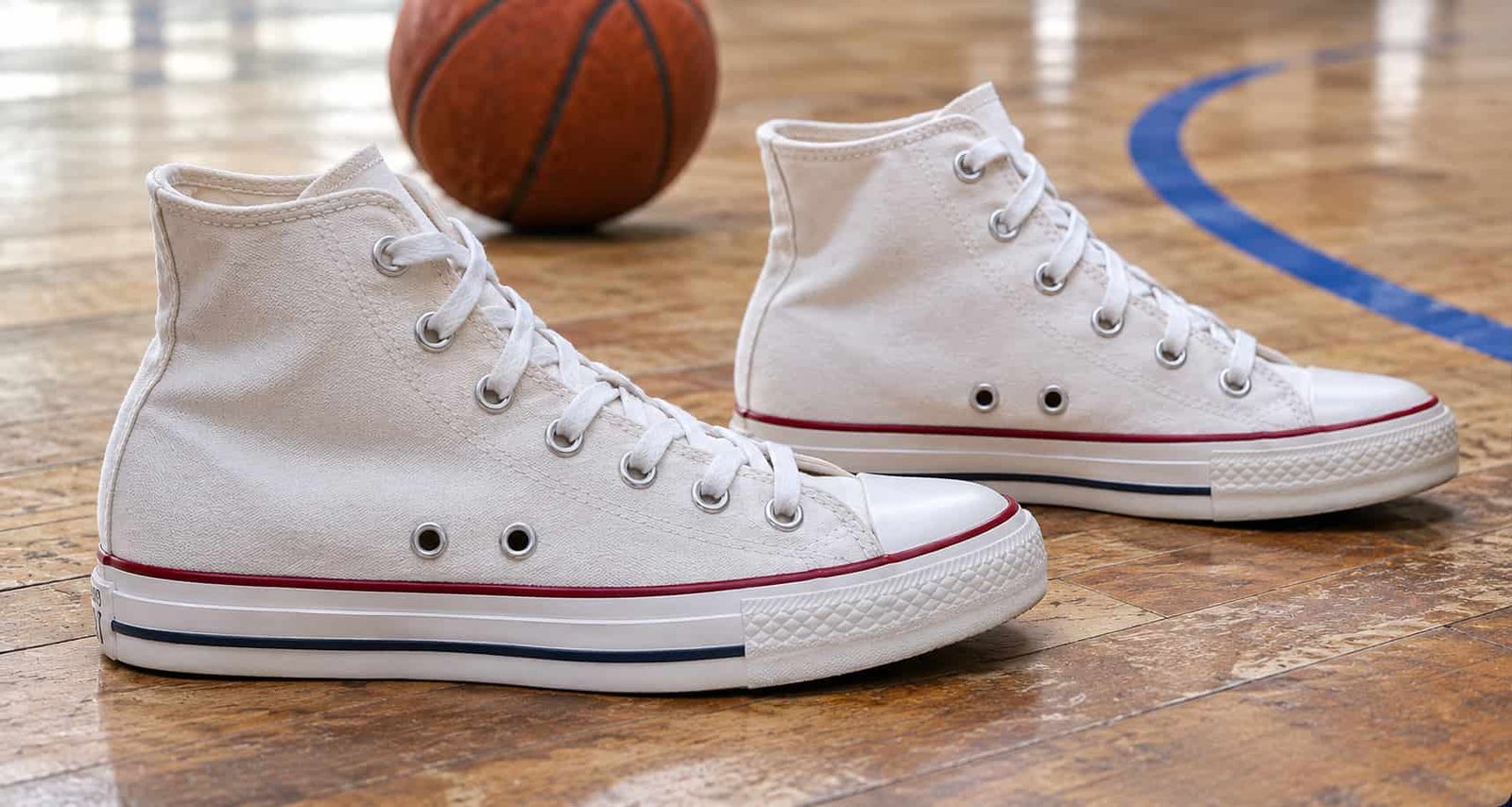
The side holes sit on the inner edge of the upper, close to the sole. On a classic high-top, the holes are placed a short distance above the rubber toe cap and the sole, and they are set into the canvas with a metal ring. Some Chucks have the holes open, while others have them plugged or covered, depending on the model and design.
The position matters for both airflow and lacing. Because the holes are low and on the sides, they can admit air into the lower part of the shoe. They are also positioned to be crossed by a lace in a side-to-side pattern, which is how the alternative lacing methods work.
If you are new to shoe parts, the anatomy of a shoe guide explains the upper, the sole, and the collar in context. The side holes sit on the upper, so the anatomy guide is the right place to see where they fit.
Purpose One: Ventilation and Its Limits
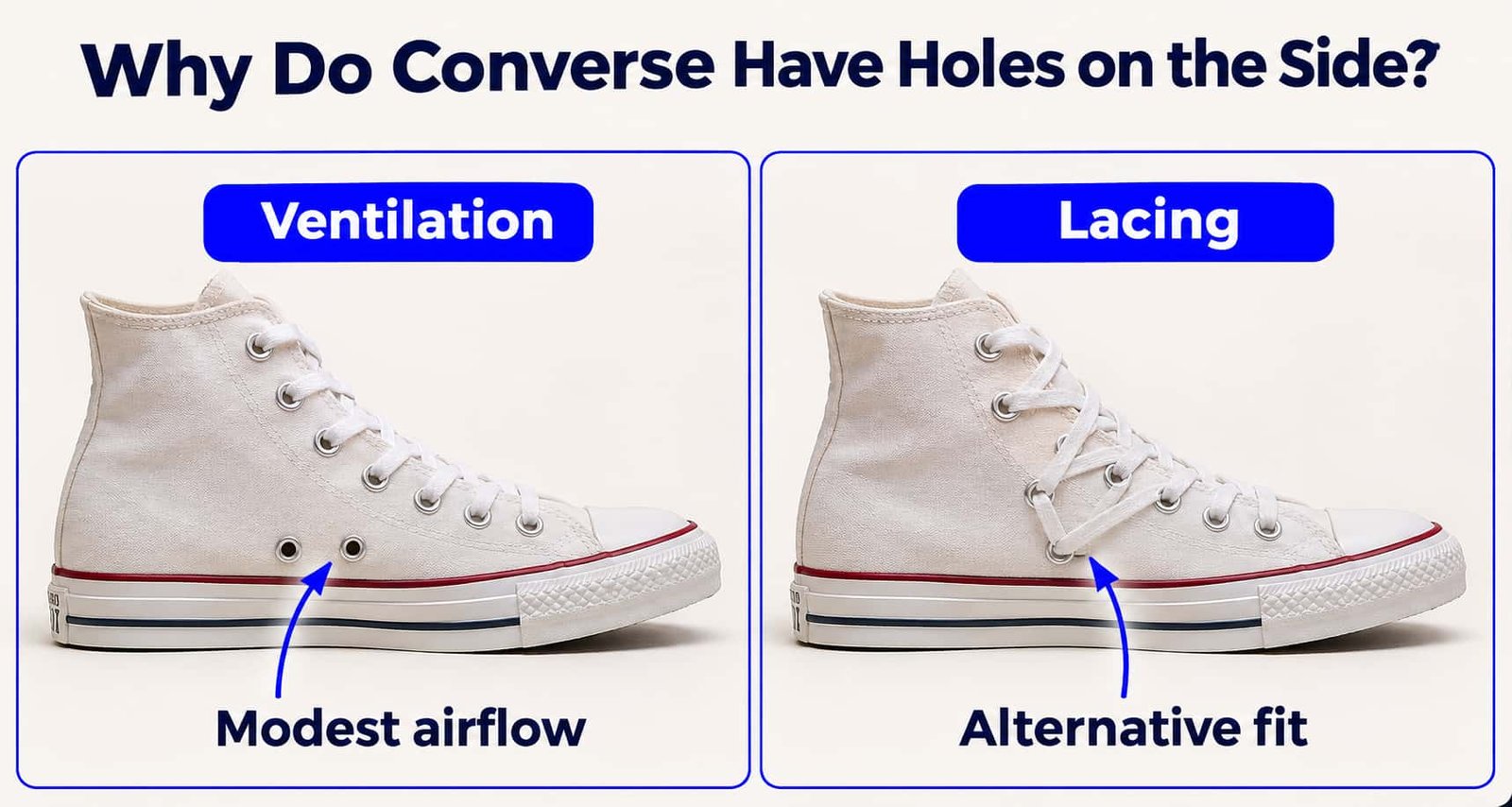
The most common explanation for the holes is ventilation. Several articles, including Mental Floss, Tyla, and Marie Claire, describe the holes as offering airflow to the foot. Marie Claire says the holes allow air to get into the shoe in a way that is similar to the breathable material used in modern gym trainers. Tyla adds that the holes were originally useful when Converse was known as a basketball shoe, since they gave players’ feet a way to breathe during games.
The honest picture is that the holes do add some airflow, but the effect is limited. Mental Floss states directly that the feature alone may not be enough to stop feet from sweating on hot days. The benefit becomes more noticeable during long walks or a basketball game, when any source of airflow makes a difference.
Breathability in footwear depends on many factors, including the upper material, the lining, the sole, and the amount of movement. The side holes are one small contributor. If keeping your feet cool is your main priority, a breathable upper or a different shoe may do more than the holes alone. Our guide to how waterproof shoes work explains how membranes and coatings trade breathability and water protection.
Purpose Two: Lacing and Fit Adjustment
The second purpose of the holes is lacing. Futura Sciences describes a zigzag lacing method that uses the side holes to lock the foot in place across the width of the shoe. Marie Claire describes the same idea, saying that wearers should lace the shoes in a zig-zag across the whole width of the foot rather than only through the front eyelets.
This method can change how the shoe sits on the foot. Because the lace crosses the foot from side to side, it can hold the midfoot more firmly and reduce movement inside the shoe. The result can be a snugger feel, which some wearers prefer and others find restrictive.
The side holes also give wearers a second option for fit. If the shoe is slightly loose across the midfoot, using the side eyelets can take up the extra room. The adjustment is more subtle than a full heel lock, but it provides a useful alternative to standard lacing.
The lacing method works best when the shoe already fits. Using the side holes to force a shoe that is too small will create pressure rather than comfort.
Support and Sprains: What the Claims Say
Some articles go further and link the side holes to stability and injury prevention. Futura Sciences states that the holes help ensure strong, reliable stability and suggests they can help prevent sprains. This is a claim from one publication, and the sources reviewed here do not include controlled trials showing that the side holes reduce sprains.
The stability argument is plausible in mechanical terms. A lace that crosses the midfoot from side to side can hold the foot more securely than a lace that runs only along the top. But the stability of a shoe depends on its whole construction, including the sole, the heel, the upper, and the fit. A pair of Converse is a flat-soled canvas shoe, and it does not offer the structured support of a stability running shoe.
If you have a history of ankle injury, or if you are concerned about sprains, a sports medicine clinic or podiatrist can advise on footwear and lacing for your needs. This guide does not provide medical advice on injury prevention.
Why the Holes Date Back to Basketball
Converse began as a shoe company in Boston, founded in 1908 by Marquis Mills Converse, according to Futura Sciences. The Chuck Taylor All-Star became one of the company’s most recognised models, and it was used widely in basketball. Mental Floss notes that Converse originally designed its sneakers for athletes, and that for decades they were the top shoe for basketball players.
This background explains why ventilation is a common explanation. Players moved quickly and sweated heavily, and small airflow features can matter in that context. The side eyelets also fit a basketball player’s need for a secure and adjustable fit during sudden stops and changes of direction.
The history is useful context, but it is not a substitute for direct evidence about the holes. Official design documents from Converse would be the strongest source, and the sources reviewed here do not include one.
Side Holes vs Top Eyelets
The side holes and the main lacing eyelets look similar, but they do different jobs. The table below compares them.
| Feature | Side holes | Top lacing eyelets |
|---|---|---|
| Location | Inner side, low on the upper | Front of the upper, along the throat |
| Main role | Airflow and alternative lacing | Standard lacing and main fit adjustment |
| Typical lacing | Zigzag or side-to-side pattern | Standard criss-cross lacing |
| Effect on fit | Can snug the midfoot | Controls overall closure |
| Common sources | Mental Floss, Futura Sciences, Marie Claire | Standard shoe construction |
How to Lace Through the Side Holes
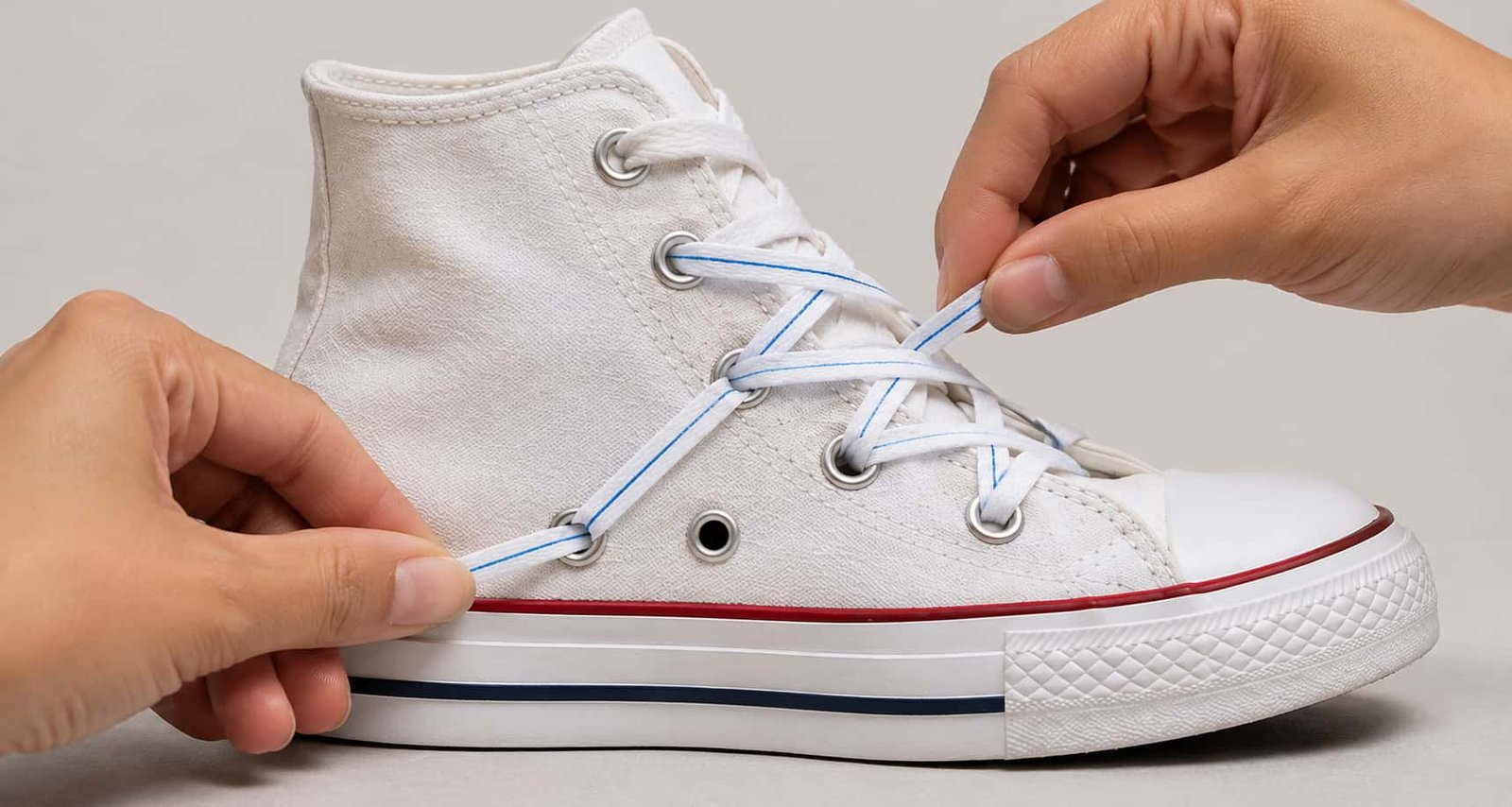
Futura Sciences describes a method for lacing Converse using the side eyelets. The steps below summarise the general approach, and you should adapt them to your shoe and foot.
Start by removing the laces and loosening the shoe. Insert one end of the lace into the first side hole from the inside, so the lace comes out on the outside. Thread it through the second side hole on the same side, then bring the lace back across the front of the shoe through the front eyelets. Repeat the pattern on the other foot. Once the zigzag is in place, finish the lacing as you normally would.
The exact route depends on the number of eyelets on your model and whether your side holes are open. Some owners use the pattern only on the inner side, while others zigzag across the whole width. Try a short walk after lacing, and loosen the laces if you feel pressure on the top of the foot or the instep.
Lacing creates a tension system that holds the foot differently from standard lacing. If you have a foot condition that affects sensation or circulation, check with a clinician before using a tighter lacing pattern, since pressure changes can matter.
The Downside: Water, Grit and Wet Weather
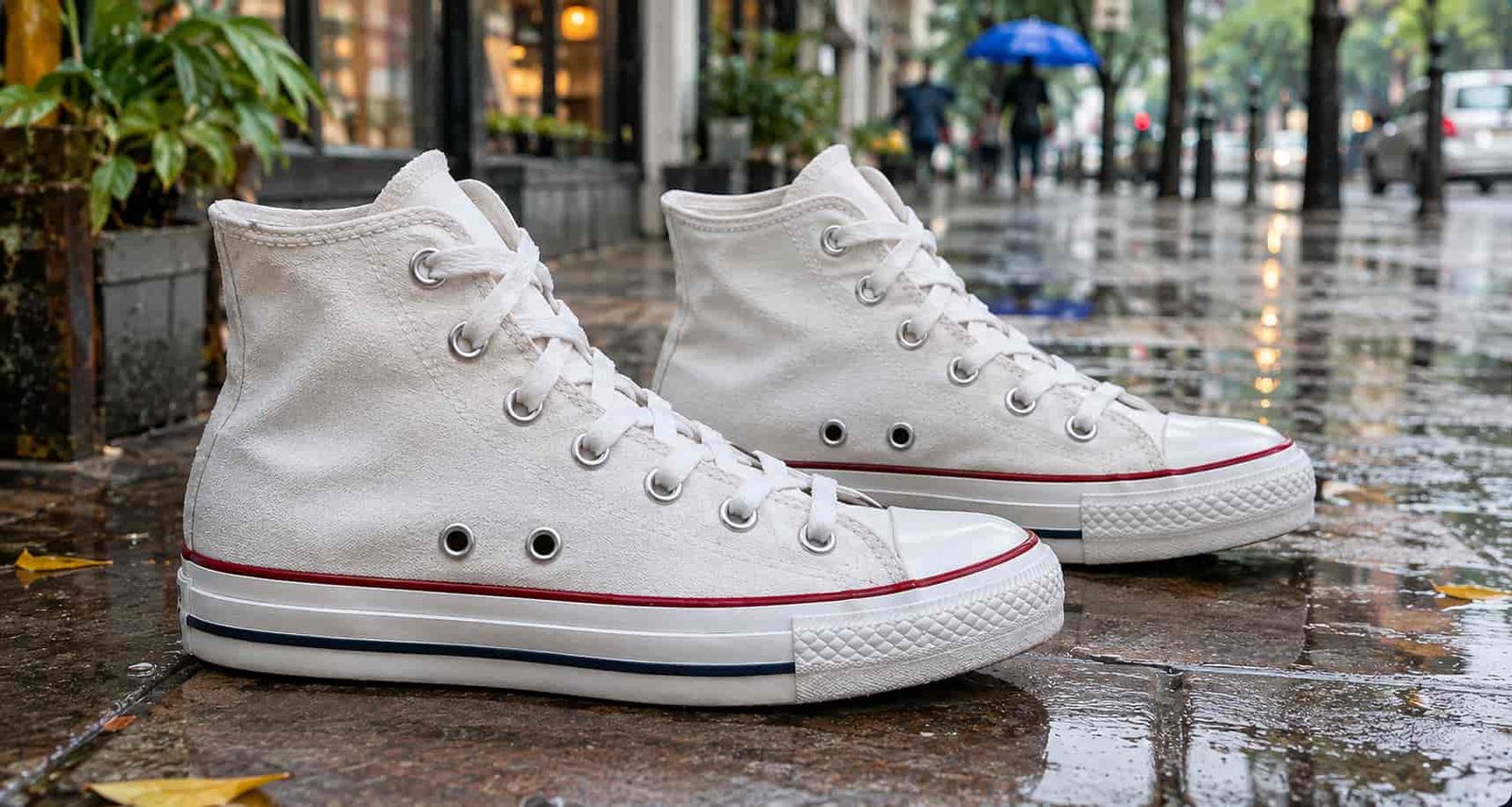
The side holes have a clear drawback. Because they are open to the outside, they can let water and debris into the shoe. Tyla reports that wearers have complained about puddles and wet weather entering through the holes, and the article quotes social media users describing the problem.
This is most noticeable in rain, on wet pavements, at the beach, or on muddy paths. The holes are not designed to be waterproof, so a pair of Chucks will not keep the feet dry in wet conditions. If you need a shoe for rain or water, look for a waterproof design, and our guide to waterproof and water-resistant shoes explains the difference.
Grit can also enter through the holes and collect inside the shoe. Clean the inside regularly, and empty the shoe after a dusty or sandy outing.
A Practical Decision Guide
Choose Converse with side holes if you want a classic, breathable canvas shoe for everyday wear in dry conditions, and you enjoy the option of alternative lacing. The holes give a modest airflow benefit and a useful extra fit adjustment.
Choose a different shoe if you spend much of your time in wet weather, walk through mud or sand often, or need a shoe for sustained high-impact activity. A structured running shoe or a waterproof boot will suit those needs better.
If you have a foot condition or a history of injury, consult a podiatrist or clinician before choosing footwear or changing your lacing. Converse are flat-soled canvas shoes, and they are not designed to correct foot mechanics. Our shoe finder can help you compare options by use.
Trade-Offs and Limitations
The side holes have benefits and limits. The ventilation effect is real but modest. The lacing options are useful but can be fiddly to set up. The holes can admit water and grit, and they do not replace a proper fit.
The stability claims come mainly from secondary sources, so readers should not treat them as proven. The design is also old, and a pair of Chucks will not have the cushioning or structure of a modern performance shoe.
Converse fit can also vary. Several articles have asked why Converse seem to fit large or uncomfortable for some people. Fit depends on the last, the width, and the size, so try shoes on before buying. Our guide to the shoe last explains why sizes differ between brands.
Myths Worth Dropping
Myth: The holes are just decoration. Several sources describe them as functional, with ventilation and lacing as the main uses. Decoration may play a role, but it is not the only explanation.
Myth: The holes make Converse waterproof. They do the opposite. Because the holes are open, water can enter through them.
Myth: The holes keep your feet cool in any condition. The airflow effect is modest, and sweat can still build up during hot or demanding activity.
Myth: Lacing through the holes prevents sprains. That claim comes from one secondary source and is not backed by controlled testing in the sources reviewed.
Myth: The holes are for the laces to go through in a specific way. They can be used for alternative lacing, but the standard lacing through the front eyelets is also correct.
Caring for Canvas Converse
Canvas shoes need gentle care. Use a soft brush and lukewarm water to remove dirt from the canvas and the rubber toe cap. Avoid soaking the shoe, since prolonged wetness can weaken the glue and stitching.
Pay attention to the side holes when cleaning. Grit can collect around the metal rings, so brush the area gently and empty the shoe after use. If the metal rings loosen or corrode, a repair professional can advise on the next step.
Let the shoes air dry at room temperature, away from direct heat. Stuffing them with newspaper can help them keep their shape while drying. Our guide on how to clean shoes and maintain them covers safe methods for canvas and other materials.
The laces also affect how the shoe performs. Our guide to types of shoelaces explains the options for fit and comfort.
Frequently Asked Questions
Why are there holes on the side of Converse?
The holes are metal-ringed eyelets. They provide some airflow to the foot and allow alternative lacing, such as a zigzag pattern across the width of the shoe.
Do the holes actually help with ventilation?
They offer a modest airflow benefit. Mental Floss notes that the feature alone may not be enough to stop sweating on hot days, though it can make a difference during long walks or activity.
Can I use the side holes for laces?
Yes. Several wearers use them for alternative lacing, such as a zigzag pattern. Standard lacing through the front eyelets also works.
Do the side holes prevent sprains?
One secondary source claims they help with stability and sprain prevention. The sources reviewed here do not include controlled testing to confirm that claim, so treat it as a claim rather than established fact.
Are Converse waterproof?
No. The side holes are open, and water can enter through them. Converse are not designed for wet conditions.
Why were the holes originally there?
Converse began as a basketball shoe, and the holes are commonly explained as a ventilation feature for players. The sources reviewed do not include an official Converse statement on the original reason.
Should I see a doctor if my feet hurt in Converse?
Yes, if you have persistent pain, numbness, or swelling. A podiatrist or clinician can assess your feet and advise on footwear. This guide does not provide medical advice.
Conclusion
The holes on the side of Converse are eyelets with two practical uses. They provide a modest amount of airflow, and they allow alternative lacing that can change how the shoe fits. Sources disagree on which function matters most, and the sprain-prevention claim is not confirmed by controlled testing. The best next step is to try the zigzag lacing on a dry day, check how the midfoot feels, and avoid the holes in wet conditions. For a broader foundation, start with the shoe materials hub or browse the footwear knowledge section.
Sources
- Mental Floss, “The Reason Your Converse Sneakers Have Extra Holes on the Side”: https://www.mentalfloss.com/posts/why-converse-sneakers-have-extra-holes-on-side
- Futura Sciences, “The holes on Converse: a mystery finally solved” (February 2025): https://www.futura-sciences.com/en/?p=36140


