

What Is TPU in Shoes? Benefits, Soles, Stability, and Durability
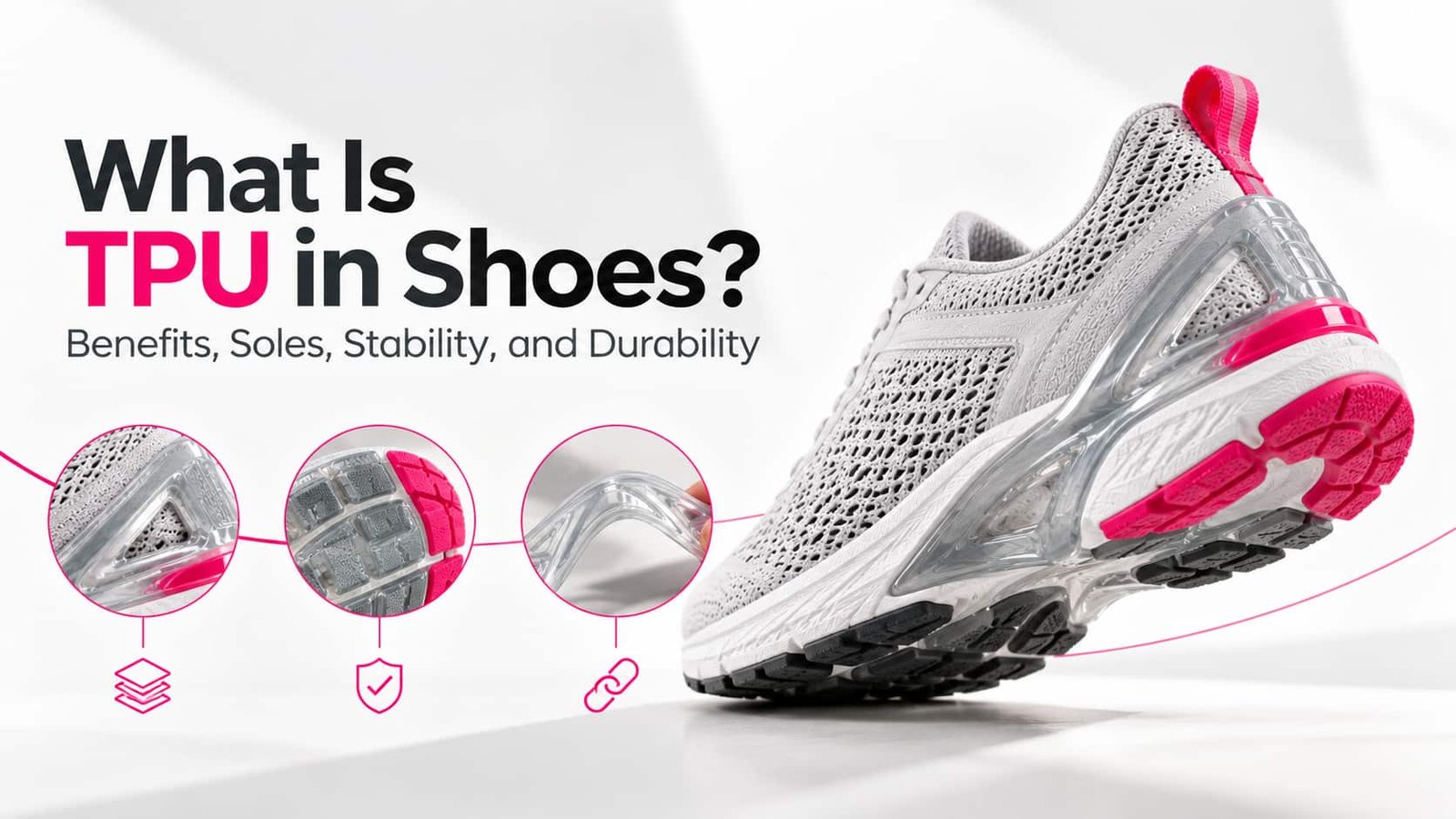
TPU in shoes stands for thermoplastic polyurethane, a versatile polymer used in footwear components such as outsoles, heel counters, support plates, protective overlays and specialised midsoles. It is valued for properties that can include flexibility, abrasion resistance, toughness and impact resistance. However, TPU does not perform the same job in every shoe. Its function depends on the type of TPU, its hardness, construction and position within the footwear.
If you have seen the term TPU in a running shoe description, product specification or sole label, you may be wondering whether it improves comfort, cushioning, durability or stability. The answer depends on where the material is used.
This guide explains what TPU means, how it works, its advantages and disadvantages, and how it compares with EVA and rubber. It also explains the difference between a TPU sole and a TPU plate so you can understand what you are actually buying.
Quick Answer: What Is TPU in Shoes?
TPU means thermoplastic polyurethane. It is a polymer that can be manufactured in different hardness levels and formulations for footwear. Shoe manufacturers use it in components that need flexibility, strength, abrasion resistance or structural support. TPU can be found in outsoles, heel counters, shanks, overlays and some foam-based midsoles. It is not automatically a cushioning material: its purpose depends on the component’s design.
Key Takeaways
- TPU stands for thermoplastic polyurethane.
- TPU is used in different shoe components, not just soles.
- It can provide abrasion resistance, flexibility, impact resistance and structural support.
- A TPU plate is generally a structural component, not the same thing as a cushioned foam midsole.
- TPU and EVA serve different purposes, although specialised expanded TPU can be used for cushioning.
- TPU is not identical to ordinary rubber, even though some TPU formulations can replace rubber in particular applications.
- A TPU component does not automatically make a shoe more stable, comfortable or durable.
- Always consider the complete shoe design, material grade and intended activity.
What Is TPU in Shoes?
TPU is a synthetic polymer used to make different footwear components. Its full name is thermoplastic polyurethane. It combines characteristics of thermoplastic materials and polyurethane elastomers, allowing manufacturers to produce parts with different levels of flexibility, hardness and resilience.
In footwear, TPU is useful because a shoe needs more than one material to perform well. The upper must wrap around the foot, the midsole may need to absorb impact, and the outsole needs to contact the ground. Other components help maintain shape, provide structure or protect areas that experience repeated stress.
TPU can be engineered for several of these jobs.
For example:
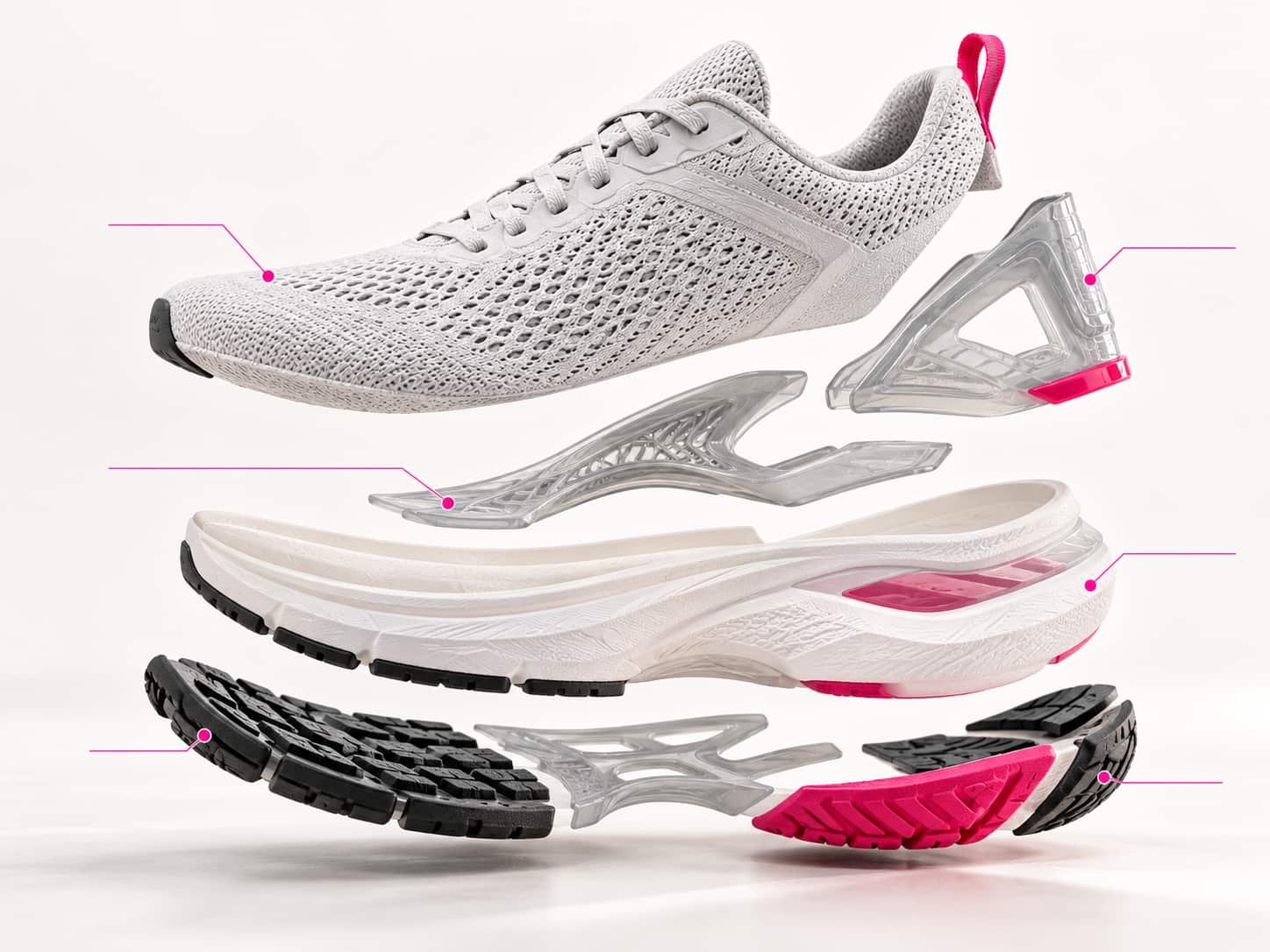
- A heel counter may use a relatively firm TPU component to help maintain the heel area.
- A shank or midfoot support piece may use TPU to provide structure.
- An outsole may use a TPU grade selected for abrasion resistance and flexibility.
- A protective toe or side overlay may use TPU to reinforce a high-wear area.
- Expanded TPU may be used in a foam-based midsole to provide cushioning and resilience.
The important point is that TPU is a material family, not one single shoe technology. Different grades can behave differently. A soft TPU component and a rigid TPU support plate should not be expected to deliver the same performance.
The Shoe Materials Explained guide provides a wider overview of the materials used in shoe uppers, midsoles and outsoles.
What Does TPU Stand For?
TPU stands for Thermoplastic Polyurethane.
Here is what the name means:
- Thermoplastic: The material can soften when heated and be processed into a shape. It can solidify again when cooled.
- Polyurethane: A family of polymers known for their versatility. Different formulations can be soft, elastic, flexible or relatively rigid.
- TPU: A thermoplastic polyurethane material that can be engineered for different mechanical and physical properties.
TPU is used outside the footwear industry too. It appears in applications such as protective cases, industrial components, films, flexible parts and sporting goods.
In shoes, manufacturers select specific TPU grades to meet the requirements of a component. A soft grade may be suitable for a flexible part, while a harder grade may be selected for a support or protective component.
Short answer: If a shoe description says it contains TPU, it means that at least one component uses thermoplastic polyurethane. It does not tell you the exact component, quality or performance unless the manufacturer provides more detail.
What Is TPU Material Made Of?
TPU is a block copolymer made from hard and soft segments. The combination and proportion of these segments influence the material’s characteristics.
In simple terms:
- The hard segments contribute to strength, hardness and structural behaviour.
- The soft segments contribute to flexibility and elastic behaviour.
Manufacturers can adjust the chemistry and formulation to create TPU materials with different hardness levels, flexibility, transparency and resistance characteristics.
This versatility is one reason TPU is used in footwear.
Different types and grades of TPU
Not all TPU is identical. Manufacturers may develop grades for:
Flexible TPU: Used where a component needs to bend or stretch without easily breaking.
Hard TPU: Used where greater rigidity, shape retention or structural support is required.
Abrasion-resistant TPU: Selected for components exposed to repeated rubbing or surface wear.
Transparent TPU: Used where a clear or translucent appearance is part of the design.
Expanded TPU (E-TPU): A foamed or expanded form that can be used in cushioning applications.
Bio-based TPU: Certain TPU products can incorporate renewable-sourced content. The proportion and environmental benefits depend on the specific formulation and verified product information.
Lubrizol explains how TPU’s hard and soft segments can be adjusted to produce a range of material properties. Its footwear portfolio includes different TPU solutions for components such as midsoles, outsoles and other shoe parts.
Where Is TPU Used in Shoes?
TPU can be used in multiple parts of a shoe. Its role depends on the material grade and the design requirements.
A. TPU outsole
The outsole is the bottom part of the shoe that contacts the ground. Some outsole designs use TPU because selected grades can offer abrasion resistance, flexibility and mechanical strength.
TPU outsoles may be found in casual, sports, safety and specialist footwear.
B. TPU heel counter
The heel counter is a component around the back of the shoe that helps maintain the heel area’s shape. A TPU heel counter may provide structure and help the upper retain its form.
A heel counter’s stiffness and shape influence how the shoe feels around the heel. It is only one part of the shoe’s overall fit and stability.
C. TPU shank
A shank is a structural component that may be positioned around the midfoot area, depending on the shoe design. A TPU shank can contribute to torsional support or help control unwanted twisting.
Not every shoe needs a separate shank. Its design and stiffness should match the footwear’s intended use.
D. TPU support plate
Some athletic shoes use a TPU plate or frame to provide structure. It may help connect different parts of the sole unit, influence torsional stiffness or support a particular movement pattern.
A TPU plate should not automatically be described as a performance-enhancing propulsion plate. Its effect depends on geometry, stiffness, placement and the rest of the shoe.
E. TPU toe and side overlays
TPU overlays can reinforce areas that experience repeated contact or abrasion. They can also be used for decorative details.
These components may help protect the upper, but they do not automatically make the entire shoe stronger or waterproof.
F. TPU cushioning components
Specialised expanded TPU can be used in foam-based cushioning systems. These products are different from dense, solid TPU pieces used for support or outsole applications.
What Is a TPU Sole?
A TPU sole is a shoe sole component made partly or entirely from thermoplastic polyurethane.
Depending on the construction, TPU may be used for the full outsole, selected outsole sections, a heel component or a combination sole.
What makes a TPU sole different?
TPU can be formulated across a range of hardness levels. This means manufacturers can design a sole component for particular needs, such as:
- Flexibility
- Abrasion resistance
- Mechanical strength
- Shape retention
- Slip-related performance, where the compound and tread design are suitable
- Resistance to repeated mechanical stress
A TPU sole is not automatically better than a rubber, EVA or PU sole. It must be assessed against the requirements of the shoe.
Is TPU sole good?
A TPU sole can be a good option when its material properties match the intended footwear application. It may be useful in shoes that require a combination of flexibility, strength and wear resistance.
However, a good outsole also needs suitable tread geometry, contact area and grip for the intended surface. The polymer alone cannot guarantee traction.
Before Buying Shoes with TPU
- Find out which shoe component contains TPU.
- Check whether it is solid TPU or expanded TPU foam.
- Inspect the midsole material separately.
- Check outsole tread and traction for your intended surface.
- Try the shoe on and assess heel fit and toe space.
- Look for manufacturer specifications rather than broad marketing claims.
What Is a TPU Plate?
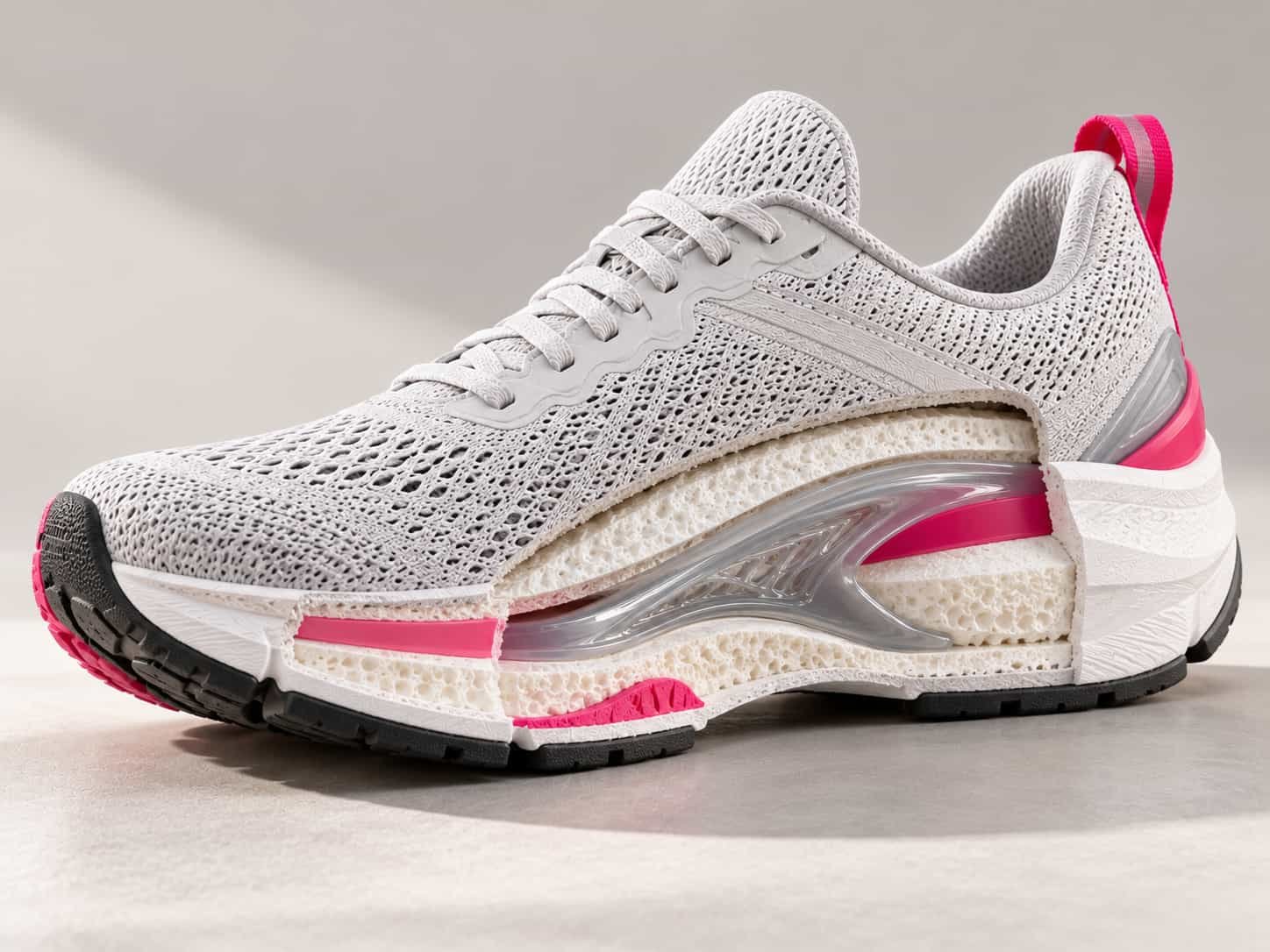
A TPU plate is a shaped component made from thermoplastic polyurethane and placed within a shoe’s construction. It is usually designed to provide structure, support or controlled stiffness.
You may find TPU plates in the midfoot, heel or other areas of a shoe, depending on its purpose.
What does a TPU plate do?
A TPU plate may:
- Help control twisting through the midfoot.
- Connect or reinforce sections of a sole unit.
- Add structure to a shoe.
- Help maintain the shape of a component.
- Provide a platform for a particular footwear design.
Is a TPU plate the same as a carbon plate?
No. TPU and carbon-fibre composites are different materials.
A TPU plate is typically a thermoplastic polymer component. A carbon-fibre plate uses reinforcing fibres within a composite structure. Their stiffness, weight, geometry and mechanical behaviour can differ considerably.
Do not assume a TPU plate delivers the same effect as a carbon-fibre plate in a running shoe. The plate’s material, shape, thickness, stiffness and position all matter.
Does a TPU plate make a shoe faster?
Not necessarily. A plate can change the way a shoe bends or resists twisting, but speed depends on many factors, including the midsole foam, shoe geometry, weight, fit, traction and runner.
A TPU plate should be evaluated as one part of a complete shoe design rather than as a guarantee of better running performance.
Benefits of TPU in Shoes
TPU has several properties that make it useful in shoe manufacturing. The benefits below describe potential material advantages, not guaranteed outcomes for every TPU shoe.
1. Abrasion resistance
Abrasion resistance is the ability of a material to withstand surface wear caused by rubbing or friction.
Certain TPU grades are designed to resist abrasion, making them useful in outsole sections, protective overlays and components that experience repeated contact.
This can be valuable in footwear that encounters frequent surface friction.
2. Flexibility
TPU can be manufactured in different hardness levels. Some grades remain flexible while maintaining useful mechanical strength.
This flexibility can help manufacturers create components that bend or move without using a completely rigid material.
3. Mechanical strength
TPU can provide a useful combination of toughness, tensile strength and elasticity, depending on the grade.
That makes it suitable for components that experience repeated loading or deformation.
4. Impact resistance
Selected TPU formulations can resist impact and help protect particular shoe components.
This is one reason TPU appears in some sports and protective footwear designs.
5. Design flexibility
TPU can be produced in different colours, textures, hardness levels and forms. It can be moulded into detailed shapes and used in different shoe constructions.
This gives footwear designers more options for functional and decorative components.
6. Low-temperature flexibility
Certain TPU grades are engineered to retain flexibility in lower temperatures. This can be useful in outdoor or specialist footwear.
The actual temperature performance depends on the TPU chemistry and product specification.
7. Potentially long service life
When the formulation and construction are appropriate, TPU can provide good resistance to repeated wear and mechanical stress.
However, the lifespan of the complete shoe also depends on adhesives, stitching, upper materials, sole bonding and storage.
8. Different processing options
TPU can be processed using methods such as injection moulding and extrusion, depending on the grade and component.
Manufacturers can also use specialised processing techniques to develop more complex footwear structures.
Lubrizol and Covestro both describe TPU solutions for footwear applications, including performance components and manufacturing options.
Disadvantages of TPU in Shoes
Although TPU offers useful properties, it also has limitations.
1. Performance varies by grade
The term TPU does not identify one fixed level of hardness, flexibility or durability. Two products labelled TPU can have very different properties.
2. It may feel firm
Dense TPU components designed for structural support can feel firm. They are not necessarily designed to provide soft cushioning.
3. Cost can vary
Specialised TPU formulations and manufacturing processes can add cost. However, price depends on the complete product and supply chain, not only the polymer.
4. It does not guarantee breathability
A dense TPU component or coating may not allow much air or water vapour to pass through. Breathability depends on the component’s structure and the surrounding materials.
5. It does not guarantee grip
Grip depends on the outsole compound, tread pattern, surface conditions and contact design. TPU by itself does not guarantee slip resistance.
6. Recycling depends on construction
TPU is thermoplastic and can be reprocessed under appropriate conditions. However, recycling a complete shoe is more complicated when it combines multiple polymers, adhesives, textiles, foams and other components.
7. Not every TPU component is cushioning
A solid TPU support plate and an expanded TPU midsole have different jobs. Confusing them can lead to unrealistic expectations about comfort.
Buying takeaway: Do not choose a shoe simply because it advertises TPU technology. Find out where TPU is used and what that component is designed to do.
TPU vs EVA: Which Is Better for Shoes?
TPU and EVA are both used in footwear, but they have different characteristics and applications.
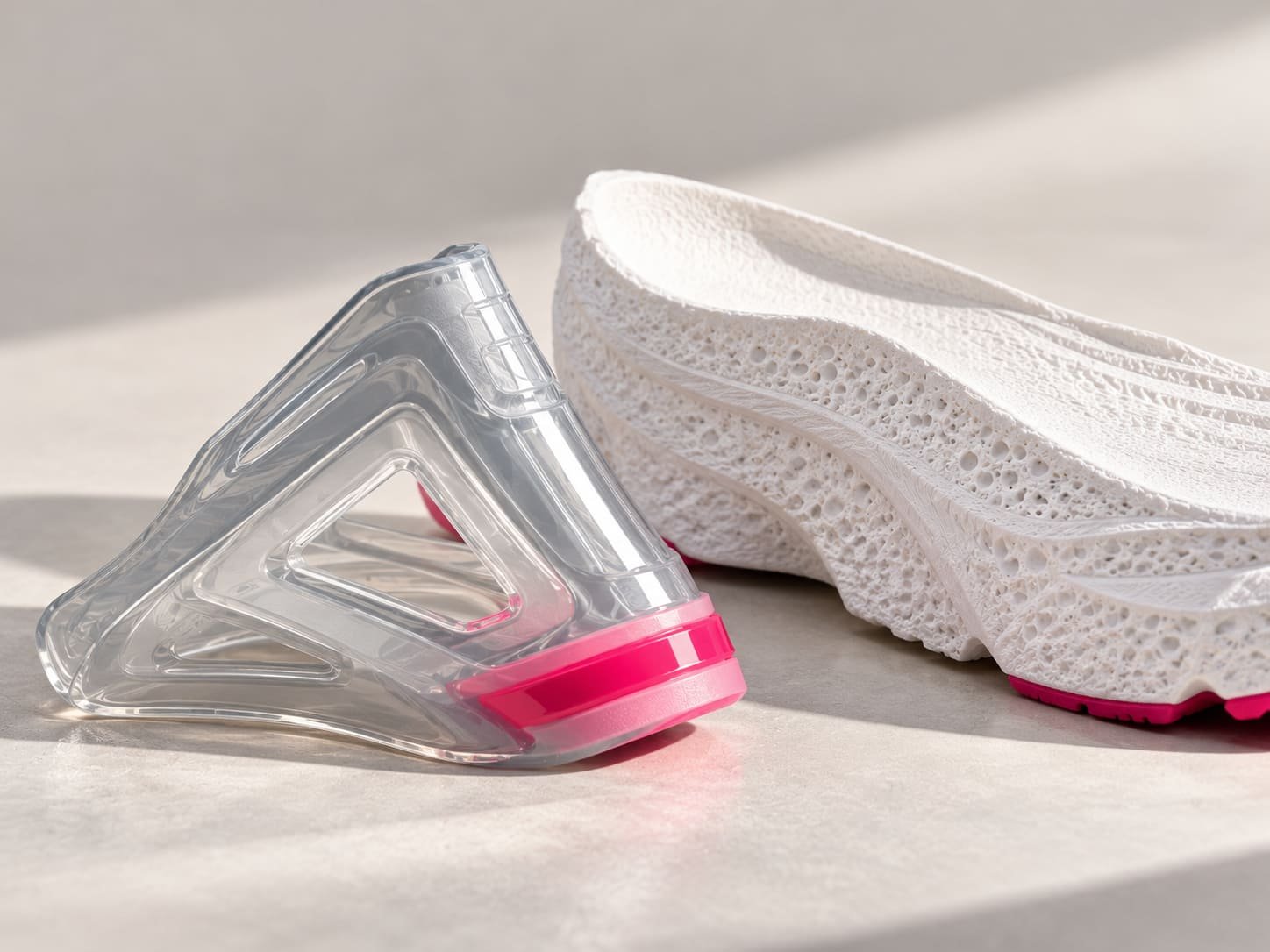
EVA stands for ethylene-vinyl acetate. It is widely used in foam midsoles because it can be manufactured into lightweight cushioning structures.
TPU is a broader material family that can be used in solid components, support structures, outsoles and specialised expanded foam applications.
TPU vs EVA comparison table
| Feature | TPU | EVA |
| Full name | Thermoplastic polyurethane | Ethylene-vinyl acetate |
| Common footwear use | Outsoles, support parts, overlays, selected midsoles | Foam midsoles, cushioning and insoles |
| Structure | Can be solid, flexible or expanded | Commonly used as a foam |
| Weight | Depends on grade and design | Often lightweight in foam form |
| Cushioning | Depends on whether it is solid or foamed | Commonly used for cushioning |
| Abrasion resistance | Selected grades offer good abrasion resistance | Depends on foam density and formulation |
| Flexibility | Can be engineered across a wide range | Can be soft and flexible |
| Structural support | Useful in designed support components | Usually less suited to firm structural plates |
| Energy return | Depends on formulation and structure | Depends on foam formulation and design |
| Best use | Components needing strength, support or wear resistance | Lightweight cushioning and comfort applications |
Which is better for shoe soles?
It depends on the type of sole component.
Choose EVA-based cushioning when:
- You want a lightweight foam midsole.
- Softness and cushioning are important.
- The shoe is designed for walking, casual wear or running.
- The foam density and geometry suit your needs.
Consider TPU when:
- The design needs a durable structural component.
- Abrasion resistance is important.
- A support element or outsole component is required.
- A specialised expanded TPU foam is used for cushioning.
There is also expanded TPU, or E-TPU. This is important because it demonstrates that TPU is not always a dense plastic component. Expanded TPU can be used in cushioning systems.
BASF identifies E-TPU as a footwear midsole option, while its footwear material portfolio also includes TPU for technical components and soles.
Verdict: EVA is commonly associated with lightweight foam cushioning. TPU is more versatile and can be used for support, wear resistance and specialised cushioning. Neither is universally better.
TPU vs Rubber: What’s the Difference?
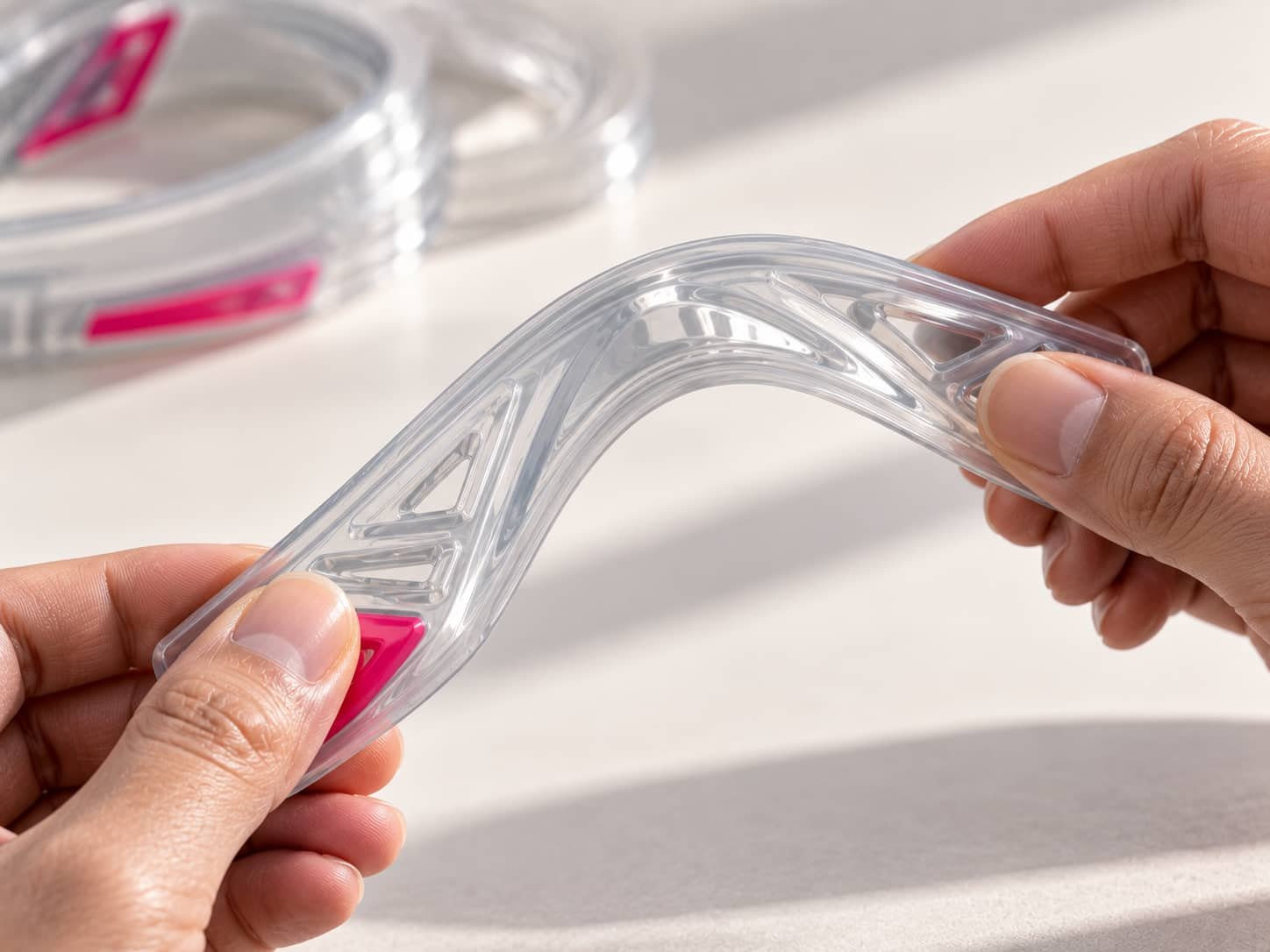
TPU and rubber are not the same material, even though certain TPU grades can be used as alternatives to rubber in specific applications.
Rubber is an elastomeric material that may be natural or synthetic. It is widely used in outsoles because suitable rubber compounds can deliver grip, flexibility and abrasion resistance.
TPU is a thermoplastic polyurethane. It can be moulded and processed in different ways and can be designed for a range of mechanical properties.
| Feature | TPU | Rubber |
| Material family | Thermoplastic polyurethane | Natural or synthetic elastomer |
| Footwear use | Outsoles, support components, overlays and more | Mainly outsoles and selected footwear parts |
| Flexibility | Varies by TPU grade | Varies by rubber compound |
| Abrasion resistance | Can be high in suitable grades | Can be high in suitable compounds |
| Grip | Depends on formulation and tread | Depends on rubber formulation and tread |
| Design options | Can be moulded into detailed components | Moulded and processed in different ways |
| Best selection factor | Component requirements and grade | Compound, tread and intended surface |
Is TPU similar to rubber?
TPU can behave like an elastomer in some applications, but it is not chemically identical to rubber.
The two materials can overlap in certain footwear uses. A manufacturer may choose TPU where a combination of mouldability, mechanical strength and wear resistance is required. Rubber may be selected where the desired outsole compound provides suitable traction and wear performance.
Which is better for shoe outsoles?
There is no universal winner. Look at the intended surface, tread pattern, outsole compound and test data.
TPU vs TPR vs PU: Understanding the Differences
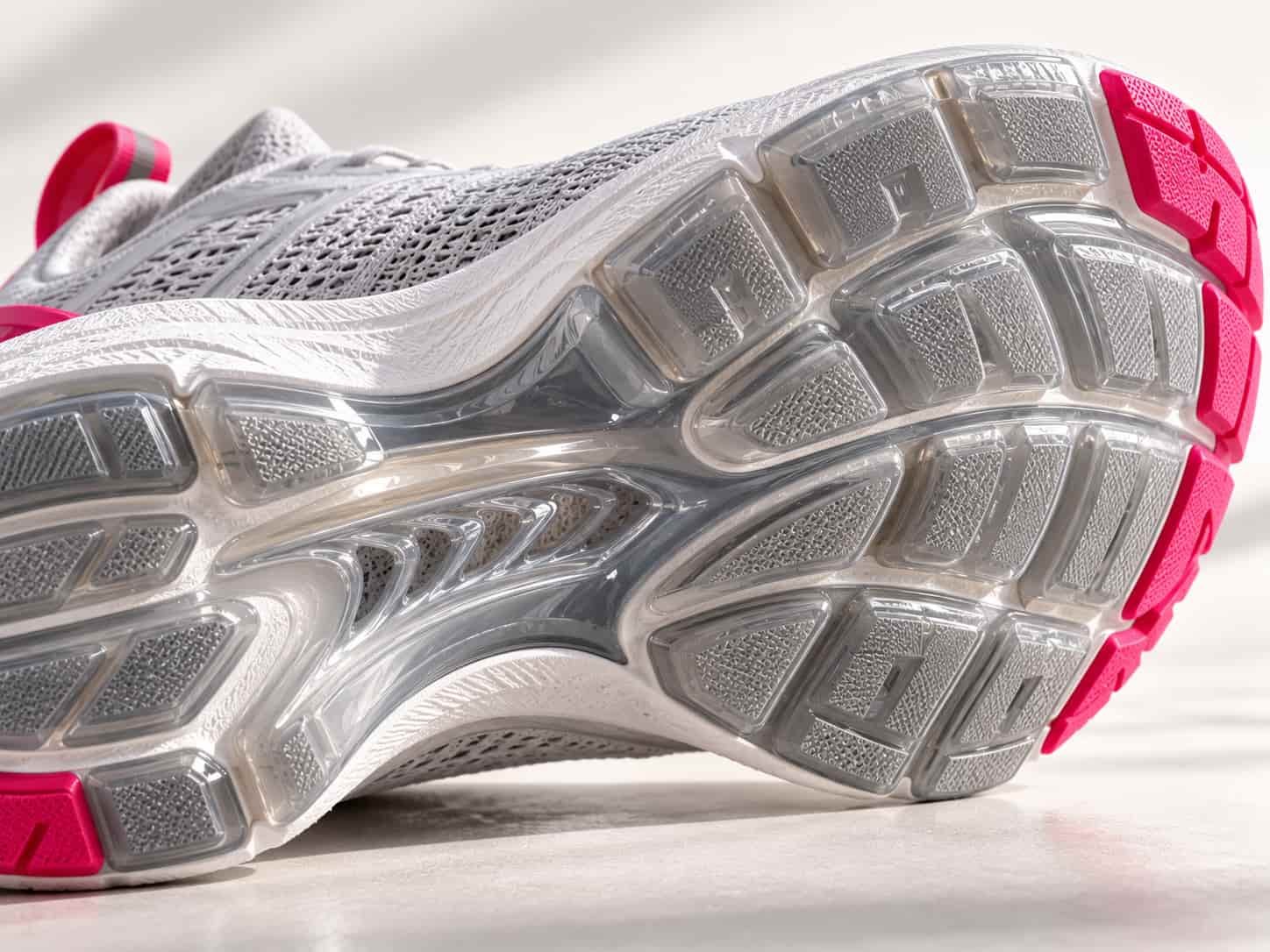
TPU, TPR and PU are often confused because their names sound similar and all may appear in footwear specifications.
However, they refer to different material families or categories.
TPU: Thermoplastic Polyurethane
TPU is a thermoplastic elastomer with a range of hardness and mechanical properties. It is used in structural parts, outsole sections, protective components and selected cushioning systems.
TPR: Thermoplastic Rubber
TPR is a broad term commonly used for thermoplastic rubber materials. TPR compounds are used in some footwear outsoles, slippers and casual shoes.
Their properties depend on the particular compound.
PU: Polyurethane
PU is a broader polymer family. In footwear, polyurethane can be used in foam midsoles, outsoles, cushioning components and synthetic leather coatings.
TPU is a specific thermoplastic type within the broader polyurethane family, but not every PU footwear material is TPU.
Comparison
| Material | Common shoe application | Main consideration |
| TPU | Support parts, outsoles, overlays, specialised foam | Grade and component design |
| TPR | Casual shoe soles and slippers | Compound, flexibility and grip |
| PU | Foam soles, midsoles and synthetic leather | Formulation and intended application |
| EVA | Foam midsoles and insoles | Cushioning, density and compression |
When comparing two shoes, make sure you are comparing the same component. An EVA midsole and a TPU heel counter do not perform the same job.
How Is TPU Used in Running Shoes?
TPU appears in different types of running footwear, but the function varies by shoe design.
TPU in the outsole
Some running shoes use TPU in selected outsole areas. The objective may be to provide wear resistance or a particular mechanical property.
The outsole still needs suitable traction for the running surface. A TPU label alone does not tell you whether the shoe will grip wet roads or loose trails.
TPU in the heel structure
A TPU component may reinforce the heel area or help maintain the shape of the rearfoot construction.
This can influence how the shoe feels, but it does not replace the importance of correct sizing and a secure heel fit.
TPU in midfoot support
A TPU shank or plate may be used to control twisting or provide structural support.
Some designs use a plate as part of a larger stability system. The effect depends on the shoe’s geometry and the runner’s needs.
Expanded TPU in cushioning
Expanded TPU can be used in foam-based midsoles. This is different from a solid TPU support piece.
BASF’s Infinergy is an example of expanded TPU technology used in footwear cushioning applications. Its characteristics are different from those of a dense outsole or heel counter.
Are TPU running shoes good?
They can be, depending on the design. Look beyond the TPU label and evaluate:
- Overall shoe weight.
- Midsole softness and resilience.
- Outsole traction.
- Heel and midfoot fit.
- Forefoot flexibility.
- Torsional stiffness.
- Breathability.
- Intended running distance and surface.
A good running shoe is a combination of components, not a single material.
How Does TPU Improve Shoe Stability and Support?
TPU can contribute to stability when it is used in a component designed to control movement or maintain shoe structure.
For example, a relatively firm TPU shank may help resist excessive twisting in the midfoot. A heel counter can help maintain the heel structure. A support frame may reinforce specific areas of the sole.
However, stability is a property of the whole shoe.
It can depend on:
- Base width.
- Midsole geometry.
- Heel-to-toe shape.
- Foam density.
- Torsional stiffness.
- Heel counter construction.
- Outsole contact and traction.
- Fit and foot movement.
A shoe containing TPU is not automatically a stability shoe. Some TPU components are decorative or protective rather than support-focused.
What should you look for in a stability shoe?
If you need a shoe that feels stable, check the complete design:
- Does the heel feel secure?
- Does the shoe have a suitable base width?
- Does the midsole compress evenly?
- Does the shoe feel controlled when you walk or run?
- Does the forefoot bend appropriately?
- Does the shoe match your activity and fit requirements?
Do not choose footwear for a medical condition solely because it contains TPU. Seek professional advice if you have persistent foot pain or a specific medical need.
Which Shoe Brands Use TPU Technology?
Many footwear manufacturers use TPU or TPU-based materials in selected footwear components. The important distinction is between a material supplier and a consumer shoe brand.
A material supplier develops polymer grades. A footwear manufacturer selects a suitable material and incorporates it into a specific shoe model.
Examples of material suppliers with documented footwear TPU applications include:
BASF
BASF describes Elastollan TPU for footwear applications, including soles, technical components and other shoe parts. Its Infinergy expanded TPU is used in cushioning applications.
Lubrizol
Lubrizol offers TPU solutions for performance footwear, including outsole, midsole and other component applications. Its footwear page describes different material technologies for durability, cushioning and design flexibility.
Covestro
Covestro describes thermoplastic polyurethane materials for sports and specialist footwear. Its examples include robust footwear applications such as ski boots, inline skates and hockey boots.
What about Nike, Adidas, ASICS and other shoe brands?
Major footwear brands use a wide range of materials and proprietary technologies. However, a general claim that a brand uses TPU does not prove that every model, collection or product uses the material.
When researching a specific shoe:
- Check the official product specifications.
- Look for the named component or technology.
- Confirm whether TPU is used in the outsole, plate, heel or cushioning.
- Avoid relying on retailer filters alone.
- Compare the model’s actual construction rather than assuming all shoes from one brand are alike.
Buying tip: Search for the exact shoe model plus the term TPU. This is more useful than searching only for a brand name.
Is TPU Material Safe for Shoes?
TPU is an established polymer used in a range of consumer and industrial applications, including footwear. However, a general material name does not provide a complete safety assessment of a finished shoe.
Safety depends on the specific formulation, additives, manufacturing controls, intended use and applicable product regulations.
When choosing footwear, consider:
- Whether the manufacturer provides material and compliance information.
- Whether the shoe is intended for direct skin contact.
- Whether the lining and other components are suitable for their intended use.
- Whether the shoe has an unusual persistent chemical smell or visible manufacturing defects.
- Whether the product is from a reputable seller with clear product information.
A TPU component does not automatically mean a shoe is non-toxic, hypoallergenic or suitable for every person. Equally, the presence of TPU alone is not evidence that a shoe is harmful.
If you experience skin irritation, stop wearing the product and seek appropriate advice.
How to Identify TPU Material in Shoes
It is not always possible to identify TPU just by looking at a finished shoe. TPU can be transparent, coloured, textured, soft or relatively rigid.
Use these checks:
1. Read the product description
Look for terms such as:
- TPU outsole
- TPU plate
- TPU heel counter
- TPU support frame
- Thermoplastic polyurethane
- Expanded TPU or E-TPU
2. Check the manufacturer’s material specifications
The official product page may describe which component uses TPU. This is more reliable than guessing from photographs.
3. Look at the shoe construction
TPU components may appear as a separate moulded piece, a support frame, a transparent overlay or a shaped outsole section.
Appearance alone is not conclusive.
4. Ask the retailer or manufacturer
If the product listing says only “synthetic material,” ask for the exact component specification.
5. Avoid destructive identification methods
Do not burn, cut or apply solvents to a shoe to identify its material. These methods can damage footwear and may create safety risks.
How to Clean and Maintain TPU Shoes
TPU components are generally straightforward to maintain, but care instructions depend on the complete shoe. Adhesives, textiles, foam and coatings may have different cleaning requirements.
Basic cleaning steps
- Remove loose dirt with a soft brush.
- Mix mild soap with cool or lukewarm water.
- Dampen a soft cloth.
- Wipe the TPU area gently.
- Remove soap residue using a clean damp cloth.
- Dry with a soft towel.
- Allow the shoe to air-dry naturally.
What should you avoid?
- Strong solvents.
- Harsh chemical cleaners.
- Abrasive brushes.
- Excessive heat.
- Direct prolonged sunlight.
- Aggressive scrubbing of transparent or decorative TPU parts.
Storage advice
- Store shoes in a cool, dry place.
- Keep them away from prolonged heat.
- Avoid leaving them in a hot vehicle.
- Do not store shoes while they are wet.
- Keep them away from sharp objects that can damage the component.
For a complete footwear-care routine, read How to Clean Shoes and Maintain Them.
How to Choose the Right TPU Shoes
Before choosing a shoe advertised as having TPU technology, decide what you need the component to do.
If you want durability
Check whether TPU is used in a high-wear component such as the outsole or protective overlay. Look for manufacturer testing or performance information rather than assuming the TPU label guarantees a long lifespan.
If you want cushioning
Find out whether the shoe uses expanded TPU foam or another midsole material. A solid TPU plate is not the same as a soft cushioning midsole.
If you want stability
Check the heel counter, midfoot structure, base width and torsional stiffness. TPU may contribute to these features, but the complete shoe design matters.
If you want running performance
Evaluate the shoe’s weight, cushioning, outsole grip, flexibility and fit. A TPU plate or outsole component is only one part of the running experience.
If you want everyday comfort
Try the shoe on. Walk around, check toe space and make sure the heel does not slip. A well-fitting shoe without TPU may be more comfortable than a poorly fitting shoe with advanced material technology.
Buying checklist
| What to check | Why it matters |
| TPU component location | Identifies the material’s actual function |
| TPU grade or construction details | Helps explain hardness and performance |
| Midsole material | Determines much of the cushioning experience |
| Outsole compound and tread | Influences wear and grip |
| Heel and midfoot fit | Contributes to comfort and stability |
| Flexibility | Should match the intended activity |
| Manufacturer specifications | Helps verify technology claims |
| Care instructions | Helps maintain the shoe |
For a more detailed look at the parts that influence shoe comfort and fit, visit the Anatomy of a Shoe guide.
Frequently Asked Questions About TPU in Shoes
What is TPU in shoes?
TPU stands for thermoplastic polyurethane. It is a versatile polymer used in footwear components such as outsoles, heel counters, support plates, overlays and some expanded foam midsoles.
What does TPU stand for in shoes?
TPU stands for Thermoplastic Polyurethane. It is a thermoplastic elastomer that can be manufactured in different hardness levels and formulations for different footwear applications.
What is TPU material in shoes?
TPU material in shoes is a polymer used to create components that may need flexibility, abrasion resistance, strength or structural support. Its role depends on where it is used in the shoe.
What is a TPU sole?
A TPU sole is a sole component made partly or entirely from thermoplastic polyurethane. It may be designed for flexibility, wear resistance and mechanical strength, depending on its grade and construction.
Is TPU sole good?
A TPU sole can be a good choice for certain footwear applications. However, its performance depends on the compound, tread design, shoe construction and intended surface. It is not automatically better than rubber or other sole materials.
What is a TPU plate in shoes?
A TPU plate is a shaped thermoplastic polyurethane component used to provide structure, support or controlled stiffness in certain shoe designs. It is different from a soft foam midsole.
Is TPU similar to rubber?
TPU can behave like an elastomer in some applications, but it is chemically different from rubber. Certain TPU grades can be used as alternatives to rubber in selected footwear components.
Which is better for shoes, EVA or TPU?
EVA is widely used in lightweight foam cushioning. TPU is used for support components, outsoles and specialised cushioning applications. Expanded TPU can also be used in midsoles. The better material depends on the shoe’s intended purpose.
Is TPU used in running shoes?
Yes. TPU can appear in running shoe outsoles, heel structures, support components and specialised foam midsoles. The function differs between models.
Does TPU improve shoe durability?
Certain TPU grades offer good abrasion resistance and mechanical strength, which can help specific shoe components withstand wear. Overall shoe durability still depends on the other materials, bonding, construction and use.
Does TPU make shoes more stable?
A TPU shank, plate or support frame may contribute to structural stability. However, stability also depends on the shoe’s geometry, base width, midsole, heel construction and fit.
Is TPU a cushioning material?
Some TPU products are used for cushioning, especially expanded TPU foam. Solid TPU components are often used for structure, protection or wear resistance rather than soft cushioning.
Is TPU waterproof?
TPU can be used in films, coatings and components with water-resistant properties, but a TPU shoe is not automatically waterproof. The complete construction, seams, upper and closures determine water protection.
Is TPU safe for shoes?
TPU is an established footwear polymer. The safety of a finished shoe depends on its specific formulation, additives, manufacturing and product compliance. A material label alone does not establish that a product is hypoallergenic or suitable for every user.
What is the difference between TPU and PU?
PU is a broad family of polyurethane materials. TPU is a thermoplastic polyurethane that can be softened for processing and formed into different components. Not every polyurethane shoe material is TPU.
Final Verdict: Is TPU a Good Material for Shoes?
TPU is a versatile footwear material that can be used for much more than shoe soles. Depending on its formulation and design, it can contribute to abrasion resistance, flexibility, structural support, impact resistance and specialised cushioning.
Its biggest advantage is versatility. Manufacturers can select different TPU grades for different shoe components, from firm support pieces to flexible outsole sections and expanded foam midsoles.
However, TPU is not a guarantee of comfort, stability, grip or durability. A shoe’s performance depends on how all its components work together.
When choosing footwear, check where the TPU is used, what it is designed to do and whether the complete shoe suits your activity. Compare the midsole, outsole, fit, support and construction rather than buying based on a technology label alone.
Sources and Further Reading
- Lubrizol – TPU Solutions for Performance Footwear. Covers footwear applications and material properties such as abrasion resistance, flexibility and cushioning.
https://www.lubrizol.com/industries/consumer-goods-and-home-care/footwear - Lubrizol – Thermoplastic Polyurethane. Explains TPU’s hard and soft segments and how formulation influences material properties.
https://www.lubrizol.com/solutions/technologies/tpu - Covestro – Shoes and Footwear. Describes TPU and polyurethane applications in sports and specialist footwear.
https://solutions.covestro.com/en/highlights/articles/theme/applications/shoes-and-footwear - BASF – Footwear Applications for PU, TPU and E-TPU. Explains footwear component applications, including outsoles, technical components and expanded TPU cushioning.
https://plastics-rubber.basf.com/northamerica/en/performance_polymers/industries/pp_footwear - BASF – Elastollan TPU for the Footwear Industry. Describes TPU grades and applications in casual, sports and safety footwear.
https://plastics-rubber.basf.com/asiapacific/en/performance_polymers/products/elastollan/footwear - Lubrizol – 100% TPU Prototype Shoe. Demonstrates how TPU can be used in multiple shoe components in a prototype design.
https://www.lubrizol.com/industries/consumer-goods-and-home-care/footwear/tpu-made-prototype-shoe - Urban Style Footwear – Shoe Materials Explained. Internal overview of footwear materials, including TPU, EVA, rubber, PU and PVC.
https://urbanstylefootwear.com/shoe-materials/ - Urban Style Footwear – How We Test Shoes. Explains the site’s footwear testing and measurement methodology.
https://urbanstylefootwear.com/how-we-test-shoes-methodology/


