

Merino Wool Shoes: Are Wool Sneakers Worth It?
Editorial Guide | Footwear Materials |
Summarise this merino wool shoes guide with AI
Open an assistant and submit the prefilled request. The assistant reads the page only after you submit it.
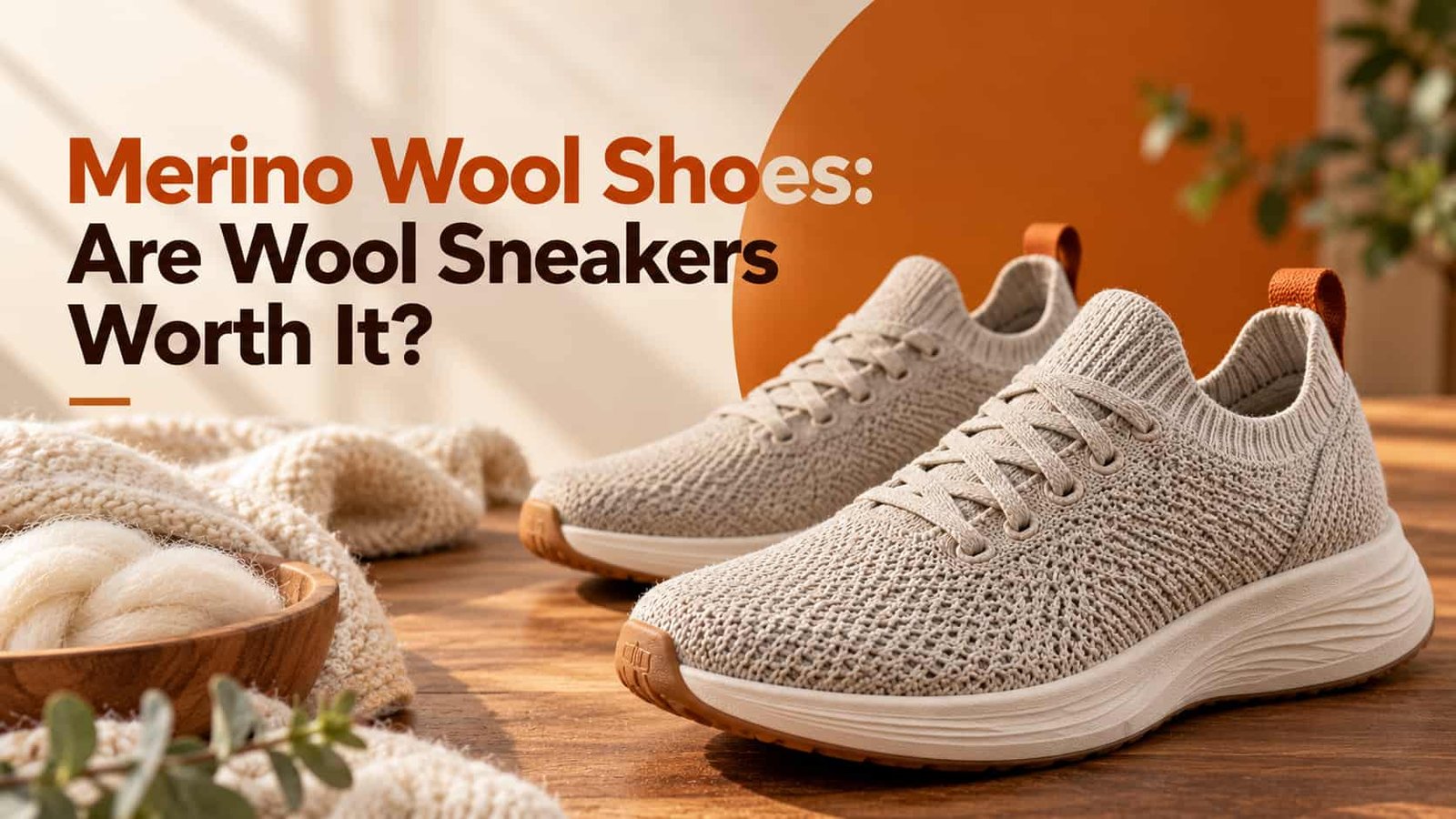
Merino wool shoes use fine, soft wool from merino sheep in the upper, usually knitted or woven and often blended with synthetic fibres for strength. Wool breathes, wicks moisture and resists odour better than many synthetics, but it is slower to dry and less durable than leather or heavy synthetics. Merino shoes suit casual, everyday and travel wear, and they are a poor fit for heavy wet ground or hard running.
Key Takeaways
- Merino is a fibre, not a shoe type. It is used in the upper of sneakers, slip-ons and walking shoes, so the construction matters as much as the wool.
- Wool handles moisture and odour well. It can absorb sweat and release it slowly, which many wearers value on long days.
- Wool is not waterproof. It can take on water and dry slowly, so it suits dry and mild conditions best.
- Durability depends on the blend and build. Thin wool wears faster, and reinforced toes and heels last longer.
- Worth it depends on use. Casual and travel wear is the strongest case, and hard running is the weakest.
Merino Wool Shoes at a Glance
| Feature | Merino wool shoes |
| Upper material | Merino wool, often knitted or woven, sometimes blended |
| Comfort | Soft, flexible, usually comfortable from the first wear |
| Breathability | Good, moisture is absorbed and released |
| Odour | Generally better than many synthetics, varies by blend |
| Water | Not waterproof, slow to dry when soaked |
| Durability | Varies with blend, weight and reinforcement |
| Care | Gentle hand wash, air dry flat |
| Best use | Casual, everyday, travel, mild weather |
These are general tendencies. Wool shoes vary widely by blend, weight and construction, so check each product’s material breakdown.
What Merino Wool Is
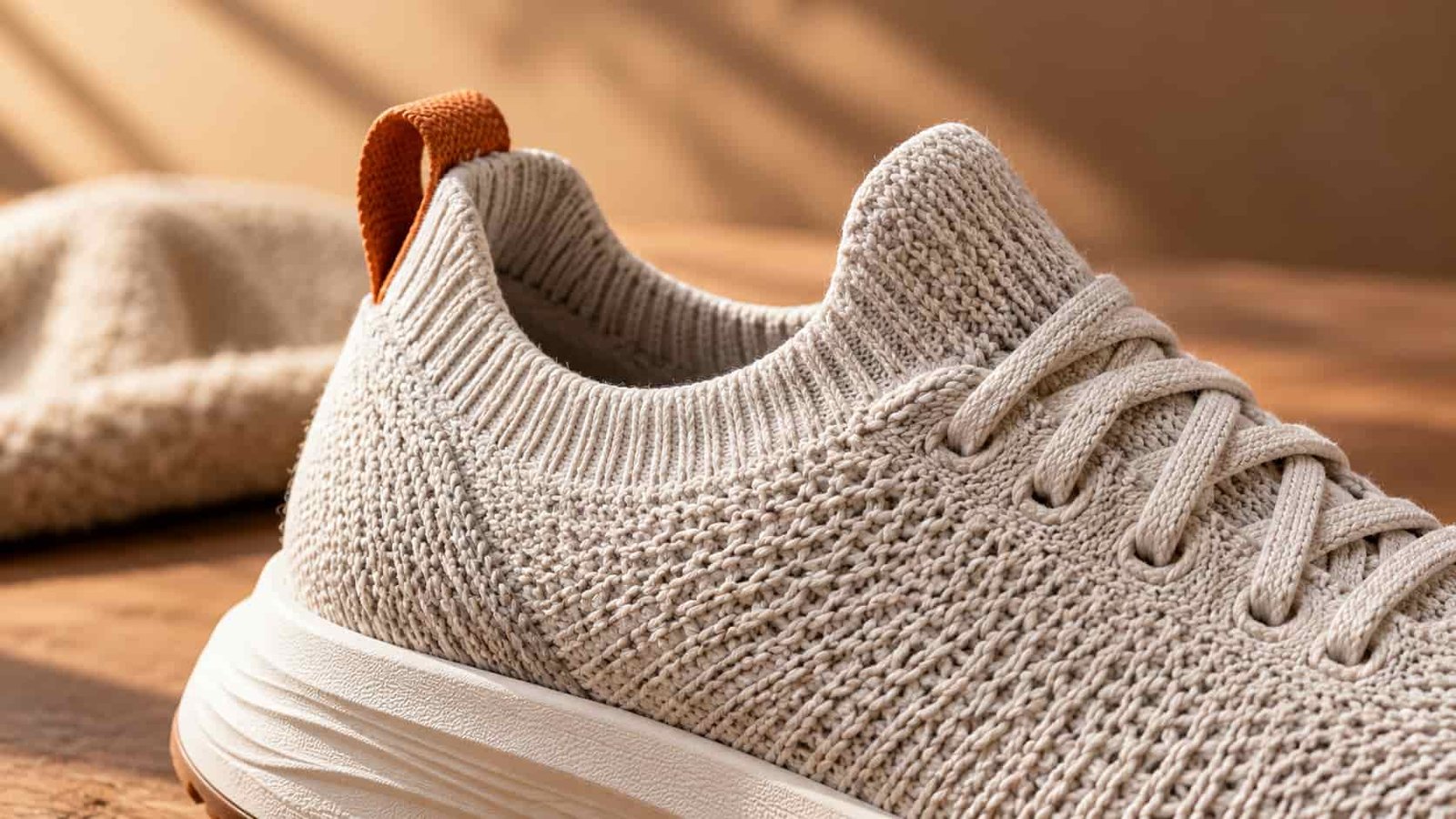
Merino is a fine wool from merino sheep, a breed known for soft, dense fibres. Wool is a natural protein fibre, and fine merino is typically softer and less prickly than coarse wools. In shoes, merino is used as a knitted or woven upper, usually as part of a shoe built with a rubber or synthetic sole.
Merino is not the same as sheepskin or shearling. Shearling is a tanned sheepskin with the wool left on, while merino shoes use spun wool yarn as the fabric of the upper. For a related natural fibre comparison, see what is shearling.
For the broader picture of shoe materials, the shoe materials guide places wool beside leather, suede and synthetics.
How Merino Shoes Are Made
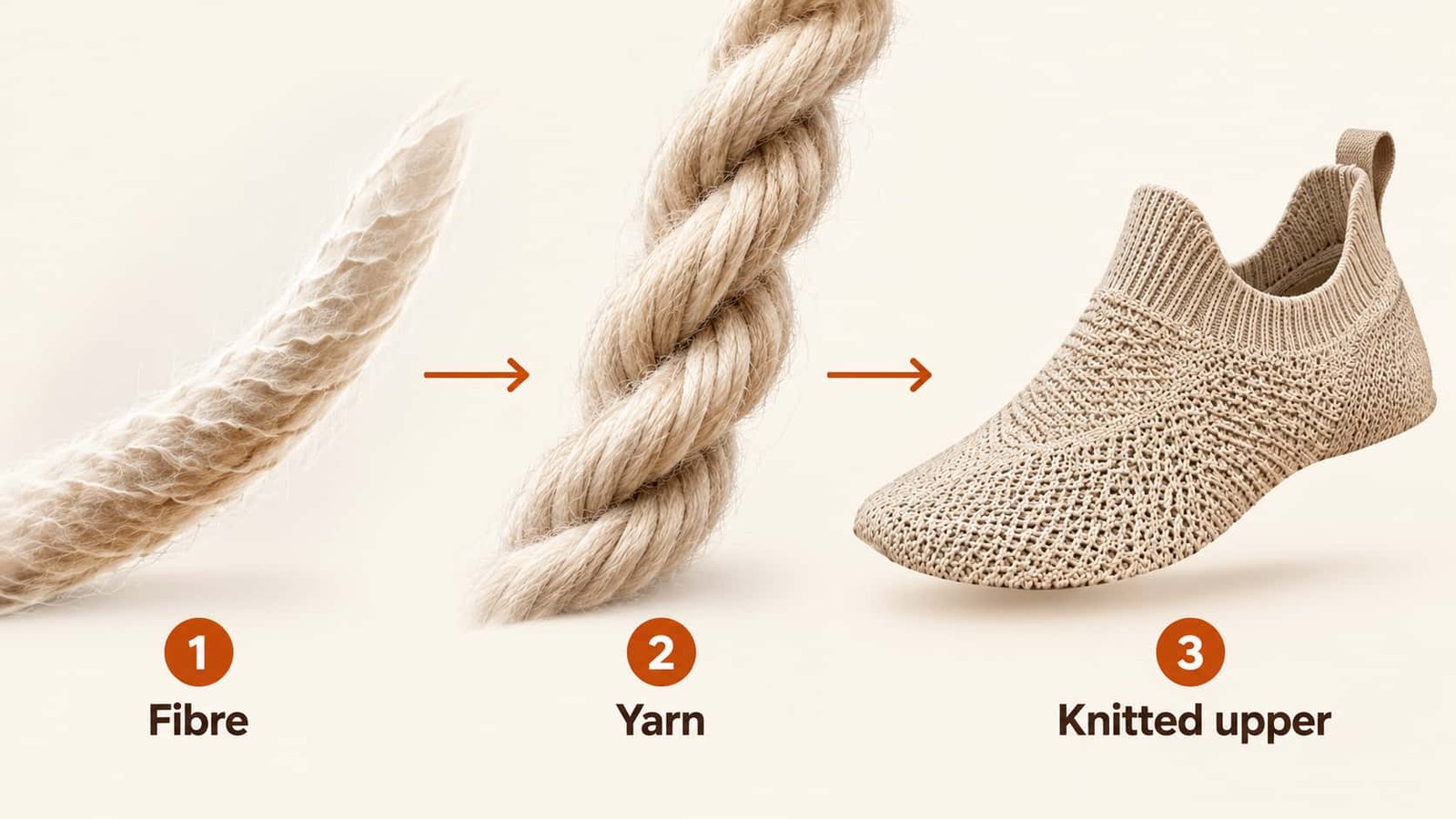
Most merino shoes start with yarn spun from merino fibre. The yarn is knitted or woven into an upper, often with stretch, and sometimes blended with synthetic fibres such as polyester or nylon to add strength or reduce shrinkage.
The upper is then cut or knitted to shape, attached to an insole and midsole, and fitted to a rubber or foam sole. Some makers add reinforced toe caps, heel counters or overlays at stress points.
The construction varies a lot between brands. Some shoes are fully knitted, others use wool panels with synthetic trims. Read the product description to see how much of the upper is wool.
Comfort and Fit
Merino shoes are usually comfortable from the first wear. The fibre is soft, and the upper flexes easily, so the shoe often feels relaxed rather than stiff. The knit or weave can stretch slightly, which helps the upper adapt to the foot over the day.
Fit still matters. A knitted upper can feel roomy if the size is too large, or tight if it is too small, and stretch varies between models. Try the shoes on at the end of the day if you can, when feet are at their largest. If you buy online, check the sizing guidance and returns policy.
Breathability, Odour and Moisture
Wool is naturally breathable, and it absorbs moisture vapour and releases it slowly. This is one reason wool is used in outdoor clothing and socks. In shoes, the wool upper can feel cooler than a sealed synthetic and less clammy than a coated leather.
Wool also has a reputation for resisting odour. The fibre can absorb sweat without holding the smell in the same way many synthetics do. Results depend on the blend, the lining and how often the shoes are worn and aired. Synthetic-heavy blends may not share the same odour performance.
This is an editorial judgment based on how wool behaves in general. It is not a standardised laboratory test, and performance varies by product.
Durability and Wear
Durability is the main question for merino shoes. Wool is a soft fibre, and thinner knits can pill, fray or stretch over time. Heavier knits, reinforced toes and heels, and blended yarns usually last longer.
The common wear points are the toe, the heel and the sides, where feet rub and the shoe meets the ground. Pilling and loss of shape often appear before the sole fails, so check the sole as well as the upper.
There is no reliable fixed lifespan for merino shoes. They are generally suited to casual and everyday wear rather than heavy, abrasive use. Treat any single figure about lifespan with caution.
Water and Weather
Merino wool is not waterproof. It can absorb water, and once soaked it dries slowly. Wool does keep some insulating warmth when damp, which is one reason it is used in outdoor clothing, but a wet wool shoe will feel cold and heavy.
Some merino shoes are sold with a water-repellent treatment, which can help light rain. The treatment wears off and does not make the shoe waterproof. For wet weather, look for a membrane or a shoe designed for water, and check the product details.
For background on how membranes and treatments differ, see how waterproof shoes work and waterproof vs water resistant shoes.
If merino shoes get wet, press out surface water gently with a dry cloth, stuff them with paper to keep the shape, and let them dry at room temperature. Keep them away from radiators and direct heat, which can shrink wool and damage the glue.
Wool Compared with Leather, Synthetics and Knit
| Feature | Merino wool | Smooth leather | Engineered mesh | Flyknit or Primeknit |
| Upper material | Natural fibre yarn | Animal hide | Synthetic yarn panel | Synthetic knit yarn |
| Breathability | Good, moisture-absorbing | Moderate, depends on finish | Very good | Generally good |
| Odour | Often better, varies | Varies | Varies | Varies |
| Water | Absorbs, dries slowly | Usually more resistant | Dries quickly | Dries relatively quickly |
| Durability | Varies with blend and weight | Often strong | Varies by bonding | Varies by model |
| Care | Gentle hand wash | Conditioning and polish | Gentle hand wash | Gentle hand wash |
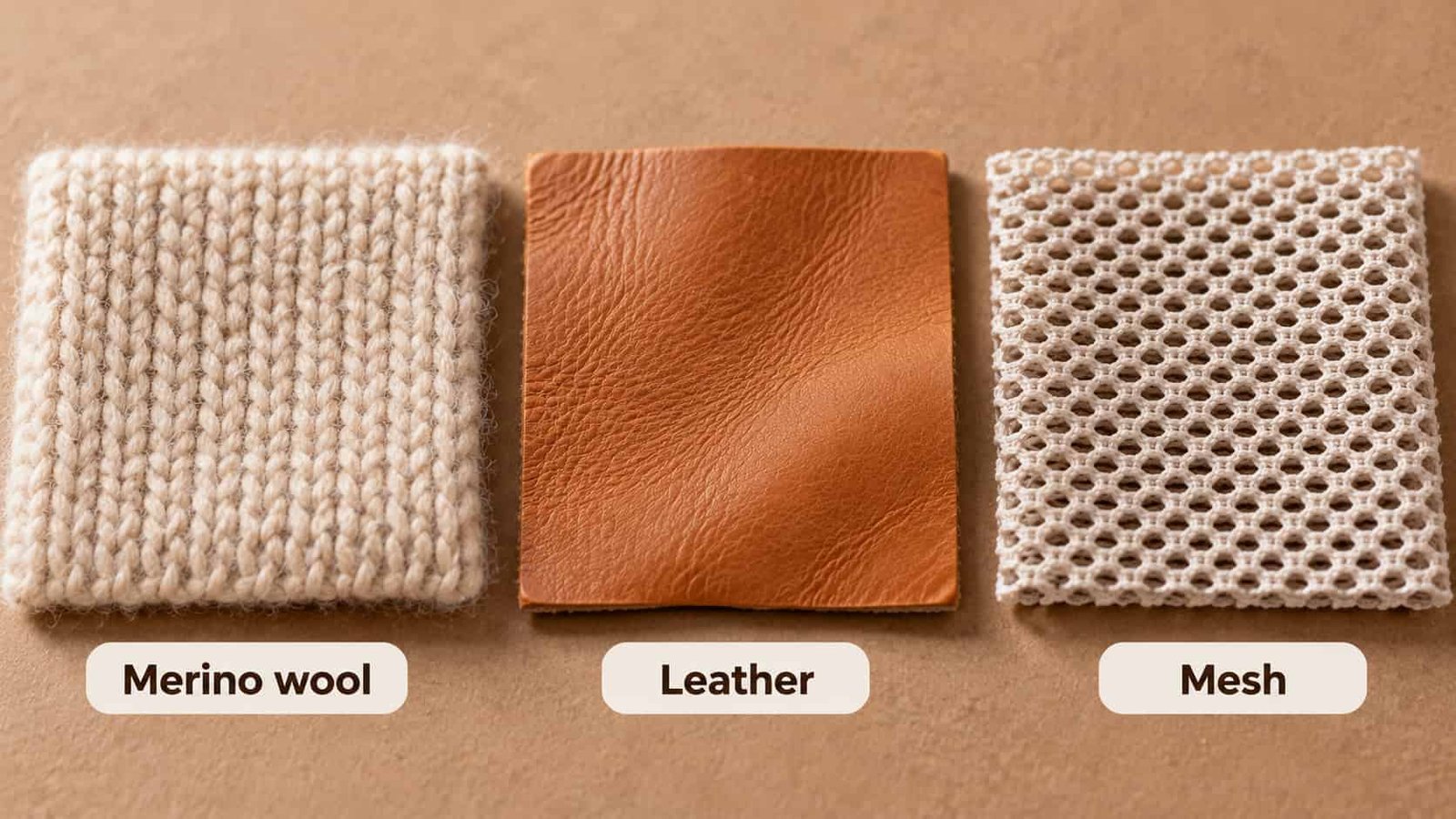
Wool sits between the open, fast-drying synthetics and the sealed, durable leathers. It is comfortable and natural, but it is not the most durable or most weather-resistant option.
For knit comparisons, see mesh vs knit shoes and Flyknit vs Primeknit.
Are Merino Shoes Worth the Price?
The honest answer depends on what you need. Merino shoes are often priced above basic canvas or synthetic sneakers, and the premium pays for the fibre and the comfort more than for hard-wearing durability.
A merino shoe is likely to be worth it if you:
- wear shoes most days for casual, office or travel use,
- value soft, natural materials and comfort from the first wear,
- want an upper that handles sweat and odour well, and
- live somewhere mild or dry.
It is less likely to be worth it if you:
- need one pair for hard running or heavy outdoor use,
- often walk in wet, muddy or cold conditions,
- want the lowest possible price for a shoe that will take heavy wear.
Prices and models change, so compare current product pages before buying. The value question is always about how long you plan to wear the pair and in what conditions.
Washing and Care
Merino wool needs gentle care. Harsh washing and heat can shrink the fibre and distort the shape.
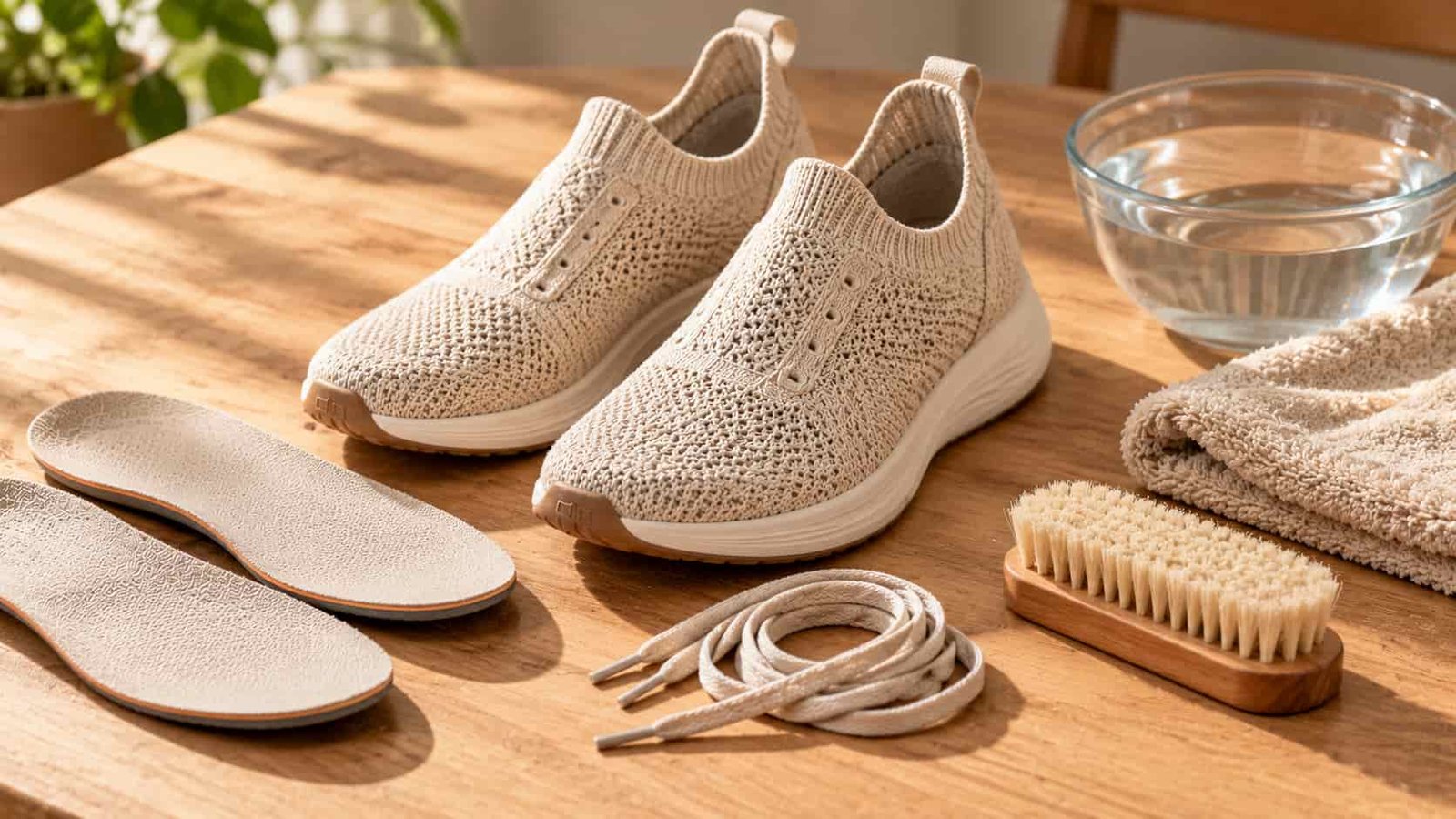
- Remove the insoles and laces and wash them separately.
- Brush off dry dirt gently with a soft brush.
- Hand wash in cool water with a mild wool-safe soap, working gently. Do not scrub hard.
- Rinse lightly with cool water, and press out excess water. Do not wring.
- Air dry flat away from heat and direct sun, stuffed with paper to hold the shape.
Avoid hot water, tumble drying, bleach and harsh detergents, which can shrink or felt wool and weaken the glue. Some brands recommend a specific wash method, so check the care label first. For a broader routine across materials, see how to clean shoes and maintain them.
Who Should Buy Merino Shoes
| Your situation | Merino may suit you if | Consider another material if |
| Use | You want casual, everyday or travel shoes | You need shoes for hard running or hiking |
| Climate | Your weather is mild or dry | You often face heavy rain, mud or snow |
| Comfort | You want soft, natural, relaxed upper | You need firm, structured support |
| Odour | You want an upper that handles sweat well | You want a wipe-clean finish |
| Care | You will hand wash and air dry | You want low-maintenance shoes |
| Budget | You will pay for comfort and fibre | You want the lowest price |
For help narrowing options by use and style, the shoe finder is a useful next step.
Myths Worth Dropping
- “Merino shoes are waterproof.” They are not. Wool absorbs water and dries slowly.
- “All wool shoes are the same.” Blends, weight and construction vary widely.
- “Merino never smells.” Odour resistance is better than many synthetics, but it is not absolute.
- “Wool shoes are fragile.” They are soft and need gentle care, but a well-made pair can suit everyday wear.
- “Merino is the same as shearling.” Shearling is tanned sheepskin, while merino shoes use spun wool yarn.
Frequently Asked Questions
What are merino wool shoes?
Merino wool shoes have an upper made from fine merino wool yarn, usually knitted or woven, often with a rubber or synthetic sole. They are soft, breathable and suited to casual and everyday wear.
Are merino wool shoes waterproof?
No. Wool absorbs water and dries slowly. Some models have a water-repellent treatment for light rain, but this does not make them waterproof.
Do merino wool shoes smell less?
Wool generally handles odour better than many synthetics because it absorbs sweat and releases it slowly. Results depend on the blend, the lining and how the shoes are worn and aired.
Are merino wool shoes durable?
Durability depends on the blend, weight and reinforcement. Thin knits can pill and stretch, while heavier, reinforced shoes last longer. They suit everyday wear more than heavy running or outdoor use.
Are merino wool shoes worth the price?
They can be, if you wear them often for casual, travel or office use in mild conditions and value comfort and natural materials. They are less likely to be worth it for hard running or wet, muddy conditions.
How do you wash merino wool shoes?
Remove the insoles and laces, brush off dry dirt, hand wash in cool water with a mild wool-safe soap, rinse lightly, press out water and air dry flat away from heat. Avoid hot water, tumble drying and bleach.
Are merino wool shoes good for running?
They can suit easy, short runs for some people, but they are not built for hard or long running. Running shoes need specific cushioning and support, so choose a running-specific model if running is your main use.
Is merino the same as shearling?
No. Shearling is tanned sheepskin with the wool left on. Merino shoes use spun merino wool yarn as the upper fabric.
Final Thoughts
Merino wool shoes combine a soft, natural upper with good moisture handling and a comfortable feel. They are not waterproof, they are not built for hard use, and they need gentle care. For everyday, travel and mild-weather wear, they can be well worth it. Check the wool content, the reinforcement and the sole before buying.
For the wider picture, start with the shoe materials guide, then compare Flyknit vs Primeknit if you are also looking at knit uppers.
External References
- Woolmark, wool footwear performance information: woolmark.com/performance/wool-footwear
- Wikipedia, “Merino” (fibre and breed background): en.wikipedia.org/wiki/Merino
- Wikipedia, “Shearling” (to distinguish shearling from merino yarn shoes): en.wikipedia.org/wiki/Shearling


