

What Is adidas Primeknit? Fit, Feel and Durability
Get Quick AI Summary
Open an AI assistant and submit the prefilled request. The assistant may need access to the article or its text to summarize it accurately.
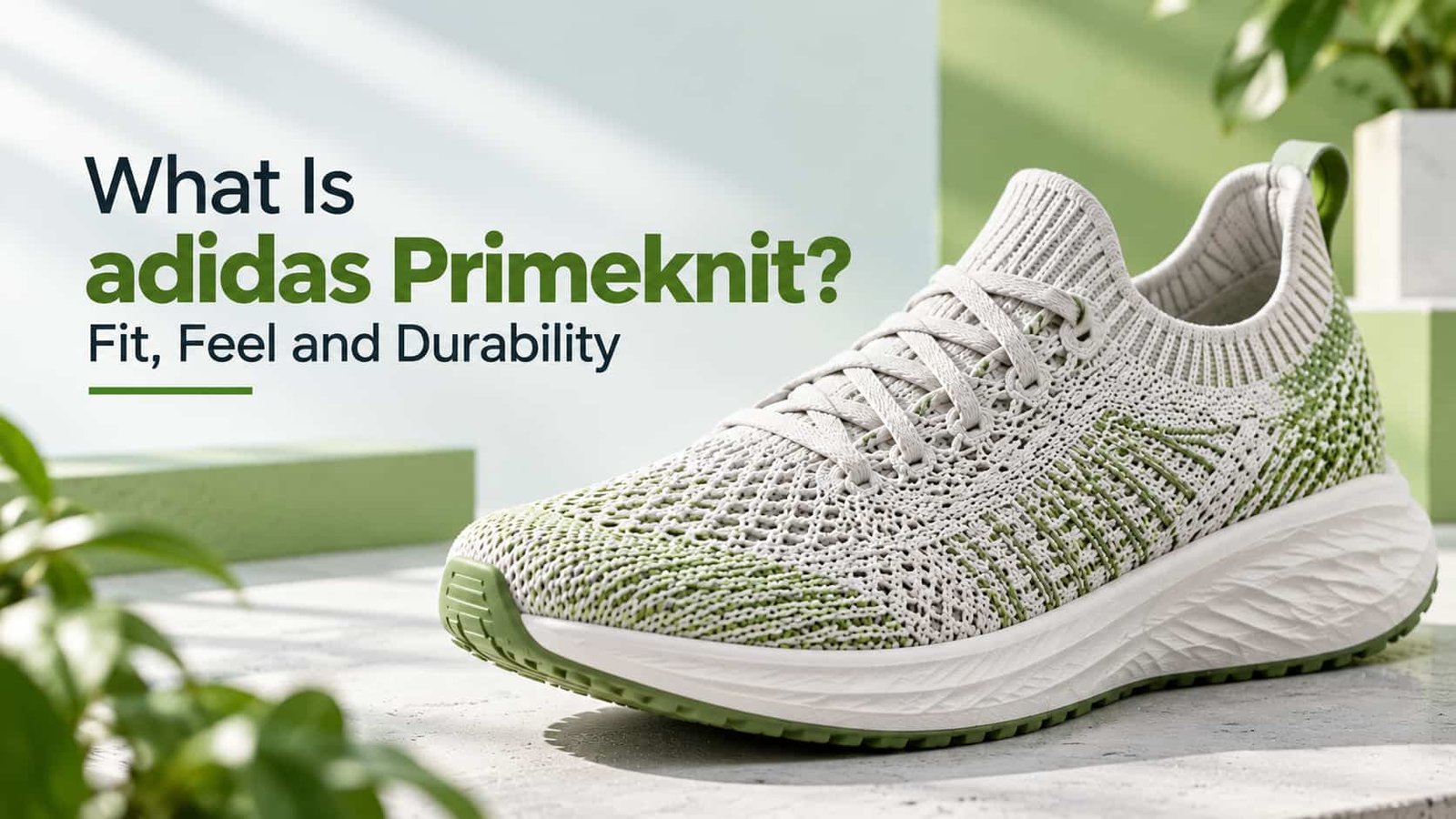
What is adidas Primeknit? adidas Primeknit is a knitted textile technology used in selected adidas footwear and apparel. In shoes, it forms an upper designed to wrap around the foot, with the yarn and knit structure engineered to balance flexibility, ventilation, and support. The actual feel, durability, and weather protection depend on the shoe’s construction and model.
Primeknit at a glance
Primeknit is best understood as an upper technology, not a complete shoe specification. It describes how part of the shoe is constructed, while the midsole, outsole, heel structure, lining, and other components determine many of the shoe’s other characteristics.
Key takeaways
- Primeknit is a knitted upper technology: the name does not mean every adidas shoe uses the same yarn, knit pattern, or construction.
- Fit comes first: the upper can feel flexible and close-fitting, but it cannot compensate for the wrong shoe size or shape.
- Durability depends on the whole design: knit density, reinforcement, abrasion, fit, and care all matter.
- Primeknit is not automatically waterproof: weather protection depends on additional materials and the specific shoe.
- Primeknit is not the same as Boost: Primeknit describes the upper, while Boost is a cushioning technology used in some adidas shoes.
- Model names need checking: not every Stan Smith, Samba, Superstar, Swift Run, or Spezial has a Primeknit upper.
What Is adidas Primeknit?
Primeknit is adidas’s branded knitted textile technology. It is used in selected footwear uppers and clothing, with the construction adapted to the intended product. In footwear, the knit can be engineered to provide a close fit, flexible movement, and different levels of support in different areas.
The important distinction is that Primeknit is not one universal fabric with identical performance in every shoe. The yarn, density, pattern, reinforcement, lining, and overall construction may vary by model and product generation.
According to adidas’s official Primeknit information, the upper can use tighter-knit areas for support and more relaxed areas for flexibility and ventilation. The exact balance depends on the design.
What is Primeknit used for?
Primeknit has appeared in different types of adidas products, including selected:
- Running shoes.
- Lifestyle sneakers.
- Football boots and cleats.
- Sport and training footwear.
- Apparel such as selected performance garments.
Not all products within these categories use Primeknit. Always check the individual product description for the upper material and construction.
Is Primeknit a fabric or a technology?
It is most useful to think of Primeknit as a branded textile technology. The finished upper is a knitted textile, while the brand name refers to adidas’s approach to designing and using that textile.
This distinction matters when comparing shoes. A generic knitted sneaker may share some construction principles with Primeknit, but that does not mean the materials, engineering, or performance are identical.
For a wider introduction to knitted and other footwear materials, visit the Shoe Materials Explained guide.
How Does Primeknit Technology Work?
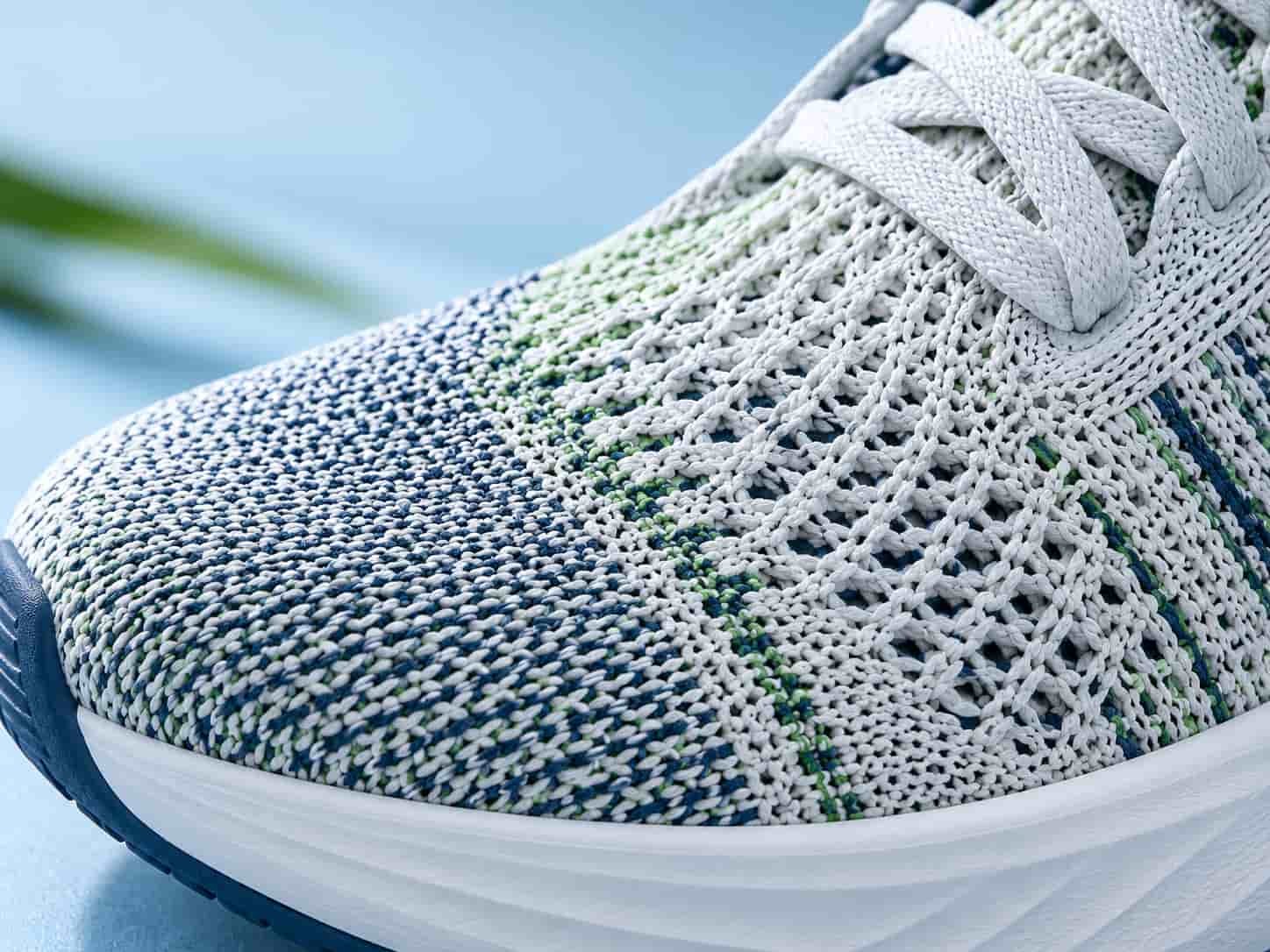
Knitted shoe uppers are created by forming yarn into interconnected loops. In engineered footwear, the knit can be varied to produce different textures, levels of flexibility, and areas of support.
Primeknit is associated with shaping the upper through a knitting process rather than relying entirely on multiple separate pieces of textile sewn together. The exact production process varies by shoe generation and design.
1. Yarn selection
The yarn influences the upper’s feel, stretch, texture, and resistance to wear. Different fibres and yarn constructions can behave differently, so the name Primeknit alone does not identify every material used in a specific model.
2. Creating the knit pattern
The textile is formed into a knitted structure. Different zones may use different stitch densities or patterns to help balance flexibility, support, and airflow.
3. Shaping and assembling the upper
Some knitted uppers are produced close to their intended shape, while additional components may be attached during assembly. A knitted upper still needs to work with the shoe’s heel structure, closure system, lining, and sole.
4. Adding support where needed
Depending on the design, reinforcements or denser knit zones can help the upper hold the foot more securely. A flexible textile does not automatically provide sufficient support for every activity.
5. Combining the upper with the sole
The completed upper is attached to the rest of the shoe. The cushioning and outsole are separate design elements and should be evaluated independently.
A 2012 technical report from Knitting Industry described the original adizero Primeknit development and its use of computerised flat-knitting machinery. This is useful historical context, but it should not be treated as proof that every current Primeknit product is made by an identical process.
What Does Primeknit Feel Like?
Primeknit shoes are often described as having a sock-like fit. This generally refers to the way the textile can wrap closely around the foot and flex during movement. The sensation varies by shoe model, upper density, padding, and foot shape.
Flexibility
A knitted upper can bend more readily than some rigid or heavily structured materials. This may feel natural when walking or running, particularly if the shoe fits well.
Flexibility is not always preferable, however. Some activities require firmer support around the midfoot or more protection around the toes. The best balance depends on the shoe’s purpose.
A close-fitting feel
A Primeknit upper may conform to the foot more closely than a stiff upper. That can feel comfortable to some wearers, but a snug upper should not squeeze the toes, create persistent pressure, or allow the foot to slide inside the shoe.
Do not assume that the upper will stretch enough to fix a poor fit. Choose the correct size and width from the beginning.
Weight and structure
Some knitted uppers are designed to keep the upper lightweight, but the complete shoe’s weight also depends on the sole, reinforcement, lining, and other components.
Two shoes with similar knit uppers may feel quite different because their midsoles, heel structures, and overall shapes are not the same.
Primeknit Benefits and Drawbacks
Primeknit can be useful when its flexible textile construction suits the intended activity. It also has limitations that are worth considering before buying.
| Potential benefits | Potential drawbacks |
| Flexible upper that can wrap around the foot | Fit may feel too loose or too tight for some foot shapes |
| Knit zones can be engineered for different functions | Performance varies between models |
| Can allow airflow where the knit and lining permit it | Dense knit and substantial lining can reduce ventilation |
| Can reduce the need for multiple separate upper panels in some constructions | Textile can snag, fuzz, or abrade |
| Offers a distinctive textile texture and appearance | Dirt may become trapped in the knit |
| Can be combined with different sole technologies | The upper alone does not determine cushioning, grip, or stability |
| Can be used in athletic and casual footwear | Ordinary knit construction is not automatically waterproof |
Who may prefer Primeknit?
Primeknit may suit people who enjoy a flexible, close-fitting textile upper for everyday wear, commuting, travel, or an appropriate athletic activity.
A more structured or protective upper may be preferable if the shoe will experience frequent abrasion, rough outdoor use, or movements requiring more support than the particular knitted design offers.
Is Primeknit Durable?
Primeknit durability depends on the specific upper and how the shoe is used. A knitted textile can be engineered for performance, but it is not automatically more durable than mesh, leather, or another material.
Important factors include:
- Knit density: the textile’s structure affects its resistance to wear and its flexibility.
- Yarn properties: different fibres and yarn constructions have different characteristics.
- Reinforcement: additional protection may be used in areas that need more structure.
- Fit: an upper that is constantly stretched or rubbed can experience more stress.
- Construction quality: stitching, bonding, and the connection between upper and sole matter.
- Use: everyday walking, running, gym training, and rough outdoor use create different demands.
- Care: aggressive scrubbing, high heat, and unsuitable cleaning products can damage some textiles or attached components.
Where can a knitted upper wear?
Potential wear areas include the toe, inner heel, and locations where the upper repeatedly rubs against another surface. These are not guaranteed failure points; the actual pattern depends on the model and the wearer’s movement.
If the toes push hard against the front of the shoe, the textile may be under constant tension. If the heel slips, friction may wear the lining. A suitable fit can reduce unnecessary stress.
How can you extend the life of Primeknit shoes?
- Choose a fit that does not place excessive tension on the upper.
- Avoid dragging the shoe across abrasive surfaces.
- Brush off loose dirt gently.
- Clean stains with a method suitable for the specific shoe.
- Let wet shoes dry naturally away from direct heat.
- Follow adidas’s care instructions for the exact model.
- Inspect the sole, upper, and bonding rather than judging wear by the fabric alone.
Durability is best judged from the complete shoe and its intended use, not from the Primeknit label alone.
Primeknit Breathability and Waterproofing
Is Primeknit breathable?
Primeknit can be breathable, but airflow varies by the knit structure, yarn, lining, coatings, and reinforcements. A more open knit may allow more airflow than a dense, heavily lined construction.
Comfort also depends on the weather, sock choice, activity level, and fit. A shoe that feels cool during a short walk may feel warmer during prolonged exercise.
If ventilation is important to you, check the product description and the actual construction rather than relying only on the word Primeknit.
Is Primeknit waterproof?
Ordinary knitted textile is not automatically waterproof. Water can enter through the knit or through other parts of a shoe. Some adidas models combine knitted uppers with additional weather-protection technologies, but those features are model-specific.
adidas’s official Primeknit information describes some footwear options with protective technologies such as GORE-TEX. That does not mean all Primeknit shoes include them. Check adidas’s official Primeknit collection and individual product descriptions.
Use this practical distinction:
| Requirement | What to look for |
| Everyday dry-weather wear | Comfortable fit and appropriate upper construction |
| Light splashes | Check the specific product’s water-resistance claims |
| Frequent rain | Look for a shoe explicitly described as waterproof |
| Running in wet conditions | Check weather protection, grip, fit, and intended surface |
| Warm conditions | Check lining, knit density, and ventilation |
A waterproof shoe may trade some airflow for protection, depending on its construction. If keeping your feet dry is a priority, read the exact model specifications rather than assuming Primeknit itself provides the protection.
For more background, see our guides to how waterproof shoes work and waterproof versus water-resistant shoes.
Primeknit vs. Flyknit: What Is the Difference?
Primeknit and Flyknit are branded knitted upper technologies from adidas and Nike, respectively. Both are associated with engineered textile uppers, but the construction, materials, and design vary across products and generations.
| Feature | adidas Primeknit | Nike Flyknit |
| Brand | adidas | Nike |
| General construction | Engineered knitted textile upper | Engineered knitted textile upper |
| Design aim | Varies by model; may balance flexibility, support, and ventilation | Varies by model; may balance flexibility, support, and ventilation |
| Fit | Depends on shoe shape, knit zones, and sizing | Depends on shoe shape, knit zones, and sizing |
| Durability | Depends on yarn, reinforcement, and use | Depends on yarn, reinforcement, and use |
| Weather protection | Requires model-specific protective construction | Requires model-specific protective construction |
| Best choice | The model that fits and suits your activity | The model that fits and suits your activity |
Which is better?
Neither technology is universally better. A fair comparison requires two specific shoes that are designed for similar uses and are assessed for fit, support, ventilation, weight, and durability.
Do not assume one technology is more breathable or longer-lasting simply because of its brand name. The individual shoe design matters more than a general label. For a dedicated comparison, see the planned Flyknit vs Primeknit guide.
Primeknit vs. Mesh and Traditional Shoe Uppers
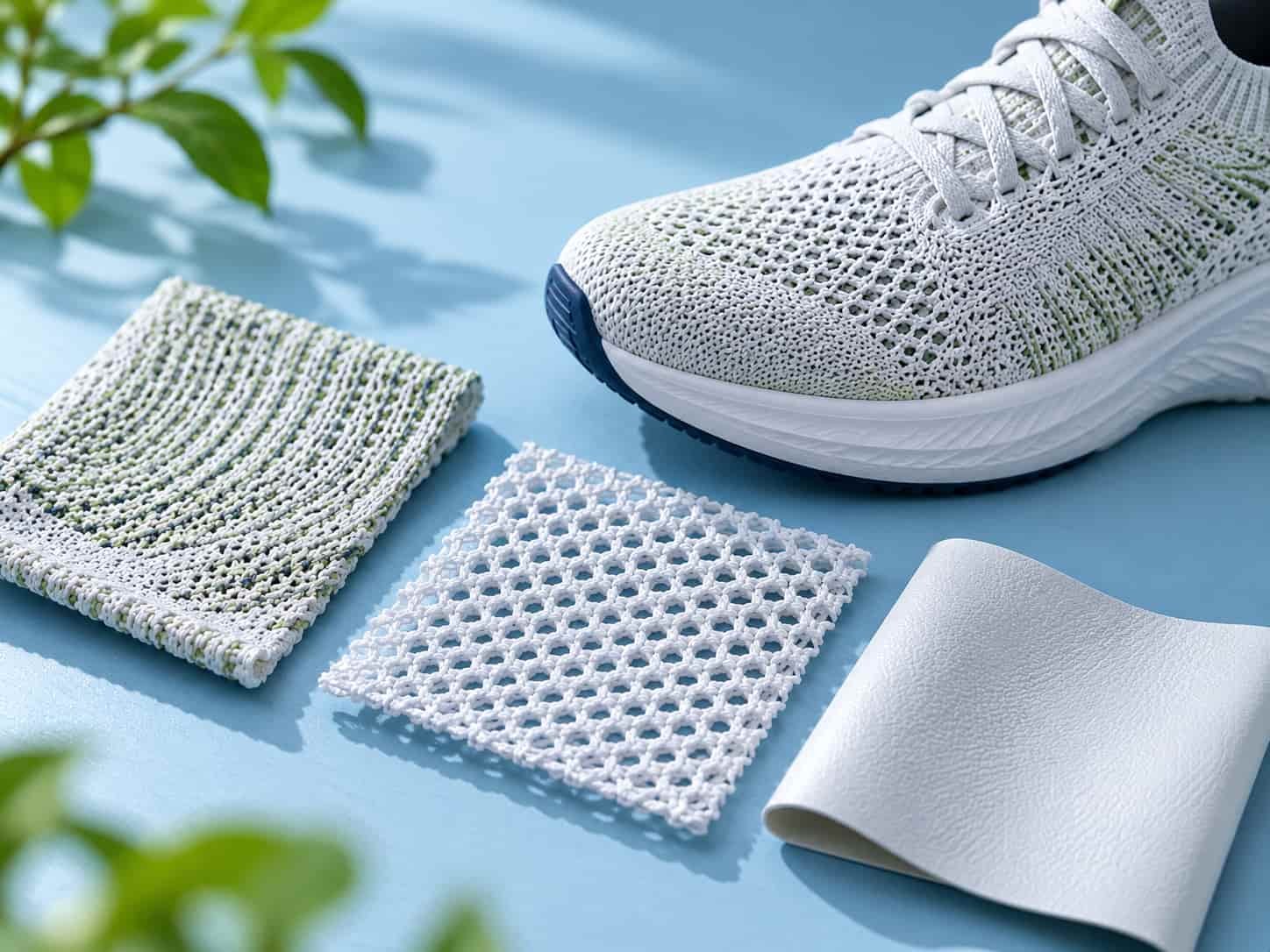
Primeknit is a branded knit technology, while mesh is a broad term for a network-like textile structure. Some mesh fabrics are knitted, so the terms can overlap. Traditional shoe uppers may also use leather, synthetic leather, woven textile, or combinations of materials.
| Upper type | Typical characteristics | Considerations |
| Primeknit | adidas-branded knitted upper technology | Model-specific fit, structure, and durability |
| General knit | Knitted yarn loops | Can vary from soft and stretchy to dense and structured |
| Mesh | Open or network-like textile | Airflow and protection depend on openings, lining, and reinforcement |
| Leather | Natural leather upper | Feel and maintenance depend on the leather type and finish |
| Synthetic leather | Man-made leather-like material | Performance depends on the material and coating |
| Woven textile | Yarns interlaced across the fabric | Structure and flexibility depend on the weave |
Choose by the shoe’s intended use and actual properties. A knit upper may feel flexible, while a more structured upper may offer additional protection. Neither characteristic makes one material best for every wearer.
Primeknit vs. Boost: Understanding the Difference
One common source of confusion is the difference between Primeknit and Boost. They are not interchangeable terms.
Primeknit refers to the upper, while Boost refers to a cushioning technology used in some adidas footwear. A shoe can combine a Primeknit upper with Boost cushioning, but not every Primeknit shoe uses Boost.
| Term | Main role | What to evaluate |
| Primeknit | Knitted upper | Fit, flexibility, ventilation, and durability |
| Boost | Midsole cushioning technology | Underfoot feel and the complete shoe’s design |
| Outsole rubber | Ground-contact component | Grip, wear, and intended surface |
| Waterproof membrane | Weather-protection component when present | Product-specific protection and care |
The upper and sole work together, but they solve different problems. A flexible upper cannot guarantee comfortable cushioning, and a cushioned midsole cannot guarantee that the upper will fit correctly.
For more on shoe construction, read our guides to shoe anatomy and insole vs midsole vs outsole.
Primeknit in Stan Smith, Samba and Other Models
Searches for “adidas Primeknit Stan Smith,” “adidas Primeknit Samba,” “adidas Primeknit Superstar,” and “adidas Primeknit Swift Run” show that readers are interested in specific model names as well as the technology itself.
However, a keyword does not prove that a particular model or edition has a Primeknit upper. adidas has produced different versions, updates, and collaborations across its range.
adidas Primeknit Stan Smith
If you are researching a Primeknit Stan Smith, confirm the exact edition and product description. Do not assume that a Stan Smith uses Primeknit simply because another edition of the model or another adidas shoe uses knitted material.
adidas Primeknit Samba and Spezial
Samba and Spezial searches may refer to different releases or product variations. Check the material listed for the exact item. A familiar silhouette does not guarantee the same upper construction across every version.
adidas Primeknit Superstar and Swift Run
The same rule applies to Superstar and Swift Run. Confirm the specific model, edition, and listed materials before making a buying decision.
adidas Primeknit soccer cleats
Some adidas football footwear uses knitted uppers or collars. For football, check the boot’s intended playing surface, fit, traction configuration, and any model-specific ball-control features. Do not select a boot based on upper material alone.
adidas Primeknit clothing and sweaters
Primeknit is also used in apparel. The material and construction in a garment may differ from the design of a shoe upper, so footwear durability or care advice should not automatically be applied to Primeknit clothing.
For current product information, begin with adidas’s official Primeknit collection and check each product page. Availability varies by region and time.
How to Clean Primeknit Shoes
Cleaning methods depend on the specific shoe’s fibres, lining, coatings, adhesives, and other components. Check the manufacturer’s care instructions before cleaning, particularly if the shoe has a waterproof membrane or special finish.
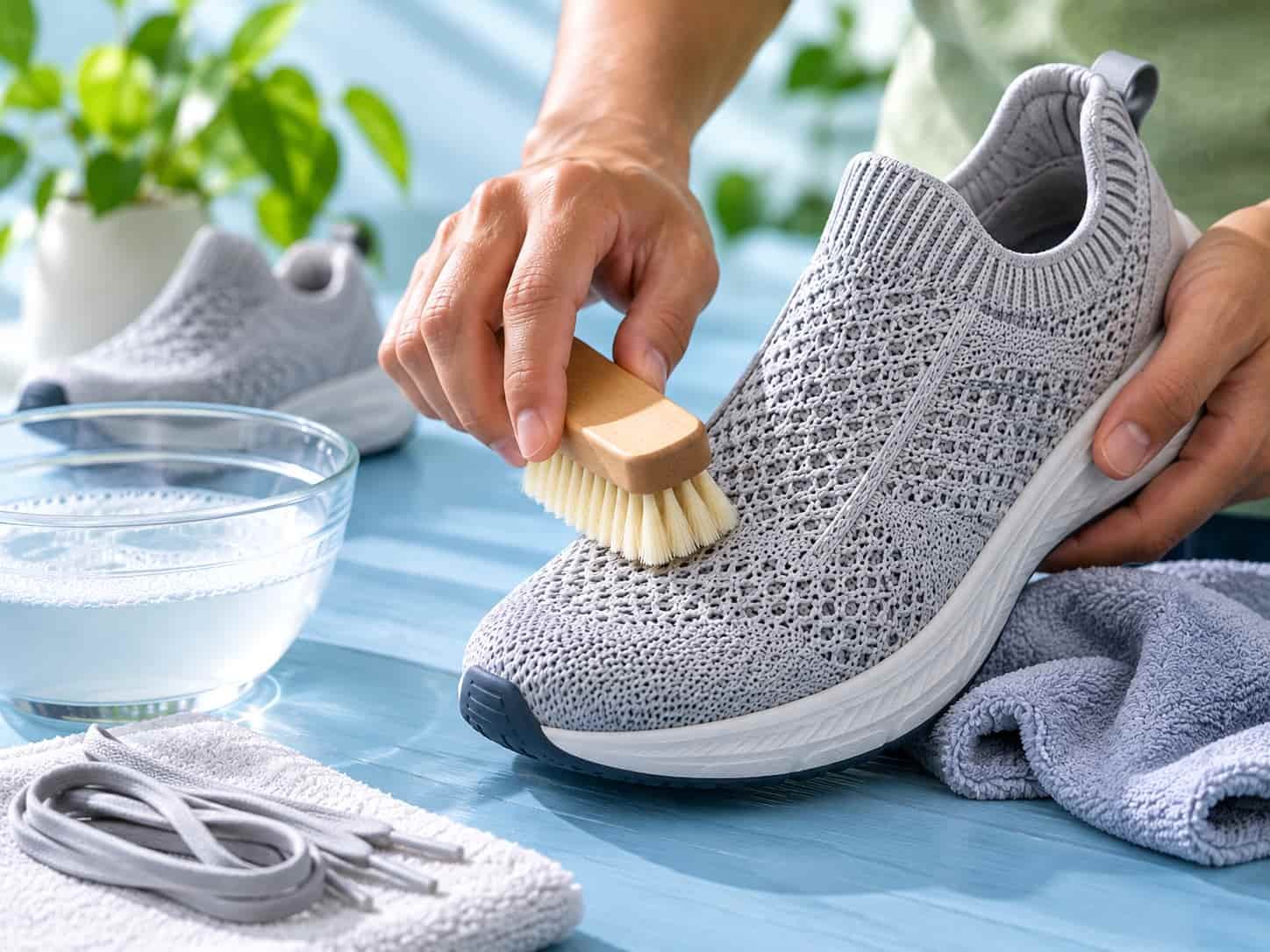
Step 1: Remove loose dirt
Use a soft brush to remove dry dust and loose debris. Avoid pulling at the knit loops or scrubbing aggressively.
Step 2: Remove laces if appropriate
If the design permits, remove the laces so you can clean the upper more evenly. Clean the laces separately using a method suitable for their material.
Step 3: Use a gentle cleaning solution
For routine surface dirt, use a small amount of mild detergent diluted in cool water, unless the care instructions recommend another method. Avoid bleach, harsh solvents, and unapproved cleaning chemicals.
Step 4: Clean the textile carefully
Use a soft cloth or soft-bristled brush. Work gently across the surface, especially in areas where the knit is thin or exposed.
Step 5: Remove residue
Wipe away remaining detergent with a clean cloth that is only slightly damp. Avoid saturating the shoe unless the manufacturer specifically permits it.
Step 6: Air-dry naturally
Allow the shoe to dry in a ventilated area, away from direct heat. High heat may affect the shape, adhesives, or other shoe components.
Step 7: Check the whole shoe
Before wearing the shoes again, make sure the upper and lining are dry and inspect the outsole, seams, and bonding.
Can Primeknit shoes go in the washing machine?
Do not assume that every Primeknit shoe is machine-washable. Follow the care instructions for the exact model. If the manufacturer does not explicitly permit machine washing, gentle surface cleaning is the safer starting point.
For further guidance, see our shoe cleaning and maintenance guide.
How to Choose the Right Primeknit Shoes
Use this checklist before purchasing a Primeknit shoe.
| Your priority | What to check |
| Everyday comfort | Toe room, heel hold, upper pressure, and overall fit |
| Running | Fit during movement, cushioning, outsole, and intended running surface |
| Walking | Comfortable fit, suitable sole, and ease of maintenance |
| Breathability | Knit structure, lining, overlays, and the manufacturer’s description |
| Durability | Reinforcement, fit, construction quality, and likely wear conditions |
| Wet weather | Explicit water-protection specifications for the exact model |
| Football | Playing surface, traction, fit, and the boot’s intended purpose |
| Easy care | Manufacturer’s cleaning instructions and the upper’s construction |
| Style | Colour, silhouette, and whether the exact model uses Primeknit |
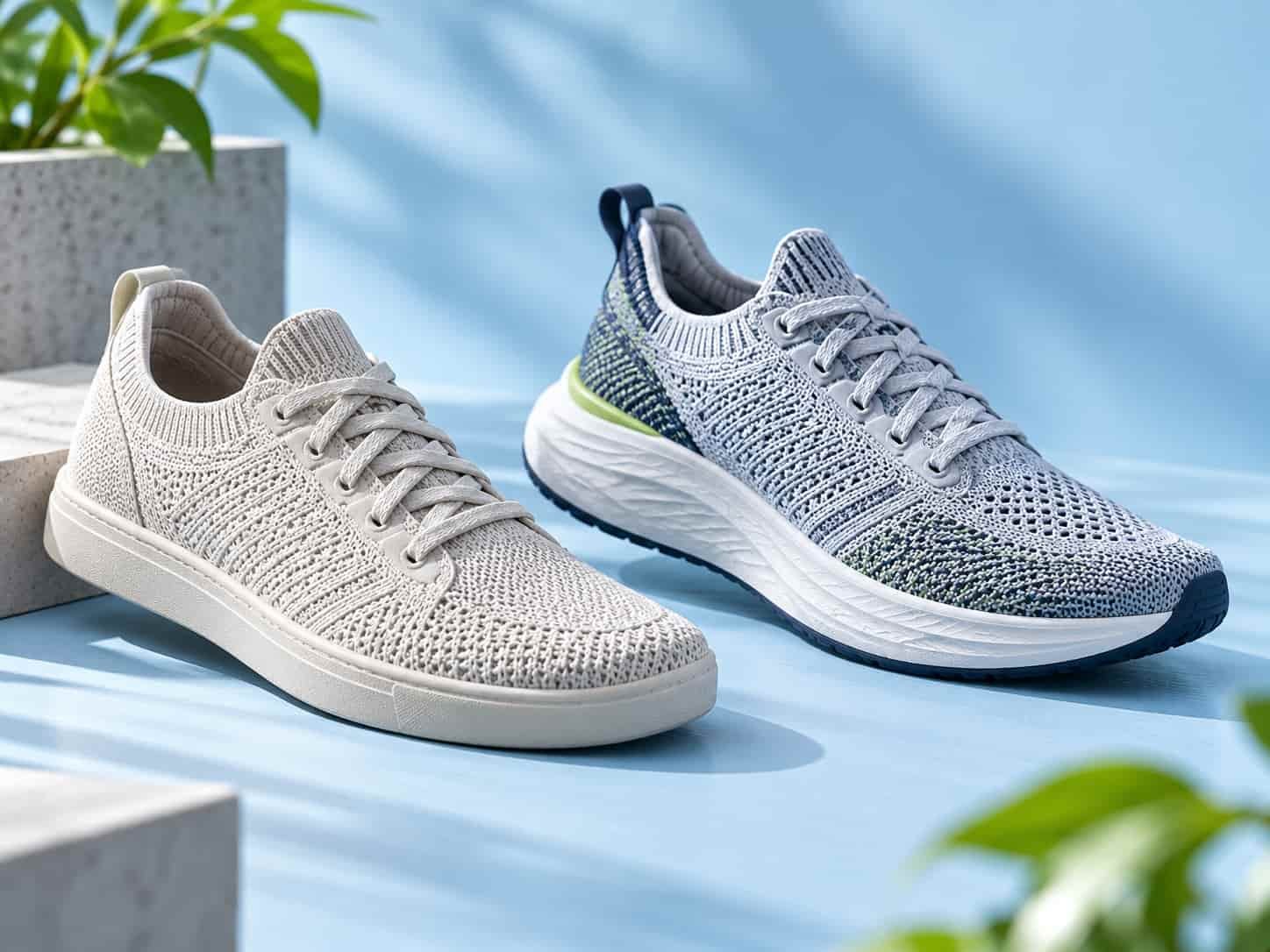
A simple decision guide
- Choose Primeknit when the specific shoe’s fit and upper construction suit your activity.
- Compare two models on the complete design, not only on the upper material.
- Look for explicit waterproofing if you regularly walk or run in wet conditions.
- Confirm the exact edition when searching for Primeknit versions of familiar adidas silhouettes.
- Read the care instructions before cleaning, particularly for shoes with special coatings or membranes.
Common Primeknit Myths Explained
Myth 1: Every adidas shoe uses Primeknit
False. Primeknit is used in selected products. Check the material description for the exact model.
Myth 2: Primeknit and Boost mean the same thing
False. Primeknit is an upper technology, while Boost is a cushioning technology used in some shoes.
Myth 3: Primeknit shoes are automatically waterproof
False. Ordinary knitted uppers are not inherently waterproof. Additional protection must be confirmed for the specific product.
Myth 4: Primeknit is always more durable than mesh
There is no universal rule. Durability depends on yarn, knit structure, reinforcement, construction, fit, and use.
Myth 5: A sock-like fit means the shoe is the correct size
False. A close-fitting upper can still be too narrow, too short, or too loose. Check comfort and fit before buying.
Myth 6: Primeknit guarantees better running performance
False. Running performance depends on the complete shoe, including fit, cushioning, outsole, stability, and the runner’s needs.
Frequently Asked Questions About Primeknit
1. What is adidas Primeknit?
Primeknit is adidas’s branded knitted textile technology used in selected footwear and apparel. In shoes, it forms an upper designed to wrap around the foot, with performance depending on the yarn, knit structure, reinforcements, and shoe design.
2. Is adidas Primeknit durable?
It can be durable when the material and construction suit the intended use. Knit density, reinforcement, fit, abrasion, care, and the quality of the overall shoe affect its lifespan.
3. Is adidas Primeknit waterproof?
Not by itself. Some models combine knitted uppers with additional weather-protection technologies. Check the exact product specification before relying on a shoe in wet conditions.
4. What is the difference between Primeknit and Boost?
Primeknit is an upper technology. Boost is a cushioning technology used in some adidas midsoles. Some shoes combine both, but they serve different purposes.
5. What is the difference between Primeknit and Flyknit?
Primeknit is associated with adidas, while Flyknit is associated with Nike. Both are engineered knitted upper technologies, but their construction and performance vary by shoe and generation. Compare specific models for a meaningful decision.
6. Do Primeknit shoes stretch?
The amount of stretch depends on the knit, yarn, reinforcement, and construction. Do not rely on the upper stretching substantially to fix an uncomfortable fit.
7. Can you wash Primeknit shoes in a washing machine?
Only if the manufacturer permits it for that specific model. Otherwise, use gentle surface cleaning and natural drying, following the care instructions.
8. Do all Stan Smith, Samba, or Superstar shoes use Primeknit?
No. The material can vary by edition and product generation. Check the exact product listing rather than assuming that a model name guarantees a Primeknit upper.
Final Verdict: Is adidas Primeknit Worth It?
adidas Primeknit is a knitted upper technology designed for selected shoes and apparel. It can provide a flexible, close-fitting feel, and the knit can be engineered to balance ventilation and support. However, the experience depends on the exact product-not just the Primeknit name.
Before buying, check the fit, upper construction, sole, intended activity, and weather protection. Confirm model-specific material details when researching Stan Smith, Samba, Superstar, Swift Run, Spezial, or football footwear. Treat Primeknit as one part of the shoe, rather than a guarantee of comfort, durability, or performance.
For more context on footwear materials and construction, visit the Shoe Materials Explained guide.
Sources and Further Reading
- adidas – Primeknit Shoes. Official product and technology information.
- adidas – Primeknit Clothes and Shoes. Official collection information.
- adidas India – Primeknit. Regional product and technology information.
- Knitting Industry – adizero Primeknit: How It’s Made. Historical technical reporting on the original knitted upper manufacturing process.
- UrbanStyleFootwear – Shoe Materials Explained. Internal material overview.
- UrbanStyleFootwear – How We Test Shoes. Internal methodology page; link only when relevant to the site’s actual evaluation process.


