

What Is Nike Flyknit? Fit, Breathability and Durability
Editorial Guide | Footwear Materials |
Summarise this Nike Flyknit guide with AI
Open an assistant and submit the prefilled request. The assistant reads the page only after you submit it.
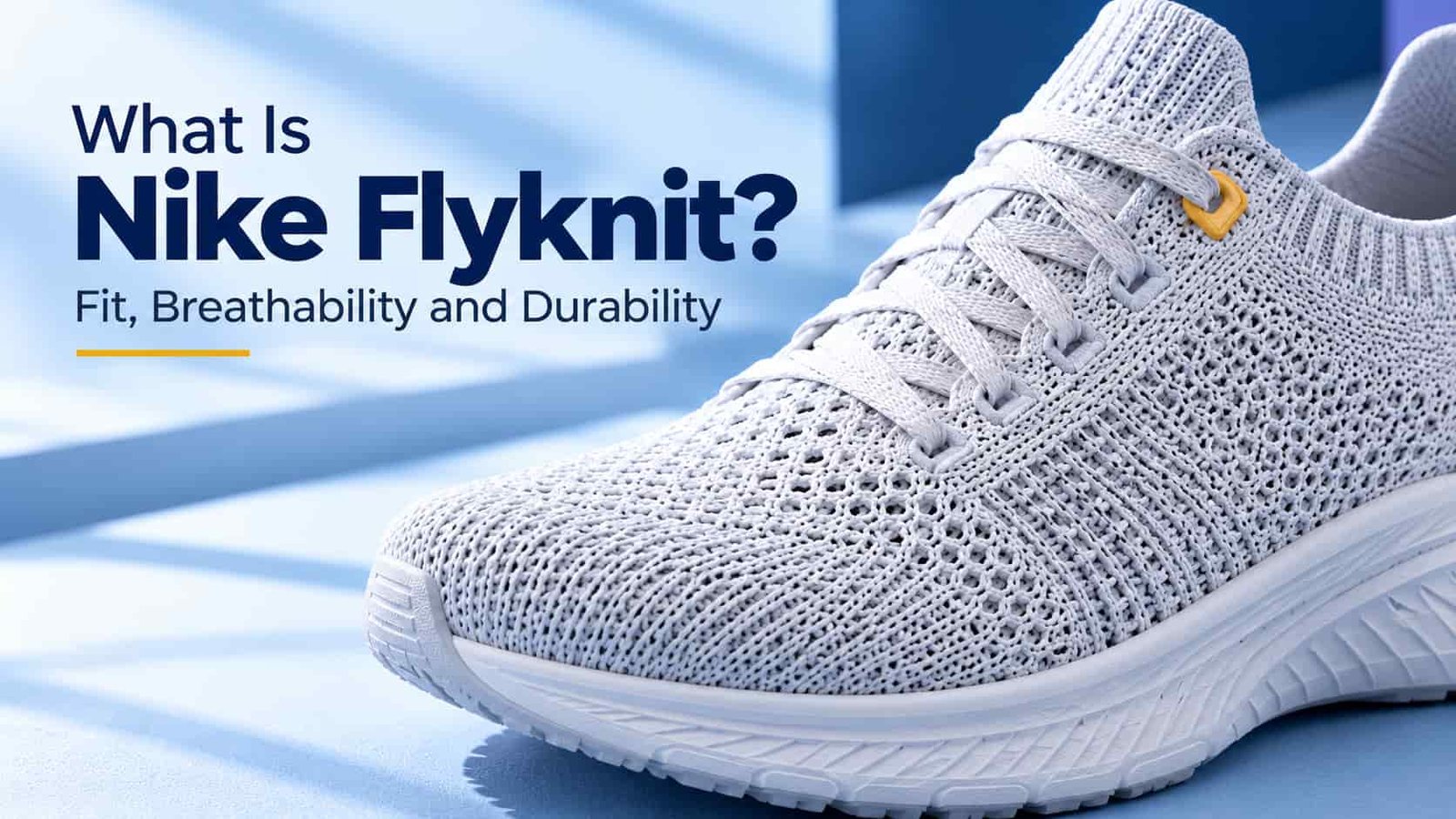
Nike Flyknit is a digitally engineered knit shoe upper, made by knitting yarn into a shaped, largely seamless piece. Nike developed it to give a lightweight, sock-like fit with breathability and support where needed. Flyknit is usually breathable and close fitting, and its durability depends on the yarn, the knit density and how the shoe is used.
Key Takeaways
- Flyknit is a knit upper, not a fabric you buy by the yard. It is engineered and knitted to shape, usually as one piece.
- Its fit is close and sock-like. Knit stretches with the foot, which suits many runners and everyday wearers.
- It is generally breathable. The open knit lets air through, although heat and moisture depend on the shoe’s lining and design.
- Durability varies by model. Knit density, yarn choice and bonding all matter, so no single lifespan applies.
- Care is gentle. Hand wash, brush lightly and air dry away from heat.
Nike Flyknit at a Glance
| Feature | Nike Flyknit |
| What it is | Knitted, engineered shoe upper |
| How it is made | Digitally programmed knitting, often one piece |
| Fit | Close, sock-like, stretches with the foot |
| Breathability | Generally good, depends on knit density and lining |
| Durability | Varies by model, yarn and bonding |
| Weight | Light, models vary |
| Water | Not waterproof |
| Care | Hand wash, air dry |
| Typical use | Running, training, lifestyle and sport |
These are general tendencies. Individual Flyknit shoes vary widely, so check each product’s description and construction.
What Nike Flyknit Is
Flyknit is Nike’s name for a knitting process that produces shoe uppers. Nike describes it as a digitally engineered knitting process best known for lightweight, form-fitting and virtually seamless shoe uppers. Flyknit debuted with the Nike Flyknit Racer, which Nike introduced around the 2012 London Olympics. Since then it has been used across running, training, basketball, football and lifestyle shoes.
The central idea is precision. Rather than cutting fabric panels and stitching them together, Flyknit places yarn only where it is needed. Nike has said the aim is to put structure, flexibility and breathability in the right zones of one layer.
It is worth being clear about what Flyknit is not. It is not a leather, and it is not a textile you would buy by the metre. It is a shoe-specific upper, made on machines programmed for that shape.
For the broader picture of shoe uppers, see the shoe materials guide.
How Flyknit Is Made
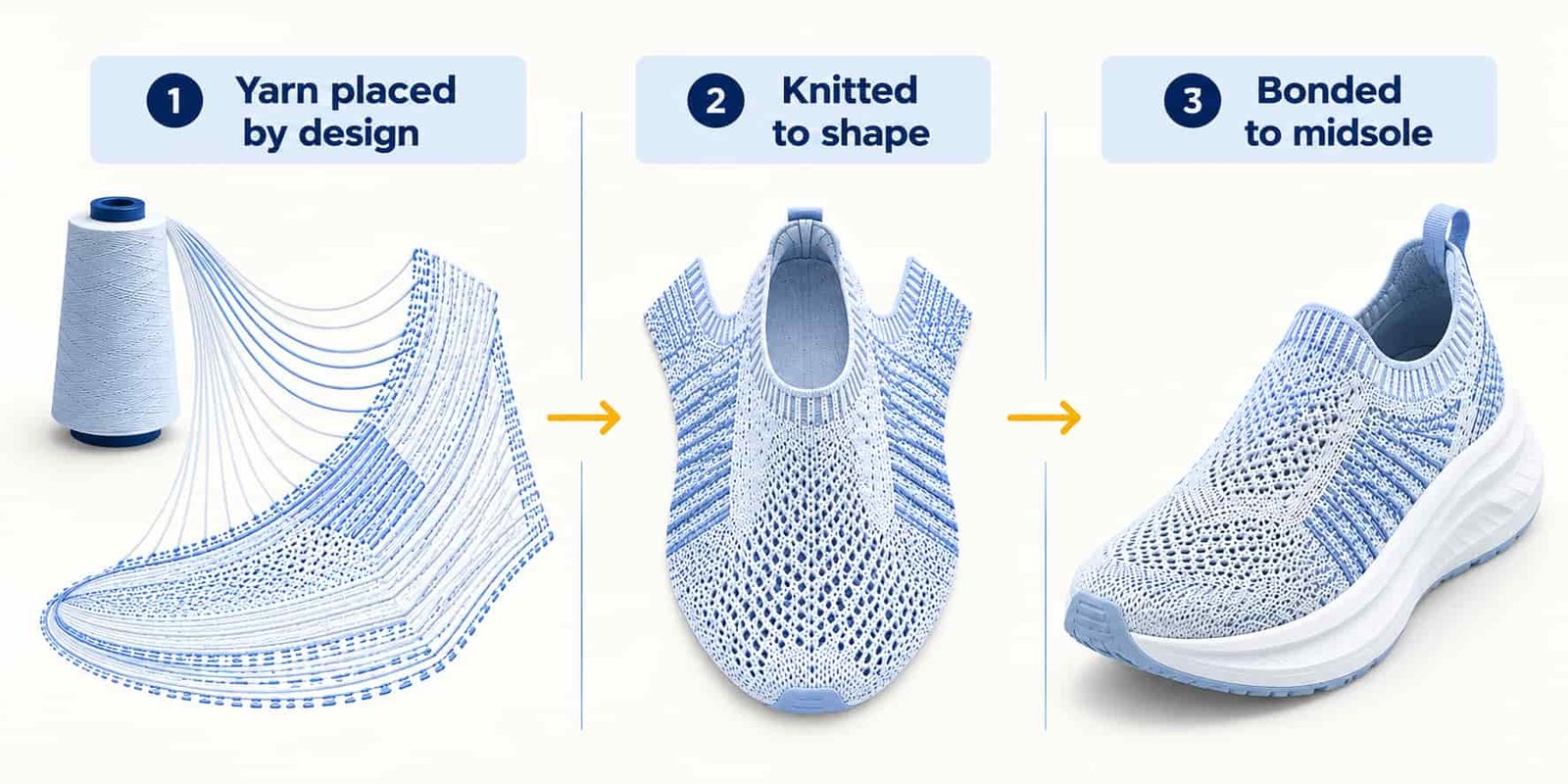
Nike’s descriptions of Flyknit focus on the design process. Engineers use software to map the placement of yarn across the upper. The knit is produced in one piece, and in later versions it can be shaped in three dimensions.
Trade coverage of the Flyknit 360 construction describes the process in more detail. According to Just Style, which reported Nike’s announcement, engineers use complex knitting structures to create a closed anatomical form that mimics the foot, and the upper then goes through a thermoforming process to add shape and underfoot support. Just Style also reports that Nike says Flyknit produces 60 percent less waste than traditional cut-and-sew methods. That is a company figure, so treat it as Nike’s claim rather than an independent measure.
Flyknit is usually fused or bonded to a midsole and heel structure, rather than standing alone. This means the upper is one part of a shoe, and its fit depends on how well it is integrated with the sole.
Fit and Stretch
Flyknit is designed to fit closely. The knit stretches with the foot and wraps around it, which is why many people describe a sock-like feel. Nike’s own copy describes the aim as a precise fit and a feeling of a second skin.
That close fit has trade-offs. Some wearers find a snug knit comfortable from the first wear, while others need a size check or a few wears to settle in. Because the knit stretches, it can also feel different from a stiffer leather or synthetic upper. If you have wide or narrow feet, check the fit before buying.
Flyknit fits differently from mesh. Mesh is an open panel that is usually less stretchy and more structured. For a closer comparison, see mesh vs knit shoes.
Breathability
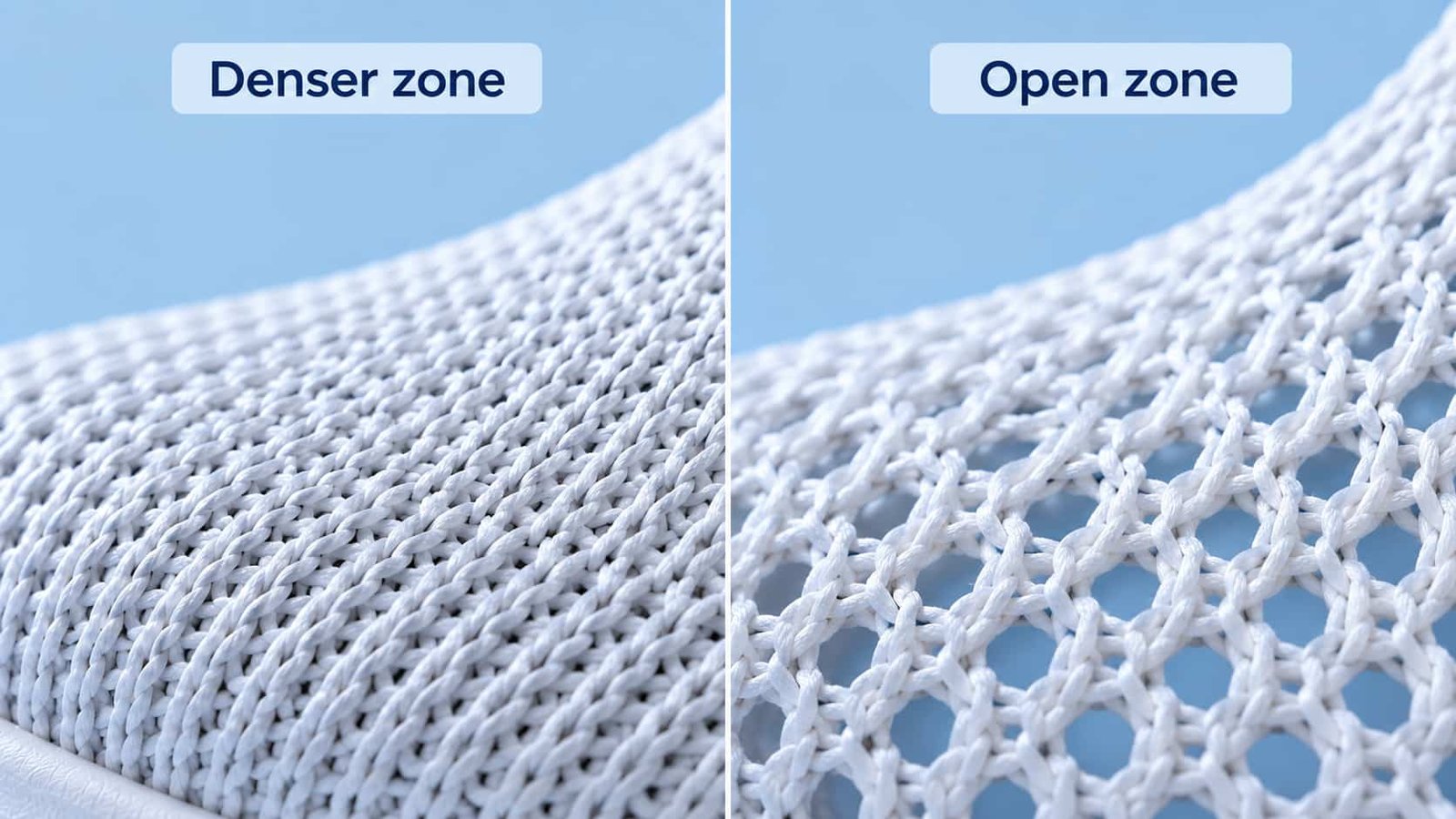
Flyknit is generally breathable. The open knit allows air to move through the upper, which can keep the foot cooler than a sealed leather or coated surface. This is one reason Flyknit is popular for running and training.
Breathability is not guaranteed. A denser knit, a thick lining or heavy overlays can trap heat, and wet or sweaty feet can make any upper feel warmer. Nike’s description of its knit emphasises airflow in some zones and support in others, so the upper can vary across the foot.
This is an editorial judgment based on how open knits behave. It is not a standardised laboratory result, and a specific shoe’s breathability should be judged by its own construction.
Durability and Wear
Durability is one of the most common questions about Flyknit, and the honest answer is that it depends on the model. Knit density, yarn type, bonding, stress points and use all affect how long a shoe lasts.
Critics initially questioned whether a single knitted upper could hold up. Flyknit has been used in many years of running and training shoes, but durability reports vary, and wear often shows first at the toe, the heel and the sides. Pilling, stretching, small snags and bond failures are typical signs of ageing.
There is no reliable fixed lifespan for Flyknit. Runners often replace shoes by mileage or by midsole wear rather than by the upper. A shoe that feels fine on the outside may have a worn midsole, so check cushioning as well as appearance.
Flyknit Compared with Mesh and Other Knits
| Feature | Nike Flyknit | Engineered mesh | Standard knit (other) |
| Construction | Digitally engineered, often one piece | Cut panels, bonded or stitched | Varies by maker |
| Fit | Close, sock-like | Structured, less stretch | Varies |
| Breathability | Generally good | Very good | Varies with density |
| Support | Built into the knit zones, with midsole | Often helped by overlays | Varies |
| Durability | Varies by model | Varies by bonding | Varies |
Flyknit is a specific technology within the wider knit category, so not every knit upper behaves the same. When comparing shoes, look at the construction and the product details rather than assuming that “knit” or “Flyknit” guarantees a particular fit or durability.
For a related technology from another brand, Adidas Primeknit works on a similar principle. See what Adidas Primeknit is for the comparison.
Running, Walking and Everyday Use
For running, Flyknit suits people who want a light, close-fitting upper and good airflow. The fit can reduce slipping, although the midsole and heel structure matter more for support. Runners with specific needs for stability or cushioning should look at the midsole and motion-control features, not only the upper.
For walking and everyday wear, Flyknit is comfortable and versatile. Its stretch and breathability suit long days, and its clean look works with casual outfits. Walking shoes often need firmer heel support and arch structure, so check those features before choosing a Flyknit lifestyle shoe for long walks.
For training and sport, Flyknit has been used in football, basketball and training shoes. The fit is close, so sizing matters. Check how the upper meets the sole and whether the shoe has the stability you need for your sport.
Weather and Water
Flyknit is not waterproof. Its open knit lets water in, and it dries relatively quickly, but heavy rain or standing water will soak through. For wet weather, look for a shoe with a membrane or water-resistant treatment, and check the product details.
For background on membranes and treatments, see how waterproof shoes work and waterproof vs water resistant shoes.
If Flyknit shoes get wet, let them dry at room temperature, stuffed with paper to keep their shape. Avoid tumble drying and direct heat, which can damage the knit and the glue.
Care for Flyknit Shoes
Flyknit care is gentle. Nike’s own guidance recommends hand washing and air drying, and says that machine washing and drying are not recommended for its knit and mesh shoes. The aim is to clean the knit without stretching it or weakening the bond to the sole.
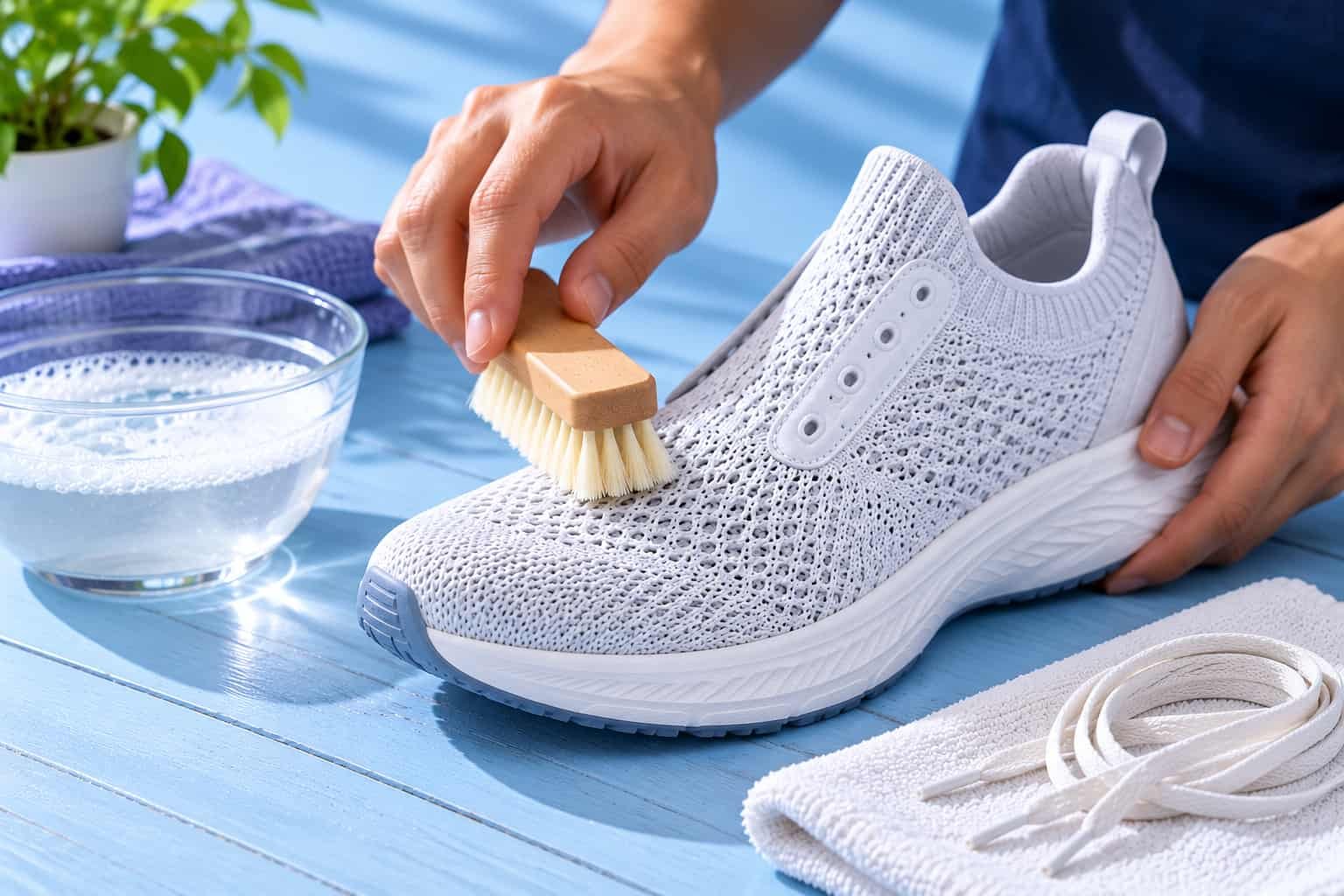
Steps that work well:
- Remove the laces and insoles, washing them separately.
- Brush off dry dirt with a soft brush, moving in the direction of the knit pattern.
- Use mild soap and cool water on a soft brush or cloth, working gently.
- Rinse lightly with a damp cloth, keeping the upper damp rather than soaked.
- Air dry away from heat, stuffed with paper to keep the shape.
Avoid tumble dryers, bleach and harsh solvents. For a complete routine across materials, see how to clean shoes and maintain them. For knit-specific steps, see how to clean knit shoes. Nike’s own cleaning guidance for mesh and Flyknit shoes is on Nike’s site. Open it before you rely on it, since Nike updates its pages.
Who Should Choose Flyknit
| Your situation | Flyknit may suit you if | Consider another upper if |
| Use | You run, train or want a light everyday shoe | You need heavy wet-weather protection |
| Fit | You like a snug, sock-like feel | You want a firm, structured upper |
| Climate | You want airflow in warm weather | You need warmth in cold conditions |
| Support | You get support from the midsole and heel | You need firm stability or motion control |
| Care | You will hand wash and air dry | You want a wipe-clean finish |
| Budget | You want a brand-tech shoe | You want a lower-cost alternative |
For help narrowing options by use and style, the shoe finder is a useful next step.
Myths Worth Dropping
- “Flyknit is a fabric you can buy by the yard.” It is a shoe-specific knit upper made with Nike’s engineering process.
- “Flyknit is waterproof.” It is breathable, not waterproof.
- “Flyknit always lasts longer than other uppers.” Durability varies by model, and midsoles often wear first.
- “Knit always means breathable.” Density, lining and overlays all change how much air moves through the upper.
- “Flyknit is the same as Primeknit.” They are different brand technologies, though they share the knitting principle.
Frequently Asked Questions
What is Nike Flyknit?
Nike Flyknit is a digitally engineered knit upper for shoes. Yarn is knitted to shape, usually as a largely seamless piece, to give a lightweight, close fit with breathability and support in the right zones.
What is Flyknit made of?
Flyknit is knitted from yarn, and the materials vary by model. Nike has used a range of yarns and fibres, so check the product description for the specific materials on any shoe you are considering.
Is Nike Flyknit breathable?
Generally yes. The open knit lets air move through the upper, which suits running and warm weather. Breathability depends on the knit density, lining and overlays, so it varies between models.
How durable is Flyknit?
Durability varies by model, yarn, knit density and bonding. Wear often shows first at the toe, heel and sides, and midsoles can wear out before the upper. There is no reliable fixed lifespan.
Is Nike Flyknit waterproof?
No. Flyknit is breathable and dries relatively quickly, but heavy rain and standing water will soak through. For wet weather, look for a membrane or water-resistant treatment.
Is Flyknit good for running?
It can be, because it is light, breathable and close fitting. Support comes mainly from the midsole and heel structure, so choose the shoe for your needs rather than relying on the upper alone.
Flyknit or mesh: which is better?
Neither is better in every case. Flyknit stretches to a snug, sock-like fit. Mesh is usually more structured with less stretch. Choose according to fit, activity and climate.
How do I clean Nike Flyknit shoes?
Remove the laces and insoles, brush off dry dirt with a soft brush in the direction of the knit, and wash gently with mild soap and cool water. Air dry away from heat, stuffed with paper. Nike recommends hand washing and air drying rather than machine washing.
Final Thoughts
Nike Flyknit is a knitted, largely seamless shoe upper that offers a close, breathable and lightweight fit. Its strengths are fit and airflow, and its limits are water, variable durability and the need for the right midsole and heel support. Judge each model on its construction rather than the name alone.
Before buying, check the materials, try the fit, and think about how you will wear the shoes. For the wider picture, start with the shoe materials guide and compare mesh vs knit shoes.
External References
- Just Style, “Nike develops Flyknit 360 footwear construction” (reports Nike’s statements on the 360 construction and waste): just-style.com/news/nike-develops-flyknit-360-footwear-construction
- Nike, “How to clean Flyknit and mesh shoes”: nike.com/a/how-to-clean-flyknit-mesh
- Wikipedia, “Canvas” (for the plain-weave contrast with knit and open structures): en.wikipedia.org/wiki/Canvas


