

Mesh Shoes Material Explained: Engineered Mesh, Benefits and Care
Mesh Shoes Material: Get Quick AI Summary
Want another explanation? Open an AI assistant and submit the request below. The assistant may need access to the article or the article text to summarize it accurately.
Mesh shoes material refers to a textile upper made with a network of interlaced or knitted fibers that create a lightweight structure and may allow air to circulate around the foot. Mesh is widely used in running shoes, trainers, gym footwear, and casual sneakers. Engineered mesh uses a purpose-designed pattern to balance airflow, flexibility, and support in different areas of the upper.
Quick answer: Is mesh a good material for shoes?
Mesh can be an excellent shoe material when breathability, low weight, and flexibility matter. It is common in running shoes, gym trainers, and everyday sneakers because its open or engineered structure can help heat escape. However, ordinary mesh is not automatically waterproof, and durability depends on the yarn, weave, reinforcements, fit, and overall shoe construction.
At a glance
- Best for: Warm weather, walking, running, gym workouts, and everyday casual use.
- Main benefit: Airflow through the upper, depending on its construction.
- Main limitation: Open mesh can let rain, dust, and small debris through.
- Engineered mesh: A purpose-designed mesh structure that can vary in density, stretch, and support across the shoe.
- Cleaning: Usually best with a soft brush, cool water, and mild cleaning solution, subject to the manufacturer’s instructions.
- Rainy weather: Choose a shoe with a suitable water-resistant or waterproof construction if keeping your feet dry is a priority.
What Is Mesh Material in Shoes?
Mesh is a textile structure made from fibers or yarns arranged to form a network. Depending on how it is manufactured, the structure may contain visible openings, tightly controlled pores, or a combination of open and denser sections. In footwear, mesh is most often used in the upper, the part that covers the top and sides of the foot.
Many mesh shoe uppers use synthetic fibers such as polyester or nylon. The precise material varies by manufacturer and product. Some uppers also combine mesh with foam-backed panels, films, synthetic overlays, padding, or other textiles to improve fit and structure.
The word mesh does not identify one single fabric specification. Two shoes can both be described as mesh shoes while differing substantially in thickness, flexibility, abrasion resistance, airflow, and water resistance.
Where is mesh used in footwear?
Mesh is commonly found in:
- Running shoes and walking trainers.
- Gym and cross-training shoes.
- Lightweight casual sneakers.
- Breathable summer footwear.
- Some hiking and outdoor shoes.
- Some football and other sports shoes, depending on the design.
A mesh upper is only one part of a complete shoe. The lining, midsole, outsole, tongue, heel counter, and internal supports all influence comfort and performance. For a broader overview of shoe components, see our Shoe Materials Explained guide.
What Is Engineered Mesh?
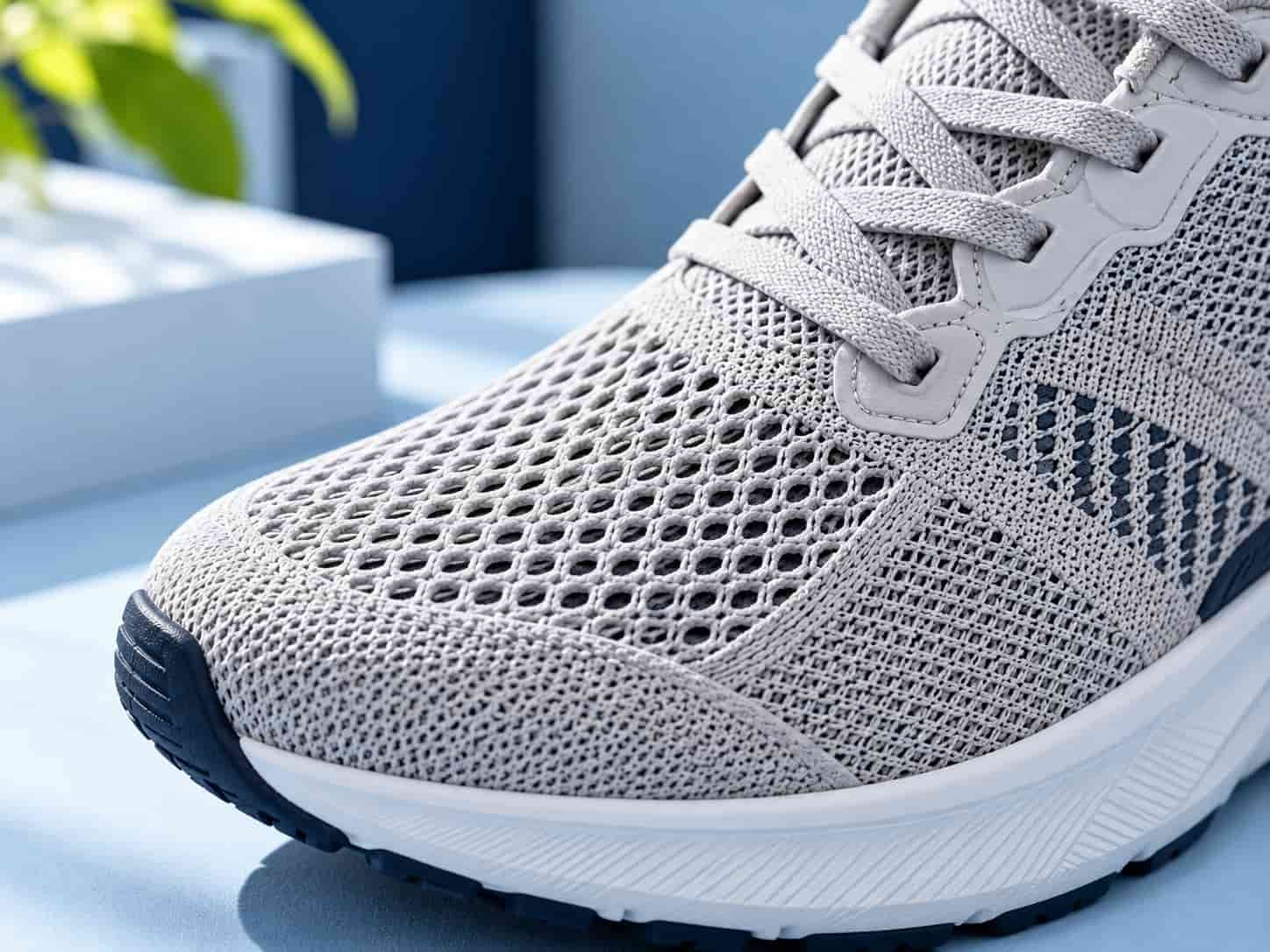
Engineered mesh is a mesh upper designed with specific performance goals rather than using the same textile structure uniformly across the shoe. Its pattern, thickness, stretch, and density can vary by location.
For example, a manufacturer may use a more open structure over parts of the forefoot to encourage airflow, then use denser sections or supportive overlays around the midfoot to help the shoe hold the foot securely. The exact design depends on the shoe and the manufacturer’s construction.
ASICS describes engineered mesh as a technical material that can stretch in multiple directions and create a close-fitting feel in certain footwear designs. Its product descriptions also associate engineered mesh with lightweight construction and breathability. These are design goals, not guarantees that every engineered mesh shoe will fit or perform the same way. Read ASICS’ material and product information.
Regular mesh vs engineered mesh
| Feature | Conventional mesh | Engineered mesh |
| Structure | A mesh textile with a relatively consistent or simple pattern | A purpose-designed pattern that may vary across the upper |
| Airflow | Depends on the size of openings, yarn, lining, and overlays | Can be targeted to particular areas, depending on design |
| Support | May need overlays or other supporting elements | May incorporate denser zones and integrated structural features |
| Flexibility | Varies with the weave and yarn | Can be designed to stretch differently in different areas |
| Weight | Often lightweight | Often designed to balance low weight with targeted support |
| Best use | Casual shoes, trainers, and some sports footwear | Performance-oriented running and training shoes, as well as lifestyle footwear |
Buying tip: do not assume the word “engineered” automatically means better. Check the fit, the construction around the midfoot and heel, the quality of the seams or bonded panels, and the intended activity.
How Mesh Shoe Uppers Are Made
Mesh uppers can be created using different textile processes, including weaving, knitting, or other methods that produce a network-like structure. The construction affects how the shoe feels and how it performs.
A simplified manufacturing process may include:
- Selecting yarn or fibers: Manufacturers choose fibers based on the desired flexibility, strength, texture, and production requirements.
- Creating the textile structure: The fibers are knitted, woven, or otherwise formed into a mesh material.
- Shaping the upper: The material is cut, knitted to shape, or formed into panels to match the shoe design.
- Adding support features: Depending on the shoe, manufacturers may add overlays, reinforcement films, foam backing, or internal support components.
- Assembling the shoe: The upper is attached to the sole unit and combined with the lining, tongue, laces, and other components.
Not every shoe follows the same process. Some modern uppers use one-piece or near-one-piece construction, while others combine several panels. Product labels rarely provide every manufacturing detail, so use the manufacturer’s specifications when you need to know the exact composition.
Are Mesh Shoes Breathable?
Mesh is often chosen because its structure can allow air to move through the upper. That airflow may help heat escape and support comfort during walking, running, and exercise. The amount of ventilation, however, depends on more than the word “mesh” on the product page.
Important factors include:
- Opening size: More open structures generally allow more direct airflow, but may admit dust and water more easily.
- Lining: A thick or less permeable lining can reduce the ventilation provided by the outer mesh.
- Overlays: Films, reinforcements, and dense panels can restrict airflow in covered areas.
- Fit: A shoe that is too tight may compress the upper against the foot and feel less comfortable.
- Socks and conditions: Sock thickness, temperature, humidity, and activity level also influence how warm the shoe feels.
REI’s running-shoe guidance explains that uppers are commonly made from mesh or knit materials to support breathability, while thicker and more structured uppers can trade some airflow for support and protection.
Does breathable mesh keep feet completely dry?
No. Breathability and waterproofing are different properties. A breathable upper can help air circulate, but an open textile may allow rain or splashes to enter. A waterproof shoe usually relies on a waterproof membrane or another protective construction, and its overall ventilation may differ from that of an unlined mesh shoe.
If your main concern is heat and sweat in warm conditions, breathable mesh may be useful. If your main concern is rain, puddles, or wet trails, evaluate the entire shoe rather than relying on the upper material name alone.
Benefits and Drawbacks of Mesh Shoes
Mesh shoes are useful because they prioritize certain characteristics, but no material is ideal for every environment or activity.
Main benefits
1. Potentially better airflow
Open or appropriately engineered mesh can allow air to move through the upper. This can be useful in warm weather and during activities that produce heat.
2. Lightweight construction
Many mesh uppers use relatively light textiles and limited structural material. The complete shoe’s weight still depends on the sole, cushioning, reinforcements, and other components.
3. Flexibility
Mesh can flex as the foot moves. How much it stretches or bends depends on the textile, panel design, and reinforcements.
4. Versatile styling
Mesh is used in athletic trainers and casual sneakers. It can be paired with overlays and other textiles to create different shapes and levels of structure.
5. Straightforward routine cleaning
Many mesh uppers can be cleaned with a soft brush and a mild solution. Follow the manufacturer’s instructions because some shoes contain delicate coatings, glued components, or materials that require special care.
Main drawbacks
1. Limited protection from rain
Open mesh is not inherently waterproof. Water may pass through the openings or wet the textile itself.
2. Possible snagging or abrasion
Fine mesh can be damaged by rough surfaces, sharp objects, repeated rubbing, or a poor fit that causes the foot to press against the same area.
3. Dirt can collect in the weave
Dust and mud may become lodged in the textile structure, particularly in light-coloured shoes or mesh with small, complex openings.
4. Support varies considerably
A flexible upper may feel comfortable but may not provide enough structure for every activity or foot shape. Support comes from the whole design, including fit, overlays, lacing, heel construction, and the sole.
5. Drying time is not identical across shoes
Some thin mesh dries relatively quickly, but a padded or lined shoe can retain moisture. Never assume every mesh shoe will dry rapidly after being soaked.
Why Mesh Shoes Wear Out at the Toe
The most common failure in a mesh shoe is a hole over the big toe. Thin mesh with no reinforcement in that area is the first part of the upper to wear through, and knit uppers show the same problem for the same reason.
The fabric is rarely the only cause. Holes usually trace back to a mix of three things: a shoe that is slightly too short, long toenails, and a big toe that lifts with each step and rubs the same spot.
To reduce the risk:
- Check that your longest toe does not touch the front of the shoe. If it does, try half a size up.
- Keep toenails trimmed.
- Look for uppers with a toe cap or overlay, which is a synthetic layer that reinforces the mesh in high-wear areas.
- Rotate two pairs so each one gets a rest.
A hole is not always a defect, but it is worth noticing early. If it keeps happening in different pairs of the same size, the fit is a likelier cause than the mesh.
Mesh vs Textile Shoes: Which Is Better?
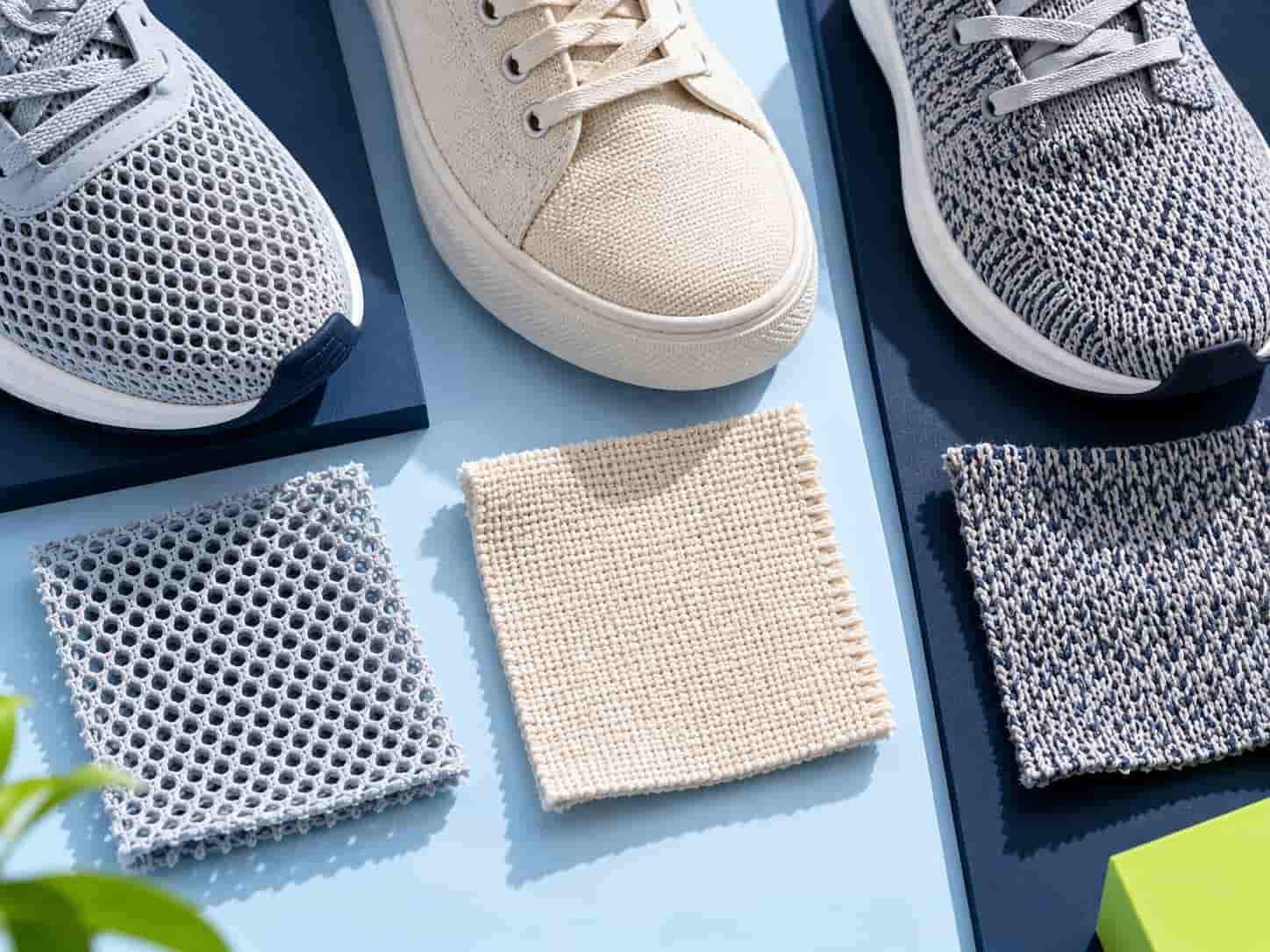
Mesh is itself a type of textile structure, so comparing “mesh” with “textile” can be confusing. In shopping descriptions, textile shoes often means a fabric upper that is not specifically described as mesh. It may be canvas, woven fabric, knit, or another material.
| Feature | Mesh | Canvas | Knit upper |
| Construction | Network-like textile structure | Usually a tighter woven fabric | Interlooped yarn structure |
| Airflow | Often high when the structure is open | Depends on weave, lining, and coatings | Depends on knit density and construction |
| Flexibility | Varies by mesh design | Often less stretchy than knit | Often flexible and adaptive |
| Water protection | Usually limited without added protection | Usually limited without treatment | Usually limited without added protection |
| Durability | Depends on yarn, density, reinforcement, and use | Depends on canvas weight and construction | Depends on yarn, knit, and reinforcement |
| Cleaning | Gentle brushing and a suitable mild solution often work | Often straightforward, subject to care label | Gentle cleaning helps avoid fuzzing or snagging |
| Common use | Running shoes, trainers, casual sneakers | Casual and everyday shoes | Running, lifestyle, and performance shoes |
Which should you choose?
Choose mesh if airflow and a light upper are priorities. Canvas may suit casual wear when you prefer a more traditional woven look. Knit may appeal if you want a flexible, sock-like fit, although its stretch and support vary by design.
There is no universal winner. Compare the construction, fit, intended use, and care requirements. For the full guides, see canvas shoes material, knit shoes material and our Shoe Materials Explained guide.
Are Mesh Shoes Good for Running?
Mesh is widely used in running shoes because it can help keep the upper lightweight and ventilated. But an upper alone does not determine whether a running shoe is suitable.
Consider these features together:
- Fit: The shoe should hold your foot securely without pinching or creating pressure points.
- Toe room: Allow enough room for your toes to spread naturally during the activity.
- Heel hold: The heel should feel secure without excessive slipping.
- Upper support: Check whether the mesh and its reinforcements keep the foot comfortably positioned.
- Cushioning: The midsole should suit your comfort preferences, running style, and intended use.
- Outsole grip: Match the tread and rubber to road, treadmill, track, or trail use.
- Weather protection: A breathable mesh road shoe may not be the right choice for wet, muddy conditions.
A lightweight mesh upper does not automatically make a shoe faster, safer, or more comfortable. Fit and the complete construction matter. If you are buying shoes for regular running, consult our shoe-testing methodology for the evaluation factors to consider; do not treat a material description as a substitute for trying the shoe on.
Are mesh shoes good or bad for running?
They can be good when the fit is secure and the shoe is designed for the runner’s activity. A thin upper may be comfortable in warm weather, but it may offer less protection against debris or abrasion. For trail running, look for suitable toe protection and a secure upper. For road running, prioritize fit, cushioning, and a suitable outsole.
Are Mesh Shoes Suitable for Rainy Weather?
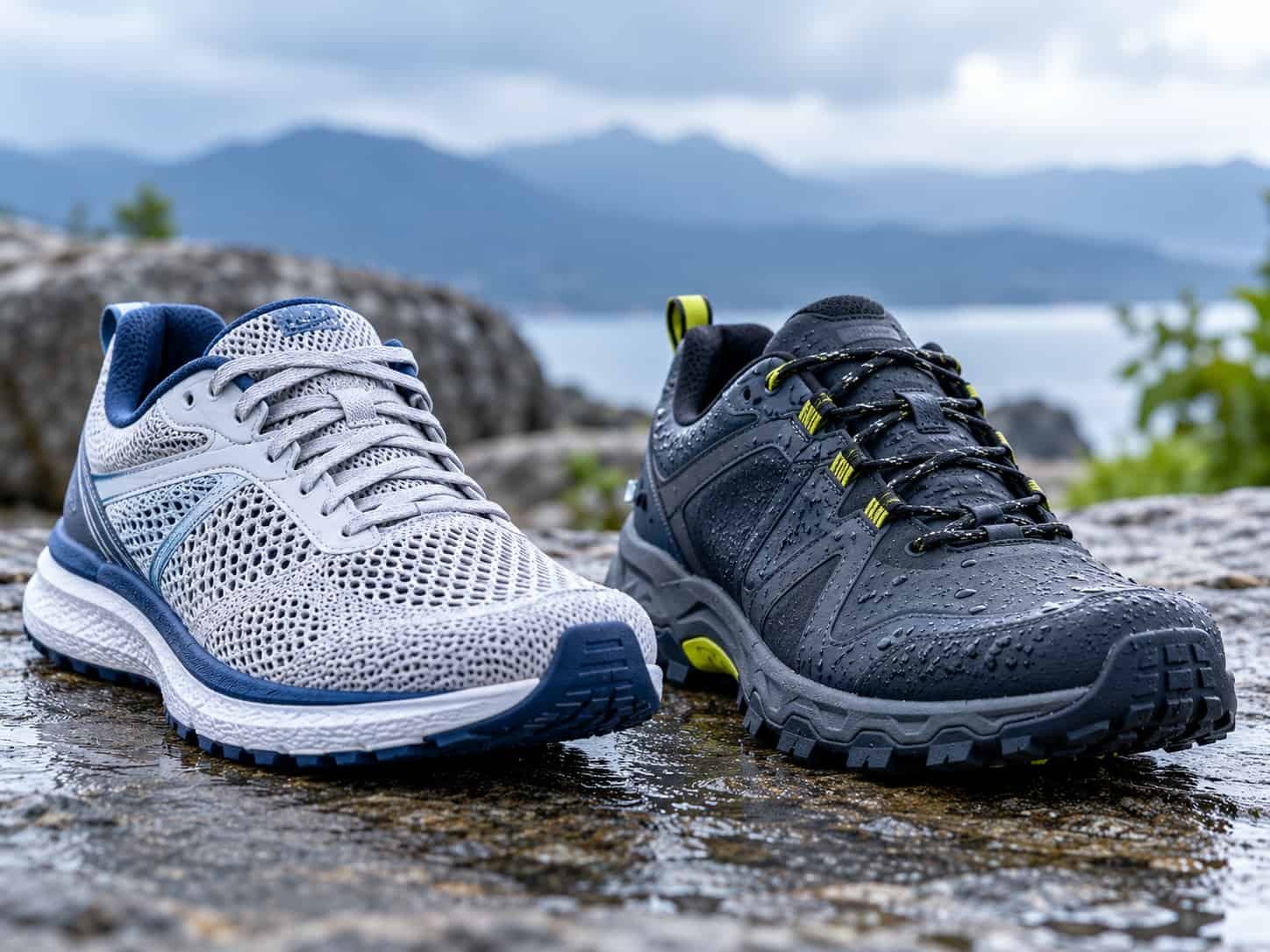
Ordinary open mesh is usually a poor choice when your priority is keeping rain out. Water can pass through the openings, and a saturated lining or sock can make the shoe uncomfortable.
Mesh shoes may still be usable in light or brief showers, but the result depends on the weave, any coating or membrane, the lining, and the shoe’s overall design. Water resistance and waterproofing should not be treated as interchangeable claims.
What to choose for wet conditions
- For occasional drizzle: Look for a tightly constructed upper with a suitable water-resistant treatment, while checking the product’s actual limitations.
- For sustained rain: Consider footwear with a waterproof membrane or a purpose-built waterproof construction.
- For hot and humid weather: A waterproof lining may reduce airflow compared with an unlined mesh upper.
- For muddy trails: Consider both water protection and grip, along with debris protection and the ease of cleaning the shoe afterward.
REI explains that waterproof running shoes often use a waterproof/breathable liner, while water-resistant constructions may use tighter mesh and strategically placed materials. Waterproof designs can also retain more heat.
Mesh Shoes for Men and Women
Mesh shoes are available in a wide range of styles marketed for men and women. The material itself does not determine which shoe is best for a particular person. Fit, width, foot shape, intended activity, and construction are more useful selection criteria than the gender label alone.
Wide feet: stretchy mesh can suit a wide foot because it adapts to the foot instead of pressing on it. Still check that the shoe is sold in a wide width, because the sole and the supports around the mesh decide how much real room you get.
When shopping for mesh shoes, compare:
- Available sizes and width options.
- Whether the toe box feels cramped or allows comfortable movement.
- Whether the upper stretches or presses against the sides of the foot.
- The security of the heel and midfoot.
- Cushioning and outsole traction for the activity.
- Whether the shoe can be cleaned according to your routine.
For everyday walking, a flexible mesh upper may feel comfortable if the shoe fits well. For gym use, look for a secure fit and a sole appropriate to your workouts. For long periods of standing, assess the complete shoe’s underfoot cushioning and stability rather than choosing based only on mesh.
Mesh Material in Football Shoes
Mesh and other textile constructions can appear in football footwear, but football shoes need to be evaluated differently from ordinary running trainers. The surface you play on, ball-contact design, fit, and outsole configuration are important.
For football boots, check:
- Playing surface: Firm ground, artificial turf, and indoor surfaces may require different outsole configurations.
- Upper feel: The upper should fit securely and provide the type of ball-contact feel you prefer.
- Reinforcement: Check the toe and side areas for protection against the demands of play.
- Traction: Choose studs or an outsole designed for the intended playing surface.
- Fit: Excessive movement inside the shoe can affect comfort and control.
A mesh-like upper does not guarantee superior ball control or better performance. Check the exact model’s material specification and intended playing surface before buying.
How to Clean Mesh Shoes
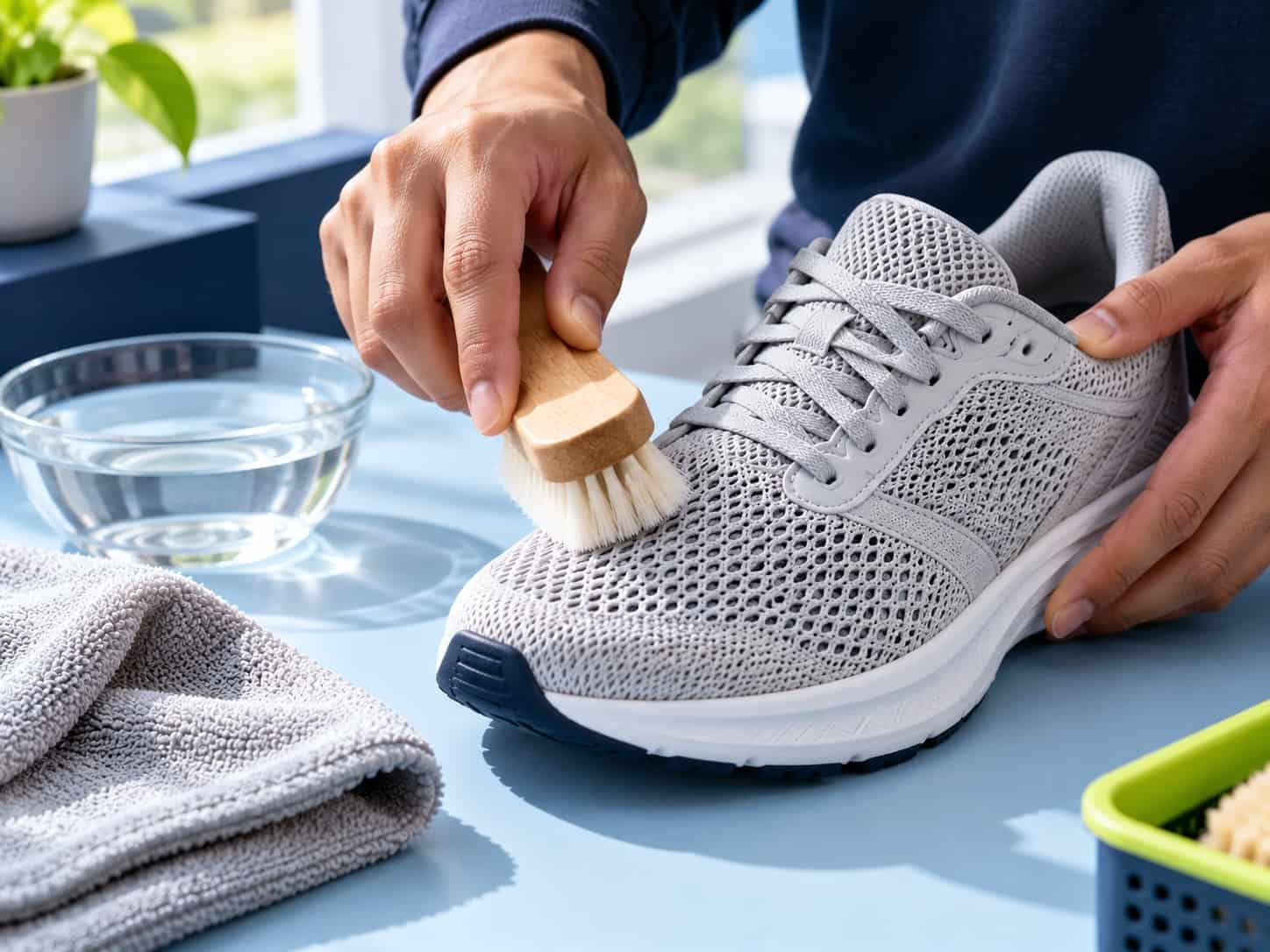
Mesh can collect dust, mud, and grime between its fibers. Gentle cleaning is generally preferable to aggressive scrubbing, which can damage delicate yarns or loosen bonded components.
Step-by-step cleaning method
Step 1: Check the care label.
Read the manufacturer’s instructions first. Do not assume that a shoe is machine-washable simply because its upper is made of mesh.
Step 2: Remove loose dirt.
Let wet mud dry enough to brush away without smearing it. Use a soft shoe brush or cloth to remove loose dust and debris.
Step 3: Remove the laces and insoles if permitted.
This helps you reach the tongue and eyelet areas. Clean removable insoles separately according to their care instructions.
Step 4: Prepare a mild cleaning solution.
Use cool or lukewarm water with a small amount of mild detergent appropriate for the material. Avoid strong solvents, bleach, and harsh cleaners unless the manufacturer specifically approves them.
Step 5: Clean gently.
Dampen a soft cloth or brush and work in small, gentle movements. Avoid saturating the shoe or pressing hard enough to deform the mesh.
Step 6: Wipe away residue.
Use a clean, slightly damp cloth to remove remaining cleaning solution. Excess detergent can leave visible residue.
Step 7: Air-dry naturally.
Allow the shoes to dry in a ventilated area away from direct heat. Avoid radiators, hair dryers on high heat, and other intense heat sources that may affect adhesives or materials.
Step 8: Reassemble when fully dry.
Replace the insoles and laces only after the components are dry. This helps avoid trapping moisture inside the shoe.
Can mesh shoes go in a washing machine?
Some manufacturers permit machine washing for particular models, while others advise against it. Check the specific care instructions. Machine washing can affect adhesives, cushioning, trims, or the shape of the upper, so hand cleaning is a sensible default when the instructions are unclear.
For a more detailed routine, use our shoe cleaning and maintenance guide. For running shoes in particular, see how to clean mesh running shoes.
How to Choose Mesh Shoes
Use this checklist before purchasing.
| Your priority | What to look for | What to watch out for |
| Breathability | A mesh structure suited to warm conditions | Thick linings or extensive overlays may limit airflow |
| Running | Secure fit, appropriate cushioning, outsole grip, and suitable upper support | Choosing by upper material alone |
| Gym training | Stable fit and a sole suited to your exercises | A very flexible upper that does not secure your foot adequately |
| Everyday walking | Comfortable fit, practical cleaning, and appropriate cushioning | Mesh that rubs or snags in your normal environment |
| Rain protection | Verified water-resistant or waterproof construction | Assuming all mesh is water-resistant |
| Durability | Reinforced high-wear areas, sound seams or bonds, and suitable outsole rubber | Very thin mesh in areas that repeatedly rub against your foot |
| Easy cleaning | Care instructions compatible with your routine | Assuming all models can be machine-washed |
| Football | Correct outsole for the playing surface and a secure upper | Selecting an ordinary running shoe for football |
Short verdict: mesh is one of the best uppers for hot weather, gym sessions and road running, as long as the shoe fits well. It is a poor first choice for rain, mud and rough ground where sharp debris and abrasion are likely.
A simple decision guide
- Choose breathable mesh for warm conditions and everyday use when ventilation is a priority.
- Choose engineered mesh when you want a designed balance of airflow, flexibility, and structure, provided the specific shoe fits well.
- Choose a more protective upper when your activity involves abrasion, debris, or repeated contact.
- Choose purpose-built waterproof footwear when keeping rain out matters more than maximizing airflow.
- Compare the full shoe before buying: upper, lining, cushioning, outsole, fit, and care requirements all affect the experience.
Common Mesh Shoe Myths
Myth 1: Every mesh shoe is breathable
Not necessarily. Mesh structure, lining, overlays, and other construction details influence how much air passes through the upper.
Myth 2: Mesh shoes are waterproof
Ordinary mesh is not inherently waterproof. A shoe needs a suitable protective construction if waterproof performance is required.
Myth 3: Engineered mesh is always more durable
Engineered mesh describes a design approach, not a universal durability rating. Durability depends on materials, reinforcement, workmanship, fit, and use.
Myth 4: All mesh shoes can be machine-washed
Cleaning instructions differ by model. Machine washing can affect the upper, adhesives, or sole components. Follow the manufacturer’s instructions.
Myth 5: Mesh alone determines running comfort
The fit, heel hold, toe room, cushioning, outsole, and overall construction all matter. An airy upper cannot compensate for a shoe that fits poorly.
Frequently Asked Questions About Mesh Shoes
1. What is mesh material in shoes?
Mesh is a textile structure made from fibers or yarns arranged in a network. It is often used in shoe uppers to reduce weight and allow airflow. Its properties vary by weave, yarn, lining, reinforcements, and overall design.
2. Is mesh material good for shoes?
It can be a good choice for running, walking, gym training, and casual footwear when breathability and flexibility are priorities. It may be less suitable when the shoe needs strong protection from rain, mud, or abrasion.
3. What is engineered mesh in shoes?
Engineered mesh is a purpose-designed mesh upper in which the pattern, density, stretch, or support can vary across the shoe. Manufacturers use these differences to target particular fit and performance goals.
4. Are mesh shoes good for running?
Many running shoes use mesh because it can provide a lightweight, breathable upper. The right shoe still depends on fit, cushioning, outsole grip, support, terrain, and personal comfort.
5. Are mesh shoes good for the rainy season?
Ordinary open mesh generally offers limited rain protection. For prolonged wet conditions, look for a shoe with a clearly specified water-resistant or waterproof construction and consider the trade-off between weather protection and airflow.
6. Which is better: mesh or textile material?
Mesh is a type of textile, so the answer depends on what the comparison means. Compared with canvas or a denser woven upper, open mesh often prioritizes airflow. Canvas may offer a different appearance and feel, while knit materials can provide a flexible fit. Compare the actual construction rather than relying only on labels.
7. Can mesh shoes be washed?
Many mesh shoes can be cleaned with a soft brush, cool water, and a mild cleaning solution. Machine washing is appropriate only when the manufacturer permits it. Avoid harsh chemicals and high heat.
8. How can I make mesh shoes last longer?
Choose the right fit, avoid repeated friction, clean away dirt gently, let wet shoes dry naturally, and follow the manufacturer’s care instructions. Replace shoes when their structure, outsole, or cushioning no longer suits the intended use.
9. Why do mesh shoes get holes at the toe?
Thin mesh with no reinforcement over the toes is usually the first place a shoe wears through, but the fabric is rarely the only cause. A shoe that is slightly short, long toenails and a big toe that lifts with every step all add friction. Check toe room, keep toenails trimmed, and choose a pair with a toe cap or overlay.
10. Are mesh shoes good for wide feet?
They can be. Stretchy mesh adapts to the foot instead of pressing on it, which many people with wide feet find comfortable. Still check that the shoe comes in a wide width, because the sole and the supports around the mesh set the real space.
Conclusion: Is Mesh the Right Shoe Material for You?
Mesh can be a practical choice if you want a lightweight upper that allows airflow. It is especially common in running shoes, gym trainers, and everyday sneakers. Its main trade-offs are limited rain protection in open constructions and the possibility of snagging or abrasion, depending on the material and design.
Before buying, consider the activity, fit, weather, upper support, cushioning, outsole, and care instructions together. If you are comparing several shoe materials, start with the Shoe Materials Explained guide and use the individual material guides to narrow your options.
Sources and Further Reading
- REI Expert Advice – How to Choose Running Shoes – information about uppers, breathability, structure, and waterproof construction.
- ASICS – Official website and footwear material information – manufacturer descriptions of engineered mesh in specific footwear.
- adidas – Mesh Shoes – manufacturer overview of mesh footwear and general care guidance.
- CDC – Healthy Habits: Foot Hygiene – general advice on foot hygiene, keeping feet dry, and changing shoes and socks regularly.


